Quail Release

by Ann Collins and Catherine Johnson

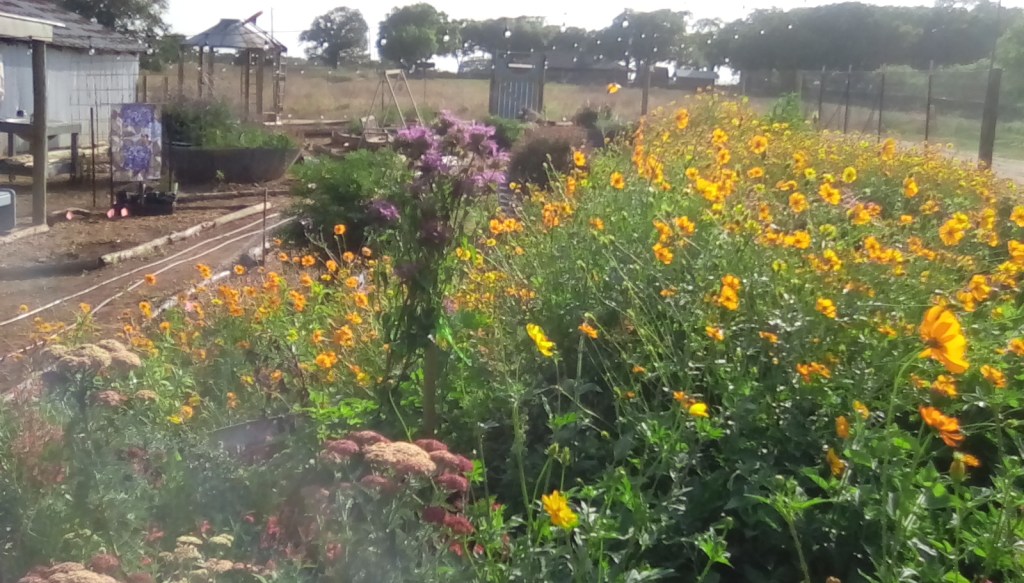
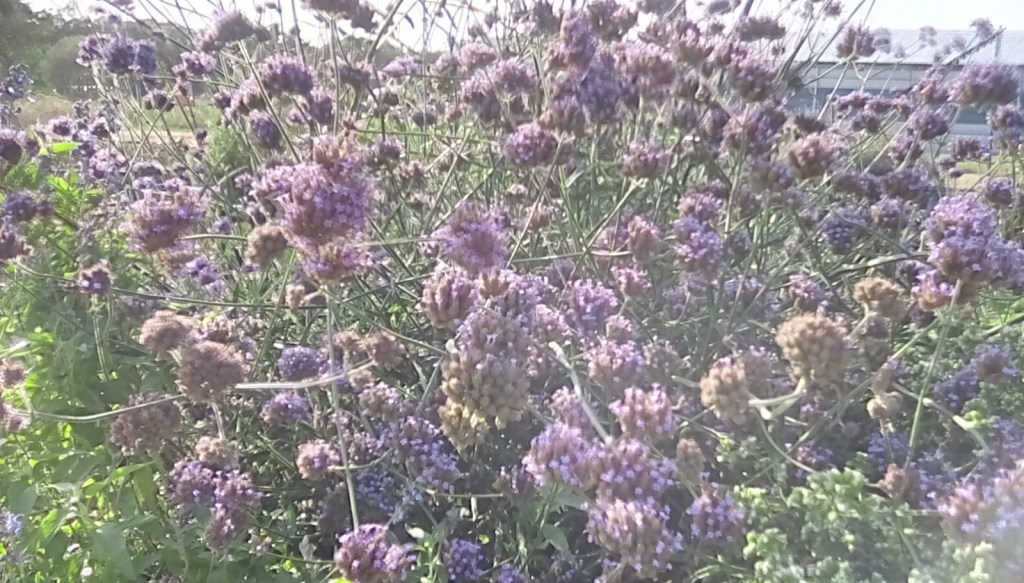
Catherine Johnson and I had a spectacularly rare treat this week. We were visiting the Bird and Bee Farm, where Catherine has created a marvelous wildflower garden. If you haven’t seen it, you really must go. It is full of color, texture, and scents. Guinea fowl and chickens roam free, gobbling up grasshoppers and other noxious critters. Catherine even shares the overflow (flowers, not grasshoppers!).

Bobwhite quail. Image by @JBL via Twenty20

Gene and Cindy Rek have turned their hundred-acre property into a prairie paradise. You may already know they sell laying hens of every description. They also sell Rio Grande turkeys, guinea fowl, and Peking ducks.* This week they added another member of the feather family: Bobwhite Quail.

After an early morning trip to Bastrop, they came back with two flax boxes with breathing holed punched in them. Inside were thirty pairs of breedign quail. Gene carried the boxes out in some tall grass and gently set them down. He cut the strings on box #1 and carefully lifted the lid, revealing an almost-solid carpet of mottled brown feathers.

Just as we were taking in the scene, it suddenly erupted and flew away. Not at all what I was expecting!

Here’s what we saw:

The next box we were somewhat prepared for, but it was just as exciting when it was opened and thirty quail breathed a sigh of ecstasy and got their first taste of prairie freedom.

While we stood, adjusting to this miracle of Nature, the birds immediately started calling to one another with their signature whistle of, “Bob White!”

Later we saw several of them on the pond margins, trying to make sense of this incredible gift they had been given. Hopefully, most will survive to repopulate an area that was once their native habitat before every scrap of nature was cleared away for cattle, monocultures, and civilization, before pesticides, GMOs, and chemicals.

This is supposedly quail. Photo by @Tereza via Twenty20

These birds were all full grown, but future plans include day-old chicks to be raised in the barn and released later this summer.

There will be a coming out party when they are old enough, and all of you are invited to the celebration. Cindy will let us know when it is. It will be fun: a step back in time and a step forward toward restoration of a native prairie, right here in Milam County.

Mark your calendars!


*The farm is open only by appointment, and they are booked many weeks ahead. Please call them at (512) 808-8533 to reserve an opening! You can drop by and look at the gardens at any time.
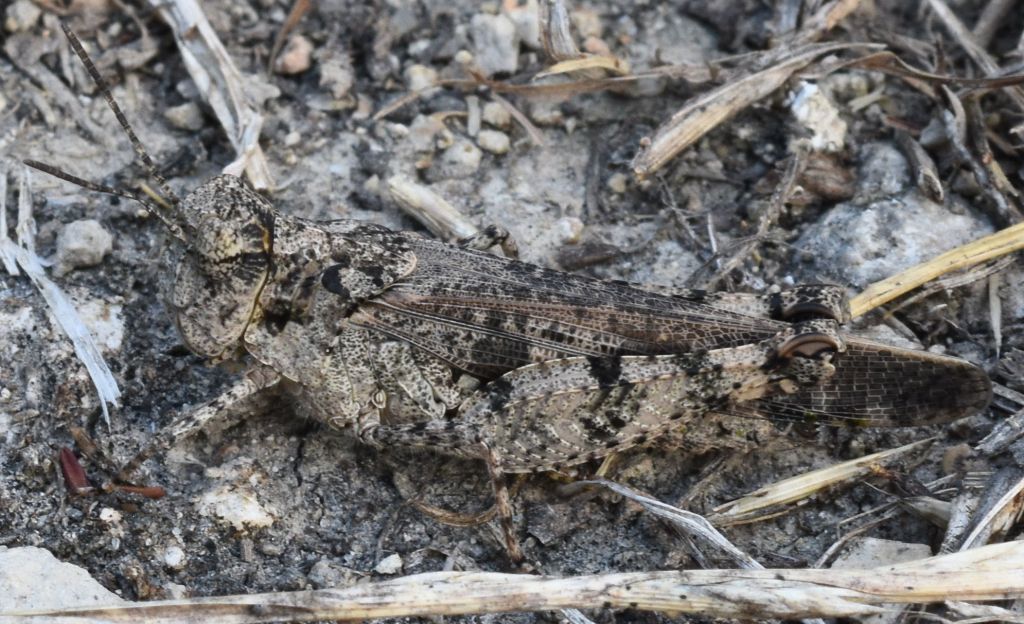
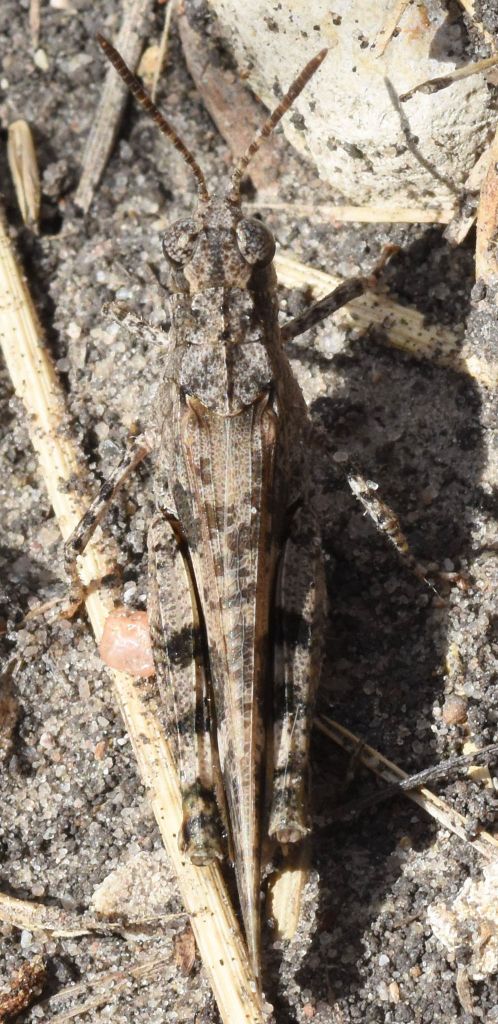
Nebulatettix subgracilis, Blackland Baby?

by Eric Neubauer

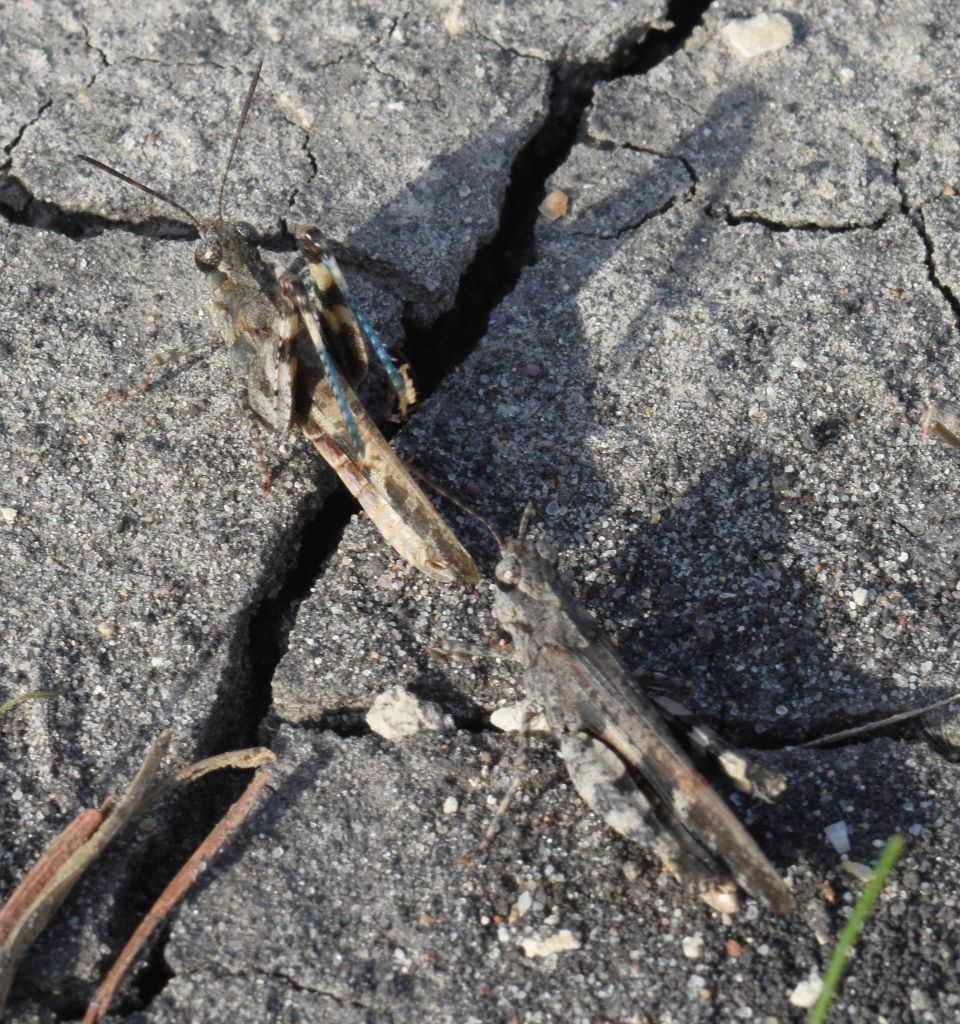
This grasshopper wins the award for best Texas Blackland camouflage.  It is so good that it could well have evolved here. Nymphs are especially difficult to see.

iNaturalist observation by E. Neubauer

Unlike some other grasshopper species, its appearance is fairly consistent from individual to individual. It is also relatively common, at least in my neighborhood. Observations at iNaturalist suggest a range from just over the border in Mexico, north up through the center of Texas, and just into Oklahoma.

This was my first big ID challenge. I started noticing these last fall soon after I joined iNaturalist. There wasn’t much help on iNaturalist with less than 24 observations, most misidentified, and few if any research grade. How can this happen with an everyday species? Well, first this species was named Encoptolophus subgracilis until recently. A recent genetic study of the Chortophagini resulted in a new genus and realignment of several species. The second is that grasshoppers don’t have a lot of fans and people tend to concentrate on the easy ones.

The view that gives the accurate ID.

Eventually I found the published article on line which provided some guidance. While a lot of the focus was on genitalia, which are rarely visible in live photographs, there were also details of the cranial ridges between the eyes for this and a half dozen related species. From that point on, all that was necessary to confirm an ID was a sharp, overhead photograph (at right).

The cranial ridges look like a bottle with slightly curved sides an a short neck to me. Another characteristic is the bright blue tibia which stands out against the salt and pepper body when the hind legs are flicked out during mating displays (see photo below).

This species can probably be found throughout Milam County from at least May through October.

Fun times for the dusky grasshoppers – blue area visible.

Texas Terrors

by Eric Neubauer

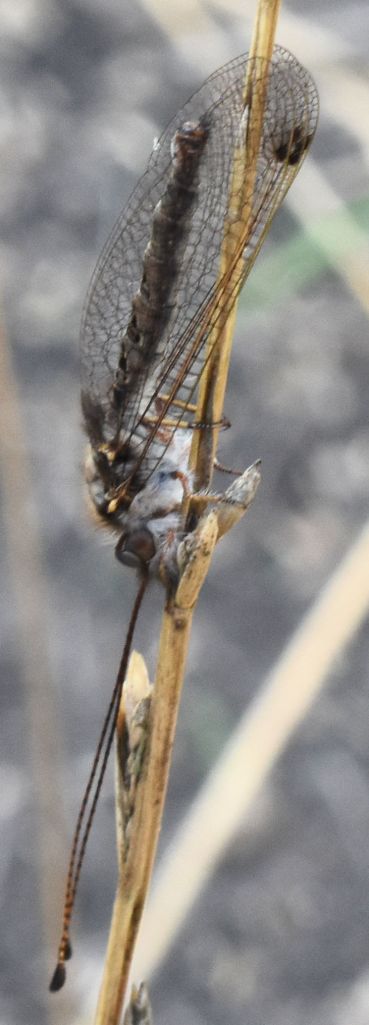
The owlfly (Ululodes macleayanus) isn’t really that scary to humans. It’s just an insect whose lineage goes way back to when dragonflies ruled the skies. It hunts at night and is closely related to antlions. Antlion larva dig pits in sand and hide at the bottom waiting from prey to slide down the sloping sides. I knew about antlions and encountered pits dug by larva, but never heard anything about owlflies.

This becomes the first iNaturalist observation of the Ululodes for Milam County (there are 800 in Texas, so they’re pretty obscure. I only got a single photo and was lucky to get that since it was perched on a grass stalk in the wind. It was taken with the macro lens I just bought.

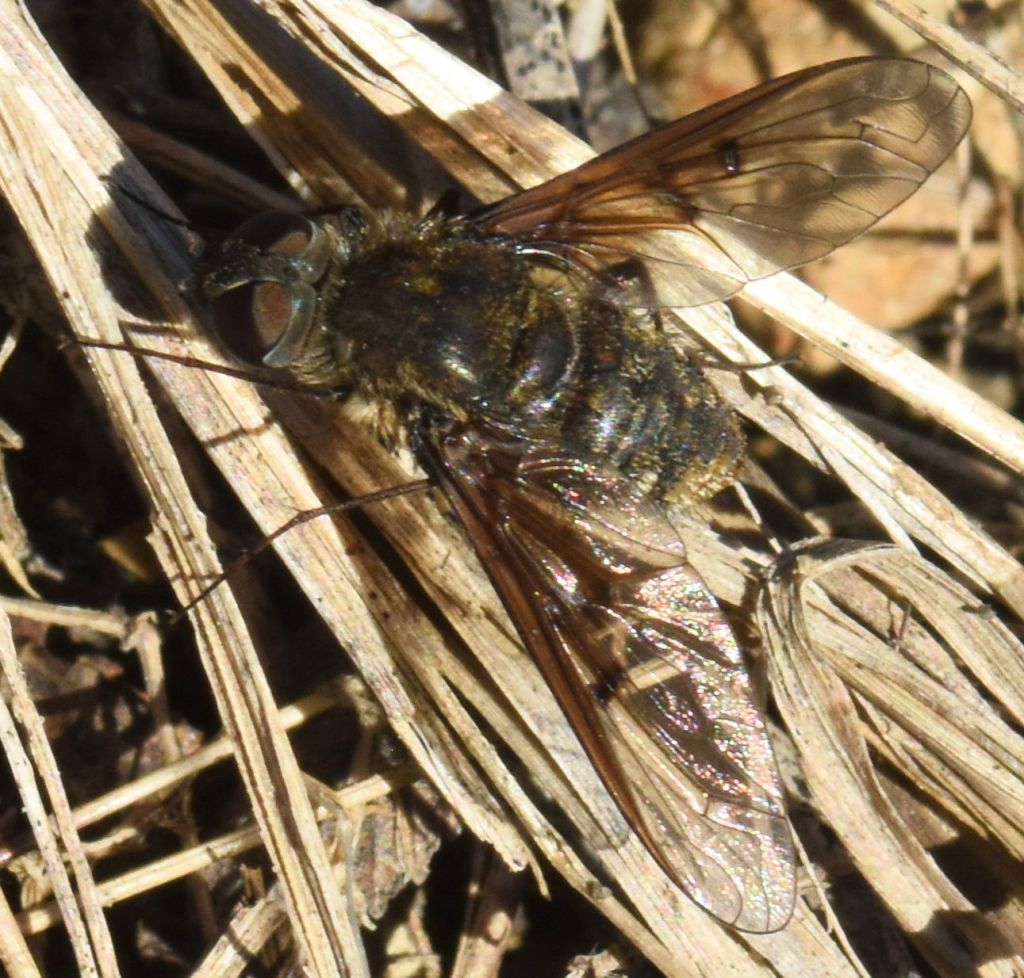
You may recall the Anthrax pluto fly specimen I observed a while back. It turns out that the next week, Sue Ann Kendall saw another one, Anthrax larrea. I saw the same kind the next day! Between the two of us, we had most of the verified iNat observations in the whole United States.

I went through the Anthrax observations for Texas and found four as yet to be identified ones. So now there are seven. That the neat thing about this kind of research. Eventually there can be a lot of positive fallout.

It does appear to be one of the rarer species though since that’s only 7 out of 121 Anthrax observations in Texas.

Anthrax larrea

Caterpillar Season

Cindy Travis and Sue Ann Kendall

From Cindy:

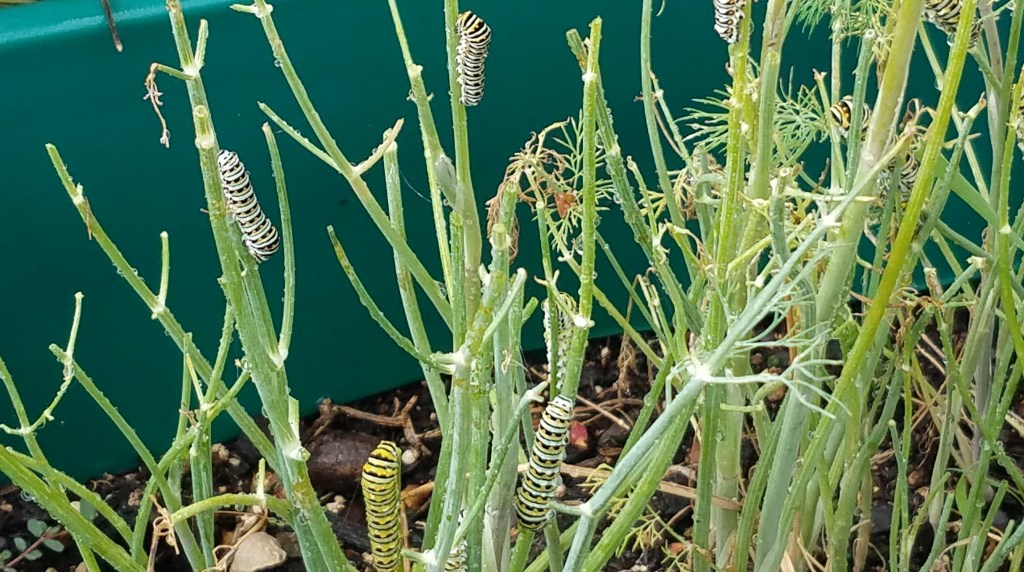
I found a dozen of these caterpillars devouring my dill. When there was nothing but a stem left, they crawled up the side of my planter and crawled away. I thought they might find the nearby parsley and ingest it too, but no sign of that and no sign if them.

I suppose they are somewhere nearby spinning their cocoons.  Maybe I’ll see some pretty black swallowtails around soon if my nesting phoebes and barn swallows or bluebirds don’t get them first!

From Sue Ann:

I have had many of these in my bronze fennel plant, and I hope they have gone off to pupate, too! The fennel also hosted the caterpillar of the cabbage looper moth. I’ll plant dill next year, for sure. The more black swallowtails, the better!

More about the Black Swallowtail, from Cindy

Papilio polyxenes, the black swallowtail, American swallowtail or parsnip swallowtail, is a butterfly found throughout much of North America. It is the state butterfly of Oklahoma and New Jersey. Wikipedia

Eastern black swallowtail. Photo by @AngelsLight via Twenty20. Licensed use.

Black Swallowtail Life Cycle: Overview and Timings

StageTypical Duration
Egg stageGenerally 4 to 10 days, depending on temperature and host plant
Caterpillar (larval) stage3 to 4 weeks
Chrysalis (pupal) stage10 to 20 days (except for overwintering pupae)
Adult butterfly stage6 to 14 days
Facts about the Black Swallowtail

And More from Sue Ann

I had to add this observation from last night, as I was dining outdoors at the Central Avenue Bistro in Cameron (with safe distancing and all that). I felt something prickling my ankle and looked down to find this fellow. It must be on the last instar, because it’s big! I believe it’s a live oak metria moth (Metria amelia) given that it and many friends were falling from the live oak tree we were sitting under, though iNaturalist has yet to confirm me.

Hard to tell the front from the back of this one!

The moth looks like this, which really would blend right in with an oak tree!

Live oak metria moth. iNaturalist photo by xylochic627 (CC-NY-NC)

Milam Wildscape Project May Update

by Catherine Johnson

Bird and Bee Farm is open by appointment only, and the new bathroom nearly complete. We also have a new certification sign to go with all the other signs on the project.

It is already too hot to work anytime but early or late in the day.  The creatures and plants are thriving, though. 

Coreopsis, purple bee balm, and yarrow

The gold coreopsis in the photo above must go, because it is smothering other plants. Email me if you want some!

The garden is a beautiful Wild mess. 

This new arch is ready for vines.

We are glad for all our volunteers and donors. All materials for the structures below were donated.

Master Naturalist Kim Summers taking a break under the new shelter. The arch is shown at right.