Our Bird Station Is Under Construction

by Sue Ann Kendall

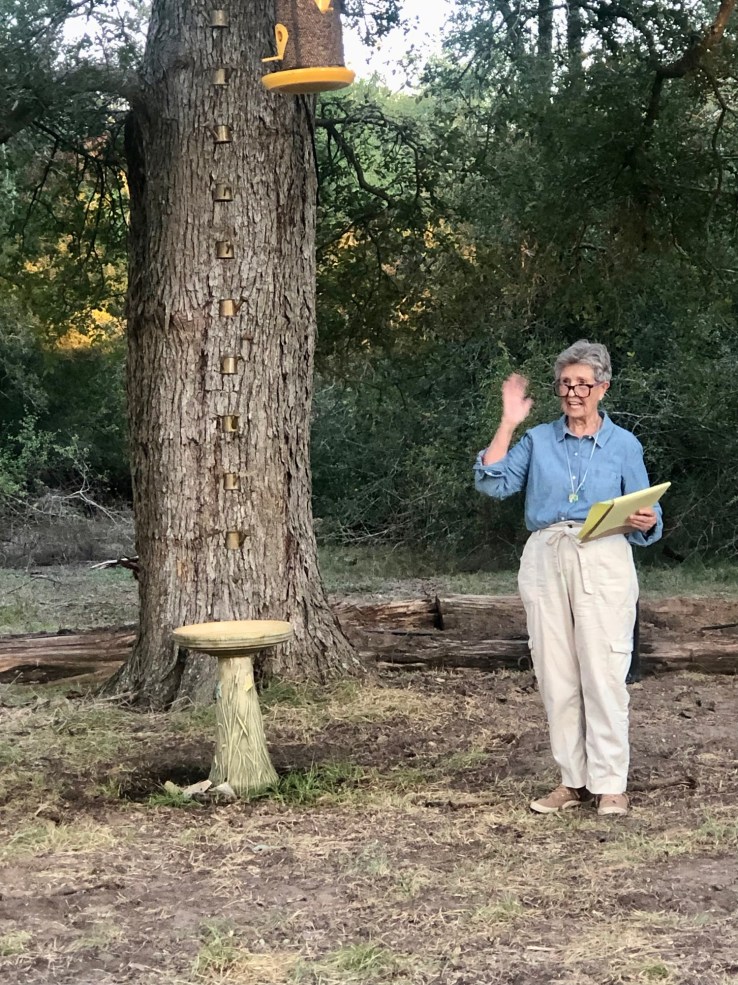
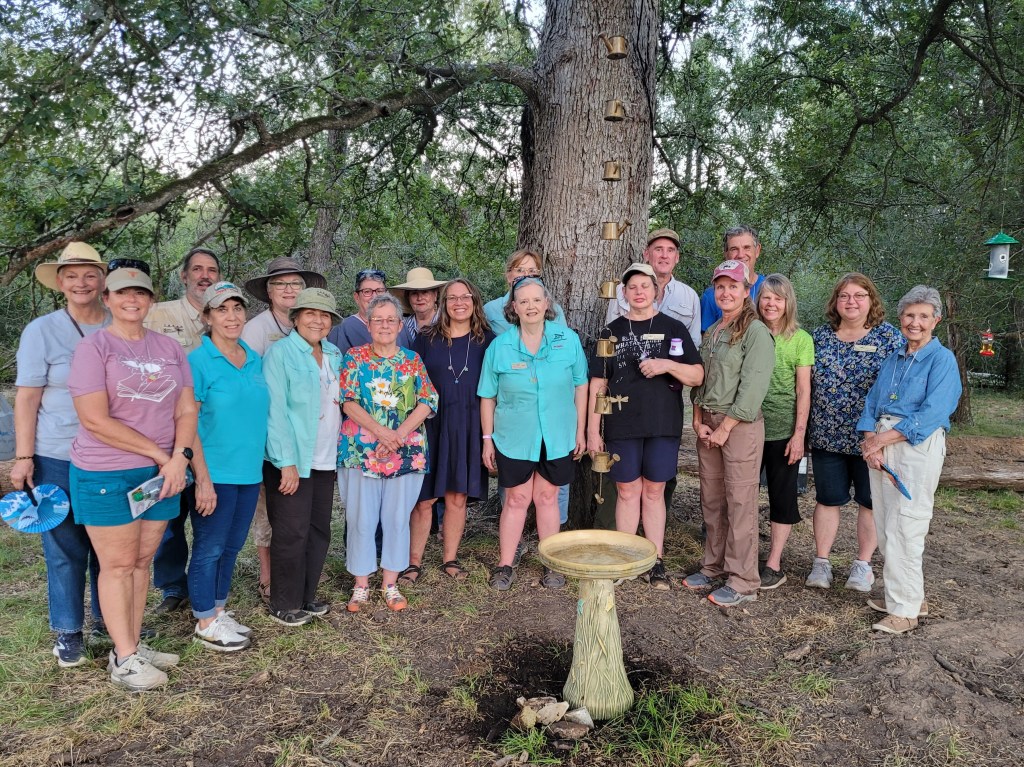
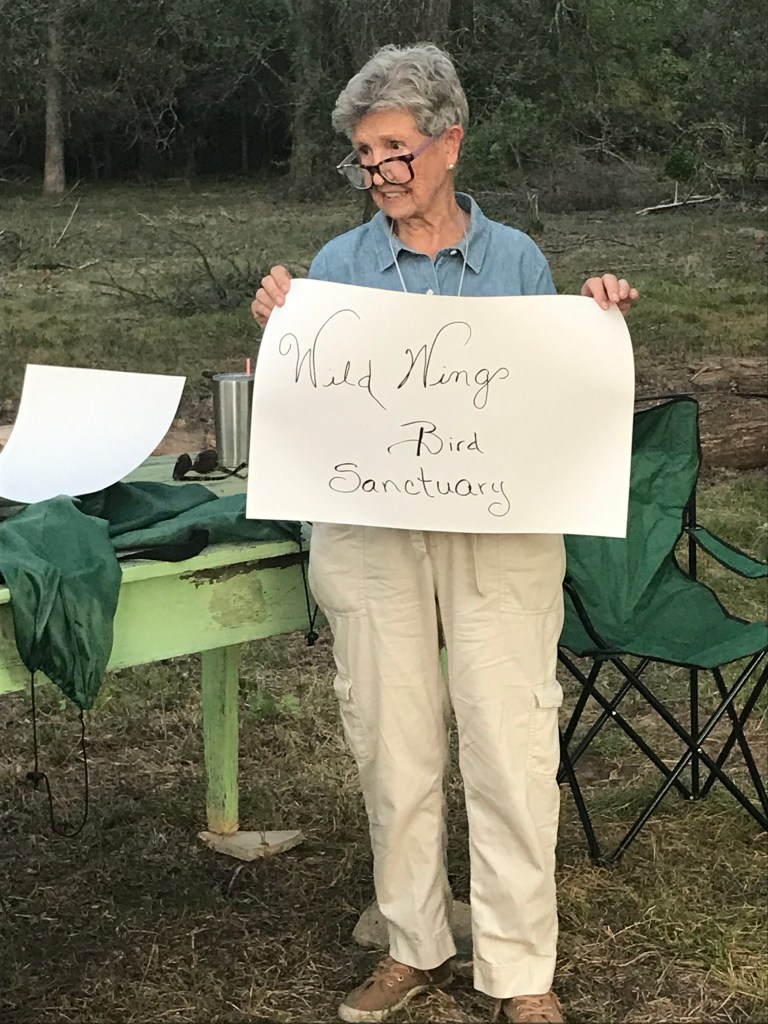
Members of the El Camino Real Texas Master Naturalist chapter, led by Ann Collins, our resident avian expert, are banding together to work on our latest project, which is an area created for the benefit of our Milam County birds that will allow for visitors to safely see and enjoy them. Ann will announce its name at an upcoming event, so stay tuned!

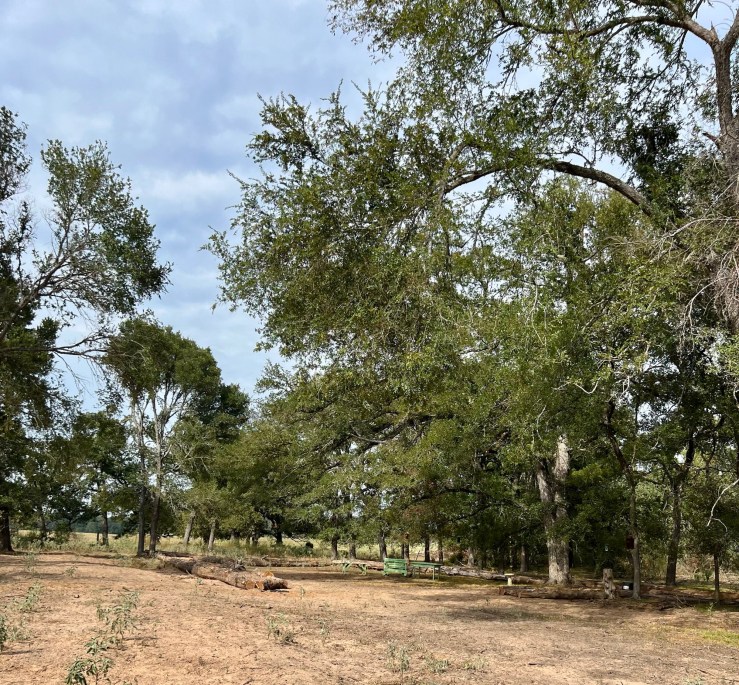
With much appreciated assistance from agencies such as Texas Parks and Wildlife and the Natural Resources Conservation Service, Gene Rek has been preparing the area that Ann selected for the station, which happens to be near the Wildscape we’ve created. Gene and his crew have built beautiful new fencing around the birding area, cleared brush and some trees to create open space, started a road that will lead to the area, with parking, too. Yaupon mulch will be used to protect new plants.

New fence and gate, and evidence of a removed tree.

There is already water running to the site as well, which will make the next stages of the project much easier.

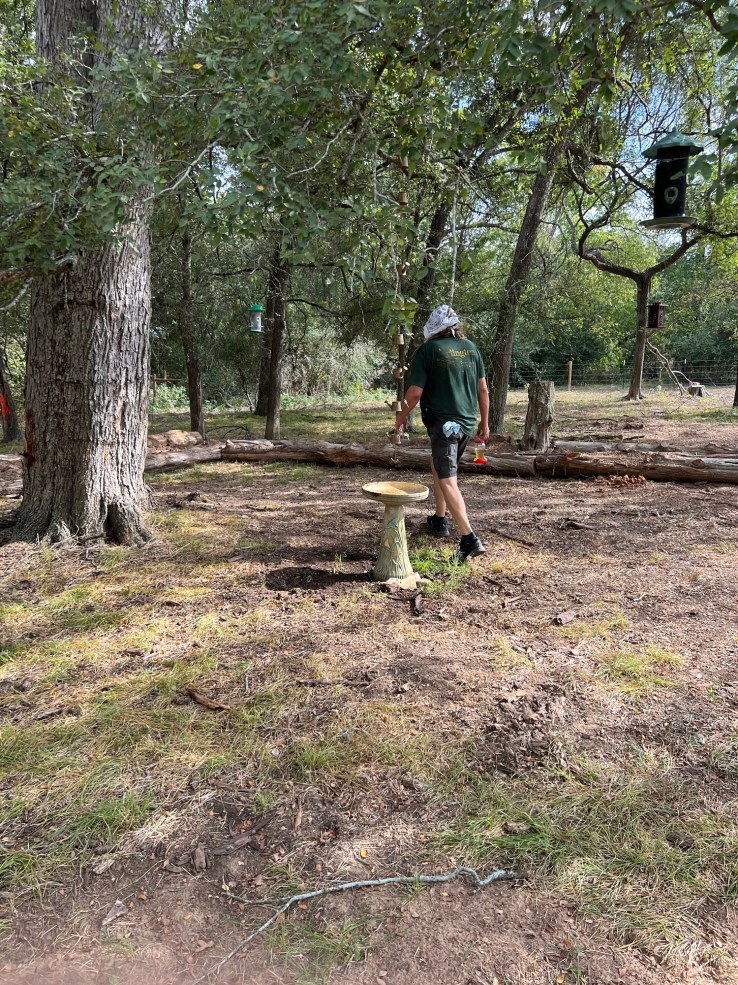
Those future plans include planting many native plants that will provide food and shelter to birds and installing water features for both birds and people to enjoy. There will be different kinds of bird feeders in addition to natural sources of food like beauty berries, yaupon, pokeweed, and nuts. Benches will also be installed (and donations of benches with backs are welcome).

The pipe in the center will be made into a hanger for bird feeders

As of now, there are large logs created from trees that have been thinned outlining the main observation area and providing seating. I was there yesterday and observed a Downy Woodpecker busily hollowing out the remnants of a broken limb to create a house or somewhere to store food. I also watched dung beetles hard at work moving a ball of cow dung to wherever they wanted it to be. As this was happening, Carolina Chickadees were feeding in the oak trees and chirping merrily, as Painted Buntings, Carolina Wrens, and a Pileated Woodpecker contributed to the chorus.

Birds seen or heard yesterday:

  • Barn Owl
  • Barn Swallow
  • Carolina Chickadee
  • Carolina Wren
  • Downy Woodpecker
  • Northern Cardinal
  • Purple Martin
  • Painted Bunting
  • Pileated Woodpecker
  • Red-bellied Woodpecker
  • Yellow-billed Cuckoo

It’s already a beautiful and pleasant place to relax and observe our amazing world. I plan to help out with the project by documenting it here on the blog and keeping a count of birds I and others observe as time goes on.

Future residents await their time to shine (AI image; doesn’t look like real woodpeckers)

Spiffing Up the Wildscape

by Sue Ann Kendall

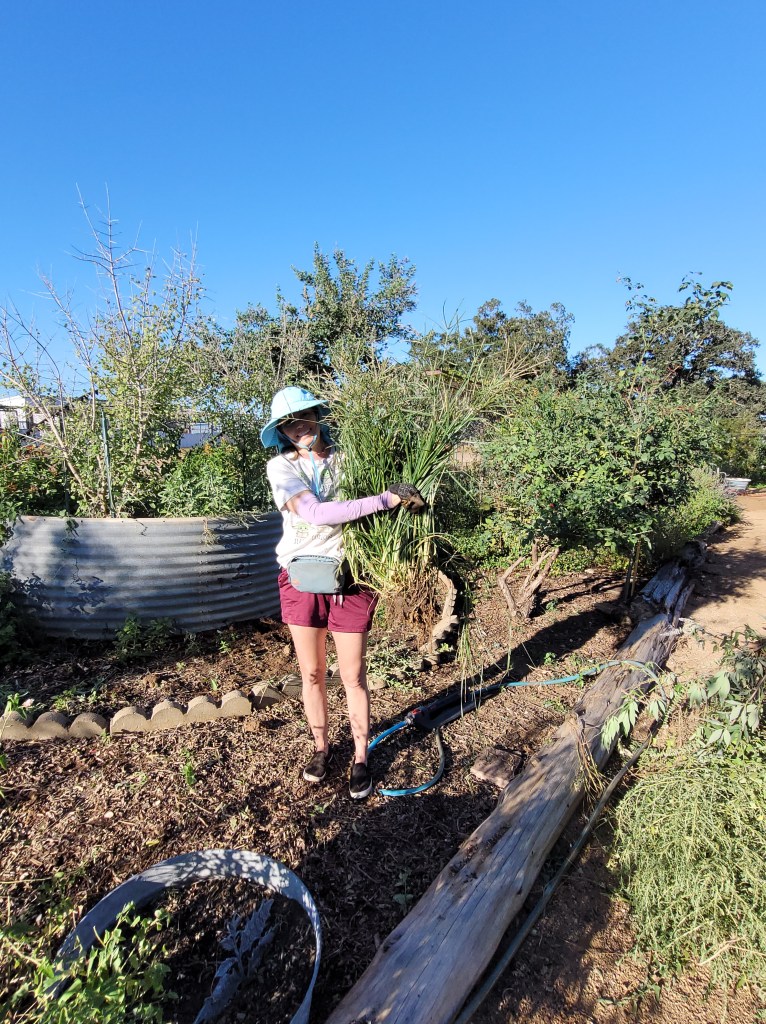
There’s going to be a big visitor event at the Wildscape our chapter sponsors, and it’s coming up fast, so the garden needed a lot of pruning, weeding, and encouraging. Members got out early this morning and got to work pulling up what shouldn’t be there (overly enthusiastic grasses for the most part) and directing what should be there to their proper spots. A lot of the roses needed encouraging!

This smells so good.

There were enough people to help out that only a little dizziness or other heat issues developed, and as always there was plenty of camaraderie.

I admit that I may have spent more time taking pictures of bees, butterflies, and other insects than pulling weeds, but I did contribute! Besides, everyone likes pictures of flowers and pollinators, right?

After we were finished, we headed to Rockdale for lunch, where we ran into Linda Jo Conn and her family. The people in the restaurant must have thought it very weird that everyone in both large groups seemed to know each other. Volunteering can be fun.

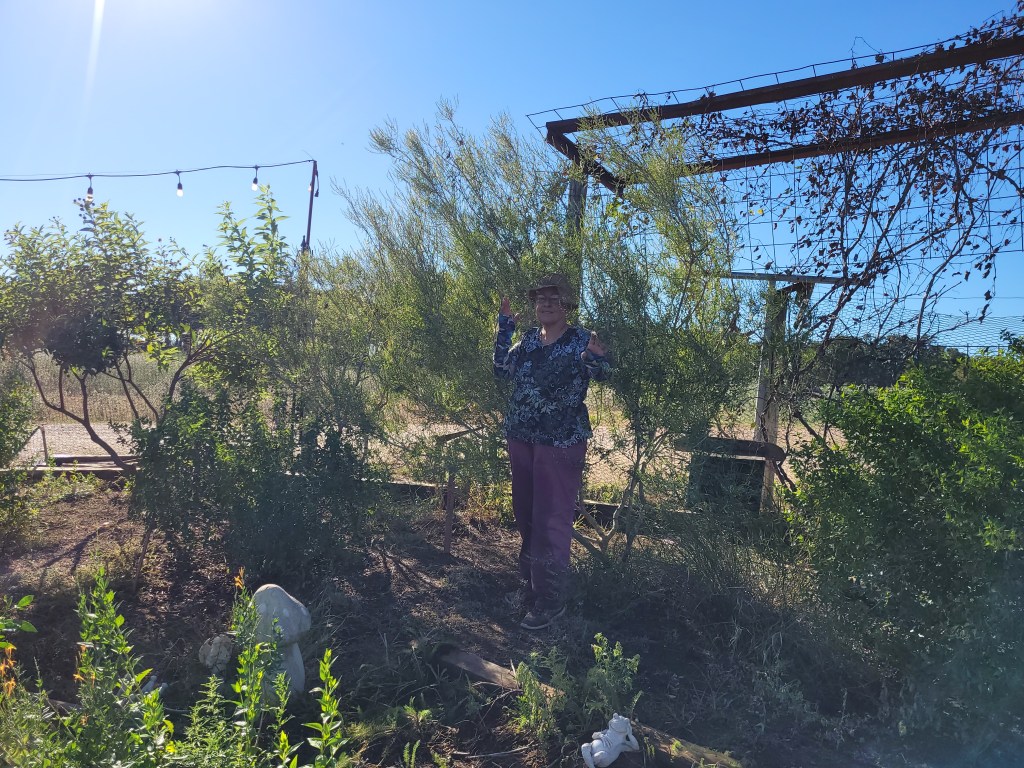
The fairy garden is being reconstructed, so here’s a totally fake one you can imagine replacing the one at the Wildscape.

4H Presentation

by Carolyn Henderson

A few members of El Camino Real chapter Texas Master Naturalist presented a program on butterflies to some 4H members on Friday, June 28. The 4H program was having a summer day camp and offered the chapter the opportunity to speak with the children. Debra Sorenson, Carolyn Henderson, Liz Lewis and Pamela Neeley presented the program on helping pollinators do their thing. 

Native Texas Flower Bed Improving

By Carolyn Henderson

Progress is being made on the flower bed the chapter voted to develop into a native Texas plot. If faces Travis Street, so those of us who are in downtown Cameron regularly have paid attention to the ongoing battle with the non-planted plants running rampant in it. 

The bed after weeding

Some might call them weeds. But, some of them are native wild flowers that tend to be invasive – in that they overrun everything else around them. For example, Persimmons are coming up repetitively all over that bed, and they are very hard to get up.

Luckily, almost everything we planted has survived and is growing. We plan to plant more things in the  fall with the hopes of all of ours overrunning all he uninvited plants. We could put poison on the interlopers, but we don’t want to risk what we did plant. Mulch is on order to be put down this week.

The photos are from work done today. Jackie Thornton and Liz Lewis, both regulars at the plot, as well as Connie Anderle and Linda Jo Conn did a lot of work on the bed today. We also had an unexpected volunteer – Ed Guerrero – who is a master weed puller. I’m pretty sure we would not have gotten the whole thing done without him.

The weed pullers

Past contributors to the project have been Catherine Johnson, Phyllis Shuffield, and Pamela Neeley. If you can pull a weed, you can volunteer. When we are done, we all go have lunch to celebrate winning this battle against those unwanted invaders.

Creating Little Nature Lovers

by Sue Ann Kendall

I had a wonderful opportunity to introduce young people (and some adults) to observing nature and learning from it. On March 9, I was invited to help a Cameron Cub Scout pack learn how to behave in parks and what to look for when you’re out in nature. We went to Chalk Ridge Falls Park, which is in Belton, on the Lampassas River, next to the Stillhouse Hollow Lake dam.

River View

The park is a great place to take young people, because the trails are wide, there are safe stairs, and there are many different ecosystems represented (riparian, woodlands, and prairie). One caution would be that children have to be supervised, because the river has carved a pretty steep canyon that is NOT fenced off. Also note that while there are stairs down to the river, they are steep and would be difficult for anyone with physical challenges to handle.

There were twelve children in attendance, including a couple of siblings of Cub Scouts. There were plenty of helpful adults, as well, so I could concentrate on finding items of interest to show them. We talked about littering and damaging park property, since this public park has a litter issue. The Scouts hope to come back to do public service by picking up trash – it was their idea!

Checking out the bridge

We also talked about trail etiquette, such as not taking things from parks and staying on the path, which about 50% of the children were able to do. One thing I need to remember in doing this kind of thing is that nowadays many children will have attention-deficit disorders or may be on the autism spectrum, so it’s a good idea to present things that they all can benefit from. I did much better than I did last time I tried this, which led to a good time for all.

Since this is a city park, they probably expect kids to climb the trees.

Once the Den Mother and I showed the Scouts a few interesting flowers, bird nests, and pollen on tree catkins, the questions began. Some of the youngsters asked great questions about what they were observing or hearing (we heard a loud canyon wren, so I could explain that the park is the perfect habitat for them). I was asked about leaves, the berries on the cedar trees, how the seeds get in raccoon poop, and so much more. I was positively impressed at how much they got into the nature thing once they got started.

Exploring the woodland and future wildflowers

Parents and grandparents also were paying attention and asking questions, and the Den Mother and I were surprised at how far we ended up going down the trail. They didn’t complain about being tired until we’d been out more than an hour. Speaking of going down the trail, the grandmother who came along was using a cane to help walk the trails. She initially said she’d just sit and wait when we went down some stairs to go over a bridge, but she got so interested in what her grandchildren were seeing that she made her way down and went the rest of the way with us. When we were finished, she said she was now ready to do squats. We got a good laugh out of that. But, that’s what being out in nature can do for you!

These stairs were in pretty good shape, though, and the grandparent made it.

Here’s what made the nature walk worth it to this Master Naturalist. One of the Cub Scouts had asked me many questions and was fascinated by flowering trees and berries. As we walked off from looking at some new thing, he turned around and ran up to me, with his little face aglow and shining black eyes. He exclaimed, “I love nature now!” He also wanted a photo with me when we left.

Here I’m showing them an oak gall

One of the young girls was also having a lot of fun. We got to the place where we were going to turn around, and some of the families had snacks. Her family had left theirs in the car, so they were going to go on back. She looked stricken and said to her mom, “But I want to stay here and continue this adventure!” I have to say I agreed with her. There was lots more to see, since there are many trails in the park.

Nice trails and plenty of resting spots

More than one parent mentioned wanting to come back and go further, without children. I think a field trip to do a BioBlitz here would be very worthwhile. I heard four types of wrens (before the children arrived) as well as other interesting birds, so it would be a good birding spot, too. Here are some of the things we saw.

I sure hope I can find more opportunities to lead nature walks. I think interpretation is my favorite part about being a Master Naturalist. I was so happy to see how much learning took place!