The second week of May brought an issue up at my house that I have not had before. Blue birds hitting my windows trying to catch insects. I was worried they would hurt their beaks and my window panes.
I tried putting objects in front of the window, placing furniture inside of the house that showed thru, decals made just for this purpose and just waiting outside to scare the birds away. All with no luck. The pounding went on all day.
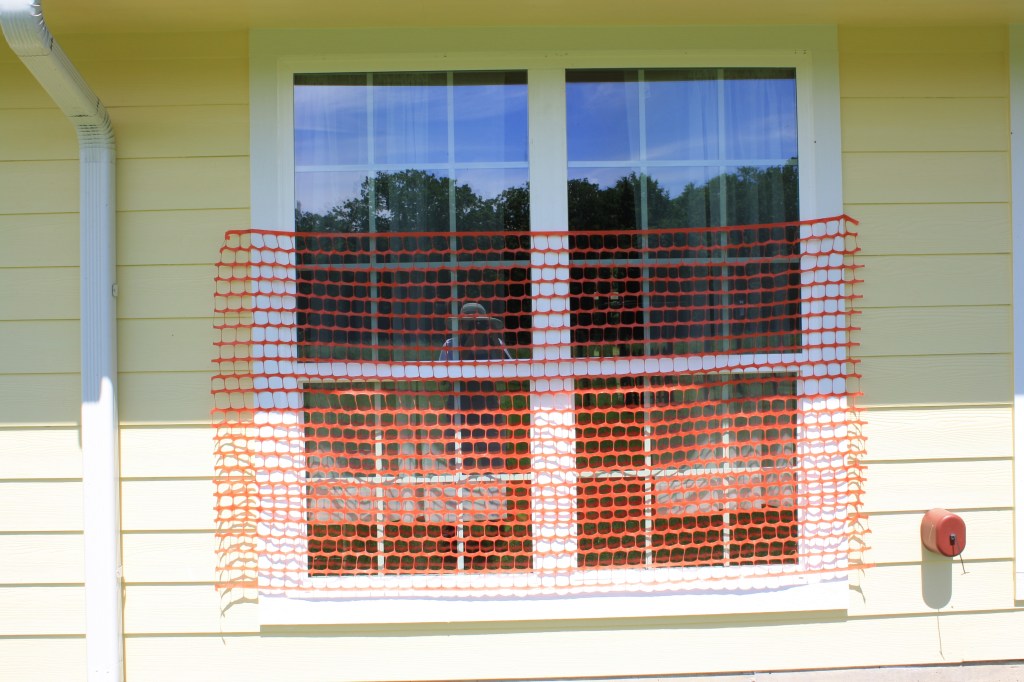
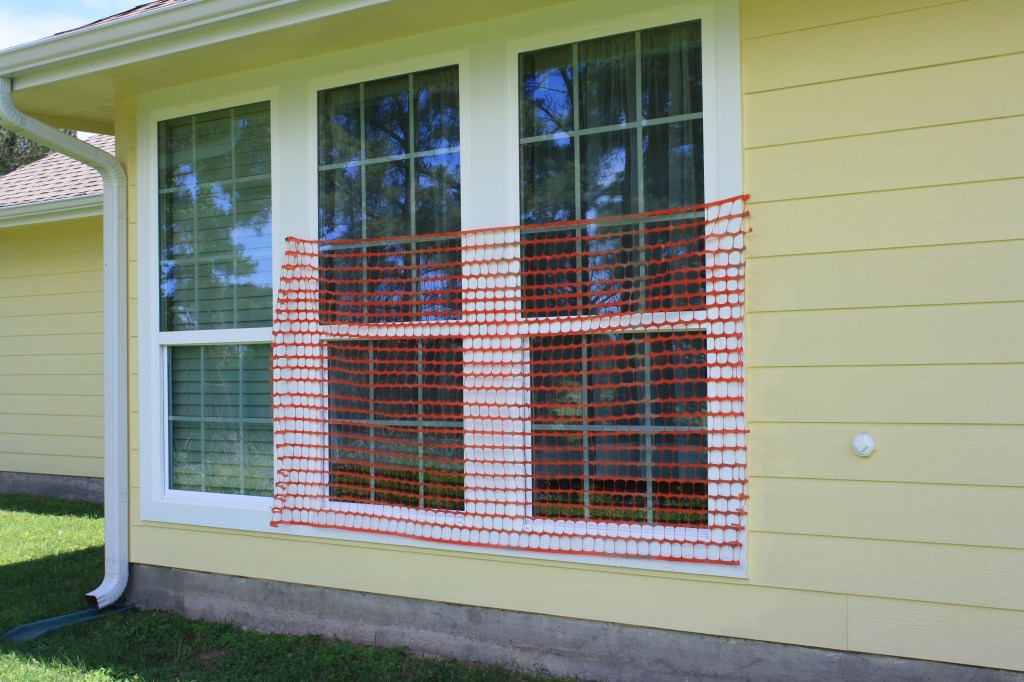
Then Linda remembered that we had saved some plastic construction fencing from when our house was built. Strong and lightweight. So we put some up around the house and it worked.
Bird Proofed!
I don’t know what was different this year that caused the birds to do this, I just hope it doesn’t happen again.
As I had finally thawed out from the Great Freeze of 2021 on March 6, I decided to try my hand at feeding bees and butterflies. I was short of old beaten up pans as shown in a previous teaching segment here, because my children take stuff every time they move in and out. I went to Brookshire’s, where I happened upon purple and green plastic deviled egg platters. I thought maybe the colors would attract the bees and butterflies. I bought two, and I threw in a disposable aluminum pan just in case silver is what they prefer.
Turtles basking in the sunlight at Orchard Park, Cameron.
On March 7, I mixed sugar water at a 1 sugar to 4 water ratio. (I specify this in case it is incorrect and can be noted.) I placed rocks from my yard that I had washed into all three containers. I put cut oranges in the silver pan with rocks. I poured the sugar water over the deviled egg platters and a little in the oranges platter. I placed them at different places in my yard.
On the morning of March 8, I discovered that my sprinkler system had gone off unexpectedly. There were no bees, so I assumed the sugar water had been diluted from the sprinkler.
On March 9, I drained the old watered down sugar water, and put in fresh sugar water. I added small sticks from my freeze- damaged trees. My cat started drinking it. I moved them so the sprinkler system could not reach them.
On March 10 and 11, nothing happened except the cat kept tasting the sugar water.
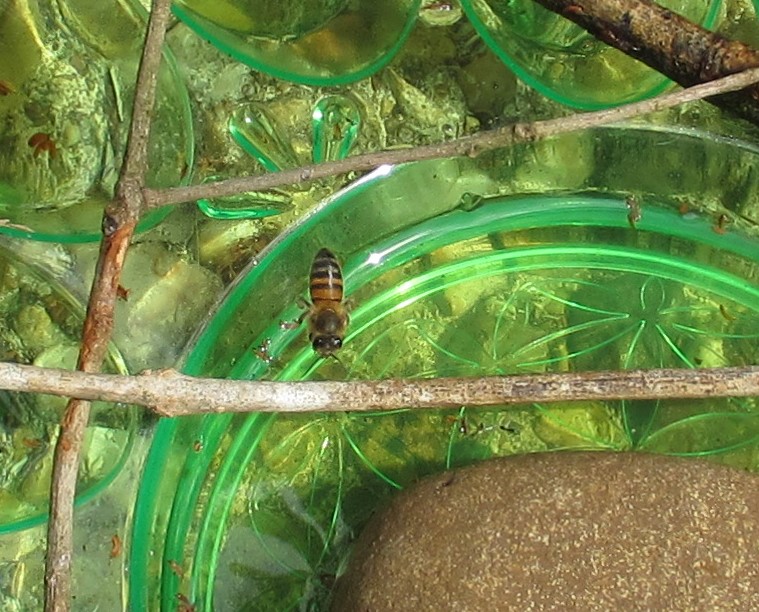
Eureka! On March 12 at noon, I found one bee drinking from the green platter. And one cat. And some ants. On the 12th, it had been pointed out to me that things are starting to bloom and the Monarchs are moving north despite the freeze, so unsaid person was pretty sure that the bees and butterflies would survive without my sugar water.
My one bee visitor
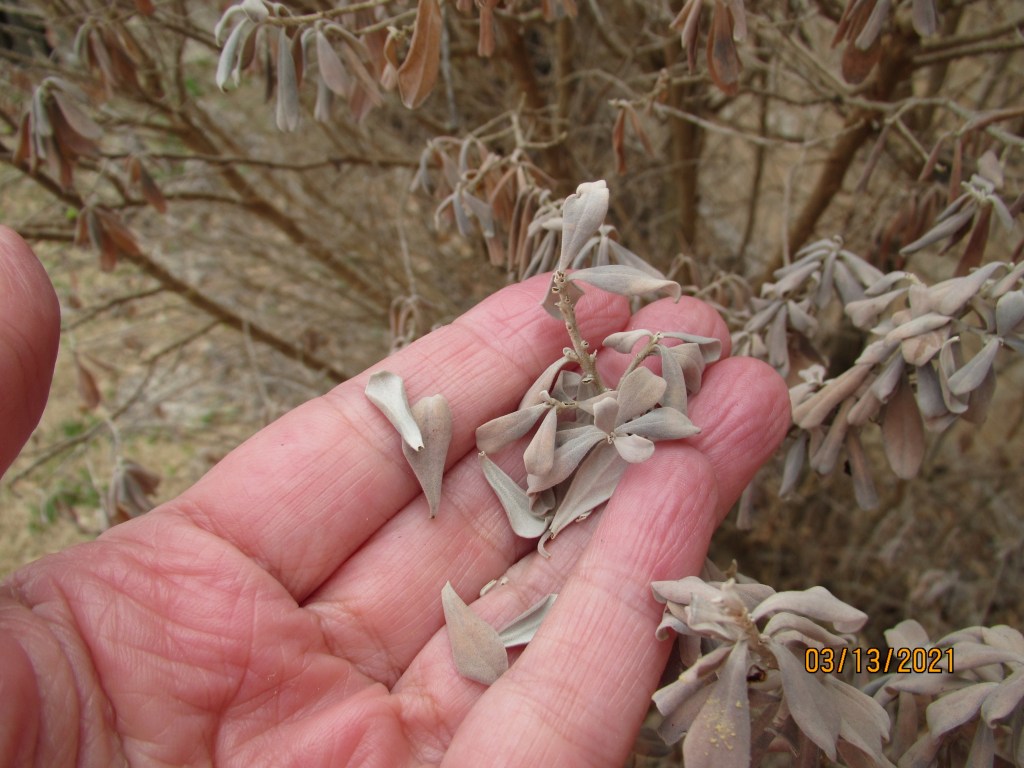
On March 13, there were no bees or butterflies, so I bought flowering plants at Lowes. I had already bought quite a few to plant at the Master Gardeners Sale the previous weekend. I don’t know if the bees will come, but at least everything won’t be brown in my yard. I even noticed that My large Texas Purple Sage, which looked like a goner from the freeze, was putting out new leaves while it still shed the dead ones.
The Sage sprouting new leaves at the same time it was shedding the old leaves. The Texas Sage is an evergreen – normally.
The Texas Sage shedding copious amounts of dead leaves.
Maybe bees and butterflies aren’t attracted to plastic deviled egg platters or oranges, or maybe all my neighbors had also been seeing the encouragement to feed bees and beat me to them. Maybe they found those plants that were already blooming.
I did look up the topic of cats drinking sugar water. It is not deemed particularly harmful to them, but, oddly, it is also noted that cats can’t taste sweet. I guess the cat just needed a drink of water.
From Suna: I did a much stronger sugar solution, 1:1, and had lots of bees. Then I read the sugar water wasn’t great for them, so who knows if I did any good or not?
Bees in very sugary water, crawling on various things Suna put in a shallow vessel.
I was asked to show the progress of my pollinator garden as the year goes on and to say a few things about what I do as it goes forward.
Bonus dog!
As you can imagine, I can only mention a few things, because gardening is an ongoing project every day. Each year the garden is different. Sometimes Mother Nature supplies plenty of water and wind born native plant seeds. But sometimes she decides to hold on to her precious water. You must be observant.
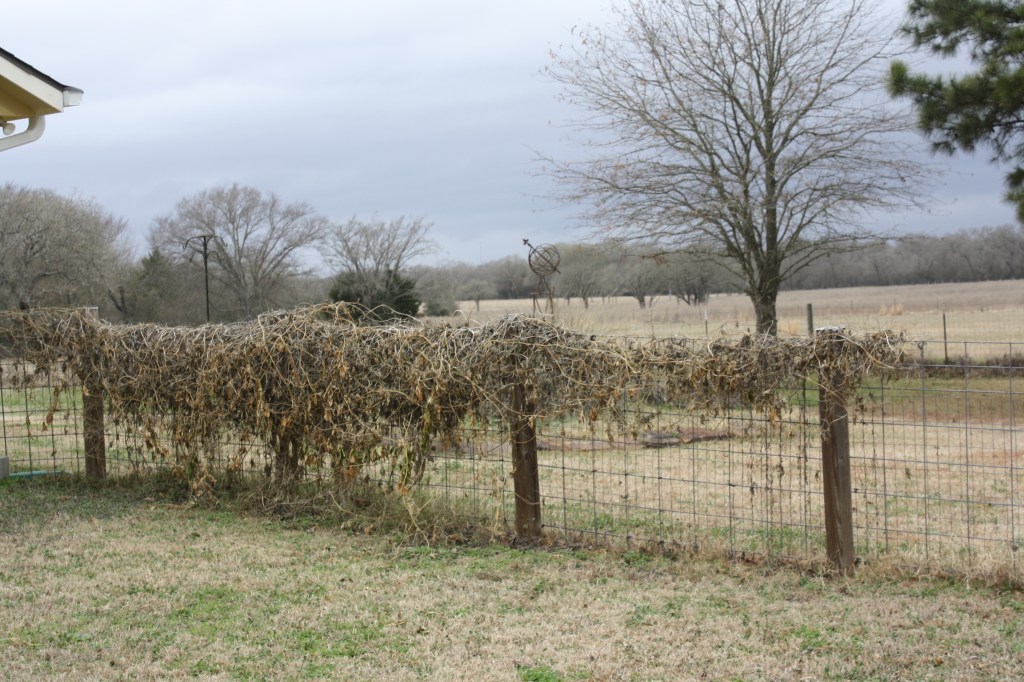
Sleepy vines
Just the water alone can determine what plants will be successful.
Right now the garden is asleep, as it should be. The leaves protect many things beside the plants. They are the blanket that keeps things warm. There are butterfly chrysalis that stay there until Spring tells them it’s time to wake up. So, removing the leaf litter too soon can steal from the garden the very animals you are hoping to see. Timing is everything!
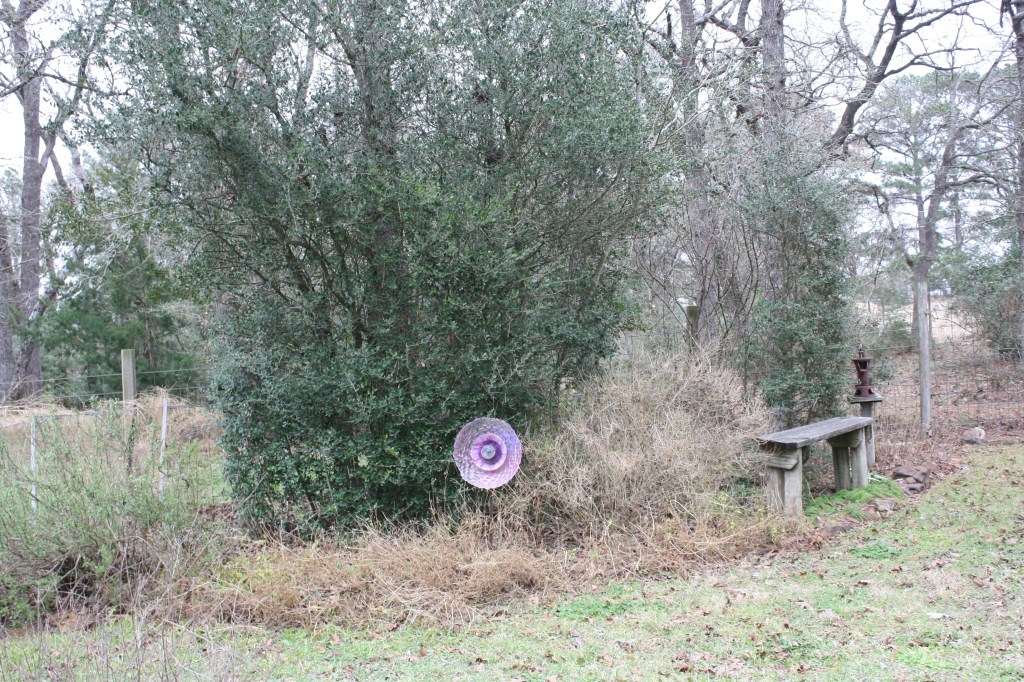
Leaf litter is on duty.
Is there a rigid rule that I use to know when it’s time to clean up the garden?
NO!!! If I knew that I would be famous.
Keeping the good kind of litter in its place.
I usually start now to just tidy up a few things. Nothing major. We all know that the last freeze has not happened, and we don’t know when it will.
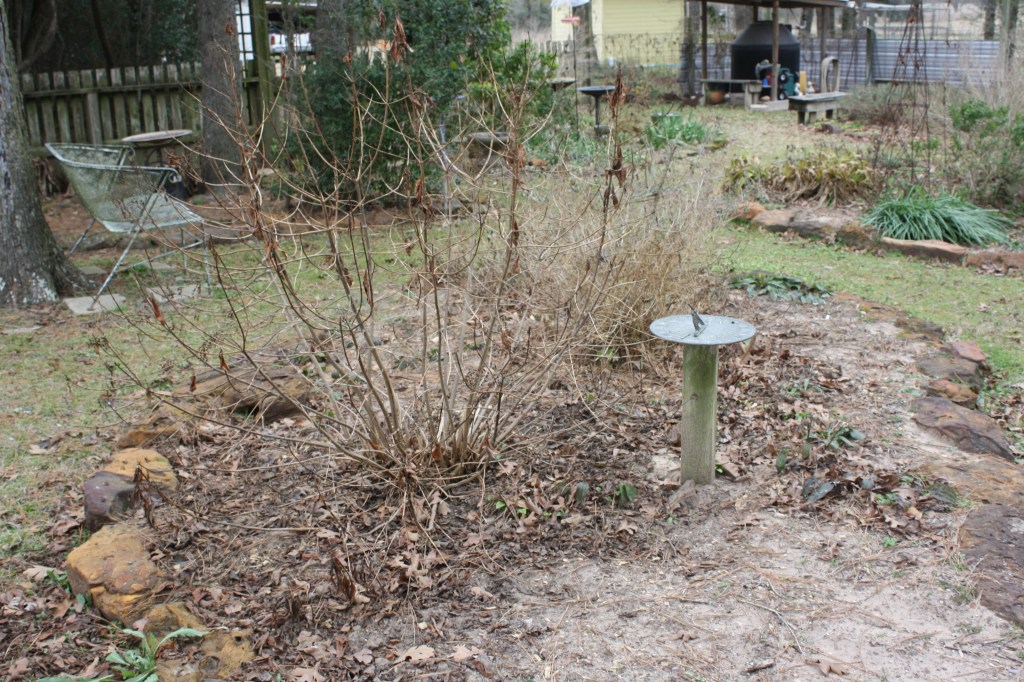
Last year’s stems.
I had to pick up the mess the storm left just a week ago. Many limbs and bushes were broken. I cleaned all that up and removed it.
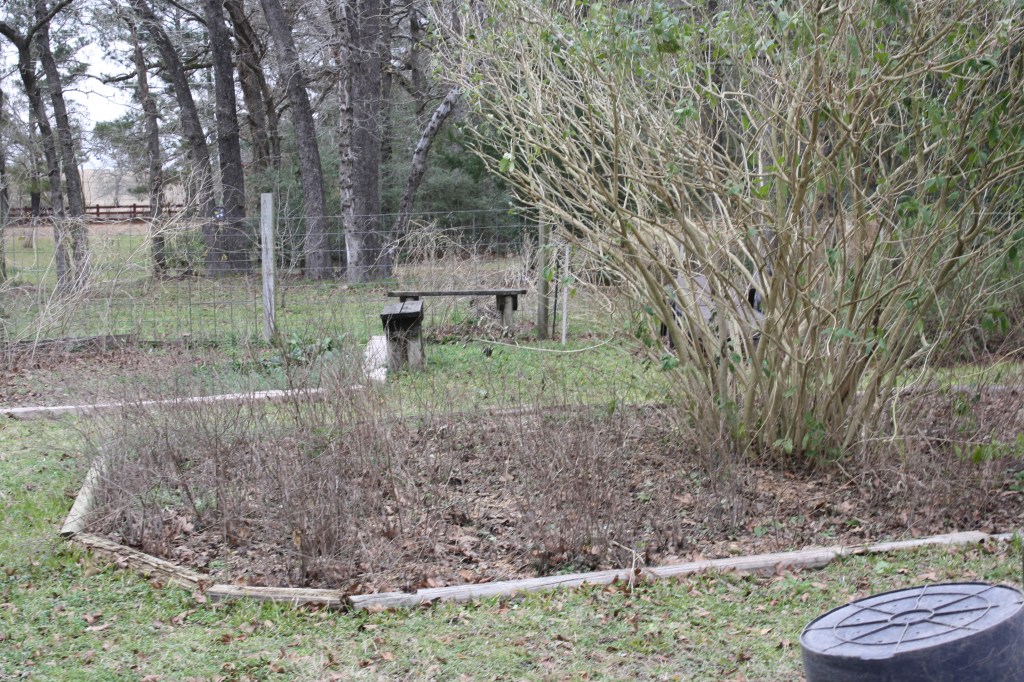
We’ll see what comes back in this circle!
In January, as in all months, you want to keep the water sources for your birds clean. My bird feeders are not inside the garden, but just outside it. That keeps the seed debris, rats, and feral cats from living in the garden.
Lots of water options
Soon as it warms up, I will begin to see what vines, bushes, and plants are reborn. Some gave their life for the garden last year, and I will have to reseed or replant them again. The real miracle of gardening is about to start again.
A great place for birds to hang out.
Is it a lot of physical work? Yes it is. But, to me nothing you love to do is really work. My goal as always is not just to have a retreat to renew myself, but to help the wild things that share the planet with us.
I always try to learn what they need, and that’s what I put in the garden.
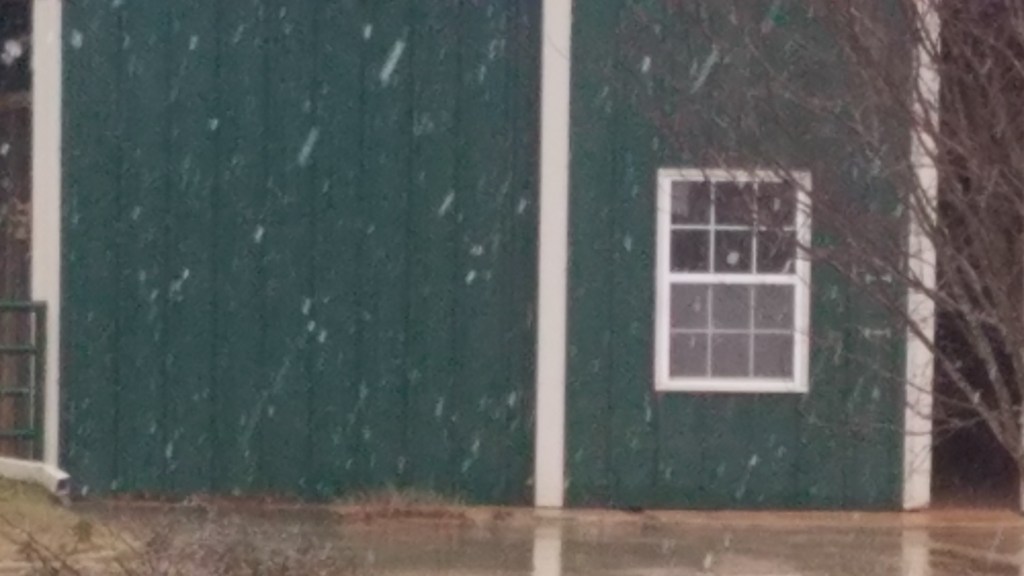
[From Sue Ann: it’s snowing in Milam County today, so we may get a few snow reports. This one came first, with beautiful birds!]
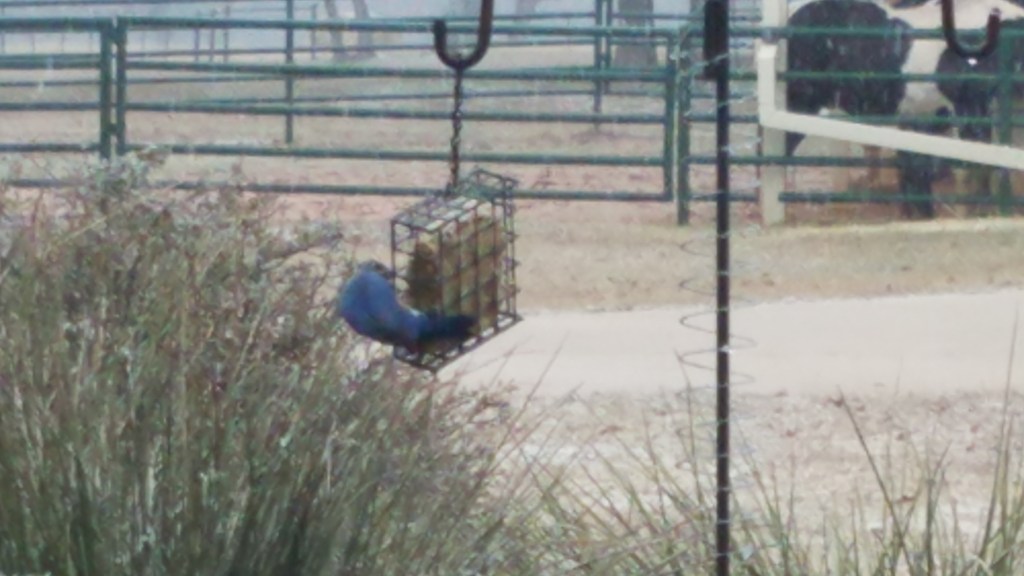
Snow coming down, bluebirds, chipping sparrows, yellow rumped warblers, pine siskin, orange crowned warblers and more enjoying my home made suet blocks (recipe on web site and on the blog here).
Barn snowWoods snowHappy birdsMr. Bluebird loves Cindy’s suet recipe.
After years of putting in a garden and many hours of chopping, watering, preventing hogs from getting in the garden, droughts and then too much rain, we decided it wasn’t worth it. Some years we had an abundance of green beans, black eyed peas, squash, and okra, but not enough to outweigh all the work.
Then on September 12, 2019, I attended the Master Naturalist meeting and the presentation was on Keyhole Gardening. “WA LA!” This may be our solution, I thought. I purchased the book, Spoiled Rotten ,by Deb Tolman, Ph.D., and began gathering materials for our garden. NOTE – my husband thought I was nuts!
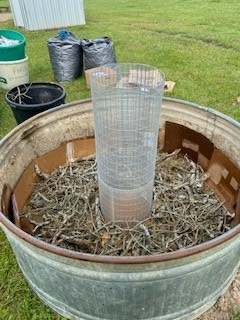
Here are my steps (photos of the stages are below):
We used an old water trough, cut the bottom out and put galvanized small wire in the bottom to keep gophers out.
We made the keyhole for composting scraps out of wire and wrapped it with old window screens. The purpose of the window screen is to keep the roots from going into the keyhole while allowing the nutrients from the compost to feed the plants.
Added a layer of rocks over the wire for drainage.
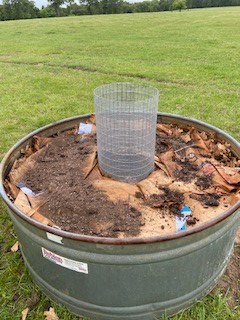
Then alternated layers of sticks, wet paper feed sacks, dried cow manure, wet cardboard boxes, blue jean (cotton) scraps, and paper. It took more materials than you would think!
The top 8 – 10” is bagged garden soil. TA DA! You could use your own soil but ours isn’t the best – clay and sand…
Building the keyhole garden
Our spring garden was not as productive as we hoped, as there was not enough time for the compost to supply the nutrients for the plants.
This fall, I worked in bags of Miracle Grow (shhh…it’s all supposed to be organic) to help give the plants a boost. Next spring, we will work in some chicken manure and compost from the Bird and Bee Farm or the mushroom compost from the Madisonville area!
Finished fall garden
We’ve got lettuce, broccoli, cauliflower, carrots (just coming up), brussels sprout, mint, one pepper plant, and a rogue cantaloupe from the spring! Delicious! And it’s so much easier than the traditional garden.
My husband thinks we should do another one in the spring, as he’s got another water trough with a rusted holey bottom. He realized that I’m not as nuts as he first thought!

















 Nature Along the El Camino Real