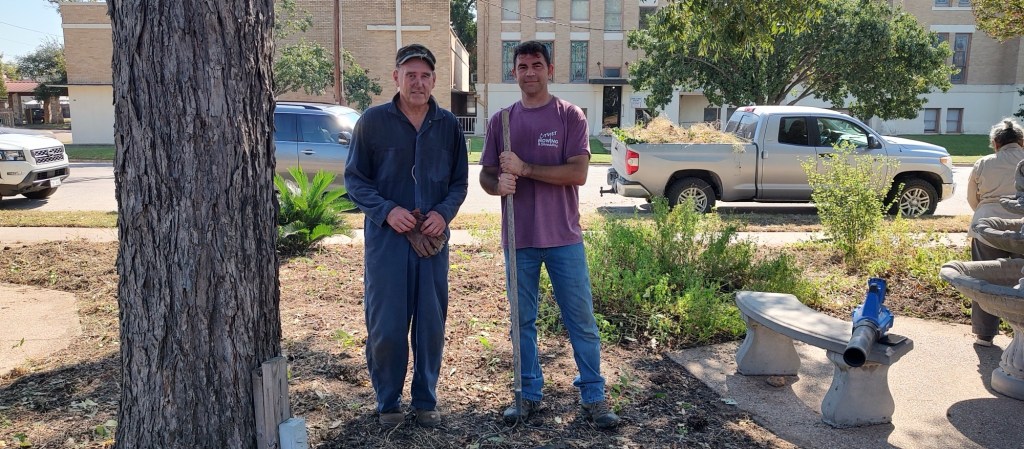
A small but intrepid group took on the fight of the non-native, invasive plants in the Wildscape – again. Chad Cryer, Alan Rudd, Liz Lewis, Phyllis Sheffield, Pamela Neeley and I implemented a new method to attempt to get rid of the seriously invasive persimmons and Tree of Heavens.
Small but mighty
I would call it isolated poisoning. Chad clipped the multitude of pomegranate trees, many that had managed to reach at least 5 to 6 feet this season. Alan then put a tree poison only on the cut limbs. We cut them back in February. Alan had already done it to the Tree of Heavens that weren’t as numerous.
The invasives elimination committee.
We put all the limbs in Alan’s pickup bed. The pile stood taller than the truck cab.
We also fought off the Tievine that had totally covered the Gulf Muhly grass among other things. We also removed the other invasives in the Wildscape. A good deal of what had been planted was there, but scraggly looking from being overshadowed by all of those. It knocked out a few completely.
The weeding committee
We vowed to be back in two weeks to evaluate our efforts.
Here are some pictures from our trip to Red Mountain, where we prepped for the Tonkawa Powwow and did some trash pickup. What a spot!
Getting ready to climb
None of us had climbed the mountain before, but when we spotted some ribbons on trees, we figured that was our cue to start climbing.
Climbing
Let’s just say it was more of a challenge than we bargained for, but we all reached the summit. The kicker? Those ribbons were actually indicating where a trail was supposed to go. Who knew?
Anyway, our detour led to some neat discoveries, like some clay handles that could’ve been part of ancient clay pots. I took some photos and left the artifacts in place for the ongoing archaeological dig.
This may be a fossilized gourd in a rock!
Being a Texas Master Naturalist is a real treat, and our crew is fantastic. Love it!
Around the farm, I have all kinds of lazy water features. Let’s take a look!
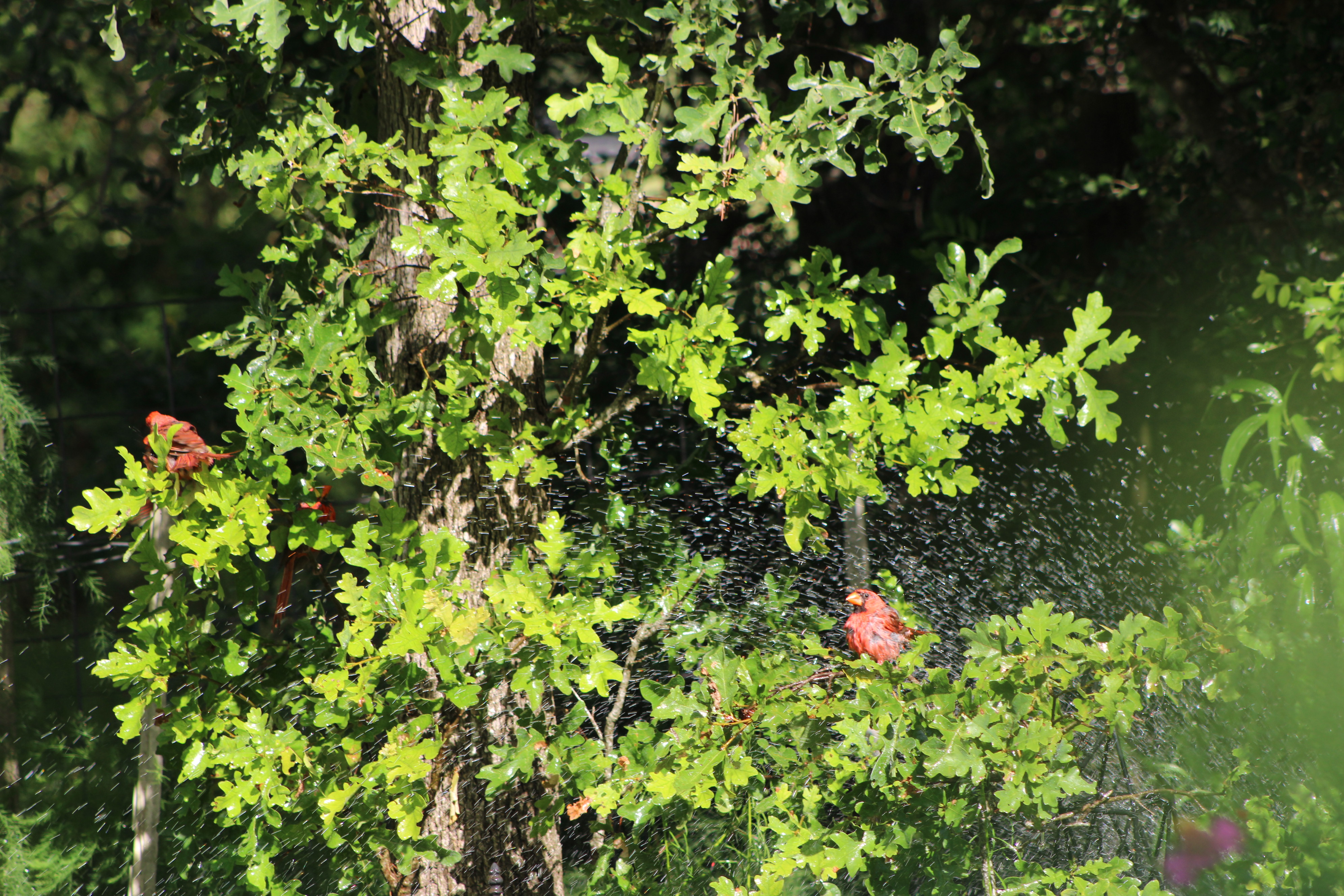
This one has a drip from the faucet keeping it full and the water moving. Even large birds, cardinals, come here for water.
Here’s another lazy water feature. The solar fountain keeps things moving. The plant is rooting in a convenient terracotta strawberry pot. Also there for fish “enrichment” I put water hose into a pot when topping it off so the water movement doesn’t create mucky water. The fish are doing well and get fed pellets or mosquito larva from nearby sources.
Lazy water source is by the back door faucet. Shallow kitchen container with shard and pot in corner. When there is a fish, they have a place to hide under the shard. The pot provides extra climbing surface so the toads can get out when they find themselves in here. When mosquitos build up, I move a fish over here for a day. The faucet drips into the container when I’m watering around the house.
This large lazy water feature container is not set up right now. I have an electric ceramic fountain, usually 6-8 fish, and a water plant – this is an arrowhead. When set up it creates the pleasing sound of running water, but being under an oak tree presents problems with leaves.
The next lazy water feature is a plant container from a big box store. There’s a pottery shard for fish to hide under, and a pedestal for the water plant and solar fountain. This solar fountain has legs to keep it from hugging the wall and emptying the water on to the ground. I’ve lost one leg, so water escapes regularly.
One happy fish, pedestal for plant on pedestal – but too hot right now.
Fountains do need to have algae and minerals scrubbed off top to keep it accepting sun power. It’s a very low tech, not too expensive way to have fountain, fish, and a water feature. Just use what you may already have. Solar fountains range from $12-15 on line.
And finally, here’s another low-cost water feature at night. There are two toads enjoying the water at 10:30 pm. One is partially on the solar fountain and partly on the rim of the submerged terracotta pot. He won’t drown.
Once again, we are breaking records for the heat here in Texas and the world.
I think that this is the new normal. My opinion…
So, there are a few simple things we can do for the wildlife.
One, we can provide water for them. It can be more important than food.
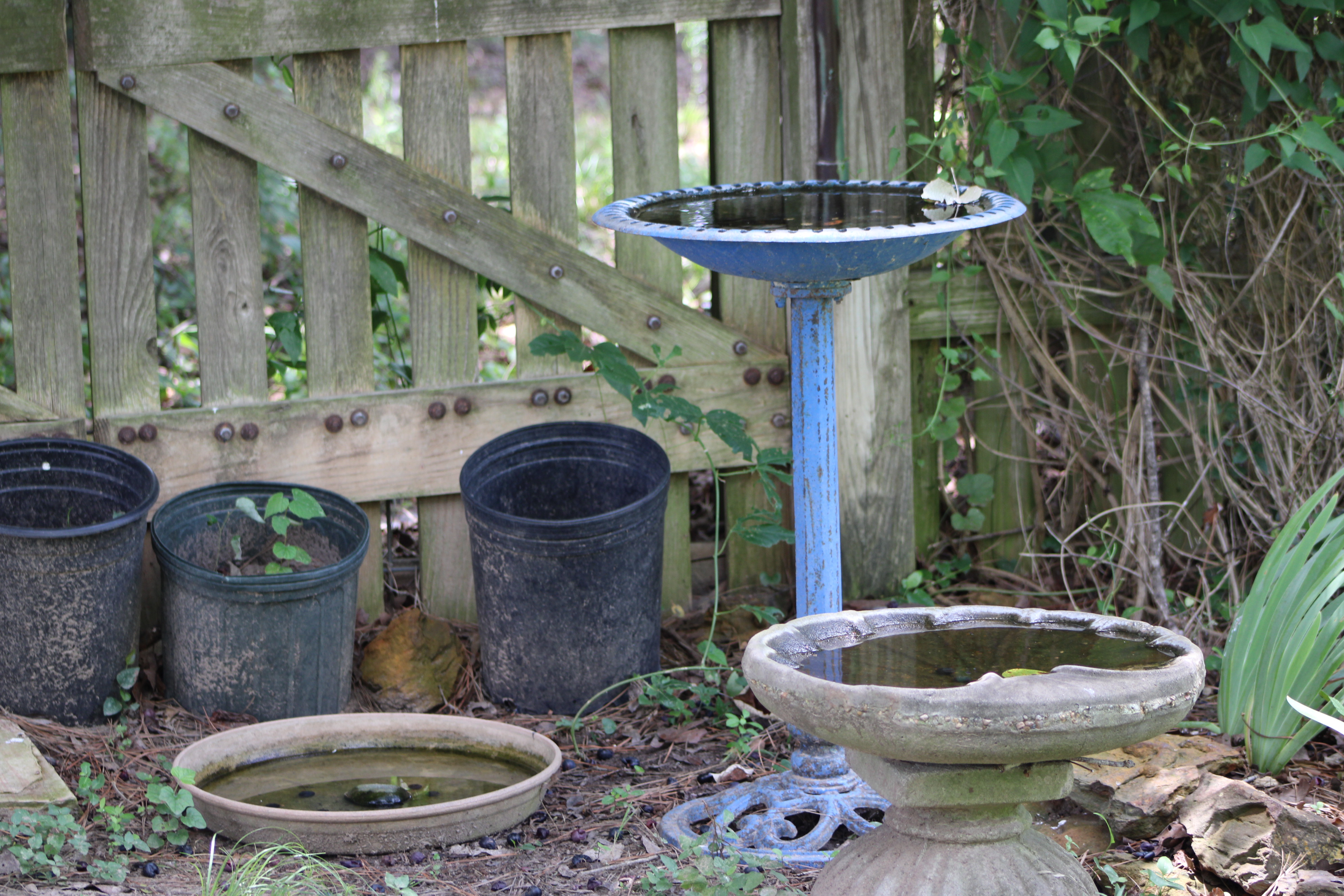
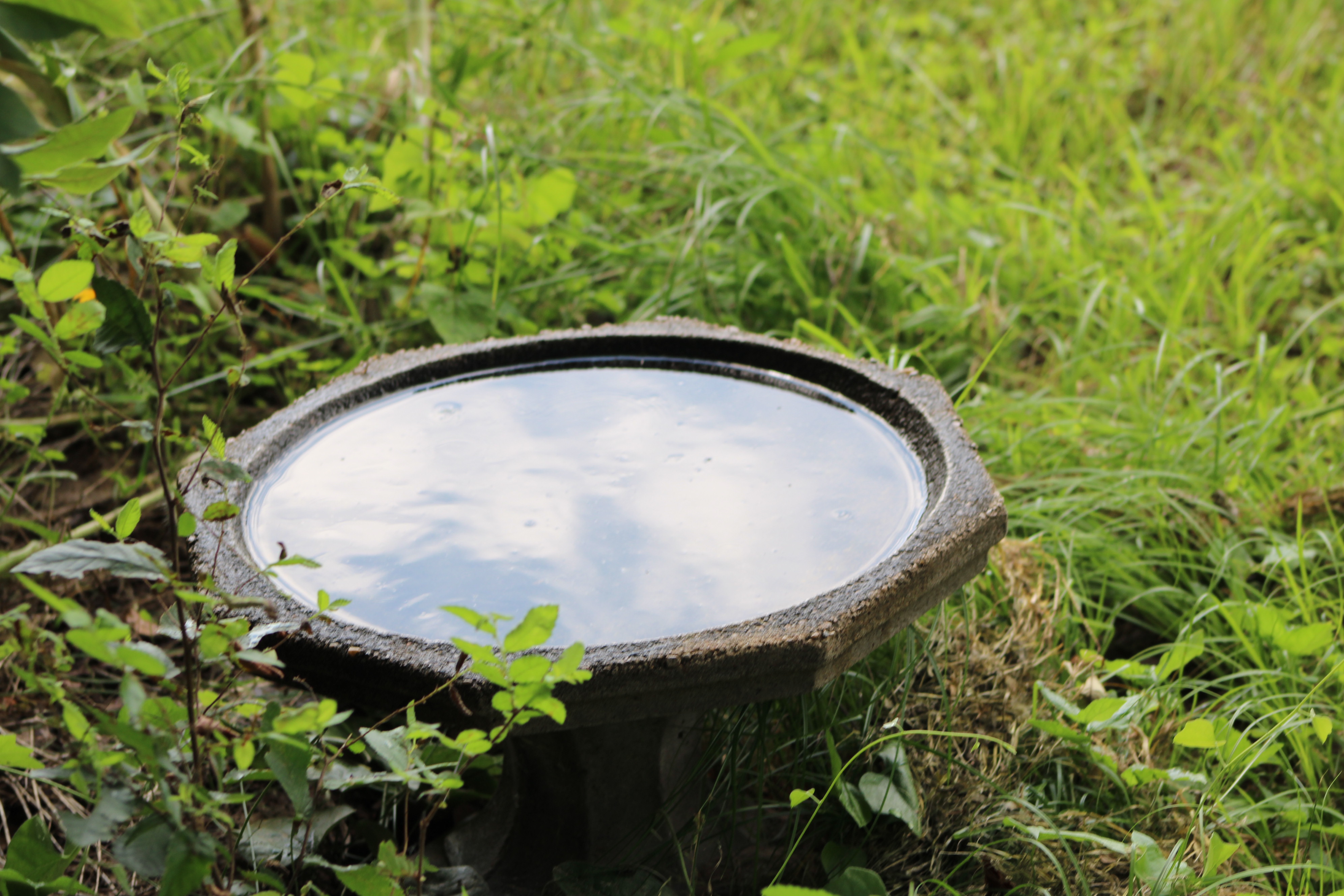
Containers that are not too deep are best. Place the containers under some shade if possible. Dump old water out as often as you can, and put fresh water in. That will keep the mosquitos to a minimum.
Birds need a perch of some kind to feel safe. There are lots of things you use for this. You can use cow panels, trellis, and old tree limbs. Be creative.
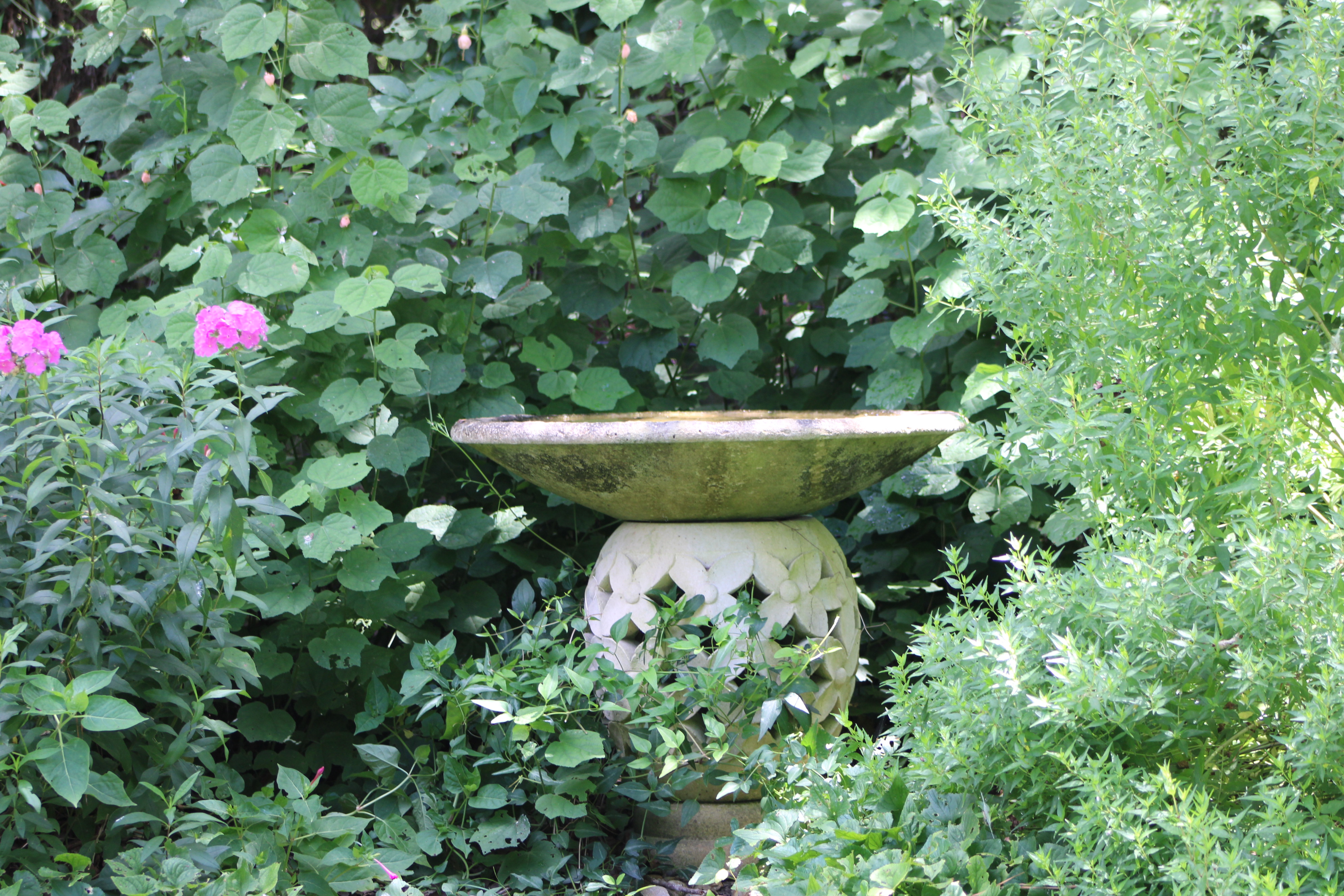
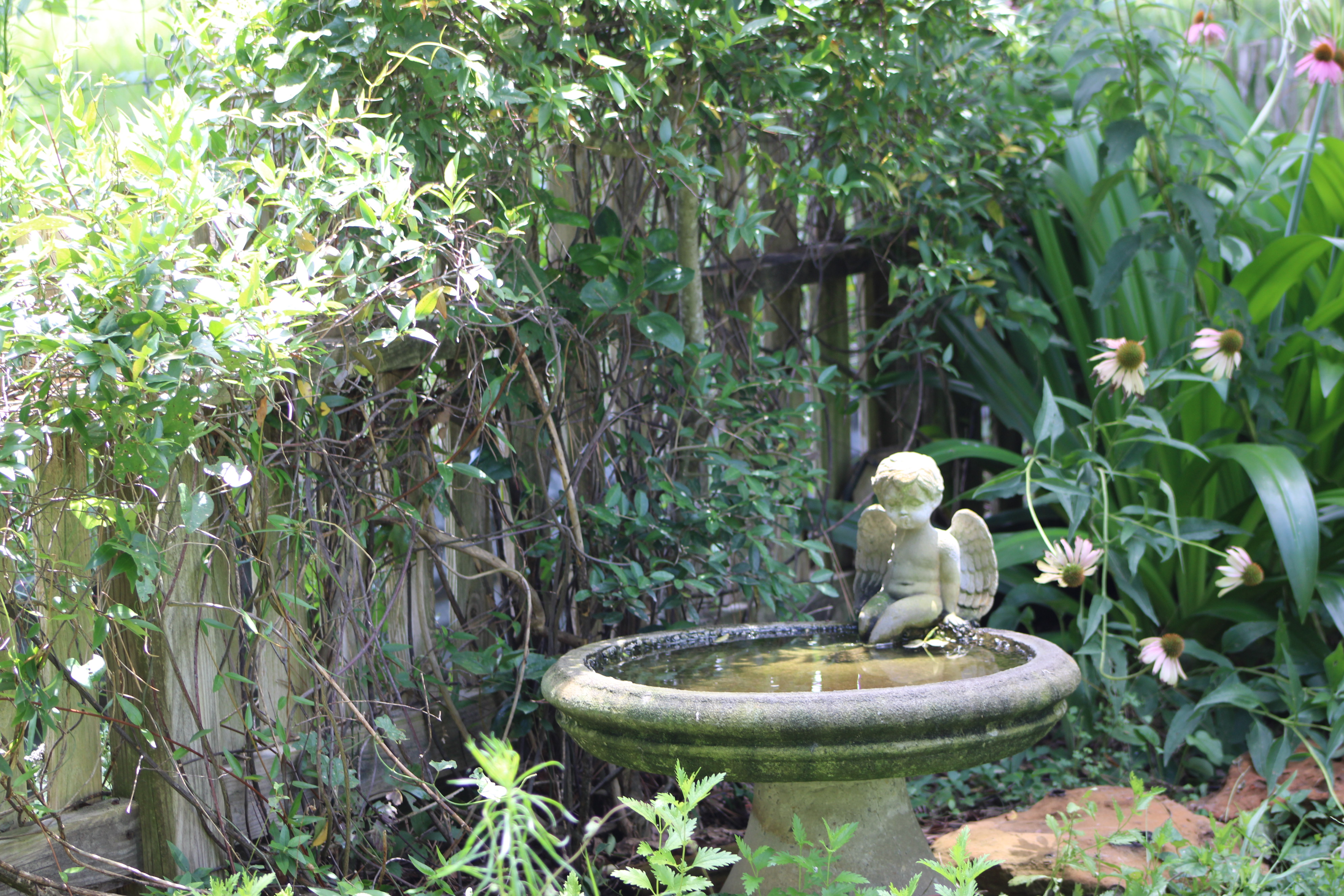
Here are a few photos of water containers I use.
I also put the sprinkler on for about 30 minutes each day. They love that.
You will find many birds, mammals, and reptiles drinking from the water you provide.
I’ve been using Merlin Bird ID since last summer to identify birds I hear. I’d used it before to identify birds I saw, but once I started the listening exercise, I was hooked. It’s such fun knowing what I hear around me, and it’s great training for birding without the app. My ability to identify birds by song is hugely improved. Plus, knowing what’s out there helps you know what to look for if you want to see birds.
Merlin interface.
Cornell Labs has done an amazing job developing this app, which you can download from the App Store in whatever kind of phone you have. I can’t imagine how much work it has taken to train the listening app on the sounds of all the birds around the world (you can get Bird Packs for wherever you happen to be).
I got Europe because I keep getting those weird IDs and wanted to read about those birds. Mexico is because I go to South Texas sometimes.
I’ve learned a few interesting things about Merlin that those of you who use it or are interested in giving it a try may benefit from.
One of the most common birds I hear.
1. Merlin will not identify domestic birds. My chickens can walk right in front of the phone and nothing registers. It also completely ignores my horse trainer’s guinea fowl, and didn’t pick up the turkeys at Bird and Bee Farm. However, it has identified wild turkeys, so I think the turkey thing was a fluke.
I’m a bird!
2. The app has trouble with birds who make sounds that are low in pitch. For example, it needs most doves to be really close in order for it to register them. Collared doves make a higher sound that it identifies more easily. And you have to be on top of an owl for it to be picked up. In the past week, I’ve heard entire owl conversations that didn’t get “heard,” both of barred owls and great horned owls. That’s why it pays to also be able to identify birds with your own ears!
I’m so subtle.
3. Crazy things can happen after a recording is interrupted. Two things that happen to me often will interrupt a recording: the phone ringing or me accidentally starting a video rather than taking a photo while the app is running. You can usually save the recordings, though I have lost a couple.
However, I’ve found that if I start the listening function again after an interruption occurs, Merlin’s decides I am not only in North America, but I’m also in Eurasia. I will be informed that I hear a great tit or a European robin, which is highly unlikely!
So, if you suddenly get an identification of a bird you’ve never heard of, be sure to click on the map for that bird, to be sure it has actually been seen in your area. Sure, occasionally birds are blown off course when migrating or after a storm, but most European birds stay in Europe (other than our biddies the house sparrows and starlings, of course!).
My husband’s haiku: Porch sparrow drama – fussing, fighting – very loud What are they saying?
4. Moving around is hard on Merlin. The app works best if you are standing still (or the phone is sitting on something) and the environment is not noisy. It’s amazing how loud you are walking on a trail or around your property. I live in the country, yet I realize now that it’s loud here. Loud farm vehicles and trucks, single-engine planes practicing their takeoffs and landings at the nearby tiny airport, our six dogs, the pool pump and waterfall, and air conditioning units all contribute. When camping, screeching children on trails and boats are hazards. So are waves, believe it or not. But if you stay still, Merlin’s does a pretty good on anyway.
Savannah sparrows looking for bugs
When I’m out walking, I usually pause if I hear an interesting bird, so the app can pinpoint what it is. My exercise app on my watch hates that.
Merlin Hints
Save fairly often. I try to go no more than 20 minutes or so before saving a recording unless there’s some great bird action going on. That minimizes your losses if the app crashes, which does happen occasionally.
Remember to report interesting birds you hear or see to Cornell Labs. It goes to e-Bird and provides useful research data. I don’t report every sighting. I doubt they are interested in the fact that I see vultures and house sparrows every single day. You can also upload photos. Occasionally I get one good enough to share.
Have some fun with the app and do your own research. I’m tracking what birds I hear at my house each month. It’s letting me know which birds are winter birds, which migrate, which show up in summer, and of course, what’s here all the time (vultures, house sparrows, cardinals, chickadees). Be sure to report each new bird you hear, so your life list on Merlin can grow. I have 192 birds since last September. Majestic that 193. A marsh wren showed up today. That includes birds I’ve seen while traveling, too.
Yep, we are in their range.
Conserve your phone battery. To make my battery last longer when on long hikes, I don’t keep my camera open at the tame time Merlin is running unless I’m actively taking pictures (remember, I also obsessively record plants and other life for iNaturalist). If I were planning to go out for a long time, I’d take a spare battery. I tend to run out of juice after around three hours.
Don’t become annoying. I have developed the habit of shushing people who talk when I’m “listening” through Merlin. I’m sure it irritates my spouse. People are important! I also don’t even TRY to use the app when on a group hike unless I hear something really cool and go hide to try to capture it. I was hilarious at the National Butterfly Center last October, as I lagged behind the Master Naturalists trying to hear exotic Mexican birds. I also find myself trying to be extra quiet any time I’m outdoors,because it’s become a habit. I whisper answers to questions and such. I am working on fixing that before my family stope talking to me.
I hope you get something helpful out of these hints. If I’m wrong about anything, let me know. Also, if you have additional insights or hints, tell me and I can add them to this blog post. I’m still learning!
Flowers attract insects that attract birds.
By the way, I’m not claiming Master Naturalist VT hours for any of this, since it’s on my own property most of the time, and that doesn’t count. I did count my time during the Great Backyard Bird Count, since that’s approved. I don’t claim hours when I’m camping or traveling, since I’m also usually making iNaturalist observations at the same time and don’t want to “double dip.”
[this is a revised version of a personal blog post]






 Nature Along the El Camino Real