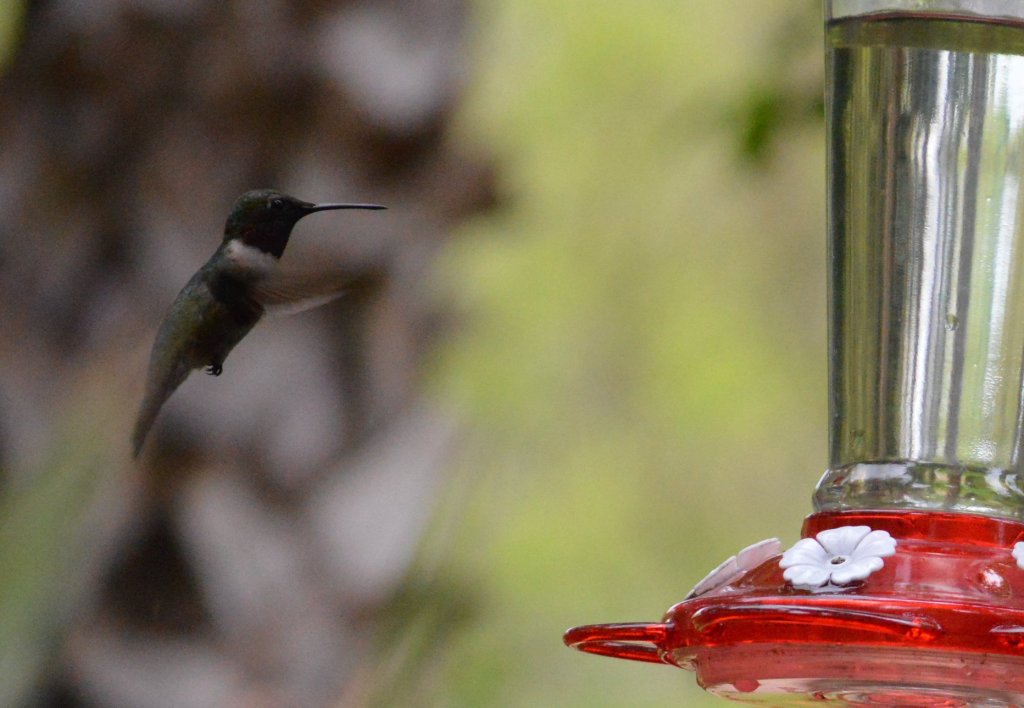
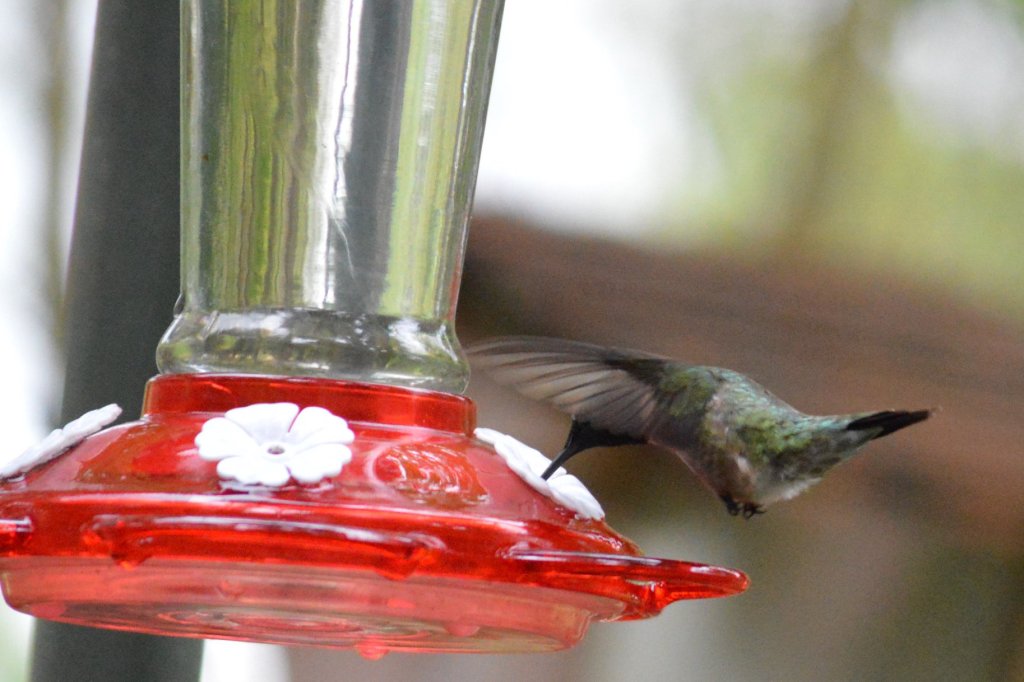
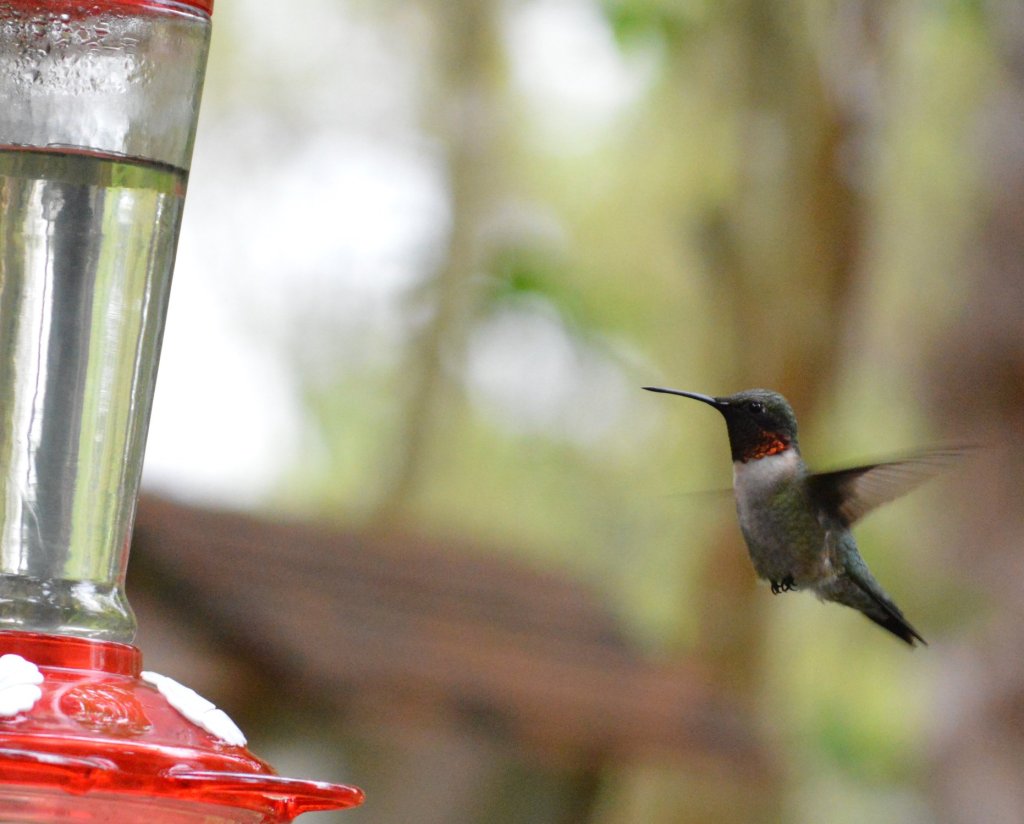
Yesterday, many of us mentioned hearing and seeing hummingbirds in the tree tops, gardens, and at some feeders. Today, just after noontime, this hummingbird posed for the camera. Enjoy the short narrative as to what happened.
I looked out the window and saw a hummingbird at the feeder. I grabbed the big camera and went outside, somewhat hidden, and stayed motionless for 15 minutes or so.
Can’t tell who it is from here.
It was still raining off and on, pleasantly mild, thundering, all foliage was wet. The hummingbird sat on a tiny branch on a large Crape Myrtle tree next to the feeder. Did he see me? Most likely! So it was standoff. I stayed motionless and was not going to move, no matter what was itching or biting me. This went on for many minutes; it seemed like forever.
Big raindrops began to fall again. A couple of Carolina Wrens landed in the same tree. The hummingbird was aggravated with them and chased them off. I waited a few more minutes, raindrops more frequent. Then, the hummingbird made his move.
Yummy!
My camera clicked rapidly at the fast-moving target. I wondered, “What type of hummingbird are you, who are you?” I asked repeatedly.
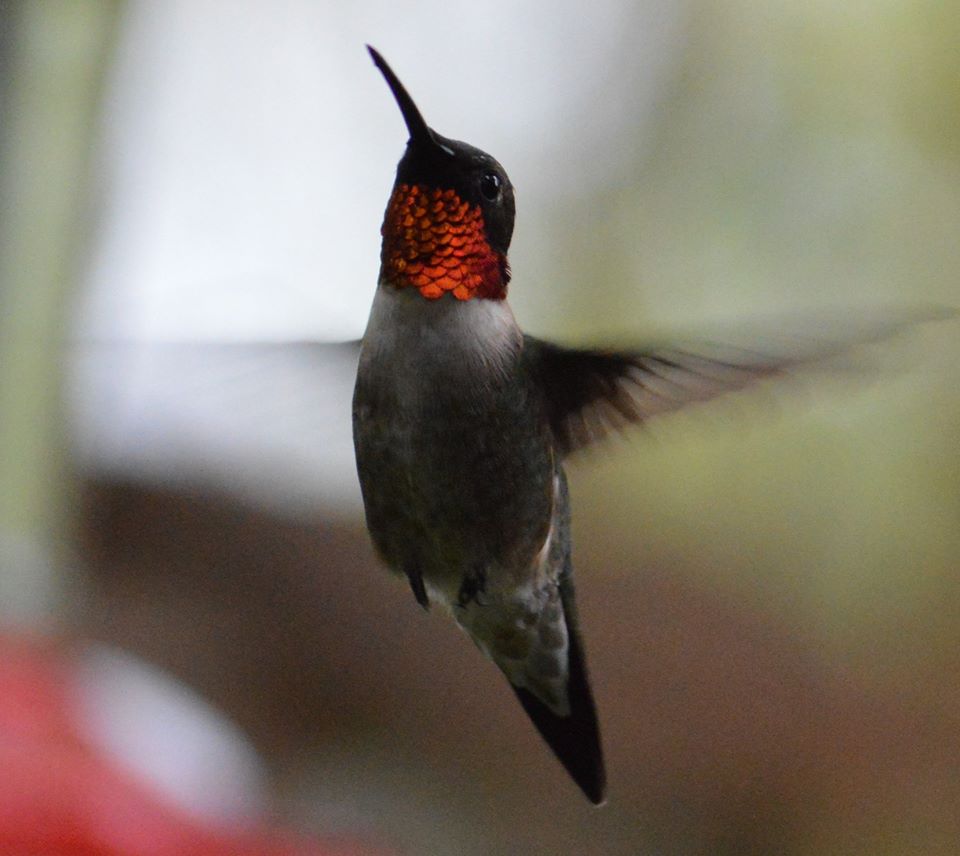
Then, after feeding a couple of times at the left feeder, he came right at me to the camera. I zoomed the lens back, he positioned himself in the upright position, and revealed his identity, proclaiming, “I am back.”
The Big Reveal!
Then he went to the second feeder to feed. Welcome home, Ruby Red-throated Hummer.
I wrote up a version of this for my personal blog, but thought I’d share it here, in case it inspired any of you to do something similar while you are sheltering in place (or any other time).
This fun project I did yesterday didn’t require any human contact nor leaving the property where our office is. I decided to see how many different yellow flowers I could find in the weed/wildflower collection known as our empty lot.
I simply ambled outside with my phone and tried to get good pictures. Yellows are difficult in bright sunlight, so it was good practice for me to try to get photos with a lot of detail and not just glare. As you can see, I managed to fill a whole screen in iNaturalist!
Most of the field actually LOOKS purple, because there is so much common storks-bill (Erodium cicutarium) growing in it, but when you look closer and closer, the yellows dominate (purple is in second place, with field madder and a little patch of grape hyacinth that must be left over from when there was a house here – I plan to replant them in the “flower bed” I’m making).
What have we got? Let’s take a look. Many of these flowers look really similar, but are different sizes or have other subtle differences. Note that I may have gotten something wrong in my identification, so if anyone corrects me on iNaturalist, I’ll correct it here, too.
Common Dandelion. Taraxacum officinale. Delicious and nutritious. Bees love them.
False Dandelion.Pyrrhopappus pauciflorus. Plus a tiny wasp and tinier beetle.
Prickly Sowthistle Sonchus asper. It’s everywhere. And very prickly. Note that there are aphids or something on it.
Smooth Cat’s Ear. Hypochaeris glabra. Looks like a teeny dandelion on a very long stem. Compare to the first dandelion and you’ll see how small it is.
Cutleaf Evening Primrose. Oenothera laciniata. Smaller than most evening primrose, but a beautiful buttery yellow.
Crete Weed. Hedypnois cretica. I thought it was a dandelion, but look at the leaf and the cool petal shape.
Woodsorrels. Genus Oxalis. I’m not sure which one it is, but it’s certainly oxalis. Sour tasty leaves!
Bur Clover. Medicago polymorpha. It’s about finished blooming and starting to make burs. Yellow is a hard color for my camera, and I couldn’t get a good shot of these.
Straggler Daisy. Calyptocarpus vialis. Lots of leaves, tiny flowers. They are pretty up close, though.
I got a lot of bugs and other things, but I’m just going to leave this parade of yellow-ness alone, in all their glory. I’ll see what other themes I can come up with over the next few weeks as all the flowers bloom away.
Do you have any suggestions? Share with the group!
I love this place! 5 stars! Photo by Pamela, through a window.
While we aren’t having meetings for a while, we are able to have our own adventures out in nature, or if we’re lucky, nature comes into our homes.
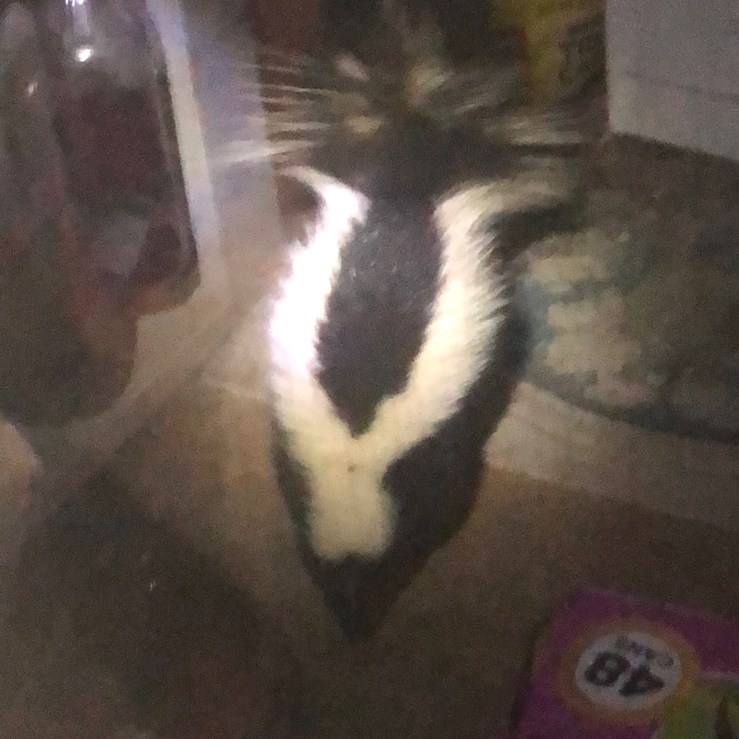
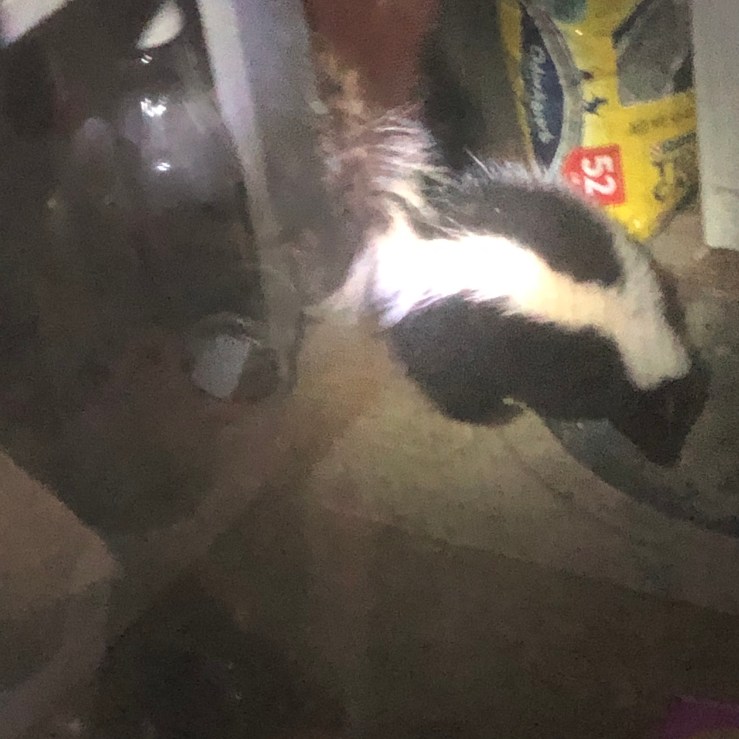
Chapter member Pamela Neeley is well known for having a home that’s welcoming to creatures of nature. People who have been to our meetings may recall that she recently had a skunk that liked to come in and check out her cat food.
It would come in through the pet door and make itself at home. It never sprayed or anything, but was quite clever.
They have the best restaurants here at Chez Pamela.
When Pamela tried to block the door, the patient skunk slowly but surely worked out how to remove the barriers, so he or she could search for snacks. Cat food is really delicious, apparently.
I guess the skunk got along well enough with Ruby the dog, though Ruby did alert Pamela to the skunk’s presence.
Skunks CAN make good pets, but that’s not something we Master Naturalists would suggest as an option. Besides, this is a wild one, and fully operational.
About that Snake
Pamela also has cats. They go in and out that same door the skunk used. Sometimes cats bring presents, as cats are known to do. Earlier in the week, the present Apollo brought was long, thin, and not dead.
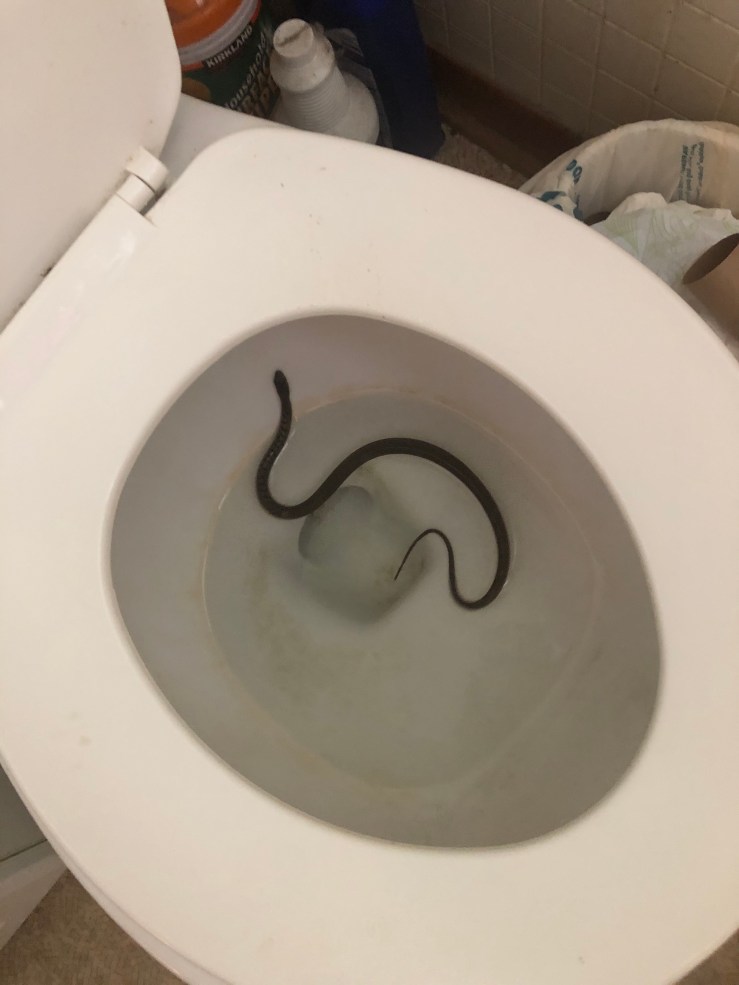
The snake was first spotted heading into what Pamela calls the “scary room filled with boxes,” from where she had no chance or removing it. Since she’s so used to critters, she went about her business, until yesterday, when she noticed Apollo the cat was stalking the bathroom. Aha!
Well, hello!
The snake was taking refuge in a nice, damp place. That can scare the pee out of you!
After taking a bunch of pictures, Pamela contacted her team of friends on a group text for suggestions. And she got dressed. That’s important.
Ideas came quickly from her amazed friends. One idea was flushing, which was immediately rejected. That’s not being kind to our reptile friends!
Other ideas were use a mop, use one of those pick-up sticks that help the elderly, kitchen tongs, a net, and so forth.
Pamela chose the large towel method. She was ready to fling it into the bathtub if it got too wiggly, but it turned out the snake just curled up and she could easily get it in the towel. It was probably relieved.
Pamela took it to the woods a good ways from the house, and everyone was relieved.
What Was It?
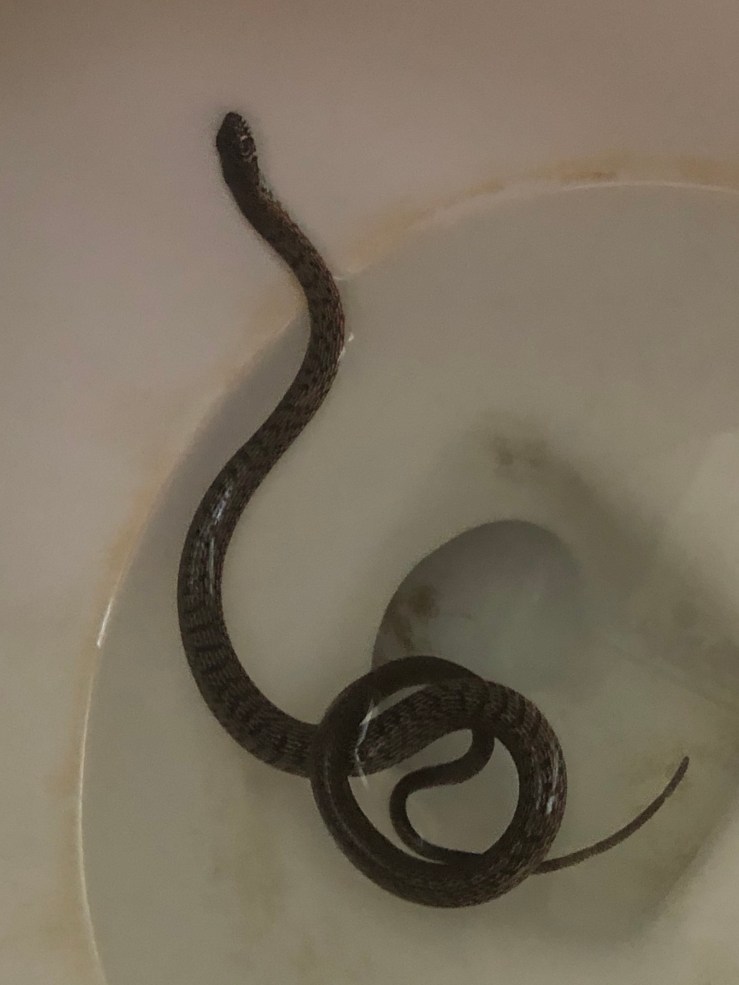
Closer image of the scared snake.
Naturally, everyone in the Cameron ladies’ text group wanted to know what kind of snake it was, especially those of us who are Texas Master Naturalists. Pamela knew what to do, and uploaded it to iNaturalist, suggesting it might be a brown snake, judging from the markings she noted.
Soon she got feedback that the snake was a coach-whip snake. Now she’s glad it didn’t do its characteristic whipping action on her. Since the snake may have been in her house as long as a week, she also hopes it ate some scorpions or other annoying creatures while it was a guest in her home.
Share Your Stories!
Now that we are mostly sitting around looking at the nature around our homes, please share what’s going on with you! Maybe it will make up for all the meetings and classes that have been canceled. I already have one to share tomorrow, so stay tuned.
This morning, a semi-hardy group of Master Naturalists met at Wilson-Ledbetter Park in Cameron to see if we can actually DO a bioblitz. What’s a bioblitz? It’s when people get together and see how many observations they can make on the iNaturalist citizen science platform in a defined area during a specific time.
Do we look chilly? We are!
Our goal is to have as many observations as possible today, February 22, at the park. That means anyone who observes after our group blitz will also count.
Goofy selfie in which I could not fit everyone in.
Twelve of us came to the event, which is a great turnout! We gave some handouts to the people who were new to iNaturalist, showed folks how to join the project I’d set up the day before, and set off in groups, where experienced and inexperienced people were together. Our instructions were to take as many pictures as possible of the flora and fauna you encountered.
Different groups did their observations differently, with some people uploading photos as they took them and others choosing to take the pictures on their phones then upload them later. We also had a couple of people using cameras, and a couple of spotters/observers. Below are some action shots and a couple of the photos we took. Thanks to Meghan Land and Dorothy Mayer for sharing their photos.
Getting ready to observe
A natural bird bath!
John is not proposing to Ann. He’s asking for expert advice.
Donna was our intrepid and cold spotter.
Meghan crosses the dam
Ann and I look at cedar waxwings
There were many interesting lichen specimens
The beautiful Chickasaw plums in bloom
One thing I discovered is that we have some great nature observers in our new class. One found a domestic cat carcass (no photo available, thankfully) and another found some beautiful eggs in a nest by an oak tree (perhaps from the nearby ducks).
Eggs found under a tree. Sparkly finger to show size.
Long-time members shared stories about previous projects our group has done in the park and helped identify some of those pesky forbs that were everywhere. It’s quite a challenge when so little is blooming, and many woody plants have no leaves yet.
We were much warmer in the conference room, with coffee.
After about an hour of photographing, we went back to the warmth of the Hermit Haus and practiced using the iNaturalist app to upload photos. It’s a bit of a learning curve, especially if you have an android phone and all your “experts” have iPhones. But, folks are already adding their observations to the project, and people are out there identifying them.
Here is what we have as of mid afternoon. We will certainly have more later!
Here are all the observations from our bioblitz, as of 3 pm today. The key to the colors is in the image above.
Just a few hours after the bioblitz started, we have over a hundred observations, and half the team has uploaded content. Not bad at all! Check the project page to see how many more observations have been uploaded. They will be trickling in over the next few days.
Where shall we go for our next bioblitz? Will you join us? Our goal is to visit all the parks in the county, so suggestions are welcome! Remember, Tania Homayoun of Nature Trackers, and our state iNaturalist expert, will be joining us April 18 for a special training with both an indoor and an outdoor component. We will let you know which park we’ll be holding that one at!
Want to Learn More?
Read more on using iNaturalist for bioblitzes at this link.