Bioblitz! The First of Many!

This morning, a semi-hardy group of Master Naturalists met at Wilson-Ledbetter Park in Cameron to see if we can actually DO a bioblitz. What’s a bioblitz? It’s when people get together and see how many observations they can make on the iNaturalist citizen science platform in a defined area during a specific time.

Do we look chilly? We are!

Our goal is to have as many observations as possible today, February 22, at the park. That means anyone who observes after our group blitz will also count.

Goofy selfie in which I could not fit everyone in.

Twelve of us came to the event, which is a great turnout! We gave some handouts to the people who were new to iNaturalist, showed folks how to join the project I’d set up the day before, and set off in groups, where experienced and inexperienced people were together. Our instructions were to take as many pictures as possible of the flora and fauna you encountered.

Different groups did their observations differently, with some people uploading photos as they took them and others choosing to take the pictures on their phones then upload them later. We also had a couple of people using cameras, and a couple of spotters/observers. Below are some action shots and a couple of the photos we took. Thanks to Meghan Land and Dorothy Mayer for sharing their photos.

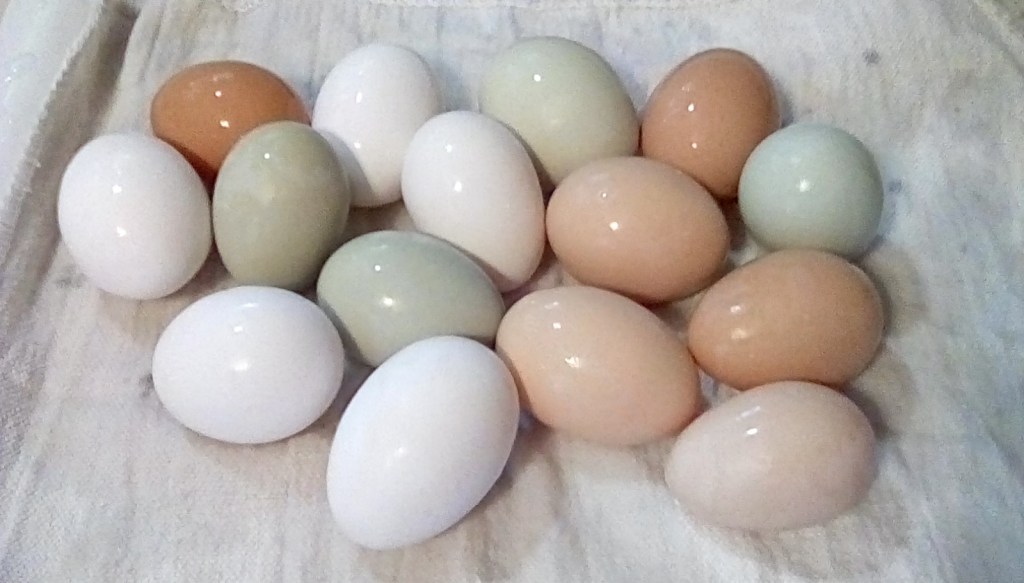
One thing I discovered is that we have some great nature observers in our new class. One found a domestic cat carcass (no photo available, thankfully) and another found some beautiful eggs in a nest by an oak tree (perhaps from the nearby ducks).

Eggs found under a tree. Sparkly finger to show size.

Long-time members shared stories about previous projects our group has done in the park and helped identify some of those pesky forbs that were everywhere. It’s quite a challenge when so little is blooming, and many woody plants have no leaves yet.

We were much warmer in the conference room, with coffee.

After about an hour of photographing, we went back to the warmth of the Hermit Haus and practiced using the iNaturalist app to upload photos. It’s a bit of a learning curve, especially if you have an android phone and all your “experts” have iPhones. But, folks are already adding their observations to the project, and people are out there identifying them.

Here is what we have as of mid afternoon. We will certainly have more later!
Here are all the observations from our bioblitz, as of 3 pm today. The key to the colors is in the image above.

Just a few hours after the bioblitz started, we have over a hundred observations, and half the team has uploaded content. Not bad at all! Check the project page to see how many more observations have been uploaded. They will be trickling in over the next few days.

Where shall we go for our next bioblitz? Will you join us? Our goal is to visit all the parks in the county, so suggestions are welcome! Remember, Tania Homayoun of Nature Trackers, and our state iNaturalist expert, will be joining us April 18 for a special training with both an indoor and an outdoor component. We will let you know which park we’ll be holding that one at!

Want to Learn More?

Read more on using iNaturalist for bioblitzes at this link.

Amazing Nature Walk for 2020 Class

Yesterday was the first field trip for our 2020 class and some tag-along Chapter members. We literally visited a field! What a beautiful field it was, however, and we are grateful to Nancy Webber for inviting us to share the property she has been managing as a wildscape for over a decade.

Heading out for the walk, Nancy explains how she manages her property.

After a bit of gawking at the beautiful off-grid home on the property, complete with huge cistern, solar panels, and blazing wood stove, Nancy led the class through the riparian area and meadows in her property, somewhere between Davilla and Bartlett. She presented so much information about her property, how they manage it, and what they do with it.

We had fun spotting prickly pear that they dug up and hung from trees to propagate no more, and marveled at how few mesquite there were. On the other hand, the possumhaw was glorious, and everywhere!

Not my best possumhaw photo, but you get the idea.

We saw and heard many birds, which was great fun to the birders among us. A ladderback woodpecker and American robins were highlights, though there were many more. We knew there were also plenty of raptors around by the evidence of many former mourning doves.

Former dove.

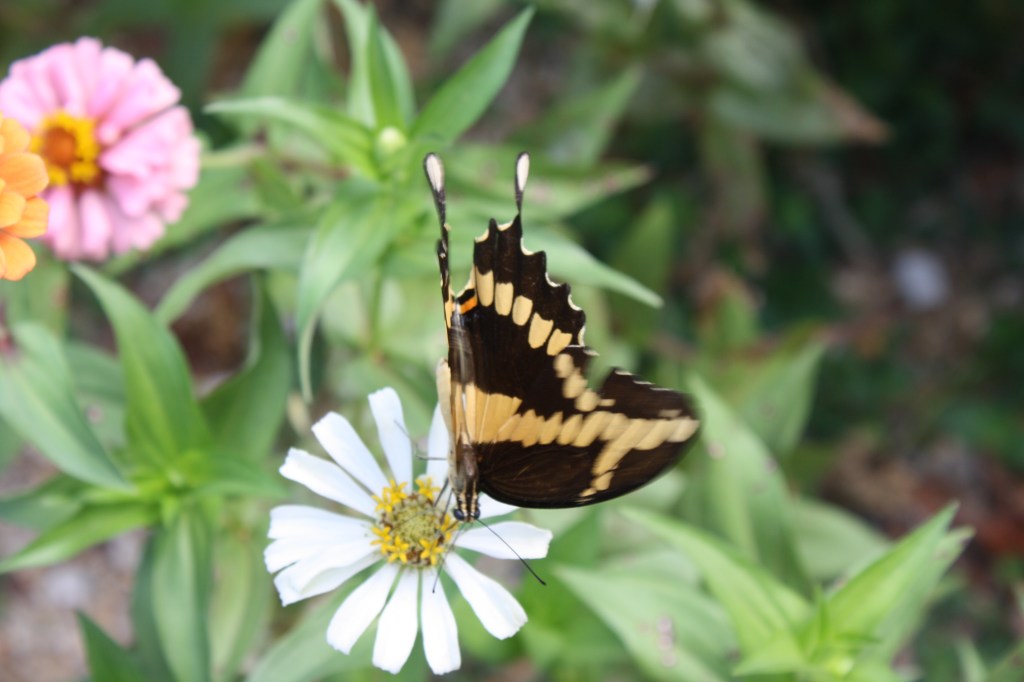
We had fun finding dens of some of the local mammals (one of which had an interesting musky smell), spider webs in trees and on top of holes, and even a grasshopper and a sulphur butterfly.

The spider just left before I could take the picture!

Another fun activity was spotting the cool things the property owners had done to honor the nature in the area, such as decorated trees, a “portal,” and an entire area featuring various bones hanging from the trees. It’s a great place to play “guess the carcass!”

The two hours flew by, since the weather was pleasantly cool and the mud wasn’t bad at all. A couple of us lagged behind as we got all involved in plant identification and taking photos for iNaturalist. We just can’t help it, plus one was a new one to us (fringed puccoon, pictured below). I think Ann Collins and I may have hooked one of our class members on our hobby!

I wish we could tour more property of our members, to see how they differ. Hope you enjoy my photos. I am sparing you most of my iNaturalist photos!

We all had a great time on our field trip!

Wildscape in Winter

I had a need to buy chickens last weekend, so I took the female members of my family over to Bird and Bee Farm to get them. The chickens I got were great, and you can read about them here. But my real point was to share how much has been going on at the Wildscape project over there. Much of the work is led by our own Catherine Johnson.

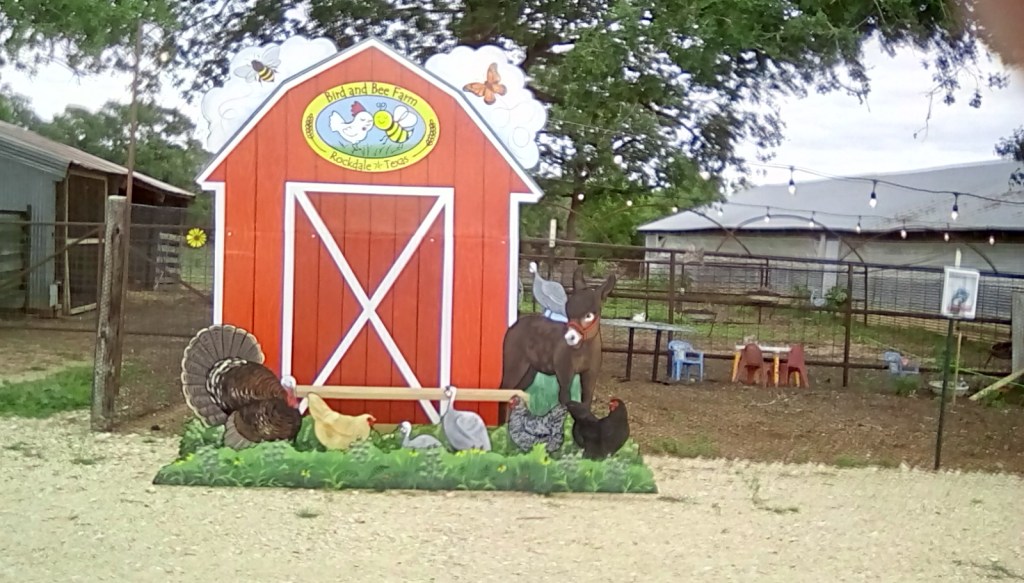
The entrance shows all their certifications. The chicken house is in the rear.

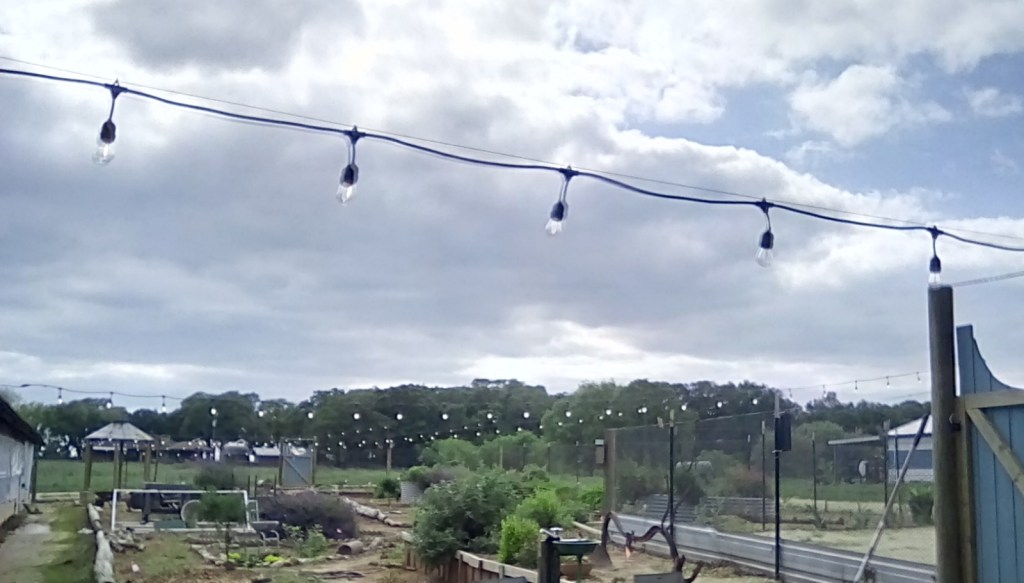
I was impressed that there was so much in bloom in the middle of January, and equally impressed by how charming the design of the project is. There are so many sweet surprises lurking among the recycled material being used to create planters, edging and decorations.

Many of our members are strong believers of practicing what they preach and recycling or re-using materials as much as possible, and a tour of the wildscape provides a lot of good ideas. All sorts of kitchen and farming implements have found their way into the beds.

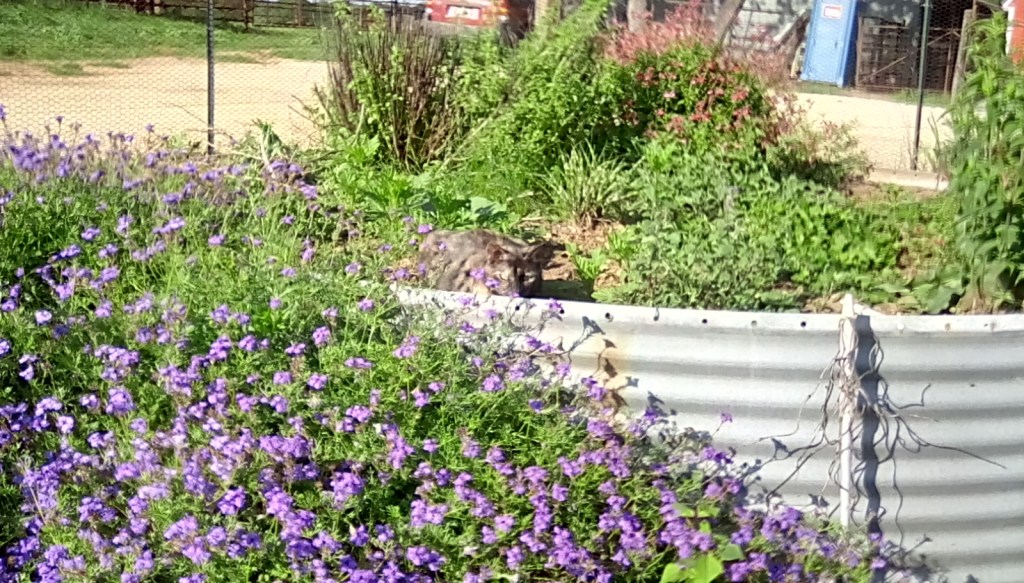
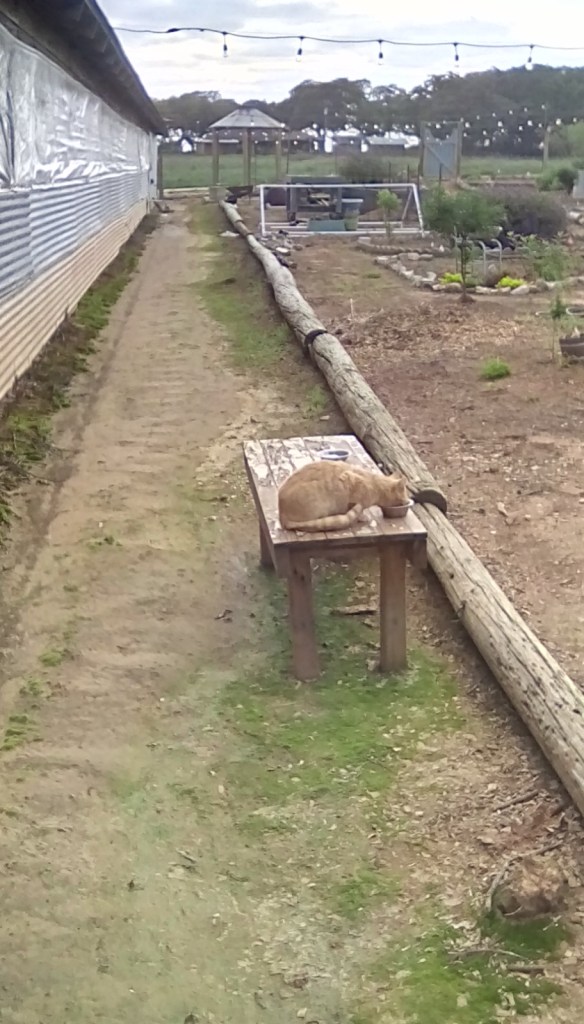
Of course, there were kitties to provide natural pest control. Rodents love bird food, and kitties love rodents!

Lots of flowers!

I also enjoyed watching the natural insect pest control in action as the guinea fowl and Rio Grande turkeys roamed the area.

Rio Grande turkey wants in the wildscape. Nope, it’s not for you.

It made me happy that Cindy Rek, one of the owners of the farm, used my guinea fowl photo to sell some of the guinea flock online! It’s great to be able to give back to folks who give so much to the community, our plants, and our animal friends.

Guineas and turkeys

Christmas Bird Count Opportunity: December – January

by Linda Jo Conn and Sue Ann Kendall

Every year, the Audubon Society sponsors the Christmas Bird Count. This year counts will be held from December 14, 2019-January 5, 2020. It’s very important for keeping up with rising and falling bird populations in the US. You can participate in many ways.

One nearby project came to us via Kyle Watter, a park ranger with the US Army Corps of Engineers at Proctor Lake in Comanche, Texas. He wrote:

January 4th, we are hosting our second annual Christmas Bird Count. Last year, we recorded 99 species at our lake. The count incorporates six driving routes, each of which includes a portion of federal property. Some of the properties are off-limits to the general  public or are quite remote.

email, November 25, 2019

If you’d like to head to Proctor Lake, contact Kyle at Kyle.J.Watter@usace.army.mil or call the lake office at 254-879-2424.

While we may not live very close to Proctor Lake, we do have other opportunities to participate. The Bird Count project requires registration with a coordinator within one of the specified circles in this map.  The circles are 15 mile radius.  If one lives within one of the circles, they can register and sit in a lawn chair in their yard to count birds on the specified days. That is not our luck here in Milam County. 

Here are the observation locations nearest to Cameron.

As you can see from the close-up above, there are several circles in easier driving distance for us, such as Granger Lake WMA, Buescher/Bastrop State Park in Bastrop County, and McKinney Roughs Nature Park in Bastrop County aren’t too bad. Linda Jo points out that she knows that in the past, ECR members have traveled to all these locations for training or volunteer events.  

Linda Jo would like to especially recommend the McKinney Roughs location, because it is being led by Nicolaus Cowey, a very knowledgeable bird person. The count led by Sheila Hargis of the Lost Pines TMN chapter at Buescher/Bastrop would also be a worthwhile experience. Sue Ann really likes Granger Lake for its variety of shore birds.

Here is contact information on each of these locations. Contact the compiler to register and get more information:

Granger
Date: Saturday, December 29
Compiler: Byron Stone
Email: drbirdie@aol.com
Granger Lake, in Williamson County, is 35 miles northwest of Austin. The area is significant due to its reputation for harboring threatened prairie species like MOUNTAIN PLOVER and SHORT-EARED OWL. Other specialties and expected species include a variety of duck and geese, BURROWING OWL, HORNED LARK, SPRAGUE’S PIPIT, LAPLAND LONGSPUR, MCCOWN’S LONGSPUR, and as many as 18 sparrow species, including HARRIS’S and LECONTE’S SPARROW. The area offers diverse habitat, and participants will have the opportunity to count open farmland, fresh water, riparian woodland, and Blackland Prairie habitat.

Lost Pines/McKinney Roughs
Date: Friday, December 28
Compiler: Nicholas Cowey
Email: nicholas.cowey@lcra.org
This CBC is located in Bastrop County between the Bastrop CBC and Austin CBC circles and just a bit to the north. This count is a community collaboration between the Lower Colorado River Authority, Bastrop Audubon Society and the Lost Pines Master Naturalists. This year the count will take place Saturday, Dec. 29, 2018 and will include the properties of McKinney Roughs, Hyatt Lost Pines, Webberville, Utley, numerous rural areas around Elgin, many area county roads and neighborhoods including Crystal Lake, Bluebonnet Acres, Wilbarger Bend, Union Chapel and Young’s Prairie Road. The count also encompasses miles of the lower Colorado River. Count starts on Saturday, Dec. 30 at 6 am at McKinney Roughs Visitor Center. Plan to arrive by 5:30 am to meet up with your count group. Countdown will take place at 6:00 pm at the McKinney Roughs Visitors Center. Register online at https://goo.gl/fxDmvU.

Buescher – Bastrop State Parks
Date: To Be Announced
Compiler: Shelia Hargis
Email: bastroptxcbc@gmail.com
We need many birders to adequately survey the birds in the circle area to find all of the expected species and the rare species visiting the area. We would especially like to have some feeder watchers, so if you live within the circle and have bird feeders including hummingbird feeders, please consider participating in that way. All groups will begin their day from a location of their choosing. We will meet at the end of the day for the countdown. Email bastroptxcbc@gmail.com to register or visit our website at www.bastropcbc.com for more information as well as maps of the areas to be covered.

Perhaps there is a date and location you will be able to participate.  This is a great opportunity to earn some end of the year volunteer hours. Please let Linda Jo know if you plan to participate, in case we want to coordinate rides.

Report hours as Cit. Sci. – Cornell / Audubon TMN Field Research Hours.