A Fly Named Anthrax pluto

by Eric Neubauer

When I review my photos and decide what to upload to iNaturalist, the first thing I do is separate them into broad categories such as flies aka Diptera, and today was the day to work on that group. One was this shaggy, spotted fly found in a wooded area near Alligator Creek.
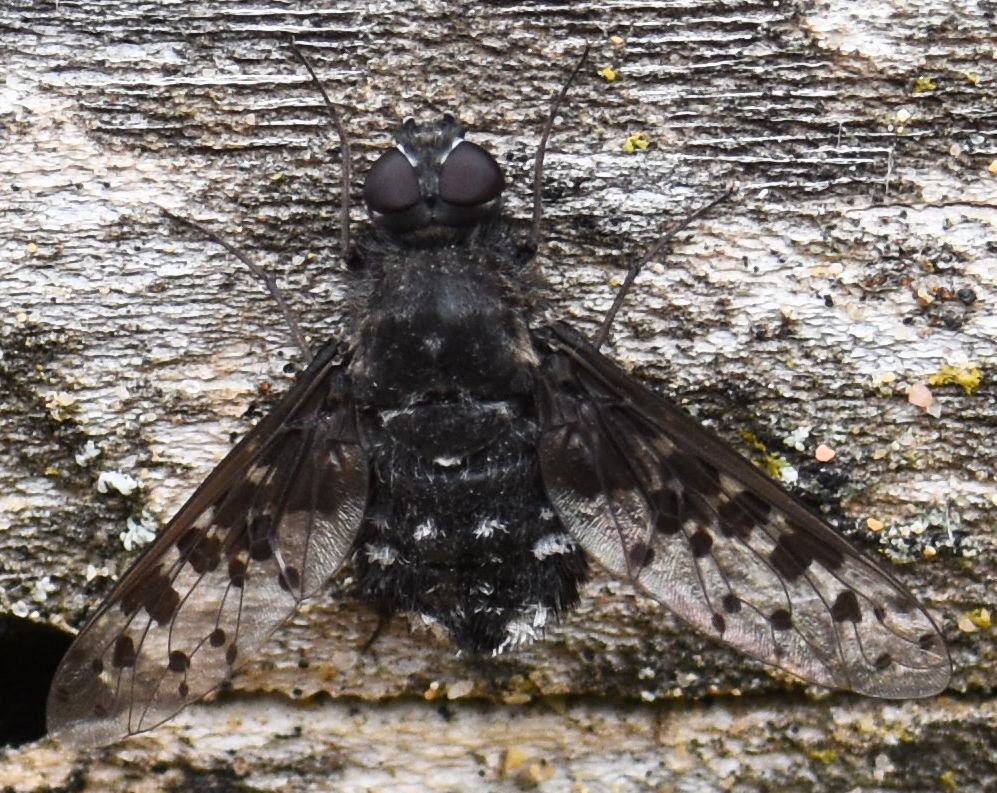
Sue Ann now declares this her SECOND favorite fly.

I don’t know my flies very well, and trying to identify one I’ve never seen before is like going down Alice’s rabbit hole.

There are so many different kinds of flies. A fair number don’t even have a single observation at iNaturalist, but I thought this one was distinctive enough and I might get lucky. Way down in the low double digit observation totals of Texas flies, I finally found one with similar spots. It was in the Anthrax genus which I’ve never encountered before.

The word “similar” is a dangerous one and it has burned me before, so the next logical step was to search the genus Anthrax in Texas. And what do you know, there was another nearly identical species down in the single digits! Now, how am I going to tell them apart?

The only consistent difference I could see was that the leading edge of the wing of one was solid black and alternated between black and clear on the other. Mine was the one with 7 observations, now increased to 8. The only other observations for this species in North America are four in eastern Canada, oddly enough.

Making the Best Out of the Materials You Have Available

… the essence of engineering

by Eric Neubauer

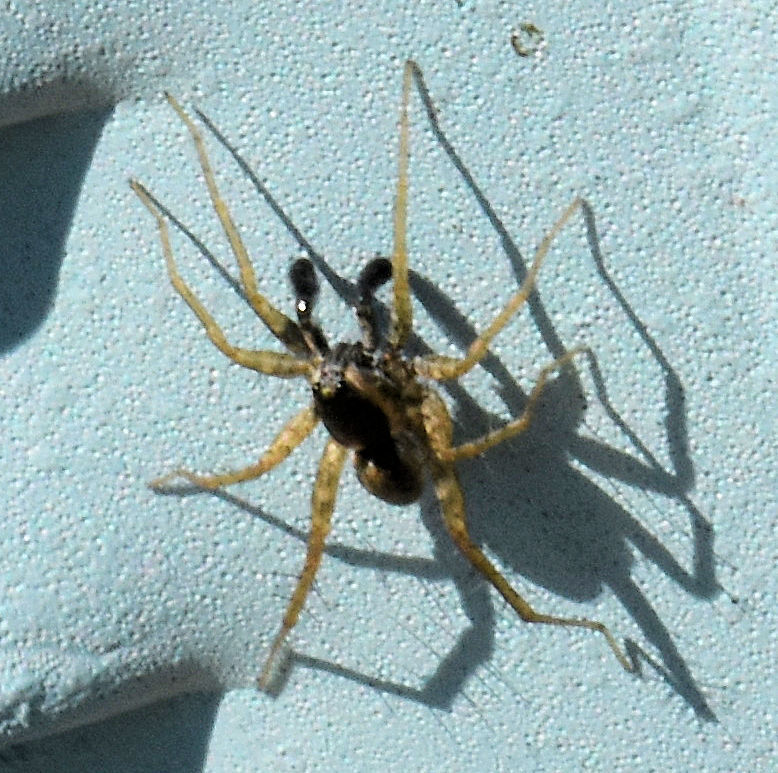
I was hardly a fan of spiders, but circumstances have determined otherwise. The pandemic has kept me almost exclusively at home, and the Texas Blacklands appear to be excellent habitat for wolf spiders (Lycosidae).

In the past, getting identifications down to the species level almost always ended up in frustration, except for Rabidosa rabida. I have identified at least three other genera on my property, and there are likely to be more.

Rabid Wolf Spider Rabidosa rabida. Photo by the author.

This year, I decided to make observations of them as they grew up. My goal was to upload at least a hundred observations to iNaturalist before trying to identify them down to species level. I passed my goal by getting 23 in 43 minutes a few days ago.

This Thin-legged Wolf Spider (Genus Pardosa) is a young one. Photo by the author.

Lycosidae are generally considered nocturnal, but this isn’t entirely true. Daytime hunting is hit or miss, but a combination of high humidity after a rain, temperatures in the high 70s, and cloudy skies apparently combined to bring them out in the middle of the day.

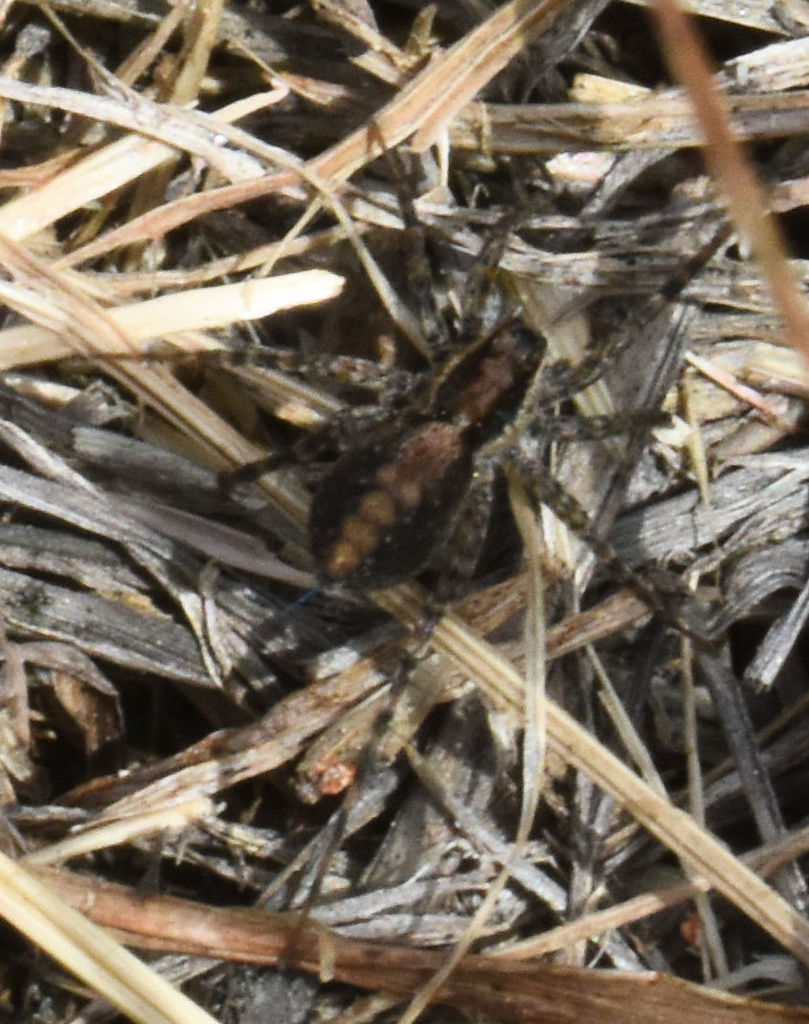
This one is not identified yet. Photo by the author.

There is also a matter of technique. I’ve found that closely cut grass next to high grass is the best place to look and photograph them. You can just walk around slowly and watch for movement, but many will escape into the high grass. If you lead with one foot along the edge of the high grass, this flushes more of them into the low grass where they can be photographed.

There is one particular species that is so well camouflaged it’s impossible to see unless it moves. Right now, they are mostly a half to an inch long including the legs, and they are old enough to identify the genus.

Brush-legged Split Wolf Spider Schizocosa ocreata. Photo by the author.

You may also see holes of various sizes in the ground. At present, many are probably Lycosidae burrows. They can be enticed out with a blade of grass, but I’ve found they disappear back down their burrows too quickly to photograph, making it a two person job whenever that becomes an option again.

My habitat is returning prairie on blackland with paths mown through the high grass. Confirmed genera: Hogna, Pardosa, Rabidosa, and Schizocosa. Other non-Lycosidae genera including Dolomedes are encountered.

Babies Everywhere

by Donna Lewis
(with additional photos by Sue Ann Kendall)

This is Suna’s Phoebe mom, eating sunflower seeds and amaranth, or waiting on a fly.

Anywhere I look I have baby birds right now, which is a wonderful thing for a naturalist. Who could be bored right now with so many little creatures to look at?

On our front porch we have a nest with five tiny Eastern Phoebes. They are fly-catchers and love things with wings.

This morning mama tried to force a giant beetle down her youngest daughter and I thought for awhile I might have to preform the Hine-lick procedure…

Donna’s Phoebe babies taking a nap
Suna has a phoebe nest atop an old swallow nest.

Then in my Blue-bird houses I have five babies in one house and six babies in another. Again, bugs are on the menu.  This year the Blue-birds decided to run off the Purple Martins so they could use their perch to look for predators near their houses.

Over in our barn I have a nest of baby Carolina Wrens in a bucket that was hanging on the wall. If you have never seen a wren baby you would not believe how tiny they are. They are the cutest little things ever. There are only three babies.

Up in the oak trees about 18 feet high we have some Ruby-throated Hummingbirds. Now talk about a tiny house. You can barely see it. It is wrapped in moss and is very concealed.

I love this quote.

There are ton’s of Cardinal nests everywhere. They eat bugs and from my feeders. I have them year round.  They are regulars here.

Then at last my beautiful Purple Martins, who came very late this year, are starting to lay their eggs finally. That unfortunately will cause the babies to mature during the hottest time of the year. 

I have seven nests with eggs and more that have not started yet.  I have the fewest Martins than ever at this site.  There are many potential reasons for this, and it’s hard to determine for sure.

But the ones I do have sing to me, and it’s all worth the trouble.

Nature is everywhere you are.  All you have to do is look.

Heaven on earth.

Hummingbirds in Milam County

by Donna Lewis

It is getting hot every day now, so it is important to remember a few tips for our smallest bird friends. They need  fresh water just like every living thing.

My hummers like to fly though a small sprinkler that I put out just for them every afternoon around 5:30 pm.  I place it under a tree for shade and a sense of security. They cool down and get a bath at the same time.  It’s fun to see them play.

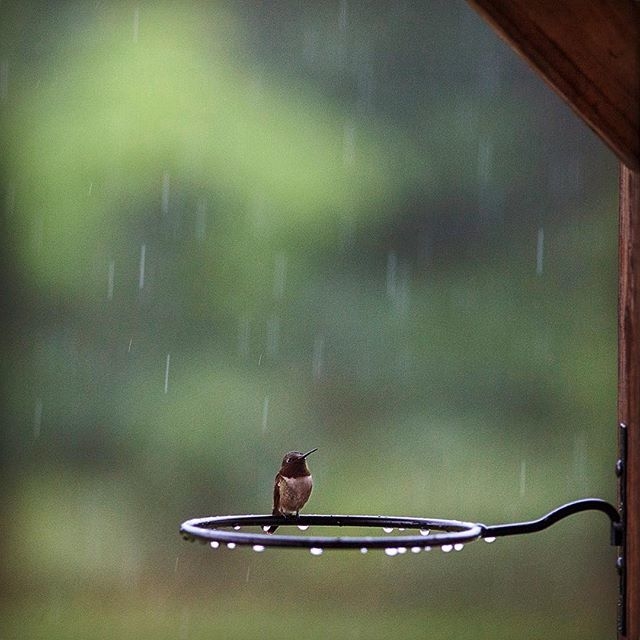
Hummingbirds enjoy a little shower. Image by @murophoto via Twenty20.

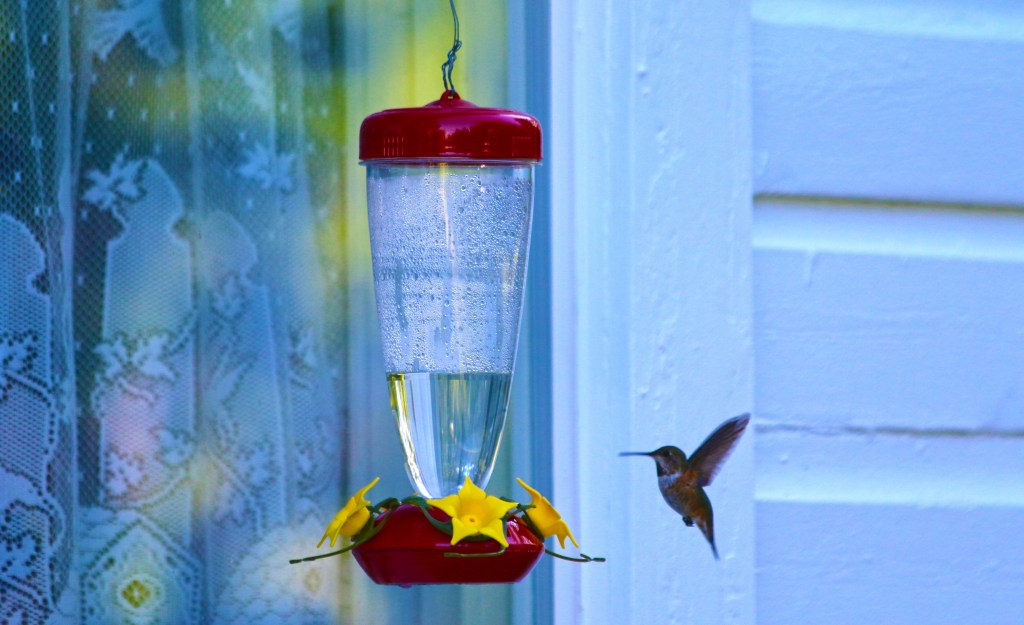
We also need to remember that hot weather will make the sugar water ferment very fast. So,  clean and put out new nectar in the feeders at least every 3 to 4 days. Sugar water should be 1 part sugar to 4 parts water.

Hummingbirds like fresh nectar. Image from Creative Commons.

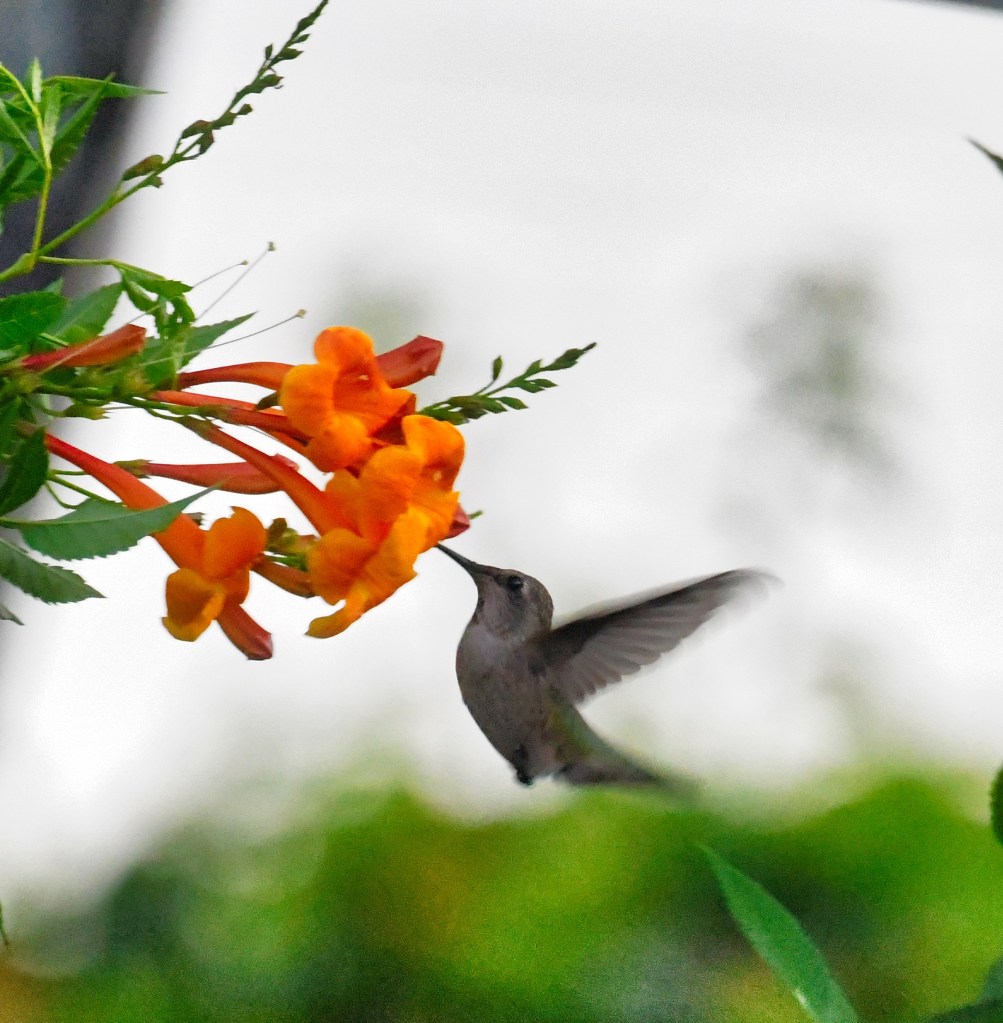
Native plants are actually the best food for them. They also like little bugs for protein. Their favorite plant here at my place is the Coral Honeysuckle I have on a fence. They spend more time drinking from its tubular flowers than drinking from the feeders.

Tubular flowers are the best! Photo by  @malisunshine via Twenty20

Its good to place the feeders under some shade if you can.  This keeps the sugar water from getting so hot.

Right now the males are doing their courtship dance.  A high deep dive in a U shape pattern in front of a potential bride..

Ladies… you get to pick.

Retrieving a Legacy

This afternoon, Phyllis Shuffield and I donned our masks and went over to where Katherine Budrich, one of the founders of our chapter, lived. Members had long hoped to retrieve some of the things she’d been storing for us, so we were very grateful to have been offered a chance to see what we wanted.

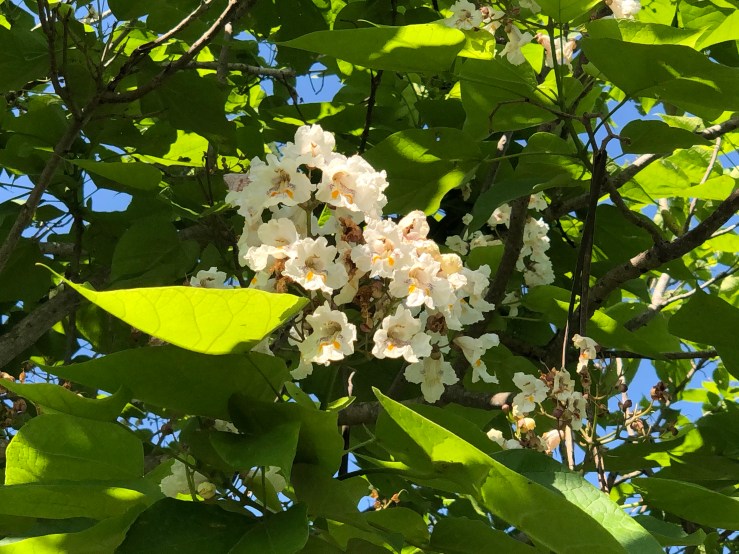
Beautiful catalpa flowers.

Neither Phyllis nor I had gone ANYWHERE since the shelter in place orders, so we both enjoyed the drive through the countryside outside of Cameron, just to get to see different scenery. Wearing masks in the heat is a pain, but worth it to get out and go somewhere. And the Budrich home is in a lovely part of Milam County.

All sorts of native trees are scattered around the property. There are lots of soapberry.

You will all be happy to learn that we got some supplies that will be useful for us in the future. There were a lot of beautiful nature posters, some of our Texas Master Naturalist signs, and a wooden sign that says El Camino Real Chapter. I hope we can use those at meetings!

Sorry the sign’s upside down. But that’s a LOT of nice posters we can use, behind there.

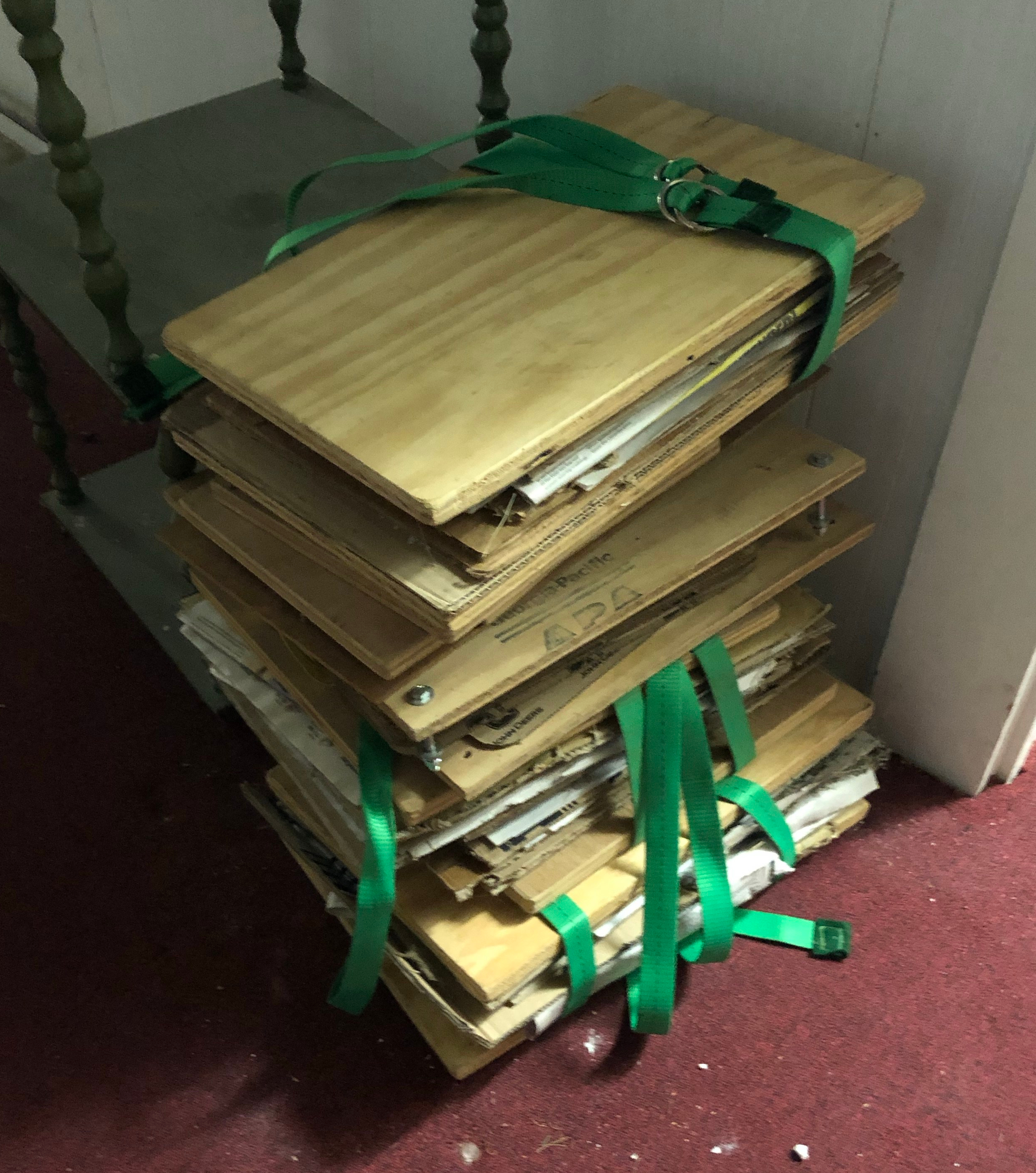
We also found a bunch of wonderful plant presses, the good kind, which will be great for future projects. There were also some amazing notebooks full of information and some books we will be able to share. And of course, Phyllis was thrilled to find a large labeled collection of native mussels, which were Katherine’s specialty.

Hiqh-quality plant presses for saving specimens.

I’m really glad that we were able to get these materials, which are a lovely way to remember Katherine and her contributions to our chapter. We have stored them temporarily in the Hermit Haus building, and I hope to find a permanent place to keep them and other chapter materials once our offices move across the street.

It was also nice to see the sweet memorial garden that’s behind the house in Katherine’s honor. It was a privilege to get to visit and see her plants, too. It feels like I sort of know her!

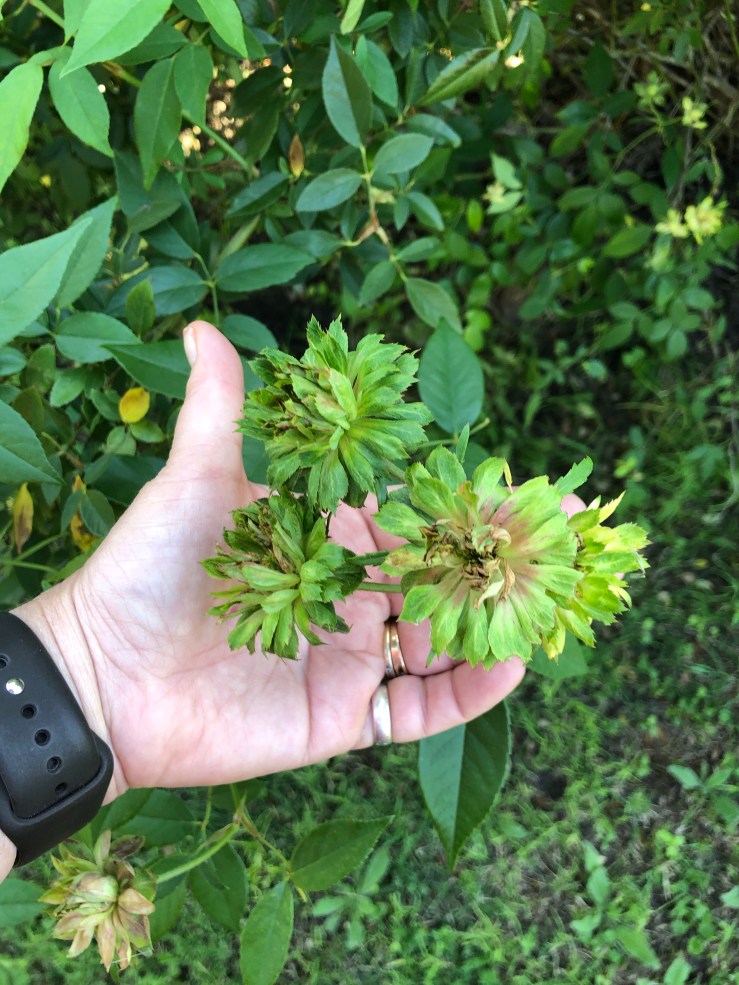
This is apparently a green rose. It’s interesting! And it’s not in iNaturalist.

The Master Naturalist community is really special. It’s touching how we care for each other, and how our contributions can last long after our lives. It was an honor to have my first trip anywhere other than my house and office since March be to help obtain these materials for us.