Weird and New Nature Observations

by Sue Ann Kendall

In the past week or so, I’ve seen some pretty darned interesting sights on my north Milam County ranch. I thought I’d share a few with you all. Plus I have a bonus observation from Pamela Neeley.

We’ve been digging a lot of holes for fence poles this week, which stirs up the insect population. A couple of days ago, we saw something wriggling on the ground, and I realized it was a spider I’d never seen before. It had beautiful pale green markings and had a very large abdomen.

I wondered what it was, and iNaturalist indicated it could be an Giant Lichen orbweaver, Araneus bicentaurius. What a beauty. We are in some of the most western areas they are found.

The day before, I has spotted a rabid wolf spider, lying motionless and with its legs all curled up. That was weird. I went to look at something else, and when I came back, I knew what had happened to it. A Rusty Spider Wasp Tachypomplilus ferrugineus had stung it, and now it was dragging it up the wall to wherever it was going to enjoy its spidery meal. It turns out those wasps, which were new to me, prefer wolf spiders as prey.

This looks yummy!

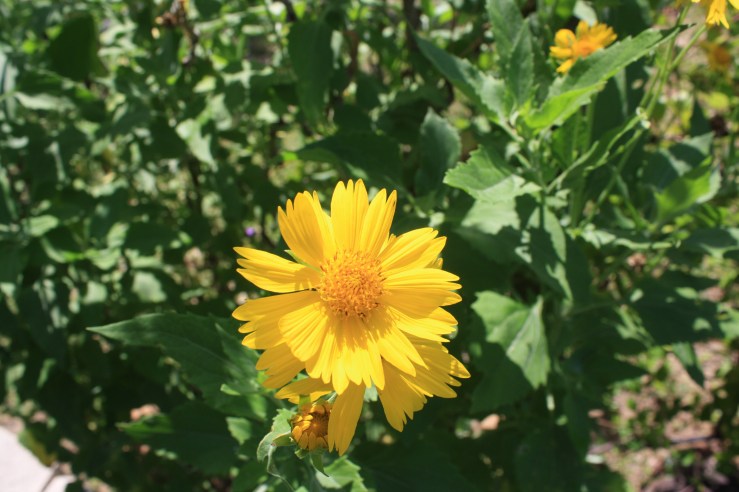
Something else that was new to me this year was my discovery of a bunch of odd-looking, deformed Mexican hat flowers  (Ratibida columnifera or upright prairie coneflower). I wrote about them in my personal blog, but have learned more since, thanks to fellow Chapter member, Linda Jo Conn. Alongside of a field that had grown oats for silage, the flowers didn’t look quite right.

Since I know that the field next to the flowers got sprayed by herbicides more than once (the representatives from our ranch coop gave permission), I wondered if that is what caused the flowers to have extra petals, extra “cones” or oddly shaped flowers. I uploaded some of the images I had to iNaturalist and waited. Sure enough, Linda Jo commented that there’s a word for abnormal growth in vascular plants: FASCIATION. Now, isn’t that cool? The Wikipedia article on fasciation says sometimes it’s caused by hormones or by viral/bacterial infections. But, among the possible causes ARE caused by chemical exposure. Another possibility is excessive cold weather. Guess what we had in February??

Other than that, I’ve been enjoying the insects of summer. Wow, there have been some interesting ones here at the Hermits’ Rest!

And finally, just for fun, I wanted to share a photo Pamela Neeley took of a young praying mantis. Look at its shadow! It’s a giraffe!

Checking the Martins after Five Days of Rain

by Donna Lewis

The purple martins at my property had just started laying eggs the last time I checked them. So I knew they should have babies anytime now.

After the f days of rain, I knew I needed to check to see if water had gotten into any of the gourds. A wet nest can be deadly for birds.

Checking the gourds

The first thing I do is gather everything I might need to clean and replace wet nesting material. You should always clean the site and not throw  anything on the ground. All that does is alert snakes that there is food up the pole.

So, nesting material, recording paper, a sack to put debris in, and clean towels to wipe out the gourd should be taken with you as you go to the housing. You don’t want to have to run back to get something. It’s best to not lower their housing for longer than 30 minutes at best, especially when they are feeding young.

All my material is gathered

As I thought, there were eggs in three gourds and young in the other nine gourds.

New life

YEAH!!!!!  How exciting! I love babies. Sadly one of the gourds with eggs had gotten a lot of water in it.  The nest was wet and not fit for the martins. The eggs were cold. I had to remove everything, clean it and put in fresh pine needles.  It is possible that the martin might lay a second set, but not probable. 

I measured one of the oldest healthy babies to be five days old.  Now I will know when I should check on them again.

Babies!

A wonderful day.

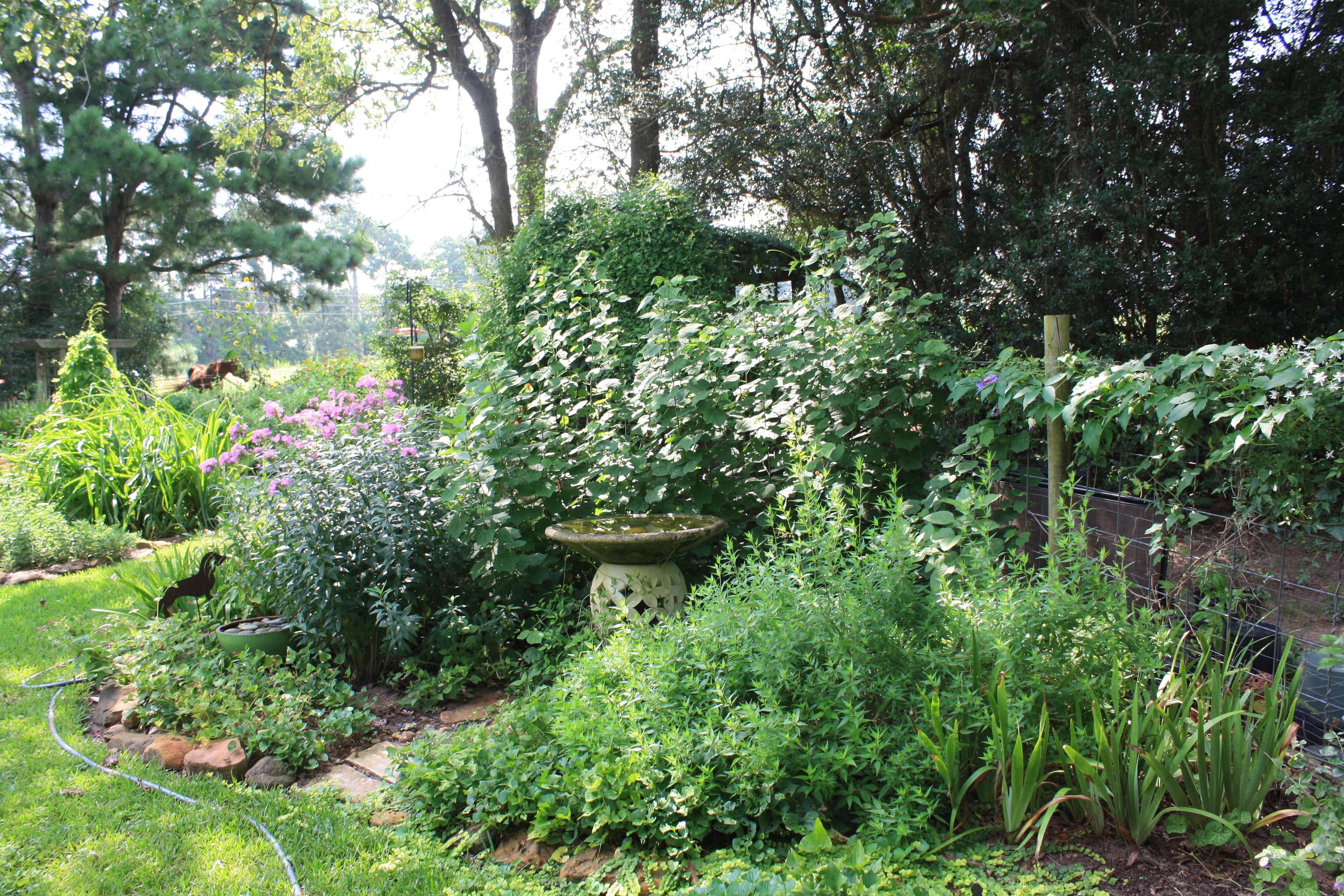
Donna’s Garden, May Update

by Donna Lewis

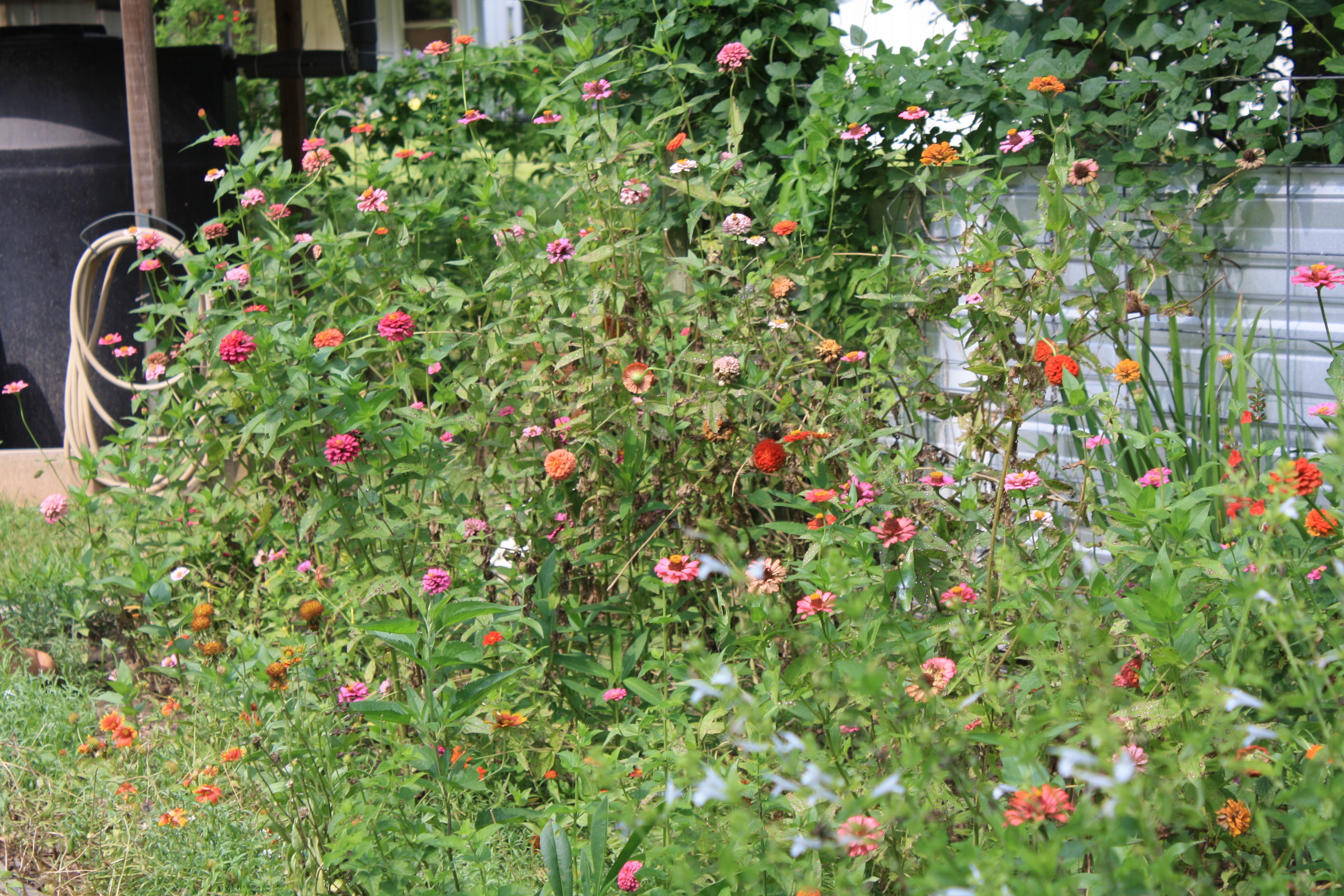
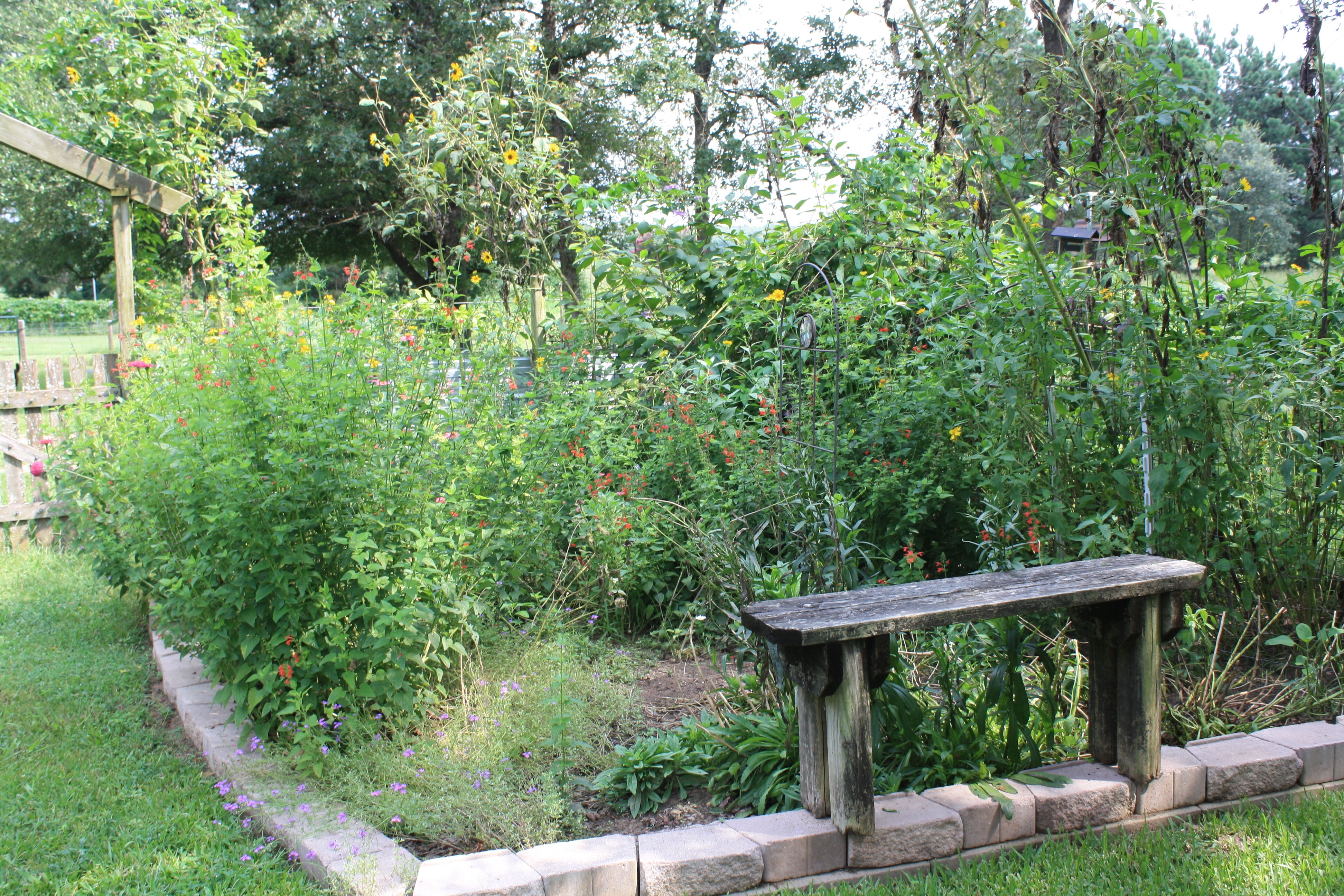
Here is the May 20th update on my pollinator garden. Every year the garden is different depending on what comes back.

Wildflowers can’t be put down!

This year was really scary because of the freeze . I was not sure what might be completely dead.

We can thank the rain for some of this lushness.

But, and I love this part…90% of my garden was planted with native plants! They are sturdy!! I did have a few larger bushes that have not shown up and probably won’t.

All this beauty makes you forget last winter, almost.
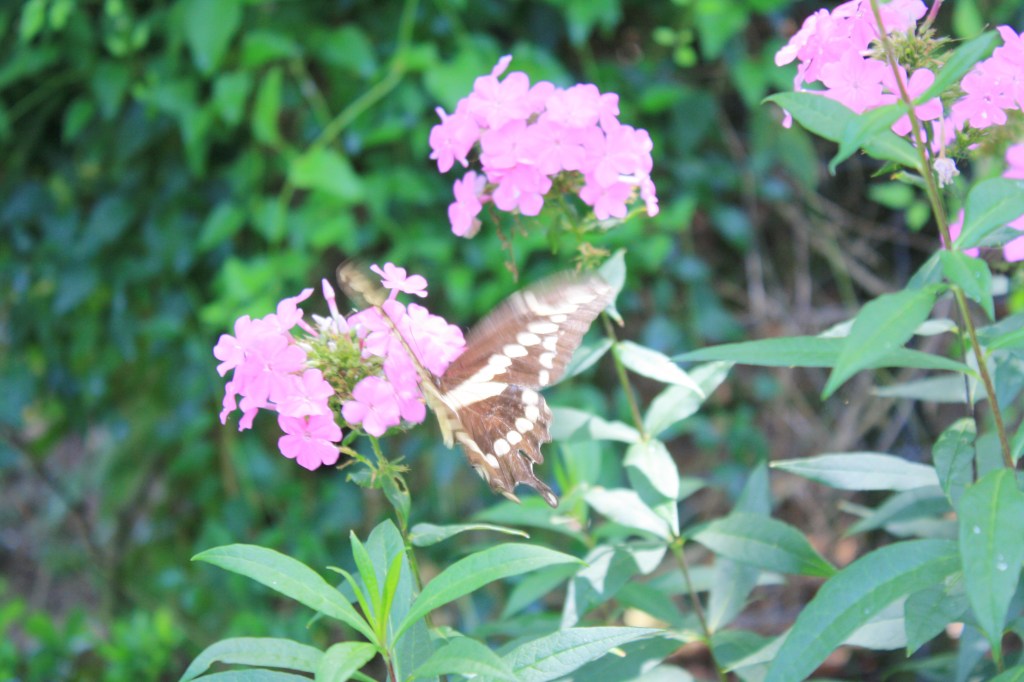
But the garden is still a beauty. Everything is about five weeks behind its normal time to bloom. The vines are just now popping up, and some plants that like more sun and hot weather have not started to bloom just yet.
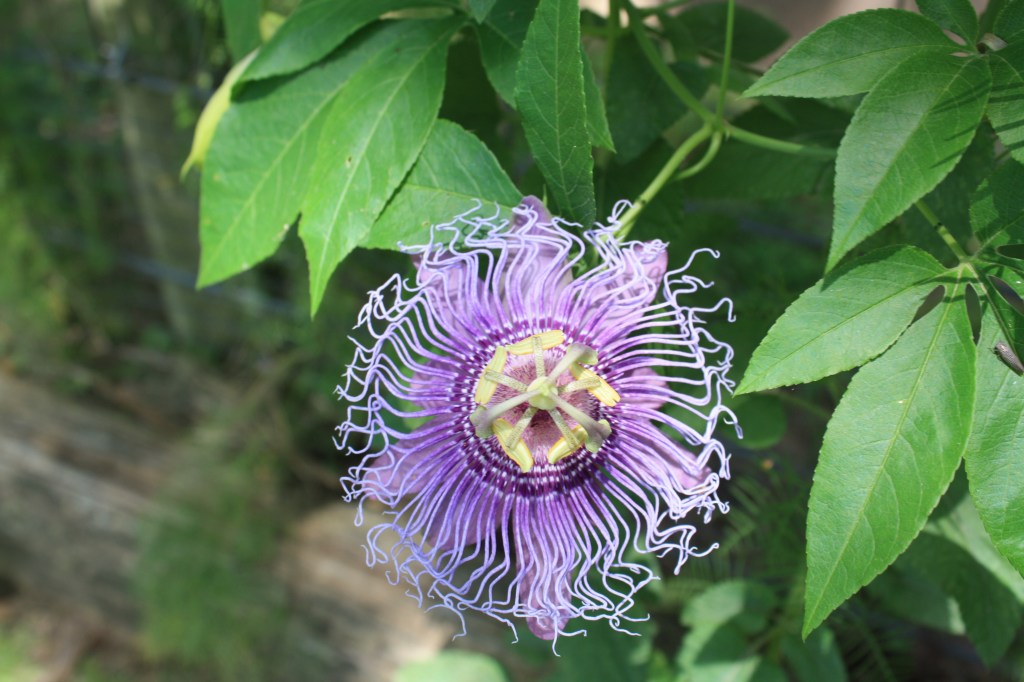
These natives are happy.
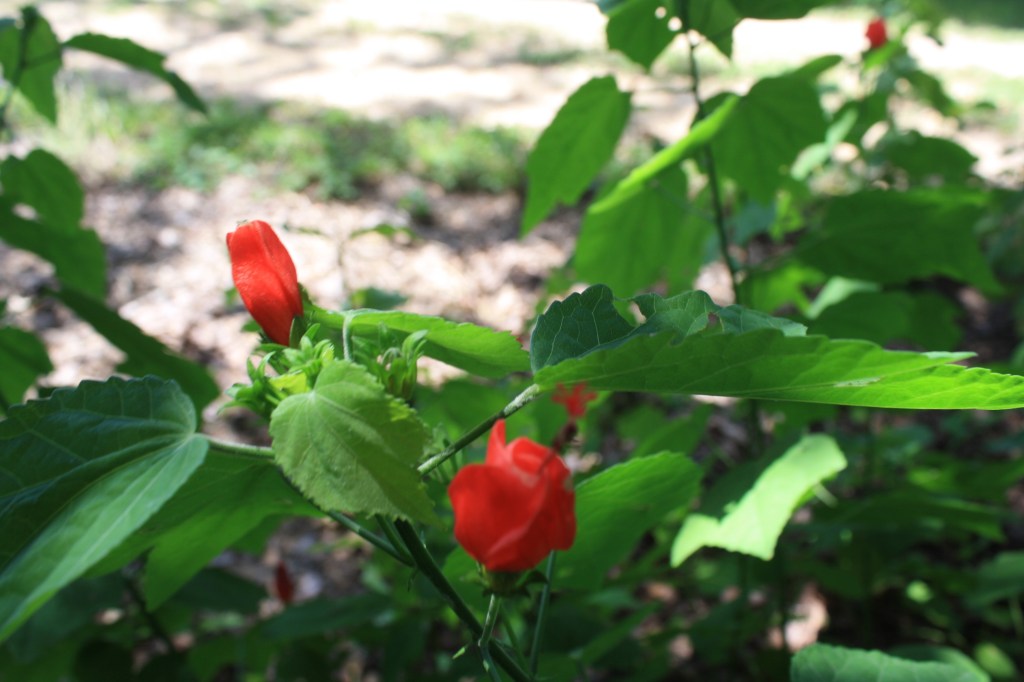
This is why planting things that are native to your area keeps the budget low. They come back!

The white flowers really pop in the shade!

Happy gardening!

Scientific Names for Spiders Are Handy

by Eric Neubauer

When we learned about scientific names in the training classes, we were introduced to how the name of the person that initially described them is often appended to the name. At the time, it seemed rather redundant.

As I found out recently, it can be very useful. I’ve been trying to untangle the lapidicina group of Pardosa wolf Spiders in Texas. These are the largest of the Pardosa spiders around here, and they like rocks, especially limestone outcrops. Their common name is stone spiders because of it.

I’m not aware of any in Milam County, but there are some at  Granger Lake just next door. There are also some along  Brushy Creek in Williamson County and several places along the lake near Belton in Bell County. In total, there are four species in Texas, which are apparently found in limited areas that don’t necessarily overlap.

Here’s one found near Granger Lake. It’s looking right at us!

Here’s what happened. P. sierra was described by Banks in 1898 from specimens collected in Baja California. P. atromedia (California) and sura were described subsequently. In 1959, Barnes decided they were all the same species, P. sierra, which had an immense range in southwestern U.S. and in Mexico. This was based on similar morphology of genitalia.

Then, in 2010, Correa-Ramirez et al. looked at the genetic code of specimens  and concluded that they were indeed separate species, and that  atromedia was in California, sierra was in Baja California, and sura was everywhere else. Additional studies may eventually add to these ranges, but for us it’s very likely that Texas has sura and not sierra. The other species in Texas are lapidicina, mercurialis, and vadosa. They are difficult to tell apart and all appear to come in a variety of colors and patterns.

Stinging Nettle, Not Your Friend

by Donna Lewis

Ouch!!

This week, I bare handedly pulled what I thought was a little weed in my garden. Hot Dog!!!  The little beauty was a stinging nettle plant  (Urtica dioica).   

Stinging nettle. The owie plant.

Stinging doesn’t really describe it; it’s more like intense pain instantly!!  The family and genus comes from the Latin uro which means “I burn”.

Being a Master Naturalist, I try not to label anything a “weed.” Everything has a purpose for someone. Nettle plants actually have a lot of good things nature and humans can use them for. Here are some examples:

  • This nettle is the host plant for the Red Admiral and Question Mark butterflies.
  • It makes a soothing tea. 
  • Parts of it are edible when cooked properly.

The stinging nettle is not to be confused with the larger Bull Nettle, which also has redeeming qualities, like beautiful white flowers.

But, beware to handle it with care. Some leather gloves might help.

I bet, at least for a while, I will be more careful.

PS: This post was from the end of April, but your blogger has had some issues getting posts done. Time to catch up!