Shades of Purple

by Carolyn Henderson

Colorful blooms are bursting out all over at the Bird and Bee Farm Wildscape. Whatever your favorite color might be, it’s in there. 

Passionflower

Shades of purple are particularly abundant. They range from the bright Mock Vervain purple to the pale bluish-lavender of  Palmleaf Mists. There is a specimen of just about everything in between. I’ve included seven different flowers that are classified as “purple”. And all of them are native to Texas. They can grow in sand and blackland and most of them don’t need much rain. 

Garden cosmos

If purple is not your shade, reds, oranges, yellows, and whites are also broadly represented.  I encourage you to come and see all the colors. There are plenty of butterflies and bees to watch, too. They are particularly fond of most of these flowers. 

You can plot next year’s garden from here. And often times there are free samples to take home. Our chapter will be hosting Girl Scouts on July 17 in the morning, at the Wildscape. It’s a good time to go check out the place for yourself. 

What Is This Flower?

by Donna Lewis

I am always looking around for nature. This past week I found a wildflower that I had never seen before on our property. I did not know what it was, just that it was new and very pretty.

The pretty new flower

So I called upon two of our own members who really know wildflowers, Suna, and Linda Jo. As I expected, one of them responded quickly with the answer.

The new residents in Donna’s garden

Linda Jo was first to ID this as a Basket Flower or the common name “American star thistle” Centaurea americana. [Suna recognized it, but couldn’t remember the name.]

The flower heads are 4-5 in. wide and are subtended by fringed bracts. The plant looks similar to the thistles but lacks their prickly characteristics… The name “basket flower” refers to the stiff, straw-colored bracts just beneath the flower head, which are divided at the tip into long, sharp teeth.

Ladybird Johnson Wildflower Center Plant Database

I was happy to see a wildflower that I hope will love our place and have a family here.

As Spock would say…Live long and prosper!

We Have a Jumper!

by Donna Lewis

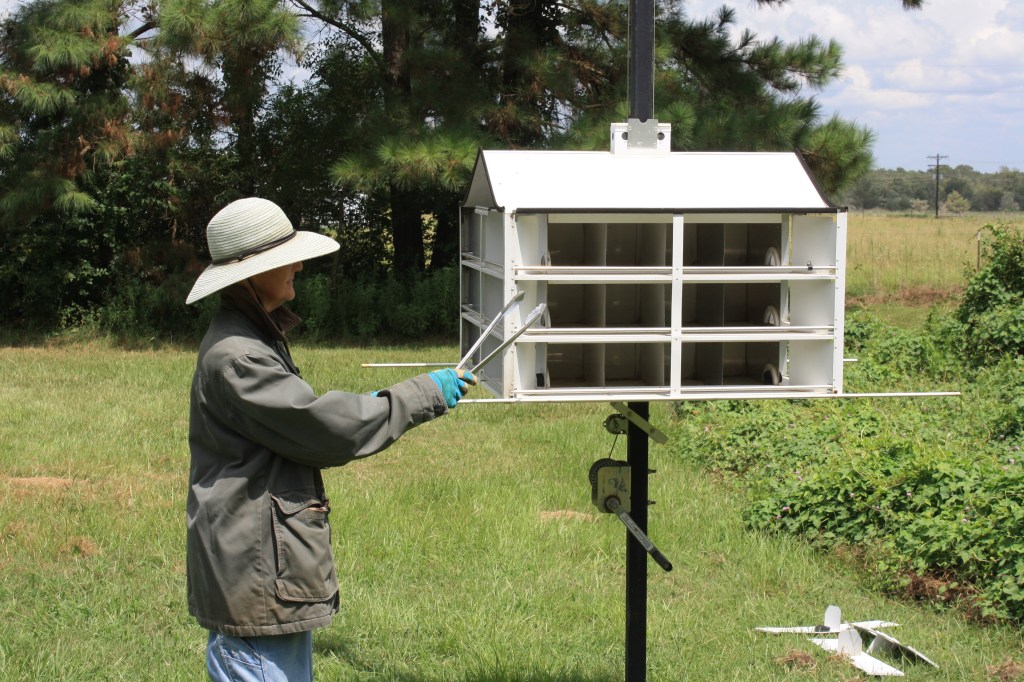
A few days ago I heard one of my baby purple martins screaming. It was on the ground calling to its parents. It either fell out or was pushed out.

Martins are the largest and heaviest of all the swallows. So, while they are excellent at soaring, they are not good at going to the ground. The entire colony got into the rescue attempt. All the adults were flying over the baby trying to get him or her to fly.

How did I get here?

This is the reason I look at the babies as soon as I can. This way I know how old the first set of eggs were when laid. It takes 28 days for a baby to have enough feathers to take its first flight. I guessed that this baby was about 26 days old

So he was close but not quite there. He needed a few more days.

I could not just lower the gourd rack and pop him back in. Doing this when many of the other babies were the same age could cause many more of them to jump out. Then I would really have trouble.

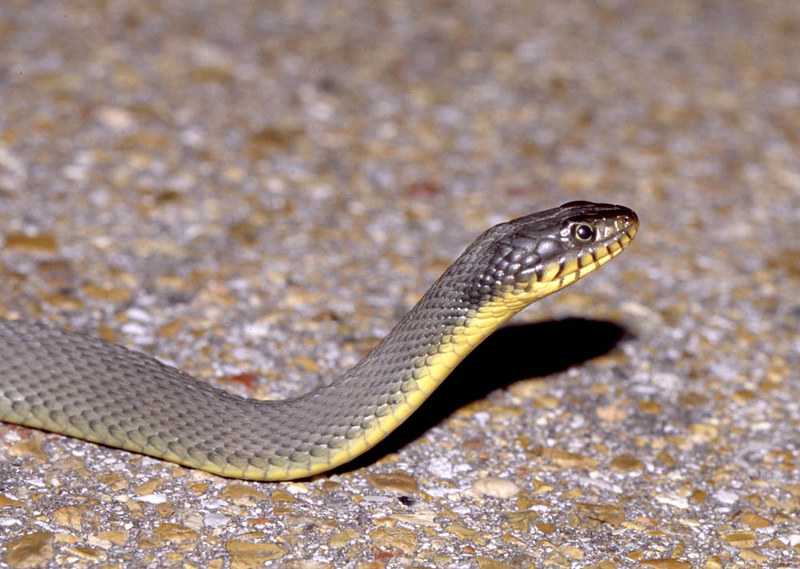
This year five rat snakes attempted to climb the pole and have my Martins for lunch. So, I knew if he stayed on the ground too long, something would eat him.

The first night he was on the ground, I put out a five-gallon bucket with a towel over it and a rock inside. He immediately went to it for protection. The adults saw this and again flew around him. They did not attempt to feed him or give him water. This is tough love.

Improvised bird shelter material

The next morning I was out early, and he was still alive and looking at me. So, I left him alone.

Howdy, Donna

I watched over the next four hours, and he left the area around the gourd rack, flying about ten inches high and started out across our pasture. I knew that was dangerous, for sure.

So I put up an open bird feeder on a shepherd’s hook and set him on it. The adults saw this, and once again tried to encourage him to take that first leap. After four hours, he got his nerve up and jumped, flying low until he gained some altitude, and he was off to the sky.

The launching pad bird feeder

I was so happy!! This usually does not happen. But this day, all was well.

Right now there are many baby birds on the ground. So, be careful mowing for a few weeks until they are in the trees.

Ten Minutes with a Tree

by Carolyn Henderson

On a hot, humid day this week, I ventured out in the early evening to see what I could find to post on iNaturalist. Because of the aforementioned humid heat, I didn’t go far. I decided to peruse a Texas Ash tree in my backyard. This tree took a hard hit from the freeze earlier this year, and I am doubtful it will survive, but nature seems to think otherwise. I spent 10 minutes looking over the tree and found nine species on it. 

Butterflies, spiders and bugs were all over it. I first happened upon a live Superb Dog-day Cicada before it molted from those prehistoric looking shells they leave attached to everything. There were two shells and a live one that I think was trying to get out of it’s shell. It succeeded. I checked back the next day, and the shell was attached to a leaf with out the Cicada in it. It had a little white thing attached to it pre-shedding (molting?) and post-shedding that the other two shells didn’t have on them. These are the cicadas we get every year in Central Texas. I haven’t seen one of the 17 year versions. 

Cicada

Next, I found two types of beetles and an ant hanging out together. I took a picture of the small, brown stink bug and got a larger Green Beetle and ant with it. The smaller brown beetle was identified as a Southern Green Stink Bug on iNat. I didn’t attempt to identify the type of ant. I thought the Green Beetle was a leaf when I took the picture. I also found a Dock Bug (per the closest thing I could find that looked like in on iNat). It could be a juvenile leaf-legged beetle. These look very prehistoric. The armor clad look makes me think of ancient Samurai warriors. Another type of beetle-looking bug was also abundant. It is identified as a Acanthocephala terminalis on iNat.

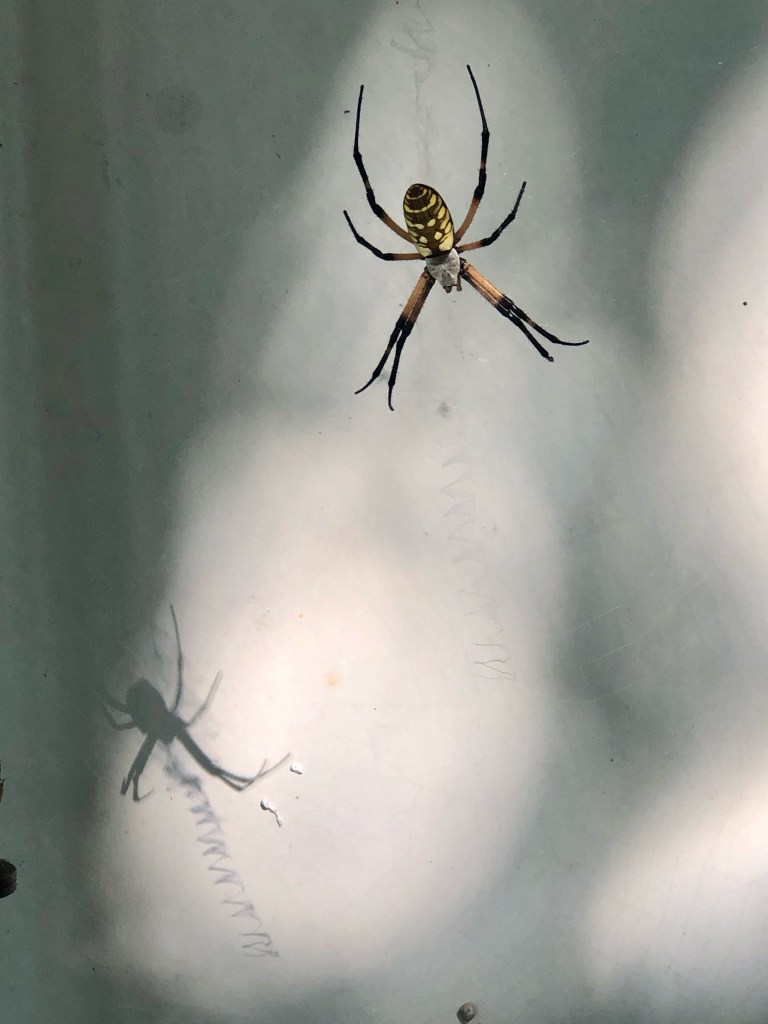
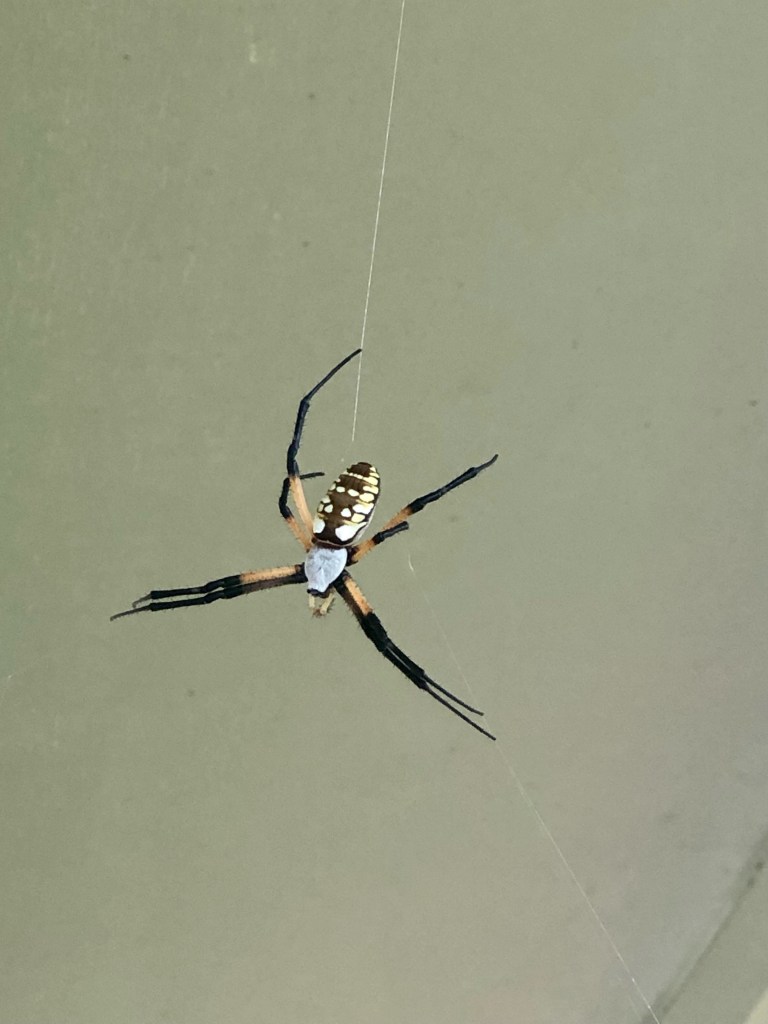
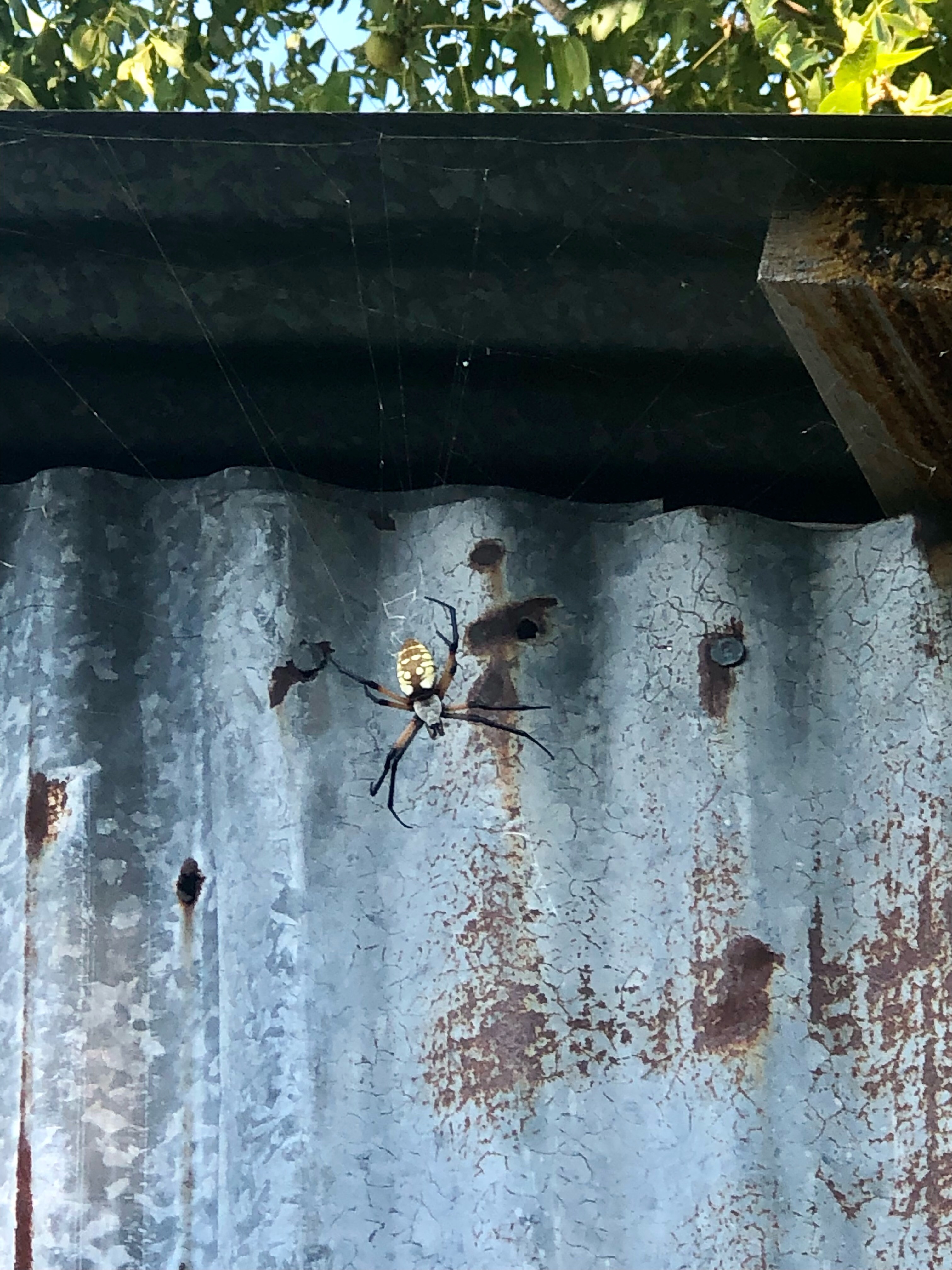
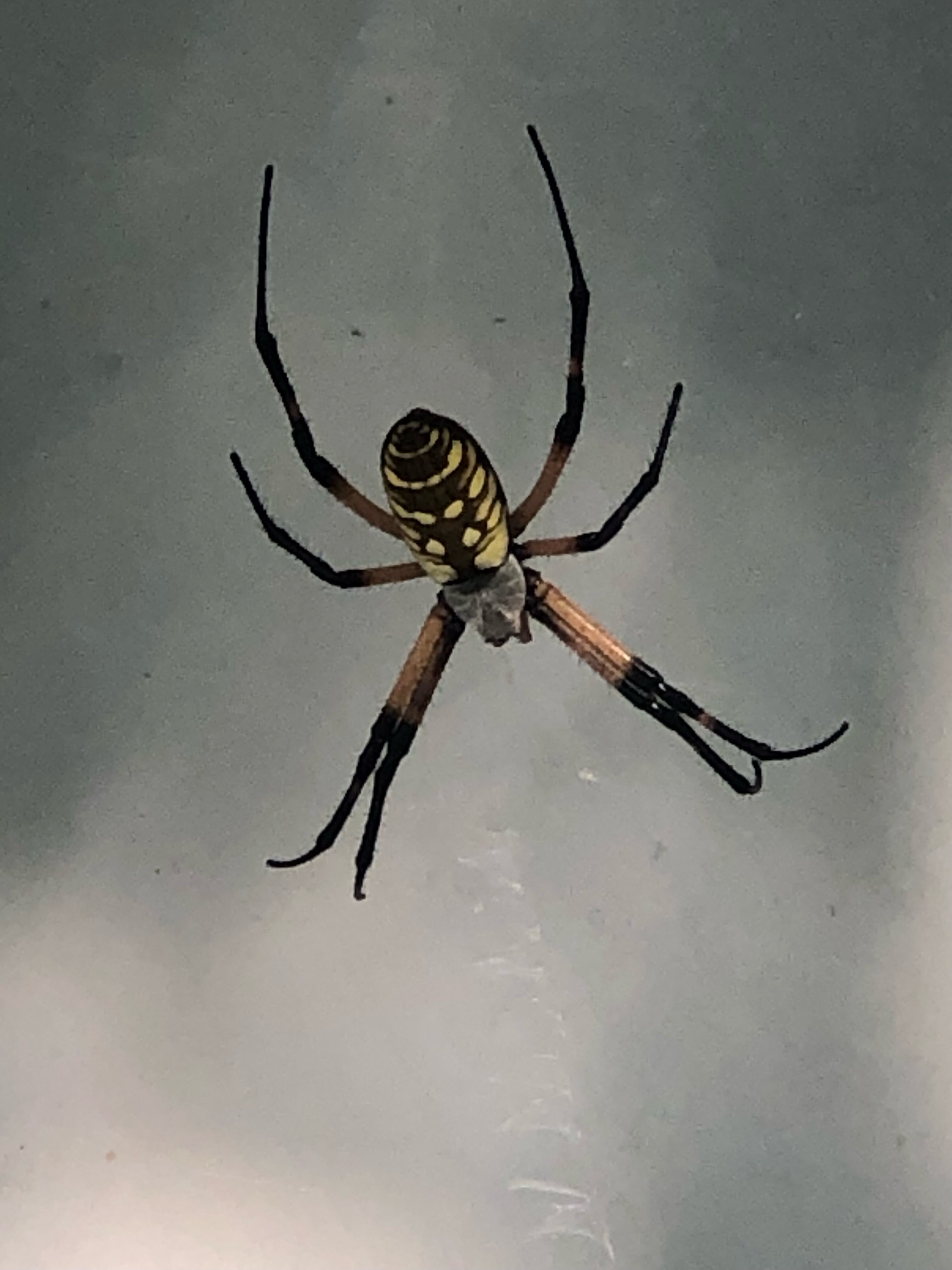
On that same tree, were several Seven-spotted Lady Beetles, Hackberry Emperors, and Garden Orbweavers. The Hackberry Emperors camouflage well when on the bark of the tree with their wings up. That’s nine different species cohabitating on one tree in close proximity to each other. 

In a nearby bush, I found a Mealybug Destroyer with it’s children?. The “destroyer” name seems inappropriate for the small, fluffy white insect.  Note in the picture that there is a much larger one (compared to the others) and three very small ones. The three small ones are in a straight line behind the large one. There was a Texas Ironclad Beetle, a Flesh Fly, and a Condylostylus. The last one, a very colorful and small flying insect, is numerous and difficult to take a clear shot of because of it’s size. A better camera than I have is needed. 

A quick walk in my backyard produced a large array of nature to observe. And, I had more than one thing to post on iNat. If you are interested in joining iNaturalist, go to www.inaturalist.org  to get started. Linda Jo Conn is the go-to person for our club on anything iNat.

Hint: If you want your post verified quickly to get research grade status, post it of a bird, butterfly or bee/wasp. I’ve had my bird posts verified before I finish the post. 

June in Donna’s Garden

by Donna Lewis

It’s heating up.

Gorgeous purple coneflowers

So here are the June photos of my pollinator garden.

Turk’s cap is enthusiastic!

After days of rain, the sun and the humidity have returned in force.

We have gone from too much rain to too much heat.  Now I have to actually think about watering my plants.   I have to do that while I stay in constant motion so the mosquitoes don’t eat me for lunch.

The first tall plants were beat down by the wind and rains we had.  Mostly purple Larkspur.  They were really pretty and the Swallowtails liked them alot.

There are so many different flowers that I cannot name them here.

Just know  I make sure that every plant or vine has some value to nature.

Zinnias, Indian blanket, black-eyed Susans, etc.

The tall sunflowers really fit the bill because they have both nectar and bugs. The nectar for the pollinators and the bugs for the birds. The cardinals and the wrens go crazy over them. Zinnias are just popping up and just about all the butterflies like them.

Sunflower and bee

Fennel is back and the Black Swallowtail butterflies lay their eggs there.

Sunflowers and friends, not fennel

It’s a wonderful place to be if you are a pollinator or a bird. It’s pretty nice for me too.