Last week I turned on my porch light every night at “dark thirty” to attract moths I could photograph and submit to the National Moth Week 2021 project on iNaturalist.org. This year was a bit cooler and more moist than most of the past years, and also a bit brighter because of the full moon. Although I thought I did pretty well with my very basic mothing equipment and a “point-shoot-and-hope” camera, I was amazed by the quality and quantity of observations my Texas Master Naturalist / iNaturalist friends across the state of Texas submitted.
Becoming a Master Naturalist has truly changed my life for the better. One thing that’s enriched my life is using iNaturalist. I’ve learned so much about the world around me, in particular right where I live. Our property is north of Cameron and has woods, pastures, a creek, springs, and an arroyo. That means there’s lots to see! I thought I’d share some of the summer life from this year.
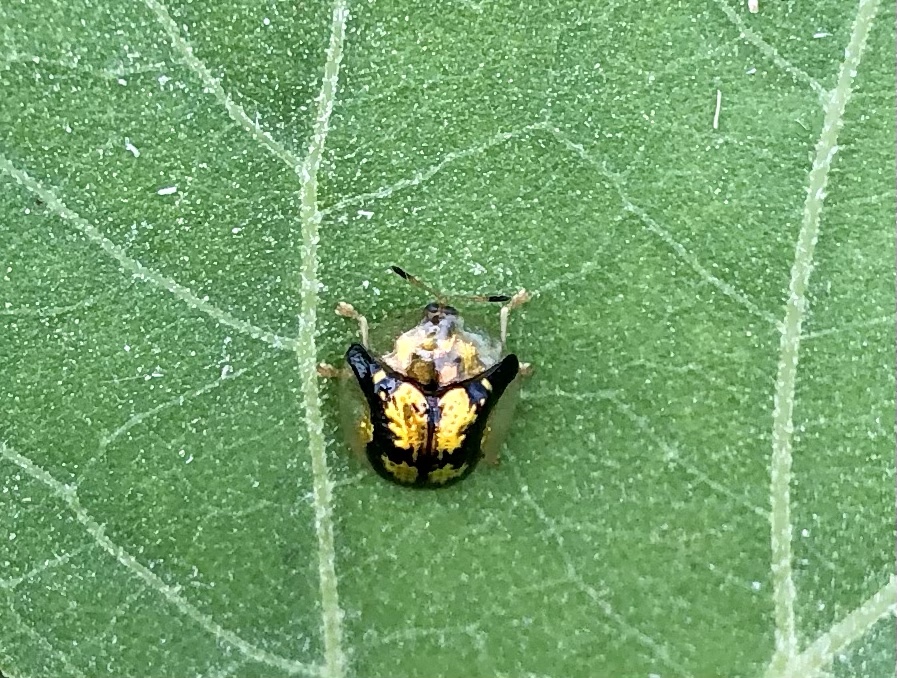
First off, I’ve learned to look down and look for anything on a leaf that doesn’t look like a leaf. However, this beetle wasn’t hard to spot. It’s teeny tiny, but was so shiny it caught my eye. I think I now have a favorite beetle, and have plenty here for it to eat!
A beautiful jewel
The Mottled Tortoise Beetle is a member of the Leaf Beetle family. It is found on morning glory flowers, leaves, and vines as well as milkweed plants. Their spiny, flat larvae look more like little dark centipedes and they eat these plants while they grow and develop into rounder, shiny adults. Though they may punch holes into the leaves of the plants, they rarely cause enough harm to damage or kill the plant unless it is young or a seedling. They are not considered an agricultural pest or threat.
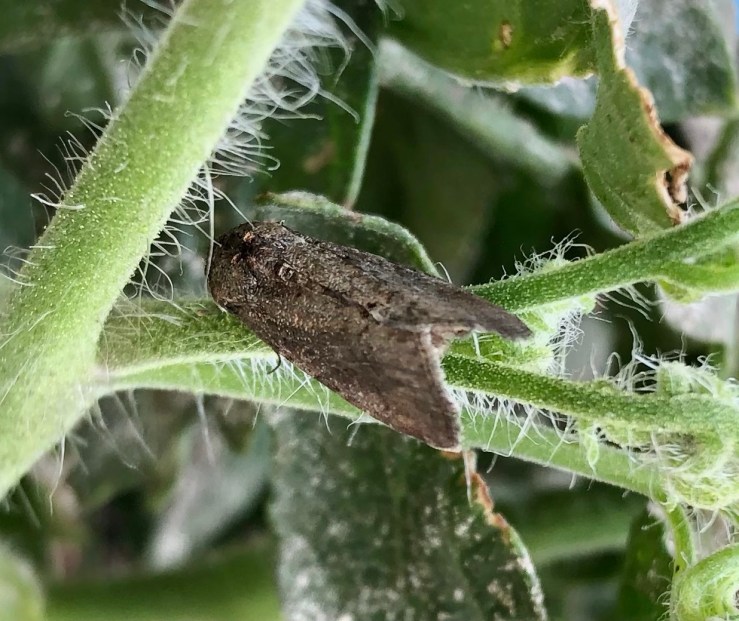
This week, I’m supposed to have been looking for moths, for this year’s National Moth Week collection. However, I’ve only located two. One is bright and cheery, plus it was on my car, which made it easy to see, while the other is one of those common brown ones that will soon be legion if the chickens don’t eat more of the armyworm moth caterpillars. I spotted it, because it was something that didn’t look like a leaf, but was on one of our tomatoes (which got damaged thanks to herbicide drift from the cotton across the road, grr.)
Media moth
Perhaps a cabbage looper moth, or an armyworm moth…
Moths of Hermits’ Rest
I’m always on the lookout for things that are blooming, because one of my goals when I retire is to compare when I have uploaded flowers over different years to see if they change. That’s why I keep recording observations on the ranch, even though it doesn’t count for Master Naturalist hours unless it’s part of an approved project (so, the beetle doesn’t count, but the moths do). I’m just curious about my local ecosystem and don’t need awards to motivate me at this point!
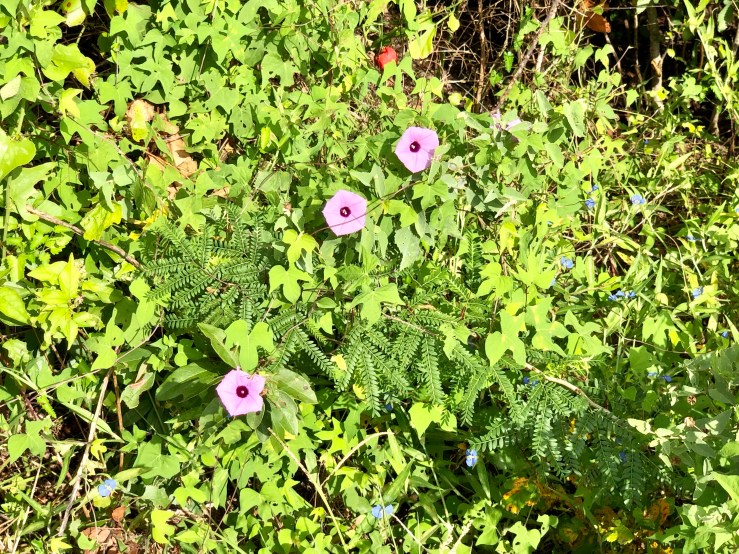
Tie vine, food for the mottled tortoise beetle
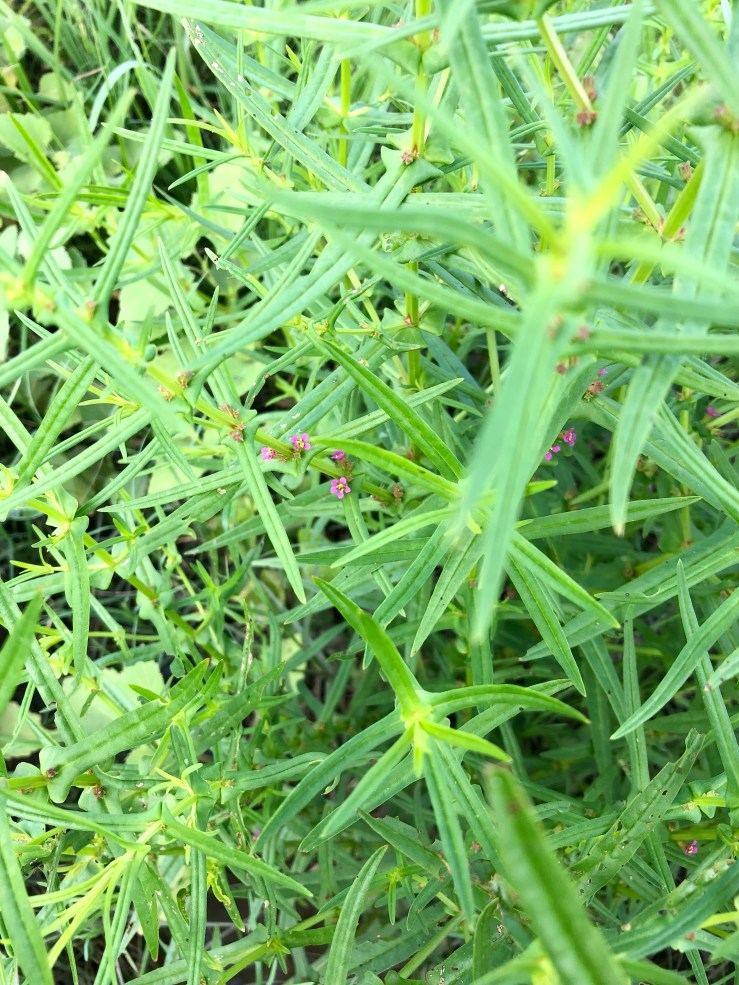
Scarlet toothcup (Ammannia coccinea) with tiny flowers
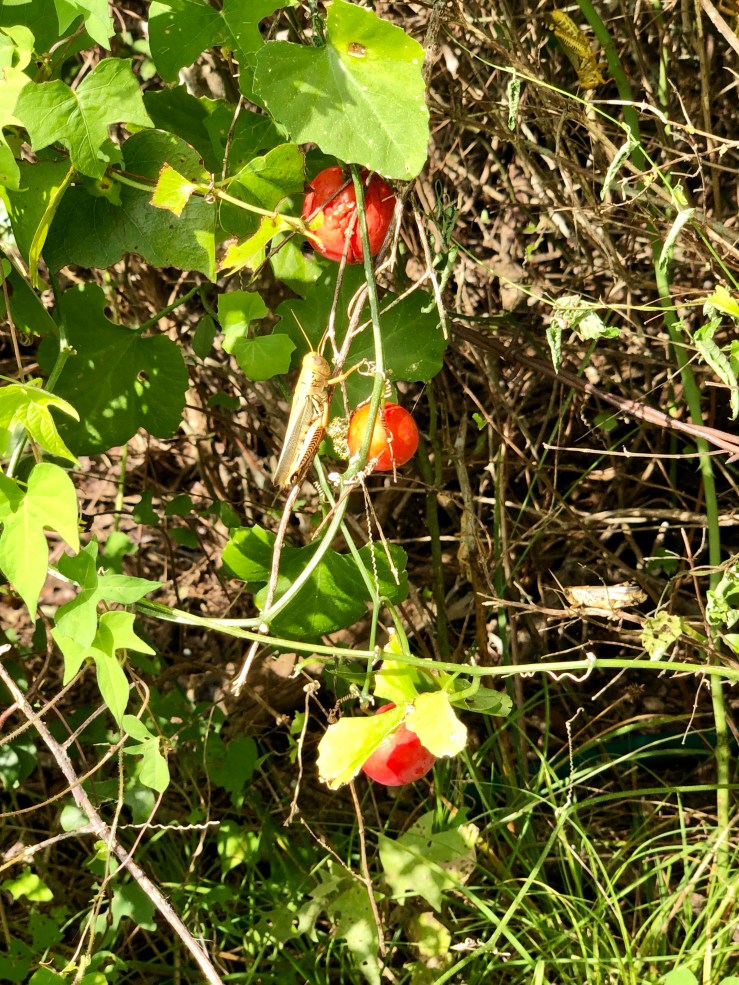
Snake apples, also known as Lindheimer’s Globeberry (plus two of our zillions of grasshoppers). It’s in the cucumber family!
Ironweed (Vernonia sp.) – some are edible!
Finally found a passionflower. We mostly have vines.
Ruellia, which I always get wrong. This is R. nudiflora, violet ruellia.
Plants of Hermits’ Rest
Most of the flowers I’ve been finding are in the pink to purple family, except those snake apples. I just learned they can also be called globeberries. Huh.
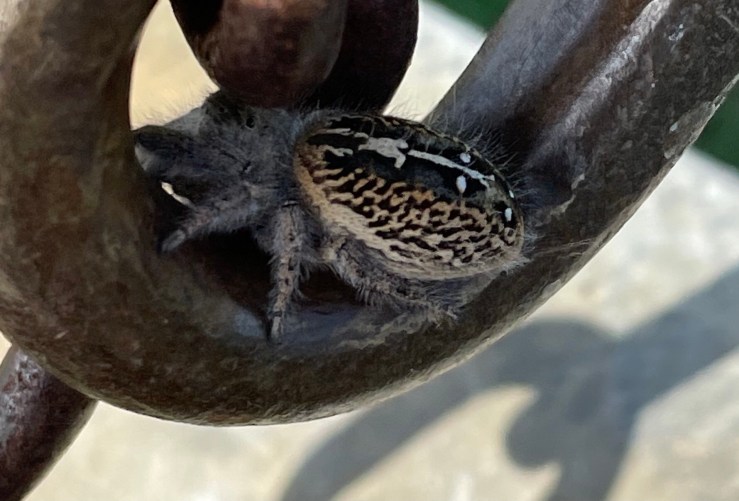
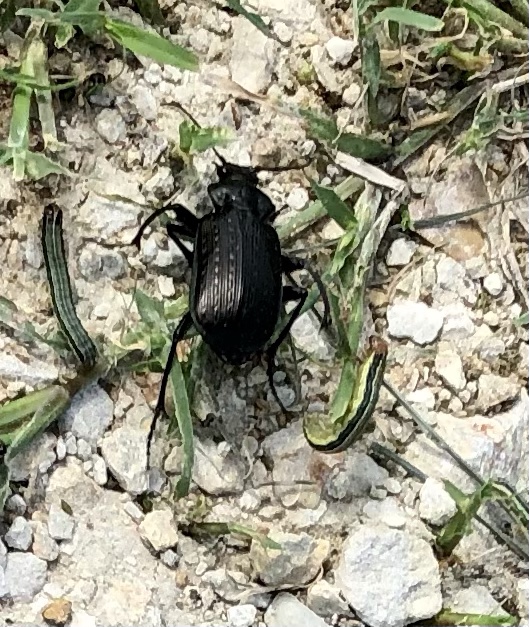
Of course, there are lots and lots of insects, particularly the differential grasshoppers who are dominating every moment of my outdoor life. Chickens like them a lot, though. The spiders have been interesting this year, though, and I’ve seen some new ones. I’ll also share the deep black beetle and one of the snakes that has been eating the eggs my hens produce. They seem to have gotten smarter and stopped hanging around in the hen house, which makes them easier to find and dispose of.
The reflected sky makes this one more interesting than its millions of brethren
Phiddipus texanus
Furrow orbweaver
Black caterpillar hunter beetle, hopefully heading out to eat armyworm moth caterpillars
Rat snake (chicken snake), deceased
Insects and reptiles of Hermits’ Rest
So, what’s thriving over where you live? Have you seen any of these species? We love it when you share your experiences on our blog! Contact me at ecrmnpresident at gmail.
by Carolyn Henderson, with additional photos from Linda Jo Conn
Young girls with boundless curiosity swarmed the Birds and Bees Wildscape Saturday, July 17, to perform public service in honor of the 100th anniversary of the founding of Girl Scouts of the USA. The El Camino Real chapter of Texas Master Naturalists hosted the event.
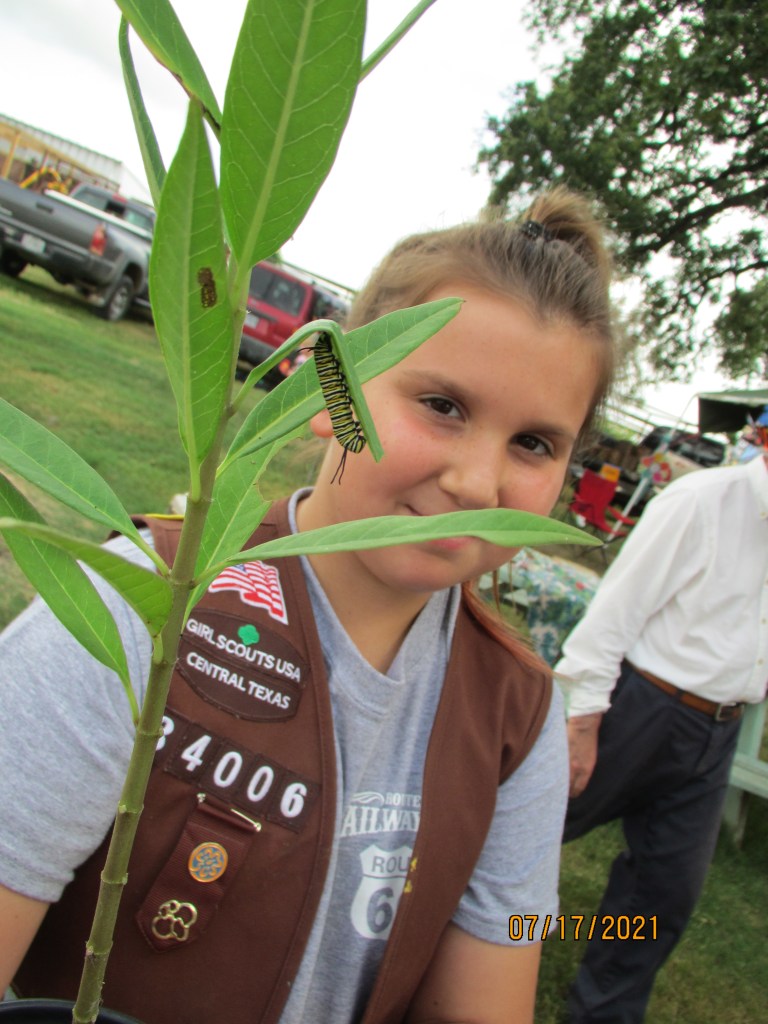
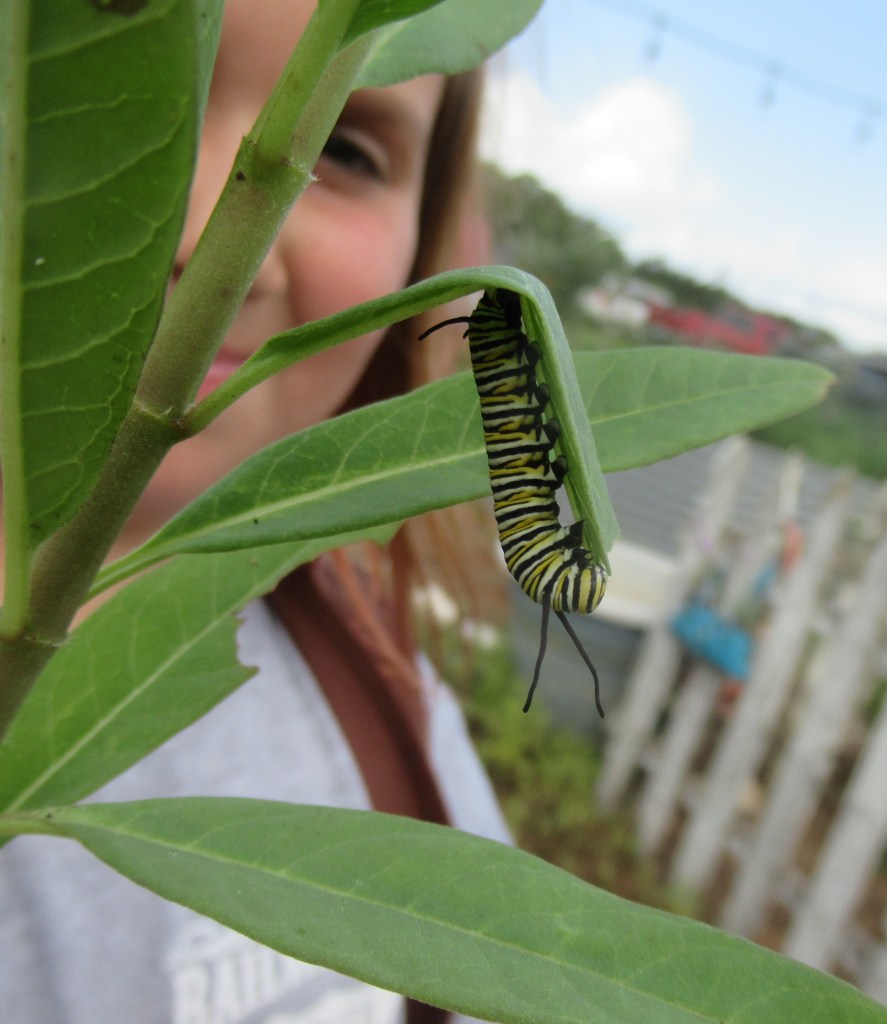
Girl Scout finds a monarch butterfly caterpillar
Approximately 40 scouts and their leaders and parents attended the event. It started with talks given by Catherine Johnson, Donna Lewis and Alan Rudd. An additional 15 ECRMN members helped the girls.
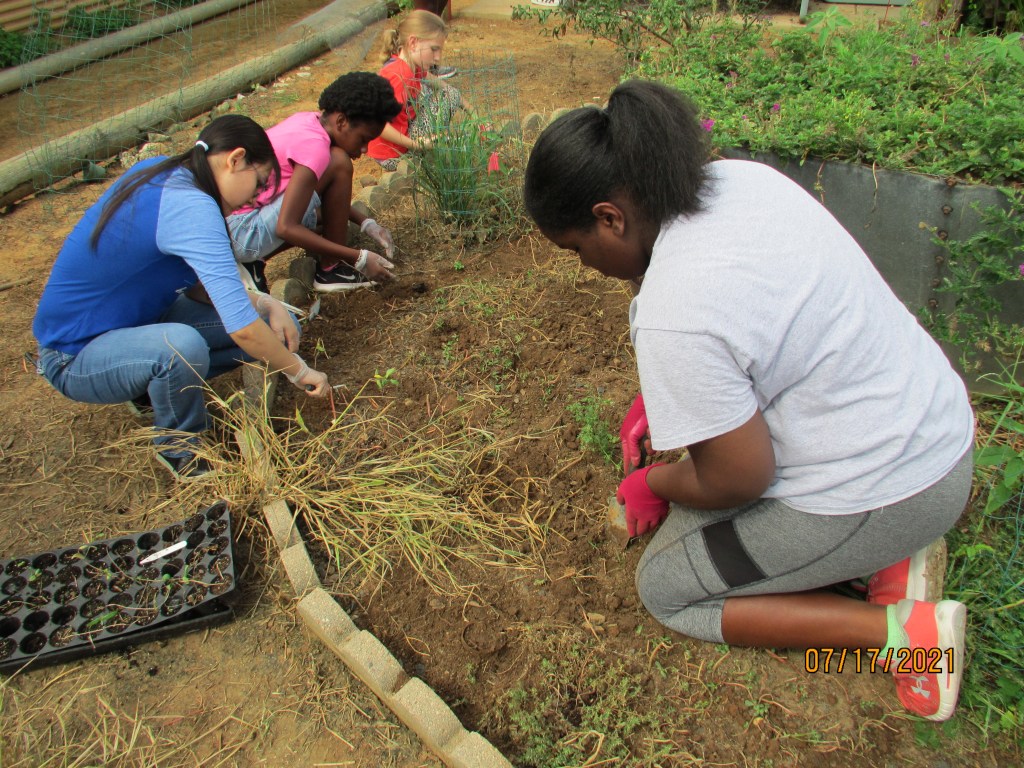
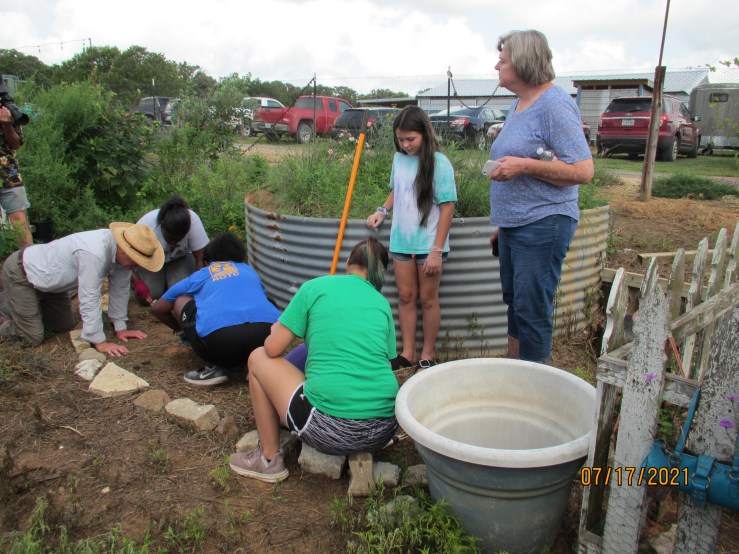
Donna Lewis spoke to them about planting milkweed to help promote the continuation of monarch butterflies. Alan Rudd spoke about the control of mosquitos with a totally natural method. Many adults were particularly interested in controlling mosquitos. The scouts then put that information into practice by planting milkweed in several sections of the wildscape.
Scouts plant milkweed
The girls and members were also excited to watch the release of many Bob-white quail into the pasture at the Bird and Bee Farm. The pasture is in the process of being returned to its natural state, and the quail were released to try to repopulate the area with a native bird that once was abundant in the area. They are rarely found east of I-35 now.
A scout shows off the goodies she’s taking home.
The girls also found stray eggs laid by other birds on the farm [guinea fowl], and monarch caterpillars that were already on the Milkweed plants that were to be planted Saturday. It was an informative and entertaining day for everyone and the scouts left with bags full of goodies and some native Texas plants to grow at home.
Two scouts explore and come back with some treasures – a large egg and some feathers.
So much went on! Enjoy more photos, as well as some taken by Linda Jo Conn. What a fun day! Click a photo to see it enlarged.
Scouts and troop leaders plant Milkweed
Alan Rudd talks about “Wigglers” ( early stage mosquitos) to the girls
Girl Scouts, GS leaders and ECRMN members wait for the quail release
Mature quail released into the wild
Girl Scout holds a baby quail. It was not released – too young
Debi, Eric, and Scott look on as Girl Scouts plant milkweed
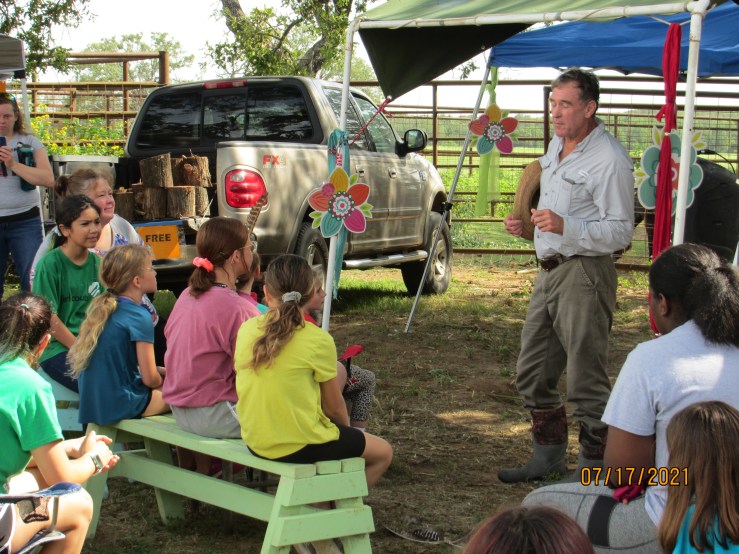
Catherine Johnson gives her presentation
Donna Lewis shows how monarchs fly to Mexico
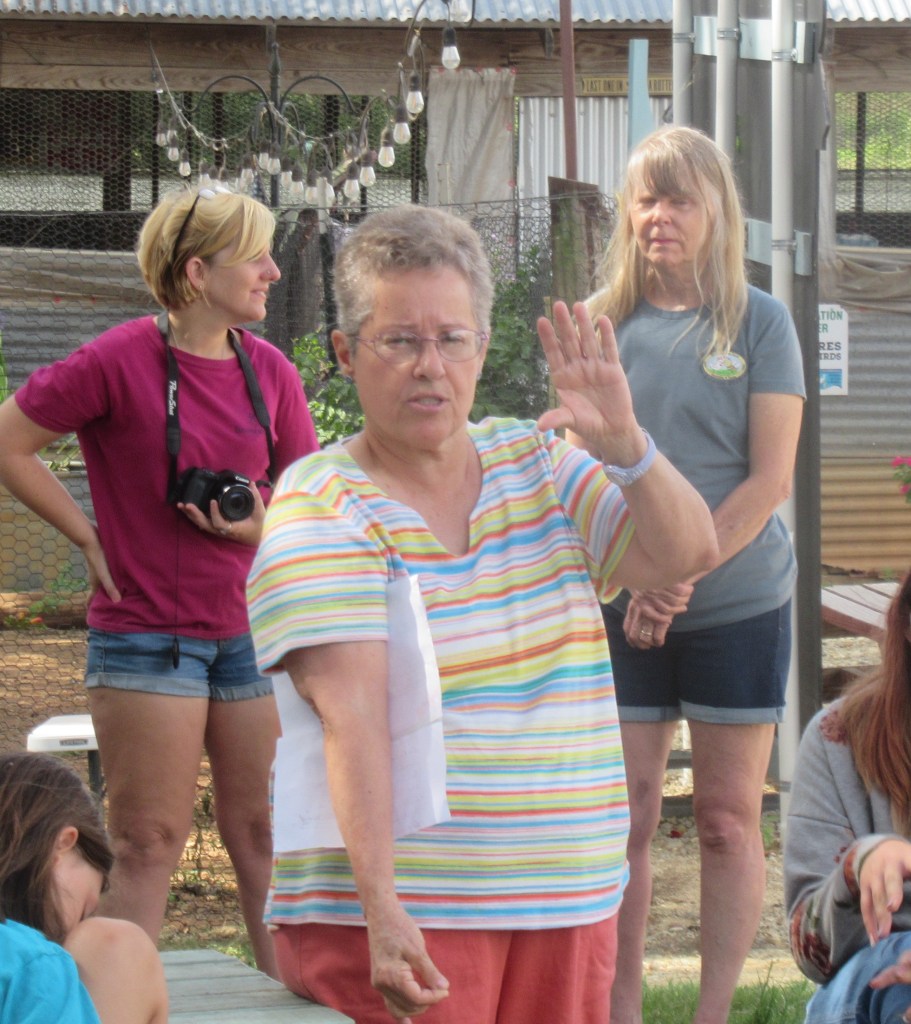
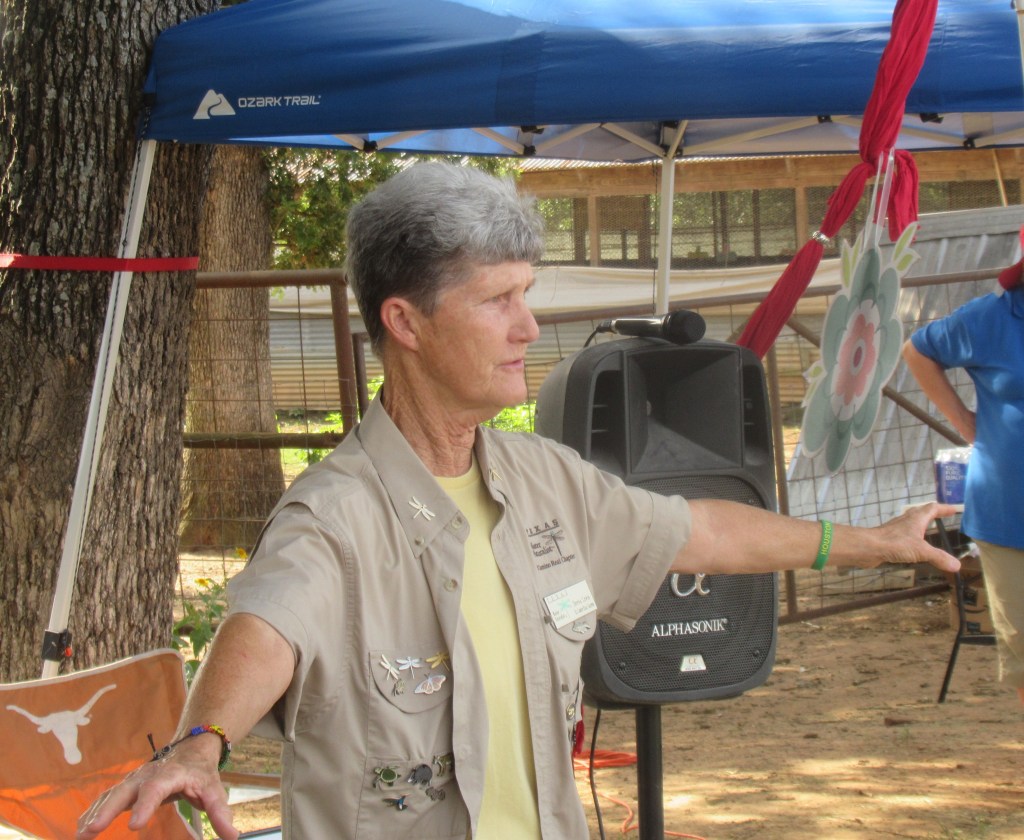
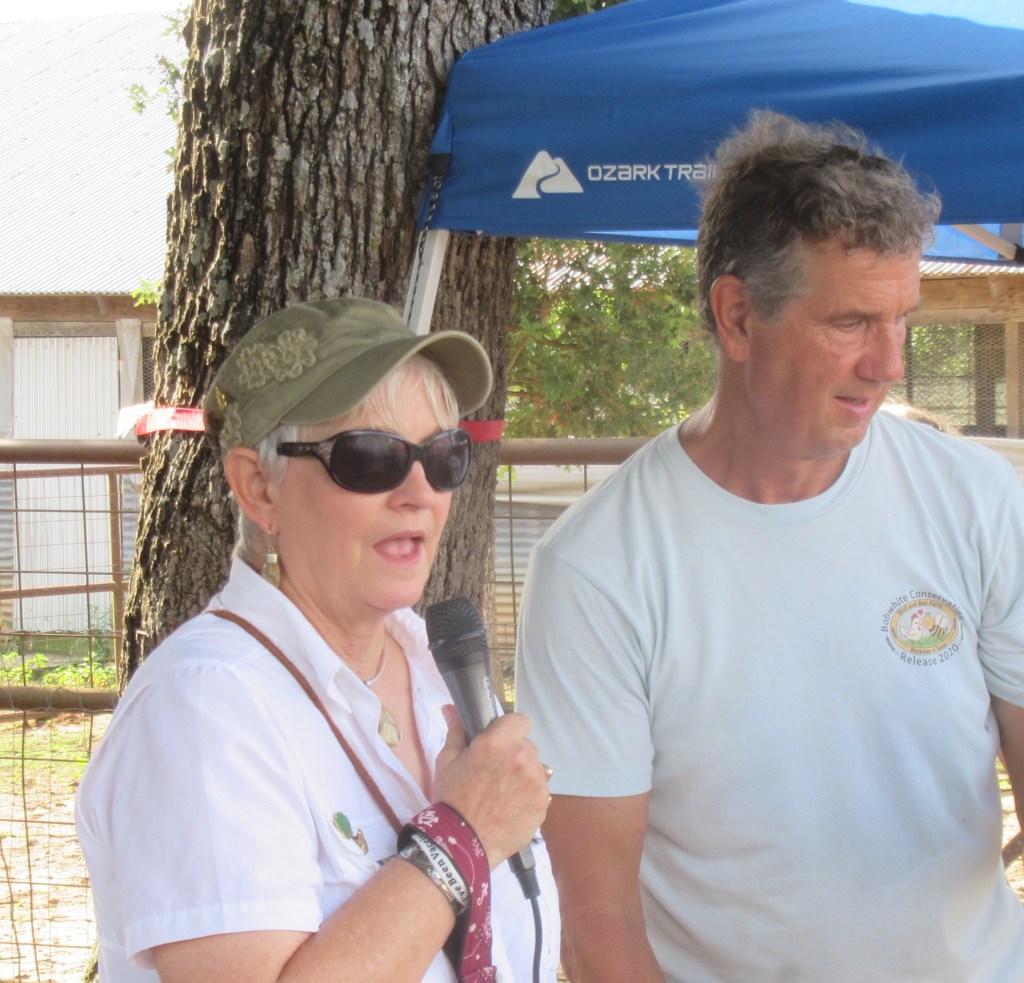
Phyllis Shuffield talks as Gene Rek of Bird and Bee Farm looks on
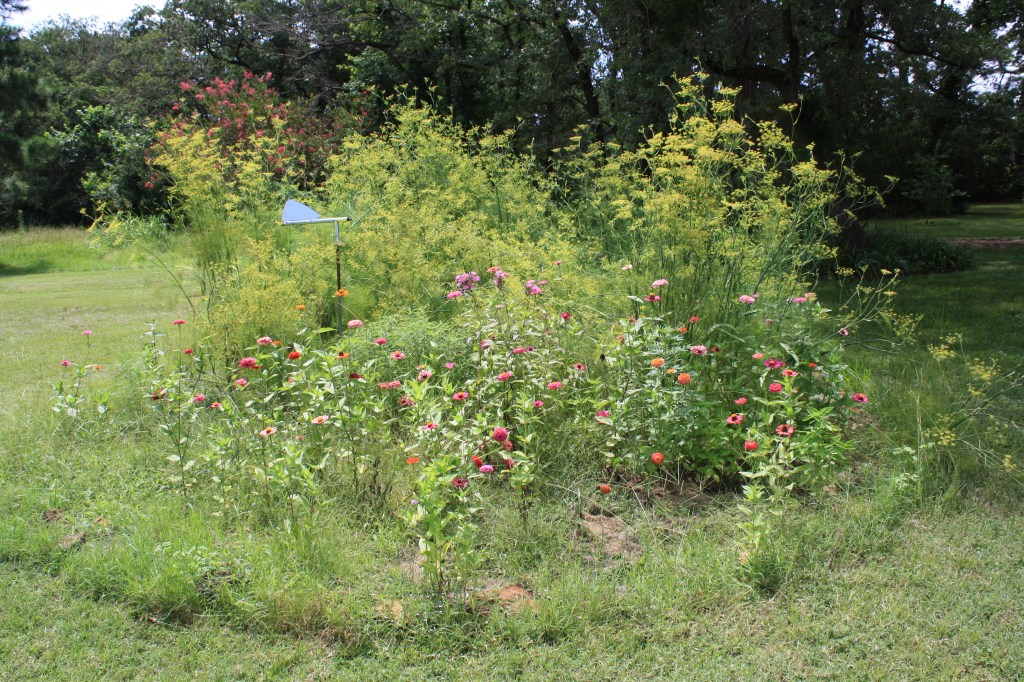
I know you all were wondering earlier this year what I was going to do to this small garden in my front pasture area. The freeze took every single plant to the ground. Laid to waste.
I was not able to weed it, or really do any work in it like I always have for many years. Injuries, a few too many years…it all adds up. I have been 29 several times I think.
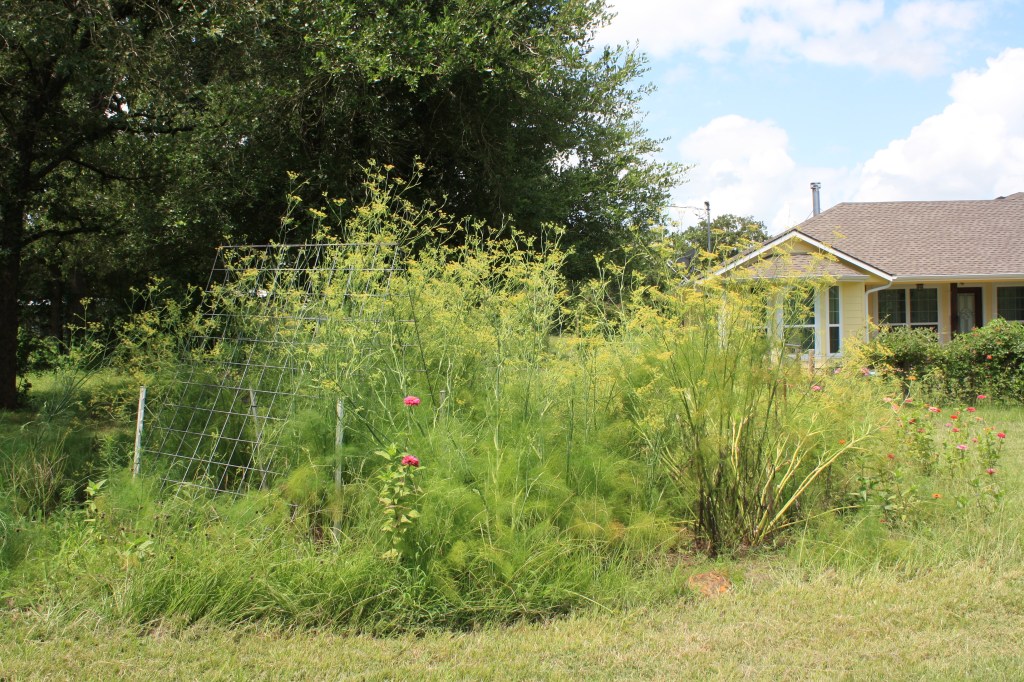
So, let’s talk about what the garden is right now. It looks messy to us humans. But, I didn’t plant it for us. I planted it for the wildlife. This garden had lots of native plants in it and a perch I made for birds to rest on.
I planted zinnias, fennel, yarrow, sunflowers, sage, coneflowers, salvia, cowpen daisies, and a host of native things that just blew in. Freebies! And very important, I made a perch for the birds to sit on.
Many gardeners forget to put something for the birds to perch on and get off the ground where they feel safe. I cut a cattle panel in two, then took some hognose clips and made it to where it would open up. The birds love it.
All those “native plants” I had put in for years came back after the horrible weather. Even the heat and too much water has not deterred them. But all the mess has lots of bugs in it. Food for hungry birds. So, I may have just given you a reason to get out of all that work, trimming, weeding and other back breaking work.
John Pruett, Connie Anderle, Ann Collins and I joined forces at Orchard Park in Cameron for a nature survey. Eric Neubauer arrived at the city park earlier to look for spiders and at the aerated pond and was leaving as we arrived. The park with its old pecan trees is neatly mowed. The paved walkway around the park was used by walkers and joggers during our visit. Several bordered rose beds, wildscape areas, and a huge purple martin house installed in the past are apparently not maintained as intended, but I envisioned a person or small group with the time, energy, and desire to add to the beauty and utility of the park volunteering their efforts here.
Purple martin house at the park
I was disappointed to learn that the Cameron City Manager is leaving for another position. During a conversation I had with him regarding the Great Texas Wildlife Trails Adopt A Loop Project, I was impressed with his vision and plans to incorporate more natural areas into the landscapes of the city parks.
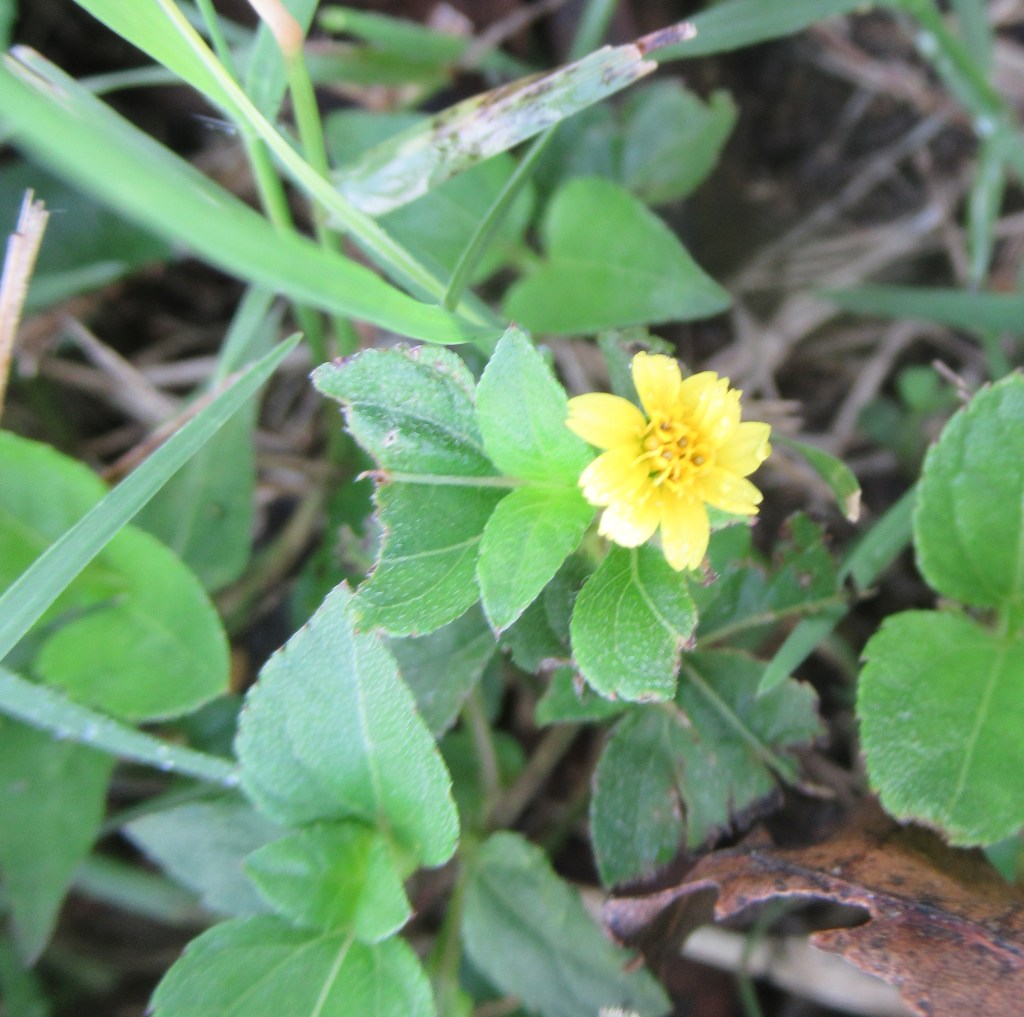
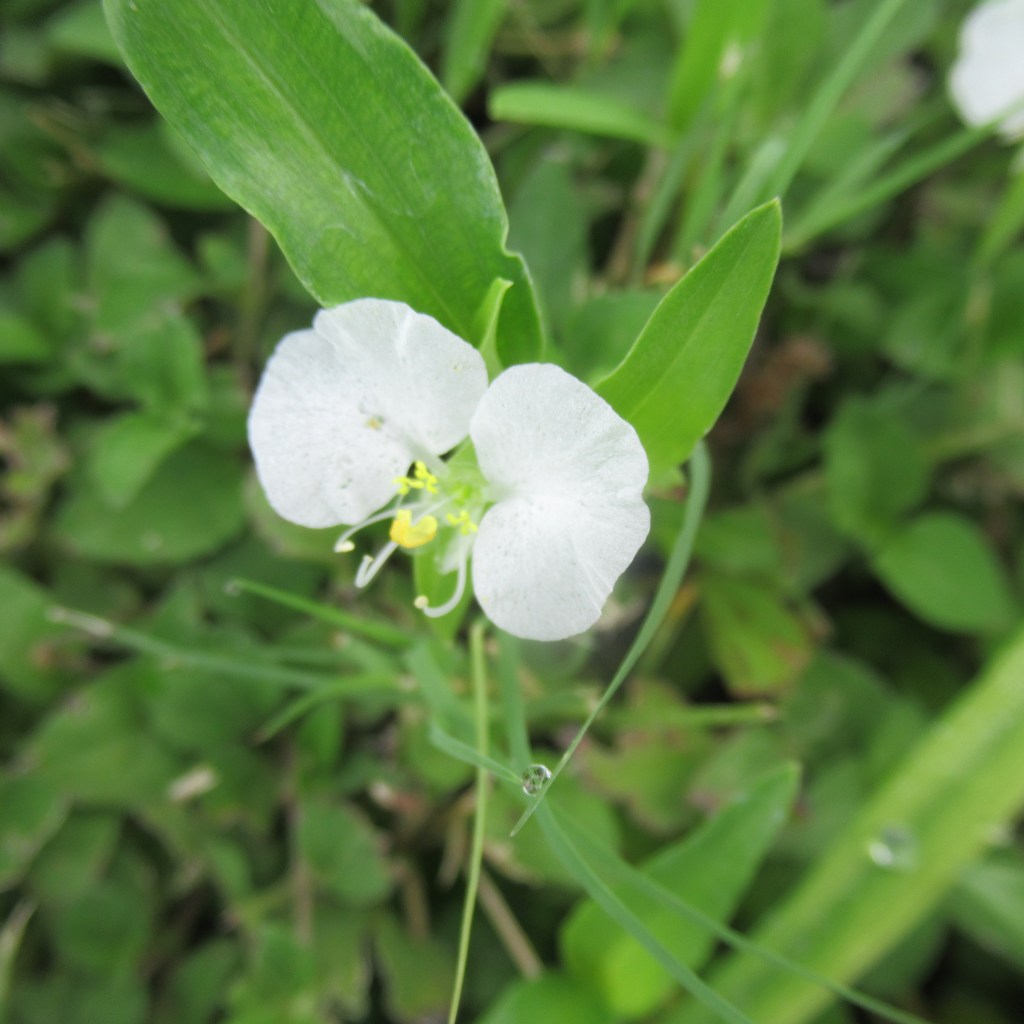
Strolling around the park “at the speed of botany,” we did some “belly botany.” Most of the plants in bloom were below the height of the mower blades. One remarkable observation was the abundance of white widow’s tears (Commelina erecta). I observed only one blue dayflower during the visit. We were pleased to see straggler daisy (Calyptocarpus vialis) and turkey trot frogfruit (Phyla nodiflora) carpeting the park. Wing pod purslane (Portulaca umbraticola) was in bloom and the tiny delicate flowers of erect spiderling (Boerhavia erecta) required a closer look.
Straggler Daisy
Erect Spiderling
Widow’s Tears
Turkey Tangle Frogfruit
Wingpod Portulaca
Plants of Orchard Park
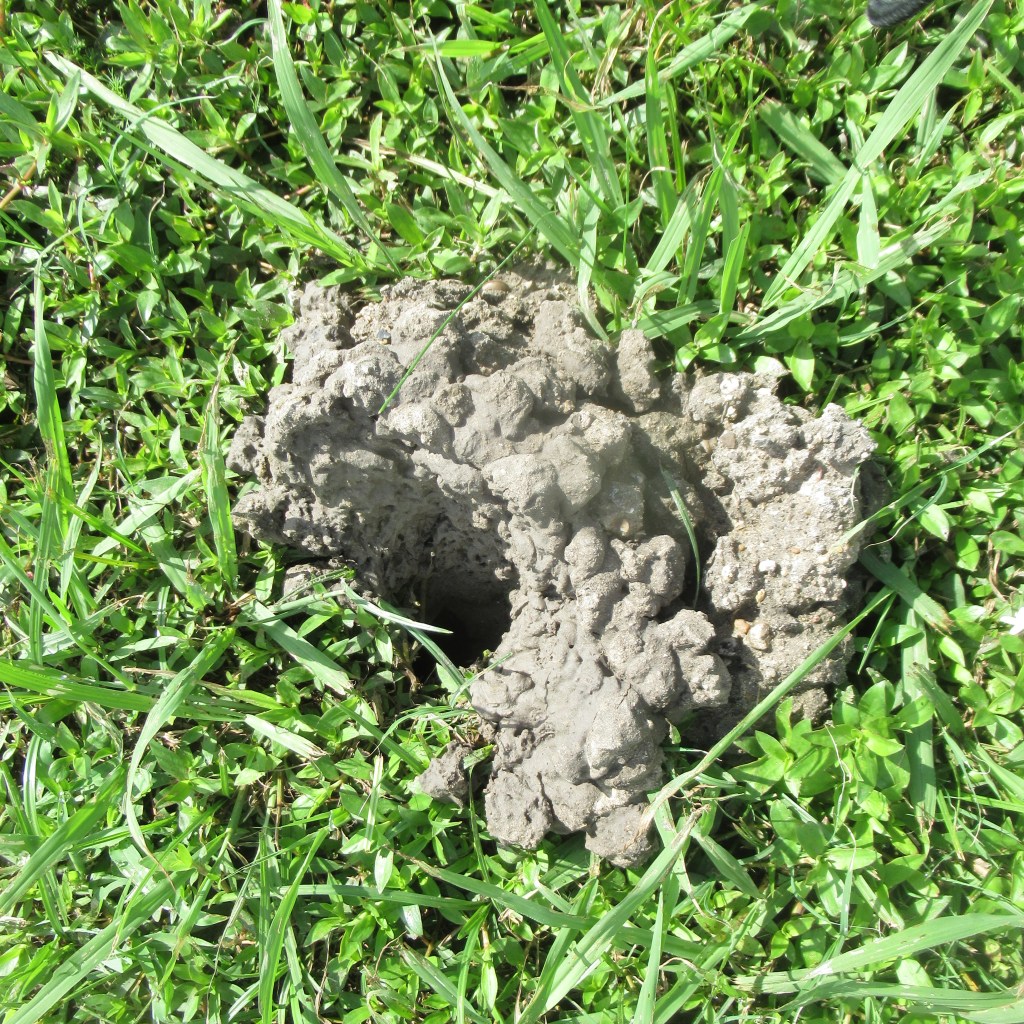
Among the animals observed was a fox squirrel (Sciurus niger) checking out the future pecan crop and several crayfish mounds (Cambaridae family). While Connie was trying to point out some rice stink bugs (Oebalus pugnax) she had spotted, my eyes focused instead on a tiny sharpshooter (Draeculacephala sp.) on a blade of grass.
Sharpshooter – Draeculacephala sp.
Rice Stink Bug
Crawfish mound
Fox Squirrel
Animals of Orchard Park
As a destination for your daily walk or to just sit and relax in the shade of the pecan trees, Orchard Park on East 6th street across the railroad tracks from the Cameron Yards is a place to go.