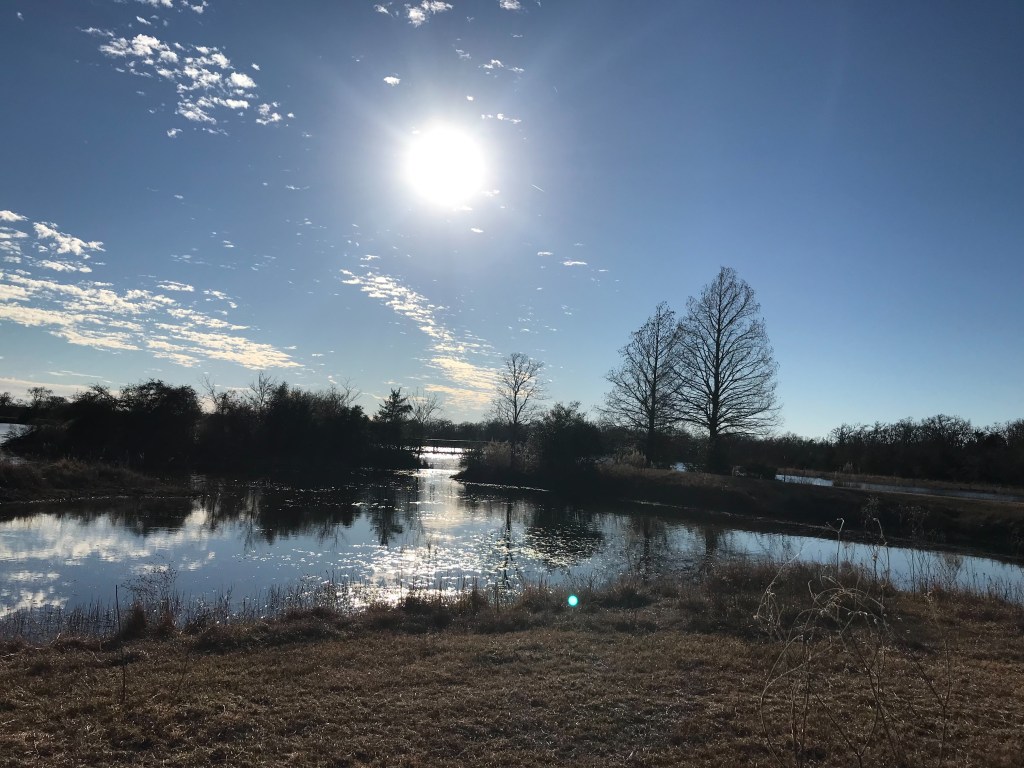
On Saturday, February 19, members of our chapter and our current training class went to visit the property of A.E. Rudd, near Somerville, Texas. It’s a beautiful place with many water features to investigate.
It was a beautiful day to be outside. Click the images below to see them full size!
Each week in our El Camino Real Master Naturalist’s newsletter we are encouraged to get outside and are given suggested activities. One week recently the activity was to visit a Texas State Park. On an absolutely gorgeous day (January 30) I did just that and visited a park that has been on my bucket list for a long time.
(The images are videos for some reason…hope to fix it soon).
The park was Palmetto State Park between Luling and Gonzales Texas, about a two hour drive from Rockdale. The park did not disappoint. I met a friend from Austin there and we took off on the trails, which are easy to walk. Our first trail ran by the San Marcos River and all I could say is “I wish my iNaturalist guru was here”. I was like a kid running here and there trying to look at everything and this is in January! (My Girl Scout Leader daughter-in-law told me to go before the mosquitoes wake up.) The second trail we walked was the Palmetto Trail and I was in love with this park. We stopped for our picnic lunch on a bluff high above the San Marcos River with a a beautiful view!
I took off on my own to explore other parts of the park and met two gentlemen who were practicing for the Texas Water Safari in their canoe. The event will begin June 11 this year at the headwaters of the San Marcos River and will end in Seadrift on the Texas coast, a distance of 260 miles. Imagine in a canoe, in June, for 260 miles!
The park is a nature lover’s paradise. The dwarf palmetto (Sabal minor) is a visual delight along with the other plant life. Looking at the website for Palmetto will give you its wonderful history and for birders, it is heaven! Entrance fee is $3.00. without any discounts! It was not crowded on the day we were there, but it is easy to imagine that it could become very busy. I highly recommend a reservation and a trip there soon!
When the temperature goes down, so do the insects. Our birds have a harder time getting something to eat. That’s when they need a little help from their friends.
That’s us!
So, I always buy a lot more bird seeds (I like the Black oil sunflower seeds), and dried mealworms for the Bluebirds.
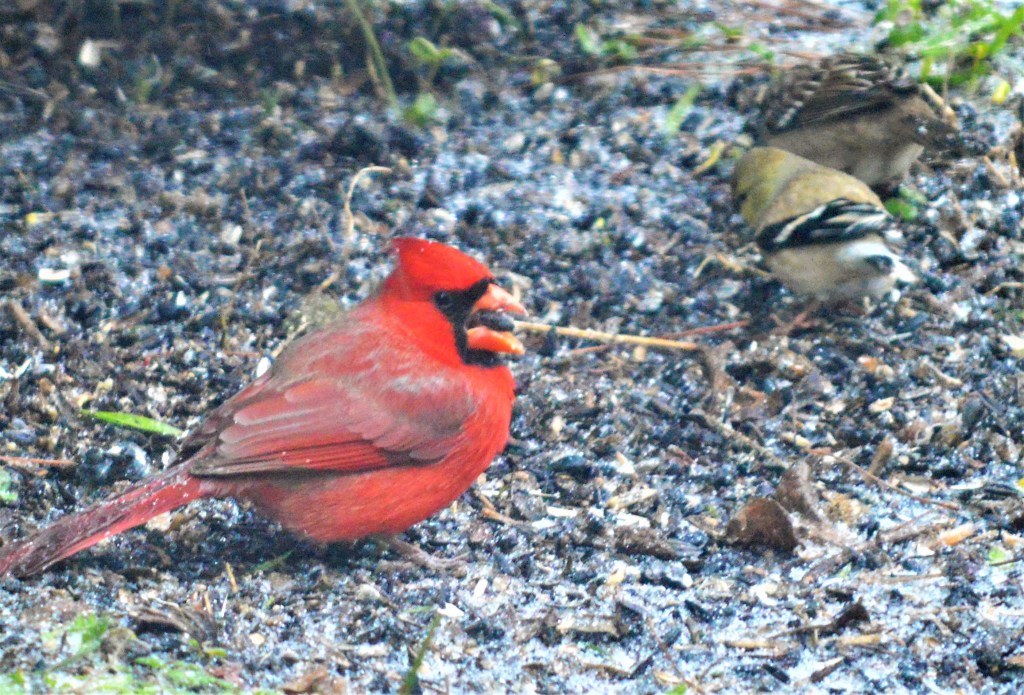
Look at all the cardinals!
I put it everywhere, in the feeders and on the ground to accommodate the extra birds that come here in the winter.
There are my locals, the Cardinals, Titmice, Chickadees, Whitetail Doves, Bluebirds, and many others, who never leave our place.
Local bird friends
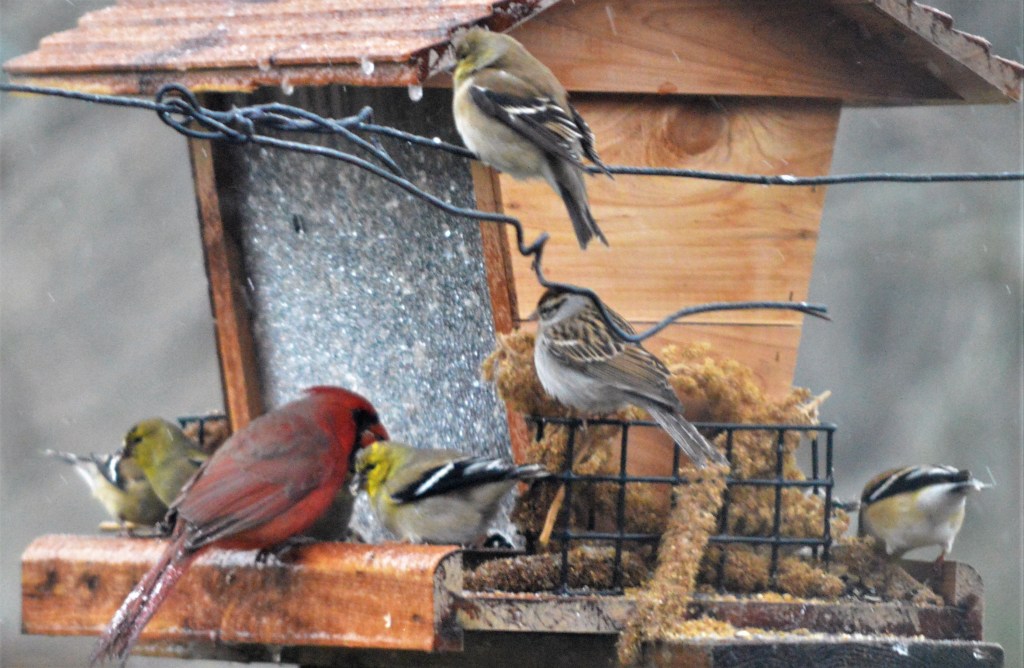
Then we have the “Hoard” of Goldfinch and Pine-siskins that visit in the winter. They eat a ton. Their mothers never taught them any manners.
But I love birds, so I try not to discriminate.
Patio buddies
BUT… These past few days my secret bird cafeteria was discovered by the Cowbirds!!!
Oh boy. They descended on the seed area like the birds in the Alfred Hitchcock movie.
It was like a black cloud.
The cowbirds in action.
My other friends had no chance for any food.
I do understand they need food too, but I wish they leave a little for the locals.
Birds of different species gather outside this frozen window. They gather around water fountains and various feeders filled with a variety of seeds. On this cold, winter day, they gather in larger numbers as the frigid winds blow and frozen water falls from the sky.
Many birds make your home their homes too. Singing melodies in the trees, reproducing their species, maintaining a balance of insects around your garden. Some of these birds take up residence at your home the entire year. One such bird in the Cardinal. Others migrate to your homes at various times of the year, like the Pine Warbler.
Last year in February, a catastrophic winter event occurred in Texas that brought Arctic-like weather to a place that does not see this type of weather. The Polar Vortex was very intense and unstable, causing cold air to shift unusually far south. In February 2021, several days of Arctic cold and deep snows paralyzed the way of life for all animals and birds. Many animals froze to death in the wild.
Cold Northern Cardinals
I remember venturing outside with our family during that event to find hungry birds. Birds that became unusually friendly to gather food. Many Pine Siskins would land on our shoulders and hands, feeding on seeds that we had to feed them.
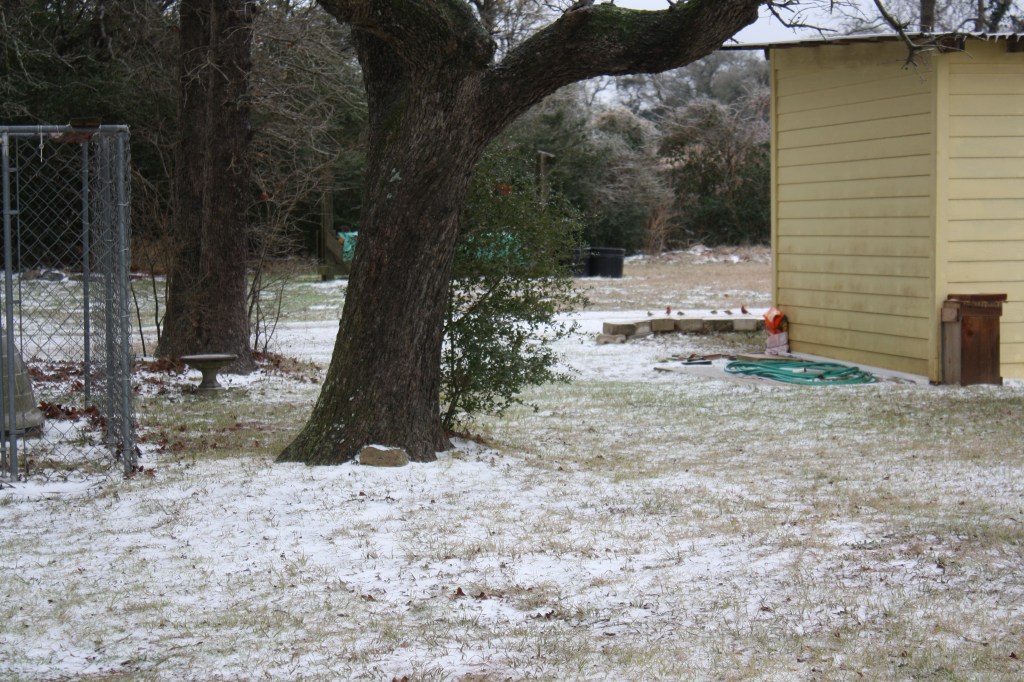
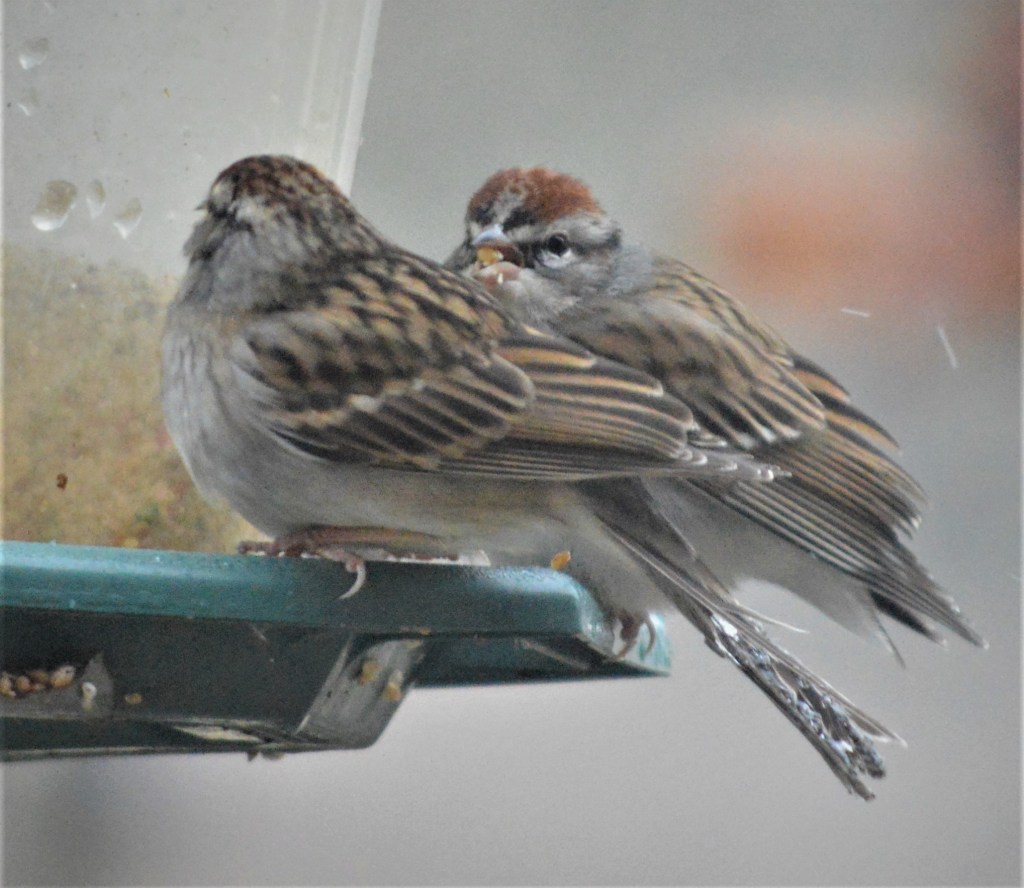
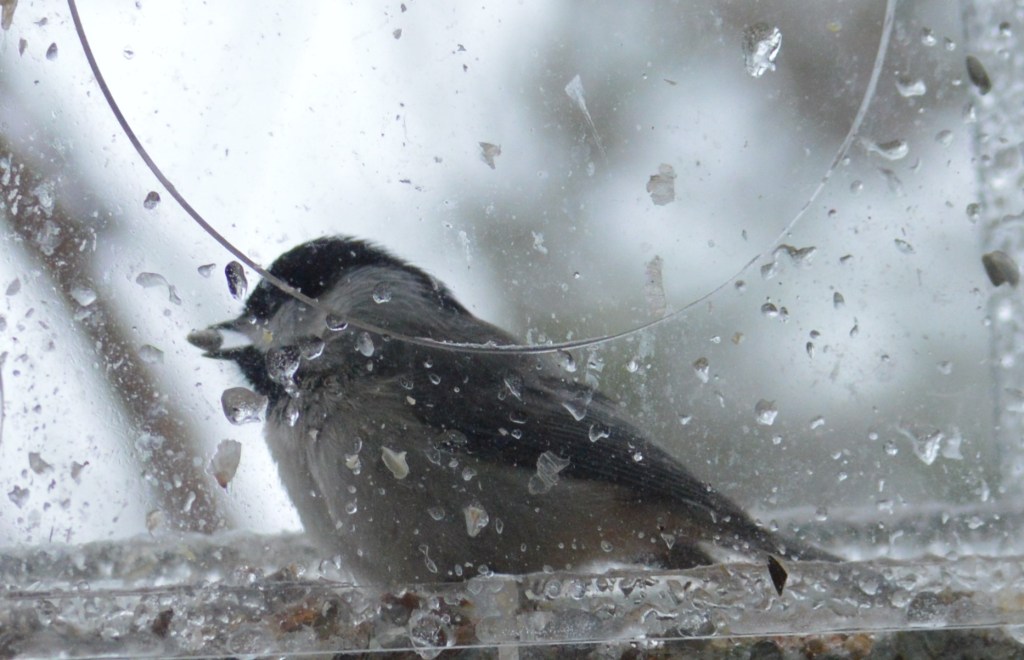
Today’s winter event is a very brief taste of that time. Many birds visited the feeders today as the ground is covered with ice and sleet. The following are birds we saw feeding today :
Cardinals
Chickadees
White-wing Doves
Tufted Titmouse
Various Sparrows
Warblers
Purple Finches
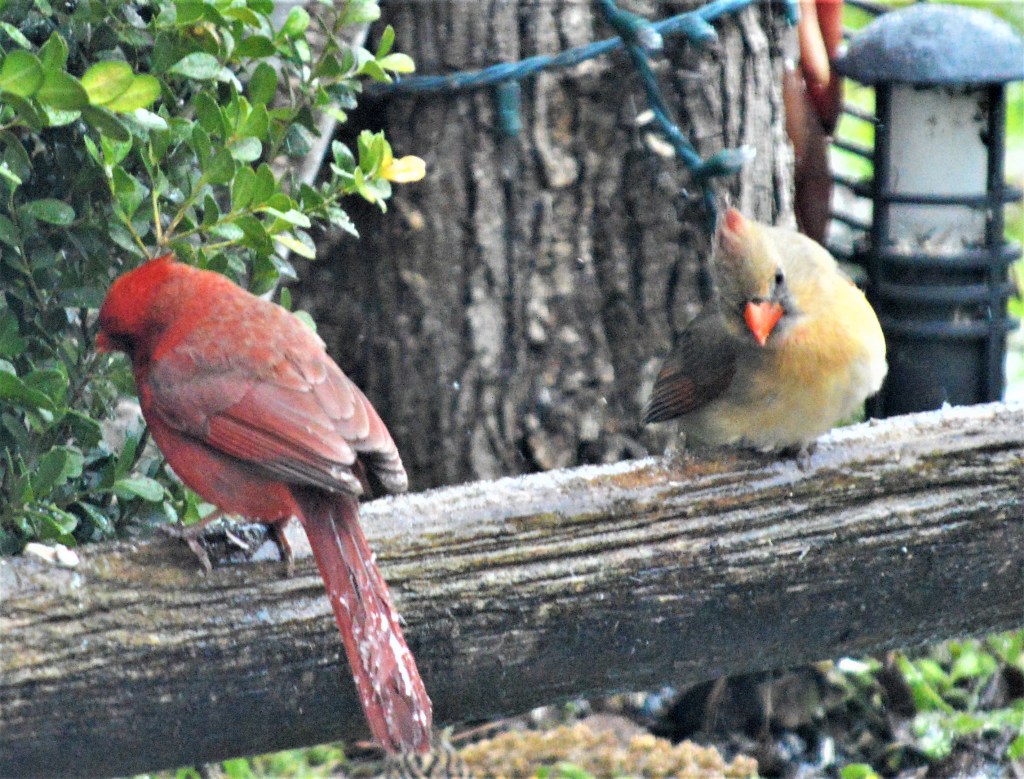
This is one of the two window feeders. They were installed to stop birds from hitting our windows. This has worked. The view is excellent. These are photos of a Cardinal with a Purple Finch, a Cardinal looking in, and a Chickadee.