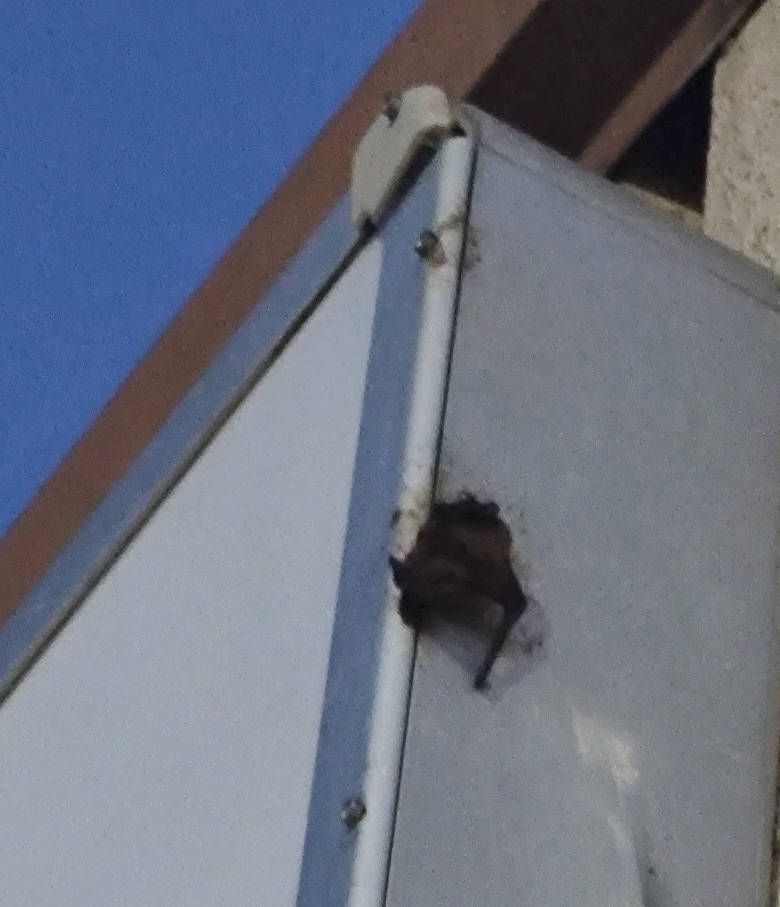
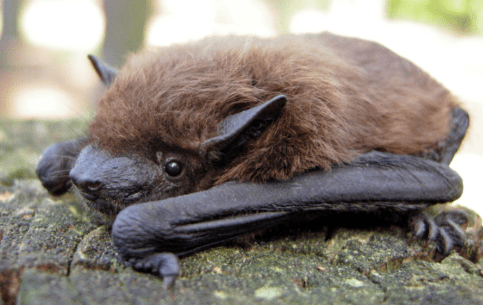
The bats are in residence in a strip mall here in Cameron. I believe they are Mexican Free Tails. Every evening around 6:30 pm they exit their abode in search of the evening meal. I’m unsure where they get their water.
The still shot is of a bar that appears to have gotten a leg stuck in the sign panels. It survived there for at least three days. Unfortunately. I couldn’t get it loose.
Postcript
At our March chapter meeting, Michelle Lopez shared the results of our Milam County bat monitoring project from last year. In addition to Mexican free-tail bats, we have Tri-colored bats (these are rare), evening bats, big brown bats, and eastern red bats. Nine sites were monitored for a week each. Michelle spent countless hours analyzing the sound files.
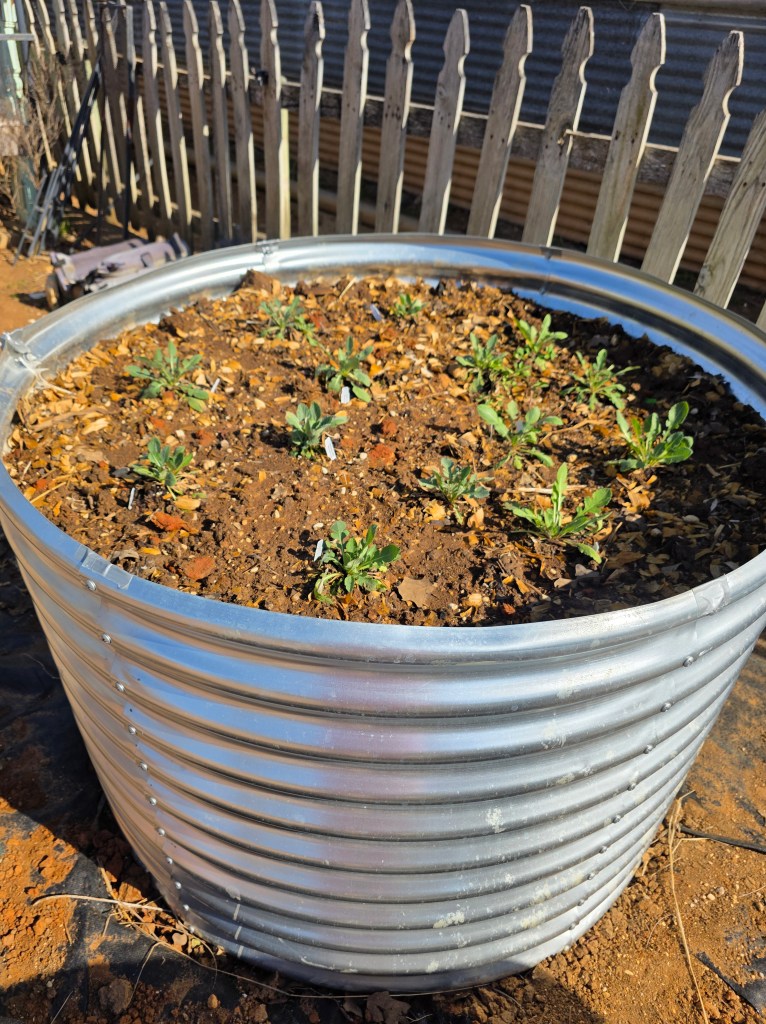
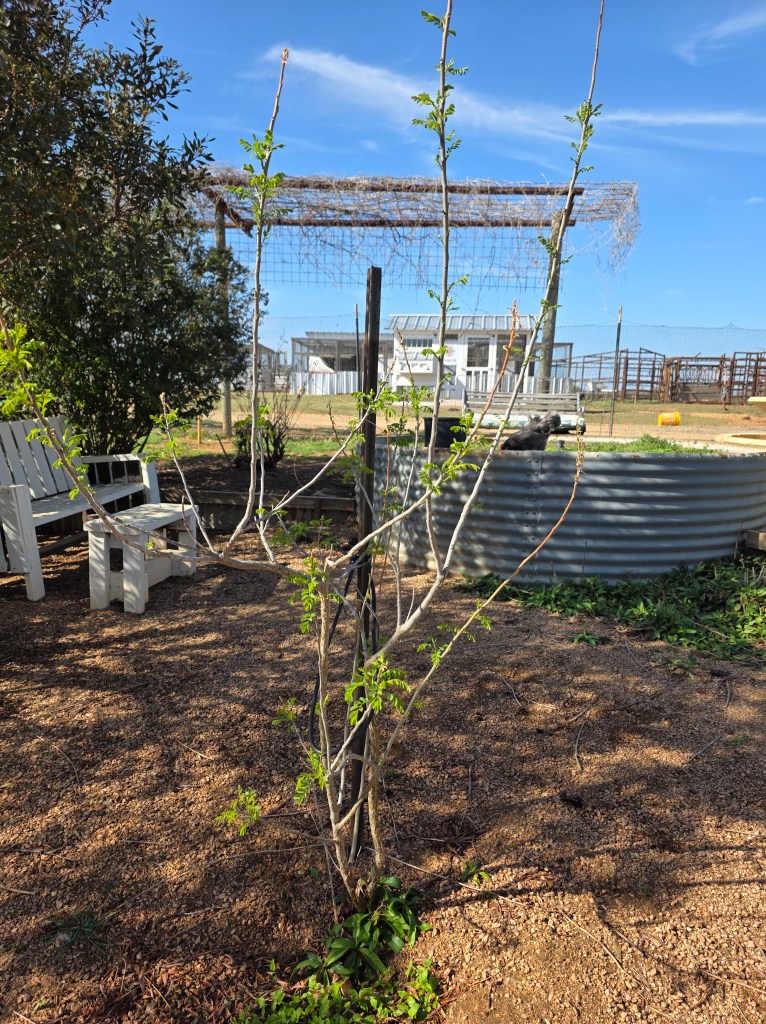
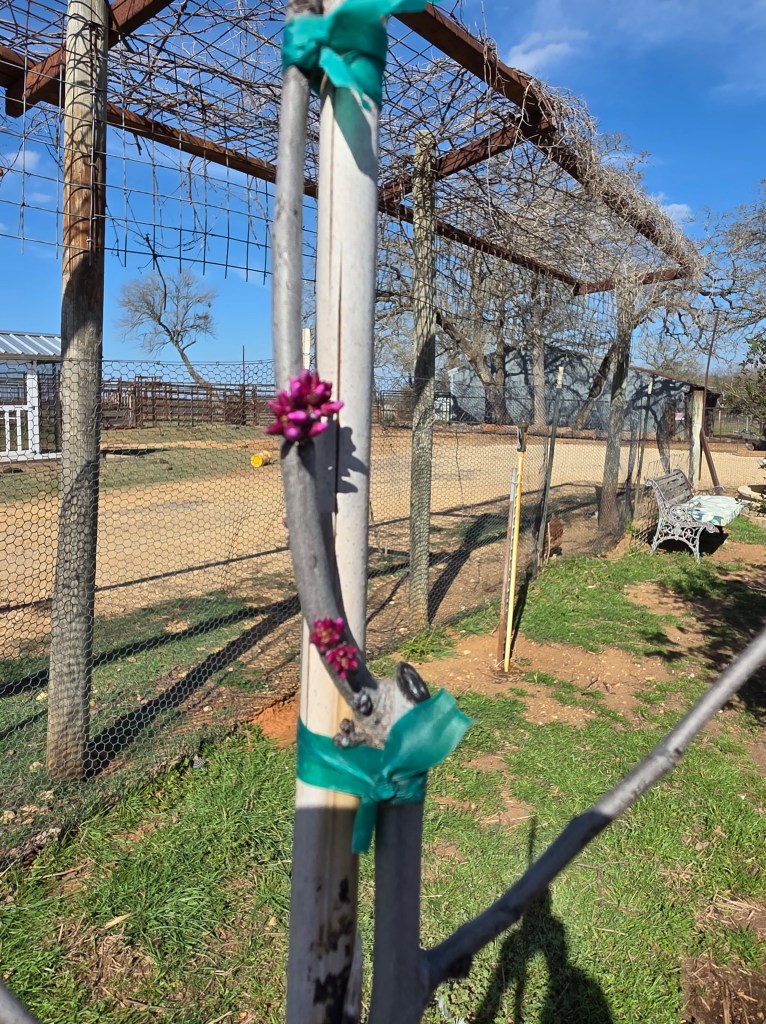
Progress continues on the Pollinators for Texas in the Milam Wildscape. More crushed granite will arrive soon to finish the pathways. The new raised beds were recently planted and Redbud and Arroya Sweetwood trees are budding out. The challenge now is watering until it rains. (It did rain before the blog got posted, which is great news!)
The Pollinators for Texas project is a collaborative effort with H-E-B and the Texas Master Naturalist (TMN) Program focused on enhancing native pollinator conservation across the state by promoting awareness, conservation efforts and creating sustainable pollinator environments. The initiative aims to engage communities in supporting pollinator-friendly practices through funding TMN chapter-led projects and programs.
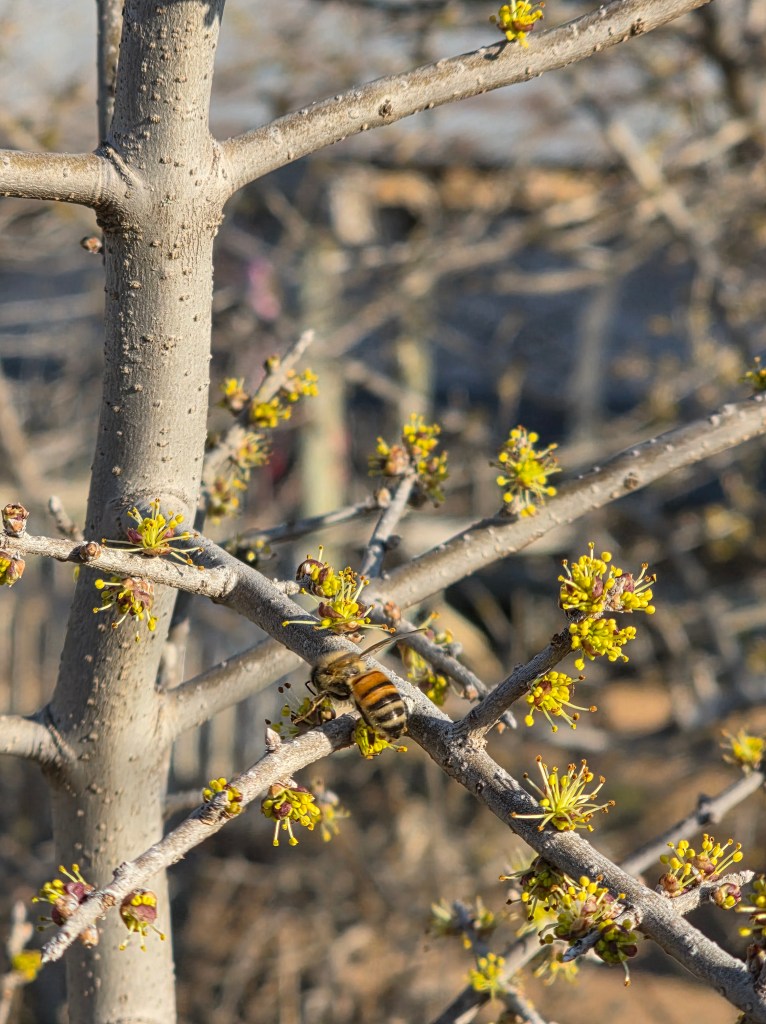
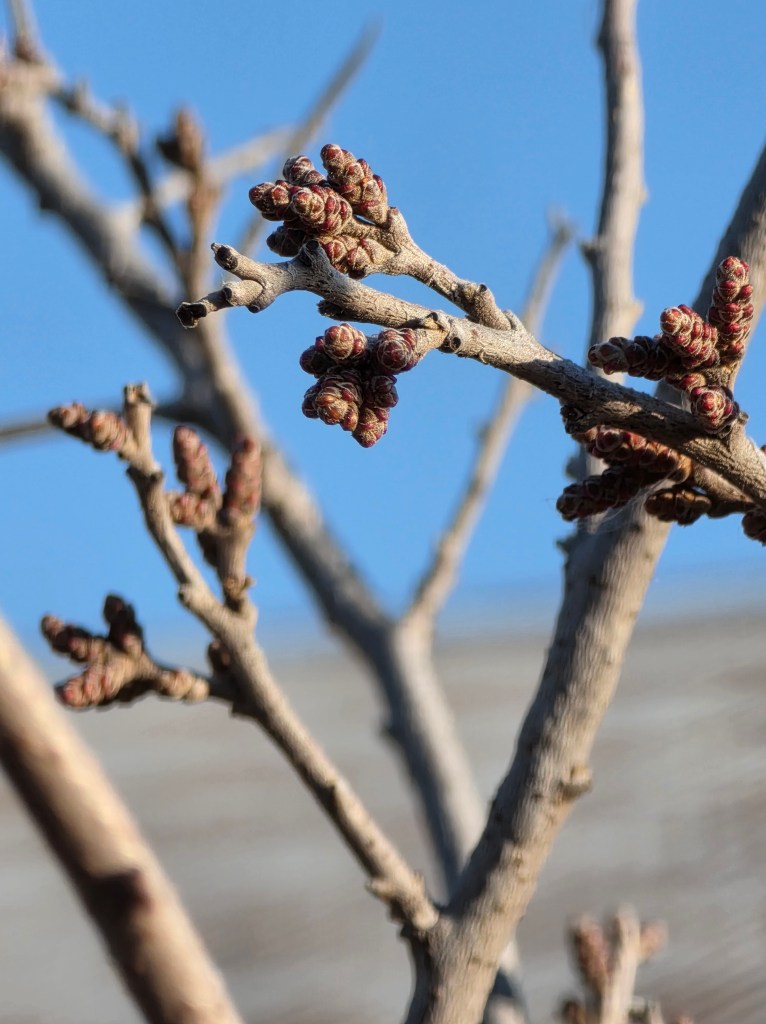
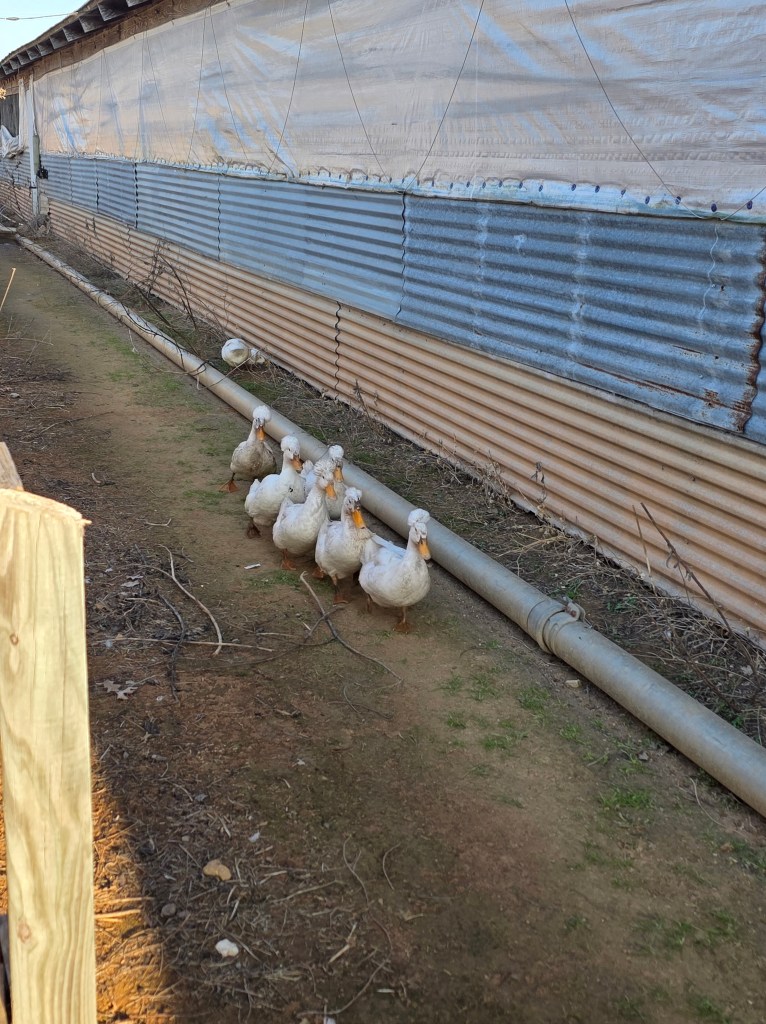
Signs of spring in February at the Wildscape include these welcome sights:
Fragrant Sumac buds
Bee on Elbow bush
Ducks in mud
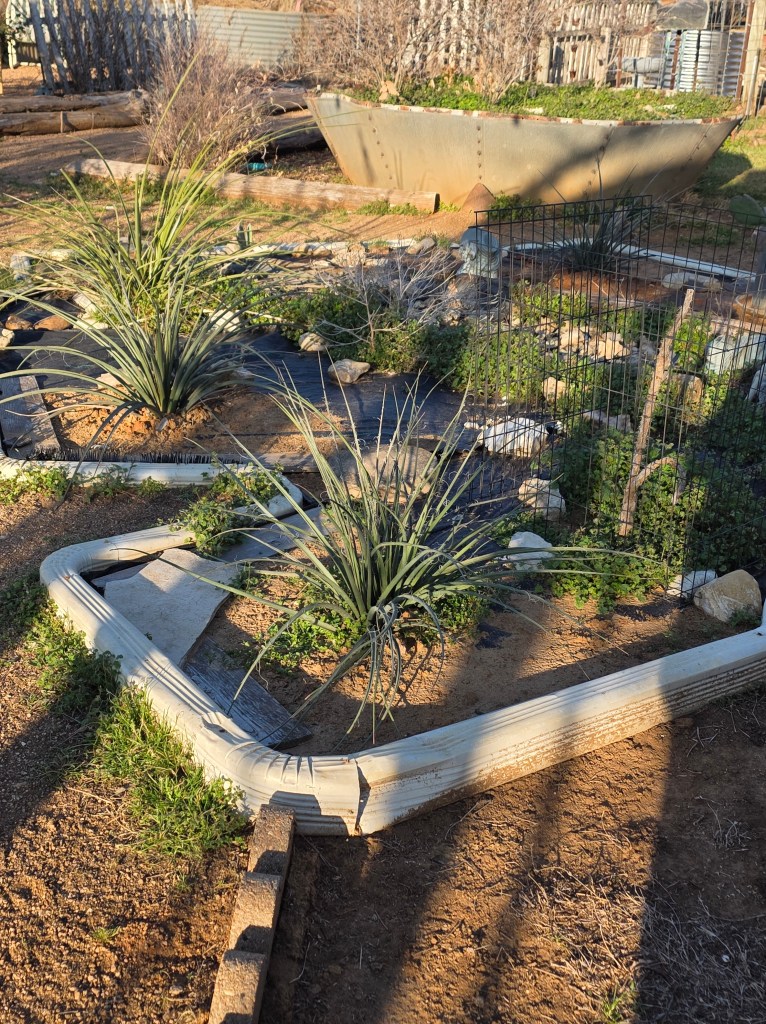
Southwest garden
We look forward to seeing how all the work we’ve done for the Pollinators for Texas project comes to life in the next few months!
The Pollinators for Texas project is a collaborative effort with H-E-B and the Texas Master Naturalist (TMN) Program focused on enhancing native pollinator conservation across the state by promoting awareness, conservation efforts and creating sustainable pollinator environments. The initiative aims to engage communities in supporting pollinator-friendly practices through funding TMN chapter-led projects and programs.
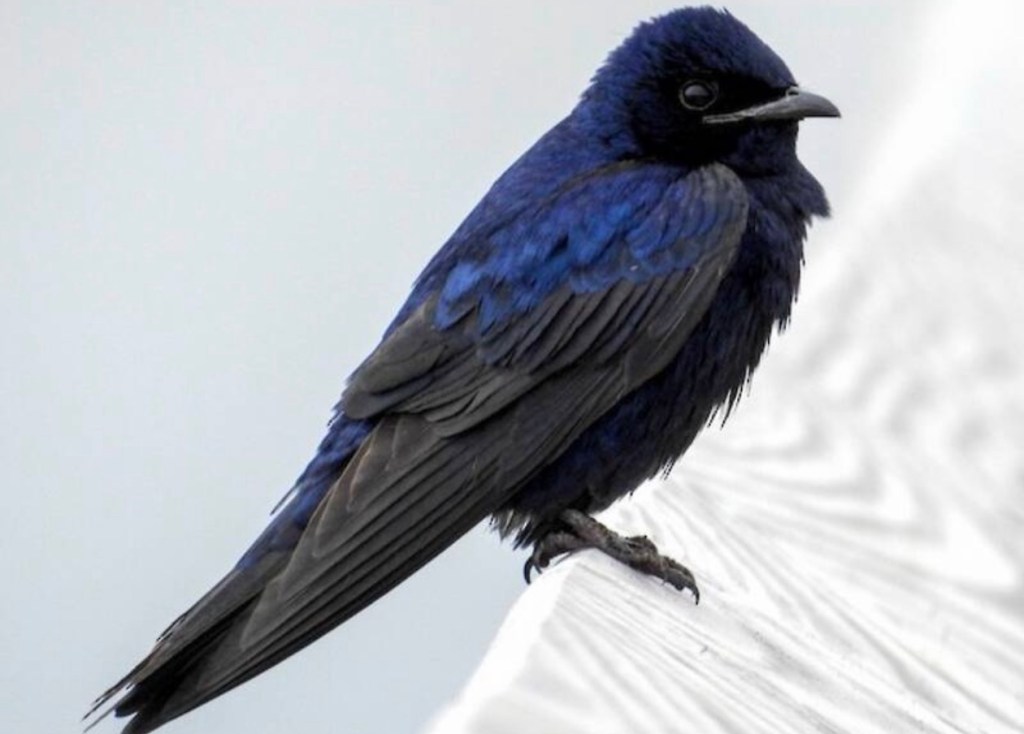
That’s right, nature lovers, it may only be halfway to spring, but the first Purple Martins have already arrived! Merlin found the first scouts at the Hermits’ Rest ranch on February 5, which is right about the right time, perhaps a little early.
From Merlin Bird ID, photo by Reanna Thomas
I’m pretty happy that ours are back, because our martins don’t nest in houses made by humans—we have enough tree cavities in our mature wooded area that they can breed in lovely holes made by our busy woodpeckers. (Today I’ve heard Downy, Ladder-backed, Red-bellied, and Pileated Woodpeckers.)
I sure enjoy their flashing colors and beautiful songs.
In honor of our chapters favorite Purple Martin lover, Donna Lewis, I’m re-printing her blog from last year on preparing her nests. enjoy!
It’s Purple Martin Time… Are You Ready?
by Donna Lewis
Yes, it is already that time when our Purple Martin friends will start their migration from Brazil back to North America. Yes, the early ones will still face freezing and other harsh weather events.
I wish I could ask them to wait a little longer, but instinct is urging them onward. The scouts (who are not the youngest birds) hope to find the best housing first…
As of today, 1/30/2025, sightings have been called in for San Antonio, Austin, Houston, and a few more Texas sites. Central Texas does not have a certified sighting as yet. I hope that myself or our Landlord in Buckholtz will win that honor. We’ll know soon. I am watching for them all day..
First of all, your houses (gourds, or apartments) should be cleaned, and with added pine-needles if you do that. I also added pine-needles to my Blue-bird houses. The openings should be blocked off so no sparrows, other birds, or insects can get in them. You need to check yourself. Do not open the housing until the first scouts land on the houses. If you are looking for the Martins you will see or hear them. Then open a few of the cavities, not all of them. I usually will pick four to open.
You do not want the non-native birds (House Sparrows or Starlings) to get in the houses. These birds will kill the Martins for the nests. Trust me, it is not a pretty thing to see. I think keeping predators and non-native birds out is the hardest thing landlords have to deal with.
Right now my gourd rack is lowered and ready to open. This coming week I will get the apartment house ready to raise up.
I have had back issues this past year, so I will have to have some help caring for my friends this year.. But I will help them out as long as I can. Their song is so addictive that most Landlords that love and care for these native birds will do it until the end of their life. A gift from Mother Earth. Their songs are like no other.
Here are some photos showing me stuffing the gourds with fresh pine-needles that will help keep the birds warm and give them a start on nest building that will come later.
We can expect to have Martins here with us for about six months, until they leave for their winter home in Brazil. again.
Birds can lift a sad spirit. No matter what the world is going through, every day they go about their business with joy and sing to us. How lovely.
Remember who you want to call to your home, and furnish what they need. They will come.
The first time I saw it, I knew immediately it wasn’t a Northern Cardinal.
At a glance, it had that familiar cardinal shape, but something was different—more gray overall, with muted red highlights and none of the bold black around the bill. At the time, I didn’t know exactly what to look for, only that my eyes were telling me this was something else.
Later, as I learned more about the Pyrrhuloxia, one detail stood out: the beak. Unlike a cardinal’s thick, conical bill, the Pyrrhuloxia has a distinctly curved, almost parrot-like yellow beak. Once I knew that, everything clicked.
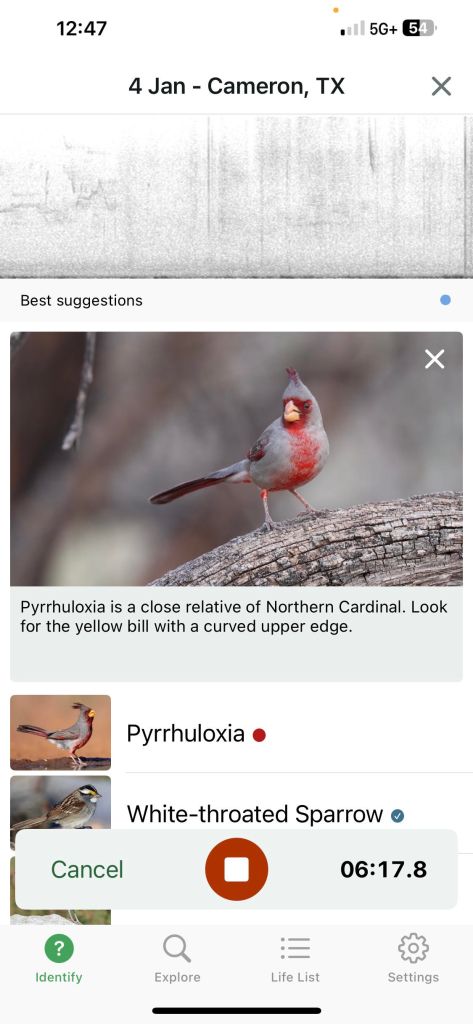
Not long after, I saw the bird again near the pond at Twisted Creek Ranch. This time, I was ready. The curved beak was unmistakable. As if on cue, the Merlin Bird ID app also picked up its call, confirming what I already felt deep down—I hadn’t been mistaken.
The Pyrrhuloxia, sometimes called the “Desert Cardinal,” is far less common in Central Texas than its bright red cousin. Seeing one is a reminder of why slowing down and paying attention matters. Sometimes it’s not about bold colors, but subtle differences—the shape of a beak, a softer call, or that quiet inner nudge that says, this bird is special.
Moments like this are exactly why I love living and observing nature here. Every season brings the possibility of something unexpected, and every observation deepens my connection to this land.
Keep watching. Keep listening. Nature always has more to reveal.
Did You Know?
The Pyrrhuloxia’s curved beak is specially adapted for cracking hard seeds, especially those found in arid and semi-arid landscapes.
Though often called the “Desert Cardinal,” Pyrrhuloxias are actually a separate species and lack the cardinal’s bold black facial mask.
Females are even more subtle than males, appearing mostly gray with faint red accents, making them easy to overlook.
Pyrrhuloxias are most commonly found in thorny brush, mesquite, and scrub habitats, which makes sightings in Central Texas especially exciting.
Their song is softer and less musical than a Northern Cardinal’s—another reason apps like Merlin can be helpful for confirmation.



 Nature Along the El Camino Real