Native Rangeland and Cattle Grazing are Compatible

by Carolyn Henderson

New trainees for the El Camino Real chapter Texas Master Naturalist learned about extensive programs being implemented by the Texas Parks and Wildlife Department with area ranchers to restore grazed land to its native state while still grazing cattle on it. A project in a neighboring county is being implemented by Tim Siegmund, the Private Lands Program Leader for TPWD-WL Division, with Jay Whiteside, TPWD Technical Guidance biologist District 5. They are several years into the 7-year plan, and the results are very positive in proving that native growth on rangeland and grazing cattle on it can be compatible and profitable. Below is a synopsis by Siegmund about the project. 

The use of fire to concentrate cattle grazing has led to a recovery of the areas being rested from burning within the pastures.  The cattle preferentially graze the freshly burned areas, and lightly or don’t graze at all the areas burned in previous years.  This allows the plants to recover, make seed, and persist over the long term in a constant burn, graze, rest cycle.  This can lead to better carbon and nitrogen cycling as a result of thatch incorporation into the soil and concentration of animal waste, increased water infiltration as healthy roots grow and rot in place creating pathways for water infiltration, and increased plant and animal diversity as there are a host of niches being created by short and tall vegetation as well as annual, biennial, and perennial plant species.  Patch burn grazing can be a great tool to promote livestock production, plant diversity, and wildlife diversity. —- Tim Siegmund
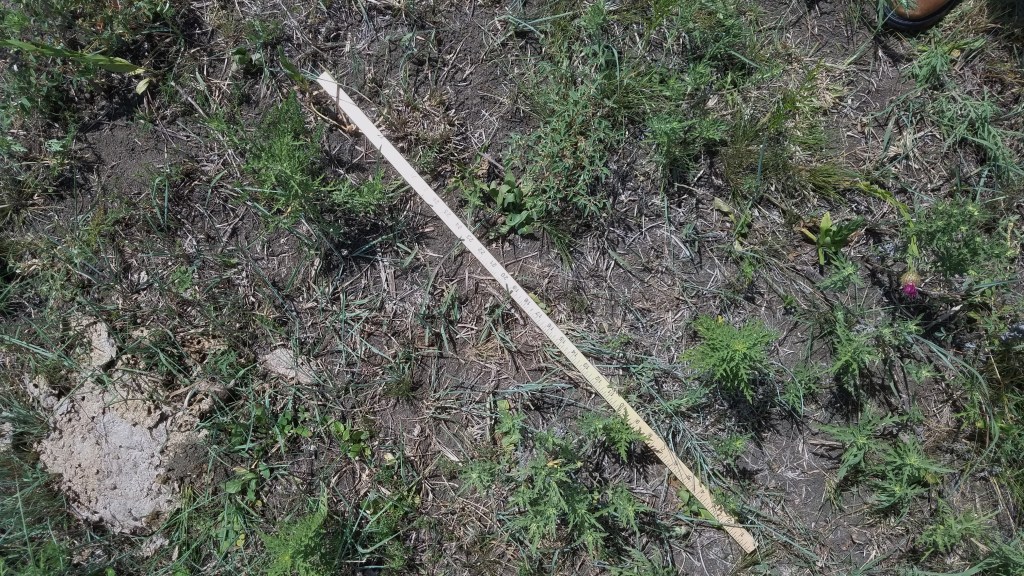
Photo 1 shows the short, grazed grass and the diverse wildflower community not being grazed by the cattle, average grass height was less than 2 inches.

Photo 2 is a picture of a yard stick showing the amount of ground cover now blanketing the ground after 2 full years post burn.

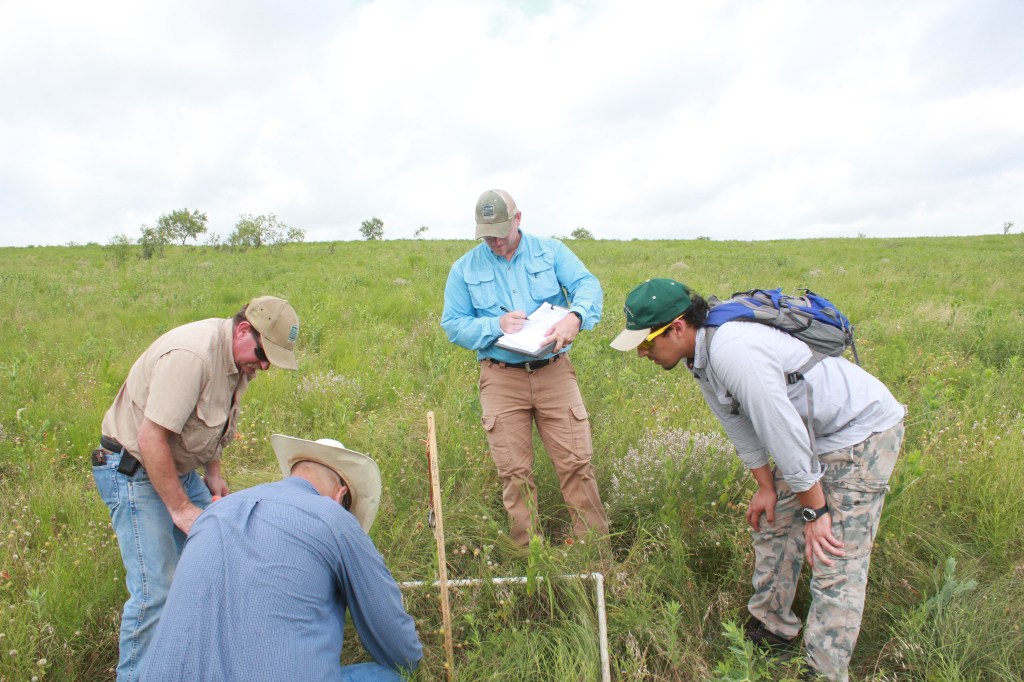
Photo 3 is a picture with Siegmund and assistants in it conducting the vegetation sampling monitoring the changes over time.

Photo 4 shows the year of burn and the annual plant community dominated area as the fire and subsequent regrowth of grass has concentrated the cattle in this area.

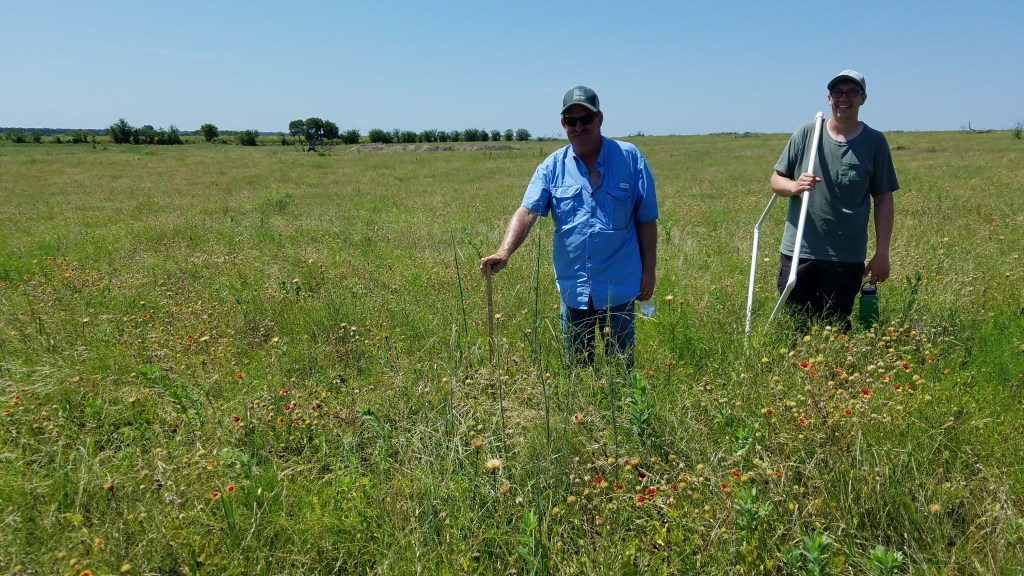
Photo 5 is a picture of Jay Whiteside and an intern showing what 2 years of rest looks like by burning other portions of the pasture to focus grazing pressure elsewhere. In 2019, grass height is approximately 20 inches.

By the way, a recording of this session can be found on our website.

Helping Our Bird Friends in Winter

by Donna Lewis

Don’t be fooled by our nice weather…  just around the corner could be lurking a cold winter blast.  Hopefully not a blast from the past (I am talking about the 10 days of freezing temperatures we had. So, there are some pretty simple things you can do to help our feathered friends right now.  Better to do these things while it’s nice for us to go outside.

We built and installed a platform under our front porch for the Phoebe’s to build their Spring nest on.  This is to hopefully keep them from putting 10,000 pounds of mud everywhere on our porch trying to build their own platform for their nest.  Boy is that messy. I have never done this before, so we will see if they use it.

Many species of birds like open platforms. Here are a few: Chickadees, Wrens, Phoebes, and Nuthatches. Ducks and other large raptors also use large platforms that are higher up.

Also new is a Bluebird feeder. This is an attempt to keep the dried mealworms from blowing off the platform dishes onto the ground and getting them wet and icky in winter weather. It’s hard for any insect-eating bird to find food in the winter.  

I have also stuffed the Bluebird nest boxes with dry pine needles for extra protection from the weather. I have shown here the area behind my house where I feed the Bluebirds and put out eggshells for the Purple Martins. The cow panels make perfect perches for the birds. Perches are very important if you want to draw any birds to you.

Bluebird house

I have placed these feeders away from the regular feeders so we don’t have conflict between the birds, and I can see it easily from inside the house.

These are my regular feeders. The open hopper is a favorite of most all my regulars, Cardinals, Chickadees, Titmice, and just about every bird.

So, you can do a few things that will assist our wild friends. Do what you can.

Frozen Birdbaths in Winter

by Donna Lewis

Sooner or later you know this warm weather will turn to cold and icy conditions.

I will hate that. Probably our wild friends will hate it too. Last year, you may have had the horrible thing I had in my garden, frozen bird baths for days. I was very upset that I could not do anything to fix it.

photo by @ssc via Twenty20

Every living thing needs water even in the wintertime. Sometimes people forget about the wild things outside and I hear them say, “They will be OK.” Not so when the weather breaks records.

I decided this winter I would try to be more prepared if and when it happened. I read everything I could find on how to fix the ice issue for the birds and creatures that live here with me on our property. I have not tried any of these suggestions, so it will be a learning experience for me also.

The first thing I learned is that some bird baths are made of materials that crack more easily during freezing temperatures. Sadly, they are also the most common things used to make bird baths with. 

Concrete
Porcelain
Ceramic
Stone
Glass

The less likely materials to crack are made of

Metal
Resin
Reinforced Plastic

Some locations are better for cold weather.  Protected areas like porches, areas that the sun can get to during the daytime, and areas protected from cats.

Photo by @defrosters via Twenty20

There are also many products especially made to go in bird baths that heat the water.  They will require extension cords, so that makes it hard for many reasons. These products are also not cheap.  But they do work. You have to be careful and follow all the safety rules when using them.

I also read where people have put items in the water that move if the wind blows. Some of these were ping pong balls, tennis balls, and wine corks. I have my doubts that these work, but who knows?  They would be easy to do. I will probably try them out.

Solar would be great, except that in the winter you may not have enough sunlight to keep them powered.

You can get this heater on Amazon.

Last but not least, is that you should NEVER put chemicals in the water that prevent freezing. These include antifreeze, salt, sugar, alcohol, or glycerin/glycol. This could kill the birds.  Certainly, would defeat the purpose!

Also remember that if the water is deeper than two inches, put a brick or rock in the middle, so small birds do not drown.

I hope these at least get you to thinking about our outdoor friends when it gets cold. Now is the time to get ready.

When Purple Martin Babies Fall Out of the Nest

by Donna Lewis

So, we have a little time until our Purple Martins return, February 2022 to be exact.

If you prepare now, you won’t have to go out when it’s cold to build something. As my friends know, I do not like cold weather. That means that now is good time to brush up on things we might encounter when the Martins are here.

The series of photos show the temporary house for the stranded young bird.

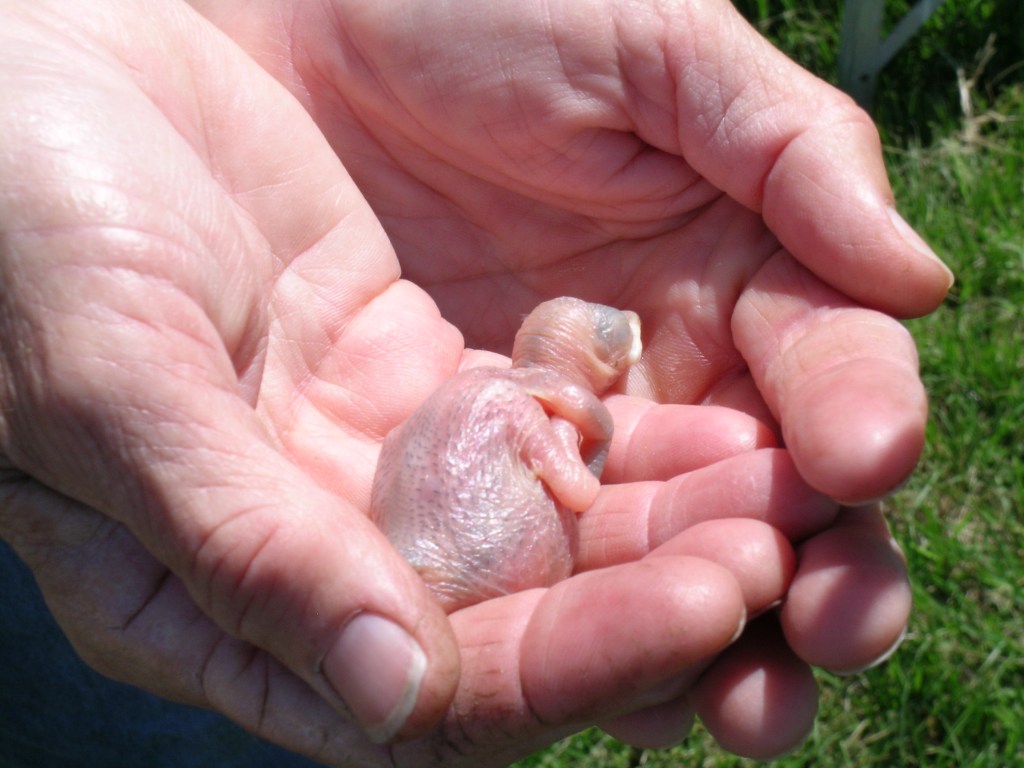
A question I get often is, what do I do when a baby is on the ground? First of all, it’s not a good thing for sure.  But it happens.

I am only going to address this situation if the nestling is in good health but is not old enough to fly on its own. Sometimes they fall out, and sometimes they are knocked out by first-year Martins (teenagers) who like to get into mischief.

This happened to me last year and I was successful in helping the baby fledge (fly on its own).

I put together a makeshift emergency house for it, so the parents could feed it. It just needed a few more days until it could fly. I was not sure it would work, but I gave it a try, since staying on the ground is bad.

I had a feeder a friend made for me, and I added some cedar scraps I had to keep the wind out and protect it. I added some pine needles and a little nest in the corner and put it near the Gourd Rack up on a shepherd’s hook.

I watched for several hours, and nothing happened. Just as I was getting depressed thinking the baby was doomed, one of the parents brought it a bug. YES!!! Some success.

The parents only came once a day, but it was enough to save the baby. It was hungry and after the third day it jumped out and flew.   

The temporary home

I was so happy. So, you see that sometimes you can help a little bit and life goes on.

Purple Martins – Where are they now?

by Donna Lewis

We have not been able to hear the lovely and enchanting sound of our Martin friends since they left in late summer.

Have any of you wondered where they go and what they are doing right now? I thought you might want to know.

Some of my babies

The Martins leave on their migration journey in late summer. They are coming from as far north as the border of Canada.  So quite a journey for some. Others have mated and reside here in Texas.  They might be the smarter ones. Not as far to migrate when the time comes.

No one knows for sure how they decide the time to get going south. Factors such as weather and available food factor into the decision. Martins are highly social birds.   After leaving their nesting colonies where their landlords cared for them, they form communal roosts.  They will sleep at night and wait for more to join them.   

Babies from 2011

Then all of a sudden, they will start to leave a few at a time and head South. They arrive and live amongst the Amazon jungles and South American areas where water is plentiful. They will live in these areas which include Venezuela, Columbia, Bolivia, and the most researched Sao Paulo Brazil till the instinct to return to North America comes over them.

Who returns first?  It is the older males first. This is most likely to obtain the highest and safest housing. Of course, this can be the worst thing if the weather stays too cold or wet.   

Newborn!

The youngest Martins may take 6 weeks to return. So many things can end their journey.   Weather, food, and loss of their housing can result in loss of life. One banded female was confirmed to have made a 4,000-mile trip in 47 days to return to her landlord.

Climate Change is also becoming a factor. When an unexpected freeze occurs here in Texas, the insects that die from it mean no food for the Martins. They do not and will not eat seeds like many other birds. They eat live insects.

Older babies from 2015

Time will tell how our friends can adapt to the changing world around them. If I can help them, I will.

But we also have to remember that we cannot make them pets. They need to stay wild.

Do what you can, where you are.