What about Barn Swallows?

by Sue Ann Kendall

We hear a lot about purple martins (Progne subis) in this blog, since our Chapter member Donna Lewis is a dedicated observer of their lives and activities as she supports them by providing structures to nest in.

There are other types of swallows in Milam County, though, as most residents have most certainly noticed. Barn swallows (Hirundo rustica) are commonly found around our homes and also depend on humans for a little help with their nests. I have some of each bird on my property, but my few purple martins nest in abandoned holes in dead trees that we have left standing. I didn’t know we had them until recently, when my handy Merlin Bird ID app noted their song, then I actually saw a pair. So, I guess purple martins do nest in the “wild” at least a little here.

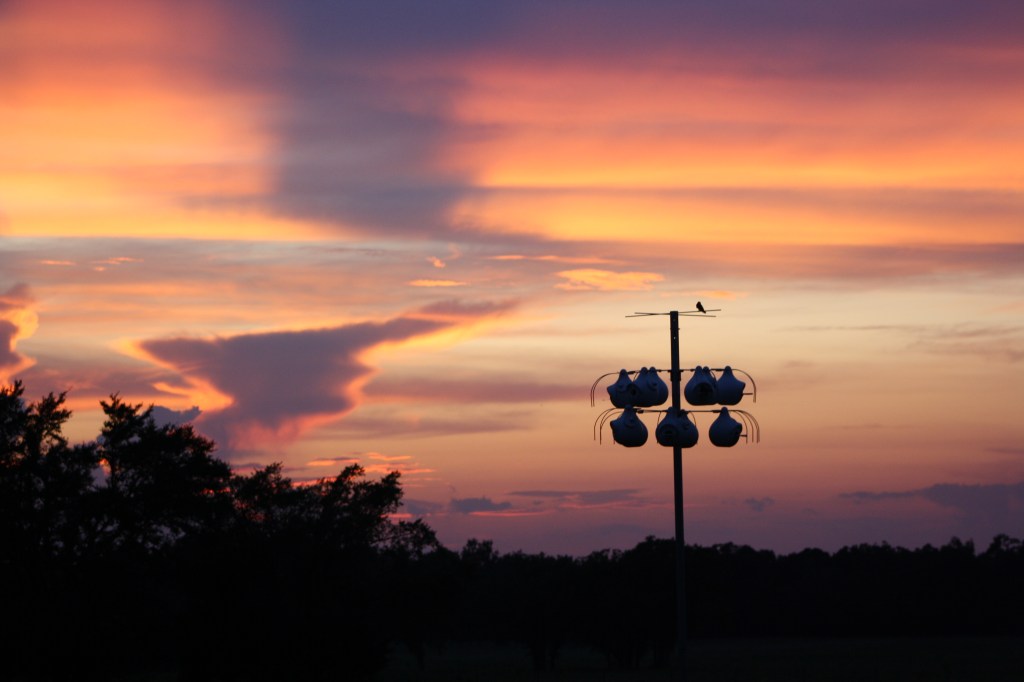
Here’s a purple martin photo by ME, from a structure in Temple, Texas.

But what about the barn swallows? Why aren’t they beloved by all, like purple martins? After all, they are quite beautiful with their shiny navy-blue bodies and striking rust-colored breast markings. And they eat lots and lots of flying insects and provide lots of entertainment while they do so. It’s like a swirling circus act when they’re all out hunting around sunset.
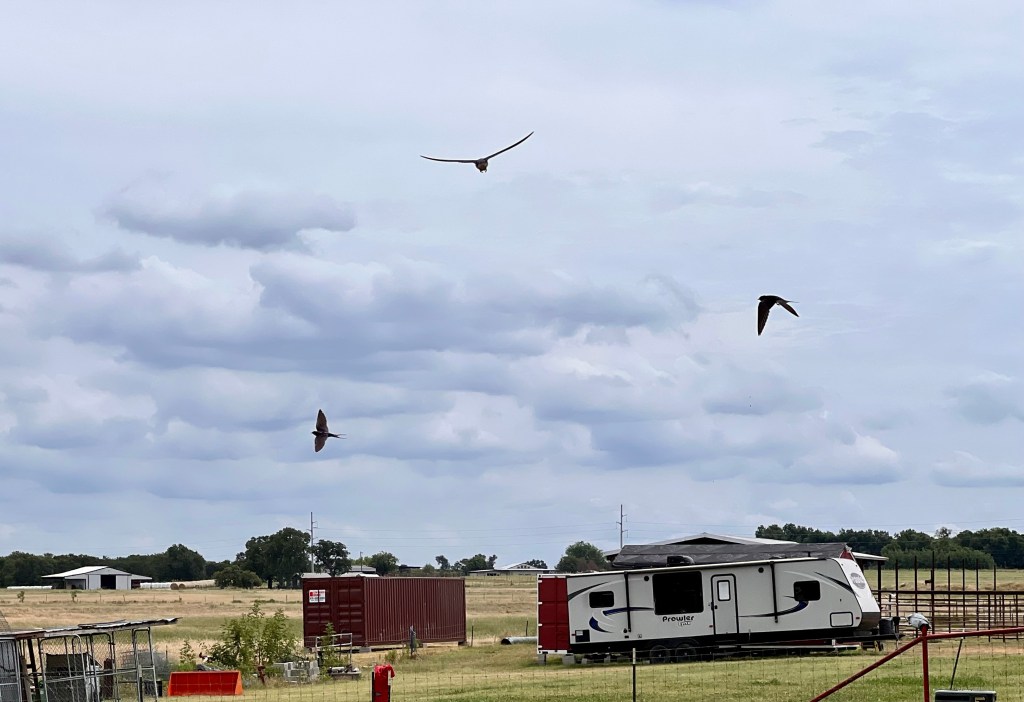
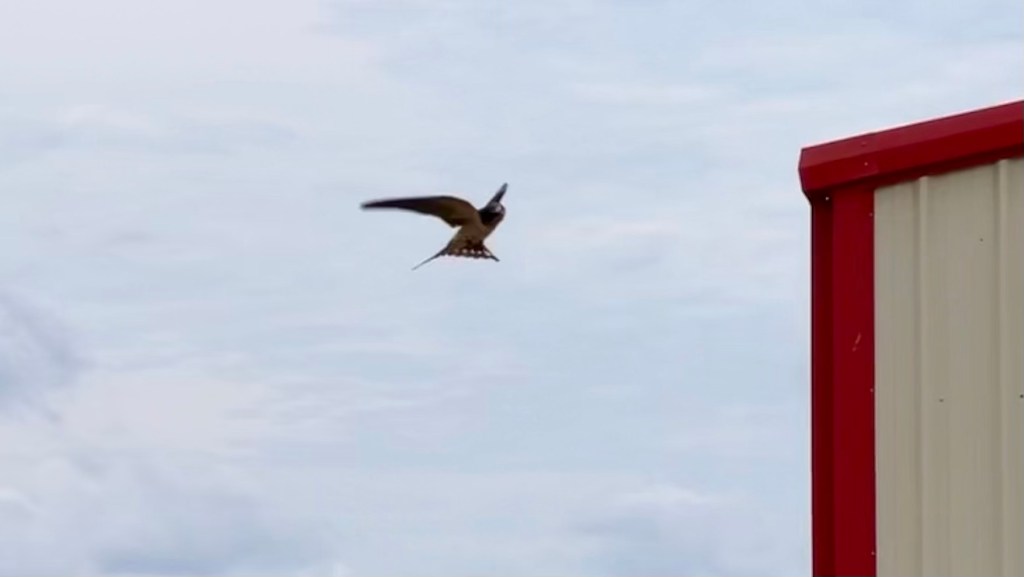
One reason people aren’t fond of them is that their nesting behavior doesn’t fit in with most suburban folks’ ideas of neat and tidy “curb appeal” for their homes. Barn swallows do nest in barns, when available, but they also nest under bridges (the same kind the Mexican freetail bats nest in), and, of course, people’s houses.
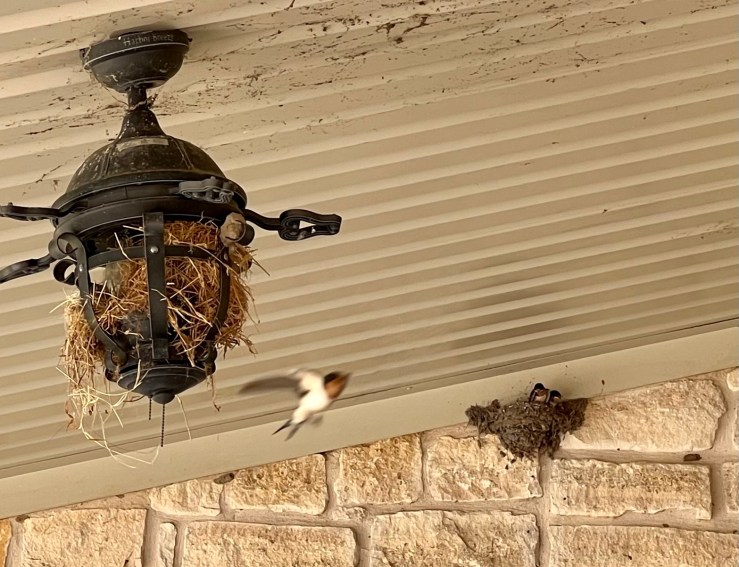
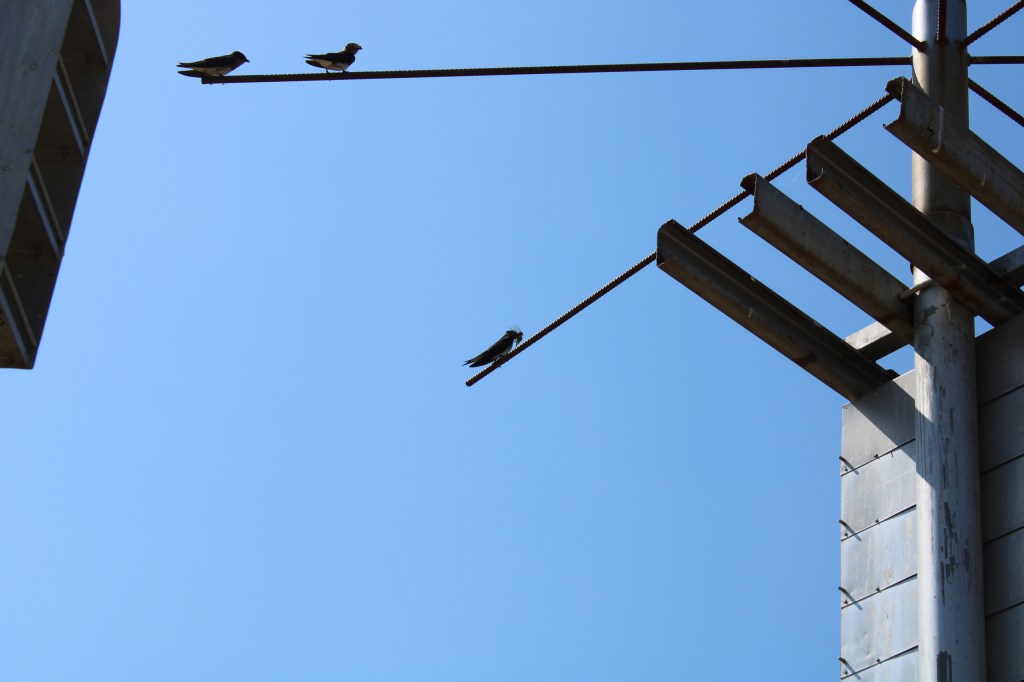
Swallow parent dodging hideous sparrow nest to go to her lovely mud nest.

When I lived in suburban Round Rock, many neighbors either invited people to come in through their garages or spent lots of time getting very messy trying to remove barn swallow nests. Many of the homes had two-story entrances, which swallows (cliff swallows, too) just loved to build their mud nests in. They also loved to shove baby bird poop out of those nests and onto people’s fancy potted plants or outdoor furniture. I will spare you a photo of swallow poop, since you have probably seen some.
Luckily, I don’t live in the Meadows of Brushy Creek on a crowded cul-de-sac anymore. And I am happy to let barn swallows build all the nests they want to around our house, which has many porch sites to choose from. After all, there is only one population of barn swallows left that still uses caves to nest in, and that’s in California, according to All About Birds.
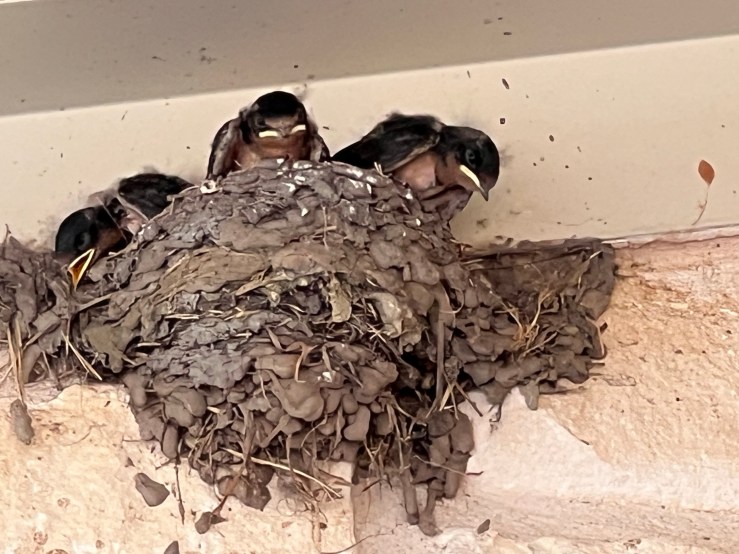
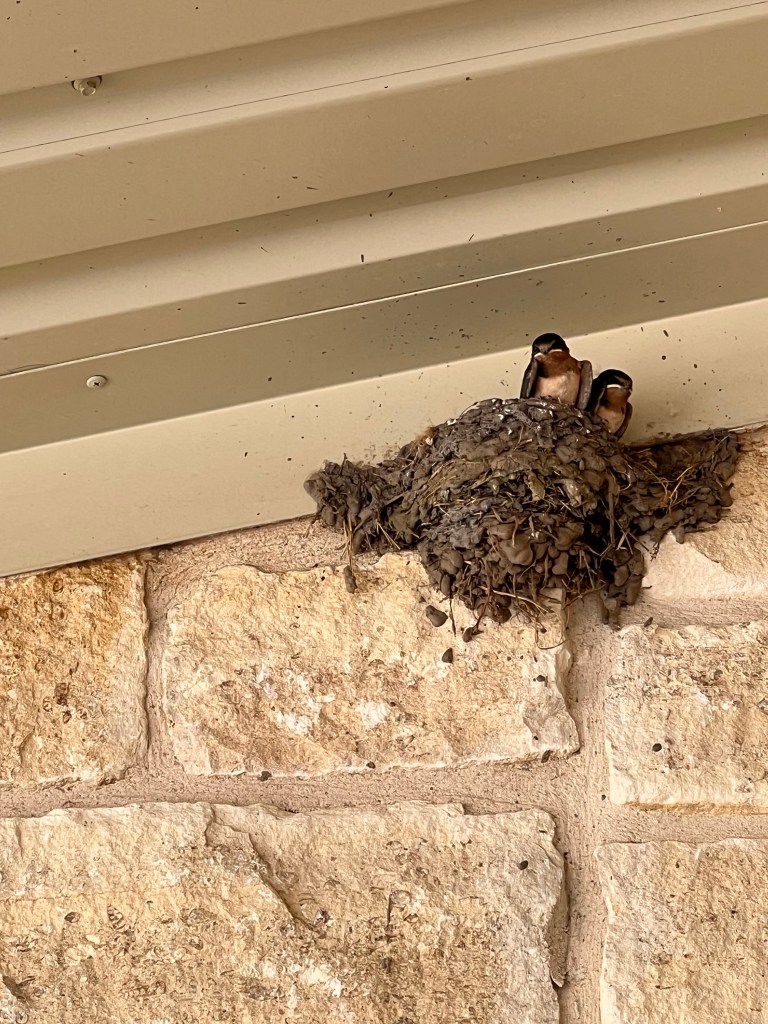
It’s getting crowded in here!

Our birds have just finished raising their second set of nestlings since they arrived from South America in the spring. I noticed a couple of the nests had three adults feeding babies, and that turns out to be a common practice. The helpers were probably babies from the first clutch.
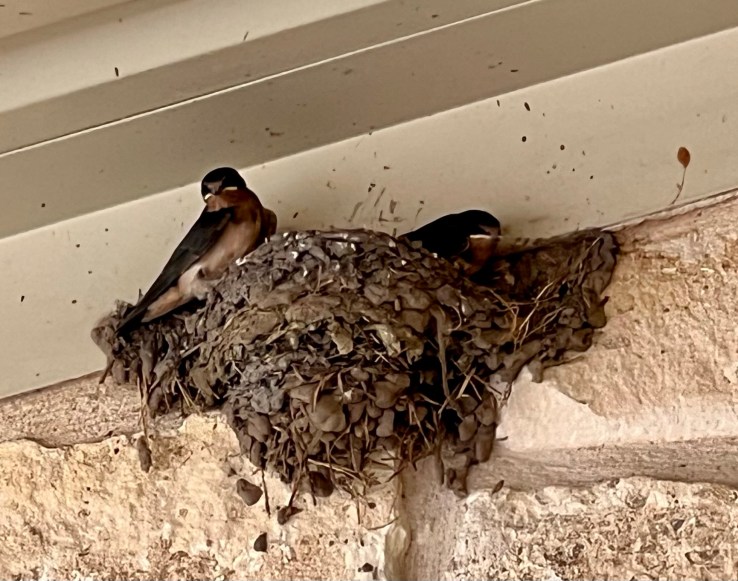
I gotta get out of here.

As the babies grew and grew (this is a very loud period on our porches), they began to have a hard time fitting in the nests. We always wondered which day would be the one when they’d fledge. Last week, I was happy to find two of them sitting on the light fixture where their dad usually hung out. Two others looked very un-ready to fly, but by the next day, everyone was swooping around with abandon.
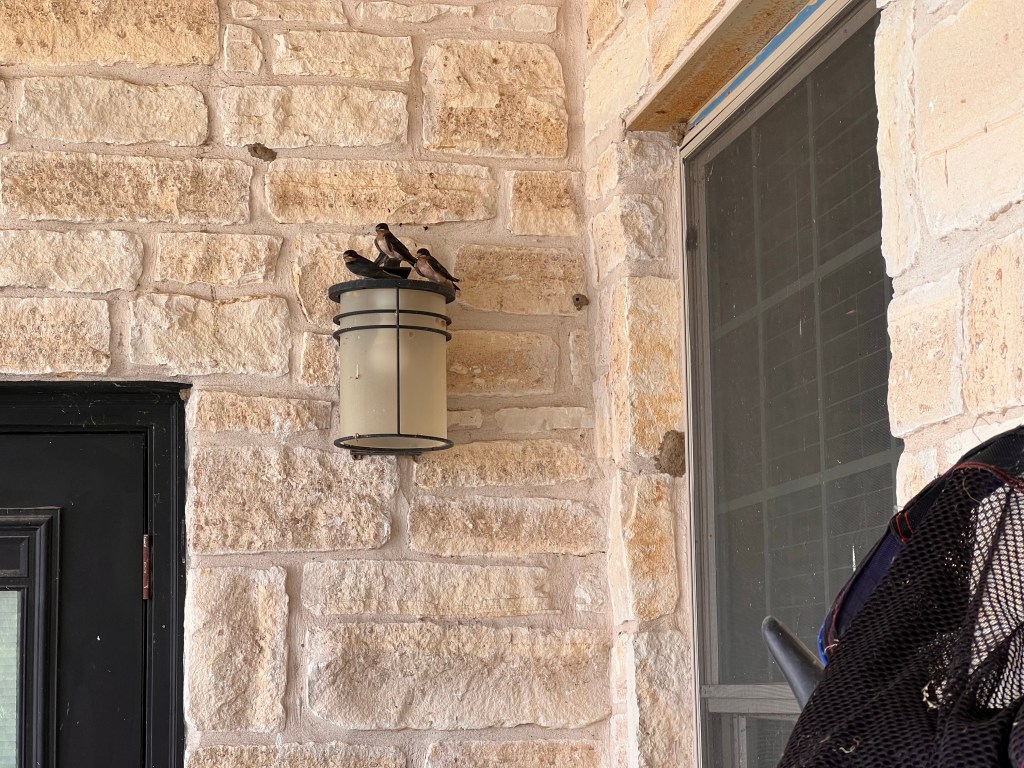
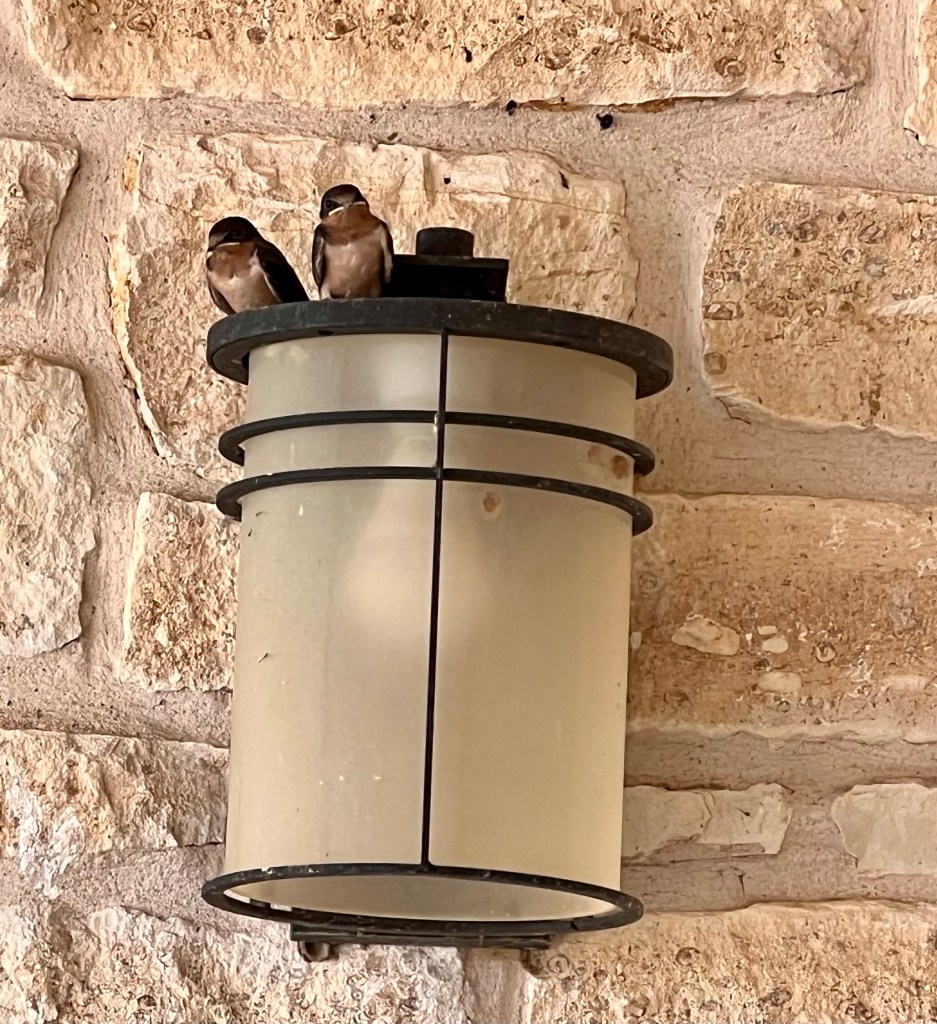
Here’s a funny thing about these birds. The whole time they have been nesting, they have completely ignored us humans and the dogs as we go in and out of the house, sit on the porch, or swim in the pool. But, after the birds had spread out and were practicing their skills, they started dive-bombing me when I went into the back yard or over to the horse pens. Each time they got to my head they’d make a sound, and I swear as they zoomed back up, there was a Doppler effect. It was really cool, but there was no way I could get a photo, since they always surprised me.
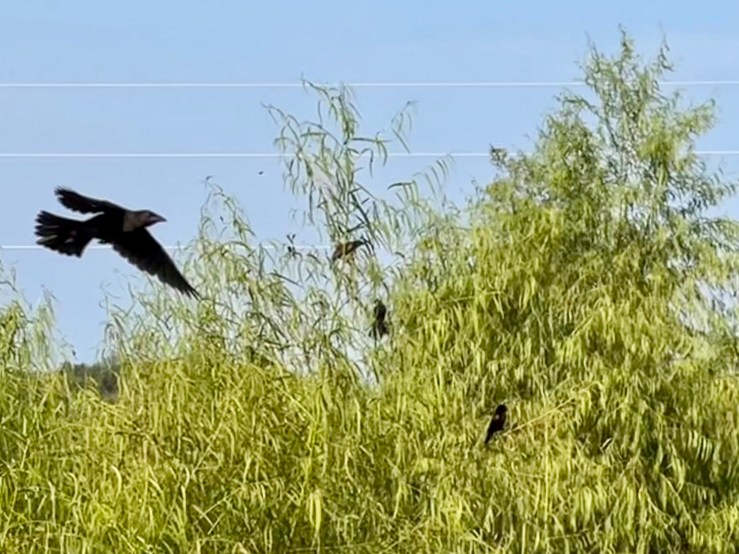
Another local resident that likes to dive bomb humans is the red-winged blackbird (Agelaius phoeniceus). Luckily, they hang out in the willows, far from me.

I am seeing fewer and fewer barn swallows this week. It’s time for them to head off to their non-breeding lands way to the south now that the young ones know how to fend for themselves. They will return in late January or early February. I’ll soon be able to power wash the porches and other poopy areas and enjoy the clean surfaces for six months. (It’s been recommended to put newspaper under nests, but that would not last long at the Hermits’ Rest, wind capital of Milam County.)

Another Nest or Two

I tell my family we are running an aviary, since house sparrows have been nesting away on the porch this year, too. I guess we were lucky they didn’t find us until this year. They are really chirpy and poopy and not native. But the nests are funny.
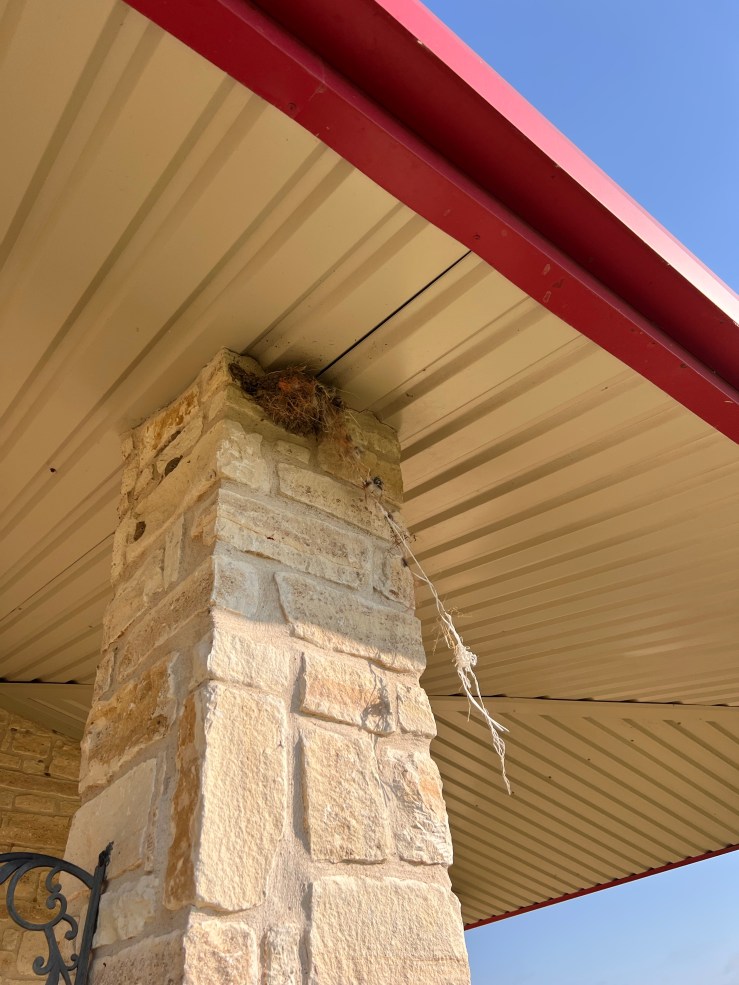
This mess is a sparrow nest converted from a swallow nest. The sparrows have to add their own special touches.

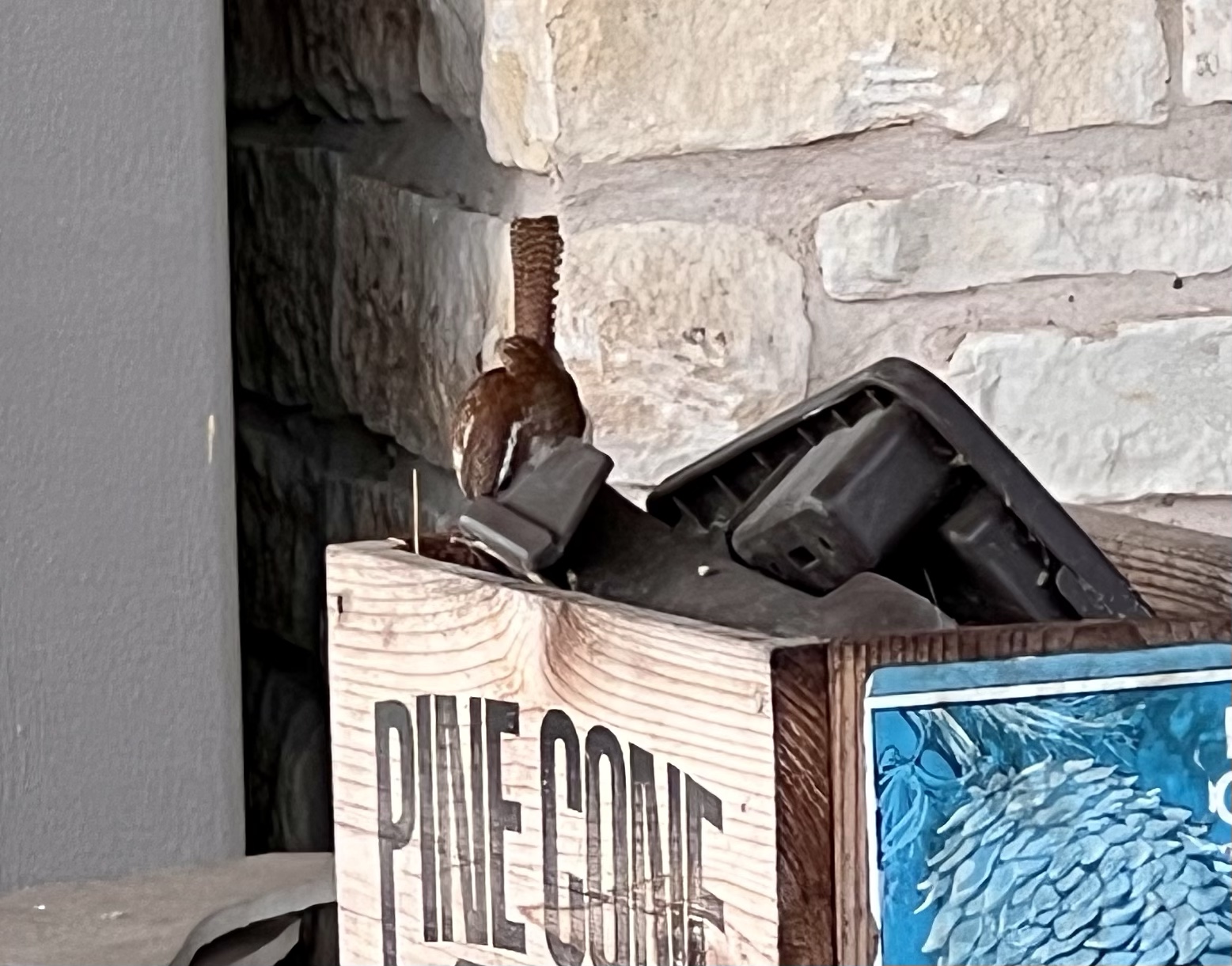
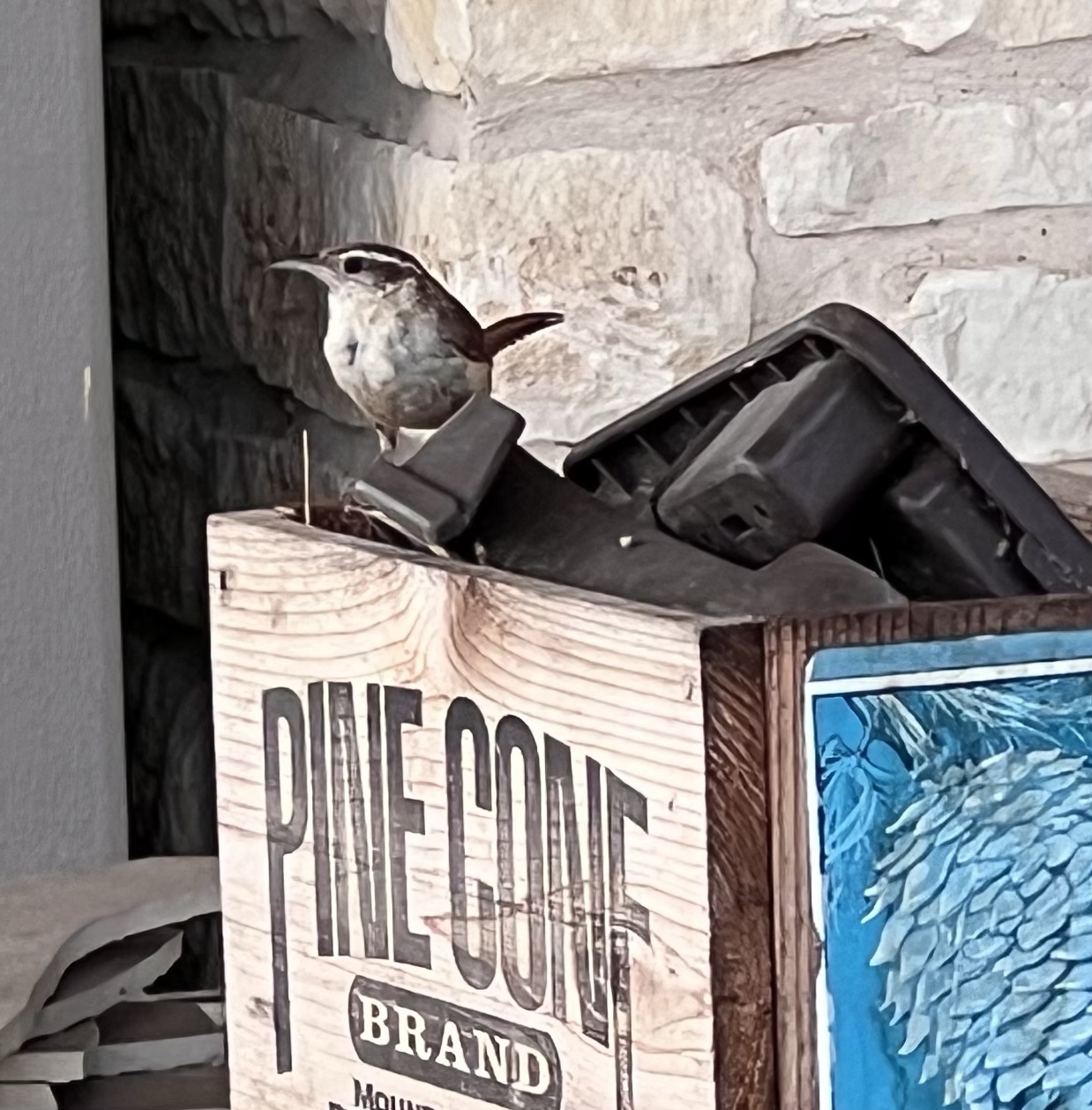
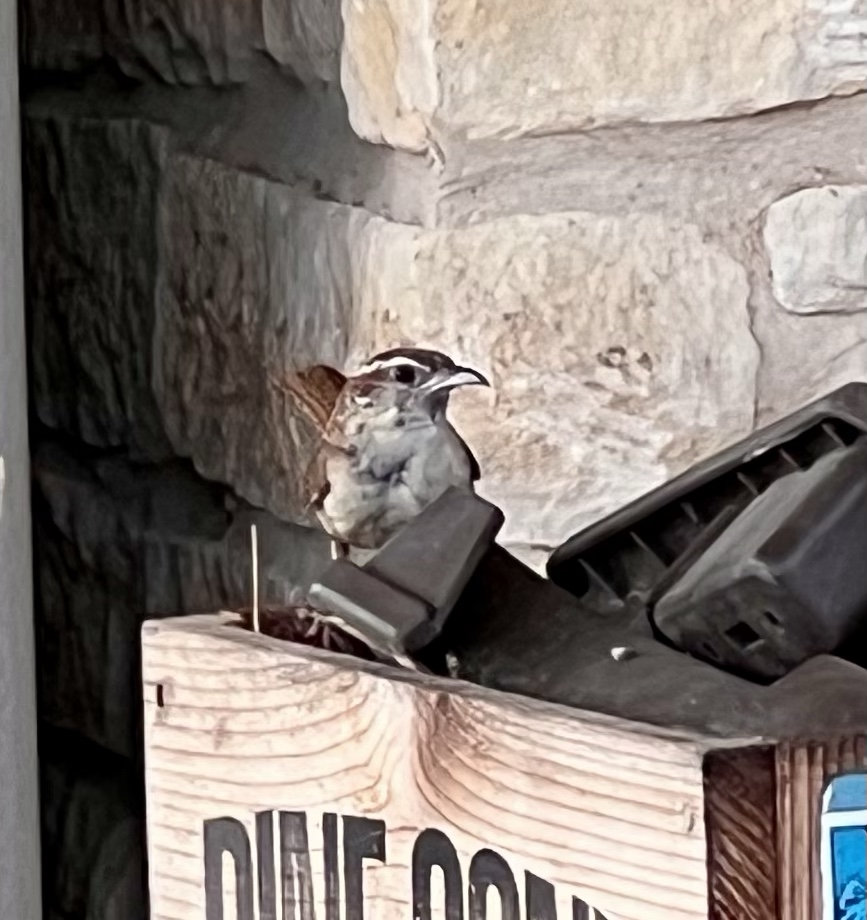
The nest of our third porch-dwelling species, the Carolina Wren (Thryothorus ludovicianus) – also known as my favorite small bird – is much cuter and more fun to watch. These wrens are well known for building nests near human habitations in odd places. We have had families in an old grill, in numerous hanging plants, and in a watering can, to name a few spots. Our current pair have taken up residence in the box that is supposed to hold the pool remote control. I had set a few other items in there to keep the wind from blowing them away, though, and this made the box irresistible to wrens.
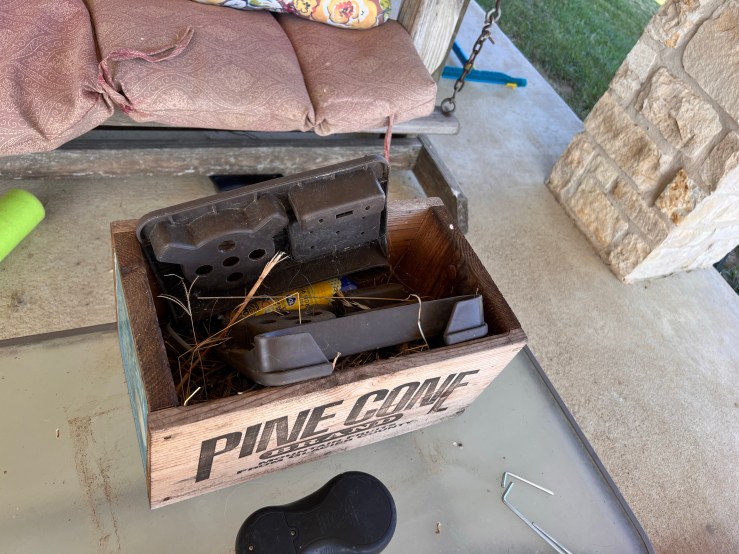
The box, with remote control in front of it. Note lots of grass. That’s nest material.

I went to clean out the box and put the remote control back in and was faced by one of my most beloved sights, an angry wren. Oops. I backed off, and we are now giving the growing family their space. The eggs have hatched (I peeked and saw two), so now the parents are taking over from the swallows and putting on a show for us patio dwellers. The pace at which those guys catch bugs and take them to the nest is impressive. We are looking forward to more pretty, fun, and melodic wrens in the near future.
Honestly, I don’t know how anyone can get bored around here!
Purple Martin Update

by Donna Lewis

Right now, it is very hot here in Central Texas. In fact, we are setting records for elevated temperatures.  So, how does this affect the Purple Martins who live here part of the year?

The Martins that arrive here first around January and February get their eggs laid first and their babies leave the houses first. Once they fledge and are living outside in the trees like other birds, they are not living in the houses. The trees provide shade and are so much cooler for them. So, the earlier the better. Of course, the early Martins also risk late freezes. Nature is always a challenge for any living creature that lives outside.

This year the Martins at my location have fared pretty well.  I have noticed some heat related deaths now in June and July.  As of today (July 4, 2023) I have only two babies still in the gourds and they should fledge any day now. Believe me, they need to. I don’t know how these two have survived the heat. I am sure the parents will be happy also.

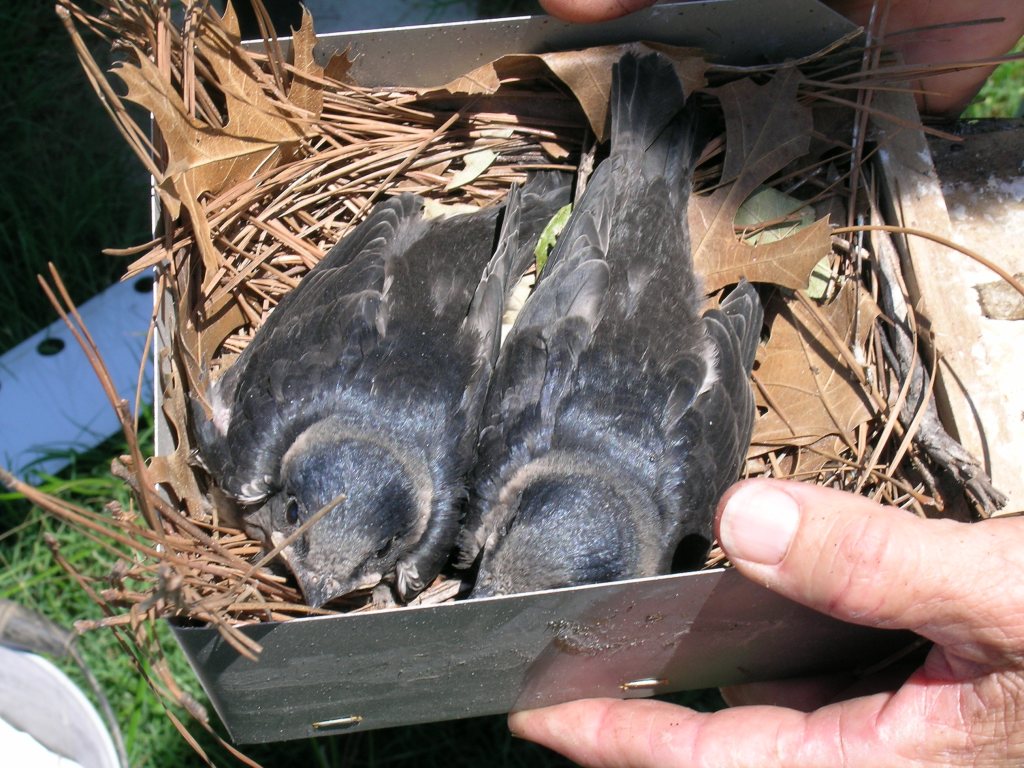
Babies!

Most of the Martins are training their new offspring to hunt and fly right now. The trip to Brazil will be coming soon. If they are not strong enough, they will not make the journey to their winter home.  Keep in mind, the new Martins have never been to Brazil before. Their first try must be successful.   

I always think of it as the young are getting their “driver’s license” now.  Martins live from 5 to 7 years as a rule.  So, if they are lucky, they will make the trip to the US and back to Brazil several times. It is amazing that any of them survive at all.  Weather, lack of insects to eat, and predators are always out there.

The Martins sing a lovely song when they court in the spring. It is one of the reasons humans love them so much.

I am sure they are talking to their young now and saying, ” What an adventure you are about to undertake.” 

Happy birding.

Weird and Interesting Sights

by Sue Ann Kendall

This post isn’t about Milam County, but it’s about some nature I observed at Fort Parker State Park, near Mexia and Groesbeck, Texas, to the north of here on the Navasota River. Since we have readers from all over the area, I’m hoping for some feedback on some of my sights, and for some high-fives about a few cool observations.

The trails were surrounded with beautiful Turk’s cap plants in bloom.

Even though we are under a giant heat dome, it was pleasant at the shady park during the mornings, so I did my longest “hikes” then (as anyone who’s gone on a walk with me will know, I stop an awful lot on hikes). The biggest highlight of my trip happened when I was on the river trail. I was busily listening to birds (vireos and more vireos), when something moved to my left. It was extra-brown and looked like mobile leaf litter. The shape told me I’d stumbled across a Chuck-Will’s Widow (Antrostomus carolinensis), my favorite nightjar! By standing still/creeping around, I managed to get photos that were identifiable, which excited me greatly. You don’t often see these birds; you more often hear them. as they are very loud and nocturnal. I’d only seen one of these birds one other time. So, that was enough nature for me, right there.

As good as my photography gets.

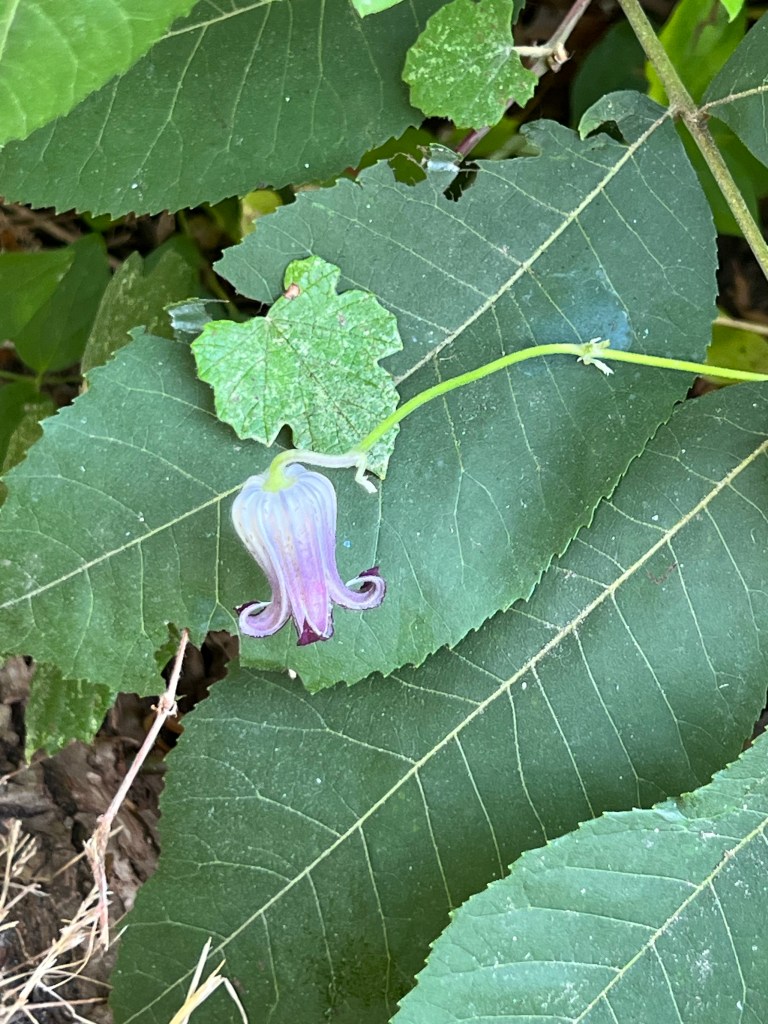
Of course, I found many other things. A couple of flowering plants were new to me, including this one, which could be one of two plants, both of which have the common name of butterfly pea or pigeon wings: Clitoria mariana or Centrosema virginianum – I’d love some help getting the right identification for this flowering vine, which is one of the most beautiful things I’ve ever seen.

There aren’t many flowers, but the vine itself is really interesting, because it grows very long tendrils that hang down gracefully.

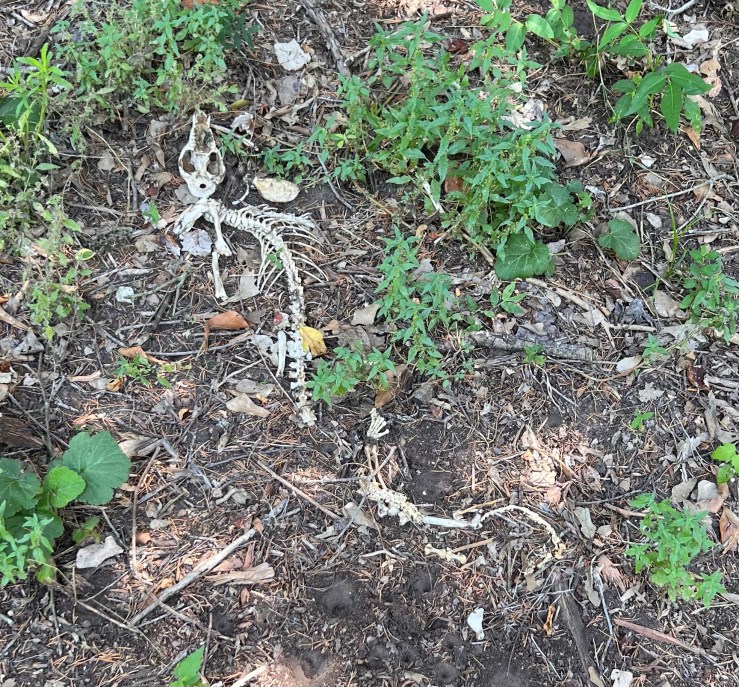
Another thing I saw that I could use some identification help with is this mammal skeleton. Could it be a fox or a coyote? It has large canine teeth. Or am I missing something obvious?

A former animal

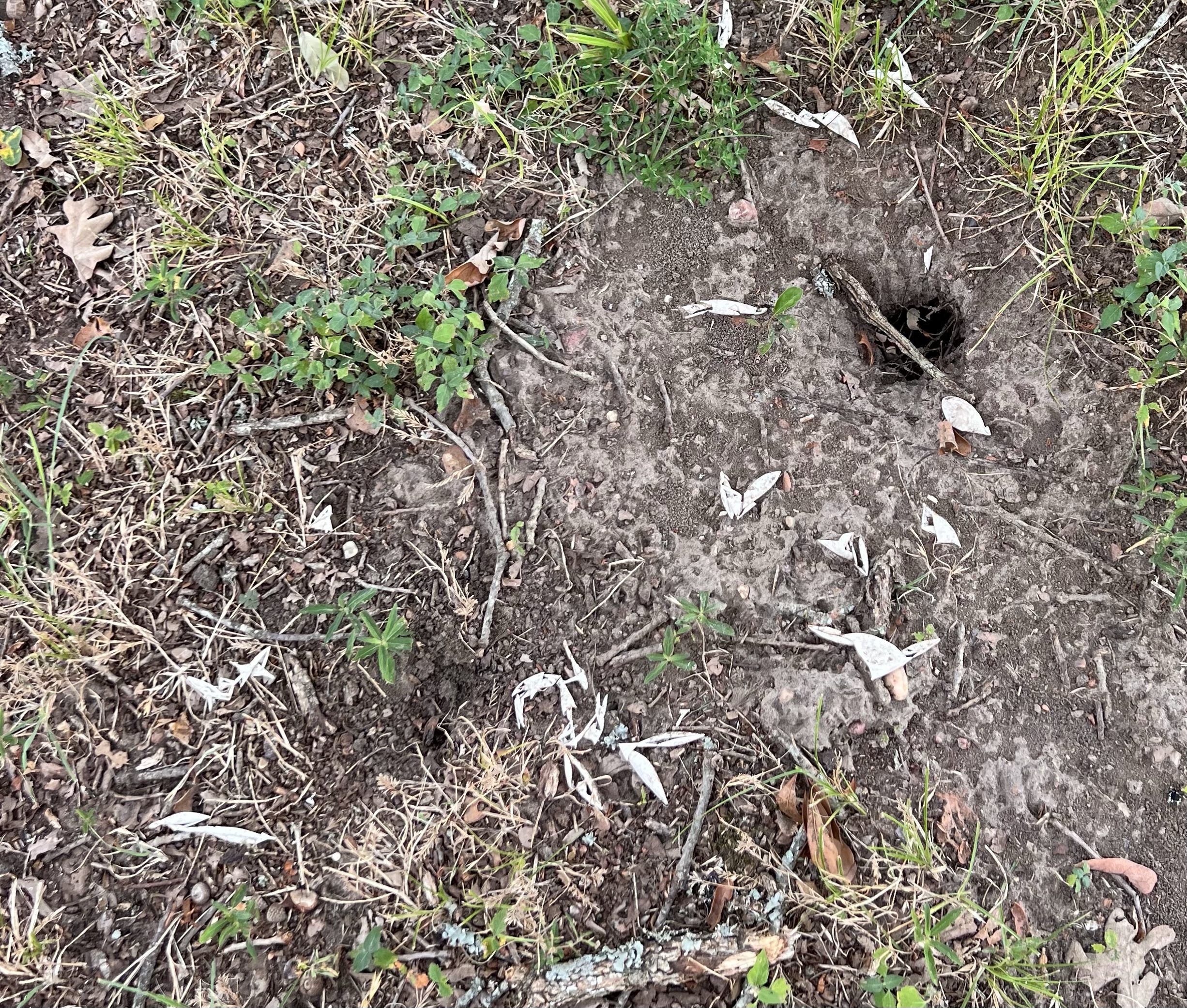
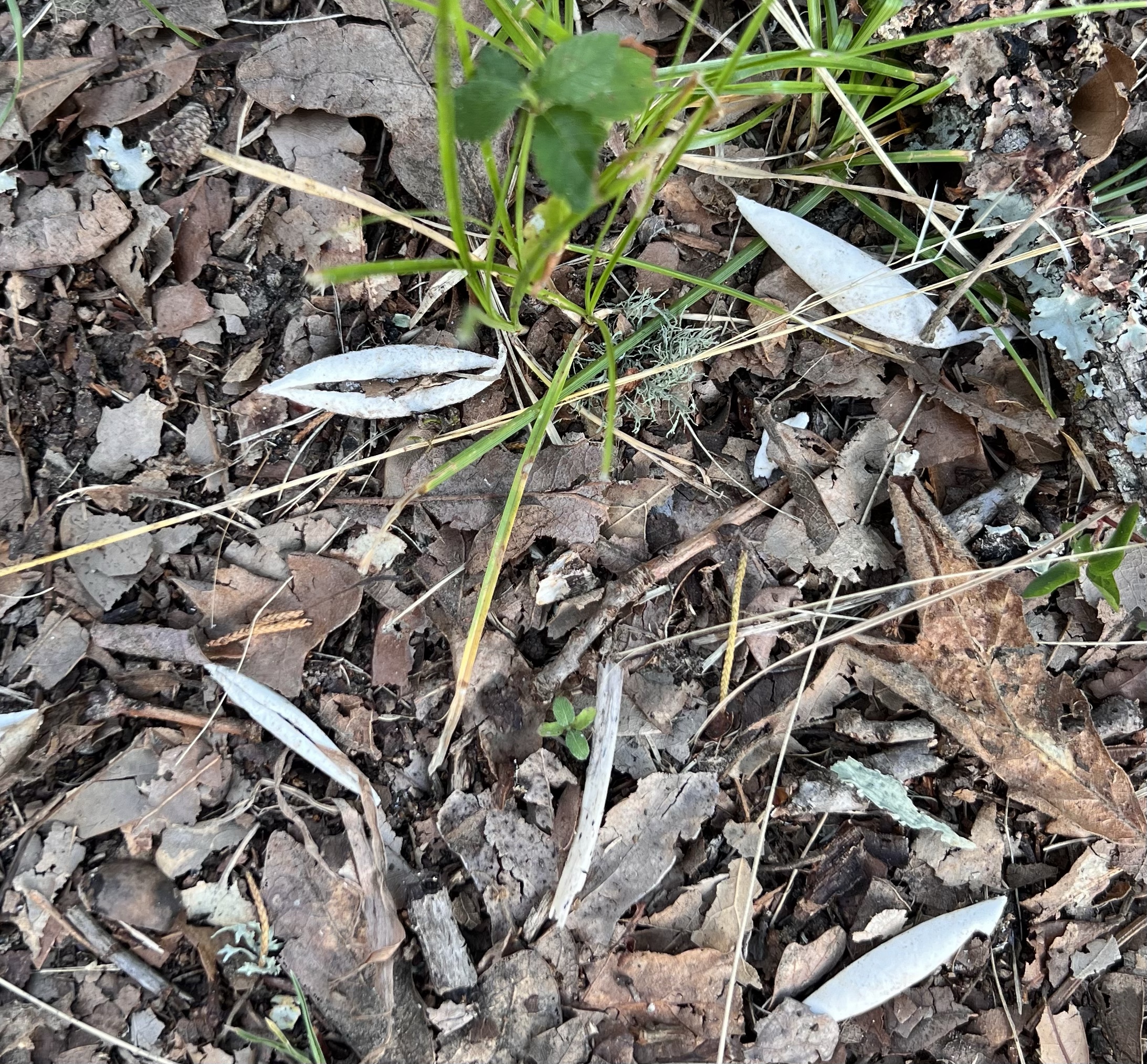
There was other evidence of creatures that have moved on, too. All over the part of the park near the lake are holes that look recently dug, with white things scattered around them. There were dozens of them.

My thought is that these are recently hatched turtles. I did see a few mounds of dirt that resemble turtle nests I’ve seen before. If even some of these made it to the lake, that’s a LOT of new turtles out there! I have a feeling all the egrets around the lake are happy with this potential feast. Do these look like turtle eggs to you?
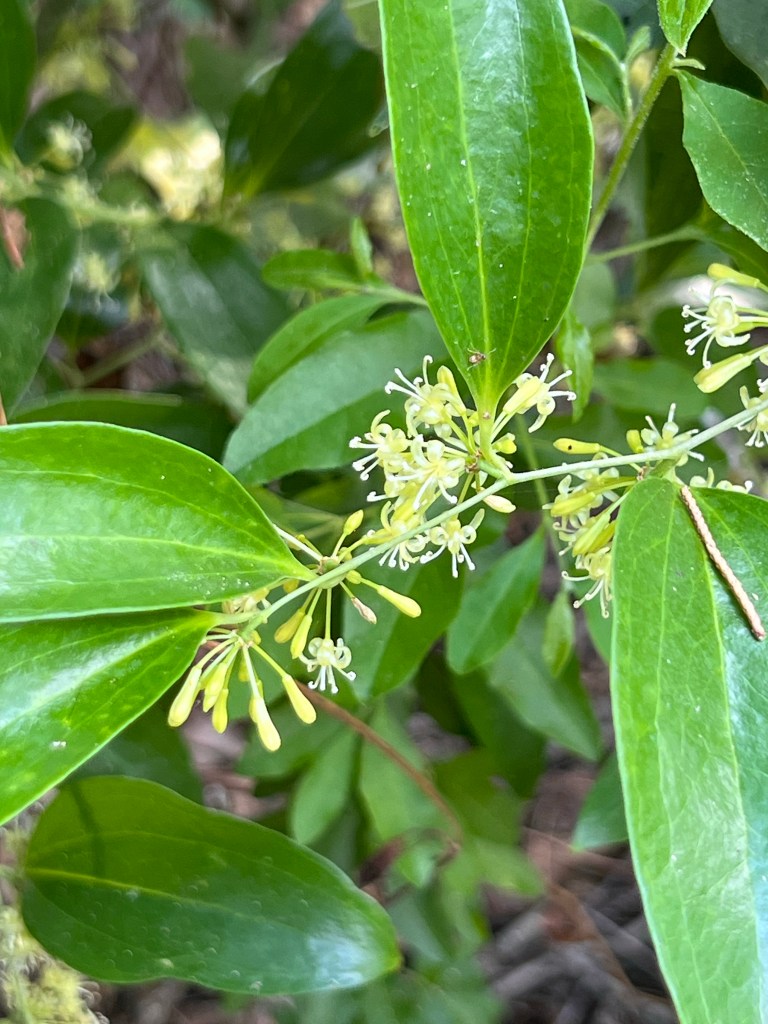
That does it for my mysteries. I thought I’d share a few other bits of interesting nature that I ran across. Let me know if any of my IDs are wrong, and be sure to go correct me over on iNaturalist (I am sunasak).

If, for some reason, you’re dying to see the many, many other plants and insects I saw over the weekend, feel free to visit my personal blog:

Or for you hard-core observation lovers, I’m sunasak on iNaturalist. Please go confirm or deny my identifications! I appreciate it so much, and it helps me learn more.

Purple Martin Day at Mike McCormick’s Ranch

by Carolyn Henderson

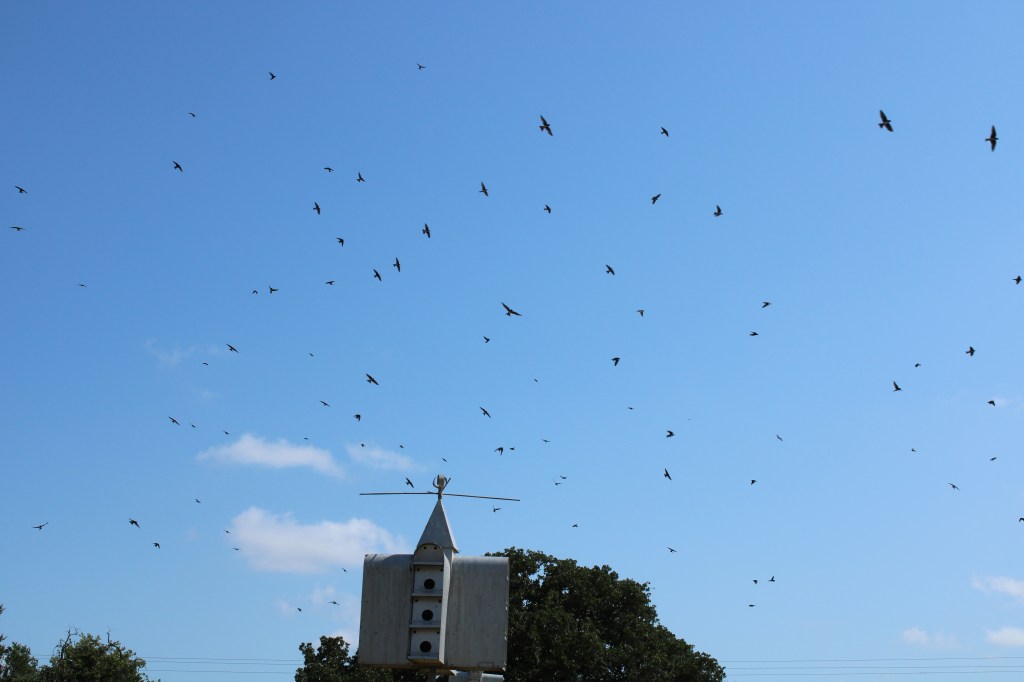
The skies over Mike McCormick’s ranch were awash in Purple Martins on Saturday, June 24. He estimates that he has 800 adults that have laid 3 to 8 eggs per pair – most of which have hatched. When the babies are air born, they may black out the blue above. 

A small, but resolute group of El Camino Real Texas Master Naturalist braved the heat to get an annual report on the expansive Purple Martin breeding grounds a few miles outside Buckholts. Thankfully, there was a nice breeze and shade up on the hill where the birds take up residence in the specially made houses on the McCormick place.

McCormick made all the houses in his workshop. He also created an impressive trap house for English Starlings and sparrows. Starlings are notorious for taking over Purple Martin houses. Sparrows are known to do it, too. Apparently, starlings and sparrows are just too curious for their own good when they see others of their kind. The trap is somewhat large and made to let them in but not out. He keeps a few as “pets” so the newcomers will see them eating and join them in the cage. 

McCormick told the group about Meteorologist Andy Anderson, formerly of KCEN, telling him that two years in the 2008 to 2010 range, the Purple Martins were “seen” on his radar because of how thick and black they looked when they do their daily hunting circles. The radar picked it up as a moving dark cloud. 

He did state that he would be making some more to be sold soon.  

Fifteen Years Have Flown By

by Sue Ann Kendall

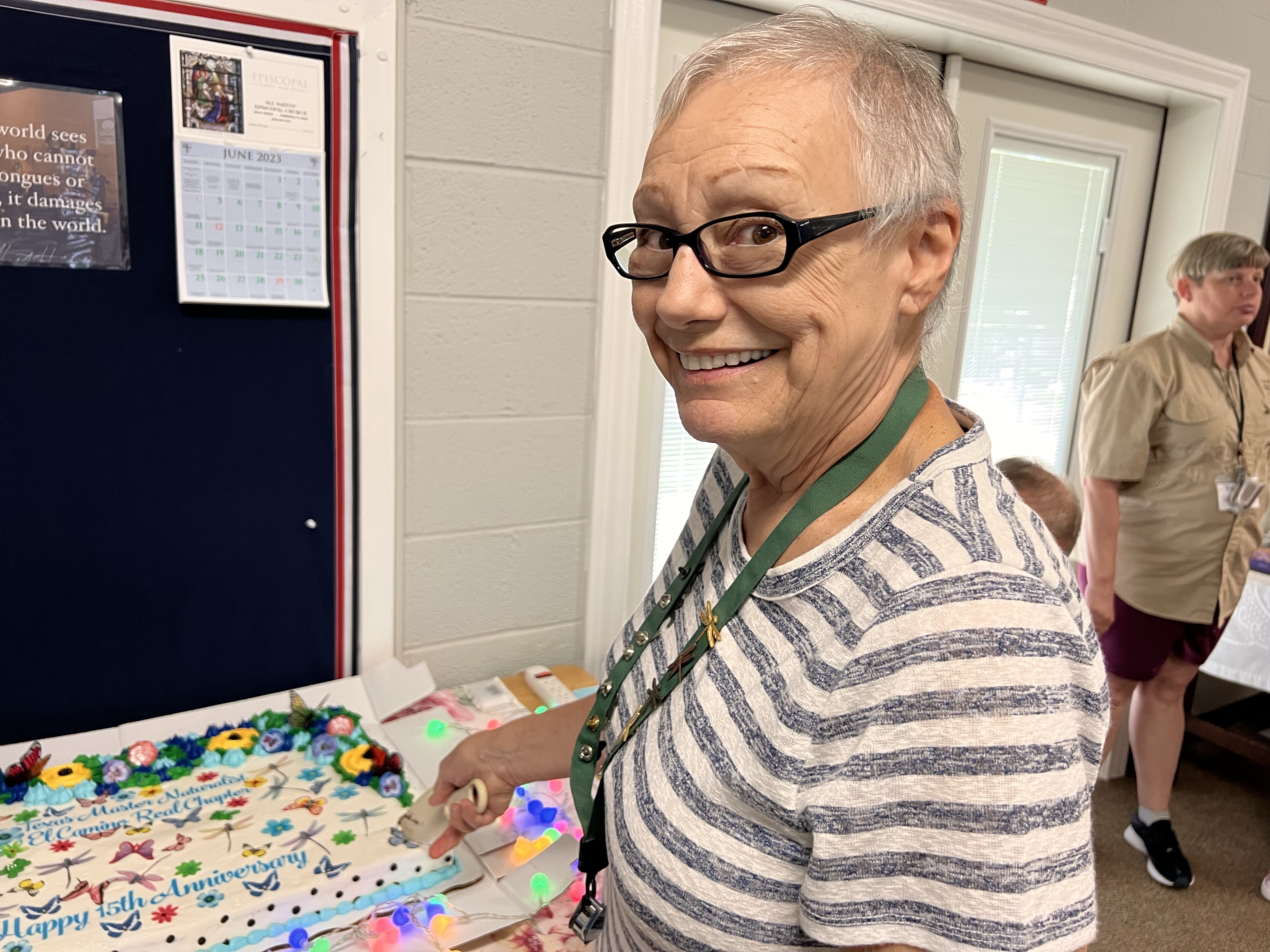
On Thursday, June 8, members of the El Camino Real Texas Master Naturalist had a fabulous time celebrating fifteen years as a chapter. We stuck with it, survived some hard times, dealt with a pandemic, and have emerged strong and active in Milam County. All members and friends, past and present, should give themselves a pat on the back!

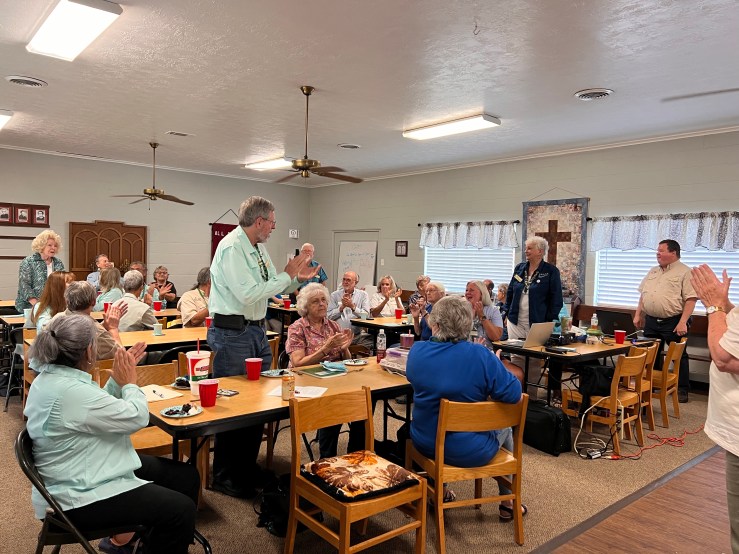
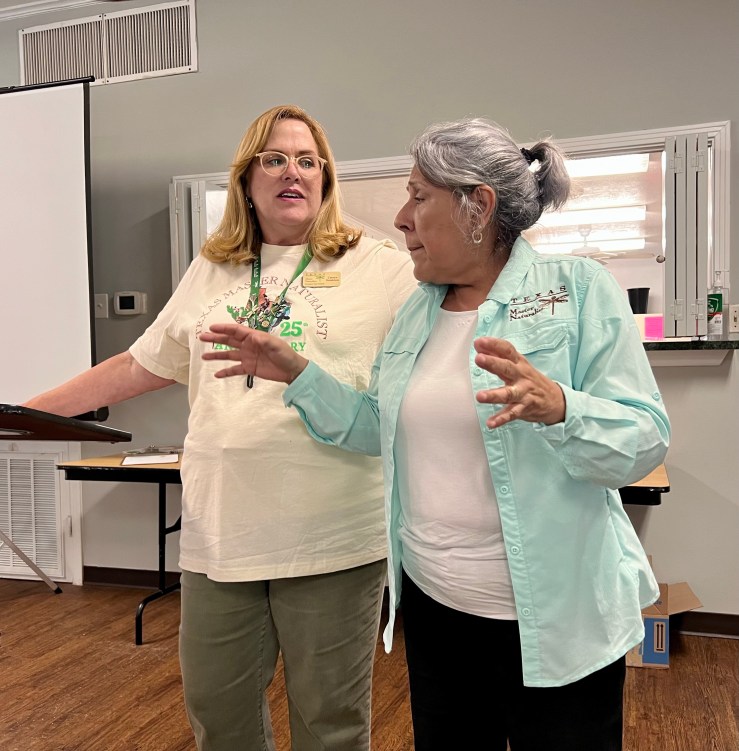
Here we are applauding the original members who joined us as we celebrated.

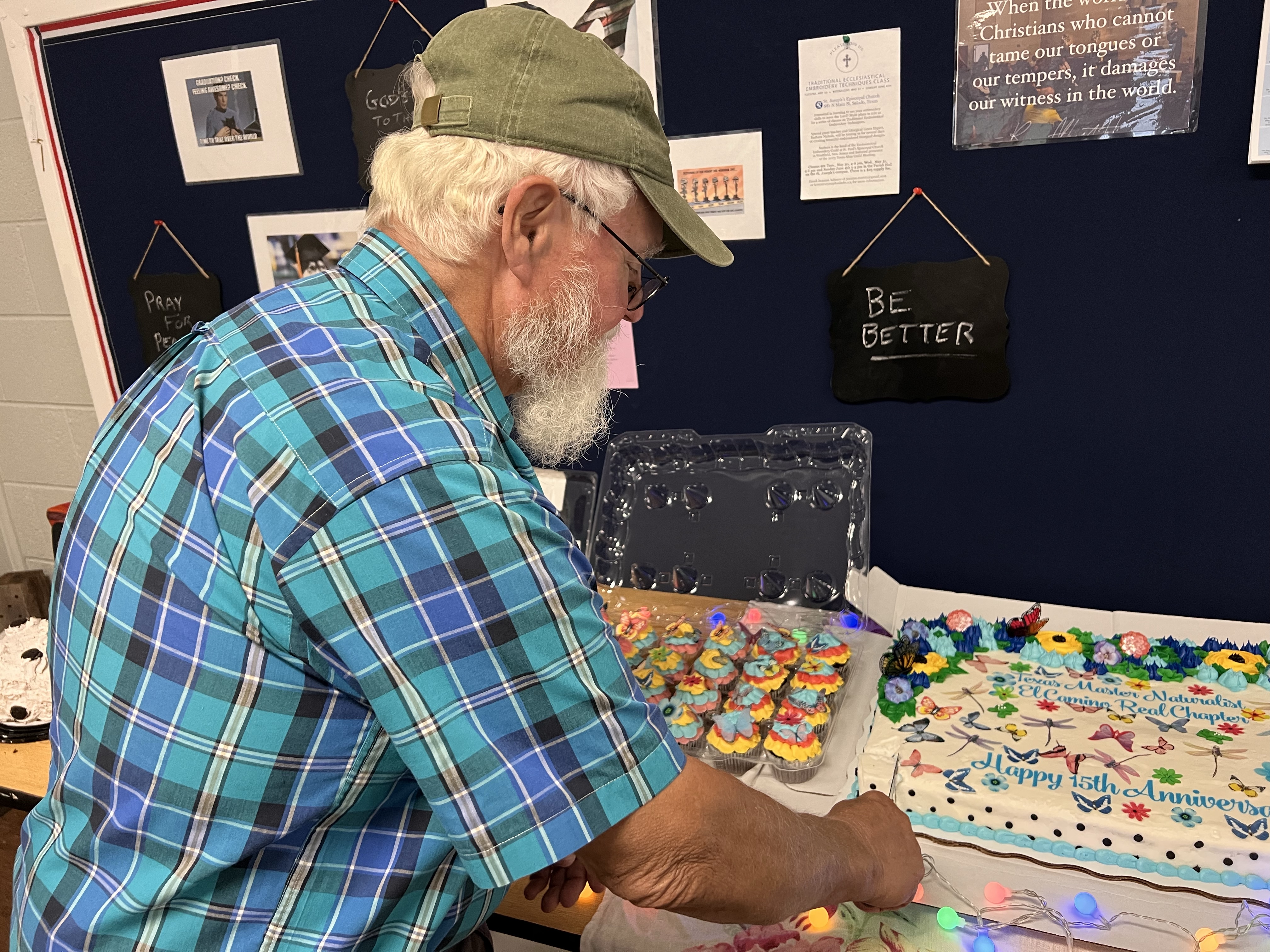
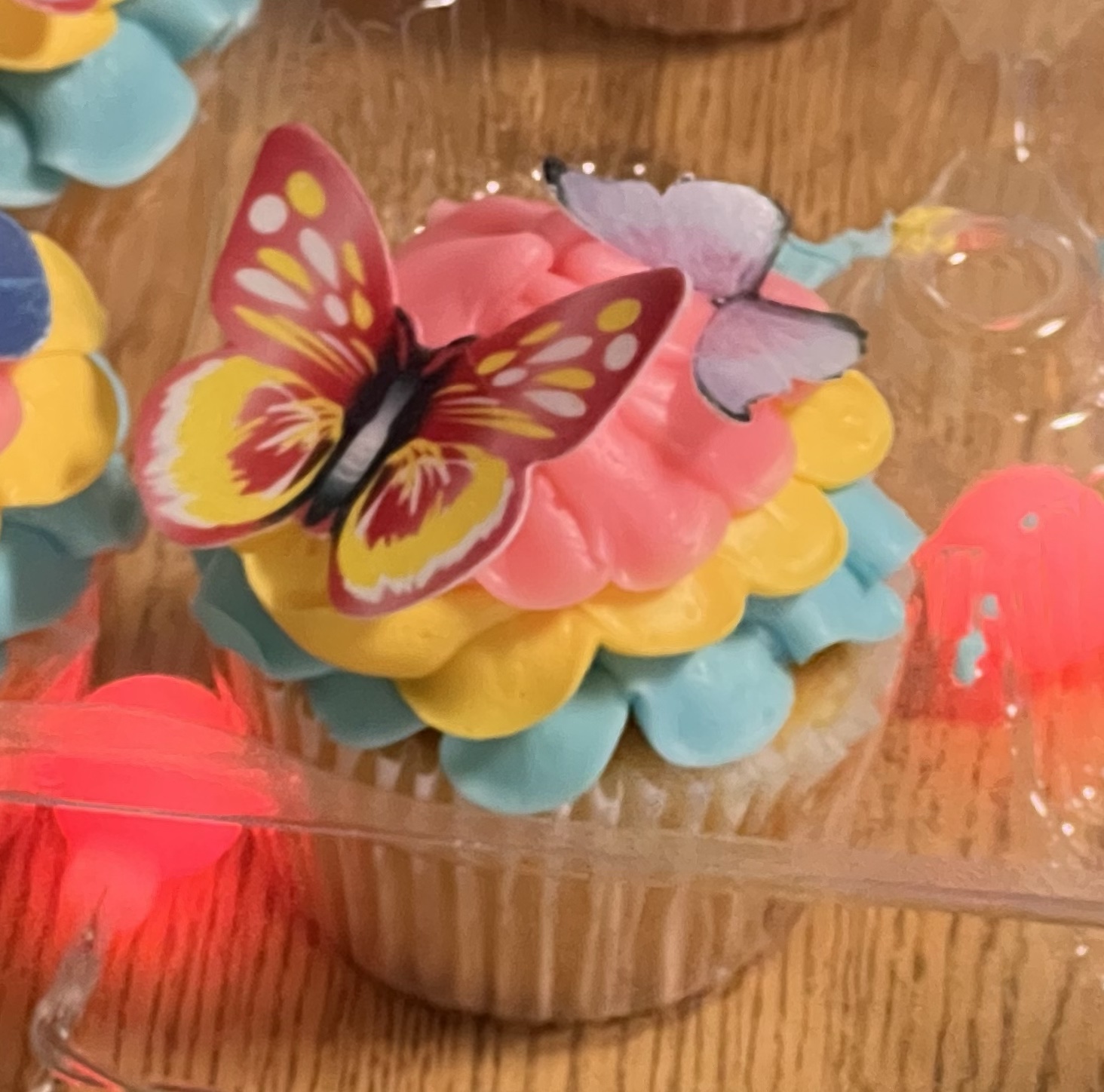
Our hospitality committee outdid themselves in creating a beautiful setting for a combined educational meeting and celebration. We started with a festive potluck mean, followed by a special selection of desserts. The cake was chocolate with cherry filling. and it was covered with flowers, butterflies, and other natural delights. There were also cupcakes that looked like beautiful flowers.

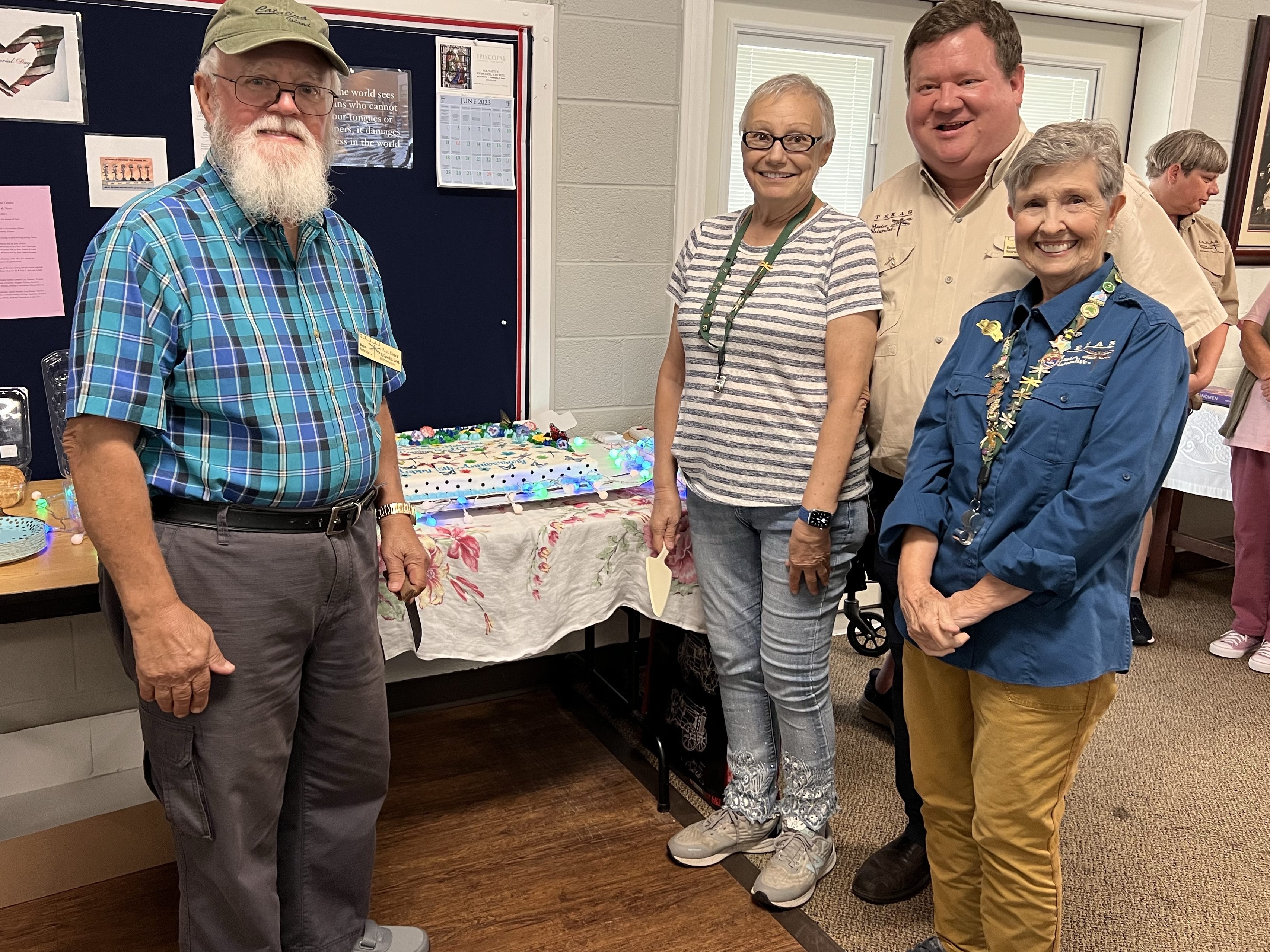
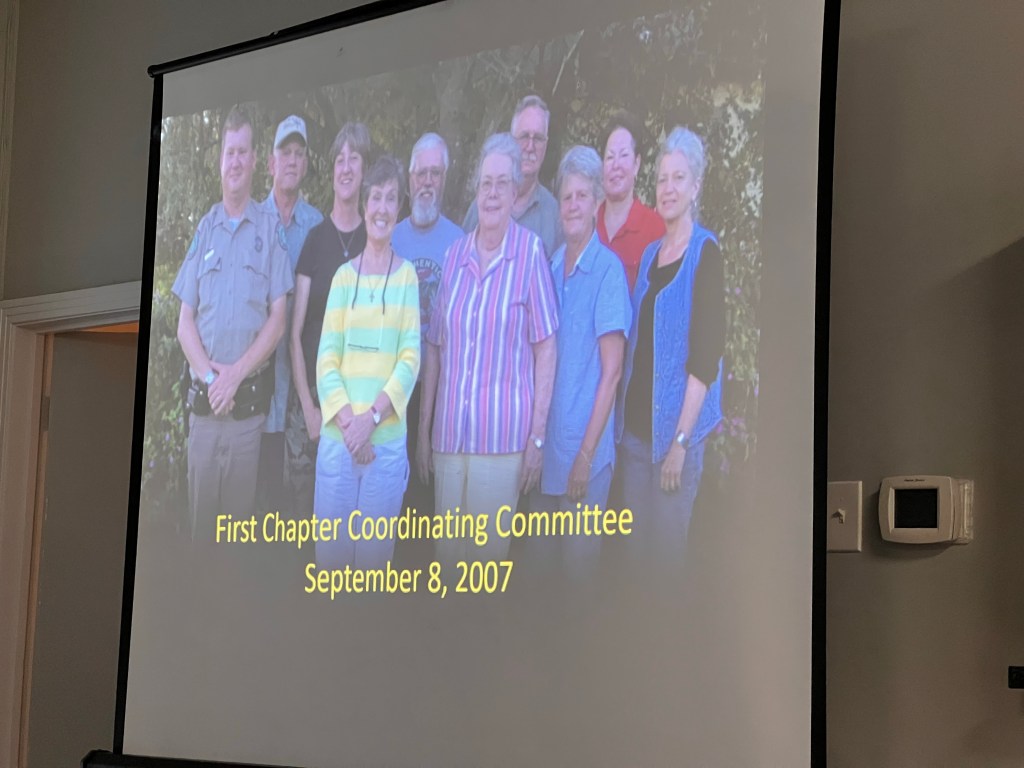
We were honored that Paul and Jan Unger joined us from Fredericksburg, where they are currently living, to help us remember our origins. Paul was the first president of the chapter. He was one of the entertaining and extra educational speakers who told those of us who have joined the program more recently learn how we got to have such a thriving organization.

The Ungers are joined by Mike Mitchell and Ann Collins, the masterminds of our chapter.

I have to say that I thoroughly enjoyed the speakers at the celebration. I learned so much (not all of it having anything to do with Master Naturalists, but that’s because there was so much good-natured ribbing going on). The evening started out with our current president and vice president, Carolyn Henderson and Liz Lewis, welcoming us all and sharing insights into today’s chapter.

These two had fun!

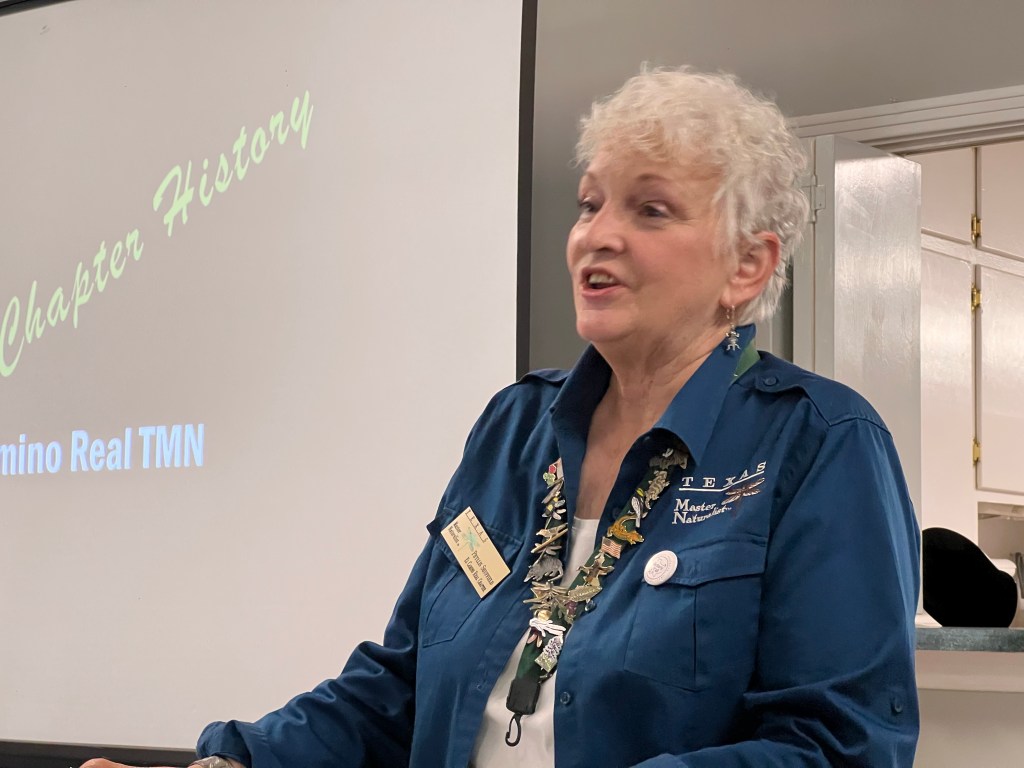
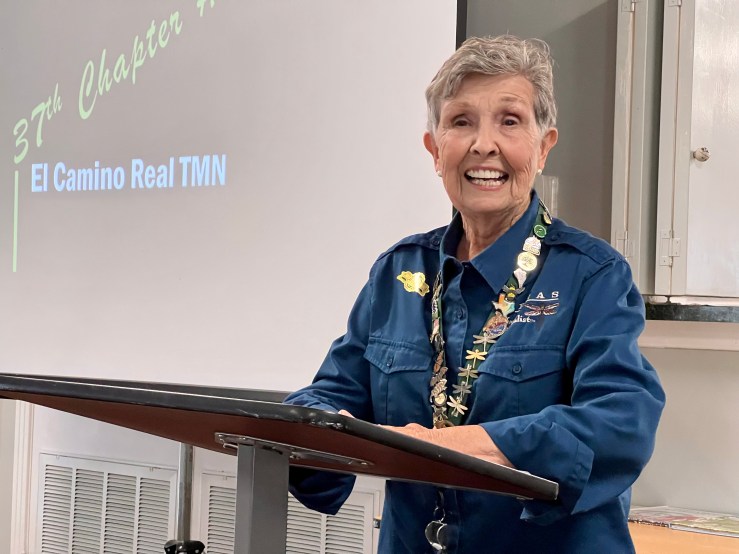
Then Phyllis Shuffield, a member of the first class, who was the president of the chapter when I joined, came up to introduce our founders. Since Phyllis is one of the best story-tellers I know, I really enjoyed finding out how she met Mike Mitchell stalking her property. Spoiler: he was the Game Warden and was looking for poachers. But she got him to turn quite red by the time she was finished. She then welcomed Ann Collins to the stage.

I wish we’d recorded Ann’s talk. Hmm, as I look at the photo above, I see she did write it all down. Maybe she’ll send me her notes and I can write them up. I’ve done it before! Ann’s story of how she became a naturalist reminded me of the protagonist of Where the Crawdads Sing. Ann ran wild and free down by an East Texas creek, educated by her own curiosity and some great mentors. She lived in the Center of Civilization (Cameron) after her girlhood, and just kept learning as she raised her children and moved around Texas. She served as a docent at so many interesting places…and learned from so many great teachers…no wonder she knows pretty much every bird and plant she encounters.
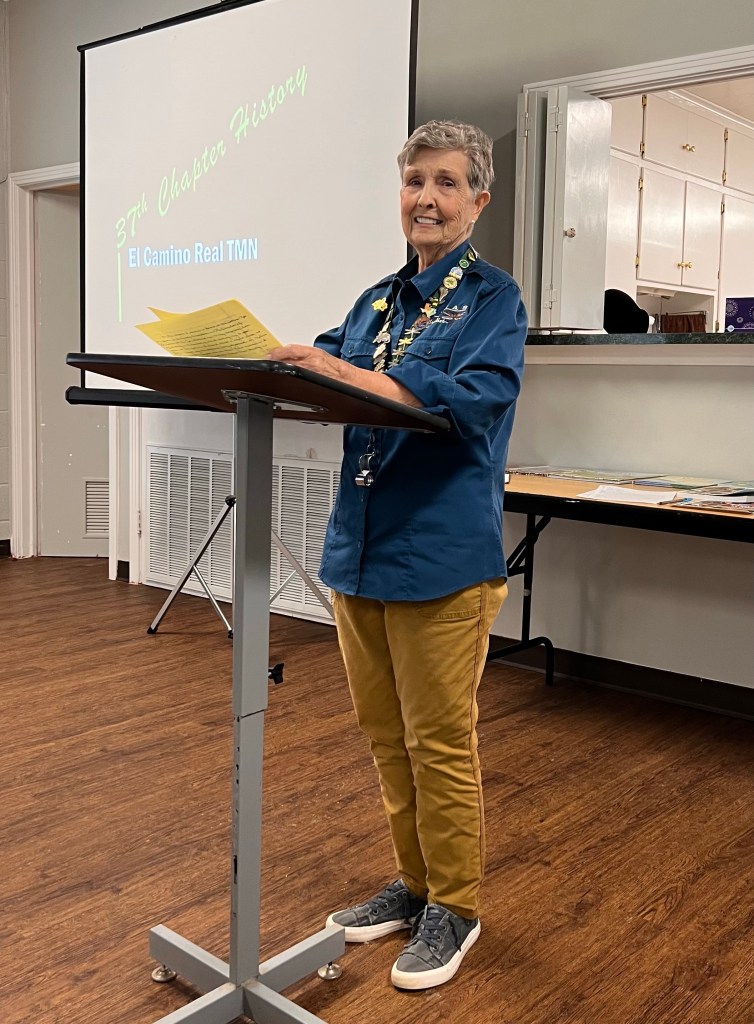
And Ann is STILL excited about nature, every day!

She’s one persistent human, too. The path to getting our chapter started had many stops and starts, including a stint as a Master Gardener (even though she is NOT actually a gardener), and taking a Master Naturalist class in College Station that was full of PhDs who intimidated her until she figured out they were just people, too. Putting Ann together with Mike, our other co-founder, created a dynamic duo who would stop at nothing to get Milam County its own chapter.

Mike explaining some of the chapter treasures he brought along.

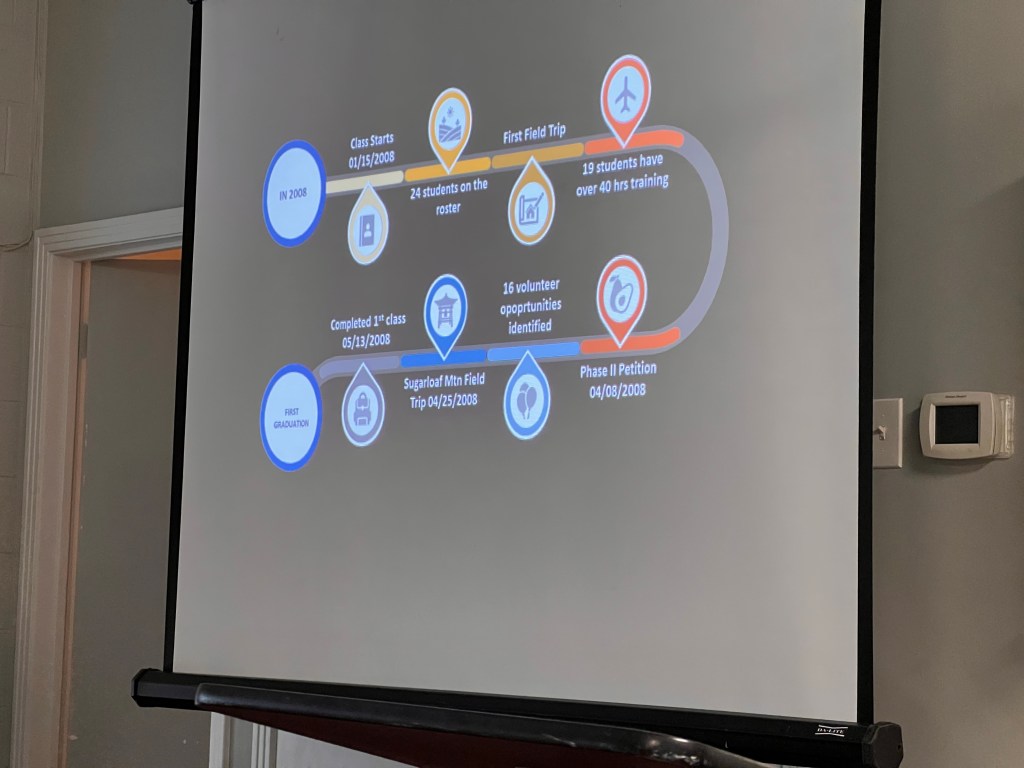
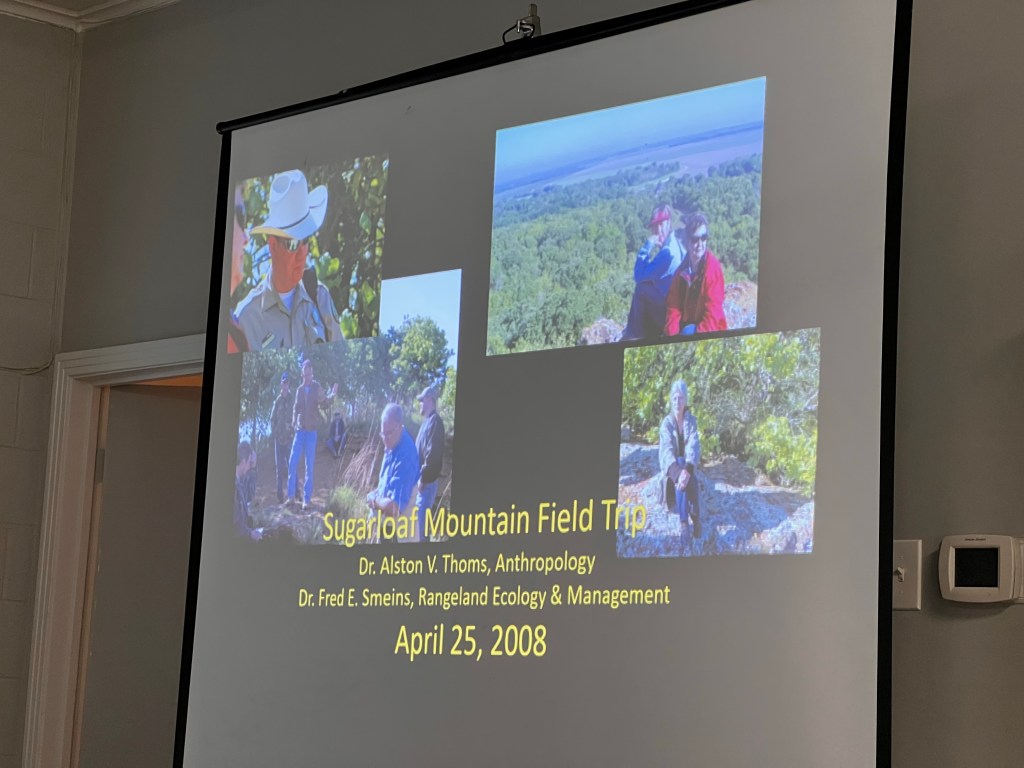
And yes, Mike Mitchell spoke next. He was our first chapter advisor and is proud to point out he is a friend of our chapter, not a member. For some reason, tracking his hours doesn’t appeal to him. But he has a Friend pin! What Mike did do was spend his off-work time and money getting the chapter documents together, creating a curriculum for the first training class, and publicizing El Camino Real Texas Master Naturalist. He still has his first outlines, the first class schedule, and many more amazing artifacts from starting our chapter.

Mike also acknowledged Don Travis, our webmaster and record keeper.

Listening to Mike made me truly appreciate the effort those dedicated naturalists had to undertake to get us up and running as well as the pioneer spirit of those first class members. It’s impressive that so many of them are still with us and continuing to actively contribute to the chapter.

We honored those who have passed on, such as Katherine Bedrich, and learned where some of the others now are. I was grateful for the chance to acknowledge those who couldn’t join us

I’m very grateful that Mike’s still our friend, still speaking to dozens of new Master Naturalist classes each year, and planning to present at the next Annual Meeting. He’s a lot of fun to hang out with, as I’ve learned from past meetings.

The work of our chapter does continue, so we took a short time to have a regular meeting. Of course, we honored the latest members to obtain their yearly recertification. Patricia Coombs attained both her initial certification as a new member and her additional yearly certification!

Congratulations on receiving your 2023 pins! Patricia Coombs, Carolyn Henderson (who presented the pins), Janice Johnson, and Debra Sorensen.

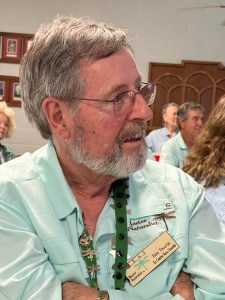
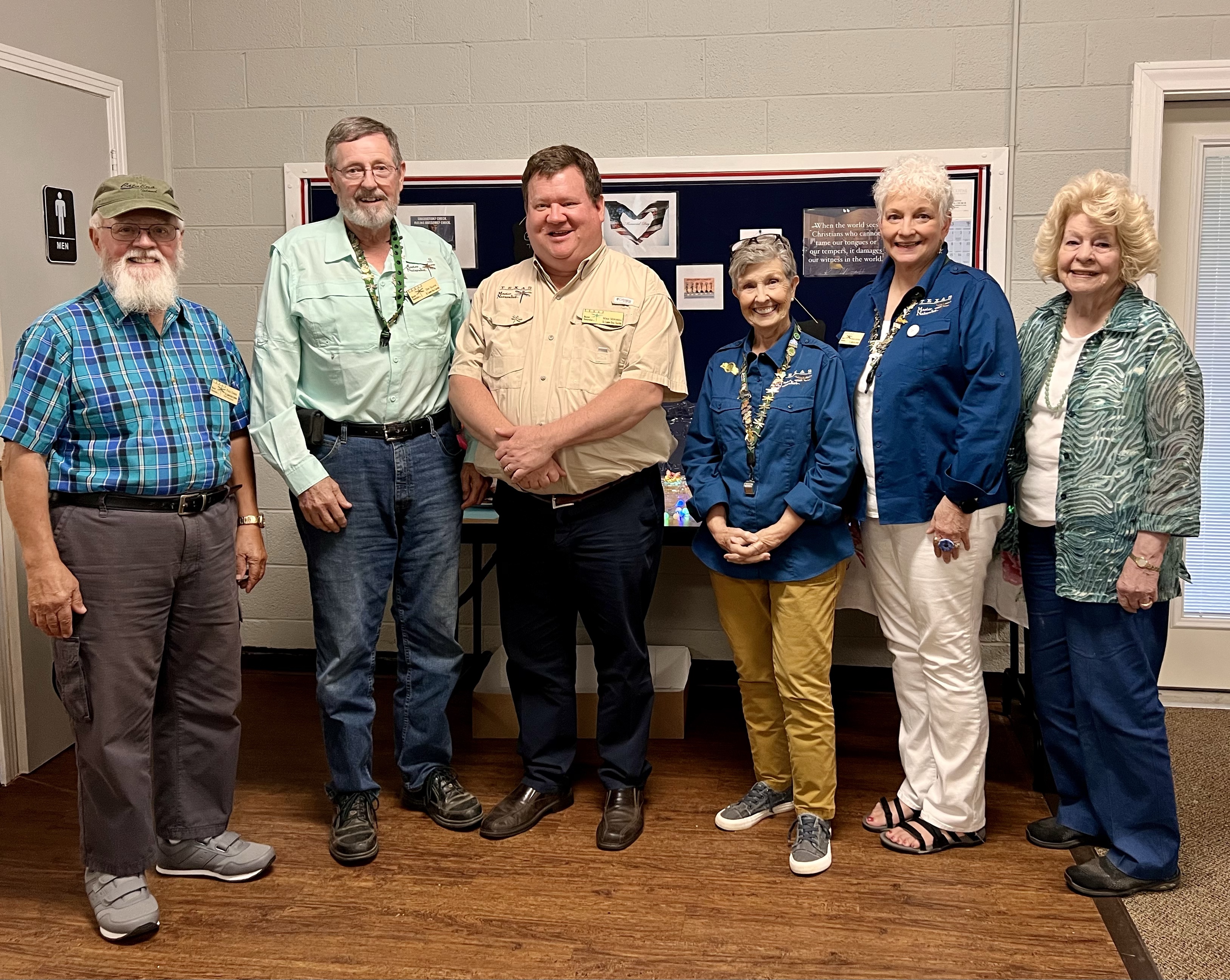
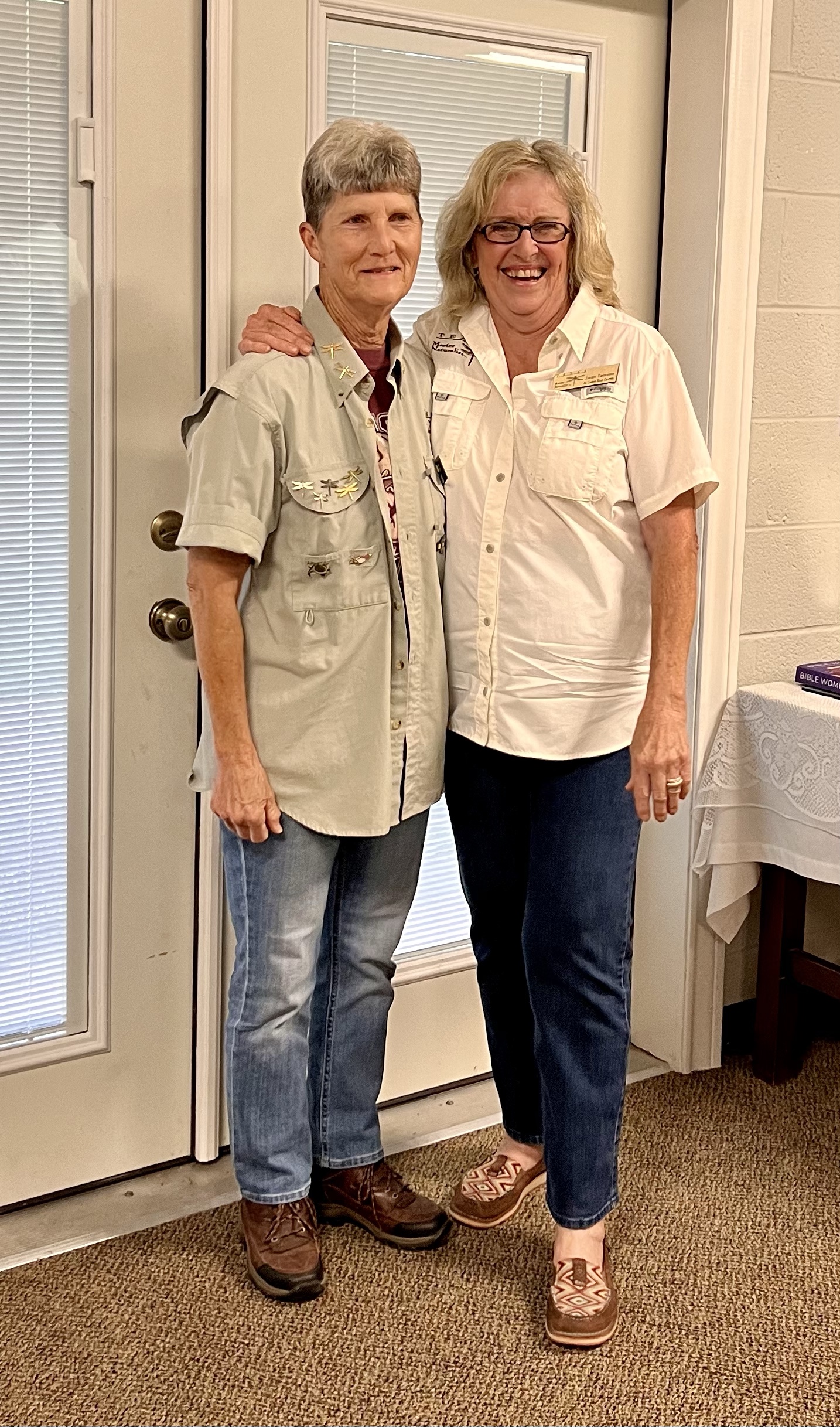
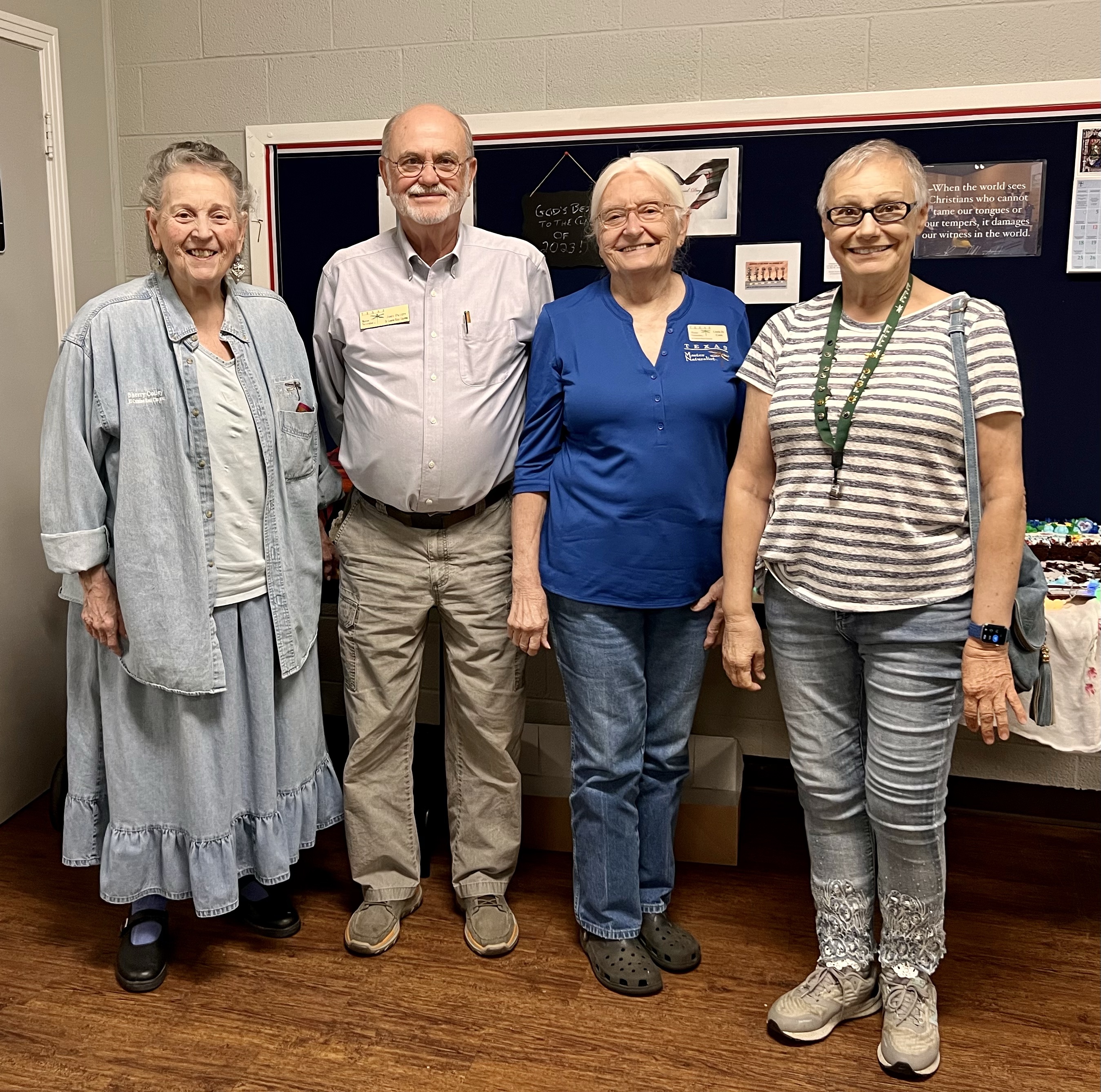
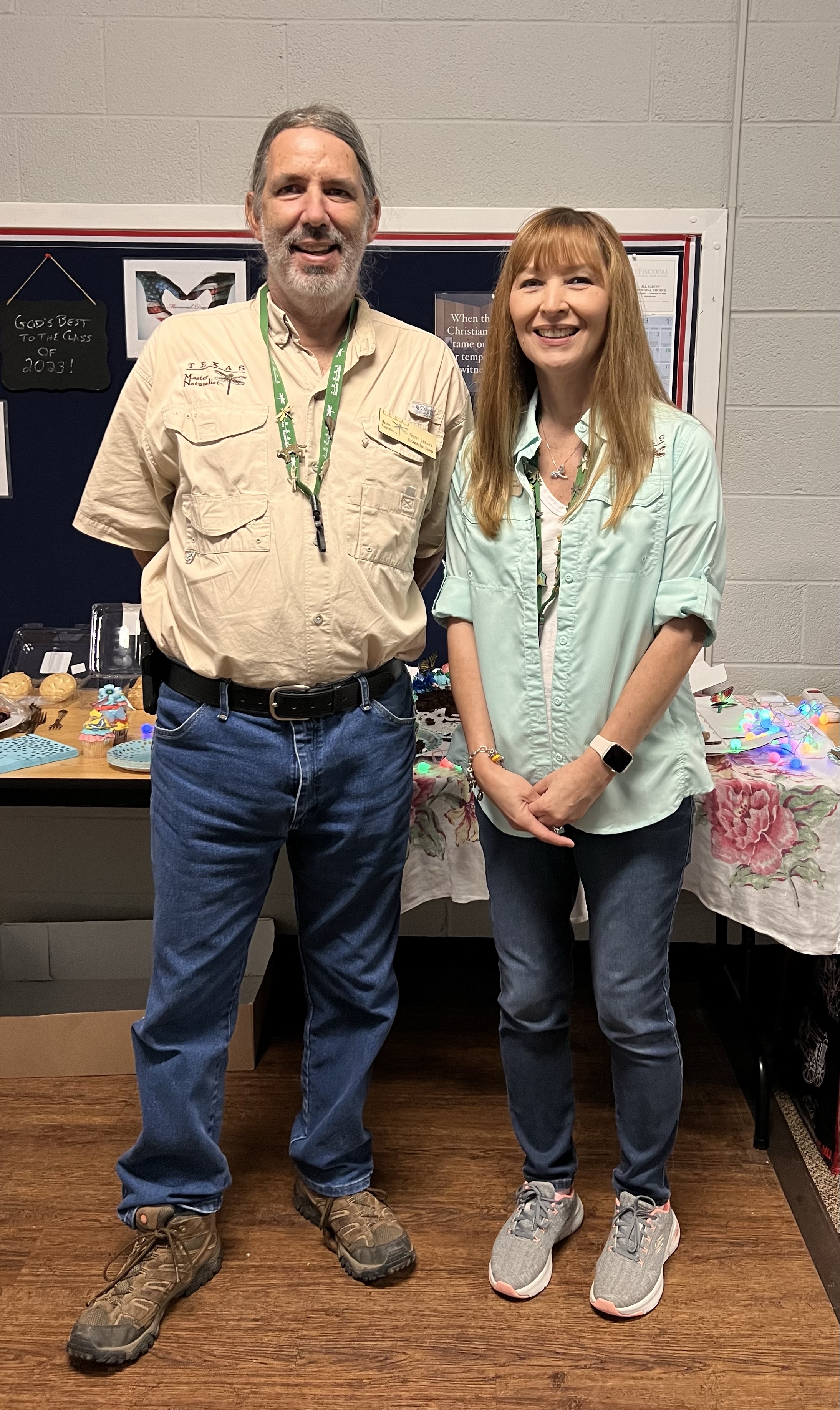
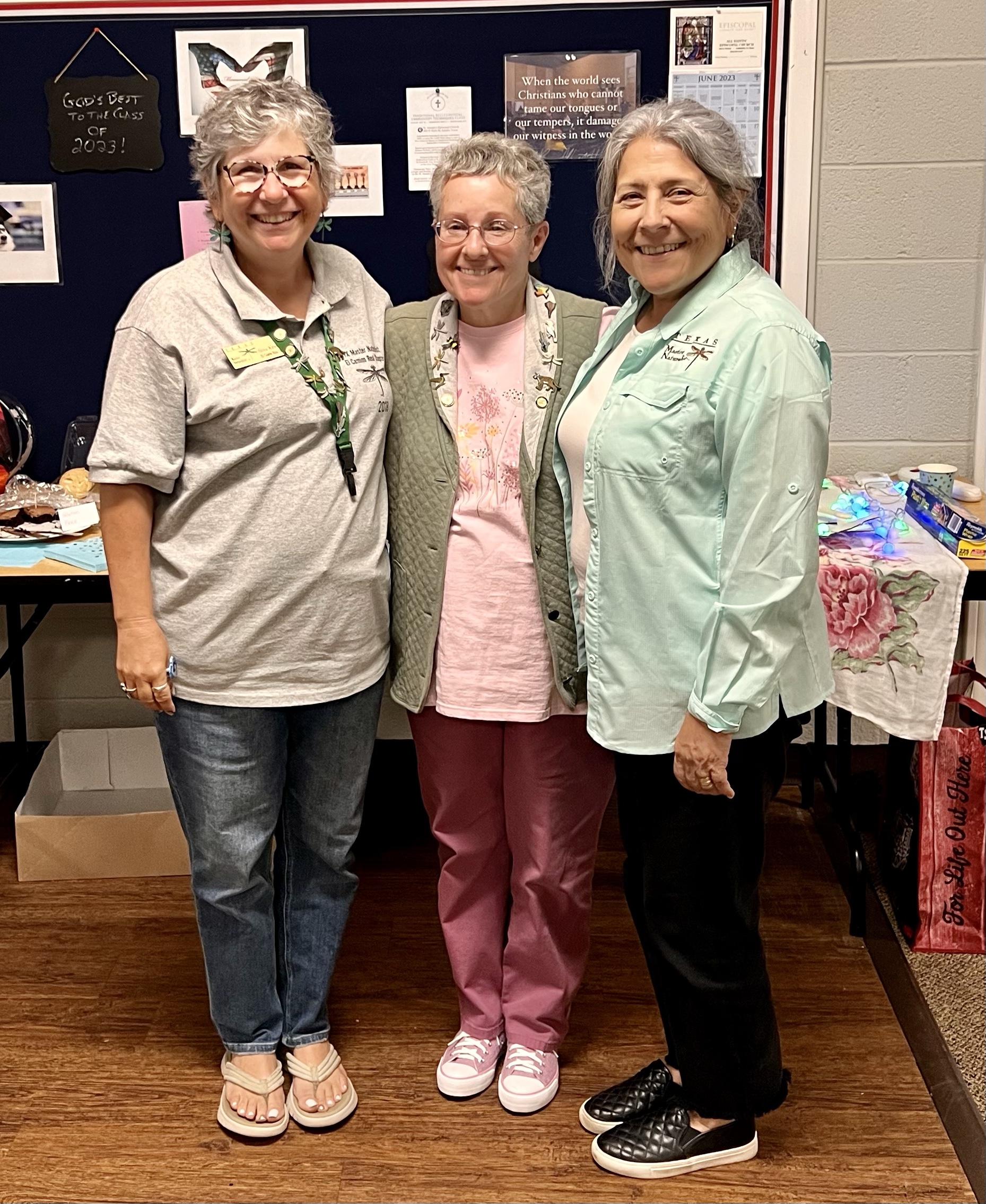
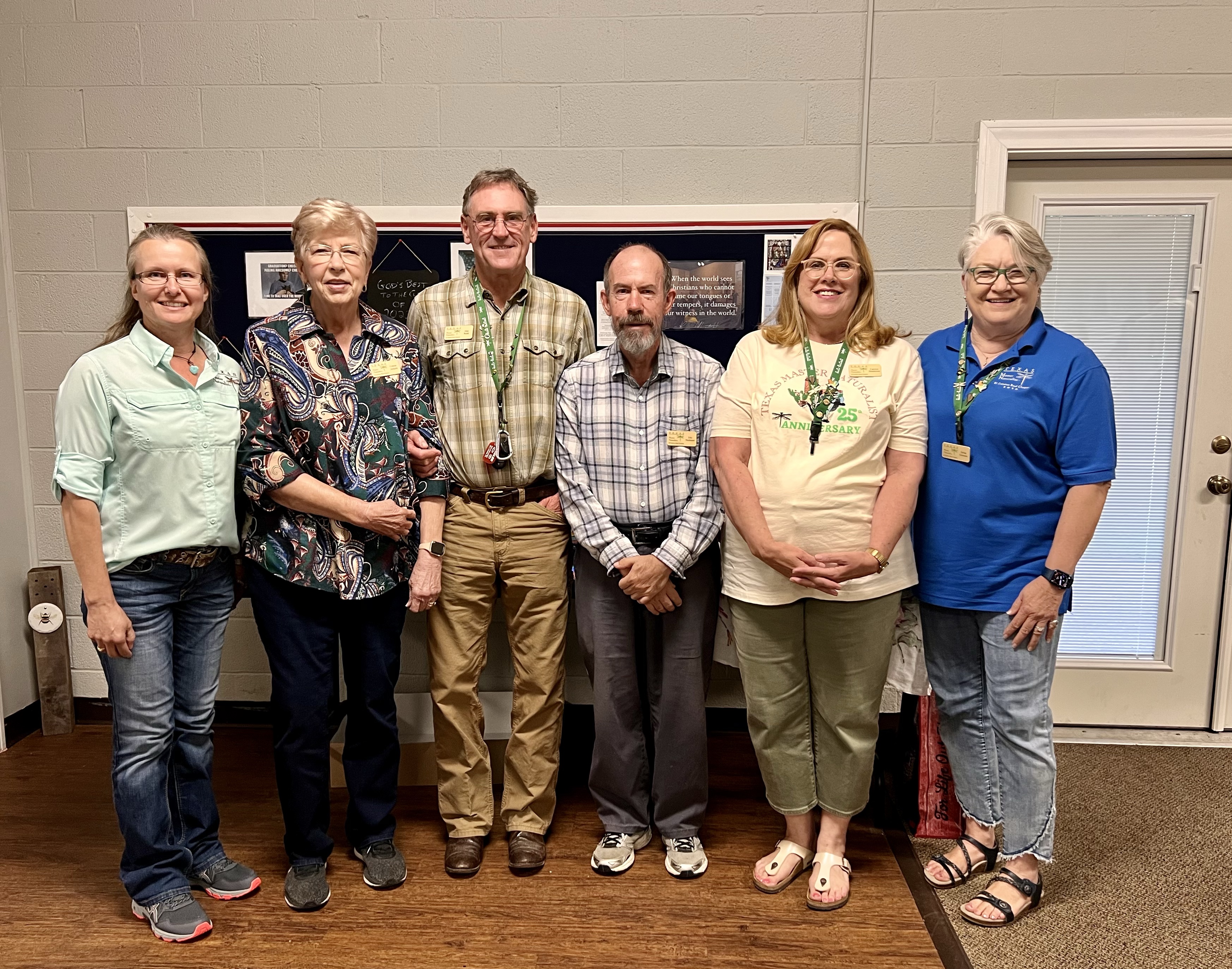
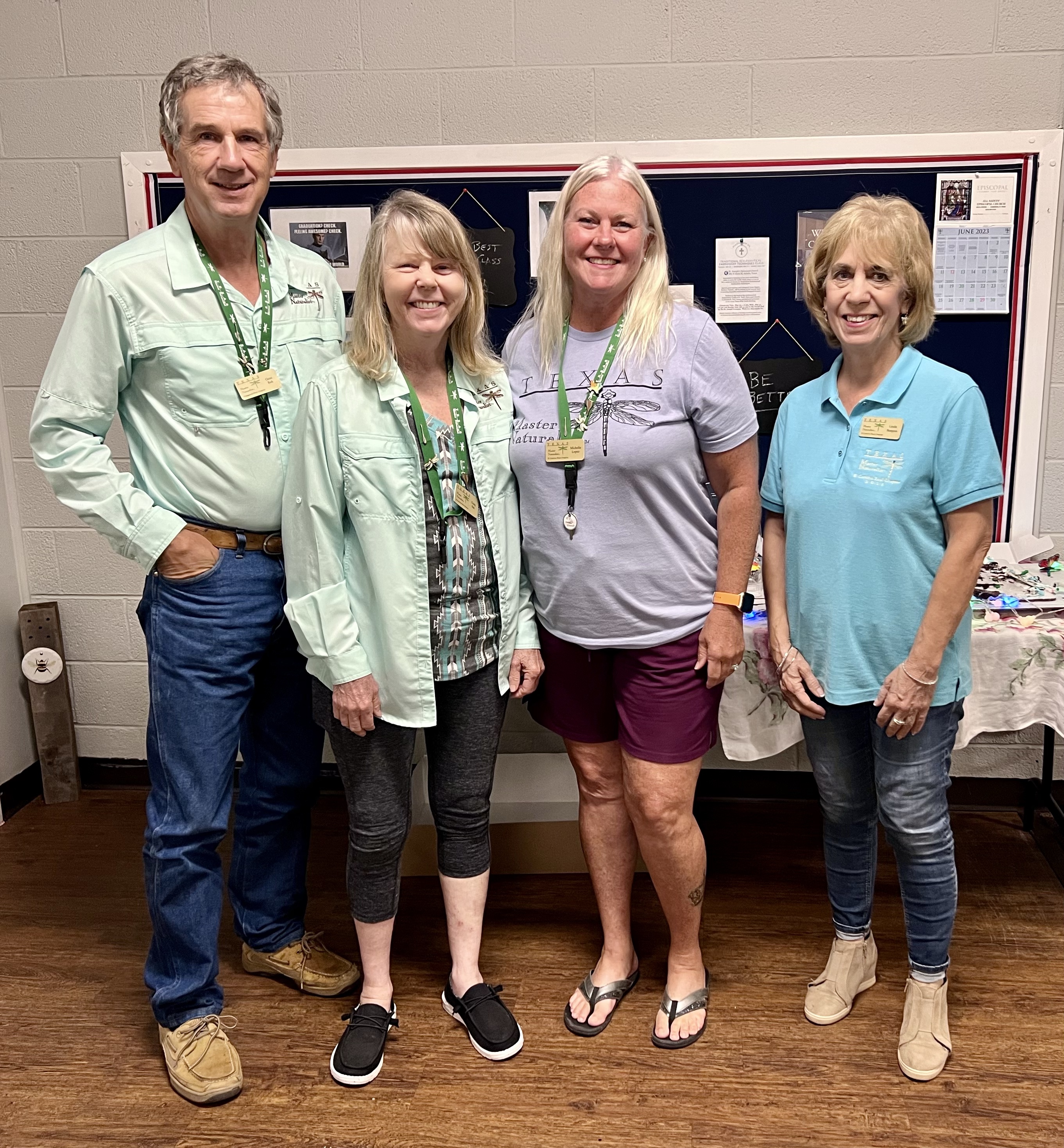
After our meeting, I took pictures of the members of each of our past training classes who were at the gathering. That was a lot of fun, and it was so good to see the legacy of our chapter as it continues. Click on any picture to enlarge it.

Interested in learning all about the nature in Texas? Let us know and we’ll contact you about our next training class. Visitors are always welcome at our monthly meetings, and you can become a Friend of El Camino Real Texas Master Naturalist if you attend more than two meetings and intend to take the next class. Join us!

You, too, could get a pansy ring off a cake!