My little company held its Board retreat near Wimberley last weekend. I was pretty excited when I found out we’d been booked into a ranch with over 100 acres. I was even more excited when I arrived and realized I knew the area pretty well from having been on retreats nearby in a previous life stage. I immediately formulated a plan to get as much Master Naturalist activity in as I possibly could. That’s my idea of fun, I guess.
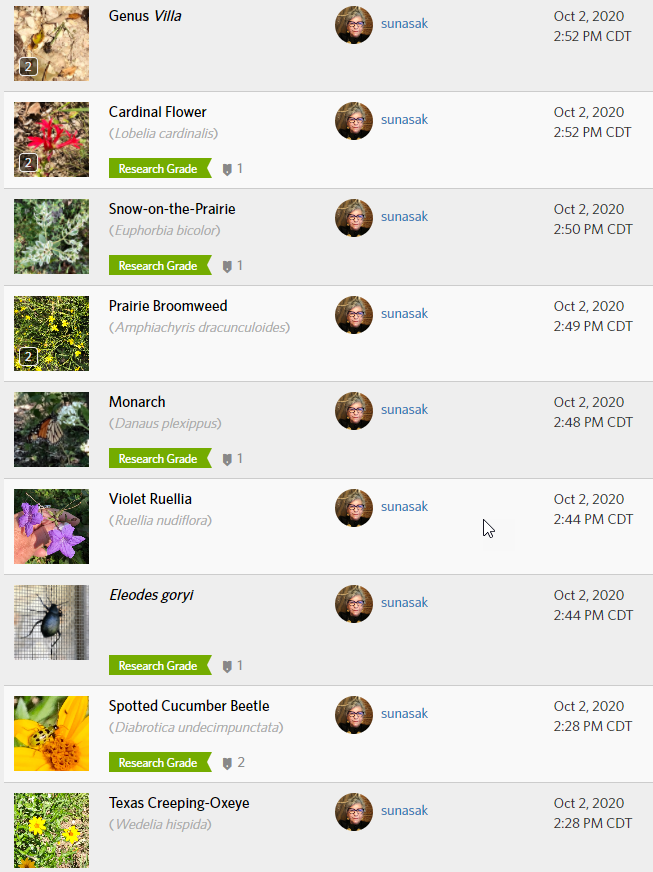
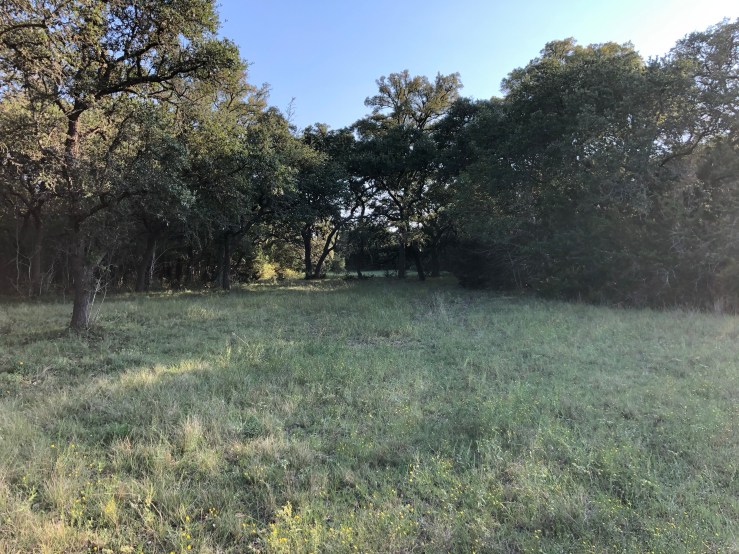
As soon as I put down my suitcase and got oriented by the property owner, I set off. I didn’t set off very fast, though, because I was doing a BioBlitz! My goal was to see how many different plants, insects, etc., I could identify from Friday through Sunday. The layout of the land was very helpful in this pursuit, because there were huge meadows full of prairie broomweed and friends, deep oak and cedar elm woods, a creek, hills, valleys, and lots of limestone formations. I made over 50 iNaturalist observations that afternoon.
Some of the things I saw the first day.
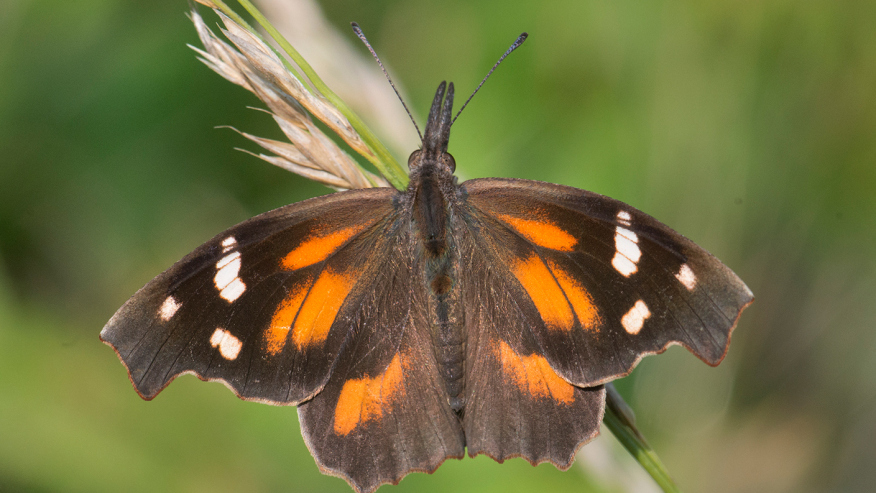
When I got back, we sat on the screened porch and watched hundreds of butterflies floating by. They were small, so I knew they weren’t monarchs (I did see three of them during the weekend). I looked on Facebook and saw that my Chapter member friend, Dorothy Mayer, had suggested I join the TX-Butterfly Facebook group. So, I did, thinking I’d at least learn something about SOME butterfly. Imagine my surprise when the first post I saw was describing the migration of the American Snout butterfly! There was my answer!
American snout butterfly, sitting still for once. Photo from news article linked below.
I later came across an article on it in the news, so you can read more here.
The rest of my weekend was a blast. I hiked all over the property, which used to be a ranch, then a resort, then part of it was a disc golf course, etc. There was a sunset tower to climb, hidden meeting areas, lighted paths, and really pretty cattle. Quite a place. It would be a fun Master Naturalist retreat area.
A few of the sites on the ranch
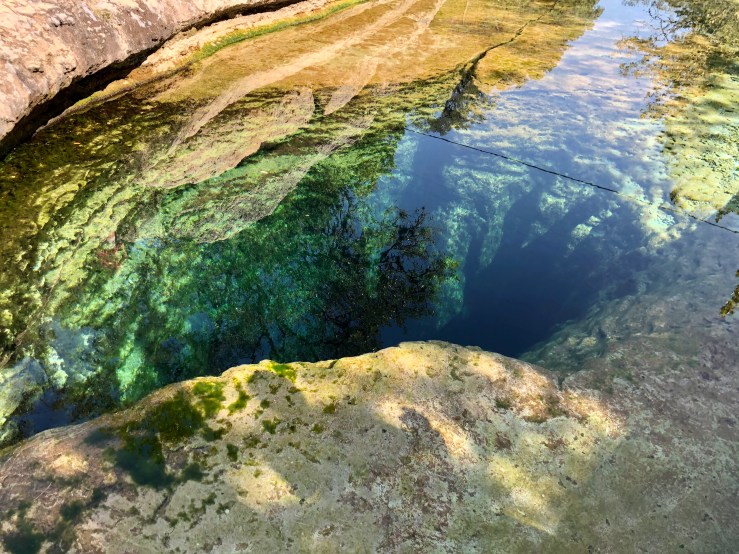
On Saturday, we avoided the incredibly crowded Wimberly Market Day (not many plants to observe there, anyway), and instead we visited the Jabob’s Well park. Jacob’s Well is the second-deepest artesial well in Texas, and it’s really beautiful. Apparently people keep drowning when they try to explore its caves, so I stayed on the shore. I was glad to be there AFTER swimming season, too.
Jacob’s Well
I met some young Park Service staff who were just keeping an eye on things, and they were fun to talk to. They told me to be sure and go find the sign saying how much work Master Naturalists had donated to the visitor center and gardens.
Way to go, Hays County TMN!
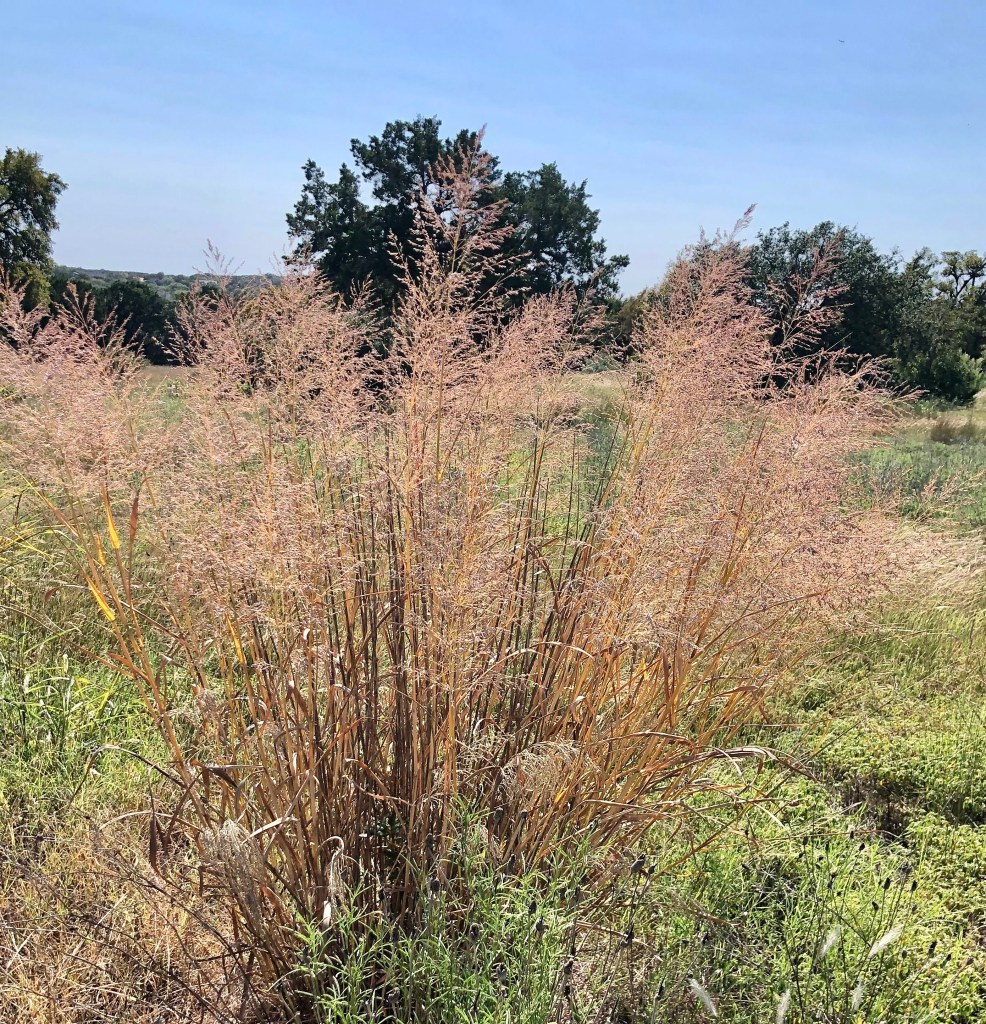
Of course, I made some more observations there, especially in the prairie restoration area. There were so many beautiful native grasses to see.
This must be last year’s grass, but it was so pretty (switchgrass).
I enjoyed finding plants that were new to me or seemed rare, as well as old friends (one dandelion, just one). What made me happy, too, was discovering that of all the iNaturalist sightings in the area, only three were by someone other than me, so I did good work documenting what I saw. Maybe it will help someone, sometime!
Metz’s Ruellia, totally white.
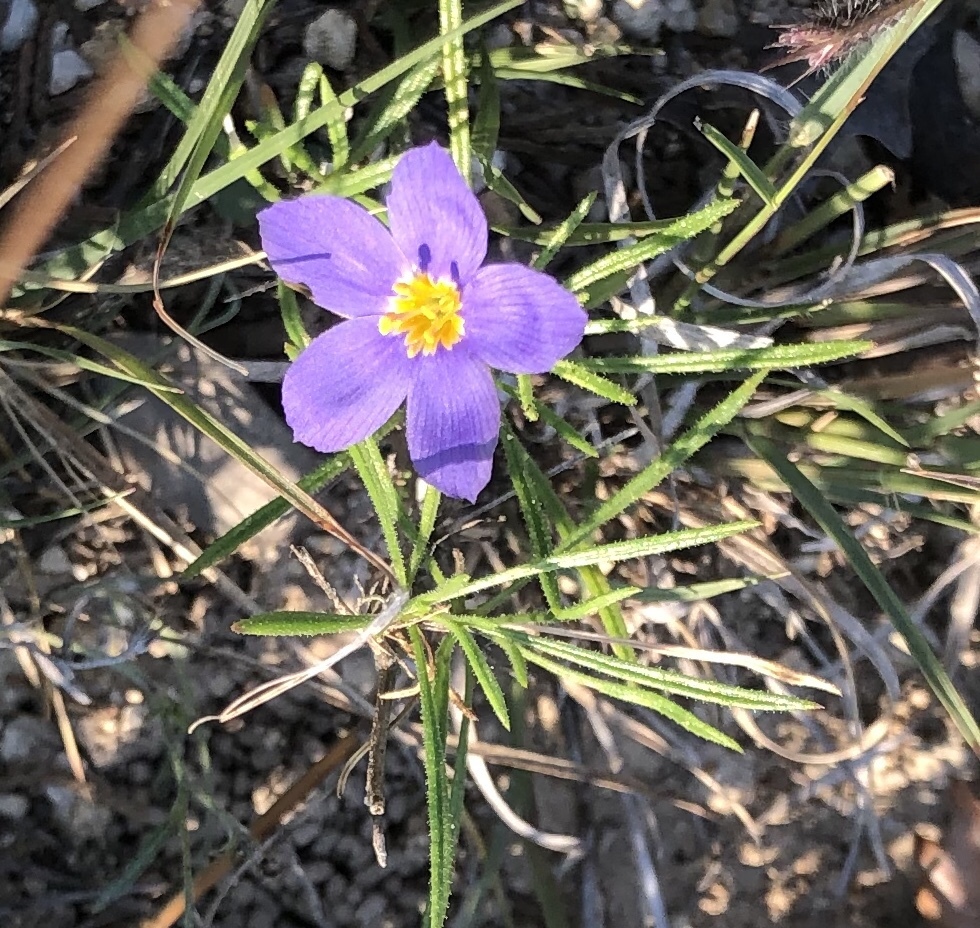
Edwards Plateau Five-eyes (a rare one)
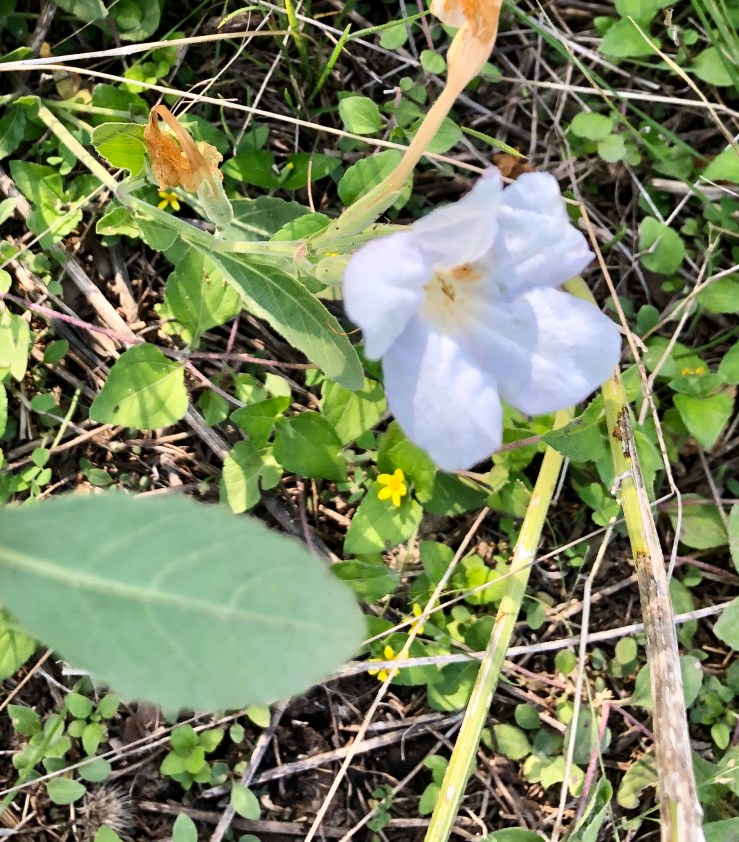
Hairy ruellia, Ruellia humilis, perhaps the prettiest flower ever, to me.
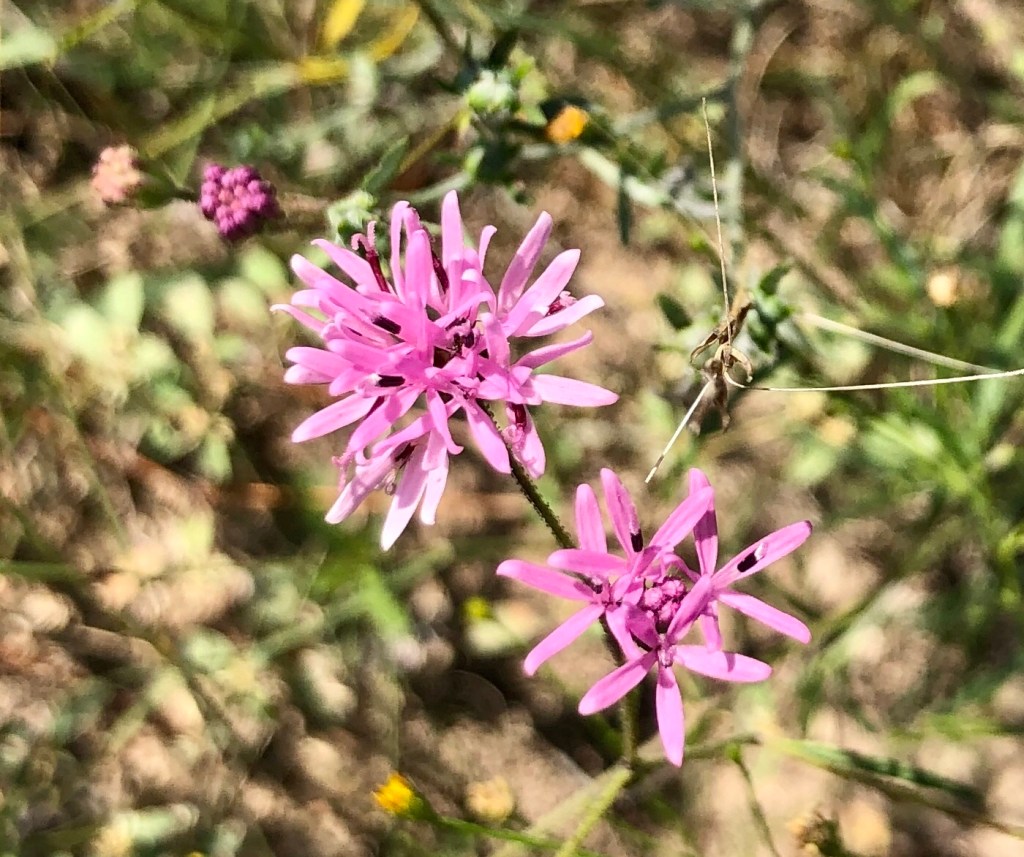
Cool wildflowers I saw. Sorry about the links that don’t show up. The good news is they take you to my observations. And, if any of them are wrong, you can correct me!
In the end, I added well over 100 observations to iNaturalist, saw the work of fellow Master Naturalists, met some people at a distance, avoided crowds, and had some fun. That’s a perfect vacation in these times of social distancing!
Note from Suna: Pamela Neeley from the El Camino Real chapter has been working with water features on her property for the past few months (years), creating not only areas of beauty (sight and sound), but places for aquatic plants to flourish, and wildlife to sustain themselves on. I toured her property a couple of weeks ago and encouraged her to share some of her ideas and techniques with fellow Master Naturalists. Maybe you can borrow of her creative thoughts some in your own gardens and wild areas!
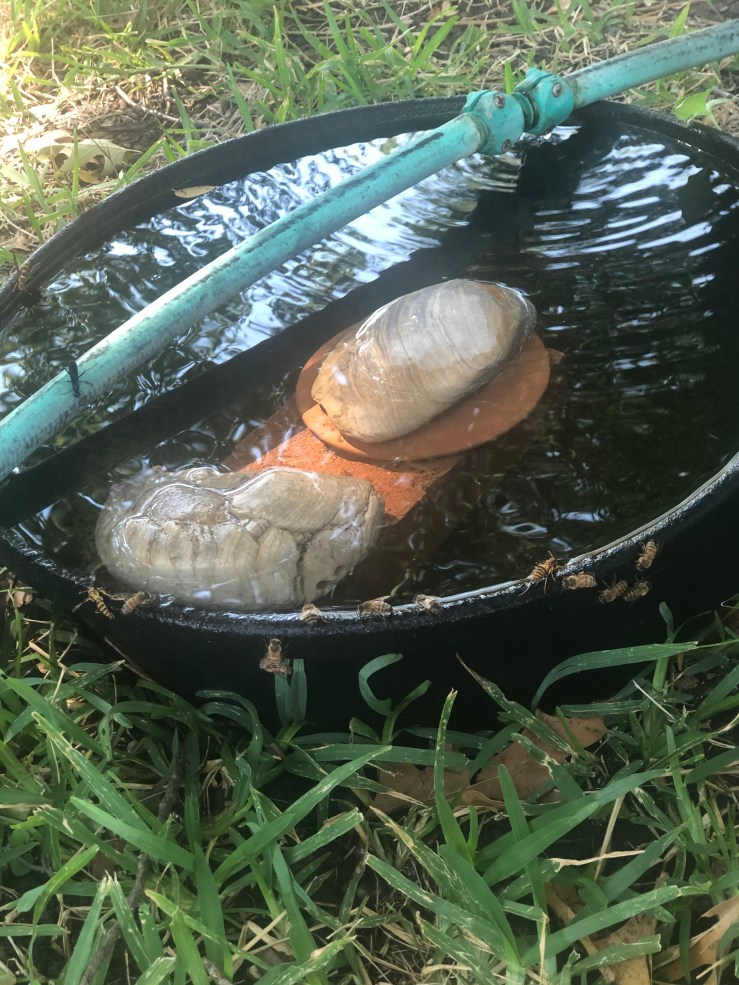
The rock is for butterflies and others to perch on
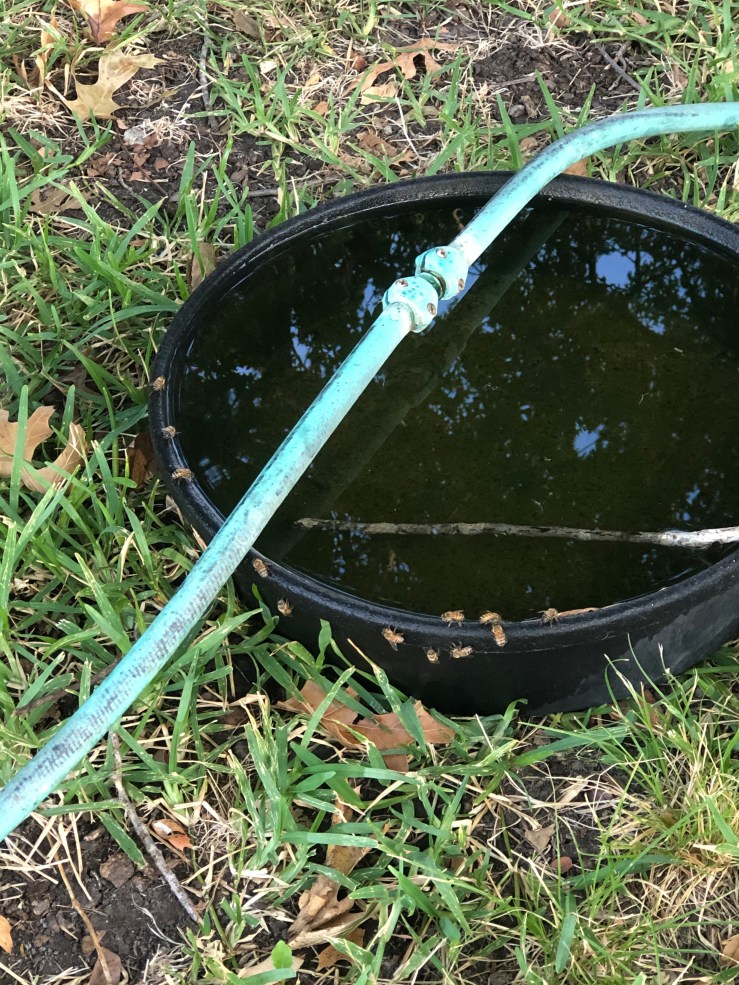
A leaky hose fills the container
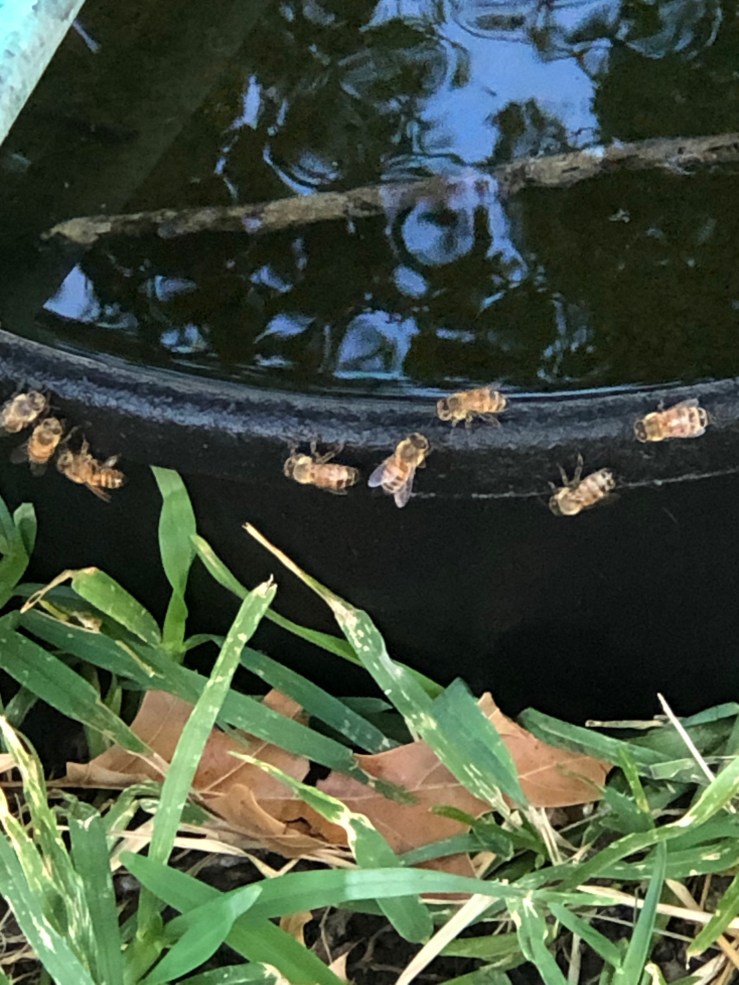
thirsty bees
This water feature is made from a hose repair that leaks. The container spills out on one edge, and the bees and wasps congregate. So far, the stones haven’t attracted many customers; bees like the edge.
See the fish?
Stunning skink
Lots of vegetation to hide in
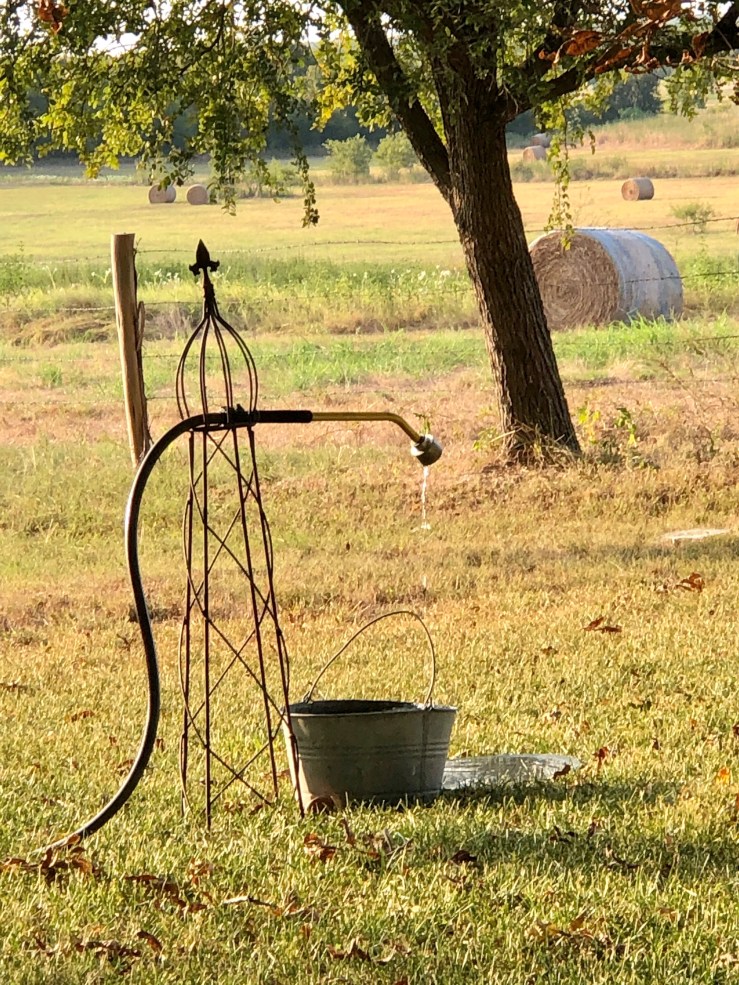
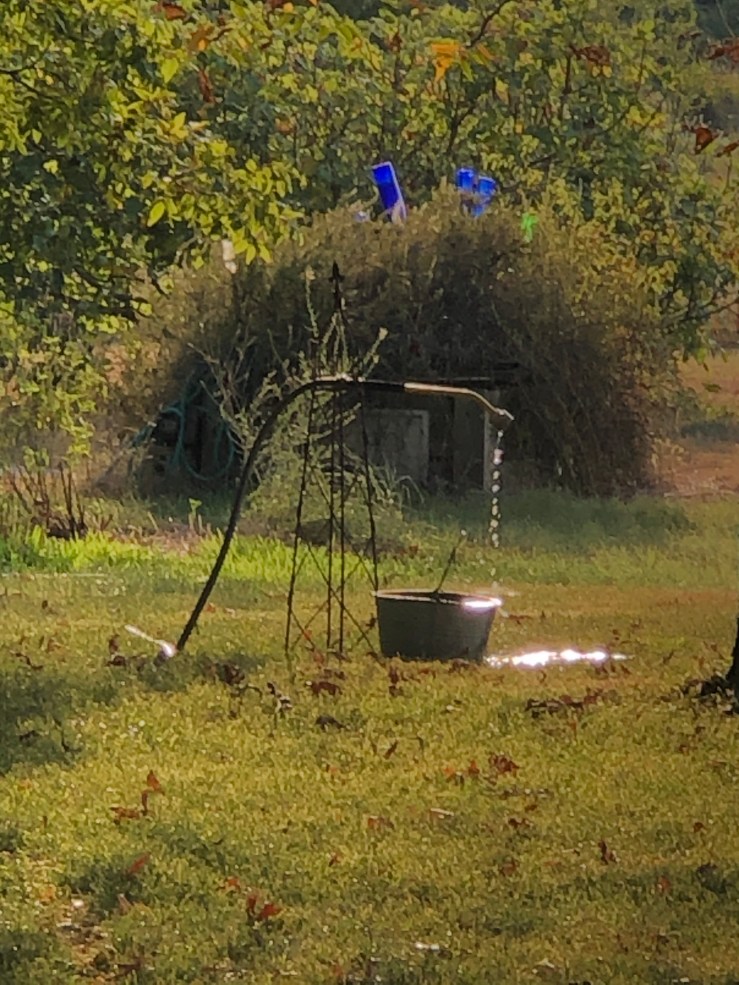
Here’s a simple water feature using a dripping hose connection. It feeds this container that’s used by my dogs and cats. There’s also a goldfish, goldfish housing (clay pot shards), and something green: a length of crow’s foot. A new visitor was This toothy skink, with beautiful turquoise tail stripes.Here’s another example of a dripping faucet connection caught into a container. Cats and dogs like this one, too.
This large, formal water feature has an electric pump, a ceramic fountain, goldfish, and terra-cotta shards. I didn’t think the wildlife cared for it until I saw the toad contemplating the water music.
This one is movable. I was very proud of my engineering and water movement. The birds were curious, but didn’t descend on it, so I’m not very bird clever. The fountain developed from a need to either water trees or the cement slab of the house. So, I added hope for bird visits. I do like the flexibility of being able to move this around.
This is Ruby
Ruby likes the water.
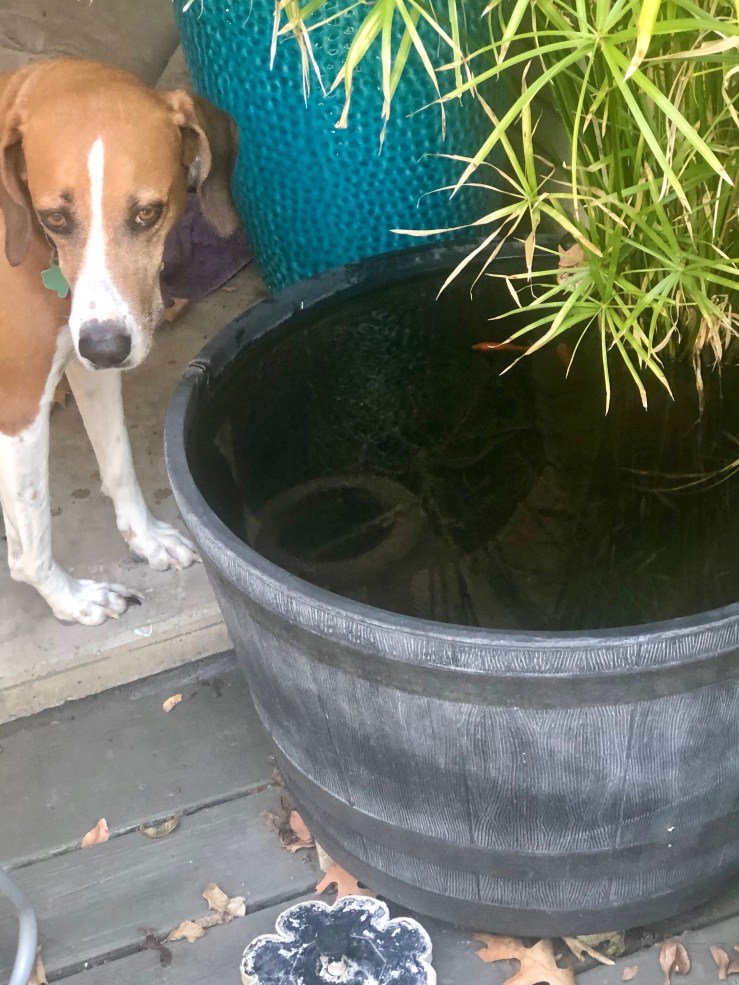
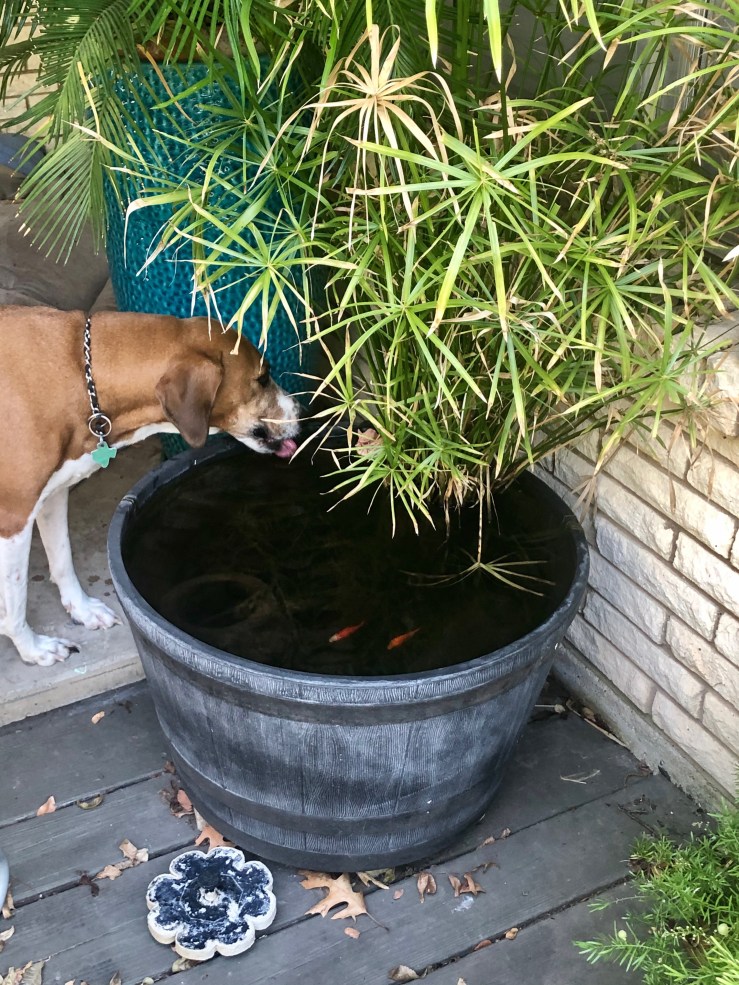
This one’s a simple water feature with dwarf papyrus. The roots have created an underwater jungle. The two goldfish have a strawberry pot and a terra-cotta pot with side pockets to swim in and around.
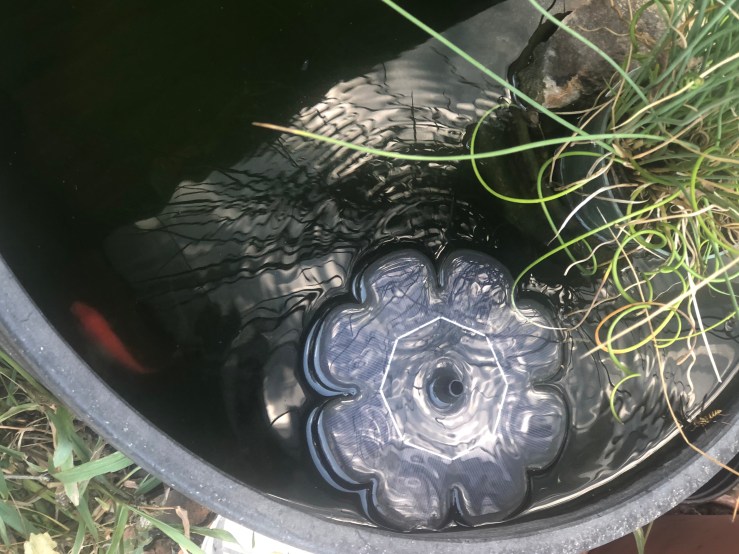
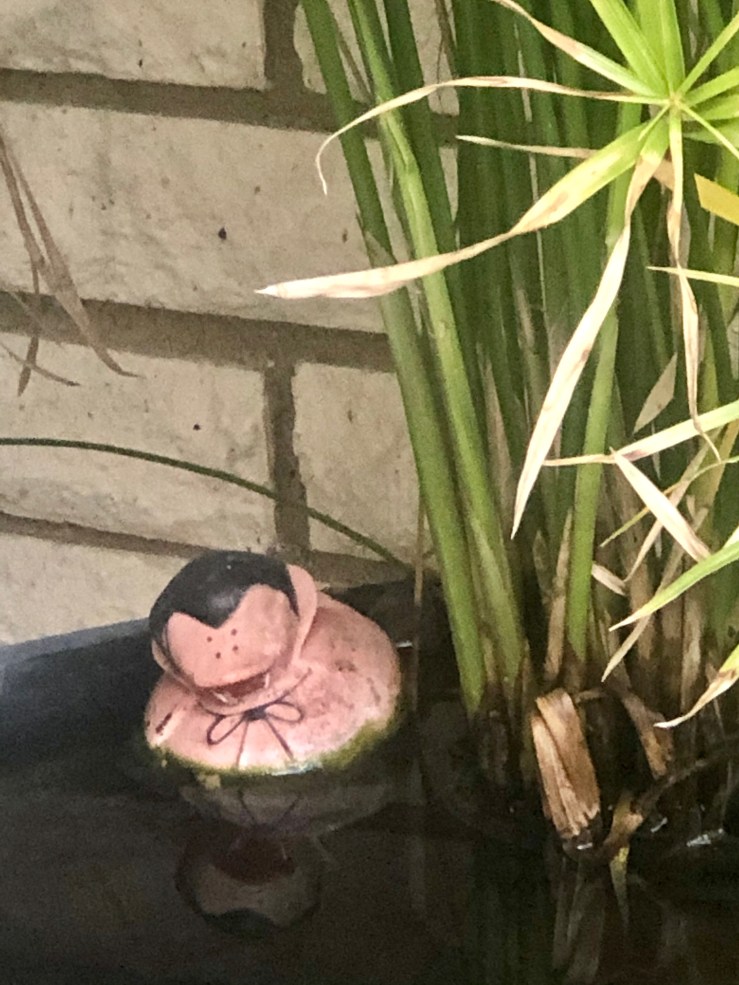
I’ve seen wasps and bees here, along with an occasional dog or cat. The water is very clean. It’s a straightforward container with a solar fountain that works, terra-cotta shards housing, a goldfish (previously two goldfish), a juncus, twisted arrow, and a fairy god duck. There are enough nutrients in this water to experiment with growing lettuce or other edible in a Styrofoam float.
A few of my water features have rubber duckies. Here are Count Duckula and Ghost duck. Some color fading has occurred.
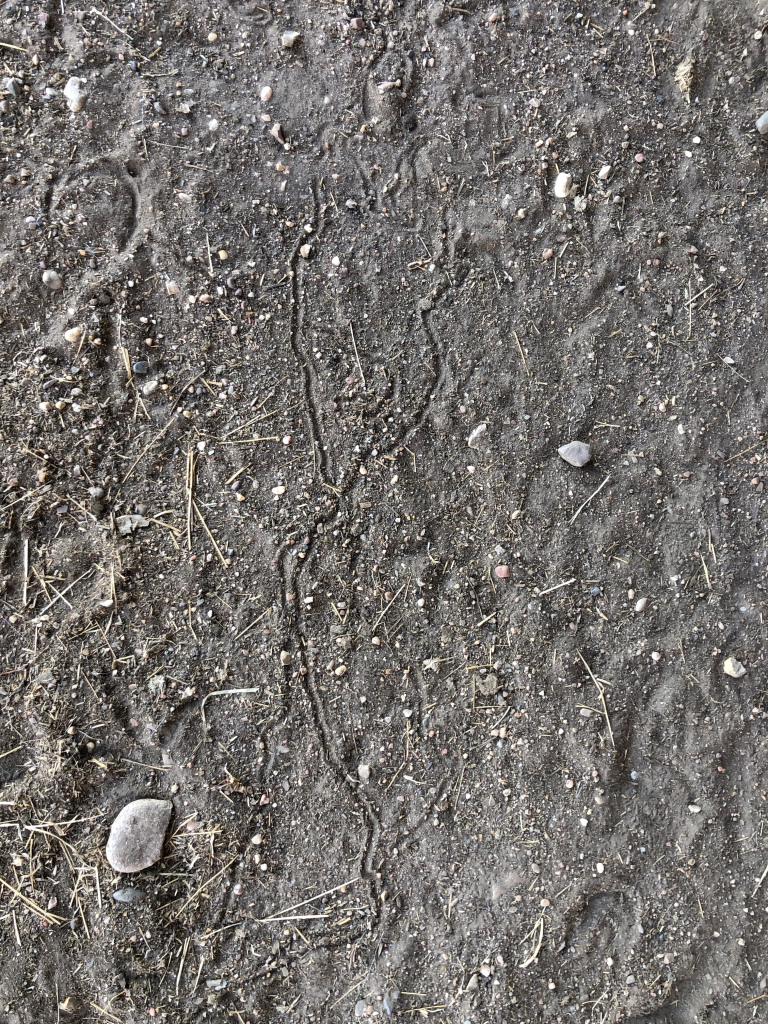
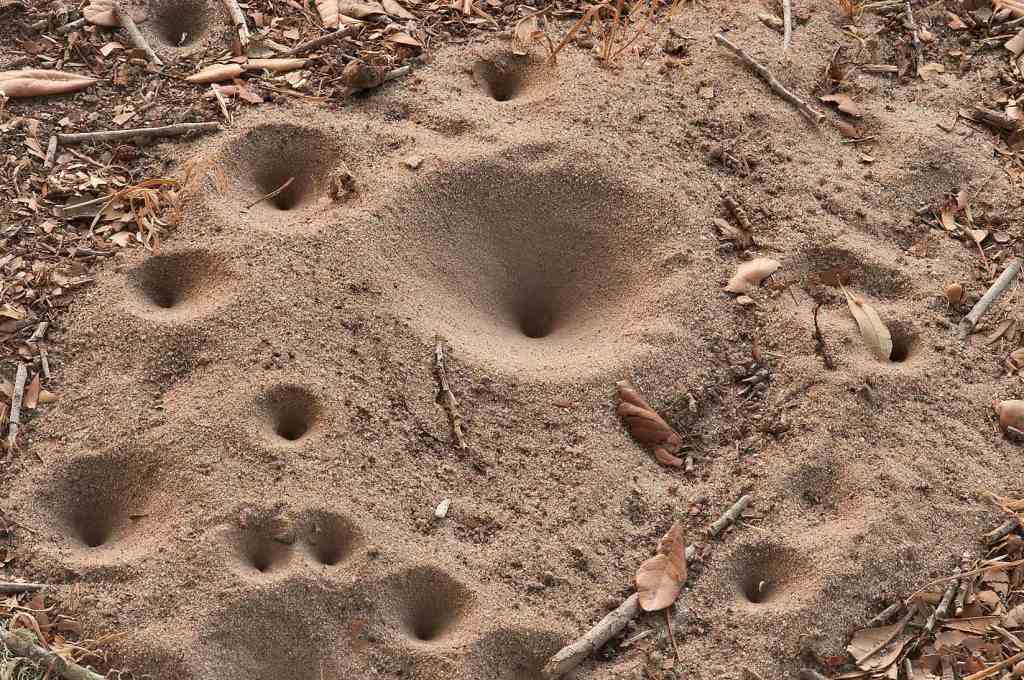
A set of fortuitous circumstances have led me to have something more in the naturalist vein to write about. I’ve been missing those things! It all started when I was in the horse pen, and noticed all these cool paths in the dirt.
In addition to the trails, there are a couple of donkey hoof prints, to liven things up.
I couldn’t remember what made those trails, though I was sure I used to know, so I posted about it on Facebook. I got some cute and silly guesses, then, as I’d hoped, someone from around Cameron reminded me of the answer. Burton, who’d been in my Master Naturalist class, identified them as ant lion, or doodlebug, trails. These Myrmeleontidae (it means ant lion!) are commonly called “doodlebugs,” because their trails make them look like they’re doodling around.
A few days ago, I was headed out to the back pasture when I walked right up to a tiny Pocket Gopher with his little back end up in the air as he was digging in the ground.
Dirt was flying everywhere. He must have gotten out in the open because there was no tunnel to dive into.
I’m thinking… buddy you need to watch what you’re doing or one of my dogs will get you because you are not paying attention.
So I reached down and touched him on his little tail.
Lordy mercy…he jumped up and started running around my boot barking at me.
I was laughing so hard.
I had my camera in my pocket so I took a photo of him. He was really telling me what he thought.
Angry little pocket gopher!
And no, I never kill these little creatures, even though they eat things in my garden. They aerate the soil and add organic matter to the areas where they are. So they do some good for us.


















 Nature Along the El Camino Real