Time for 2020 Blog Statistics

By Sue Ann Kendall

The start of a new year always seems to inspire folks to look back and analyze things. I got to thinking that last year was a hard year for our Chapter, since we had to stop meeting in person, couldn’t do a lot of the activities we’d planned, and only had a virtual conference to attend (nice as it was, it wasn’t full of hugs and chats). We certainly got more visitors in 2020 than in 2019 (granted, we didn’t start until February 2019).
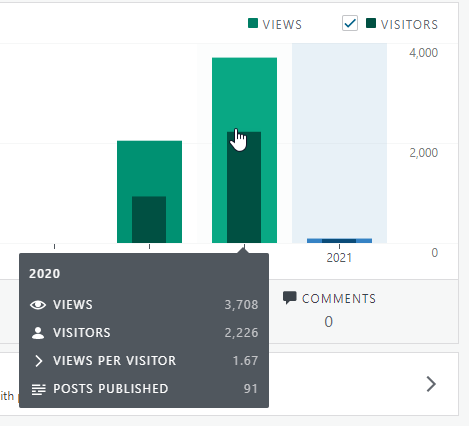
We had 3700 visitors last year, not bad for a little chapter!

Our blog, though, provided us with a way to communicate with each other and to share what was going on in our own little slices of the natural world. I was really grateful to see how our contributions grew and grew, as the blog transitioned from reports on our chapter meetings to contributions from our members. We have a nice group of regular contributors now, as well as some Chapter members who contribute whenever they can.

In fact, there were 12 different Chapter members who contributed last year: me, Donna Lewis (winner of the “most contributions” award), Catherine Johnson, Eric Neubauer, Linda Jo Conn, Carolyn Henderson, Debra Sorensen, Joyce Conner, Cindy Travis, Larry Kocian, Ann Collins, and Sherri Sweet. What? Don’t see your name on the list? You can fix it by sending me some words and/or pictures (my email address is in the member area of our website).

Blog hits by month.

You can see from the previous graphic that our hits went up and down. There were two big months. Last February, someone went through and read every single article, twice, which explains the jump. But, last month, December 2020, really spiked. Did we suddenly become fascinating?

Hmm, December 23 was a bonanza of visits.

When I look at a month’s stats, I can always tell when a blog post came out, because we get a spike in visitors. But, that was a BIG spike! The next day was pretty big, too. I was very curious to find out what the heck got published on December 23 that was so darned fascinating. A look at the most popular posts of the year gave me the answer to “what” but not to “why.”

All Time Blog Post Stats. Hmm. Two of those got a LOT more hits.

I only figured out yesterday why Donna’s sweet post about being nice to a snake was so popular. Because of all those flags people are flying these days, the phrase, “Don’t Tread on Me” has become popular. Donna’s post must have come up in searches!

The other really popular post, Let the Tours Begin, by Lisa Milewski, was from October 2019, and was about the big event we held with the Rancheria Grande Chapter of the El Camino Real de los Tejas National Historic Trail Association. That link got sent out to a lot of places and shared often, so no wonder people looked at it. (Sharing posts is how you get people to look at them; you could do that, too).

How You Can Help Our Blog Grow

We’d like for more people to be able to find and enjoy the writing and beautiful photos from our chapter members. It’s great that we are getting more posts from a variety of members, but it would be good for them to be seen! People clicking on our blog links and sharing them are what gets our blog promoted more by search engines and WordPress (blog site). So, here are some things YOU can do:

  • Contribute. Send me (Sue Ann/Suna) your nature observations, research, fun projects, or reports of activities. You can type them in an email, put them in Word, write them on a piece of paper…whatever works! I can make them into fun blog posts, even if you aren’t a professional writer.
  • Read. When you see a blog post announcement on our Facebook page (or in email if you are one of our 37 subscribers), click on it. See what fellow Chapter members have to say! You might learn something. Or laugh.
  • Comment. Do you have something to add to a post? What about a question for the author? You can comment on our blog posts. Just put your name in there and start commenting! That’s how blog readers converse and build communities.
We’ve only had 79 “real” comments. Help us out!
  • Share. Did you find a post interesting? Copy the URL (the web link, at the top of the page) and paste it in an email, Facebook post, or message to a friend. Or, click the Share button on a Facebook post. Maybe someone you know will enjoy reading what you or another member wrote.
  • Talk. Mention reading the blog in conversations, when you’re explaining to a potential new class member what fun it is to be a Texas Master Naturalist, or if you’re asked what exactly we do. The blog is a good record of that!

This can help you, too! Writing a blog post gets you precious volunteer hours. Taking the photos and doing the research for an article also counts. It’s under Chapter Administration > Website and Social Media. This is something fun, interesting, and helpful that we can do while maintaining our pandemic protocols.

Oh yes, thanks for reading! Y’all are all the best!

Exploring Three Rockdale City Parks

by Linda Jo Conn

A couple of weeks ago, several ECR members visited three of the city parks in Rockdale. 

Eric checks out the park up close

The first was Wolf Park, which is located on Main Street in town where the former American Legion Hall once stood. When we arrived, a crew was at work erecting the framework for a Christmas tree near the pavilion in the center of the lot.

Yard asters, still blooming

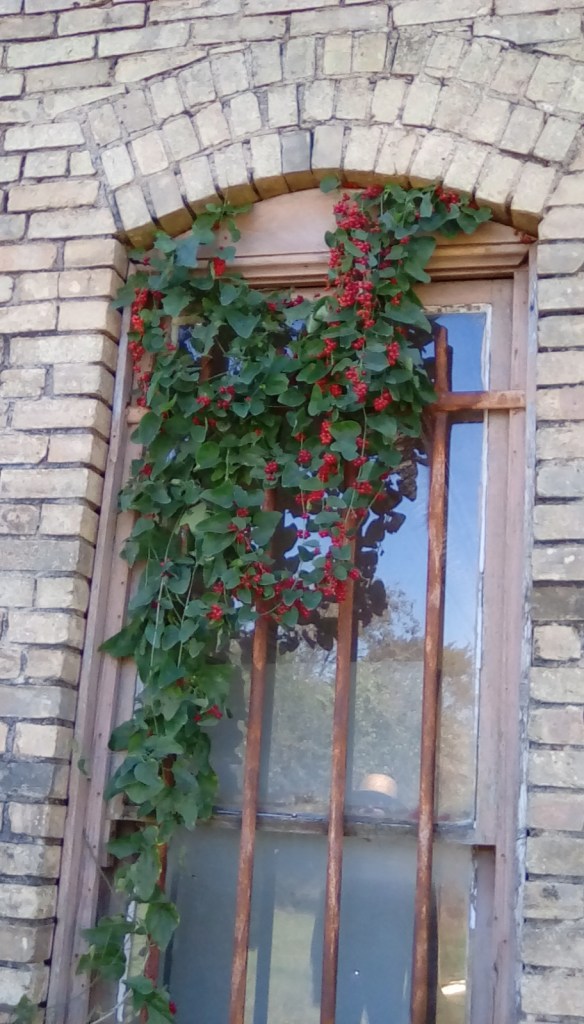
The closely trimmed city block has a border hedge of holly festooned with Carolina snailseed (Cocculus carolinus ). The lawn contains the usual scattering of straggler daisy (Calyptocarpus vialis), turkey tangle frogfruit (Phyla nodiflora), and yard asters (Symphyotrichum divaricatum). A couple of large lilac chaste trees (Vitex agnus-castus) and a bur oak (Quercus macrocarpa) are the landscape trees. 

Carolina snailseed and holly

Leaving the busy scene at Wolf Park, we drove across the railroad tracks to visit Sumuel Park which was funded in part by a Texas Parks and Wildlife Department grant. It has a splash pad water feature (unused this summer due to COVID), a playscape, picnic area, walking trail, basketball half court, restrooms, and free WiFi.  

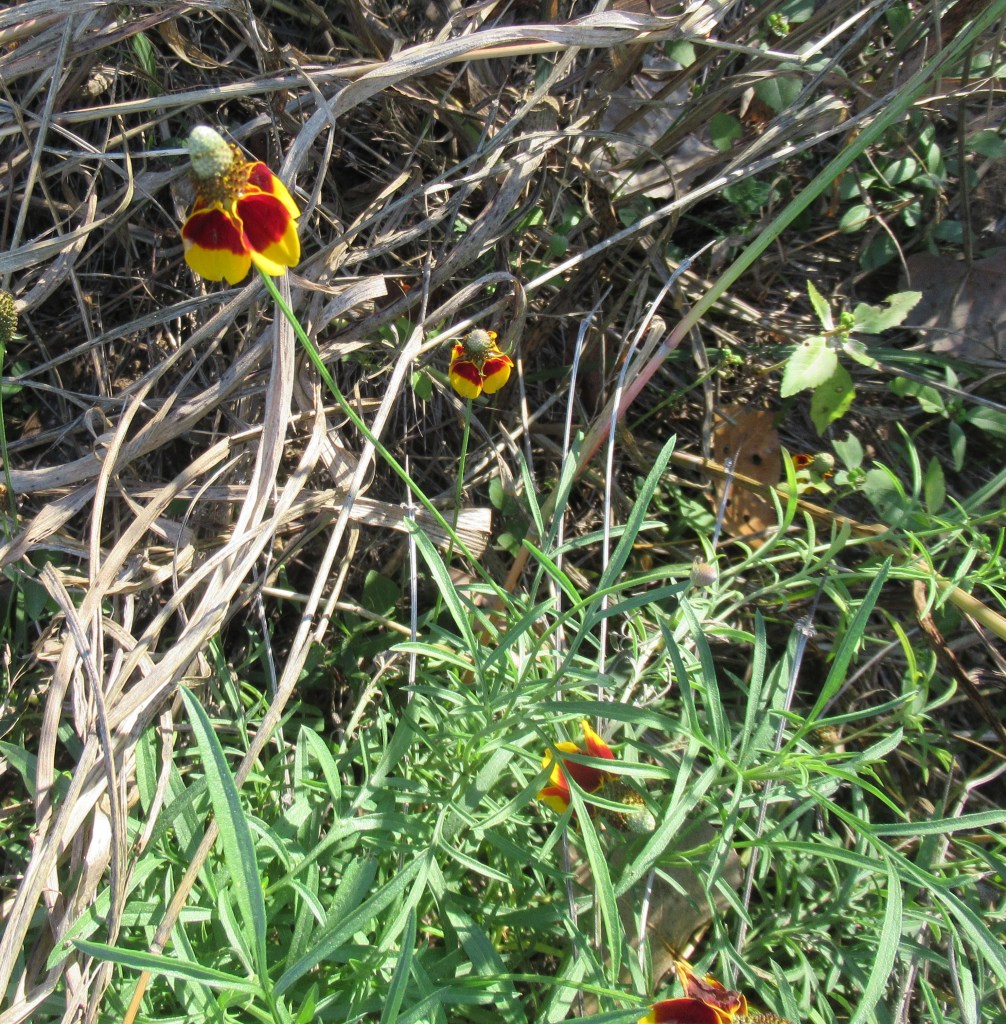
Upright Prairie Coneflower

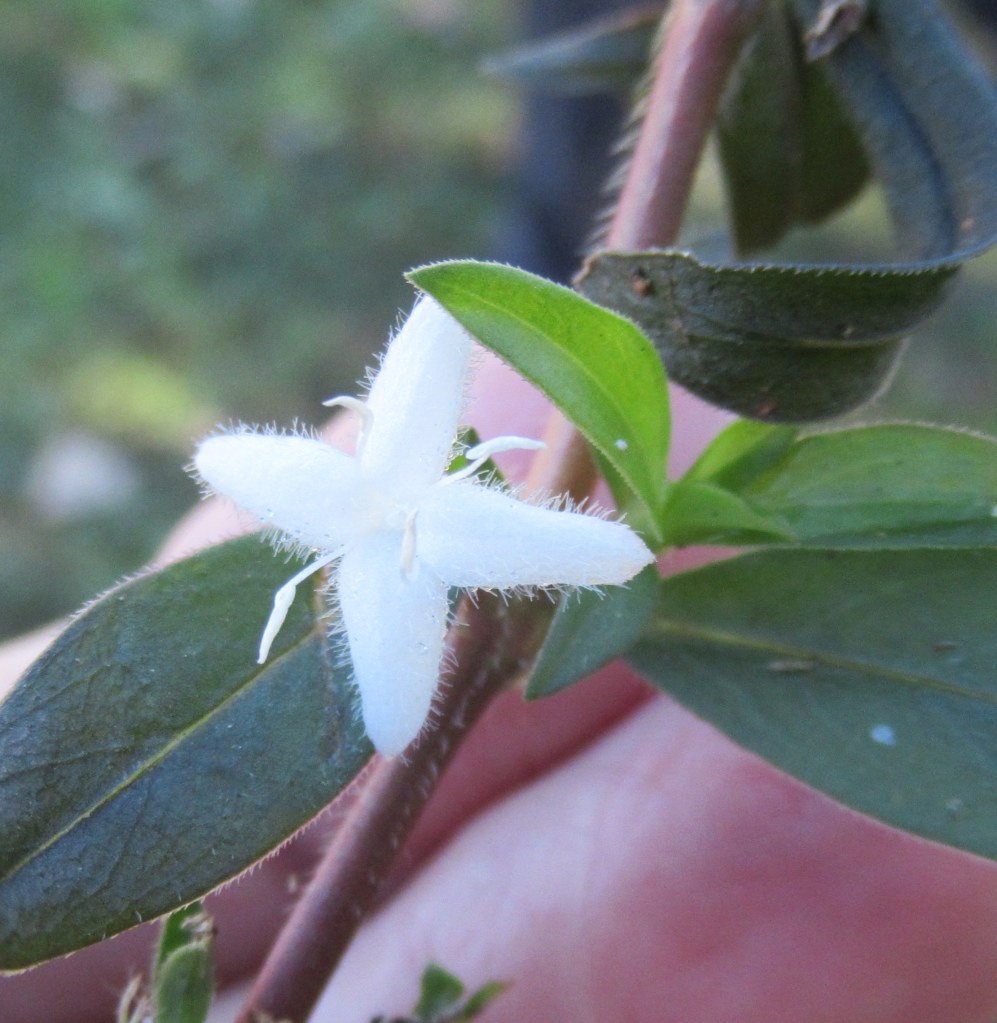
There was a bit more nature to observe at this park, including upright prairie coneflower (Ratibida columnifera) and buttonweed (Diodia virginiana) in bloom. A black vulture (Coragyps atratus) watched our activity from a nearby tree.   

Black vulture keeps watch

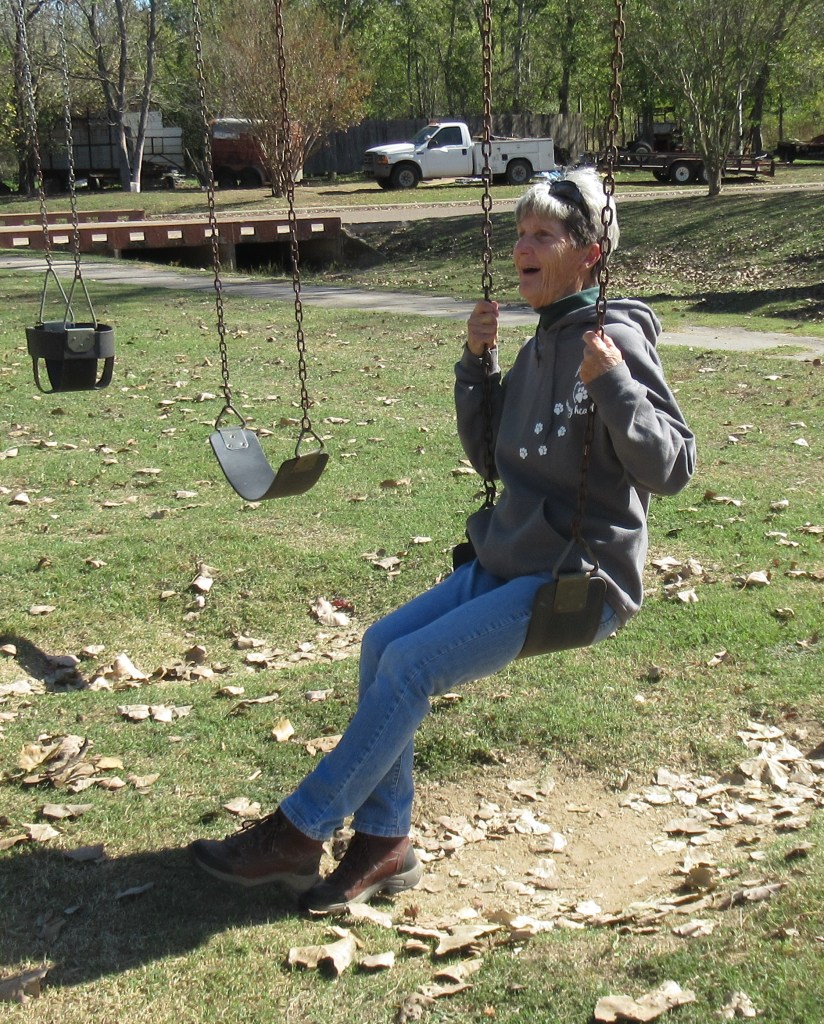
While Eric Neubauer captured another image of a grasshopper, Donna Lewis tried out the swing set. 

Master Naturalists know how to have fun!

I suppose the high point of the visit to this park was our discovery of an enormous cottonweed tree. ECR nature explorers Debbi Sorenson, Donna, Scott Berger, and Eric physically distanced themselves around the tree for a photo to show its size. It turned out that this tree had already been noticed by our ECR chapter. You can read more about this towering cottonwood on our ECR website:   https://txmn.org/elcamino/chapter-projects/special-projects/big-trees-of-milam-county/ .  

That’s one amazing cottonwood!

We traveled on to Moultry Park, located behind the former Aycock School on Baxter Street.  The park was being enjoyed by a mother with her young children when we arrived. A spacious area, it contains a basketball court, baseball field, and restrooms. 

Buttonweed at Sumuel Park

This park visit was a sobering and disturbing personal experience for me. The adjacent brick building, used by various community organizations until a 1993 fire, remains in ruins. I could literally hear the echoes of children chattering in the hallways, chalk screeching on the blackboards, and bouncing balls in the gymnasium.    

Orange Sulphur butterfly

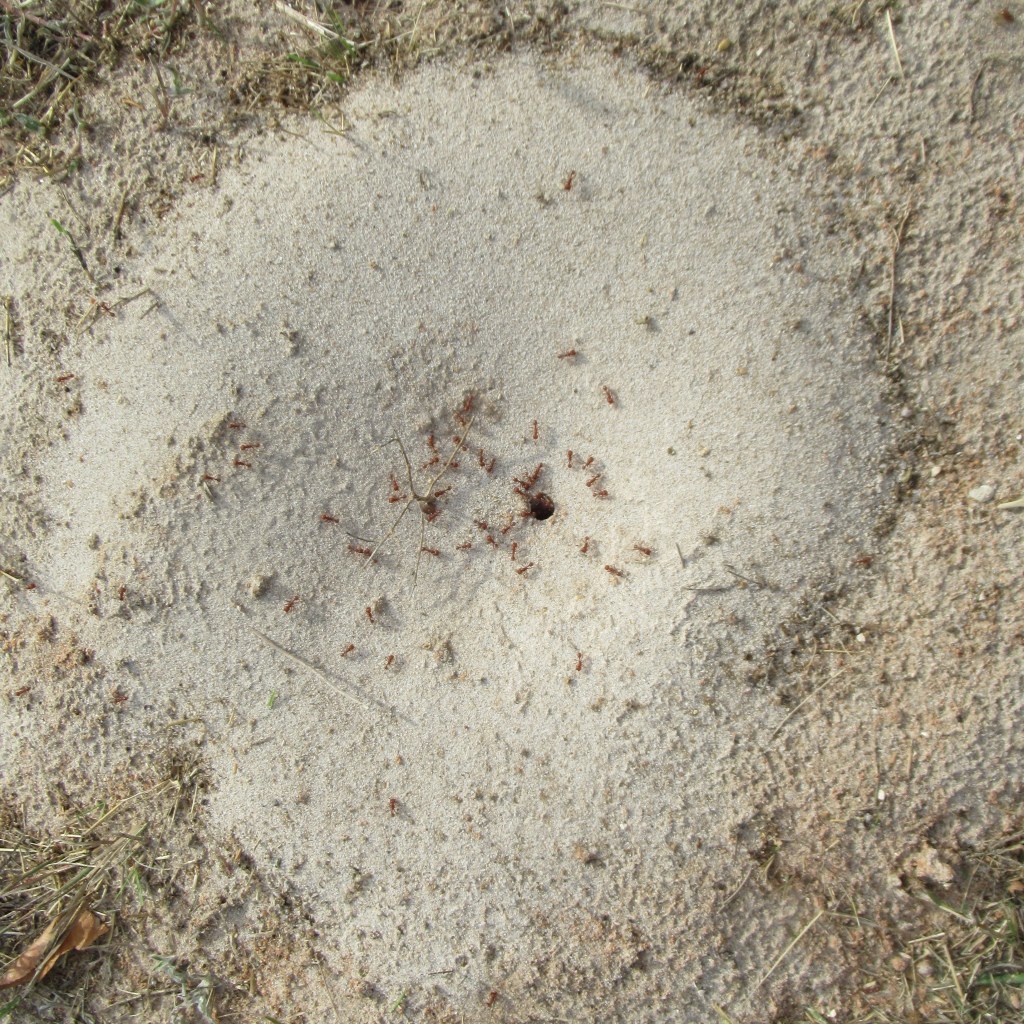
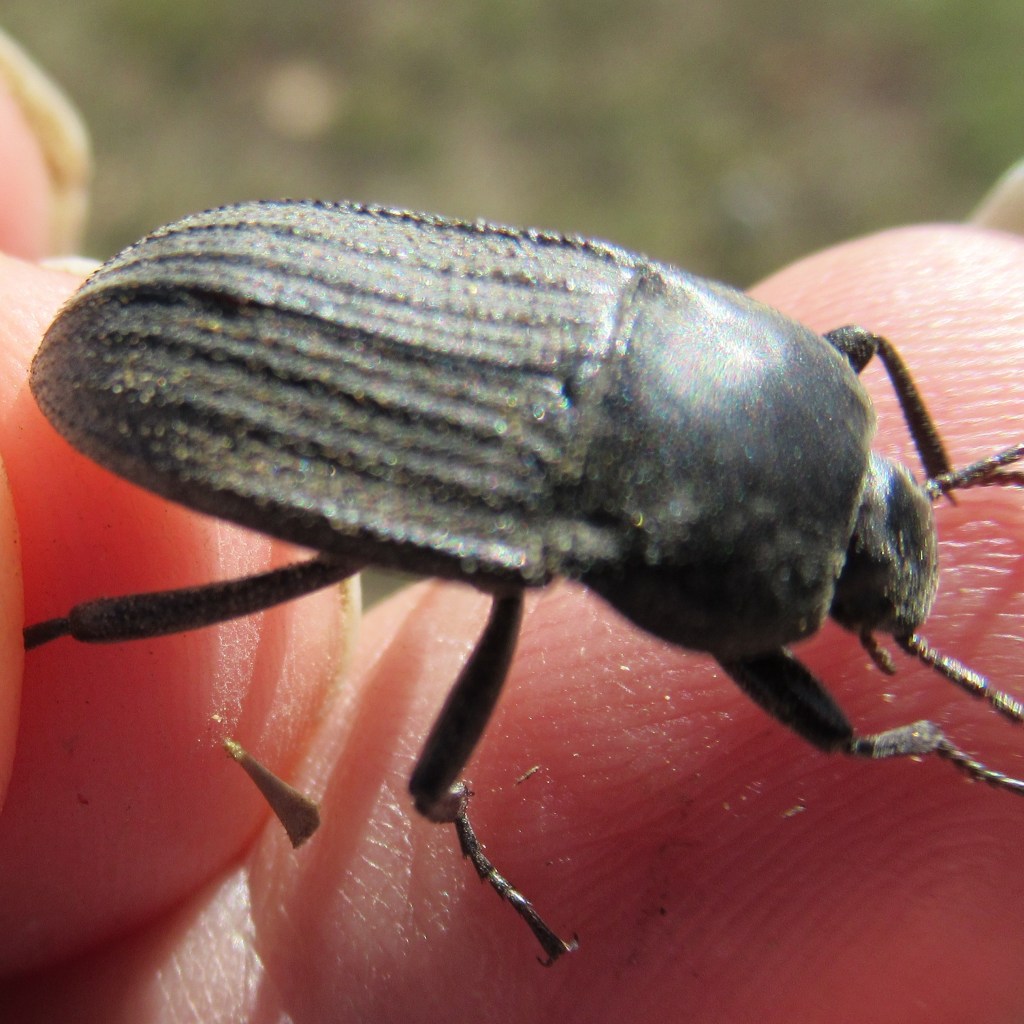
We did observe some interesting species in and around Moultry park: an appropriately named three-ribbed darkling beetle (Eleodes tricostata), a flighty orange sulphur butterfly (Colias eurytheme) visiting a camphorweed flower (Heterotheca subaxillaris) and several mounds of harvester ants (Pogonomyrmex sp.). 

Hooray! Harvester ants!

The area is a perfect habitat for horned lizards. 

The darkling beetle

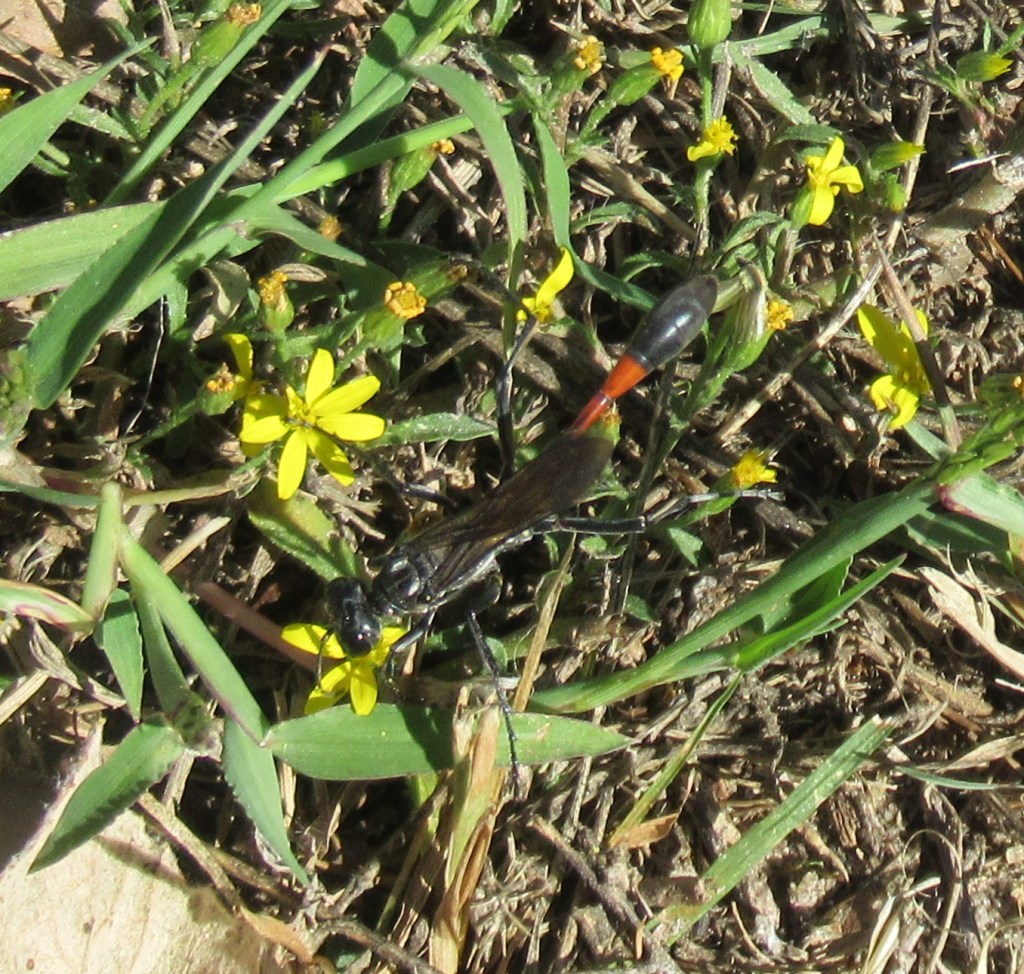
Eric stalked what he has identified as a common thread-waisted wasp (Ammophila procera) until we were both able to take photos of the large wasp. 

The big wasp

He also graciously pointed out a couple of grasshoppers (Melanoplus sp).

One of the many grasshoppers Eric spotted.

After some unexpected and serendipitous happenings at the park we headed to our homes for the day. A good time was had by all. I think. You will have to ask Donna about that. 

Cedar Park in Milam County

by Linda Jo Conn

Driving past the roadside park on Hwy 79 between Milano and Gause on my way to Sugarloaf Mountain Bridge, I told myself that one of these days I was going to stop and investigate the place. So, on the way home, I stopped and looked around. 

It is a typical roadside park. Surrounded on three sides by a chain link fence supporting several species of vines, it has a circular drive, the usual brick and cement tables and benches, and some large cedar trees.

Later, when using Google Maps to enter the GPS location for my observations into the iNaturalist.org website, I discovered that this small roadside park actually has a name:  Cedar Park. Not surprising. Cedar trees are the dominant trees.

Bird’s-eye speedwell.

Although the area is closely mown, there were a few flowers to observe. I saw my first Bird’s-eye Speedwell (Veronica persica) and Field Madder (Sherardia arvensis) blossoms of the season. There were the usual roadside park plants of Straggler Daisies (Calyptocarpus vialis), Crow Poison (Nothoscordum bivalve) and Green Poinsettia (Euphorbia dentata).  

Climbing the chain link fence were common vining plants:  Mustang Grapes (Vitis mustangensis), Carolina Snailseed (Cocculus carolinus), and Poison Ivy (Toxicodendron radicans). 

The most memorable plant of the visit stayed with me a while. The park must have been covered with grass burrs (Cenchrus sp.).  You may call them sandburs or stickers. Not noticeable in the short vegetation while I was walking about, they showed up as I was about to get into my truck. There must have been hundreds of them stuck to my jeans and to the tops and soles of my tennis shoes! It took a while to remove them.

Grass burs. Not fun.

Cedar Park is a shady, convenient place to stop on the highway and was visited by several travelers while I was there. Fortunately none had children or pets wanting to romp on the grounds. That would have been a memorable stop for them also. Ouch!

Mountain Getaway

by Catherine Johnson

Linda Jo, Donna, Eric, Scott, and Catherine Bioblitzed  the areas around Sugarloaf, Lone Mountain,  and Little River. 

We identified many plants, met some new neighbors and their dog, and had lunch on the historic bridge. It was soo beautiful outside, and we all learned a lot.

Enjoy these photos from the day!

Nature Will Find a Way

by Catherine Johnson

While others are away in the cool mountains,* a group of us decided to check on the condition of the El Camino Real Master Naturalist Butterfly Garden in Milano, which we started a number of years ago. 

The Butterfly Garden

It is  in complete disarray but still with butterflies and other insects trying to hold on to smothered natives.  A memorial on the site is also in complete disarray. We are considering possible solutions to make the area respectful.

Sulphur butterfly.

Eric Neubauer and Linda Jo Conn did some BioBlitzing, and Eric was later given a tour of  the Milam Wildscape, which he hadn’t visited before.

iNaturalist volunteers at work.

Unexpected Adventure

As we worked on the Butterfly Garden, I gained Master Naturalist volunteer hours for Nature Improvement in Public Areas, learned what false garlic and Carolina Snail vine look like, learned what a pipevine swallowtail butterfly looks like, and got to know new member Eric.

Carolina snail vine (the seeds look just like a snail!)

While in Milano I also got to hear lots of trains and watch the lowering of the flag at the post office. It was a balmy day balmy day and a good one for exercise! 

Oh, and we found odd gourds near the train tracks. That was unexpected.


*She is referring to the Chapter President, Suna, who has escaped to Utah. She will post!