At the January chapter meeting of the ECRMN we had a presentation on cemeteries from Dr. Alston Thoms. Afterward, we were encouraged to visit a historic cemetery, of our choosing, in Milam County. Since I have relatives interred at St. Michael’s I decided to start there. Now, don’t think I’m an overachiever because I visited two. They are side-by-side and could be mistaken for one cemetery.
I have been to this cemetery many times over the years but I have never taken the time to walk through and really look at the headstones. Some of them are truly unique!
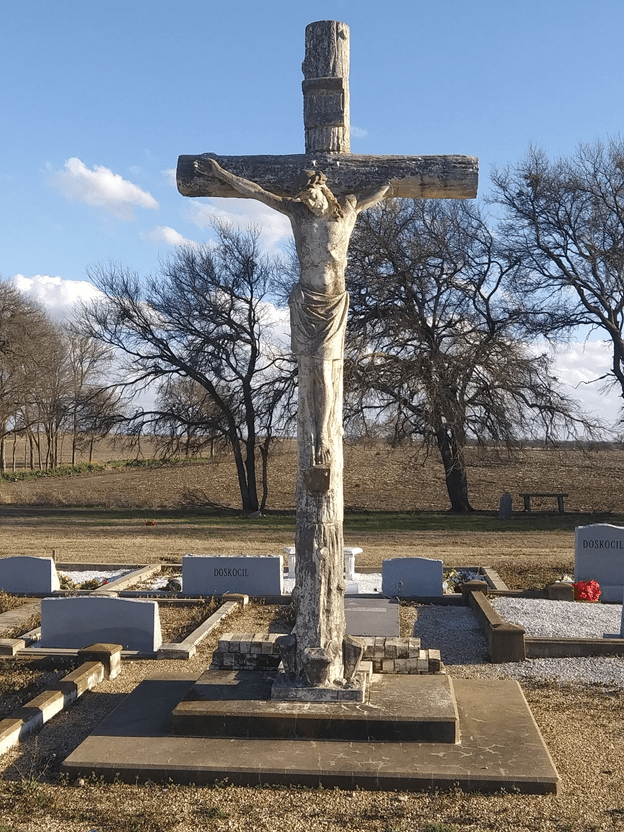
St. Michael’s Cemetery
St Michael’s Cemetery was established in 1893 and has huge, elaborate monuments and large family plots with several generations interred in each. Although this cemetery was established in 1893, some of the graves predate its establishment because it began as a private family cemetery. As you walk the grounds, you see the same family names time and again. Even so, I chose to focus my attention on the graves of those who served this country in the Armed Forces.
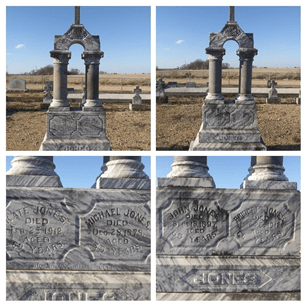
The founders of the town
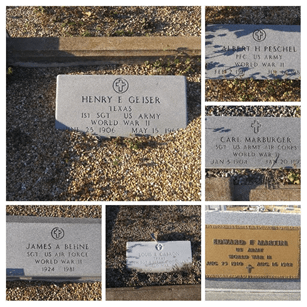
Veterans in St. Michael’s
Some of the Veterans in the Burlington cemetery
Burlington Cemetery
Burlington Cemetery was established in 1917 and like St Michael’s, you will see the same family names throughout. But, again I focused my attention to those who served this country.
The cemetery for Burlington’s non-CatholicsHeadstones of some Veterans
It’s been quite a few days since I participated with other nature-loving folks in a self-guided hike at a nearby state park, on the first day of 2021. I think it has taken me that long to recuperate before sharing my adventure.
The four state parks closest to my home are each about 35 miles away. I chose to visit the Birch Creek Unit of Lake Somerville in Burleson County. The last time I visited it was on an El Camino Real Chapter field trip in October 2013.
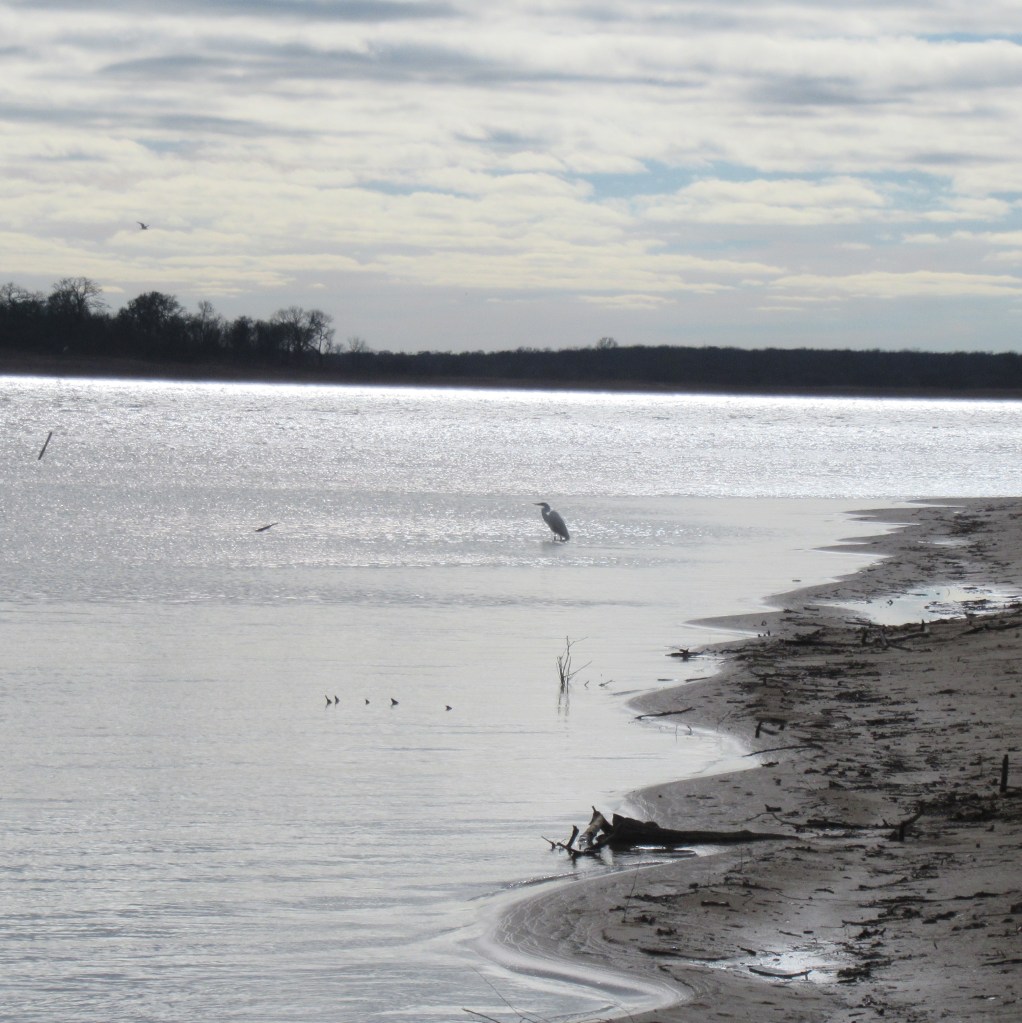
Heron at Birch Creek
It was not a warm day, in the mid 50’s, so I did not have to worry about breaking a sweat. My jacket felt good when I was not protected by trees from the wind.
I initiated several physically-distanced conversations with several folks, including a couple from Iowa who had come to Texas to eat BBQ at Snow’s in Lexington the next day. (I could not resist wowing them with the fact that the famous pit master Tootsie is my former sister-in-law.) It was interesting to hear from each person where they had traveled from for this event.
I obtained my printed copy of the designated trail showing locations of several orange flags marking points of interest. I walked down the path, stopped at the first orange flag, read about the lake in the pamphlet, proceeded along the way, and never saw another orange marker. I got totally and hopelessly lost.
Freshwater Mussel
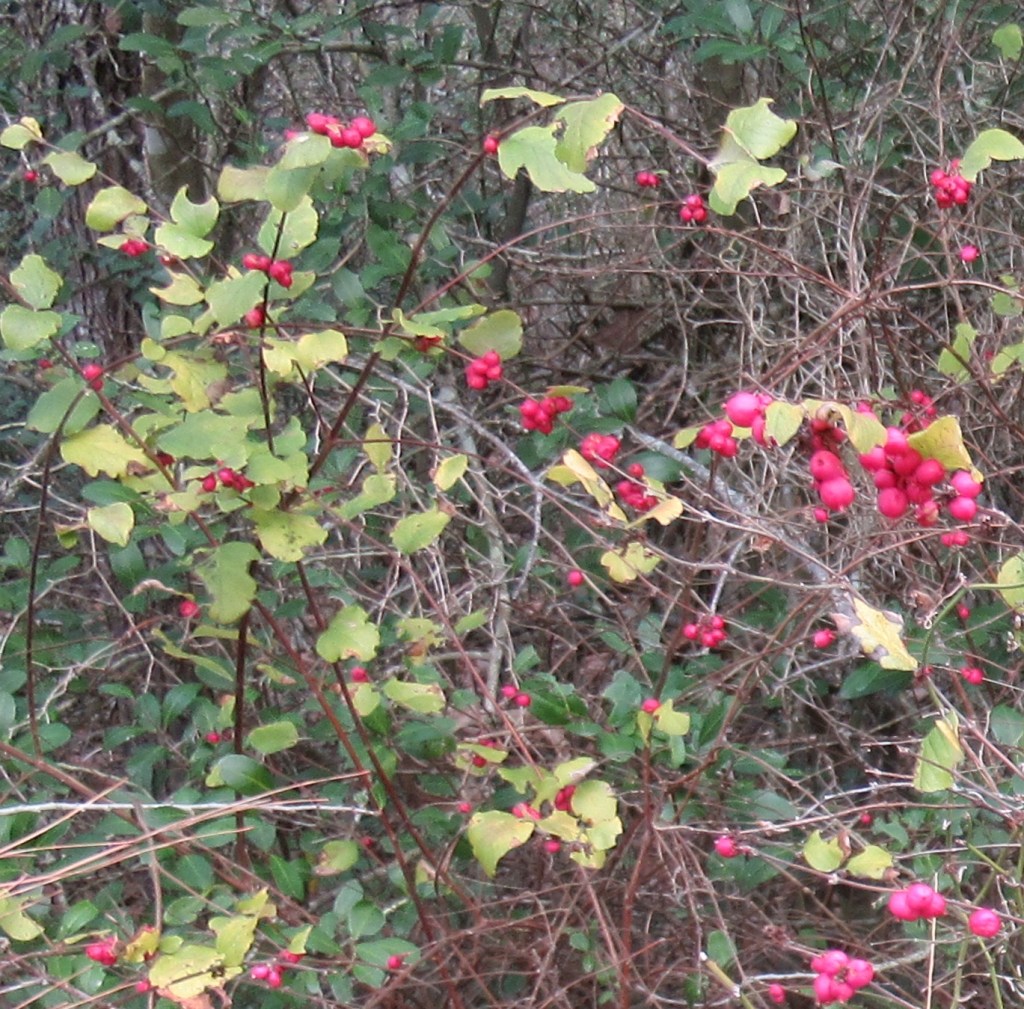
Eventually, I encountered an equally lost college student and her younger brother from Houston. We teamed up to find our way back to the park headquarters. Although not the ideal situation for nature talk, as we walked along I enjoyed answering their questions about the plants we passed and showing them interesting species such as soapberry, yaupon holly, and coralberry. I even pointed out feral hog, deer, and raccoon tracks for their edification. I realized how much I have learned by being a Texas Master Naturalist and iNaturalist addict since that 2013 visit to Lake Somerville.
Coralberry
My hike about the park took a bit more time and effort than I had planned, but was certainly worth the experience. Perhaps our chapter members can hike Mother Neff or another state park together New Year’s Day 2022. I will certainly appreciate some companions to guide and direct my steps.
by Linda Jo Conn, Sue Ann Kendall, Eric Neubauer, and Alan Rudd
Sue Ann: This story developed in an email discussion on January 15, 2021, between members of our chapter. We think you’ll enjoy it.
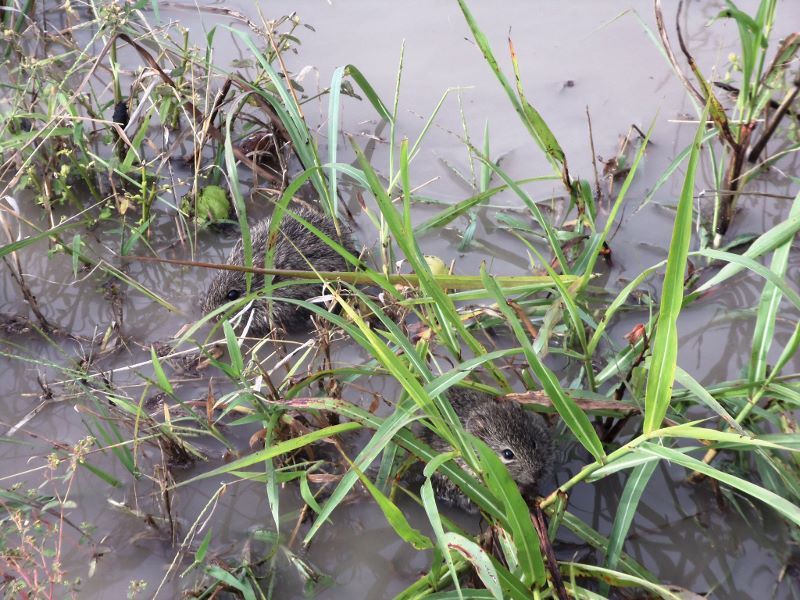
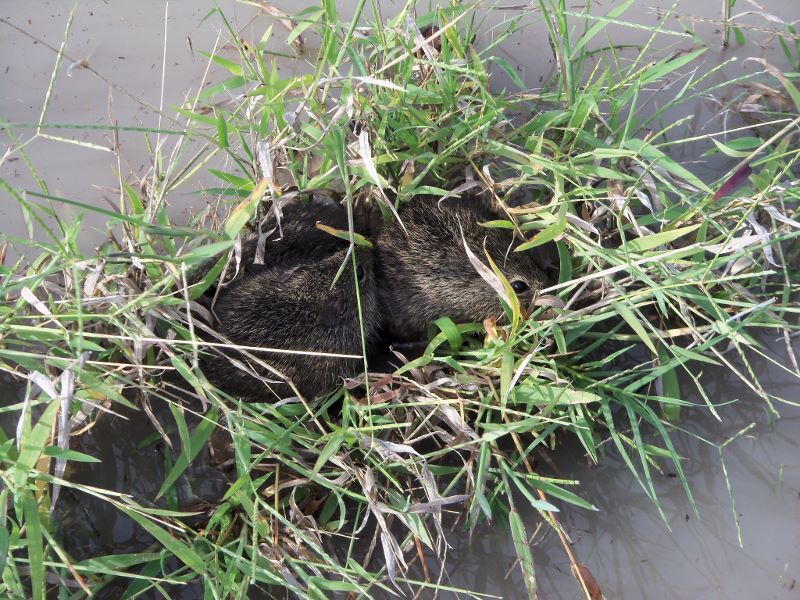
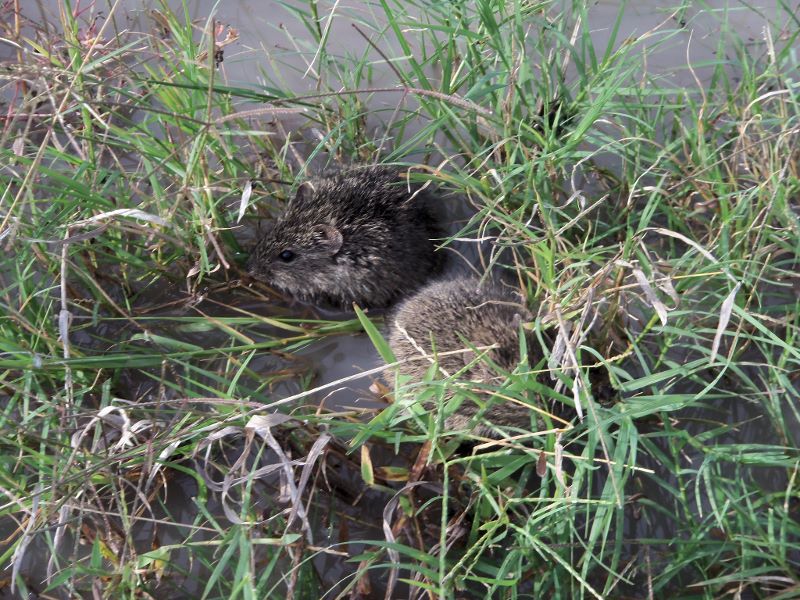
Eric: Yesterday at dusk I had a herd of eight rats outside my back door. I think the snow and flooding had them in a frenzy. After a little research, I believe they were Sigmodon hispidus.
They were eating at the salad bar and kind of cute. Actually it was a little scary when they kept coming out, but a least there were only eight. Looking up the species’ behavior suggests that they wouldn’t be much of a danger or even bother to humans. I picked up some catch and release traps today and will get pictures if I can catch one.
Linda Jo: Eric, your rat experience reminded me of an observation made during a flood event several years back by former member Katherine Bedrich. I finally looked it up and am sharing. She had driven up the road and found the highway flooded into Cameron. I remember there was a lot of repair work that had to be done in the area on the roads.
Katherine’s caption: Big Elm Creek was flooding over FM 2269 from heavy rains. The rats were along the edge and on the road. This was October 2013.
Alan: Excellent memory you have. And that little guy in the photo is in fact a hispid cotton rat.
We caught them in live traps for mammalogy classes at Texas A&M Wildlife & Fisheries classes in the 1970-80s. They were extraordinarily abundant in those decades in deep grass areas (like Eric’s property).
Dr. David Schmidly was the mammalogy professor at that time. I remember him saying, “I know that I will never go hungry because I can always catch Sigmodon”.
He had us clean them on field trip camp-outs and cook them over a fire. Being rodent, it is basically like eating a small squirrel.
Linda Jo: Wow! I can now say that I know someone who has actually eaten a rat.
Sue Ann: This story deserves its own blog!
Alan: Essentially it takes about three of them to equal a happy meal🙂
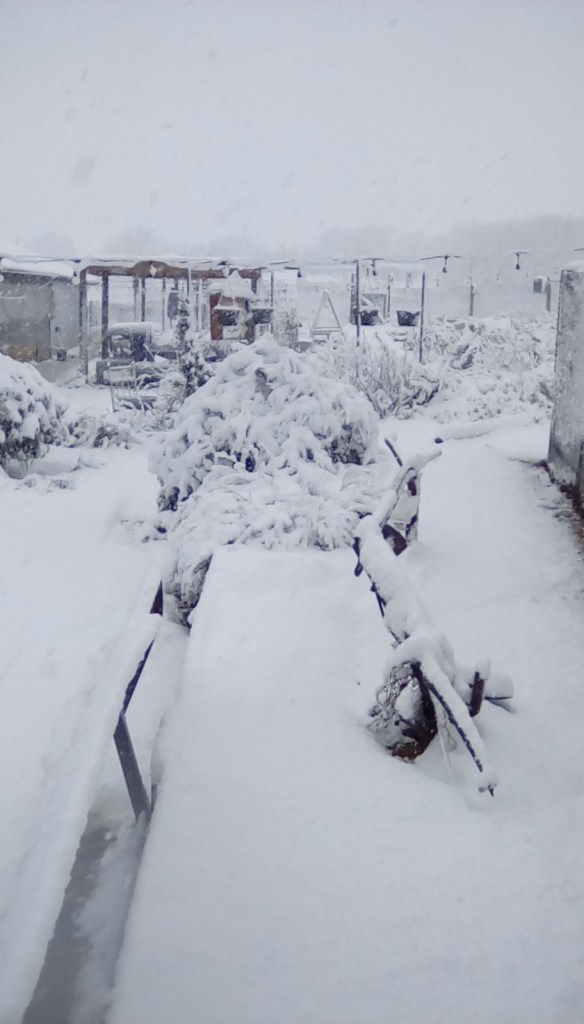
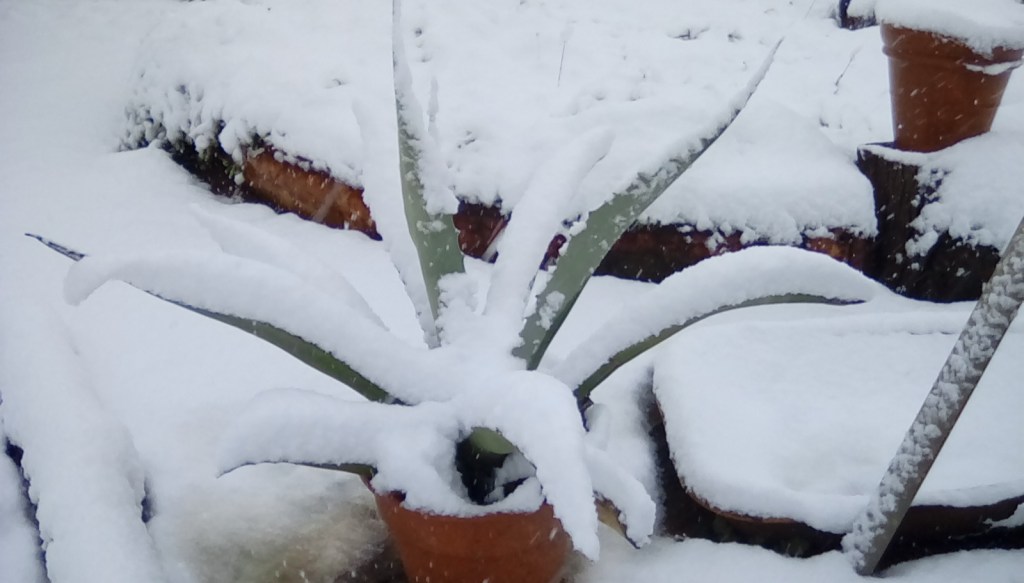
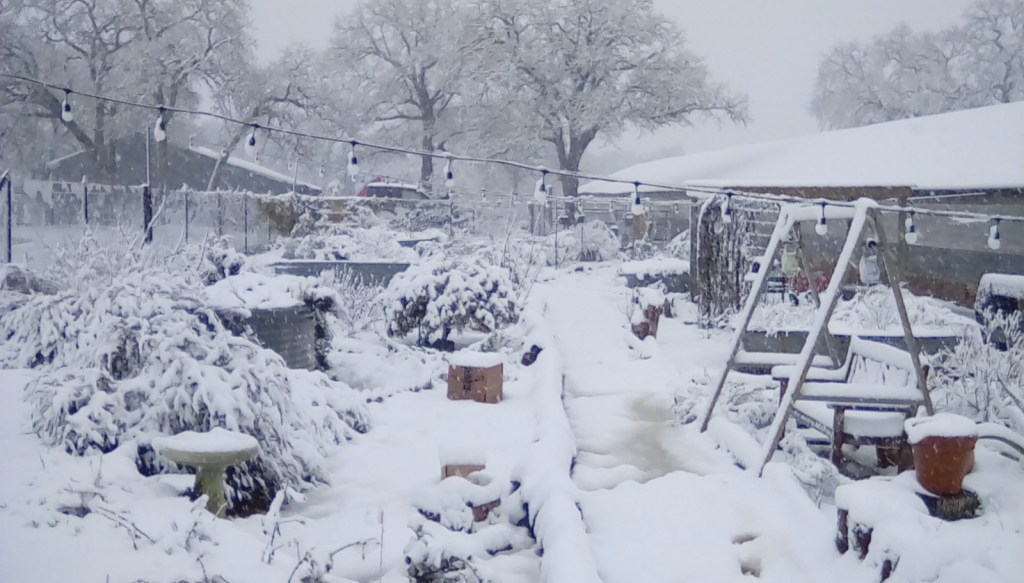
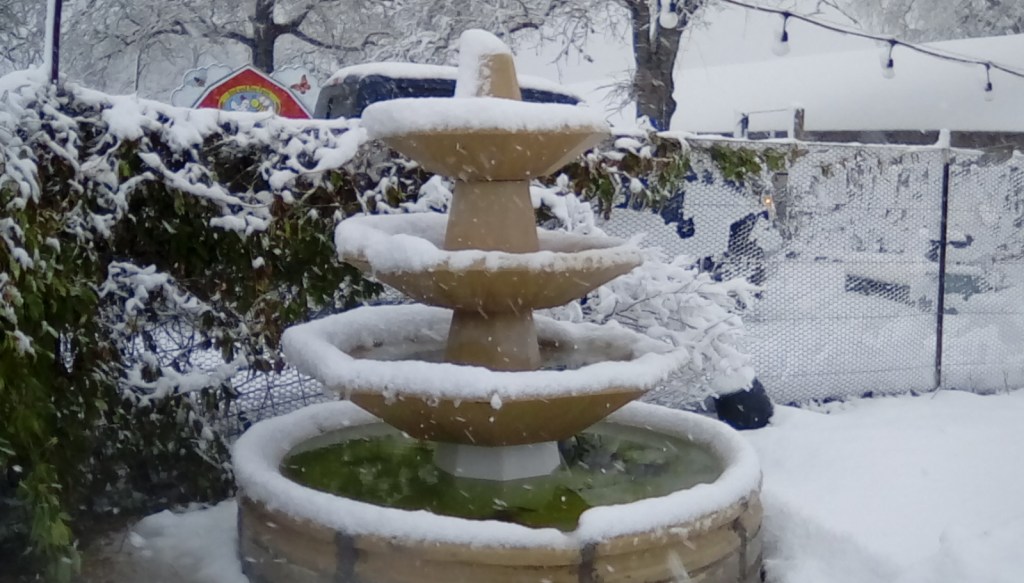
Gary drove me to the Milam Wildscape in the storm through back roads, which were safe. In addition to the snow, the Wildscape had also just recently received 9 inches of rain, but it held!!
Enjoy some photos of the wintry wildscape!
It’s almost unrecognizable!
In the gallery below, be sure to click the images to see them full size!
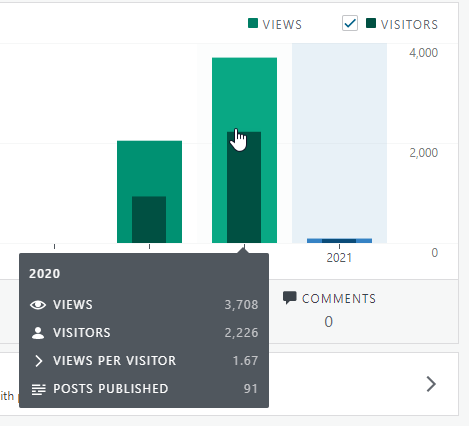
The start of a new year always seems to inspire folks to look back and analyze things. I got to thinking that last year was a hard year for our Chapter, since we had to stop meeting in person, couldn’t do a lot of the activities we’d planned, and only had a virtual conference to attend (nice as it was, it wasn’t full of hugs and chats). We certainly got more visitors in 2020 than in 2019 (granted, we didn’t start until February 2019).
We had 3700 visitors last year, not bad for a little chapter!
Our blog, though, provided us with a way to communicate with each other and to share what was going on in our own little slices of the natural world. I was really grateful to see how our contributions grew and grew, as the blog transitioned from reports on our chapter meetings to contributions from our members. We have a nice group of regular contributors now, as well as some Chapter members who contribute whenever they can.
In fact, there were 12 different Chapter members who contributed last year: me, Donna Lewis (winner of the “most contributions” award), Catherine Johnson, Eric Neubauer, Linda Jo Conn, Carolyn Henderson, Debra Sorensen, Joyce Conner, Cindy Travis, Larry Kocian, Ann Collins, and Sherri Sweet. What? Don’t see your name on the list? You can fix it by sending me some words and/or pictures (my email address is in the member area of our website).
Blog hits by month.
You can see from the previous graphic that our hits went up and down. There were two big months. Last February, someone went through and read every single article, twice, which explains the jump. But, last month, December 2020, really spiked. Did we suddenly become fascinating?
Hmm, December 23 was a bonanza of visits.
When I look at a month’s stats, I can always tell when a blog post came out, because we get a spike in visitors. But, that was a BIG spike! The next day was pretty big, too. I was very curious to find out what the heck got published on December 23 that was so darned fascinating. A look at the most popular posts of the year gave me the answer to “what” but not to “why.”
All Time Blog Post Stats. Hmm. Two of those got a LOT more hits.
I only figured out yesterday why Donna’s sweet post about being nice to a snake was so popular. Because of all those flags people are flying these days, the phrase, “Don’t Tread on Me” has become popular. Donna’s post must have come up in searches!
The other really popular post, Let the Tours Begin, by Lisa Milewski, was from October 2019, and was about the big event we held with the Rancheria Grande Chapter of the El Camino Real de los Tejas National Historic Trail Association. That link got sent out to a lot of places and shared often, so no wonder people looked at it. (Sharing posts is how you get people to look at them; you could do that, too).
How You Can Help Our Blog Grow
We’d like for more people to be able to find and enjoy the writing and beautiful photos from our chapter members. It’s great that we are getting more posts from a variety of members, but it would be good for them to be seen! People clicking on our blog links and sharing them are what gets our blog promoted more by search engines and WordPress (blog site). So, here are some things YOU can do:
Contribute. Send me (Sue Ann/Suna) your nature observations, research, fun projects, or reports of activities. You can type them in an email, put them in Word, write them on a piece of paper…whatever works! I can make them into fun blog posts, even if you aren’t a professional writer.
Read. When you see a blog post announcement on our Facebook page (or in email if you are one of our 37 subscribers), click on it. See what fellow Chapter members have to say! You might learn something. Or laugh.
Comment. Do you have something to add to a post? What about a question for the author? You can comment on our blog posts. Just put your name in there and start commenting! That’s how blog readers converse and build communities.
We’ve only had 79 “real” comments. Help us out!
Share. Did you find a post interesting? Copy the URL (the web link, at the top of the page) and paste it in an email, Facebook post, or message to a friend. Or, click the Share button on a Facebook post. Maybe someone you know will enjoy reading what you or another member wrote.
Talk. Mention reading the blog in conversations, when you’re explaining to a potential new class member what fun it is to be a Texas Master Naturalist, or if you’re asked what exactly we do. The blog is a good record of that!
This can help you, too! Writing a blog post gets you precious volunteer hours. Taking the photos and doing the research for an article also counts. It’s under Chapter Administration > Website and Social Media. This is something fun, interesting, and helpful that we can do while maintaining our pandemic protocols.
Oh yes, thanks for reading! Y’all are all the best!











 Nature Along the El Camino Real