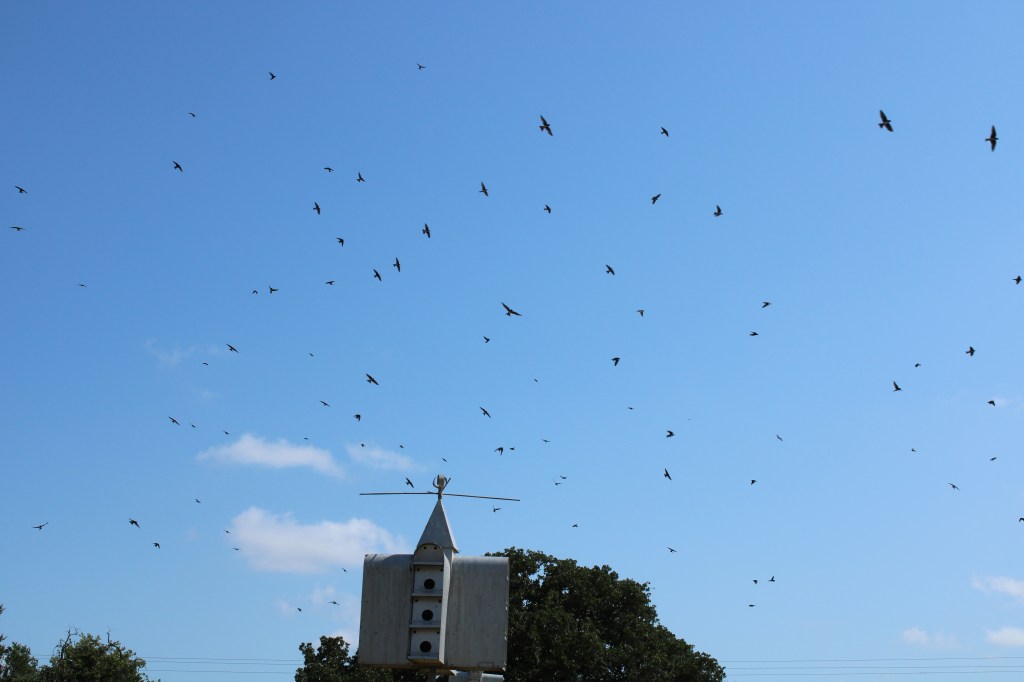
The skies over Mike McCormick’s ranch were awash in Purple Martins on Saturday, June 24. He estimates that he has 800 adults that have laid 3 to 8 eggs per pair – most of which have hatched. When the babies are air born, they may black out the blue above.
A small, but resolute group of El Camino Real Texas Master Naturalist braved the heat to get an annual report on the expansive Purple Martin breeding grounds a few miles outside Buckholts. Thankfully, there was a nice breeze and shade up on the hill where the birds take up residence in the specially made houses on the McCormick place.
McCormick made all the houses in his workshop. He also created an impressive trap house for English Starlings and sparrows. Starlings are notorious for taking over Purple Martin houses. Sparrows are known to do it, too. Apparently, starlings and sparrows are just too curious for their own good when they see others of their kind. The trap is somewhat large and made to let them in but not out. He keeps a few as “pets” so the newcomers will see them eating and join them in the cage.
McCormick told the group about Meteorologist Andy Anderson, formerly of KCEN, telling him that two years in the 2008 to 2010 range, the Purple Martins were “seen” on his radar because of how thick and black they looked when they do their daily hunting circles. The radar picked it up as a moving dark cloud.
He did state that he would be making some more to be sold soon.
To walk where Spanish settlers walked hundreds of years ago and native tribes lived their lives, even thousands of years ago is an inspiring experience. Members of the El Camino Real chapter Texas Master Naturalist and El Camino Real de los Tejas National Trail Association got to experience it firsthand Saturday in a guided tour of a trail in development.
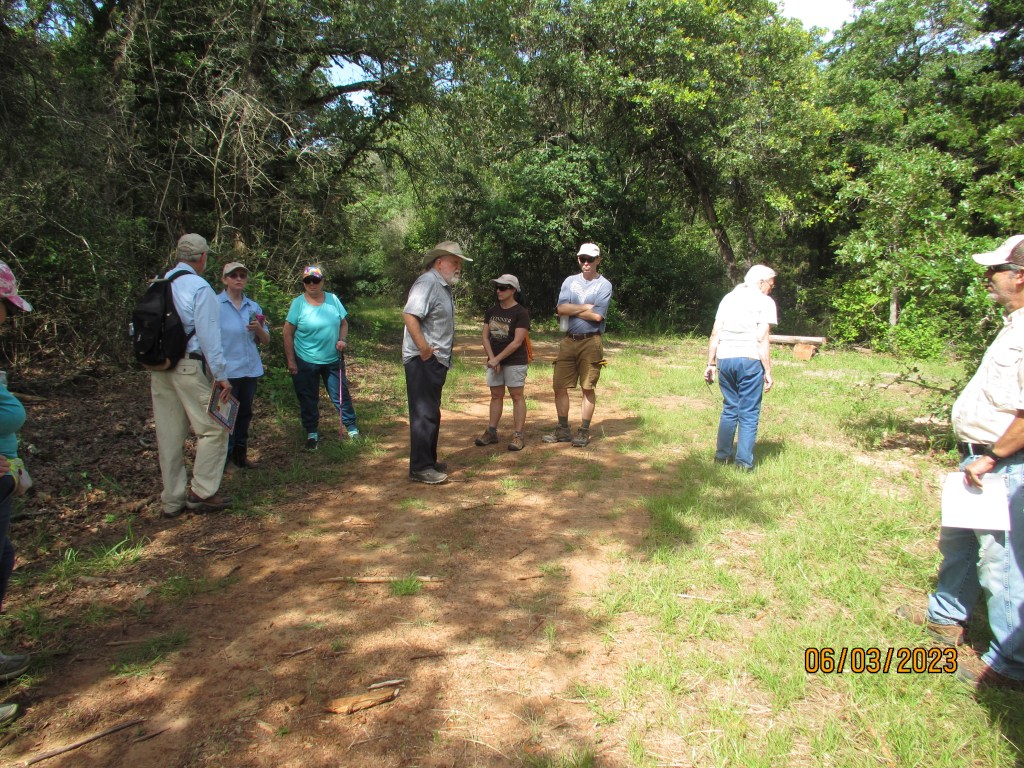
The group after their hike
The trail is part of the El Camino Real Trail that spans a good part of Texas. The part travelled Saturday, June 2, runs across the Cedar Hill Preserve, owned by Mike and Joyce Conner, and the Baumann Ranch. The Conner property is being developed as a native flora and fauna preserve, and the adjoining Baumann ranch is still a working cattle ranch. It is now part of the National Trail Association, and it is being prepared for study and hiking for organized groups in the future.
The trail head
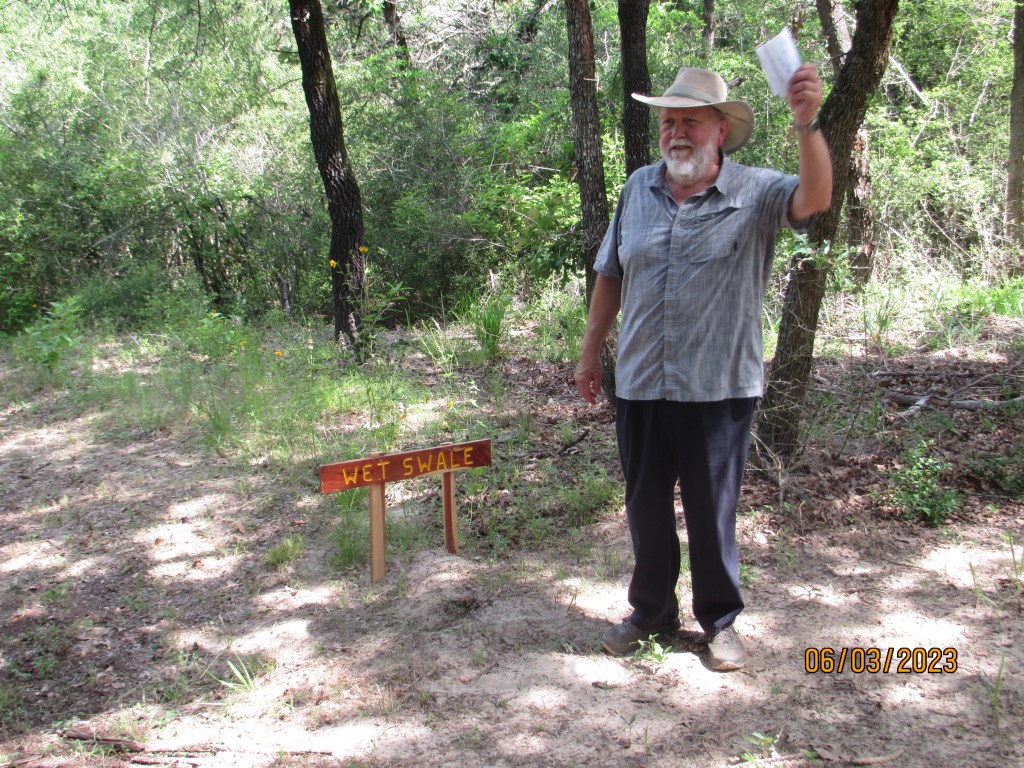
The wet swales were probably formed by water traveling in a path through the area in wet seasons then later used by travelers.
Mike Conner talks about the wet swale
The trail head begins in a woody area on sandy loam soil complete with a fancy new outhouse somewhat like your grandparents had in this area. In many areas a hiker can actually see the trodden path taken by Spaniards and Native Americans dating back hundreds and probably thousands of years ago. They are most discernable by swales that bank the path. A swale is a buildup of land running along each side of the ancient trail. It looks a bit like a street curb might look today. There are both dry swales and wet swales. The dry swales were strictly roads/paths taken by travelers.
Dry Swale (photo by Michelle Lopez)
There also are signal trees believed to have been formed by the native tribes to give direction then later used by the Spaniards. Artifacts from both groups have been identified by archaeologists studying the area. Post Oak trees primarily were used to form these trees.
Signal Tree
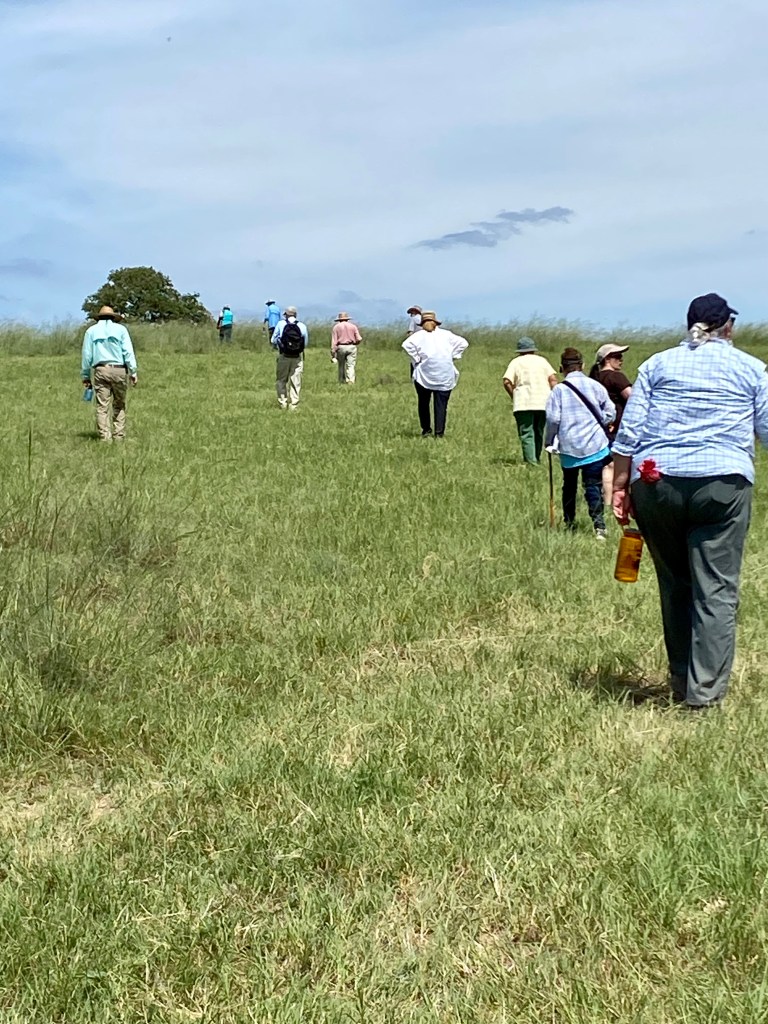
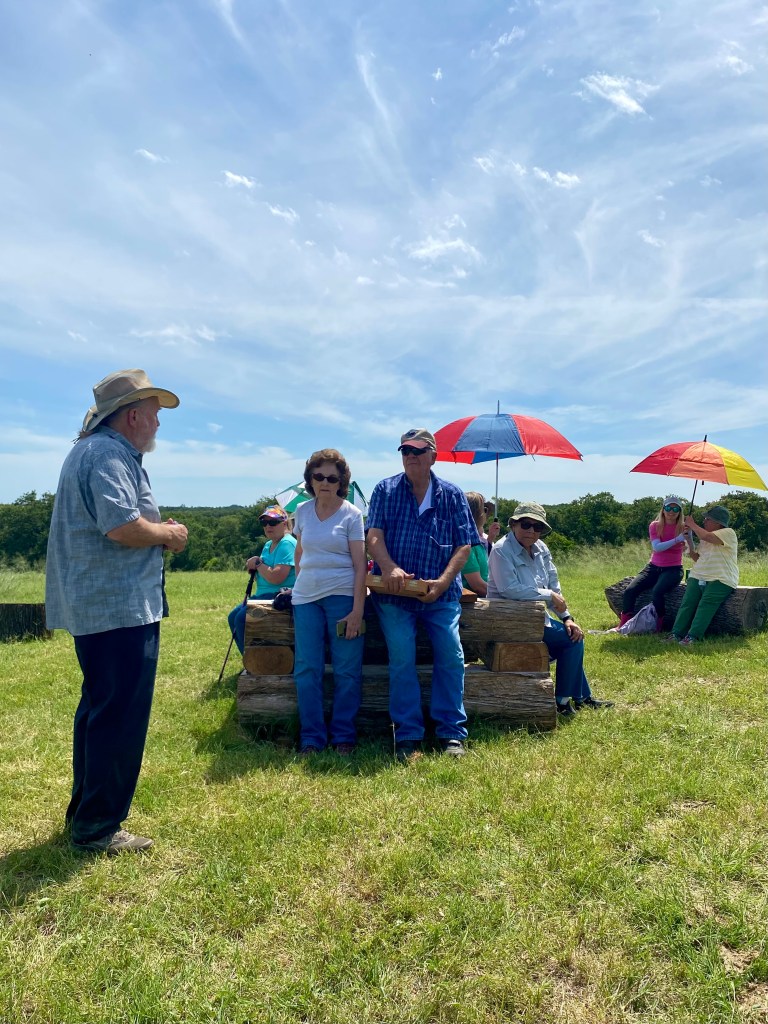
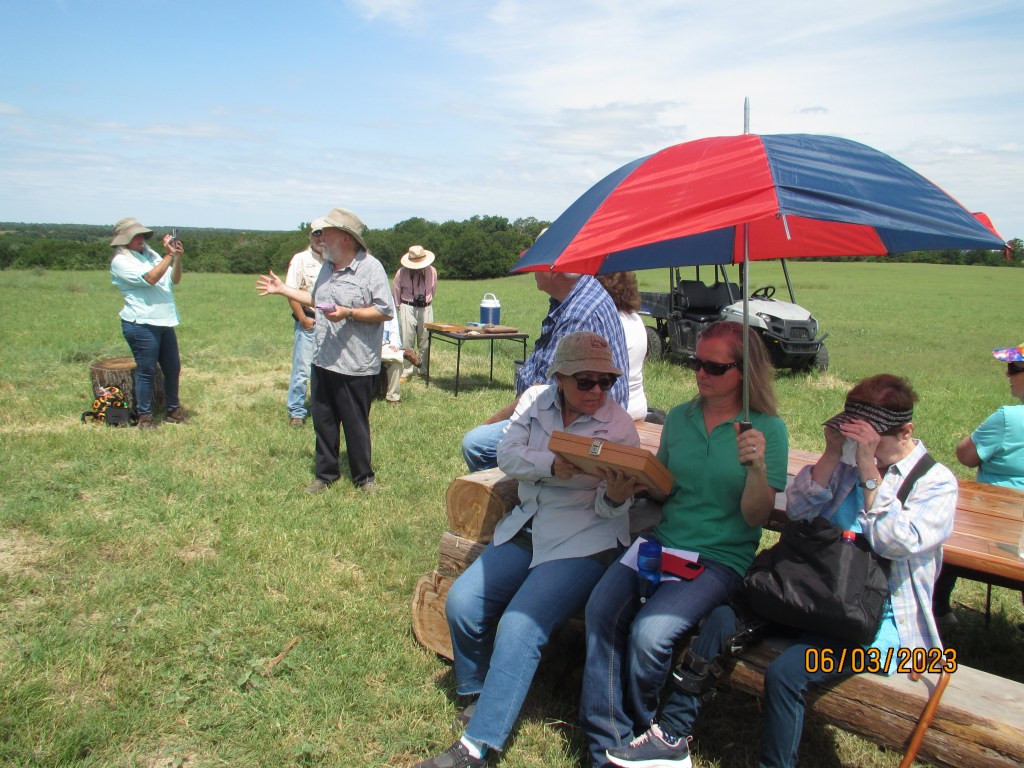
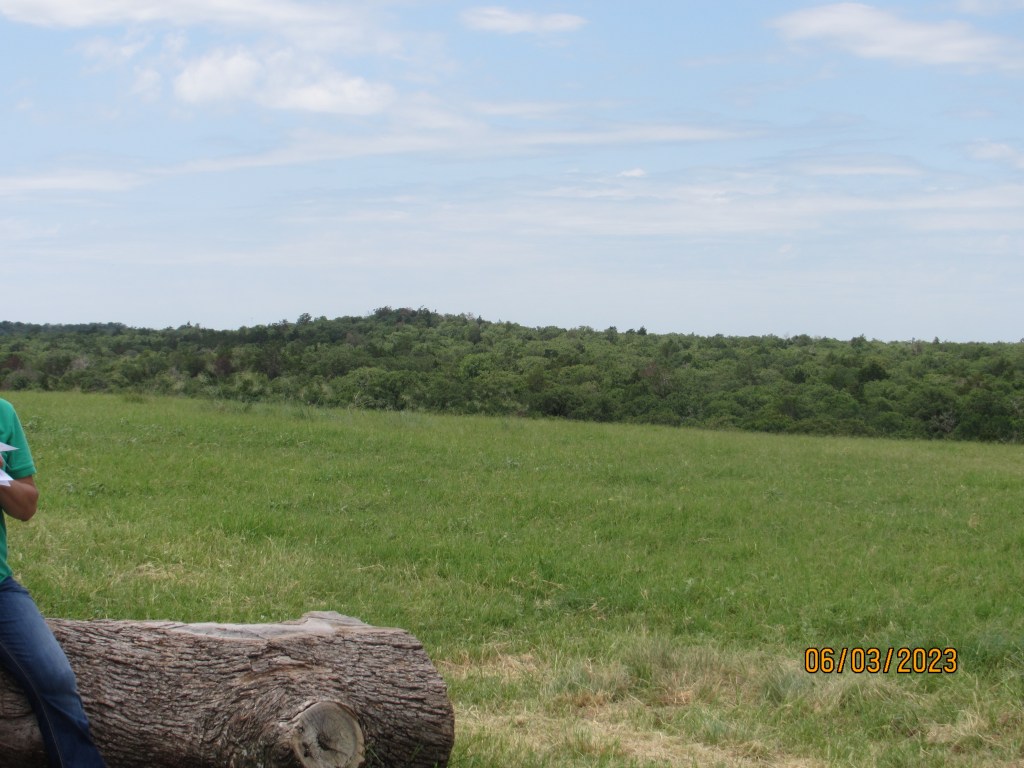
When you come out of the wooded area, you are then on an uphill stretch to reach the very high hilltop. The top of the hill is like a meadow looking out at the woods below and nearby hills or “mountains.” Sugar Loaf Mountain is very near and visible from this hilltop. It is believed that this hilltop where we were was a village for a native tribe or tribes over the years. Tonkawa artifacts have been identified from the area. There was a great deal of speculation by the hikers that the different tribes sent smoke signals to each other from these hill tops. A visit to Sugar Loaf Mountain has long been a rite of passage for area high schoolers.
Hiking up the hill (photo by Michelle Lopez)John Pruett teaching at the hilltopHill top view with pretty clouds (photo by Michelle Lopez)REcovering at the topDistant view
This area is part of the Rancheria Grande Los Brazos de Dios. An archaeological dig in the area around Alligator Creek and Pin Oak Creeks, both of which cross these properties, a few years ago found evidence of very early Spanish settlements.
Trail loop
Mike Conner and Dr. John Pruett, tour guides for the adventure, and Mr. and Mrs. Baumann, explained the history and discoveries while the rest of us recovered from the climb. Joyce Conner etched a map of the trail into a homemade tabletop. It sits at the top of the hill.
Joyce Conner’s tabletop map
Going downhill was easier, but one could certainly feel the rising midday temperature. An appreciation of what people had to go through to get anywhere hundreds and thousands of years ago is brought home when hiking this trail.
The Baughmans (center)
There is a book titled The Archaeology of Rancheria Grande Los Brazos de Dios, written by Sergio A. Iruegas, archeologist, and Melinda T. Iruegas, about the discoveries in the area. It is currently out of print, but there are copies at the Cameron and Rockdale libraries. If you own land in that area, you may be sitting on artifacts.
Mike Conner talks about the trail
Addendum
by Mike Conner
I would like to clear up a little confusion about swales.
Swales are u-shaped, linear depressions in the ground formed by many years of foot and hoof steps. They are never formed by water but may be damaged by water once they are formed. This is happening to some extent to Hidden Swale. Both the Dry and Wet Swales have been certified by archeologists to have been used during Spanish colonial times but may have been used for thousands of years before. The somewhat confusing names for these two swales come from the fact that the Dry Swale leads directly to the historic village site and cuts through a small valley that would only be passable is fairly dry weather. The Wet Swale leads in a less direct route to the historic village site that goes around the edge of the valley and would be passable in wet weather.
Wednesday night was very festive for the El Camino Real Texas Master Naturalist chapter. We celebrated the five new graduates from our training program with a delicious meal and a lovely presentation at the All Saints Episcopal Church in Cameron, where we also have our monthly meetings. We are grateful to Fr. Jeff and his staff for being such gracious hosts.
Father Jeff and our graduates.
Our food was catered by Hot Corners, the company that is located in the beautiful Venue at Railfan that recently opened in town. Barbara Dominguez does a wonderful job, and we were glad to see our vegetarian attendees had many options. Next time we’ll remember to ask for a gluten-free main course!
The appetizers included one of Barbara’s famous charcuterie boards, along with wine and some pretty darned good non-alcoholic wine beverage that was fun to try!
MMM, charcuterie
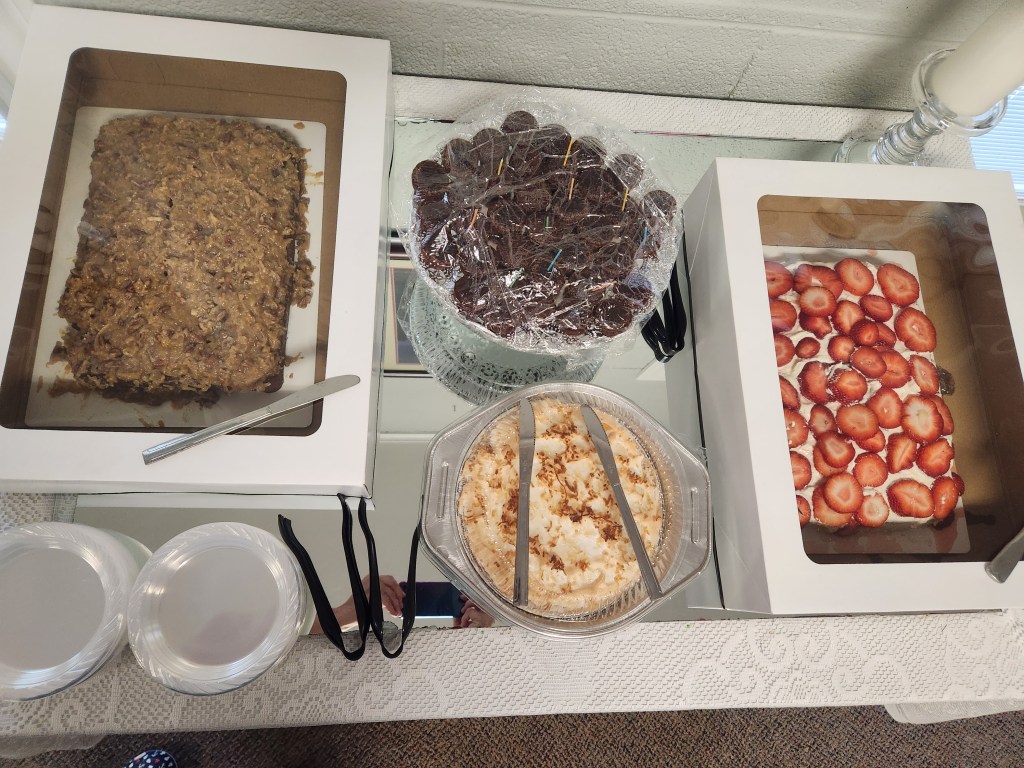
Desserts were provided by Alan Rudd, who was also our assistant trainer this year. It was hard to choose which one to try, so many people tasted more than one.
Alan tasted his pie first!Everything was all protected.
The fellowship and conversation were fantastic, and everyone had a good time at the meal, and an even better time during the awards.
First, Dorothy Mayer read her famous poem she wrote when she was graduating, which always brings a laugh.
Dorothy shares the story of her poem.
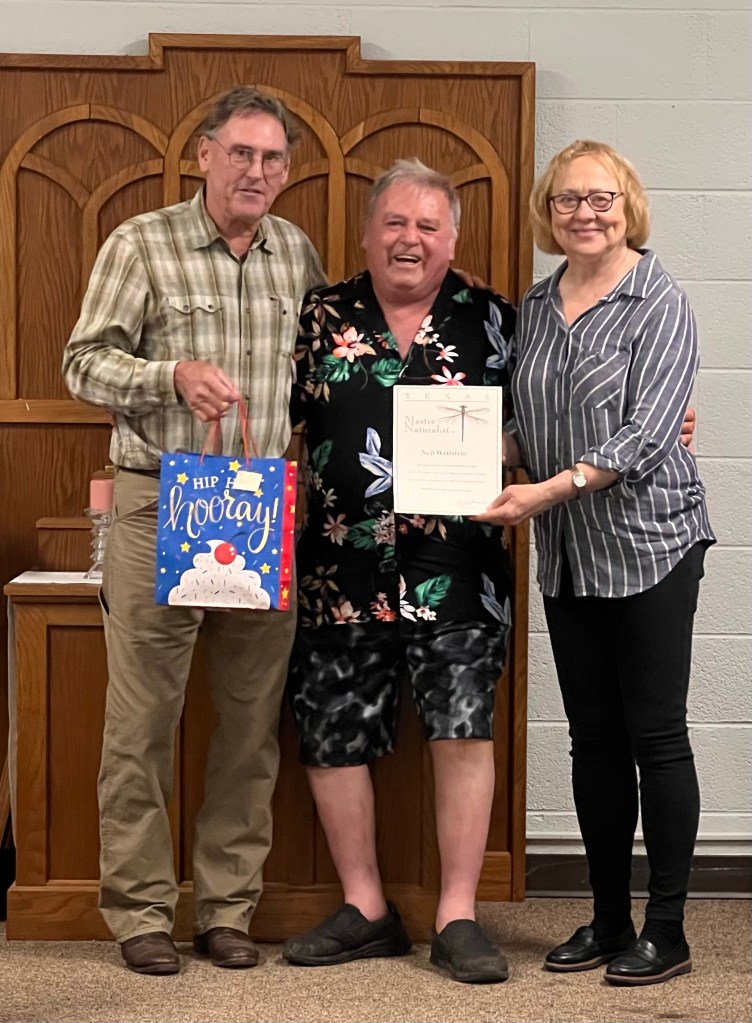
Then came the highlight of the evening. Patricia Coombs, Brenda Ferris, Ellen Luckey, Michelle Pierce, and Neil Wettstein were each presented with their graduation certificates, and two others received their first dragonfly pins for their initial certification as well. Great job, everyone!
Patricia receiving her pin from Carollyn HendersonCarolyn and Kathy share a laugh.
Following the student awards, Alan Rudd presented Kathy Lester, our lead trainer for the past three classes, with a beautiful painting of a sunrise or sunset (you get to pick) with kind words on the back of it from past students. Kathy was surprised and delighted by her gift, which is obvious in the photos!
Thank you, Kathy!
Kudos to the team who put together the party and decorated the room so nicely. It takes a lot of work to organize all our activities, and we appreciate our dedicated members very much. Now, let’s get going on the City Nature Challenge!
Here are a couple of funny out-takes from the party. We did have fun.
Alan and Patricia share a laughThe flower needed help staying up on Sue Ann’s headPamela Neeley went for a glamor shot
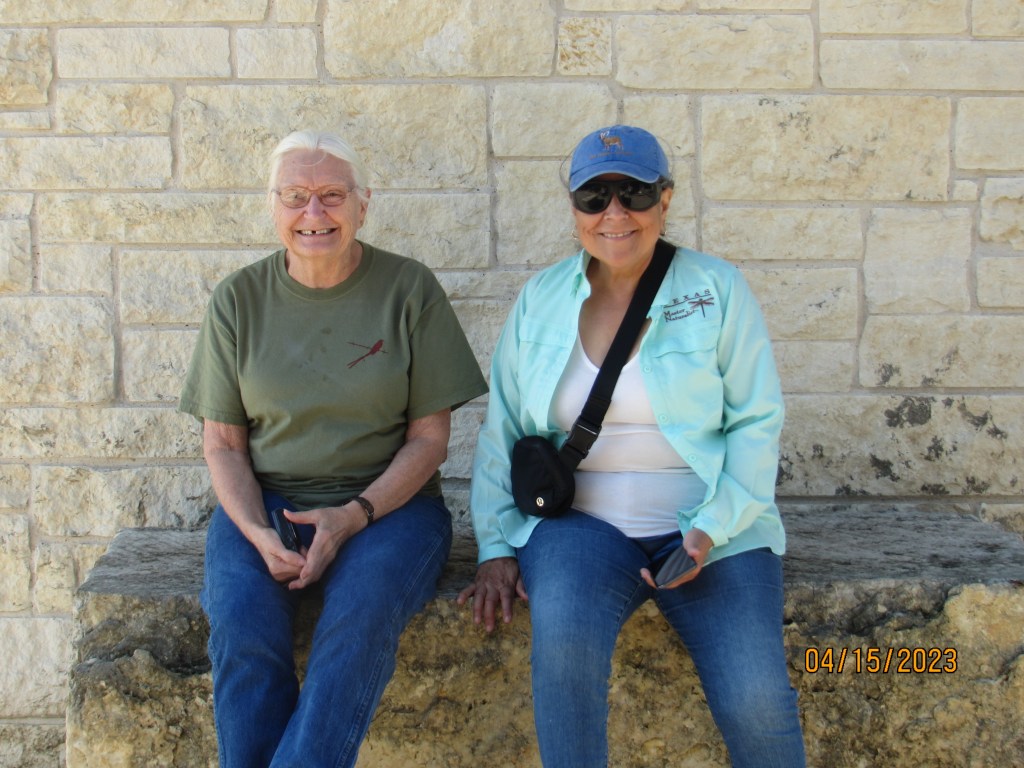
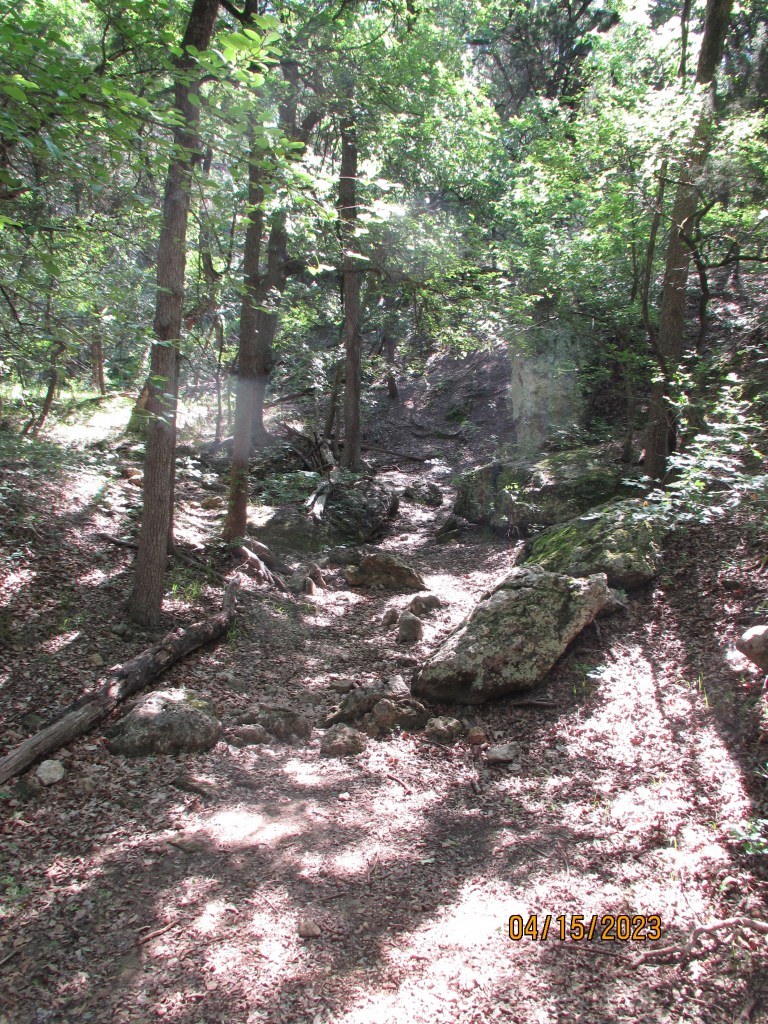
Carolyn Henderson sent along some more photos from our field trip to Mother Neff State Park on April 15. Some are of the scenery and others are of our scenic group members! We thought you’d enjoy them, so we’re passing them along.
The group at park HQLinda Jo and LizCatherine, Liz, and MarianNeil and our guideSome of our group in the caveDescending into the caveObservation towerGoing up!The trailWash pond
Saturday was an absolutely glorious day for a field trip and guided walk through Mother Neff State Park. It’s the closest state park to Milam County, so it wasn’t a bad drive at all for the carpoolers and separate drivers. Plus, we got to see lots and lots of wildflowers along the way!
Part of our group
We were very impressed with the new park headquarters that was built after the original one was flooded badly (some of the park is still inaccessible). There are very impressive native plantings all around it.
Native plant landscape
Once we were all gathered and checked in, the group motored over to the trail head and enjoyed a walk through wooded areas, led by a knowledgeable park intern who’s majoring in leisure or something like that.
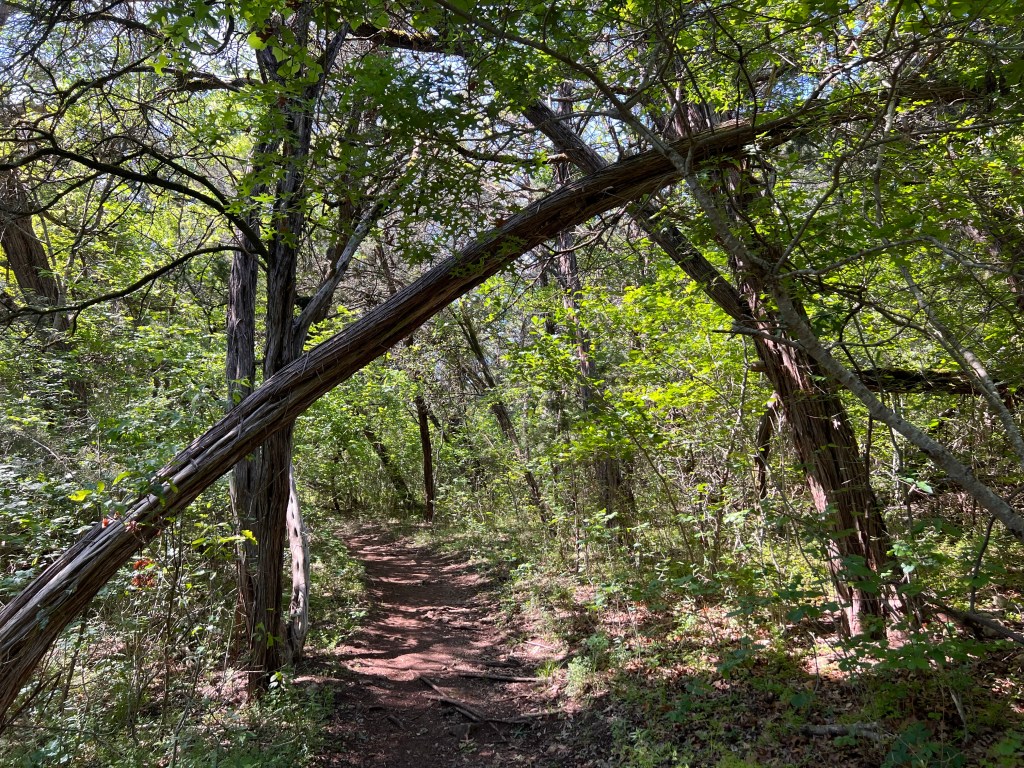
Into the woods
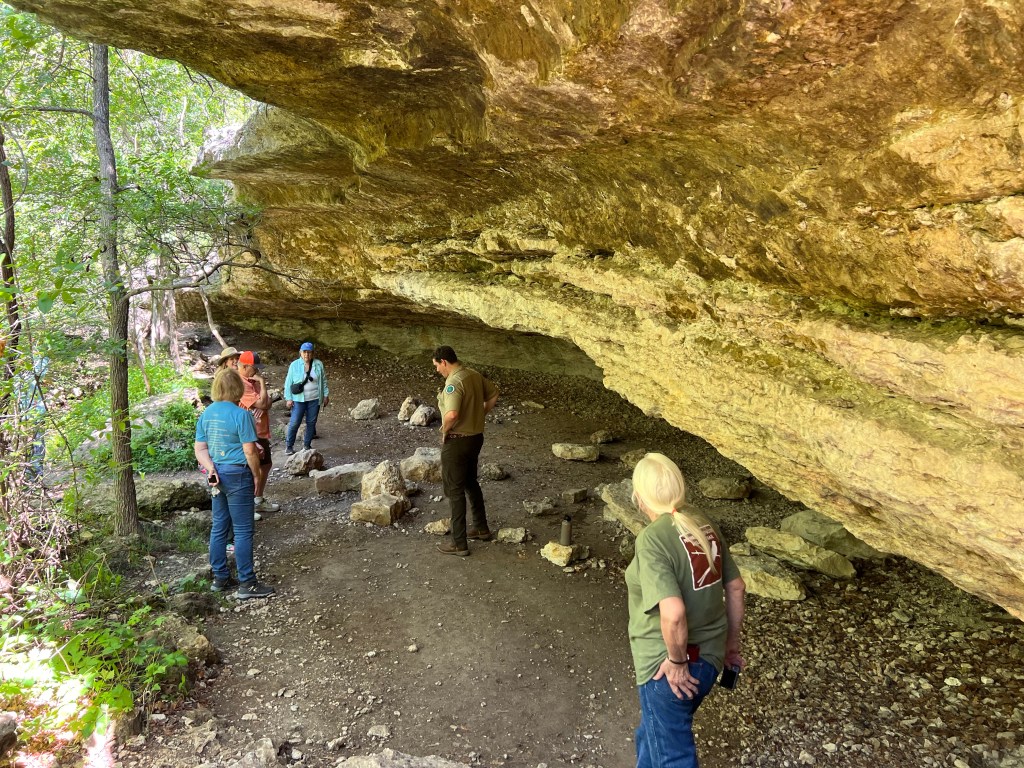
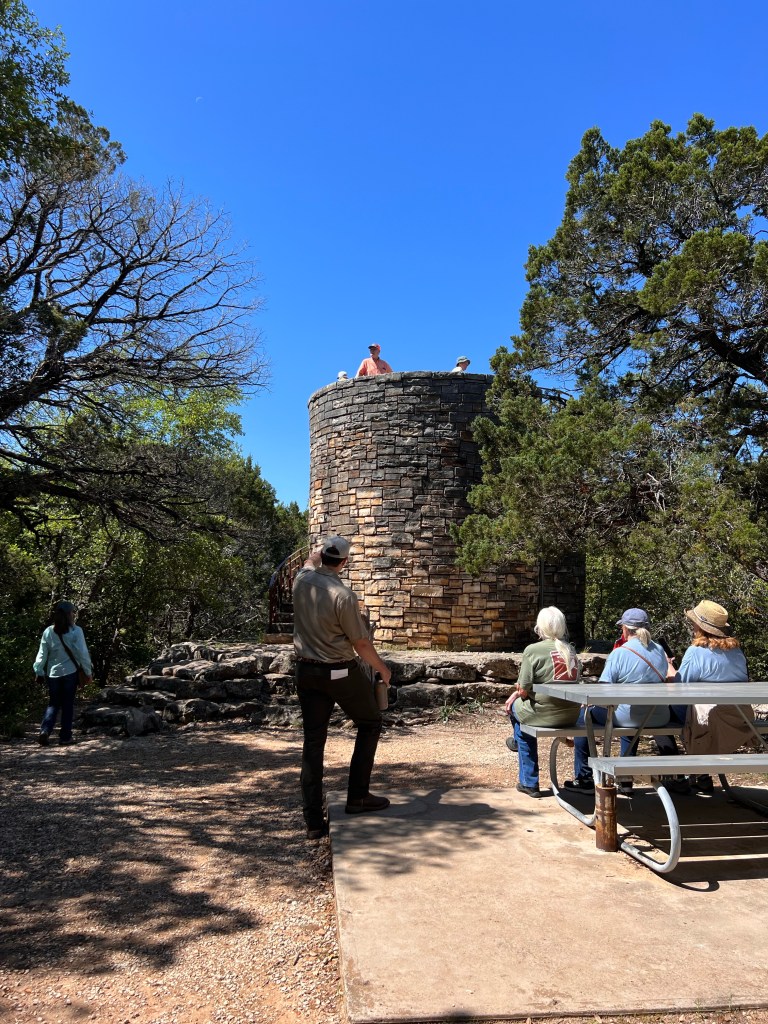
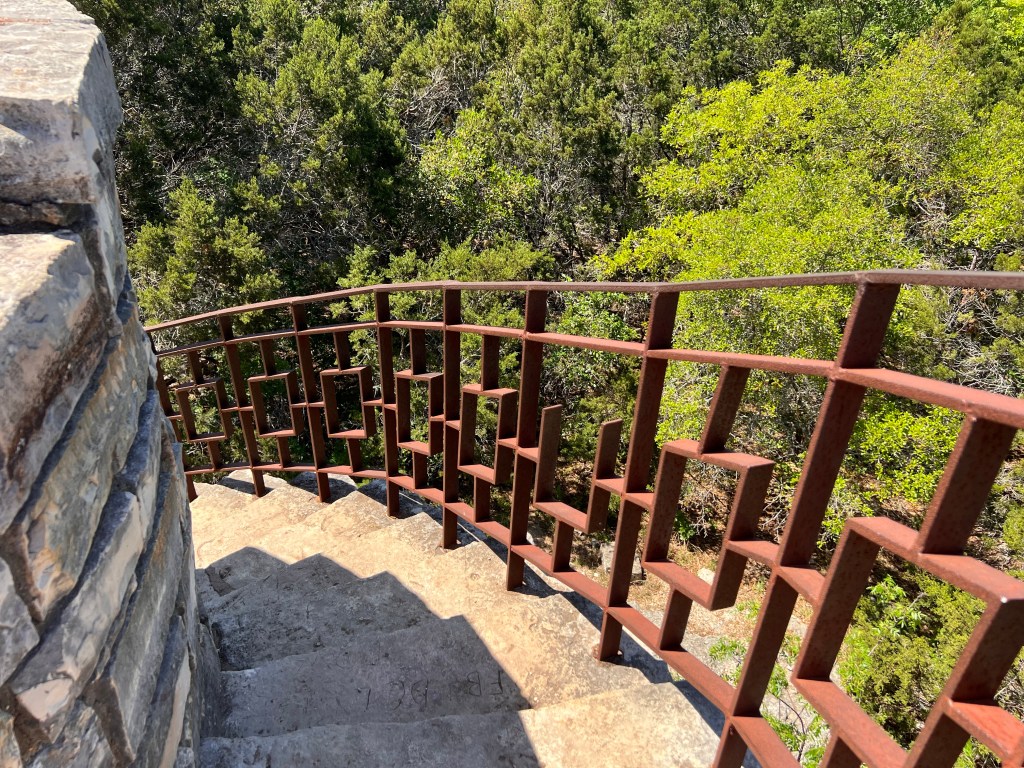
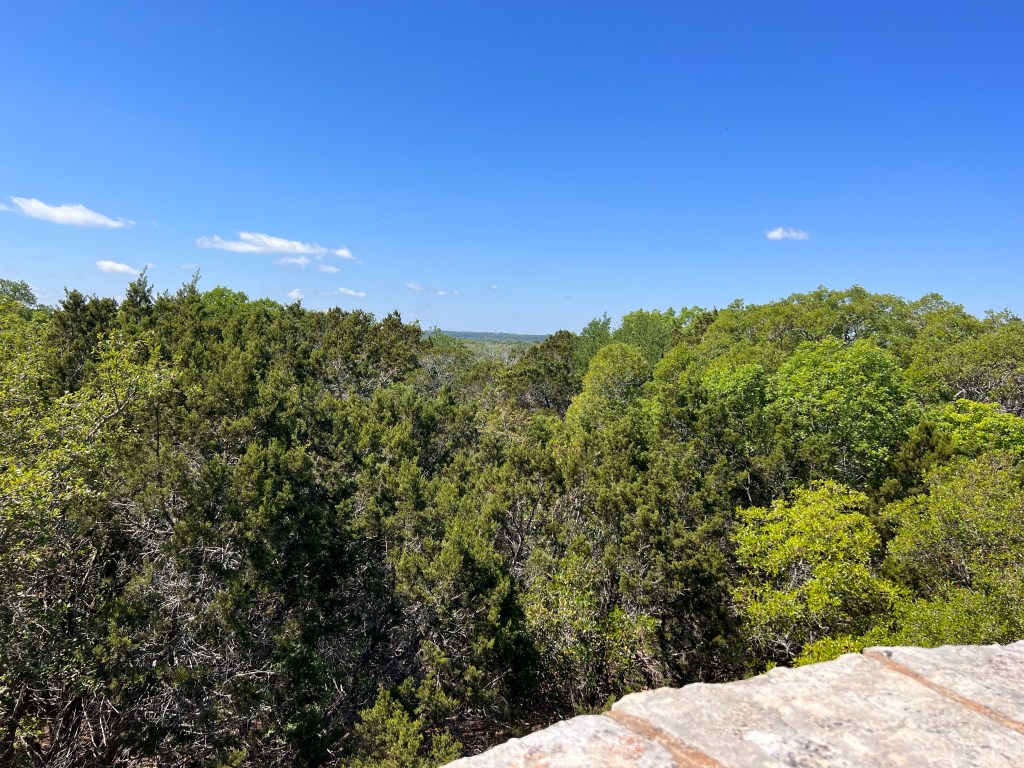
The hike took us to a cave, a cool picnic table in the middle of nowhere built by the Civilian Conservation Corps, a large cave that was used for years by indigenous residents, and a CCC tower that would give great views if the trees hadn’t grown up to block most of it. There was a lot of going up and down involved, so the hike was better for folks with good legs.
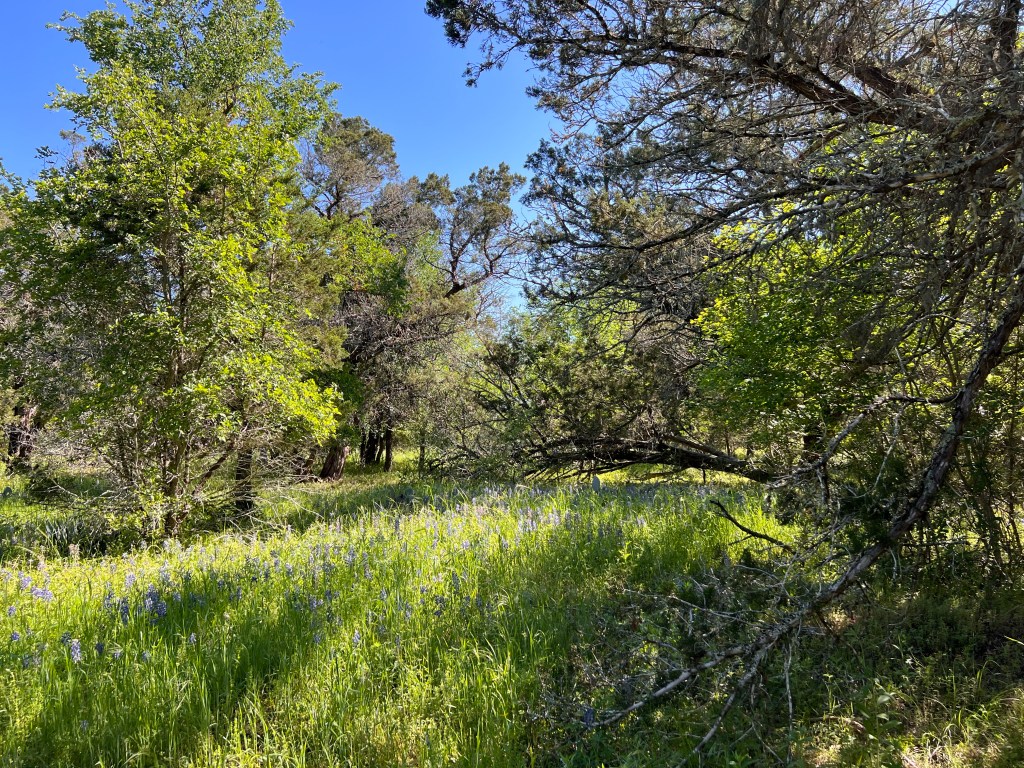
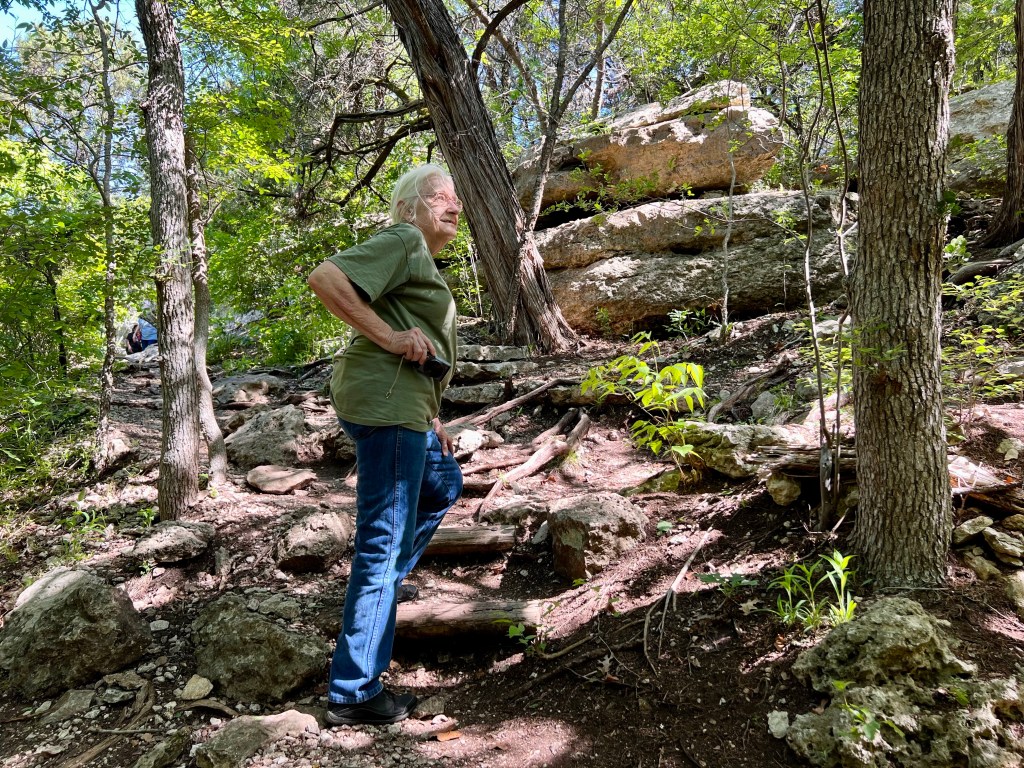
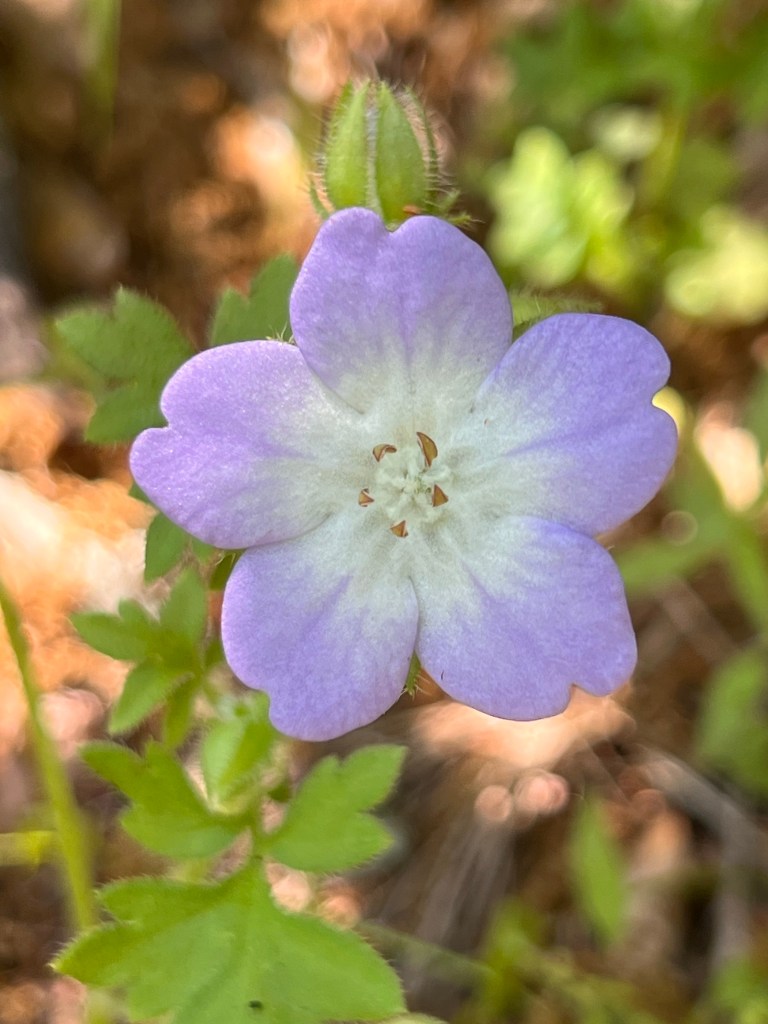
MeadowTexas baby blue eyes in the woods The wash pond where residents used to do laundry Looking down the pathLinda Jo handling the steep ascent to the caveLearning about Tonkawa CaveIt was cool in the caveThe group, minus Rosie, the photographer. Those who didn’t climb got to restIt’s a sturdy towerTower stairsTower view
Two of our members were not very good participants in the hike, however. Linda Jo Conn and I were too enthralled by all the interesting plants and insects we saw that we could share on iNaturalist. This park is part of the Texas Master Naturalist GTWT Adopt-a-Loop trail project, so we wanted to add observations to that. Also, well, we are just that way. As Linda Jo states, we proceed at the pace of botany.
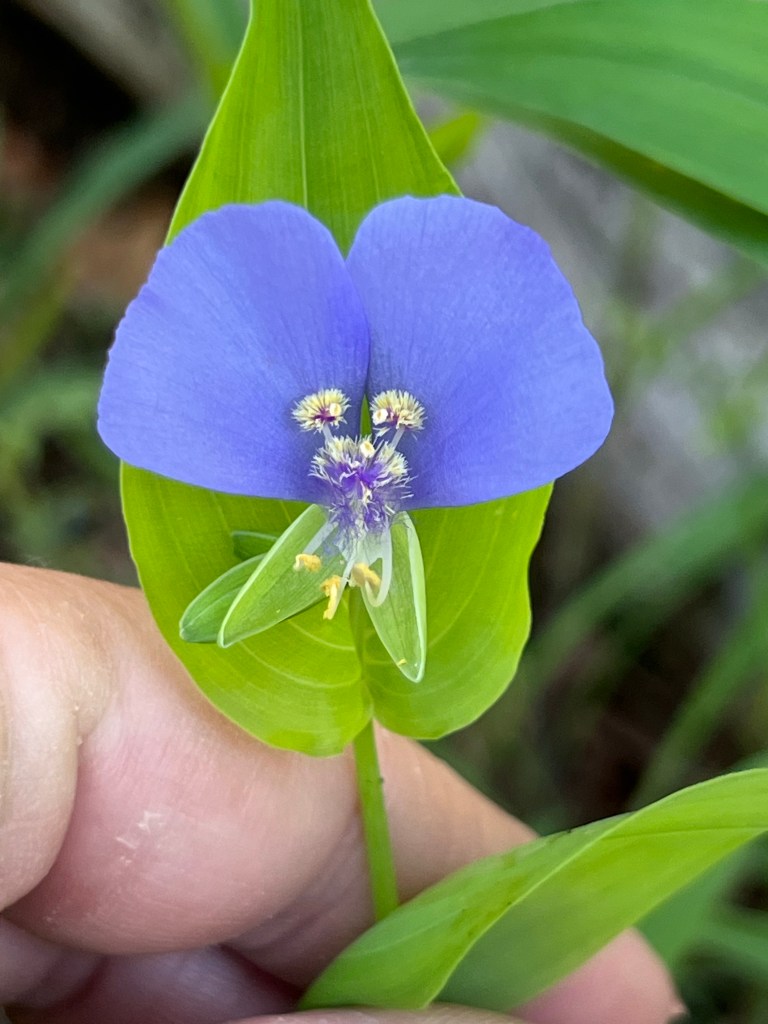
Can you ID any of these?
We found some very interesting plants and were impressed by the variety we saw. I wish we’d been there when the yellow passionflower was blooming. But I was impressed that I remembered what the leaves looked like and found it. We had a blast!
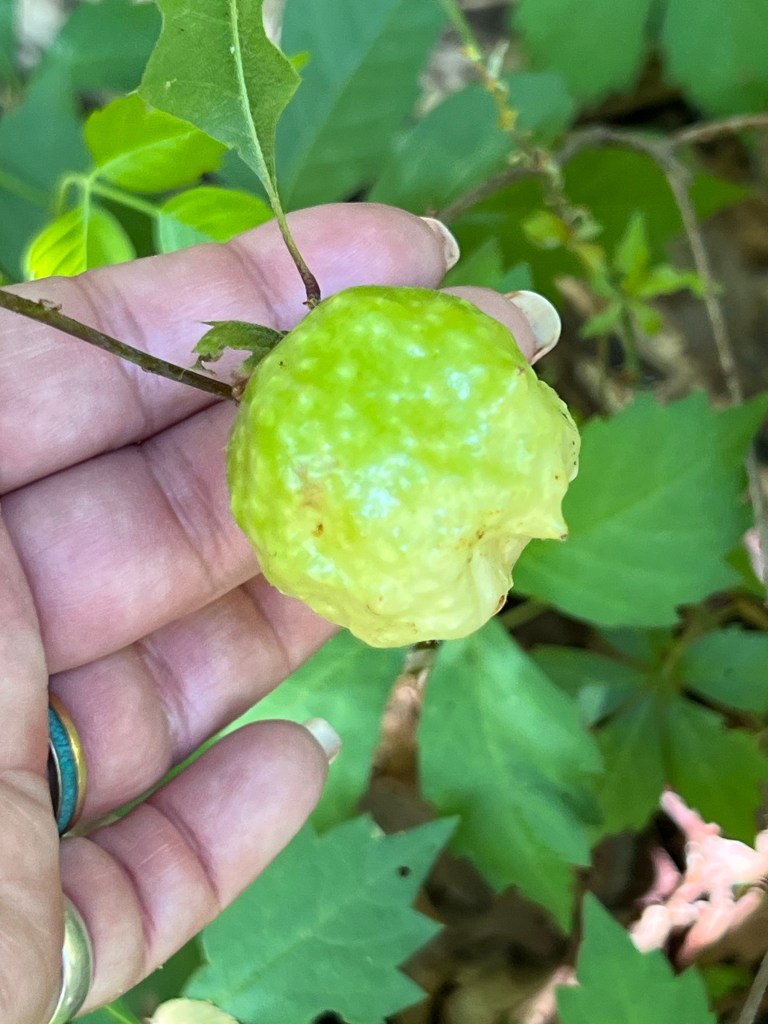
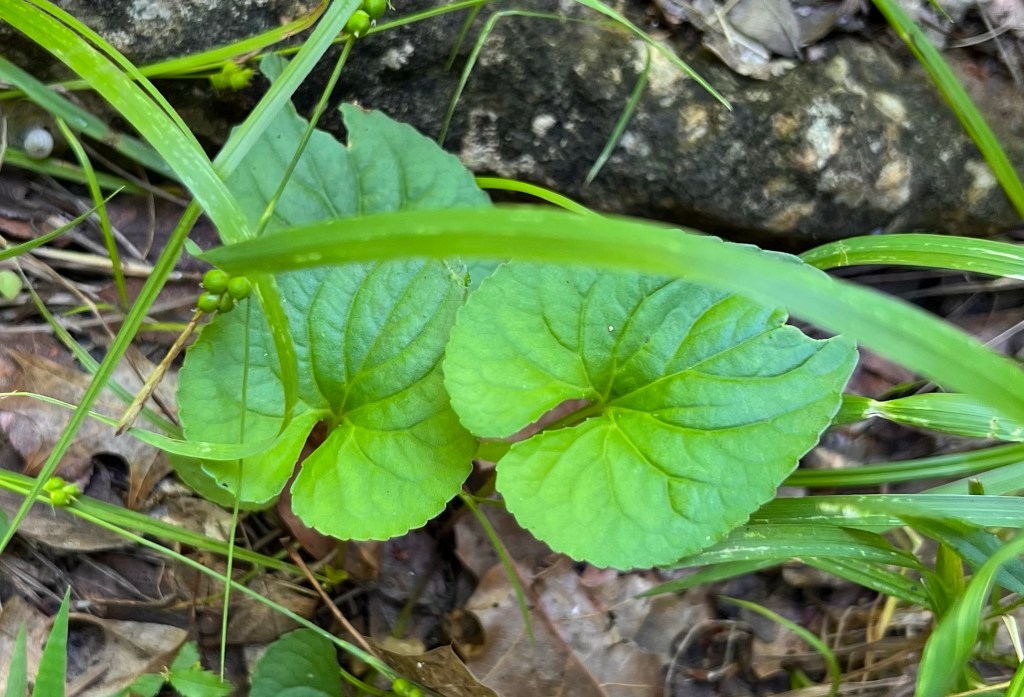
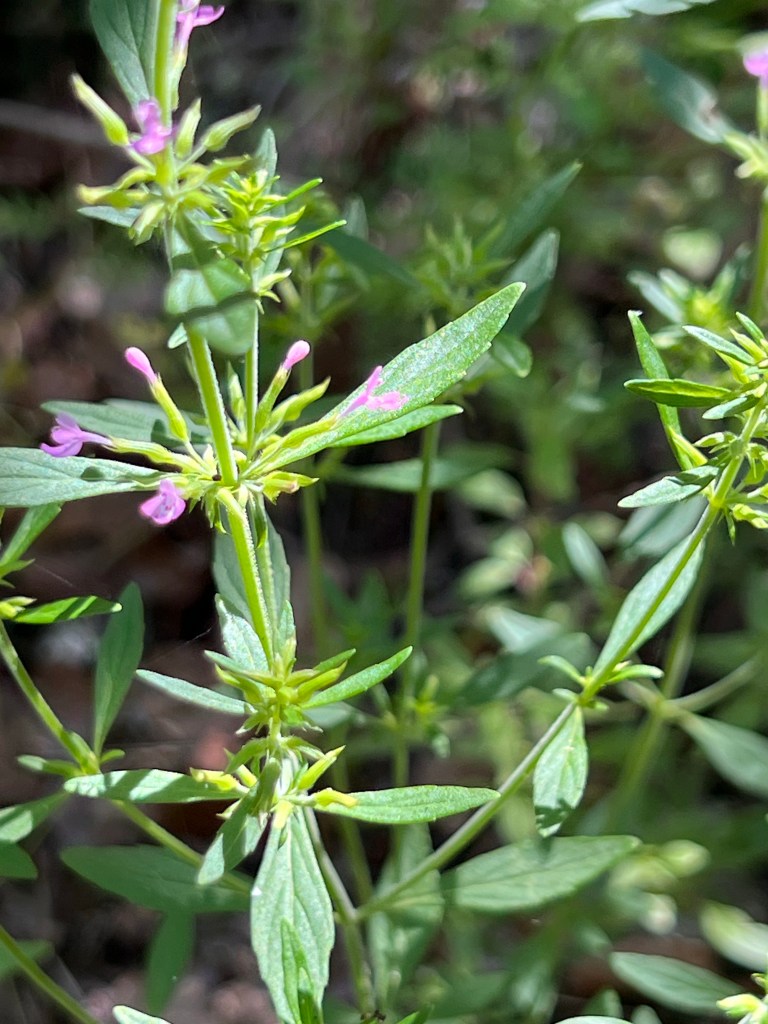
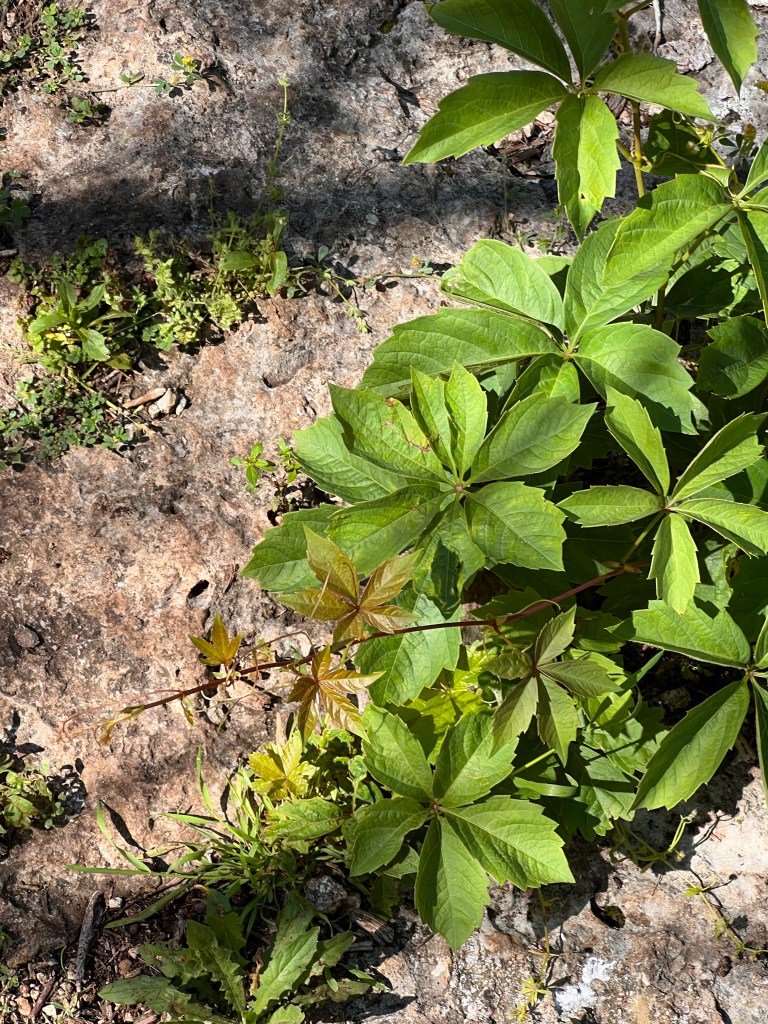
Checking for hairy leavesSpongy apple oak gallA violetINat says it’s a nasturtium?Slender hedeoma Canadian garlicEndemic to Texas 7-leaved creeper (Parthenocissus heptaphylla)Yellow passionflower
Everyone was pretty tired after we got back, but since I was driving, I forced my passengers to wait while we parked in the trail head for the walk through the meadow that my husband and I had walked last December.
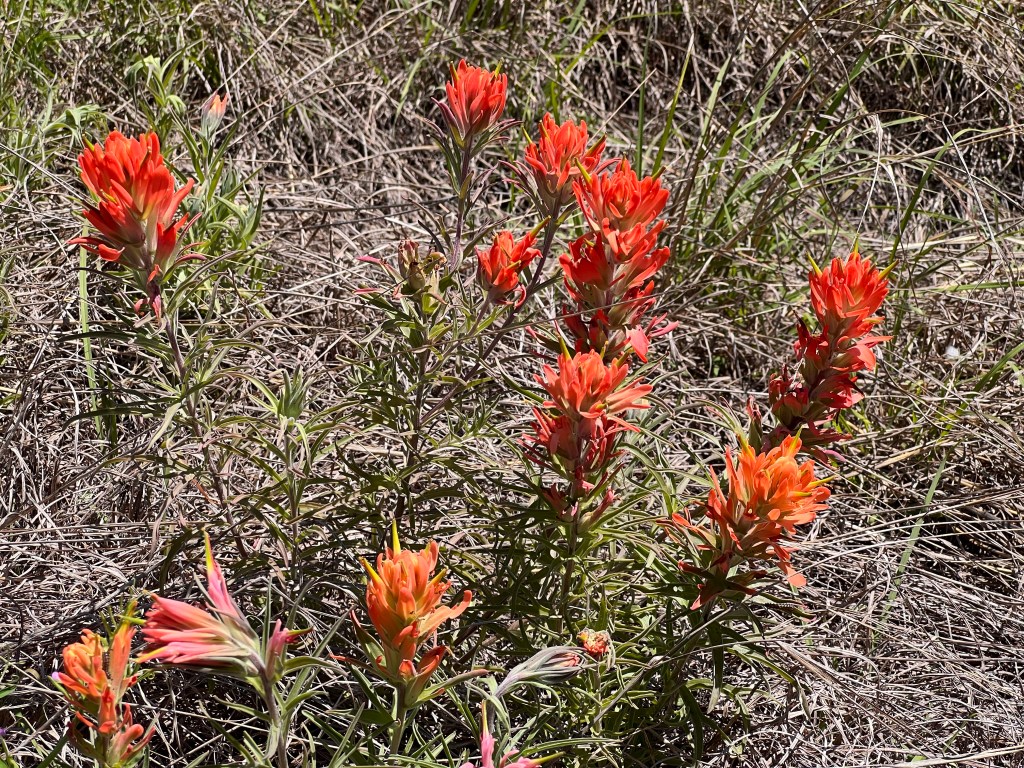
I wanted to see things that weren’t woodland plants, like Lindheimer paintbrush
We didn’t want to make them sit forever, so Linda Jo and I didn’t walk on the actual trail. We got all distracted by a sunny area surrounded by Ashe junipers. It looked like dismal scrub. But NO! It was filled with interesting and rare plants!
And pretty plants, like cobaea beard tongue
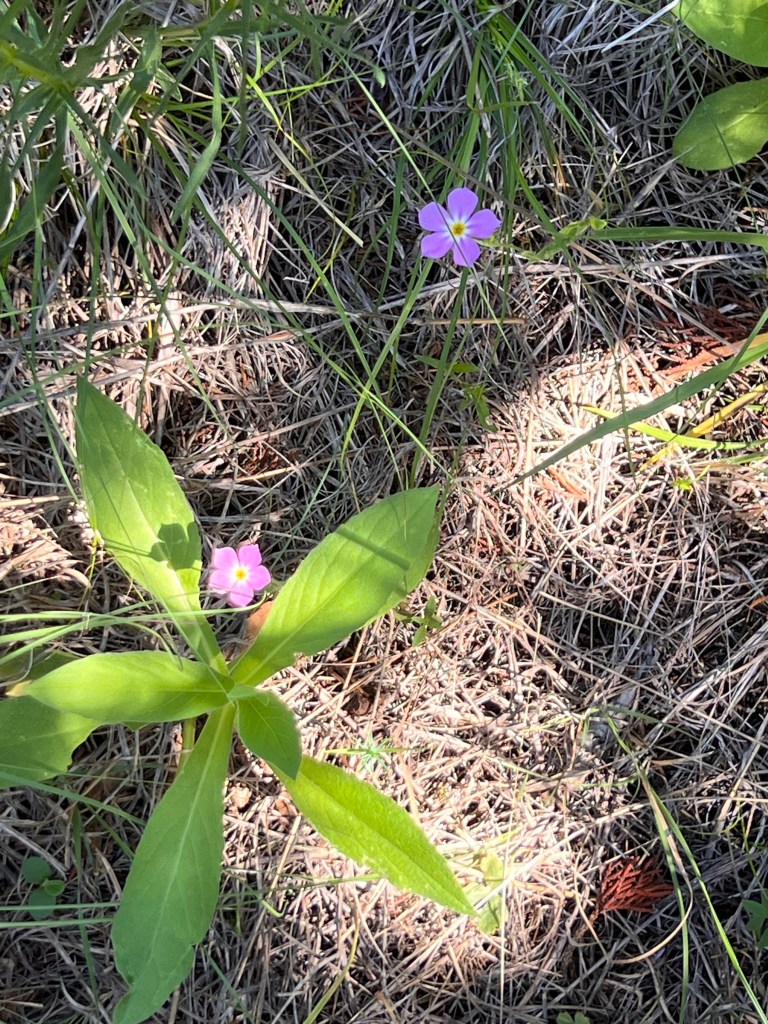
I was particularly excited to find a star milk vine. What beautiful, tiny flowers it has. The one Linda Jo was most excited about was a golden-eyed phlox, which is endemic to Texas. The other chapter members said they could hear us whooping when we found yet another interesting plant in the “bare” area.
Just lovelyStar milk vineGoldeneye phlox
We ended the expedition with a nice lunch on Lake Belton. We’re very lucky to have such a fun group to do our activities with and the perfect day to do it.
PS: Sorry for the lack of Latin names for plants. I had to hurry to finish this. Then a squirrel blew out our electricity and my Internet router.




































 Nature Along the El Camino Real