Blog of the El Camino Real Chapter, Texas Master Naturalists, Milam County, Texas
Author: Sue Ann (Suna) Kendall
The person behind The Hermits' Rest blog and many others. I'm a certified Texas Master Naturalist and love the nature of Milam County. I manage technical writers in Austin, help with Hearts Homes and Hands, a personal assistance service, in Cameron, and serve on three nonprofit boards. You may know me from La Leche League, knitting, iNaturalist, or Facebook. I'm interested in ALL of you!
I have to say that I have never had any species of hummingbirds here at my house in Milam County during December, January, or February.
So why now? I have really thought about it and there are several possible reasons, but I will leave that up to the biologists to tell us. I know they are seeing this also and working on the answers.
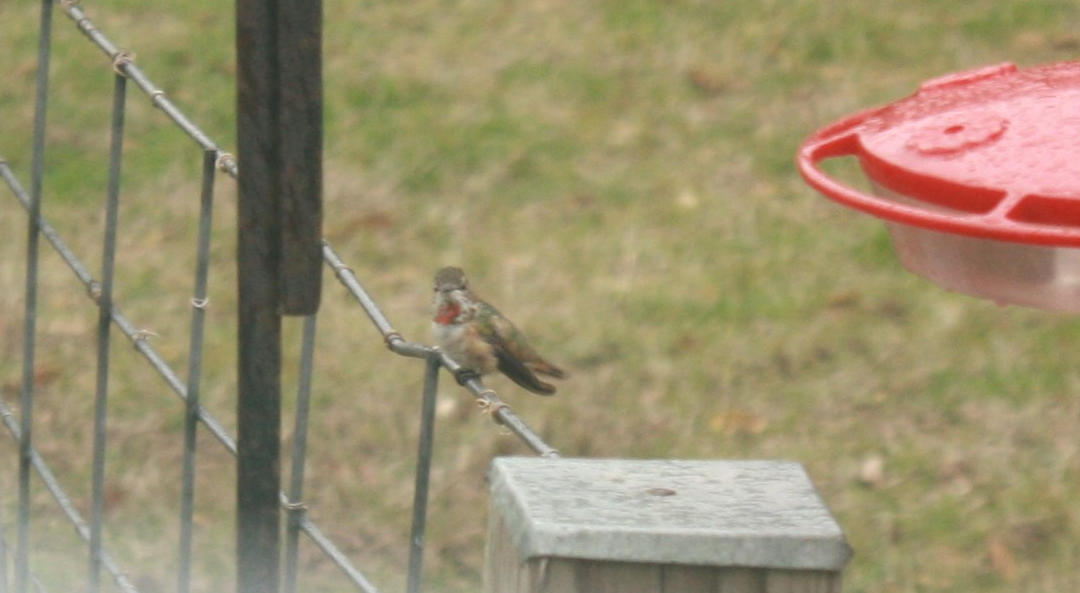
So, to get to the real news…I have about four to five hummers that have been here for months. I finally got a shot at one, and I think it’s a Rufous hummingbird.
Rufous hummingbird?
If any of you think differently, by all means tell me. It is very feeder aggressive and will not allow the others to even come near the feeder.
I did read that it is more temperature hardy than many other hummingbirds. It will need that shortly!
This small little bird has a copper coloring underpart and its sides are copper also.
Besides it, we have about 3 or 4 what I think are Black-chin juveniles or females. Once again I have not been able to get a good photo of them, but here’s a try.
Black-chinned hummingbird?
I have talked to several other birders in the area and they also have some hummers they have never seen here at this time of the year.
It pays to be observant.
So with some very severe weather soon to be upon us, here are a few tips.
This is when a little extra bird seed will assist them. There are not many insects out when it’s cold.
Adding suet near your feeders will help with the fat that helps birds stay warmer.
And last but not least water. You may have to bust some ice up for them.
All these actions are for the big birds.
For the hummers, you need to bring their feeders in at dusk and return them at dawn. They will freeze when it’s really cold.
Way back when TMN training was beginning, I heard Alan Rudd’s stories about little grasshoppers that jumped into the water to eat algae or escape with interest. Over the next year I encountered pygmy grasshoppers in just three places, locations including Taylor Park on Granger Lake on Day 1 of the Bioblitz.
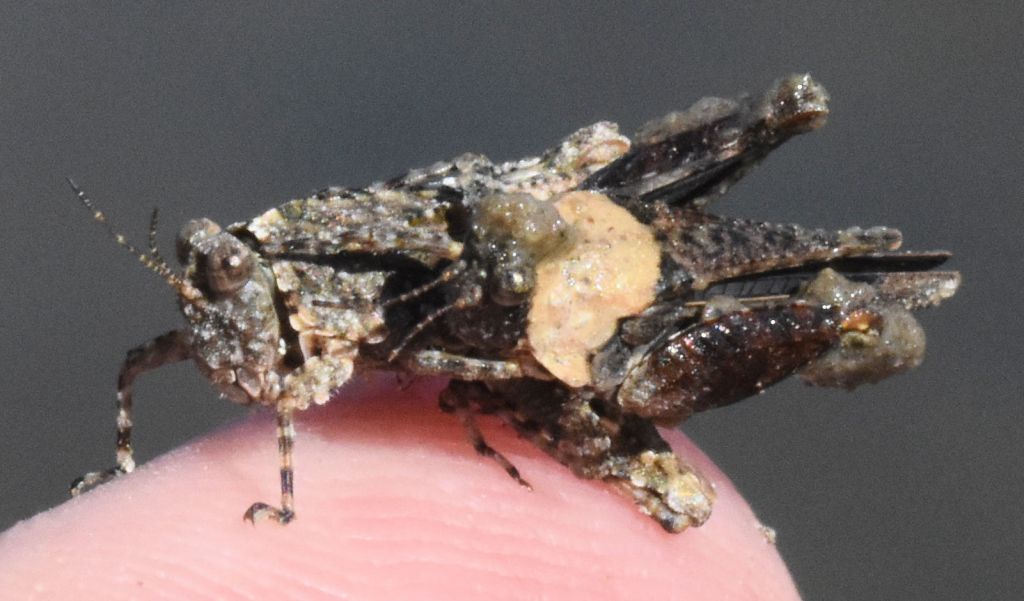
On Day 3 I encountered some again, this time at Alan Rudd’s place, where I had seen some in the fall. It seems they remain active through winter in very sheltered areas. Unbelievably I ended up with a mating pair sitting on my finger, something that isn’t likely to ever happen to me again.
Give us some privacy!
How did this happen? I saw one sitting near the water and tried to scoop in up in a container I had along for photographing Pardosa spiders. Of course, being a grasshopper it immediately jumped out as I expected, but landed upside down in wet mud, and I could see her tiny feet waving around in the air. So I offered her my finger, which she grabbed onto and was happy enough to sit there while I took as many photos as I wanted.
As I started taking photos, I realized there was more than just mud stuck to her. Eventually I realized it was an entire male grasshopper. When I finished with the camera, I put the grasshoppers back where they came from.
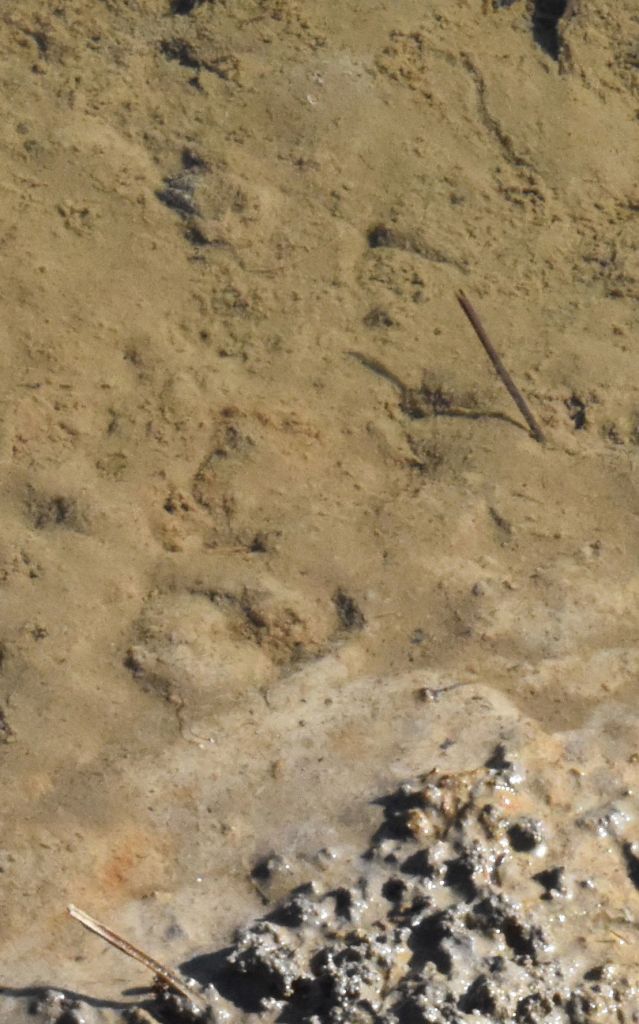
A little later I thought I saw a grasshopper jump into the water and burrow in the mud. I wasn’t sure, because little frogs were doing exactly the same thing to avoid me. I took a photo, and sure enough it was a grasshopper, proving that Alan hadn’t been exaggerating.
Something in the mud
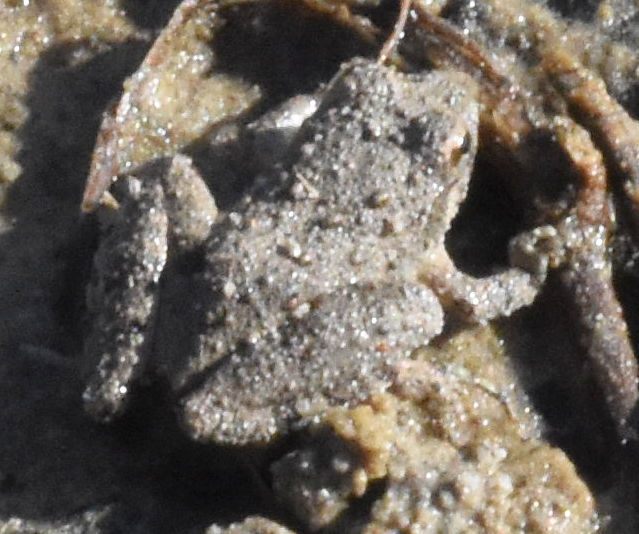
Whoops! After carefully looking at the supposed Paratettix hiding in the mud, I believe it is actually a frog, Acris blanchardi, so my underwater photo of Paratettix hasn’t happened yet. You’d think it hard not to be able to tell a grasshopper from a frog, but there you go. I’ve deleted the observation and resubmitted under Acris.
Acris blanchardi, not in the mud.
Linda Jo commented that this isn’t the first time such a mis-identification has occurred!
We will be celebrating Valentine’s Day soon and at my age that doesn’t mean a dozen roses or a box of candy from a six-foot good-looking guy! It is a time that gives me pause to think about the appreciation I feel for a group of people.
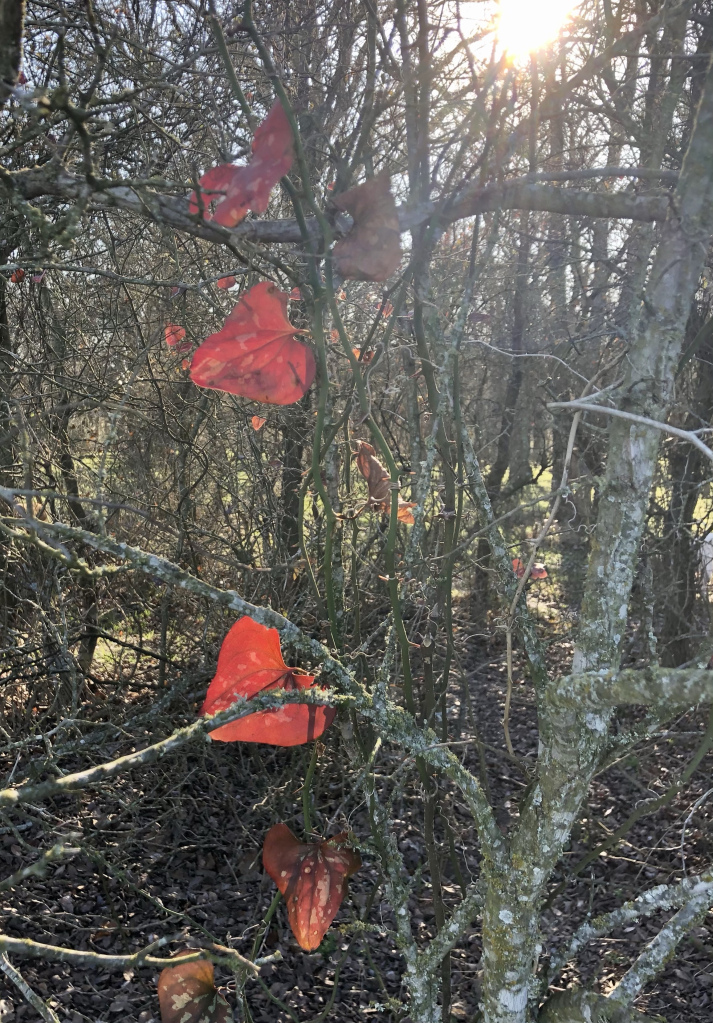
Here’s a Valentine from Sue Ann, saw greenbrier hearts in my woods.
I appreciate the value system of our Master Naturalist group. There has been due diligence in protecting us and still providing opportunities. On the state level, the Virtual Volunteer Fair was awesome, but the event impacting me the most is joining the Winter BioBlitz. Linda Jo has been such a supporter for all of us in participating in iNaturalist, but I always found an excuse.
Excuses including: I need a new iPhone, more books, more expertise…
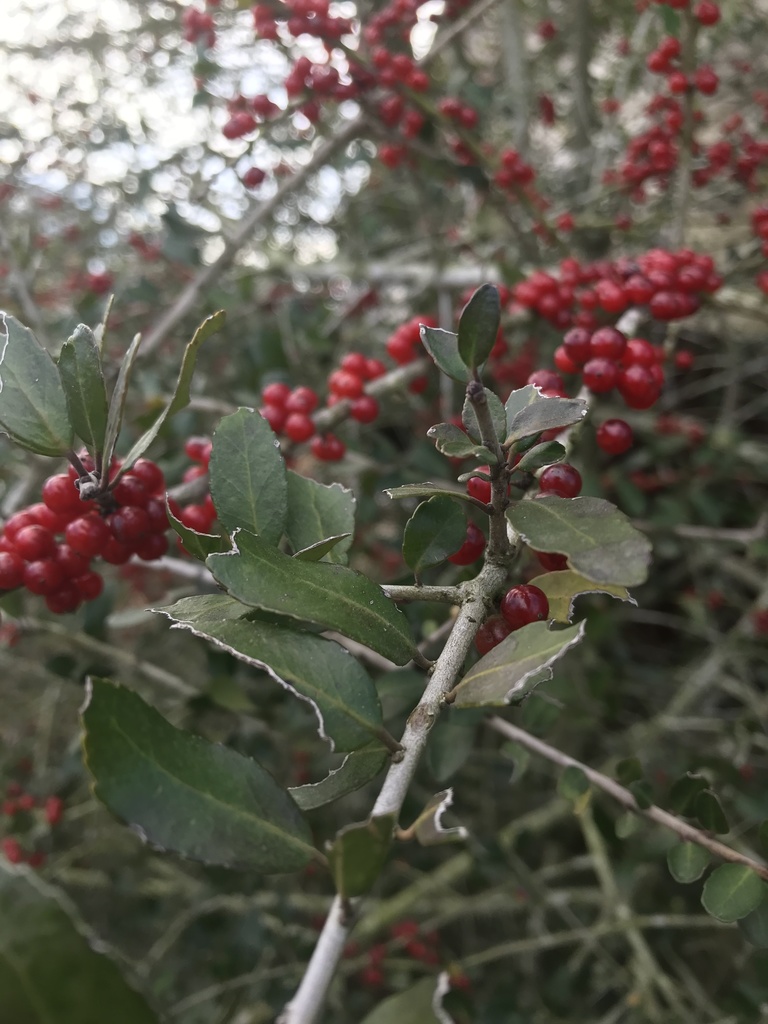
First time out I came back with my photographs and spent hours pouring over plant identification references. I don’t regret the time spent, but it was overkill when you have Linda Jo checking your work! I ended up with three research-quality entries (my yaupon holly is shown below), and you would have thought I had just gotten a gold star on my research paper. ( Please do not ask me about lichens or mosses though.) I encourage anyone hesitating to take the big step, take it!
So, to all of you that have worked so hard to keep us active, safe and appreciated, thank you and Happy Valentine’s Day!
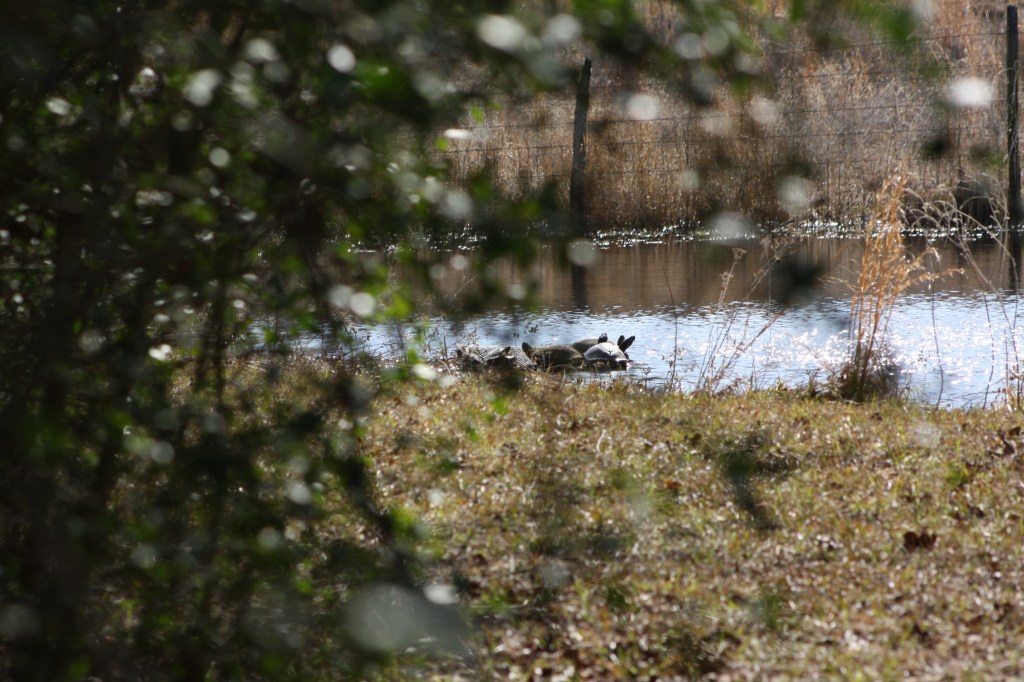
If you have ever tried to photograph our common pond turtle the, Red-eared Slider, you know how hard it is. The minute they see you, hear you, or even get a vibration, they jump into the water. So you never really get a good look at them up close.
It took days for me to sneak up on these guys down at our pond.
I think I hear Donna! Get ready to jump!
I also think my local crows call out to them that I am coming..
Red-eared sliders like muddy bottoms and slow moving water. These are the turtles that pet stores used to sell a lot of, which is not a happy thing for the turtle. They are wild and need to be out somewhere in a pond, in my opinion.
I built a turtle dock a few years ago for them to bask on. Rotten trees tend to eventually go down into the pond, filling it up with debris. As long as they can climb up onto the dock they are happy.
Investigating the Granger Lake area is something I’ve been meaning to do for more than two years. There are over a dozen access points, so this was no small task, and I still had several to go when I stopped for the day. Although it was warm, few animals were stirring and it wasn’t until the fourth stop that I found anything noteworthy. That was the area called eOSR 3, which I suspect refers to further information on-line.
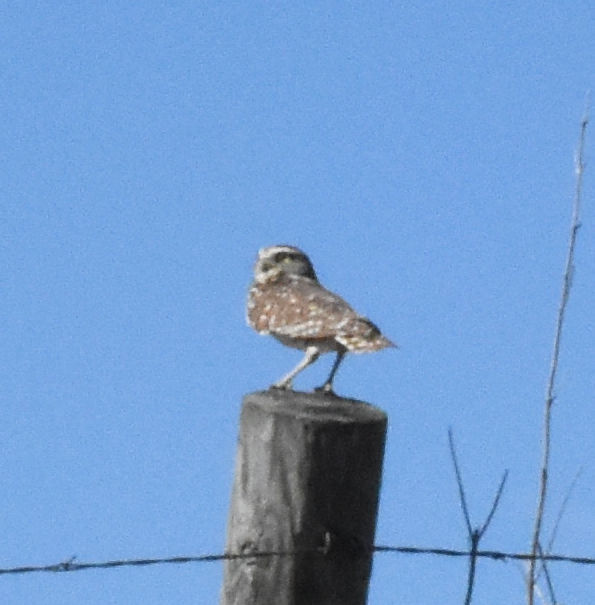
Burrowing owl
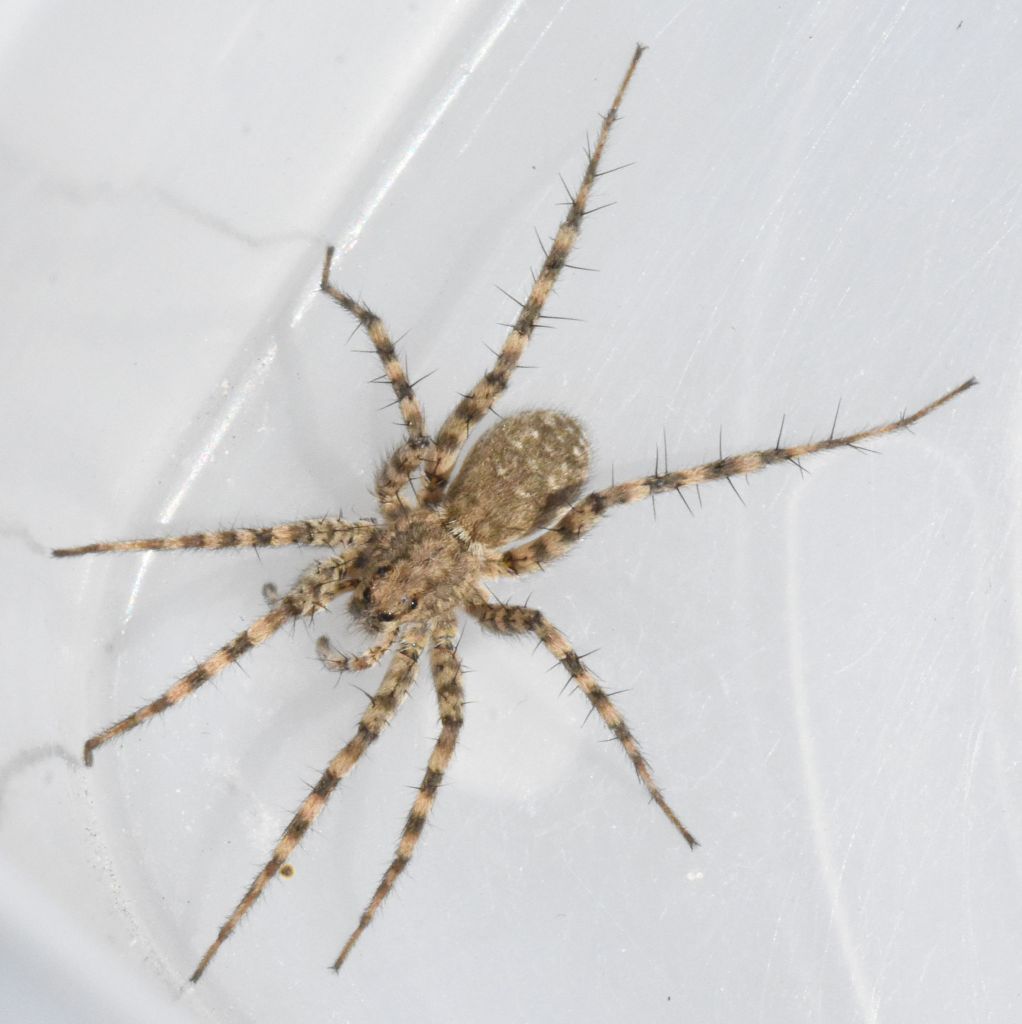
As I approached the parking area on CR 349, the road crossed a mostly dry deep ditch with a pebbly bottom. I immediately thought I might find some Stone Spiders (Pardosa lapidicina) there. I had recently encountered all four Pardosa species in the milvina group over in Burleson County and that left just four more Pardosa species to find in this area. It was my lucky day, because nature was unusually predictable. Nature even gave me a bonus as a Burrowing Owl flew up and sat on a fence post as I picked my way down into the ditch.
End of the story with the Stone Spiders? Not quite. After I got home I looked up photos of Pardosa lapidicina on iNat and BugGuide, and mine didn’t look sufficiently identical. There are three Pardosa spiders in the lapidicina group in the area, so I figured it must be one of the other two. After consulting a few scientific papers, I’ve tentatively identified mine as P. vadosa, first described in 1959, for which there are no living spider photos on-line. I’ve asked for expert help and await a reply. Reading between the lines a little, the western edge of vadosa range may coincide with the western edge of the Blackland Prairie. Father west, mercurialis takes over.
Here’s one of the Pardosas, perhaps a vardosa!
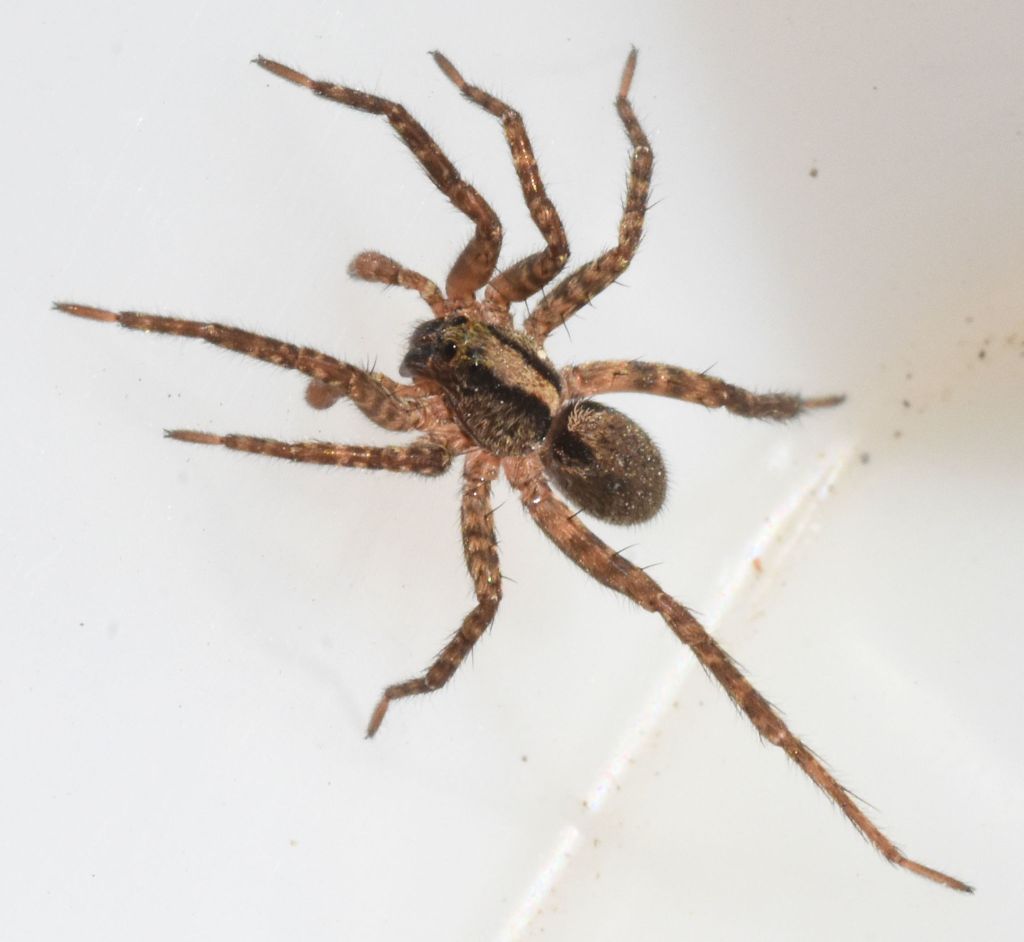
In more spider news, I’ve been finding these Trochosa sepulchralis in a small part of ditch on CR 418 adjacent to woodland. These are my most recent of eight observations and include a male and a female. Identification is difficult, but at least there are fairly recent papers on them. Camptocosa, Trochosa, and Varacosa each include similar species. The differences are subtle, so I’m not sure if I got it right. Not sure if these are adults yet, but they appear to be close. Incidentally, this species was first described from Philadelphia PA where I was born.
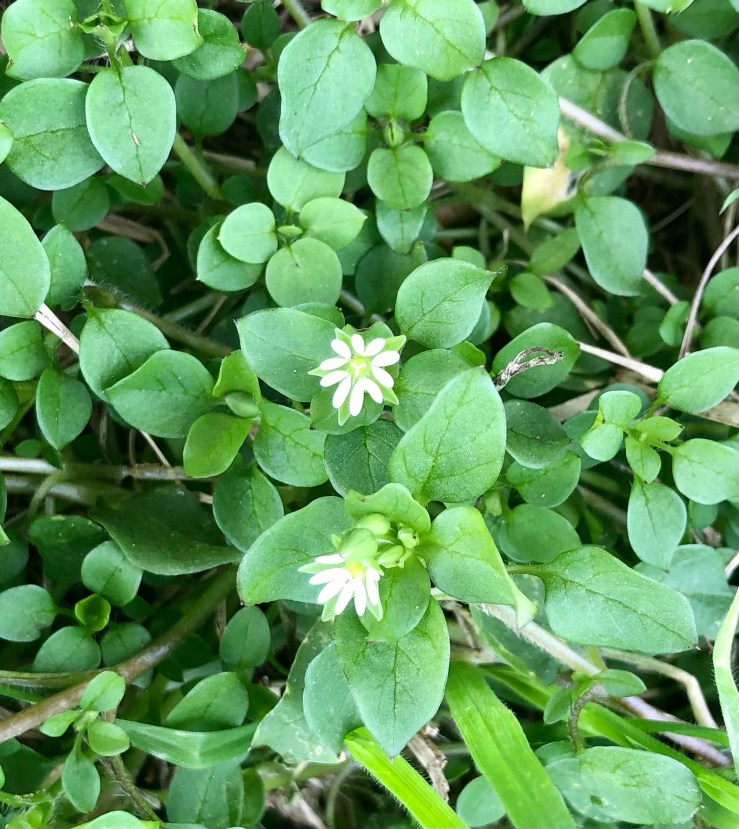
My report is nowhere near as fascinating as Eric’s, mainly because I only saw two insects other than fire ants, and they were too fast for me. I did get some nice photos of tiny flowers, and spent a lot of time puzzling over grasses, including once when I accidentally said a bunch grass was Bermuda grass. I’m sure that made Linda Jo laugh.
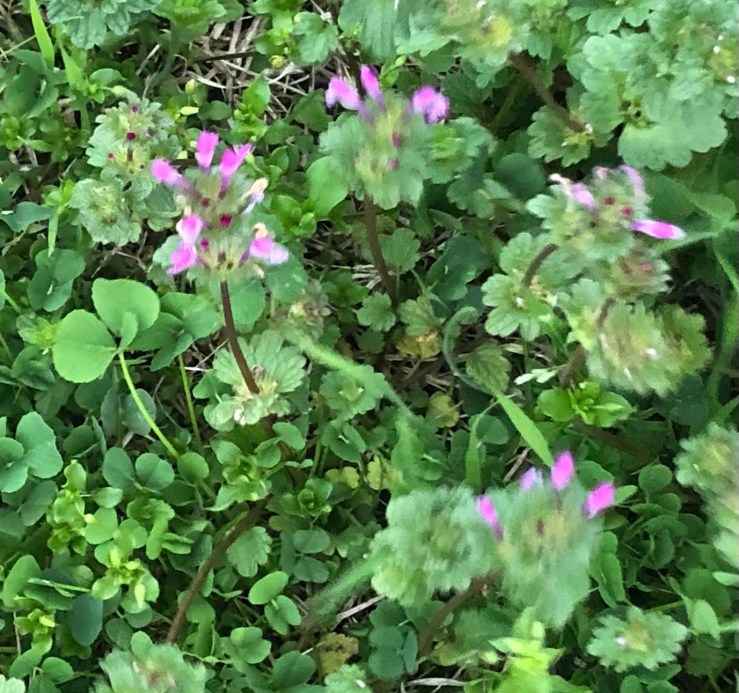
But it was a beautiful day, so I enjoyed seeing what there was lots of and what’s just poking out of the ground. There is lots of henbit deadnettle, that’s for sure. I’m enjoying seeing it cover whole fields, even if that bothers farmers.
I went a little overboard and made 72 observations, but was pleased to see that put me over 2,000 iNaturalist observations. And I sure know what’s growing around my property in early February now! I had a blast!
Common dandelion
False dandelion
A very thick poison ivy vine
Burr clover, maybe
Common chicory
Henbit deadnettle, in the wind
Field madder
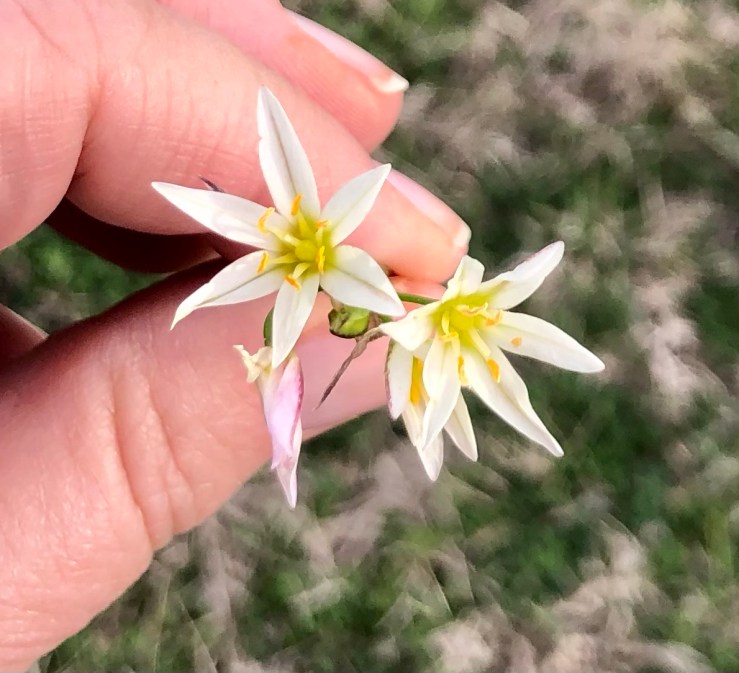
Crow poison
One of many grasses. Winter rye?
Stuff Sue Ann saw
Other Folks
I do want to point out that other members of our Chapter have made fun observations, too. Marian, Linda Jo, and Carolyn also got out and checked out their surroundings. Please go to the project page to keep track of our activities, and let Linda Jo know if you would like to participate! Just because it’s a bit chillier doesn’t mean it won’t be fun to get outside. My phoebes are certainly goading me!
Stats as of this morning. I promise to not report so many the rest of the week.








 Nature Along the El Camino Real