Blog of the El Camino Real Chapter, Texas Master Naturalists, Milam County, Texas
Author: Sue Ann (Suna) Kendall
The person behind The Hermits' Rest blog and many others. I'm a certified Texas Master Naturalist and love the nature of Milam County. I manage technical writers in Austin, help with Hearts Homes and Hands, a personal assistance service, in Cameron, and serve on three nonprofit boards. You may know me from La Leche League, knitting, iNaturalist, or Facebook. I'm interested in ALL of you!
On Christmas Eve I walked around outside after we had three inches of rain during the night. I wanted to see what everything looked like. The sun was out.
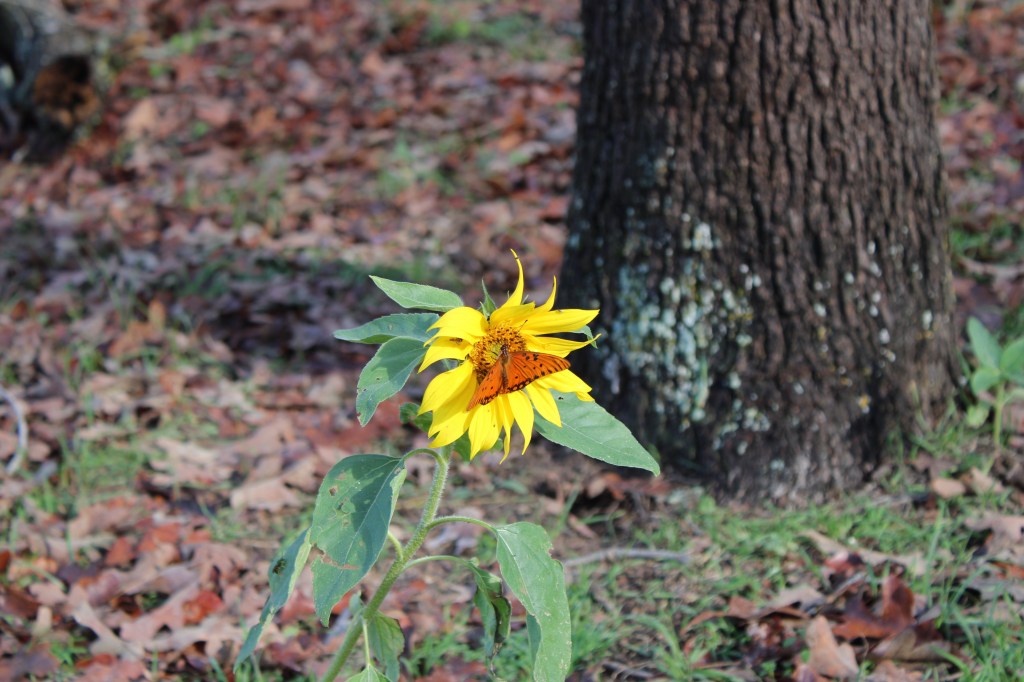
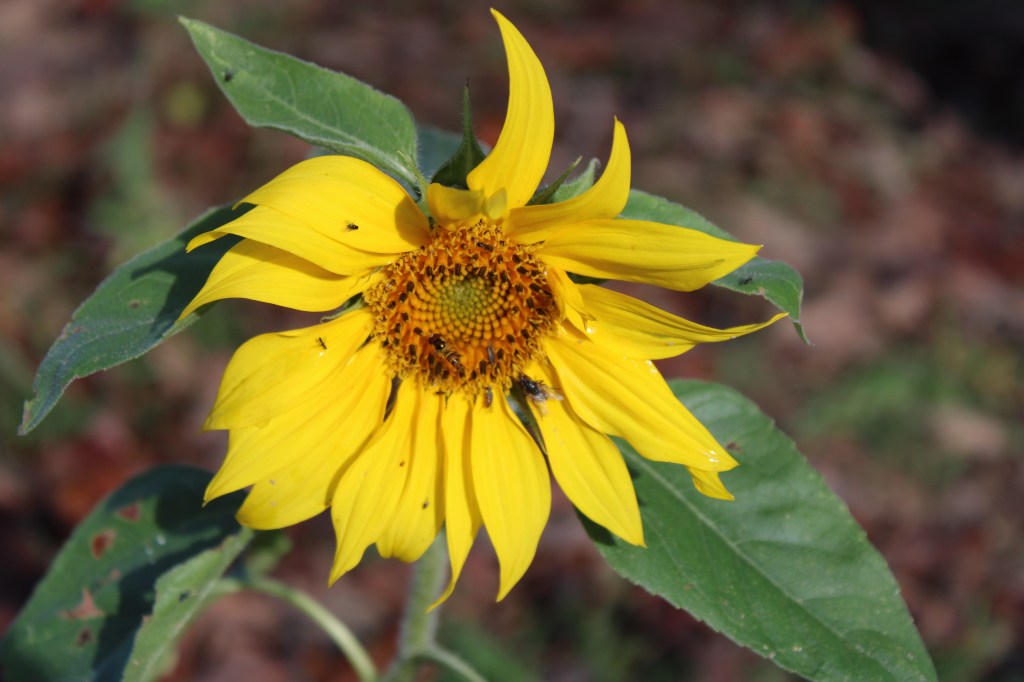
I found a little Black Oil Sunflower blooming that had been dropped by a bird. It was right beside one of my bird feeders. Nothing else blooming but that little flower.
Of course, the warm weather and rain has made many Gulf Coast Fritillaries wake up from their winter nap too early. But this one little flower held the hope of a much-needed sip of nectar.
The flies and bees were also trying to be first in line for a drink. I wish I had more for them.
Maybe they will be lucky and find more flowers in the fields around our home.
It is always amazing to see nature at work. Who are you gardening for?
Last Thursday at our regular Chapter Meeting, we enjoyed our annual celebration of the holidays, but it ended up more of a celebration of each other. The setting was one of the beautifully renovated buildings in downtown Cameron. Many attendees reminisced about shopping in the building when it was JC Penney – one of us even worked there as a teen. Well, it’s a beautiful event venue now!
Our new signs drew people in
Attendees enjoyed a beautiful charcuterie selection and delicious beverages before sitting down to a truly delightful meal prepared by Hot Corners Catering here in town. Barbara does great work! Our members decorated the place beautifully, as well, so it was quite a treat for the 45 members and friends at the event.
Sign-in table, gifts, and charcuterie!
After the meal we held our chapter meeting that included year-end reports from all the officers and committee chairs and welcomes to the new chairs. I was surprised during the iNaturalist cheerleader report by Linda Jo Conn, to get a nice certificate for doing WAY better than I’d expected at the Pollinator BioBlitz in October. I didn’t think anyone had noticed but me, but Linda Jo sees all.
Lisa relished her final reportPatsy looks forward to replacing Lisa for membershipDon tells us thanks to all who are taking over for himJanice reminded us to send in news itemsLinda Jo tells us how important iNat isI was really surprised
There were some very touching reports from outgoing officers, such as Don Travis, who has been the Communications Chair since our chapter started out. We sure appreciate his work on the amazing chapter website. All the outgoing chairs got certificates of appreciation.
Of course there were members to celebrate, as we have had 36 members recertify this year, the most in recent memory.
Members who recertified or achieved milestones this month
Then came a real surprise for everyone, when our President, Carolyn, and our incoming Training Class coordinator, Alan, started running through which attendees had held Chapter offices in the past. It turns out that they had decided (on their own, by the way) to hand out special pins for service to El Camino Real Master Naturalist. How about that? When my friend Phyllis and I realized we were about to get bald eagle pins, we knew what we had to do and we FLEW up to the presenters (at least in our minds). That’s what former Chapter Presidents do, you see.
Fly, eagles, fly
Other people who had served as officers and committee chairs in the past got different beautiful bird pins, too. It was fun to watch them come up and to see how many of us had served the chapter as officers and committee chairs. Some of the pins weren’t birds, but rather were animals that fit with what service they provided. I especially enjoyed that our frequent blogger, Donna Lewis, got a purple martin pin. That’s well deserved! And our resident spider expert, Eric Neubauer, got a tarantula, which was as close as they could come to a wolf spider.
They couldn’t get us Presidents and former Presidents to hold stillVice PresidentsSecretariesAdvanced Training coordinatorsHospitality chairsTreasurerDonna and her martinEric and his spider
As if all that wasn’t enough fun, we finished out the evening with our traditional Yankee Swap gift exchange. The usual plethora of bird feeders, bird baths, and bird houses were exchanged, along with other nature-themed gifts. Everyone seemed pretty happy with what they ended up with, even the funny gifts (after all, it’s supposed to be a white elephant exchange). I am afraid I got zero photos of the gifts, because I was tired from popping up and down to take photos earlier. So, you’ll just have to take my word for it. I’ll show you the gift I ended up with, which will turn into a butterfly feeder. The peace dove ornament came with it, and I love it best of all.
It will hang or stand (or sit on the ground)Yes, this IS my tree this year
We look forward to all the activities we’re doing next year, and hope you come along with us as we explore the nature of Milam County, Texas in all its glory.
Hello all! As usual, I walked around this week looking at nature on our property. I was in our small, wooded area looking for tracks of various animals. I noticed small bits of leaves moving. Upon closer inspection I saw that the leaves were being carried by Leaf Cutter Ants. I watched them for a while because they were so interesting and amazing.
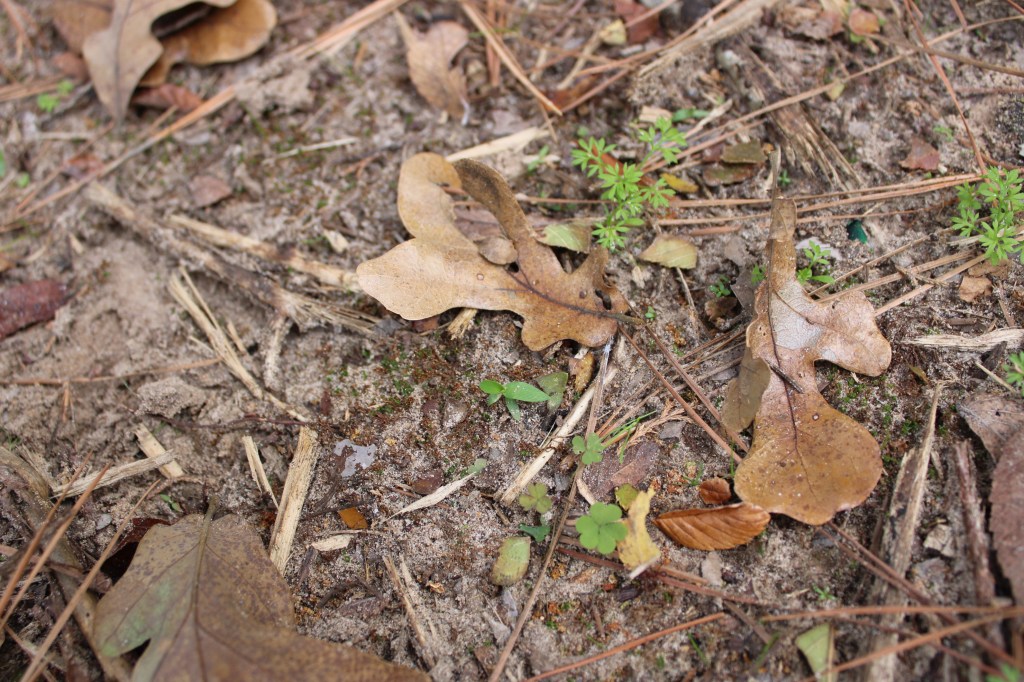
Can you spot the ants?
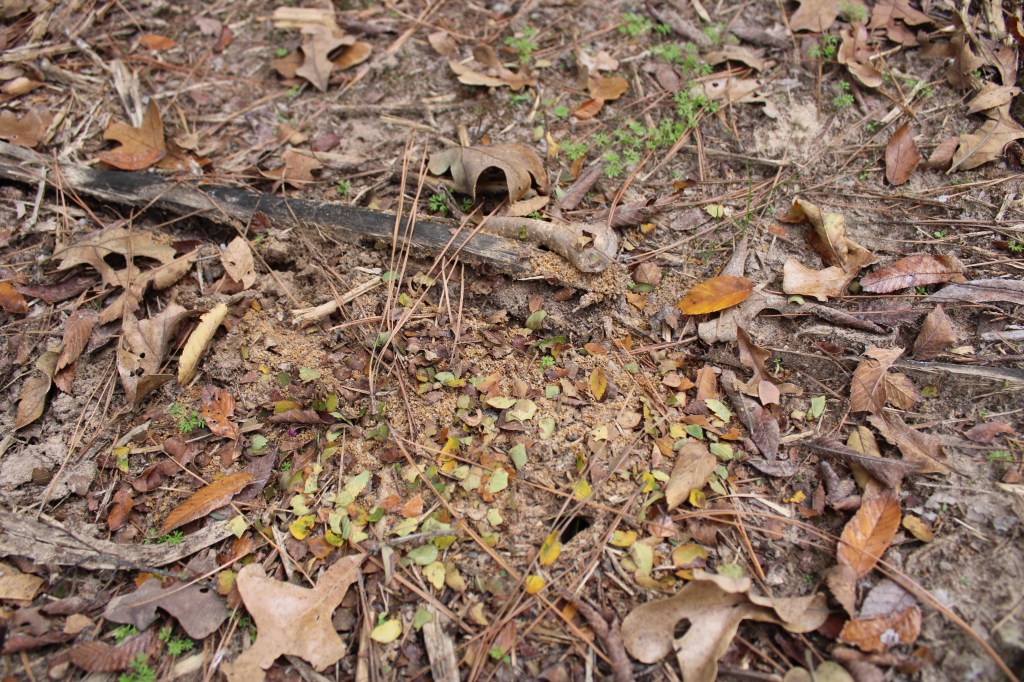
You have to be paying attention to notice such activity.
These ants are one of the strongest living things for their size. There are about 40 different species of them. The members in the colony who are responsible for actually cutting the leaves have jaws like chainsaws!
How about here?
Each ant can carry up to 50 times its own body weight. I’d say that’s Olympic medal weight lifting. Their colonies are huge. Each one can house up to 10 million ants.
Another interesting fact is that the ants do not eat the leaves. They make a fungus from them and eat the fungus. Pretty amazing.
These little animals are not too popular with farmers. They strip leaves from plants humans like. But you have to give it to them, they are very resourceful.






 Nature Along the El Camino Real