Blog of the El Camino Real Chapter, Texas Master Naturalists, Milam County, Texas
Author: Sue Ann (Suna) Kendall
The person behind The Hermits' Rest blog and many others. I'm a certified Texas Master Naturalist and love the nature of Milam County. I manage technical writers in Austin, help with Hearts Homes and Hands, a personal assistance service, in Cameron, and serve on three nonprofit boards. You may know me from La Leche League, knitting, iNaturalist, or Facebook. I'm interested in ALL of you!
This summer hasn’t been as bad in the heat and rain department as last summer, so I’m not complaining one bit. But there sure have been some interesting developments in the sky, many directly over my head.
Some overhead things are cool, like this Red-tailed Hawk I got to listen to yesterday.
I’ll start with the most interesting one. For the past week or two I’d been noticing a lot of honeybees around my legs. It seemed like the earth was buzzing. Upon closer examination, I saw dozens of bees crawling on the tiny blossoms of the grass (I think it’s Dallis grass) that is blooming now. The bees were all very busy, zipping from flower to flower (not leisurely sipping as they usually do), and they were loaded with pollen.
My lame attempts at photographing zippy bees.
This went on for a few days. Yesterday, there was no buzzing as I walked along the field in my daily bird-watching patrol. Then, late in the afternoon I was over by the trees listening to a Yellow-billed Cuckoo when I heard something that sounded like one of those annoying drones people fly these days. I looked up and didn’t see a drone. I saw a large mass of tiny things moving along at a rapid clip. It was hundreds and hundreds of bees swarming. I guess they were moving on to better pastures. I’m not sure where their hive was before, because I hadn’t heard one in a couple of years. I hope they find a nice new dead tree!
FAKE NEWS! The blog software generated this image when I asked for “swarm of flying bees.” I don’t think they actually swarm in a giant ball.
Moving along, I’ve also been dealing with birds overhead, specifically the beautiful but omnipresent Barn Swallows. Now, normally they hang out on our porches, building mud nests, raising babies and pooping. They also eat numerous insects, so they get to stay (also it’s ILLEGAL to mess with a nest of wild birds; you can ask Mike Mitchell about it if you don’t believe me). We coexist just fine, looking into or out of the windows at each other, and enjoying the swimming pool area.
Swallows on the pond.
However, lately, the little darlings have not been at all happy with me. They aren’t nesting anymore, just flying around the ponds and in the air catching food. They are always there, and for some reason they resent my presence. When I go for my morning or afternoon walks, I often hear a very loud CHIRP, with a Doppler effect as the chirper moves away. The swallows ambush me from behind, for the most part, but occasionally they fly right at me and veer off just before they make contact with my head.
There are so many!
I have absolutely no clue as to why they are dive-bombing me. I’ve had Mockingbirds and Red-winged Blackbirds do this when they are nesting nearby. But, hey, do they think I want to home in on their mosquitos?
Creepy? Why, yes, it is. Never trust AI to draw an insect. Or a horse. They always have five legs.
Other things in the sky have been more benign. I was a bit surprised to see both Black and Turkey Vultures in the air and in my trees until I realized the Mighty Hunter (Goldie the Great Dane) had eliminated yet another armadillo that had wandered into the fenced-in area. I wish they’d read my signs that say “Armadillos and Possums: Keep out! Killer Dog! This means YOU!”
All real vultures in real trees and the real sky. Left is Black Vulture looking like it’s skulking, middle are Turkey Vultures pretending to be Christmas ornaments.
Other flying friends include the usual Green Herons, Great Blue Herons, and Great Egrets, along with some hardy butterflies and a smaller-than-usual number of dragonflies. I’m going to pretend the flying Differential grasshoppers don’t exist.
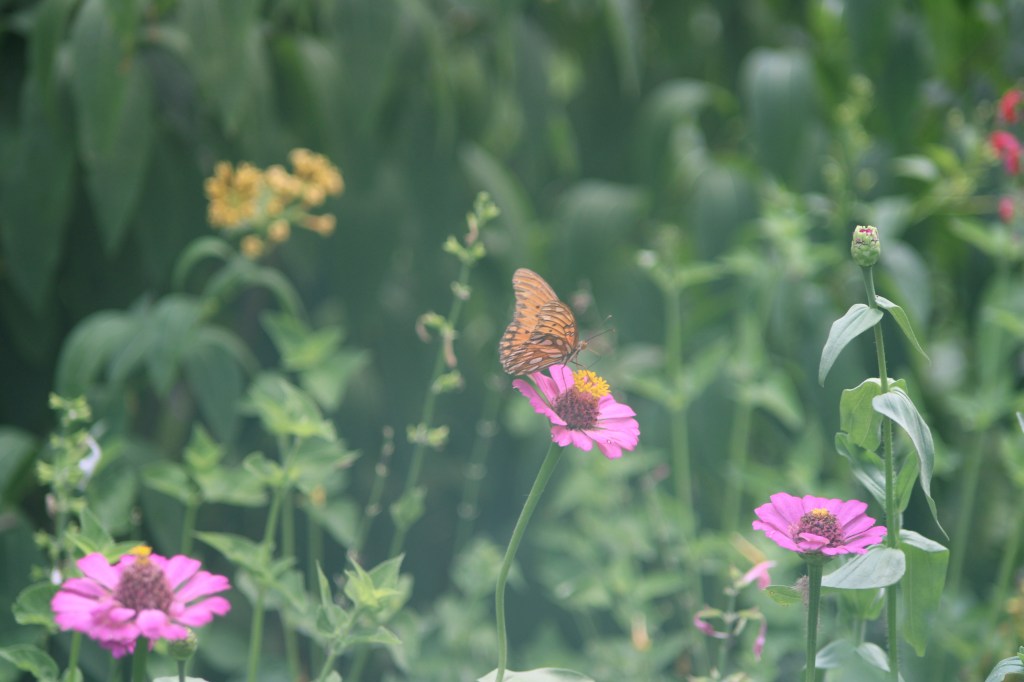
Great EgretFemale Roseate SkimmerVariegated Fritillary
Yep, the skies around here are busy. Always look up in case bees or swallows are coming for you!
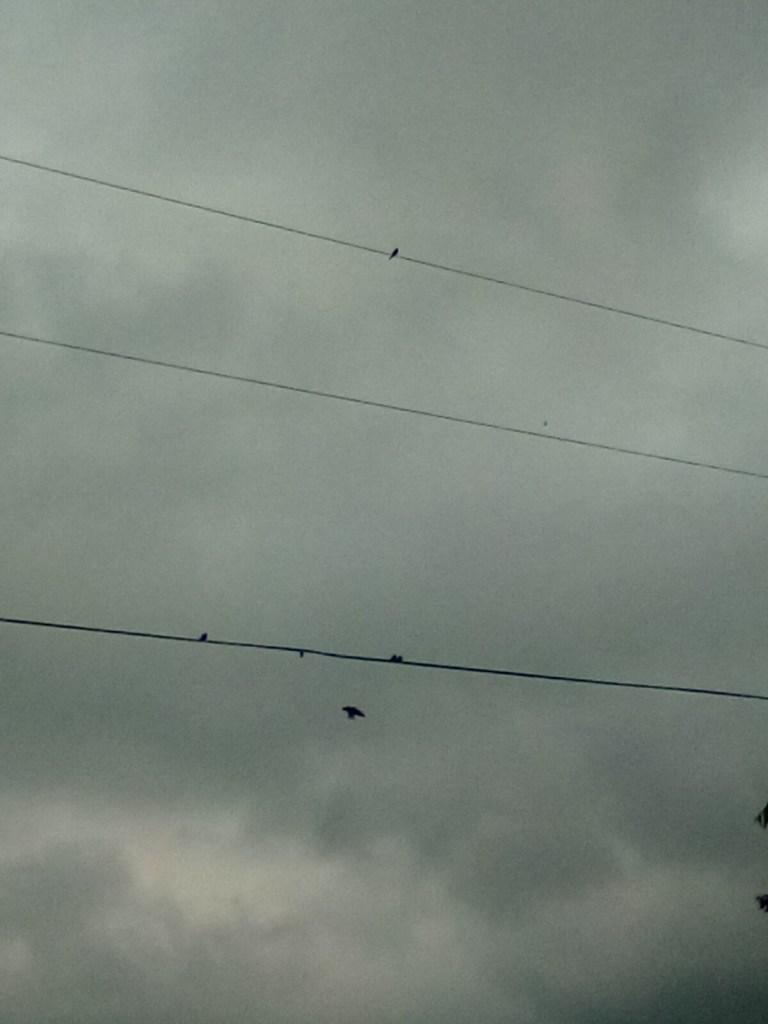
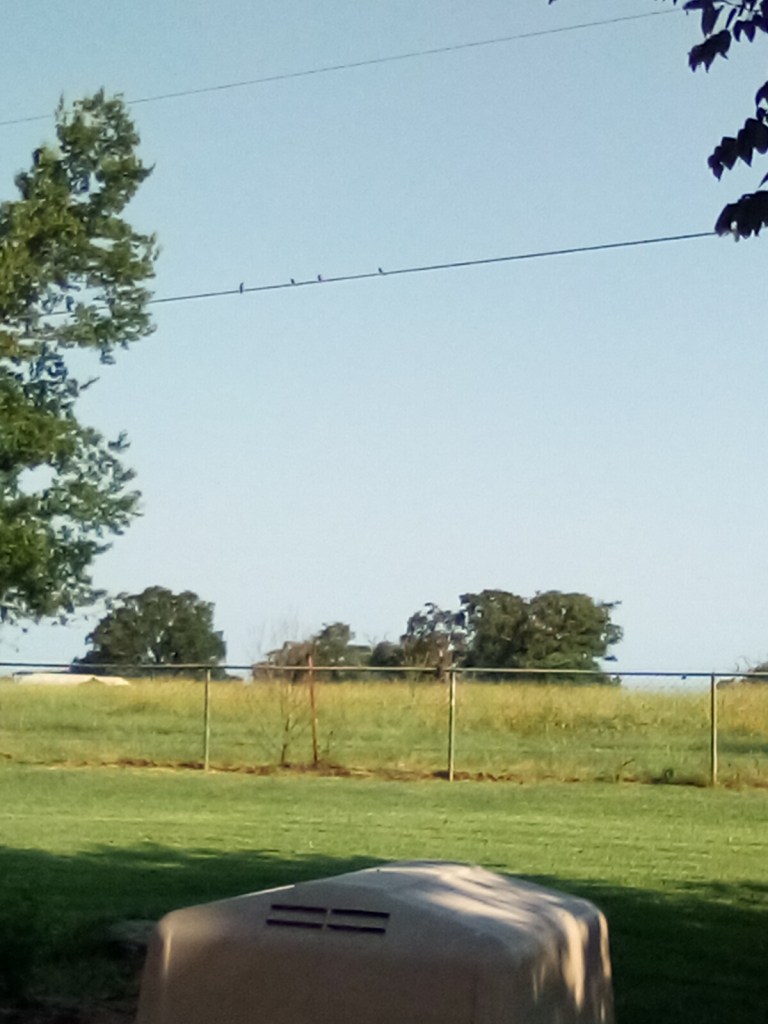
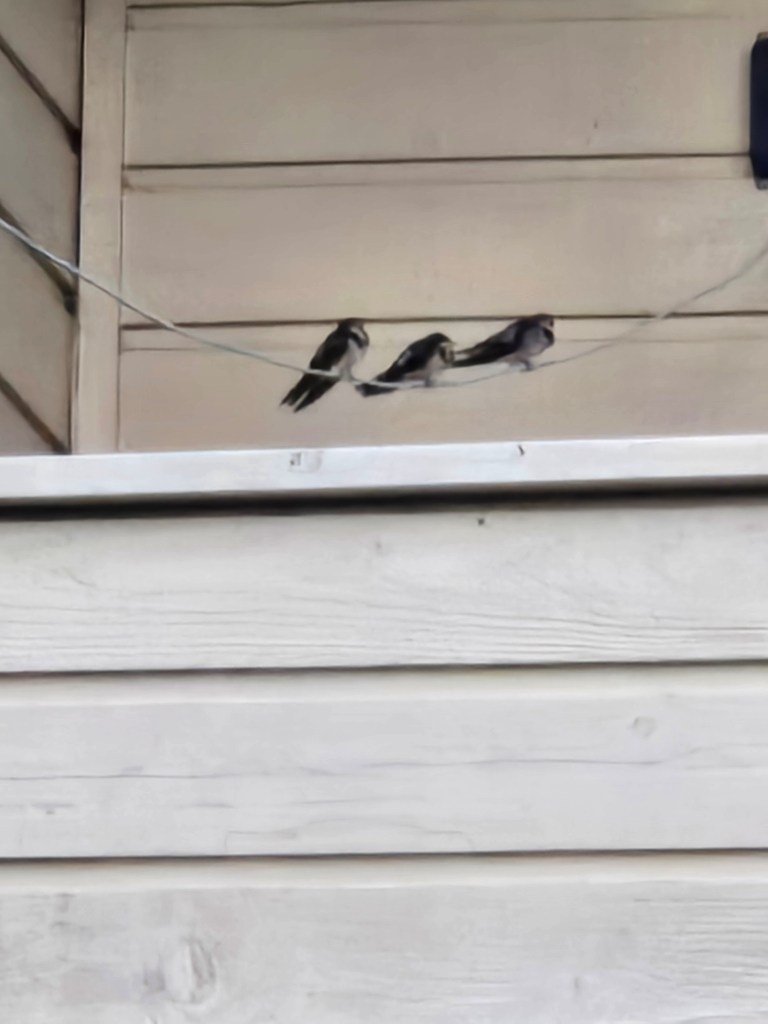
I decided to let Barn Swallows build another nest on the upper deck of my house this year. One group of three successfully flew away and stuck around as seen in the pictures of them on the power ines. We were hoping we could clean the deck as it also holds my daughter’s mini greenhouse and a seating area.
Mom had her second batch in a few days as seen in up close pics. We hope to install a swallow nesting structure, but nothing will be safer than where they are. We did add a fan that blows air under the nest.
Mom and Dad fed the first bunch on the power lines until they began to fly out to meet the parents and take the food. Then they hunted for short periods low to the ground and one day they flew away to find, I believe, the nearby pond. They are back now with their parents overlooking the siblings and the new colony.
I caught this beautiful male Tiger Swallowtail this afternoon while it was drinking nectar from a Zinnia.
I love this butterfly. The male is yellow, while the females can sometimes be black.
You can see the stripes on the wings, which look like those on tigers. They are very large and easy to see and photograph. They look like they float in the air while trying to land. But other times they are very fast and hard to keep up with.
Pipevine Swallowtail*
Mexican Silverspot (iNat suggestion)*
I have a lot of Purple Coneflowers and Zinnias in the garden, which are favorites of this species.
Purple Coneflowers
Their eggs are hard to find. The egg is green and round which blends in with the leaves of sweet bay magnolia and tulip poplar trees. The eggs are generally high up at the top of the tree.
There are also Fritillaries, Sulphurs, Pipevine Swallowtails, and Eastern Black Swallowtails in the pasture. I was too slow to get clear photos of them.
Lots to look at as always.
Butterfly identification from iNaturalist and not guaranteed accurate. Suggestions welcome.
My first adult incognita of the year. Like birds, wolf spider males are often more eye catching than the females. In the case of this species, this means a bolder pattern with greater contrasts like this one here.
Males mature ahead of the females, but I think I also observed a female with only one molt to go which means they’ll start maturing soon too.
I’m just learning how to recognize females as they approach maturity. At present I’m assuming that if they’re big enough to be recognizably male and they aren’t, then they must be females.
The timing appears to simultaneous across its range, with recent observations from Oklahoma, Kansas, and for the first time ever, Louisiana. Even those that have been lab raised since last October are on schedule with the first male molting into an adult last week.










 Nature Along the El Camino Real