
by Sue Ann Kendall
The State Fungus of Texas is the Texas Star (or Devil’s Cigar) (Chorioactis geaster). It’s not spotted often, so wheneever you see it, it’s newsworthy. When it was spotted for a second time at Inks Lake State Park last December, it made the news all over Texas. This is just one of the articles. There’s also an article on them in this month’s Texas Coop Power magazine. So, when my neighbor Vicki sent me a photo and asked me if I’d ever seen anything like this before, my heart skipped a beat.
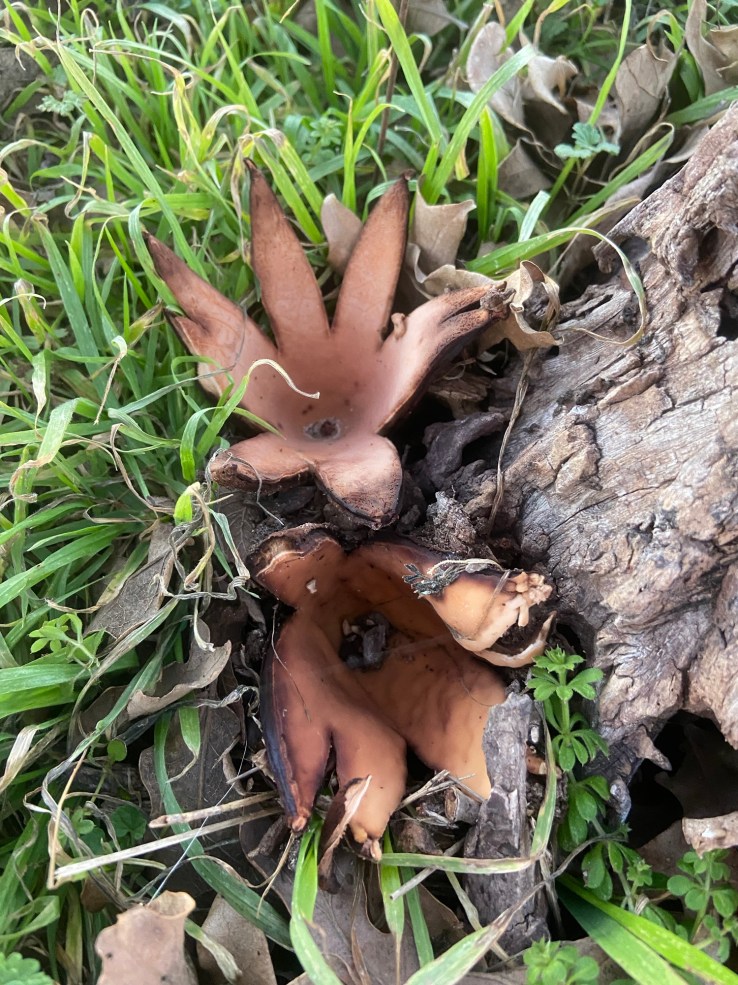
I told her it was rare and exciting. She looked it up, and we both geeked out over it for a while. The next day I went over to her property to get a look (I’d also hoped to pet her minature horse, but she was in the next pasture.) The mushroom was in a field of post oak trees, which confused me.

However, when I got closer to the spot where the Texas Star was located, conveniently flagged by Vicki, I saw it was exactly where it should be. It was right next to the stump of a cedar elm tree (that’s basically all we have, the oaks and the elms). We’d recently had a lot of rain, so it was fruiting right when it was supposed to.
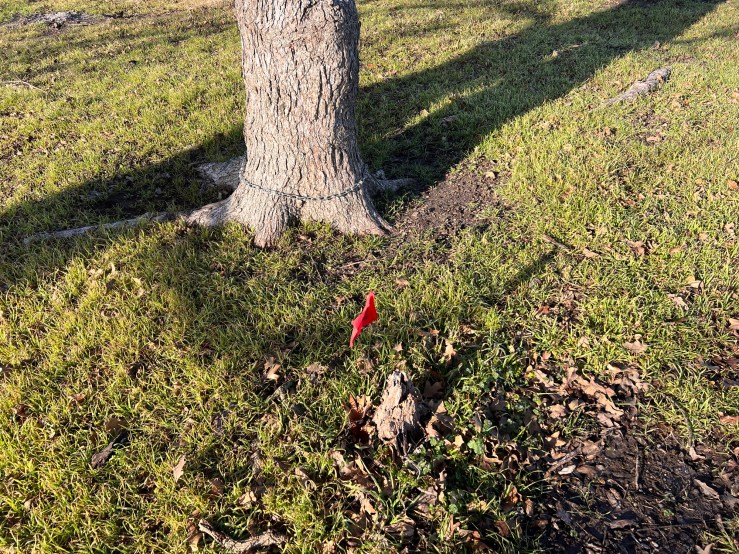
As soon as I got my own photos, I uploaded the observation to iNaturalist, where it was quickly confirmed. It had already burst its spores out, so we missed the exciting hissing sound the Texas Star makes, but it was fun to feel its leathery “petals,” and see if it smelled funny (I couldn’t smell anything). I looked around but didn’t see any more on her property. I also looked at the dozens of cedar elm stumps in my woods, but no Texas Stars have turned up.

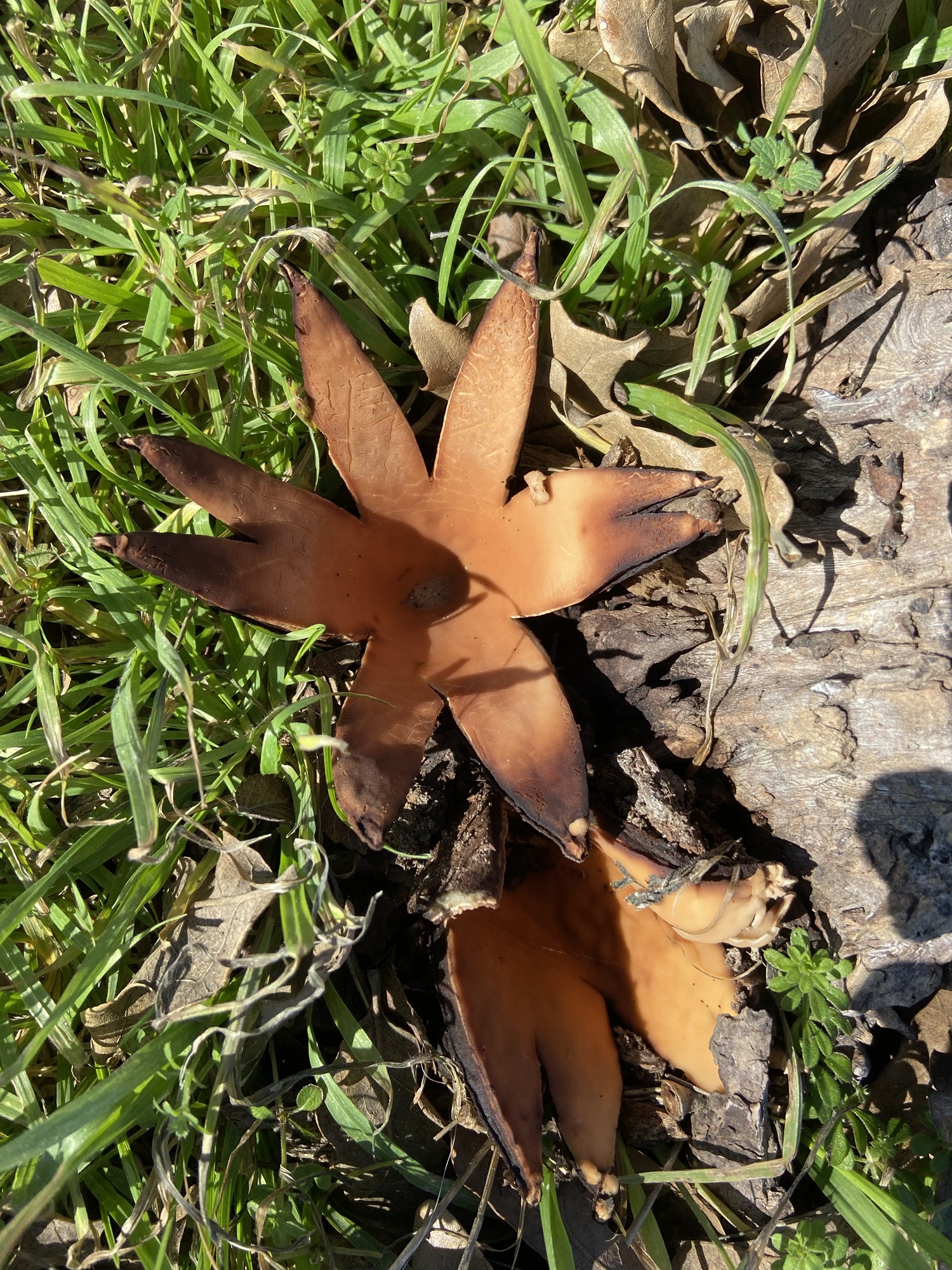
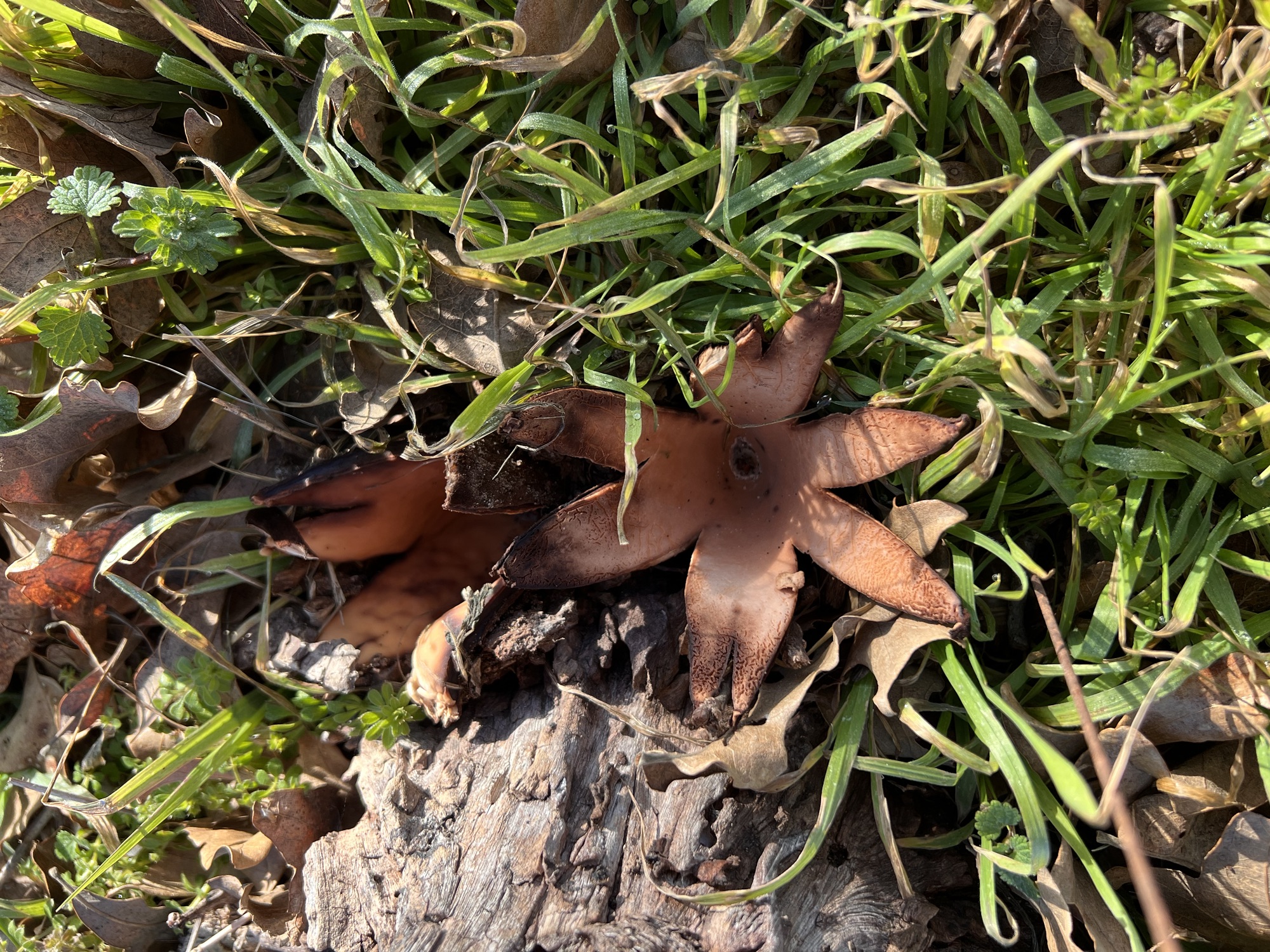
As I looked at the information on iNat and Wikipedia about the fungus, I learned a lot. First of all, I’m pretty lucky to live where it grows. It’s only found here in the middle of Texas and a small place in Japan. That makes me wonder if they are really the same fungus, but I’m sure professionals have looked into that.
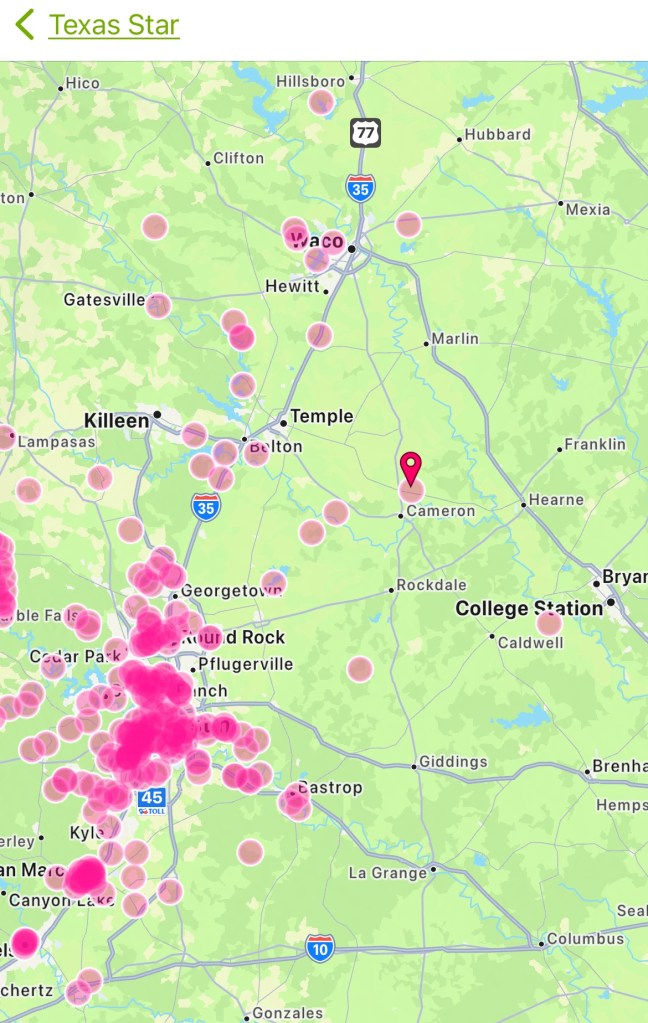
There were observations near Davilla and Buckholtz, but only the Davilla one was research grade, making my observation the second confirmed one in Milam County. And we are way to the east of its usual range. I was excited!
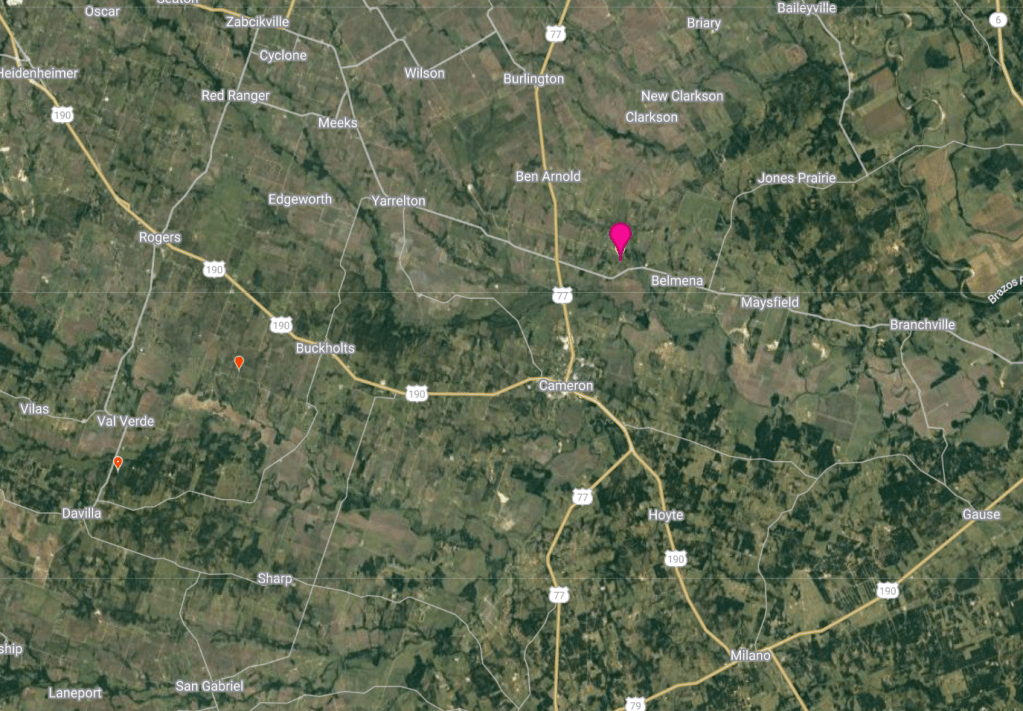
Keep on the lookout for these if you have decaying cedar elms (Ulmus crassifolia) and we have another nice rain (which I assume will happen soon). To learn more, read any of these articles:
- Texas Star: iNaturalist
- Chorioactis: Wikipedia – tons of fascinating detail
- This Fungus Is a Star: Texas Coop Power Magazine, January 2024
- Texas star mushroom again spotted in Hill Country state park: San Antonio Express-News, December 2023
- Shhhhh! The Official State Mushroom of Texas Is Hissing: Texas Monthly, January 2024
- Introducing the ‘Texas Star’, the new official state fungi: Houston Chronicle, August 2021
 Nature Along the El Camino Real