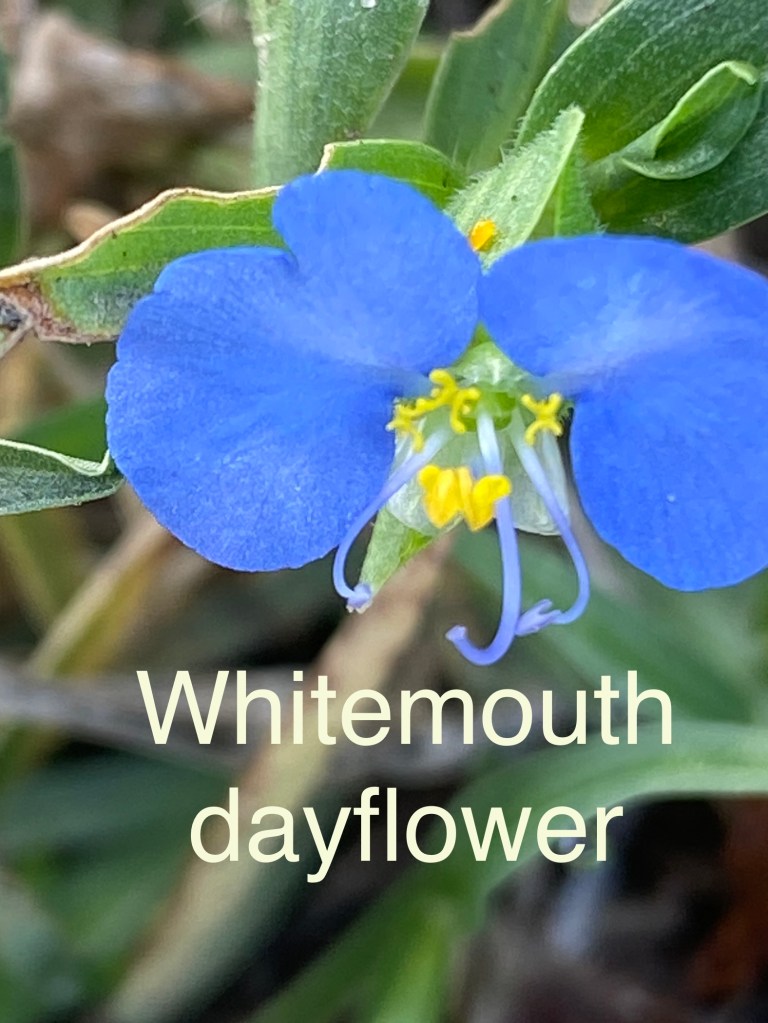
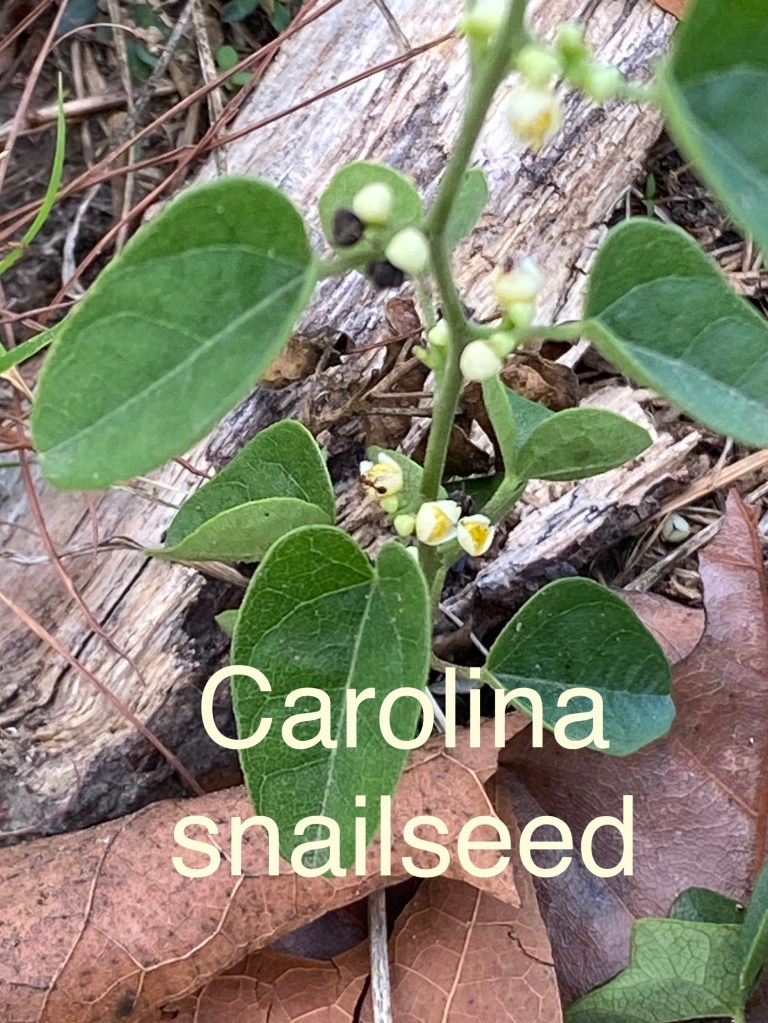
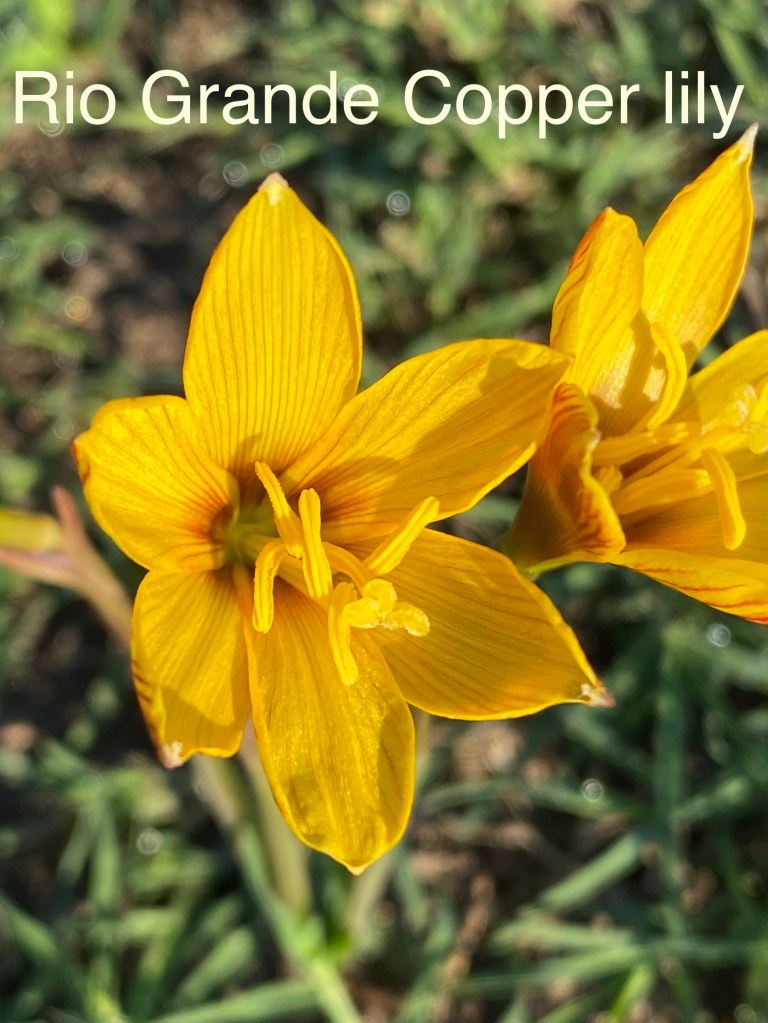
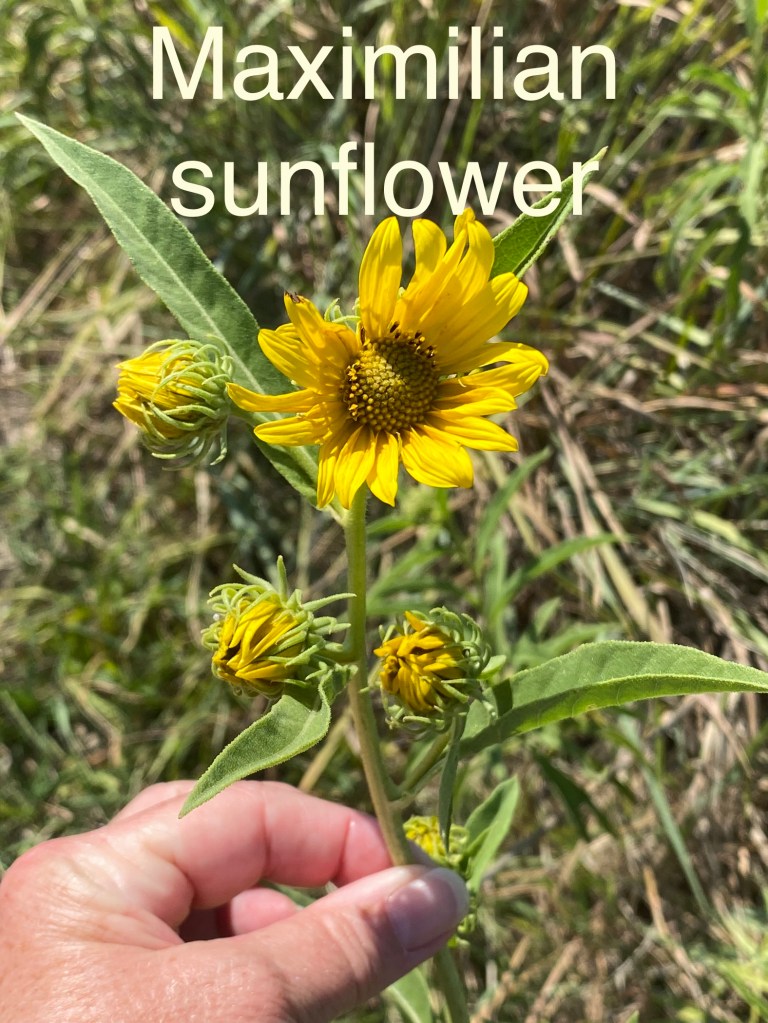
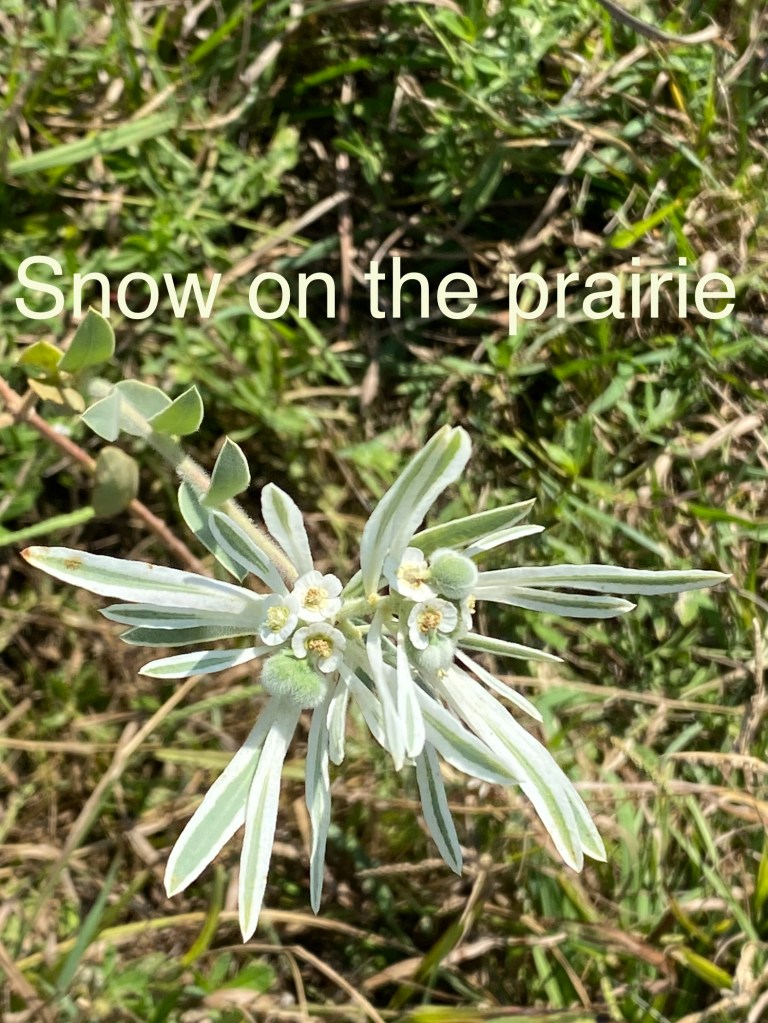
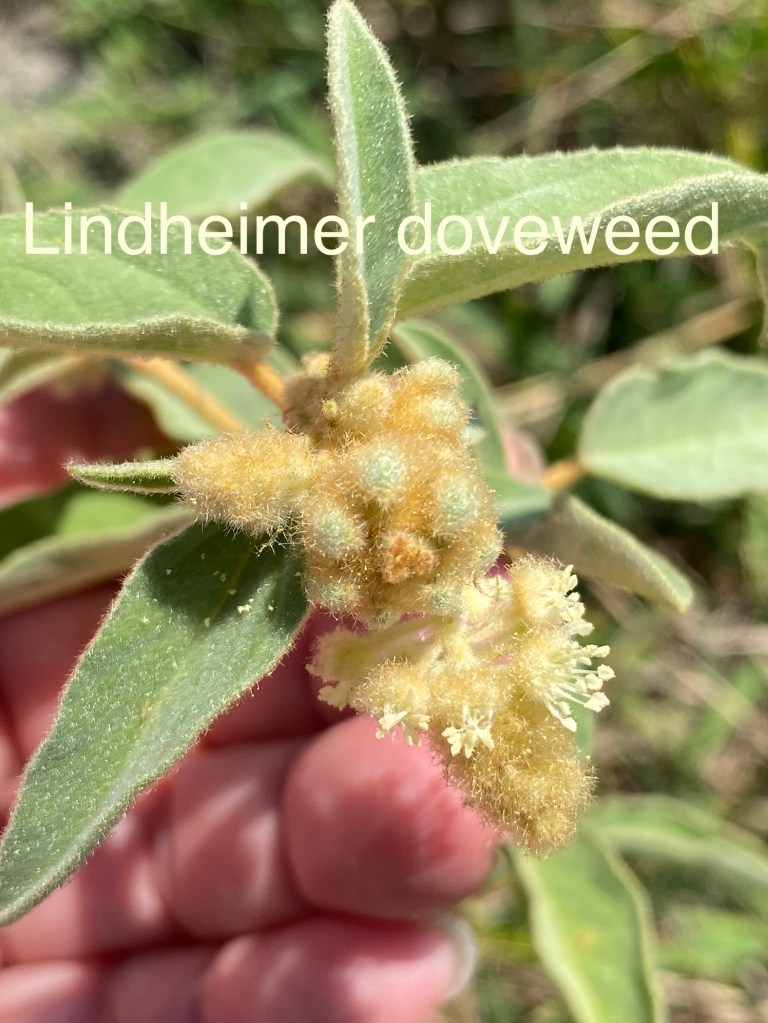
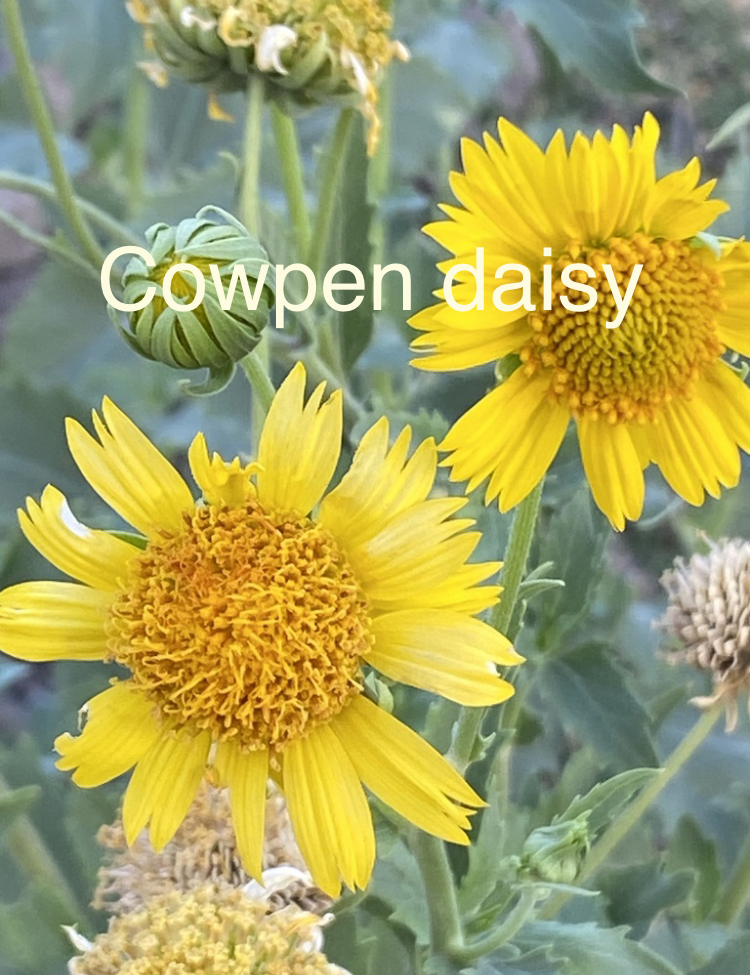
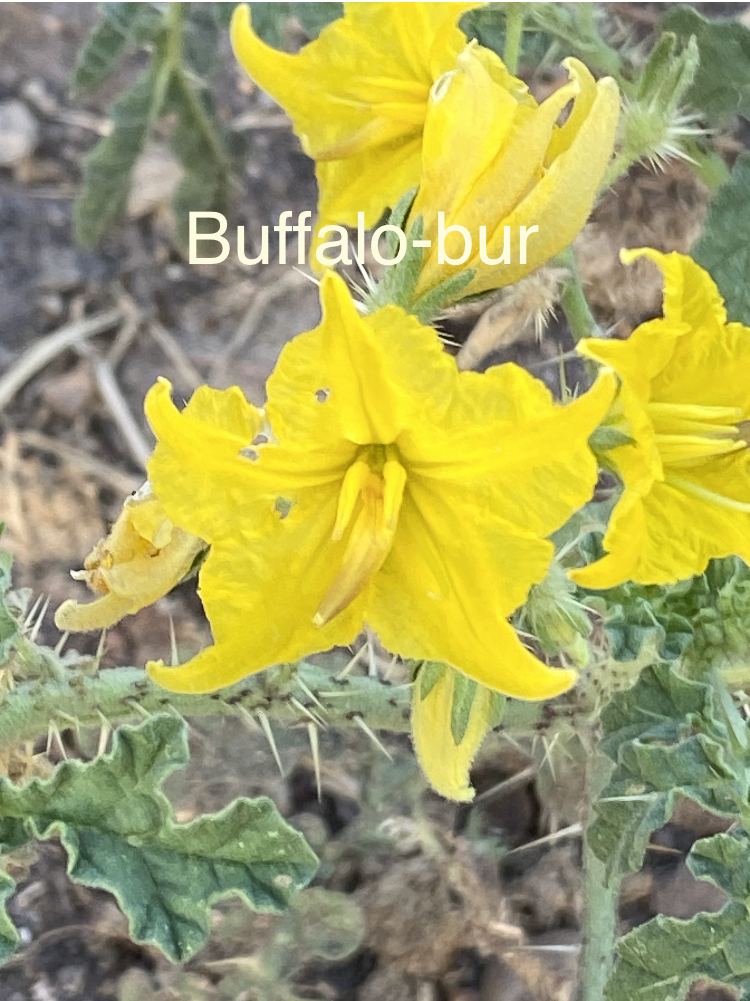
I decided to play the game “what’s blooming in the front yard today” and was surprised at a few. The Vitex tree is blooming. Maximilian sunflowers are bursting and the tall goldenrod is starting to bloom. More newcomers are Tropical sage, Southern annual saltmarsh aster, Prairie false foxglove, Whitemouth dayflower, Rio Grande copper lily and still hanging around are Texas bluebells, Cowpen daisies, Buffalo-bur, Prairie tea, Silverleaf nightshade, Tievine, Violet ruellia, Texas snakeweed, Gulf vervain, Lindheimer Doveweed, Carolina snailseed, Turkey tangle frogfruit, Bitterweed and Snow-on-the-prairie.
Late January is the beginning of spring for the honeybees. That is when the cedar elm trees begin to blossom, and the bees start bringing in sacks of yellow pollen. Pollen is protein for bees, thus particularly important for a healthy hive.
Bees coming into their hive packed with yellow pollen from the elm trees
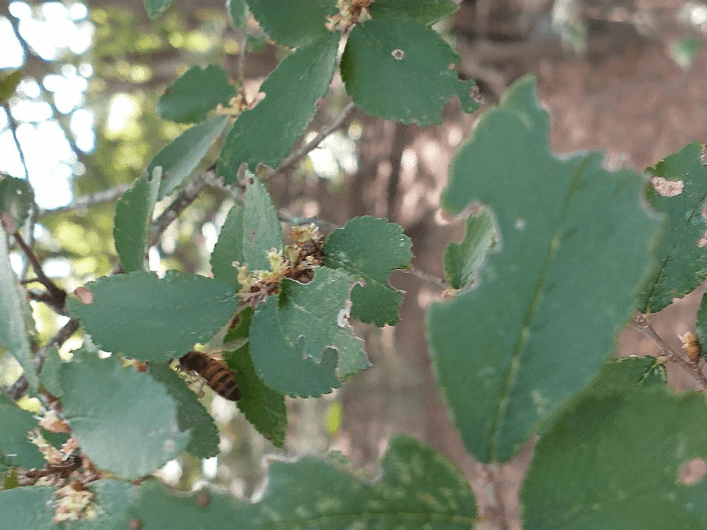
Today when I was in the woods the trees were buzzing. It’s not unusual to find bees busy in trees in late summer or fall when they might find galls on oak trees or dewy sap on pecan leaves. I was curious as to what was causing all this activity. I was not surprised to find them on the elm trees, but the reason they were there did surprise me. The elms are in bloom! Some of the trees are in full bloom while others are fading.
A bee gathering pollen from elm trees
We received almost 2.5 inches of rain last week. After a brutal summer did this cooling off to ninety degrees fool the trees?
More bee action around the cedar elm blossoms
I’ve never observed this before. Maybe being a Master Naturalist is making me more observant of such things.
[Editor’s note: I noticed that mesquite trees were blooming at my ranch this week. iNaturalist wasn’t able to ID my photo, perhaps because they were blooming at an unusual time.]
Labor Day weekend this year cried out for a river trip, and the only “river” that was running hard on September 3 was a portion of the stream that the Spanish explorers dubbed the Rio San Francisco. Stephen F. Austin drew a map of the expanding land grants between the Brazos and Colorado Rivers in 1829 and labeled this same stream Yegua. It stands to reason that those people occupying the land at that time had identified this watercourse as a place populated with horses. Yegua in Spanish are female horses. A valley to the west of the Brazos River with a significant abundance of horses deserves such a distinctive name. St. Francis of Assisi was already known as “the patron saint of animals” when the Spanish priests were spreading their culture north into Texas circa 1690. His name would be attached to many other places and a few streams. The Texas stream that is named after the horse populations attracted to its bottomland habitat is a special kind of place. It was my time to explore it.
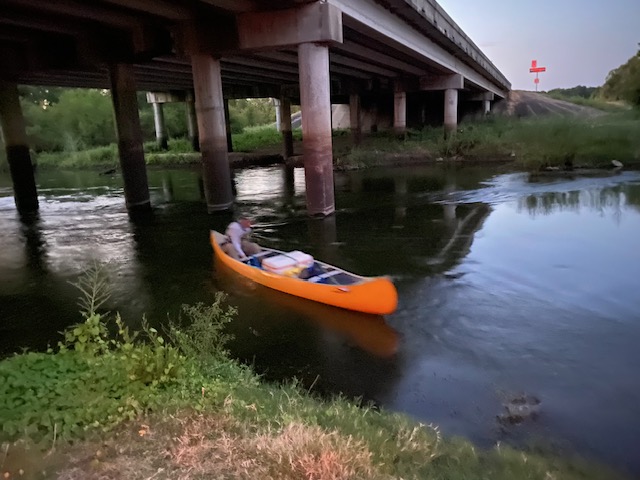
Adam and I put boats into the water of Yegua Creek below the Hwy 36 bridge in Somerville. It was before dawn, and I was hoping to paddle the first portion of a 13-mile run in moonlight. As luck would have it, we were running a bit too late, and the moon was slightly obscured by thin clouds anyway. Angie was our driver and her photographs taken as we shoved off show an orange dawn sky looking downstream. Turns out it was a darn good thing we could see well because the first three miles of this trip seemed like a combination of paddling through a Venezuelan jungle and the log-ride at Six Flags. We needed full visual acuity. Short-statured elm trees reached far out from each shore, and you had to weave around them. Open shorelines were densely populated with sedges, rattle bean, millet, and smartweed. Somerville Dam was just a mile upstream and was releasing 366 cubic feet per second to supply users down near the Texas coast. In this 40-60-foot-wide channel the water was pushing hard toward the Brazos and shoving our boats with it.
The narrow channel was alive with insect life on the water surface and in the air above it. There were clouds of small insects buzzing about us but not biting or landing upon us. I suspect they were midges (I inadvertently swallowed several but could not identify species from the taste), and they were being attacked and fed upon by an astounding number of dragonflies. In the dawn’s early light thousands of dragonflies of many sizes and colors were passing through the dense haze of Chironomids and eating them in mid-air. Looking upward was like watching tuna feeding on schools of sardines. Dragonflies were to be over and around us all day.
Lots of supplies in Alan’s canoe
One of my worries about running a narrow creek was about how many large trees would be lying completely across the channel. Very rapidly Adam scraped over the top half of a semi-submerged log in his kayak but my cargo canoe loaded with water and food could not pass. We pulled to shore, carried the cargo around and then portaged the canoe 60 feet to reload and relaunch. This turned out to be the only portage of the day and I pointed out to Adam that many famous “canoe trails” in Maine and Minnesota have ¼ mile portages between upland ponds that have no water flowing between them. This kind of portage was a cinch unless there turned out to be one tree every half-mile.
Very rapidly we were off, and then came the rapids. The first was a washed-out concrete vehicle crossing that had collapsed in the middle. Both boats sailed through the gap and the Yegua carried us soon to a second loud crashing of water half a mile downstream. This spot was a concentration of large rock rip-rap strewn across the channel and below a powerline that supplies Somerville and Caldwell. Construction crews likely used this material when stringing wires 50 years ago. The heavy water flow got us over the rocks and into the big eddy four feet below. No problem! However, this day was far from over.
The next rapids could be heard but were hidden around a hard right turn. It ended up being a steep drop of 5-6 feet. This spot is a natural rock formation. The 366 cfs filled my boat when I went over the drop and was pushed sideways into a rock wall. This, dear hearts, is why we tie all our gear securely into the canoe.
The entire boat was full of creek water in under three seconds and was being pushed rudely downstream. The water jugs, canteens, Pelican box holding my I-phone, ice chest (strapped tightly closed), first aid kit were all attached. Adam, who had shot through the rapids ahead one minute ahead of me in the kayak, had spun around to watch as I inelegantly exited my boat and was floating along beside it in my ugly brown PFD (personal floatation device). Don’t ever let anybody tell you it is too hot to wear a PFD (even an ugly brown one), especially on a reach of river that you have never traveled before. We were shoved downstream 300 yards along straightaways and around corners before an adequate sandbar was located to pull up the water-filled canoe.
The PFD was absolutely essential to keeping me from snagging a pant-leg or belt on a submerged tree-limb while being dragged along. The water temperature felt good in late summer, but in winter getting “tumped” over would have been a problem that required quickly building a fire to heat up a shivering paddler (me). Yet another reason you never paddle alone. It is hard to start a fire when you are shaking like a coon-dog trying to pass a peach pit.
Adam in kayak ready for adventure on Yegua Creek near Lake Somerville
The fourth rapid was halfway through the trip and had a large rock in the middle of the river. A lunchtime spot! The rest of the trip was delightful. Magnificent pecan and willow trees over-hung the river. We paddled in the shade almost the entire day. Without question the largest black willow trees I have ever seen stand like mythical giants along the Yegua. I wondered what it takes to be the state record Salix nigra? Two of these we saw had to be contenders.
Beautiful live oaks grew on both the Washington County bank and the Burleson County shore. Big antlered deer and feral hogs were sleeping and feeding in the lush green growing on the shoreline sandbanks. There were two old, abandoned county road bridges. Cattle swam and waded back and forth across the county line (who needs bridges?). We noted two minimalist fish camps but not a single drop line was seen. This apparently is rod and reel territory.
Adam and Alan on Yegua Creek near Lake Somerville just past HWY 36 bridge
Having unceremoniously plopped over my trusty OUACHITA, I was glad I did not bring my binoculars. Many small birds flying across in front of me consequently went unidentified. I did note eastern phoebes, pileated woodpeckers, a lone anhinga, wood ducks, a Louisiana heron, green herons galore, and great blue herons. At least my vision is still good enough to see the big ones!
The surprised behavior of a lone coyote suggested he had never seen a boat before. Deer antlers seem big this year based upon the whitetail bucks we flushed. That cool rainy spring must have provided protein at the right time for a lot of grazing animals. Francis of Assisi would be pleased.
The nice thing about this canoe trail is that it has easy access to put in on Hwy 36 and easy access to take out at Hwy 50 near Clay, Texas. Driving home through Independence and eating Mexican food at Las Fuentes in Somerville after a 6-hour paddle was a sweet finish to a Labor Day Sunday trip. Always bring dry clothes or lunch must be eaten in the outdoor heat.
Nowadays the Yegua is considered a “creek.” After experiencing the intensity of the flow and taking a thorough dunking at a natural waterfall I can see why those well-educated Padres and Spanish Expedition commanders wrote down in their diaries that the San Francisco was a river.
Yegua Creek, which is actually a river. Photo by Alexey Sergeev, 2020. Public domain. (as you read on you’ll see why Alan shared no personal photos)
Right now, many birds are migrating South for the winter season.
Included in this very large group are the vultures, our friends who clean up decaying meat so we don’t have to. They are built just for this specific task. Lucky them.
We have two species of vultures that are commonly seen in Texas, the black vulture and the turkey vulture.
Vultures are BIG. They have a wingspan of six feet. When you see them up close, you’ll know what I mean.
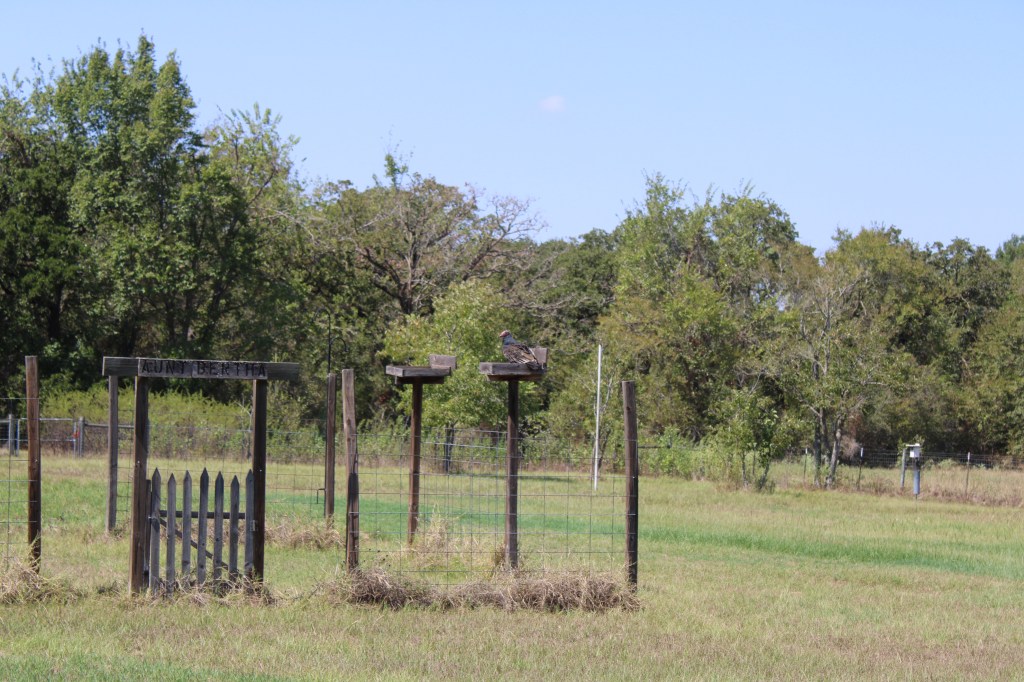
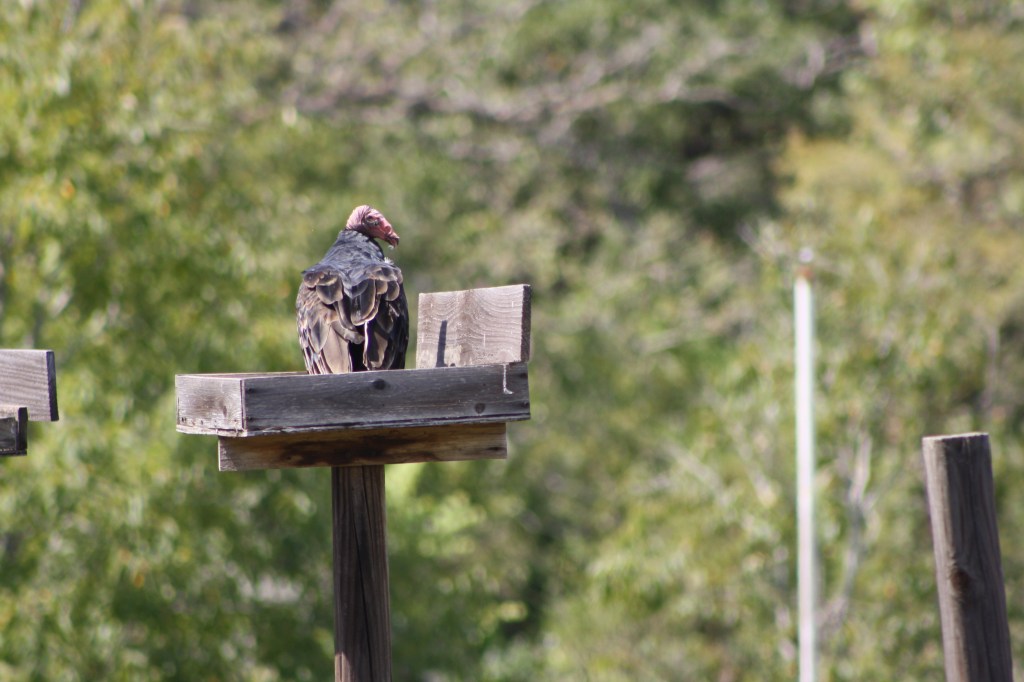
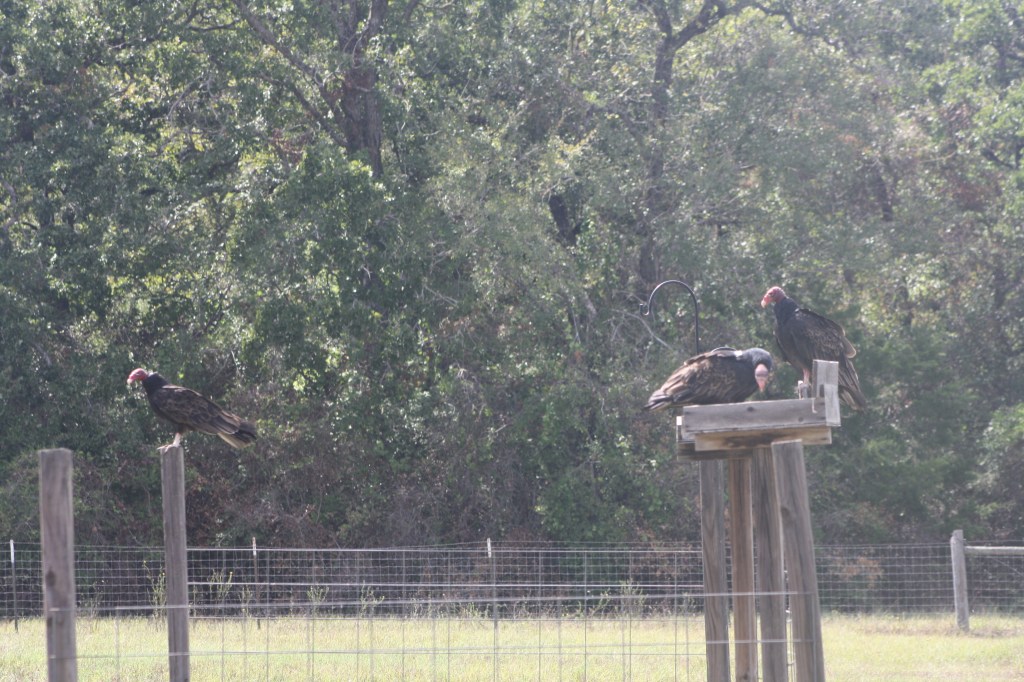
Yesterday, a turkey vulture landed on one of my platform feeders that I use for oyster shells for my purple martins. A few other birds also like the shells for grit.
I put these structures in my bird area where I also feed bluebirds mealworms.
This guy sat there in the sun and heat for 5 hours. By now I am thinking that something is wrong. It’s 3:00 pm. It should not normally do that.
I walked out to see if it would fly away, but it let me get close enough that I could have touched it. I didn’t touch it of course; I value my face.
While it sat there, two of its friends came down to either encourage him or eat him.
I called two rehabbers about it. I thought it might need medical help. They agreed.
I also called the local game warden but did not hear back from him.
So, I decided to call my neighbor to see if she would help me capture it, so I could transport it to the rehabber in College Station Texas.
I got a large towel, one of my largest dog crates, and some welding gloves together.
The rehabbers also warned me of something disgusting that vultures do when they are trapped and you try to move – they vomit on you! And it stinks big time.
My friend and I were careful to approach it from the rear using a ladder.
It just sat there and just before I was about to throw the towel over it, it flew off into a tree about twenty high near our woods.
Its wings look OK, but I feel it was sick. It should have flown up and away.
We could not help it now. This morning I could not find it.
I hope it was able to go on somehow and migrate with its friends.
I did what I could. I wish it fair skies and long life.
As goes the saying from you know who…” Live long and prosper.”
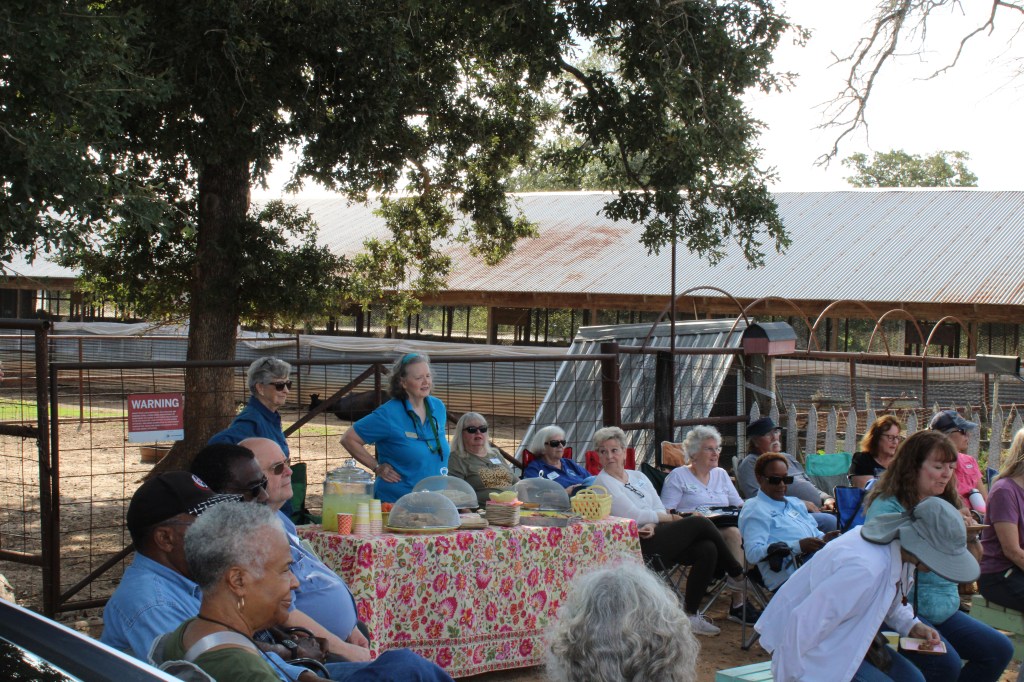
Little River Master Gardeners gathered at the El Camino Real Master Naturalist Wildscape last Wednesday to learn about native plant gardening. The Master Naturalists have a wildscape out on FM 334 to learn, teach, and share with each other about keeping it native.
Worker bees getting ready for presentation to the Little River Master Gardeners
Connie Anderle, a member of both chapters, introduced everyone then turned it over to Catherine Johnson, manager of the wildscape for ECRMN, to explain the layout and where the plants come from to be planted. Linda Jo Conn then talked to the group about why growing native plants is better for everyone and all native species of insects, birds and animals. Jackie Thornton spoke about the beauty of native species and read excerpts from a children’s book titled A Prairie Garden. Gene and Cindy Rek also spoke about their contribution, which is a lot, to the project.
Jackie Thornton reads pocket garden book to the group
Ann Collins made refreshments for the attendees and Ellen Luckey helped serve. There was a great deal of debate over which of Ann’s multiple types of cookies was the best.
Ann Collins and Ellen Luckey serving refreshments
After the speeches, all the guests toured the wildscape with members guiding and explaining what each section is about. There were 32 Master Gardeners in attendance.
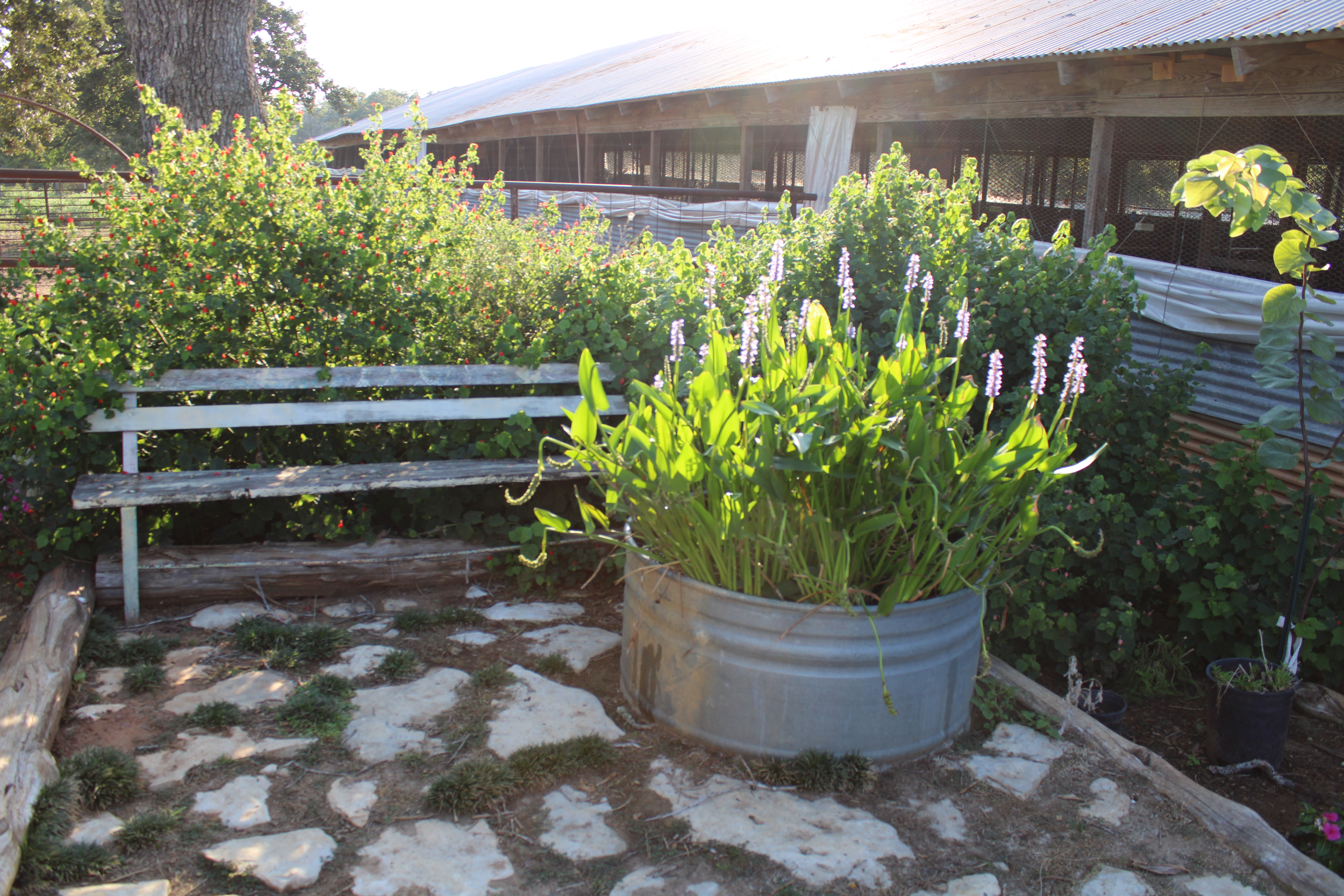
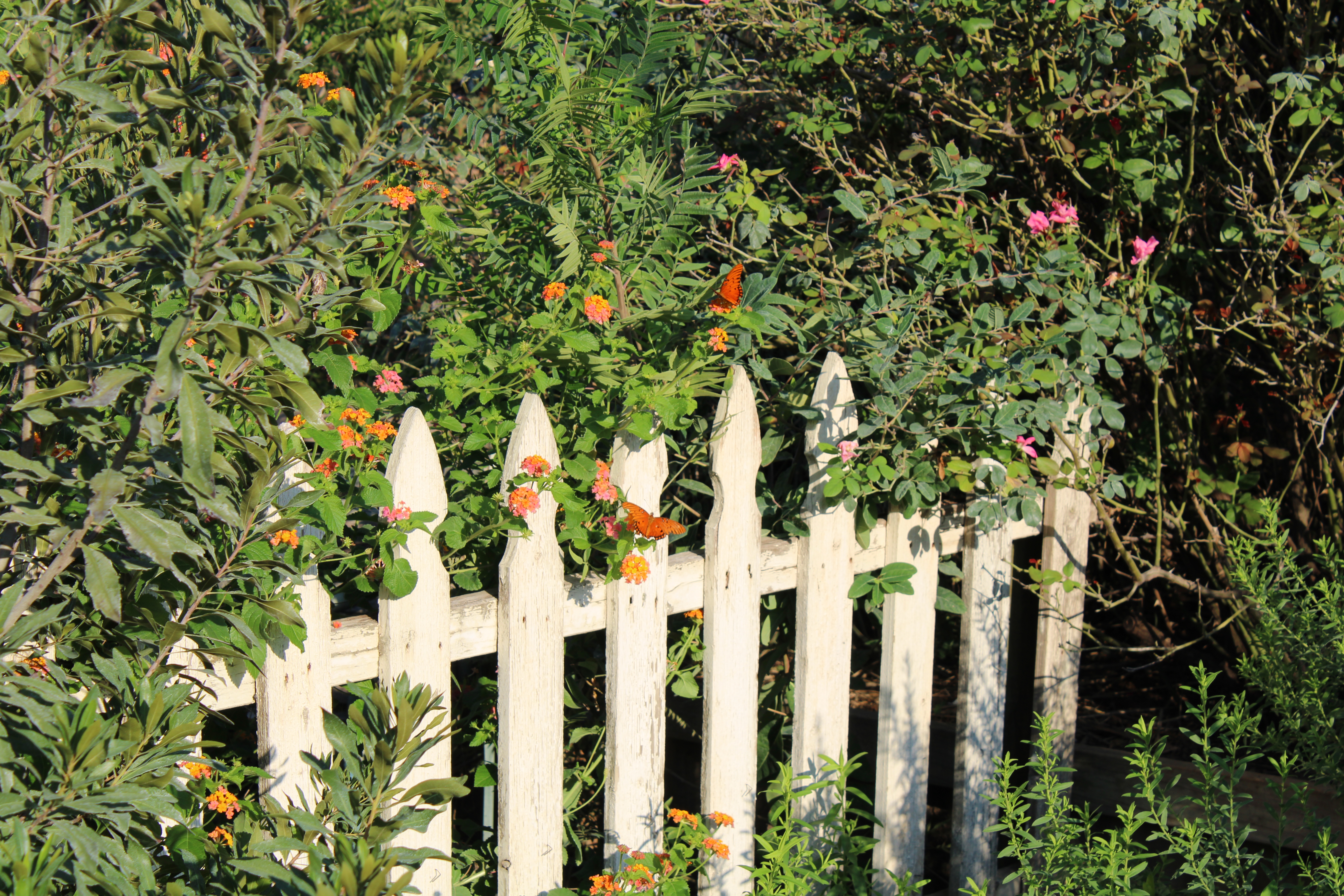
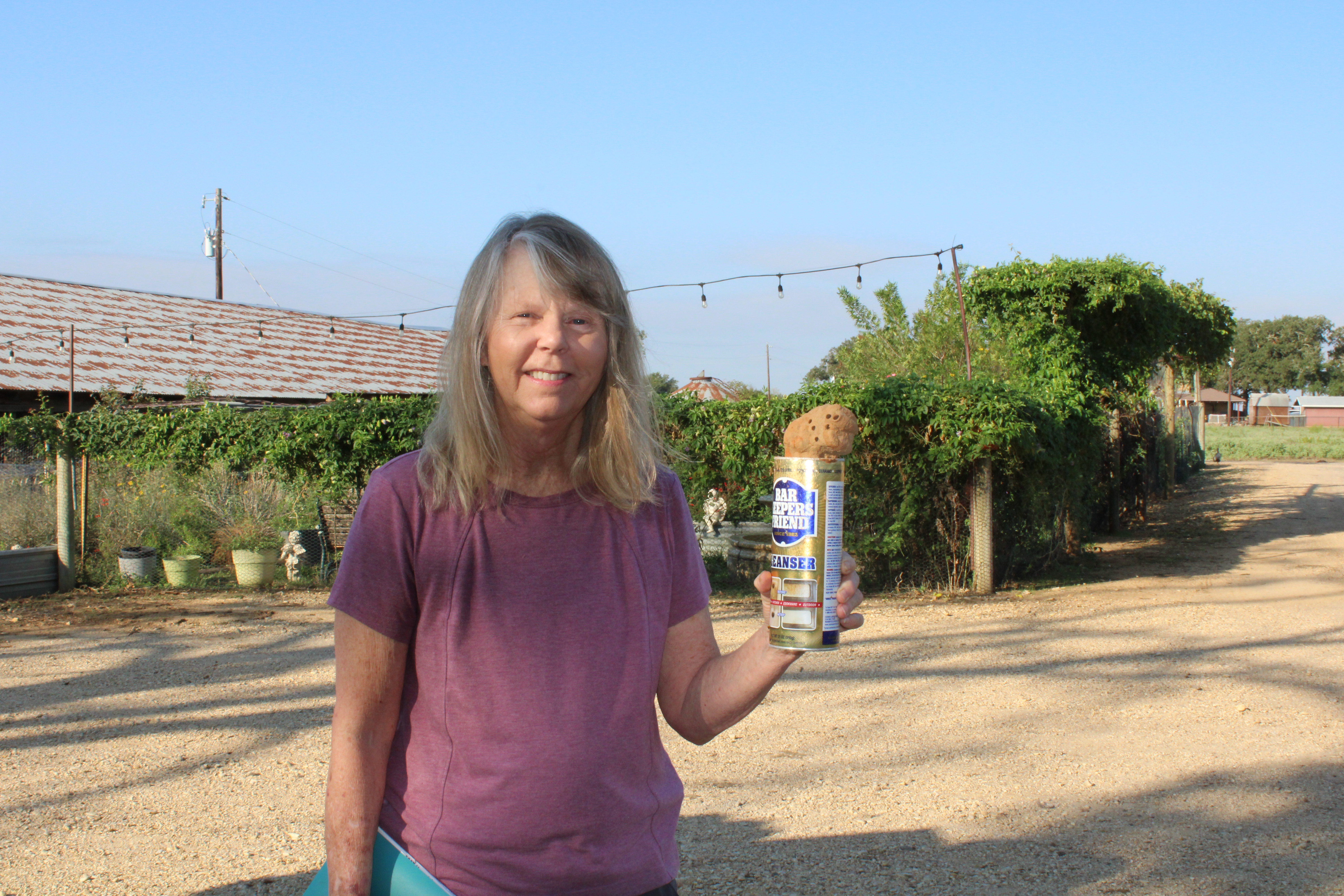
Entrane to the wildscapeA few of the many Gulf Fritillaries flying all over the placeCindy Rek shares her very large dirt dbauber nest made on top of a cleaning agent can.Linda Jo Conn explains why native is better

















 Nature Along the El Camino Real