
by Carolyn Henderson
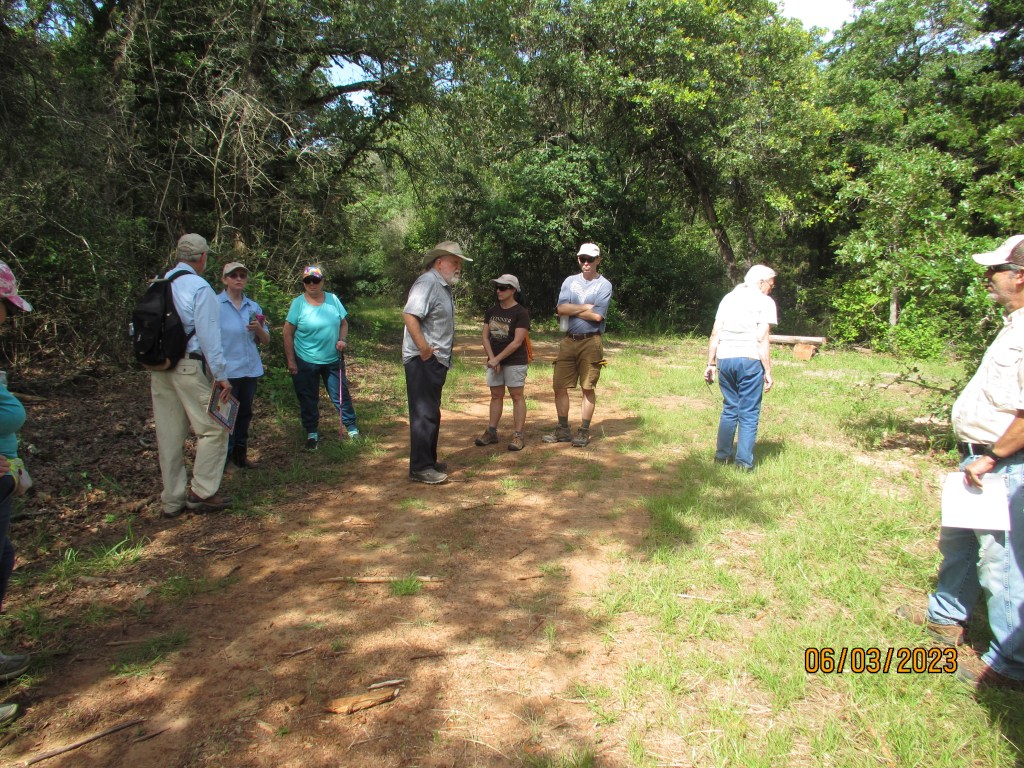
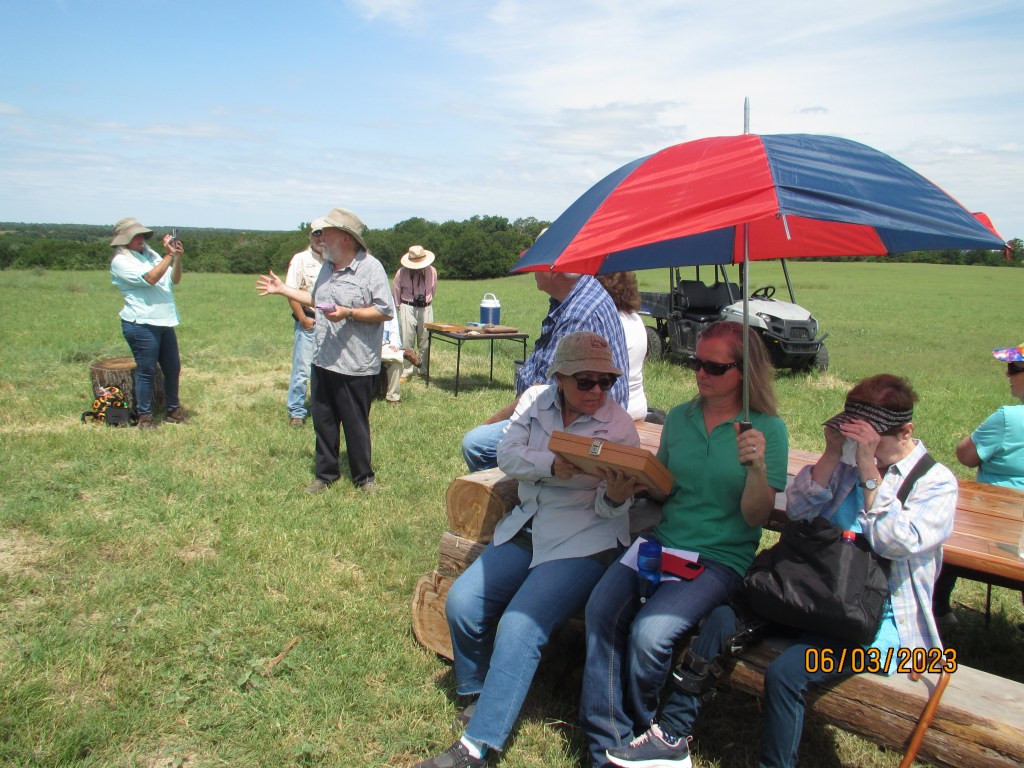
To walk where Spanish settlers walked hundreds of years ago and native tribes lived their lives, even thousands of years ago is an inspiring experience. Members of the El Camino Real chapter Texas Master Naturalist and El Camino Real de los Tejas National Trail Association got to experience it firsthand Saturday in a guided tour of a trail in development.

The trail is part of the El Camino Real Trail that spans a good part of Texas. The part travelled Saturday, June 2, runs across the Cedar Hill Preserve, owned by Mike and Joyce Conner, and the Baumann Ranch. The Conner property is being developed as a native flora and fauna preserve, and the adjoining Baumann ranch is still a working cattle ranch. It is now part of the National Trail Association, and it is being prepared for study and hiking for organized groups in the future.
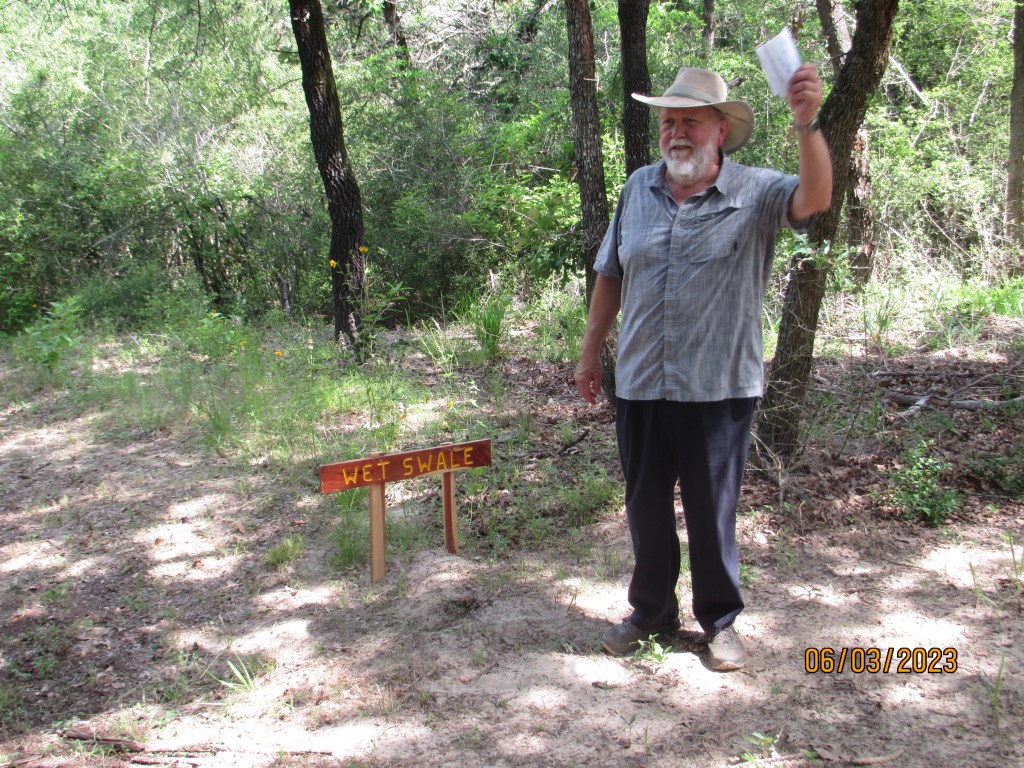
The wet swales were probably formed by water traveling in a path through the area in wet seasons then later used by travelers.
The trail head begins in a woody area on sandy loam soil complete with a fancy new outhouse somewhat like your grandparents had in this area. In many areas a hiker can actually see the trodden
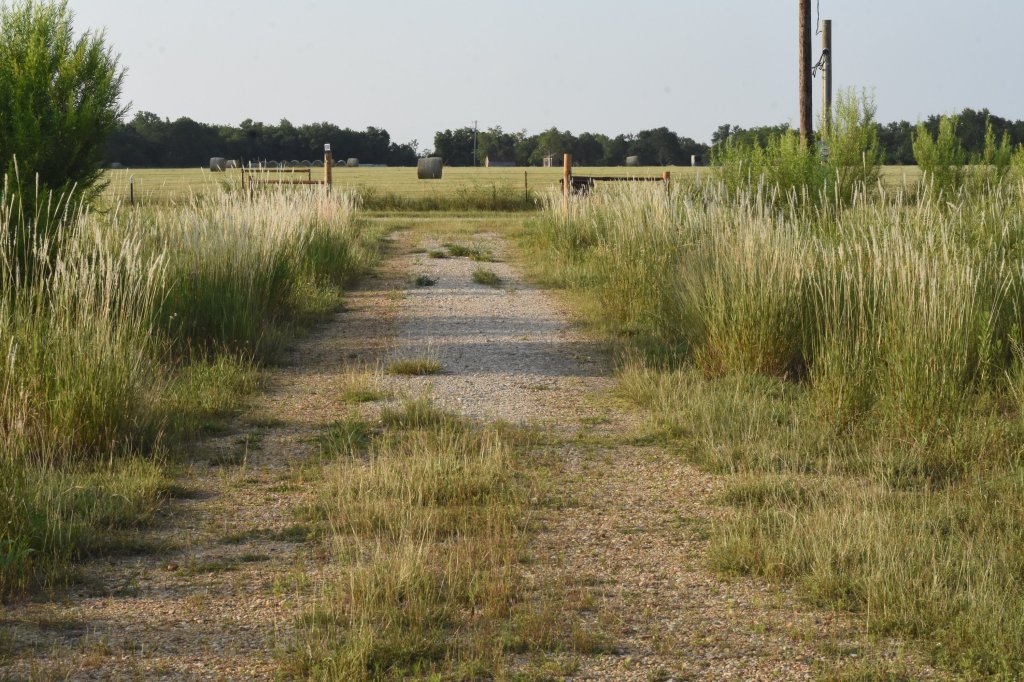
path taken by Spaniards and Native Americans dating back hundreds and probably thousands of years ago. They are most discernable by swales that bank the path. A swale is a buildup of land running along each side of the ancient trail. It looks a bit like a street curb might look today. There are both dry swales and wet swales. The dry swales were strictly roads/paths taken by travelers.

There also are signal trees believed to have been formed by the native tribes to give direction
then later used by the Spaniards. Artifacts from both groups have been identified by archaeologists
studying the area. Post Oak trees primarily were used to form these trees.

When you come out of the wooded area, you are then on an uphill stretch to reach the very high hilltop. The top of the hill is like a meadow looking out at the woods below and nearby hills or “mountains.” Sugar Loaf Mountain is very near and visible from this hilltop. It is believed that this hilltop where we were was a village for a native tribe or tribes over the years. Tonkawa artifacts have been identified from the area. There was a great deal of speculation by the hikers that the different tribes sent smoke signals to each other from these hill tops. A visit to Sugar Loaf Mountain has long been a rite of passage for area high schoolers.
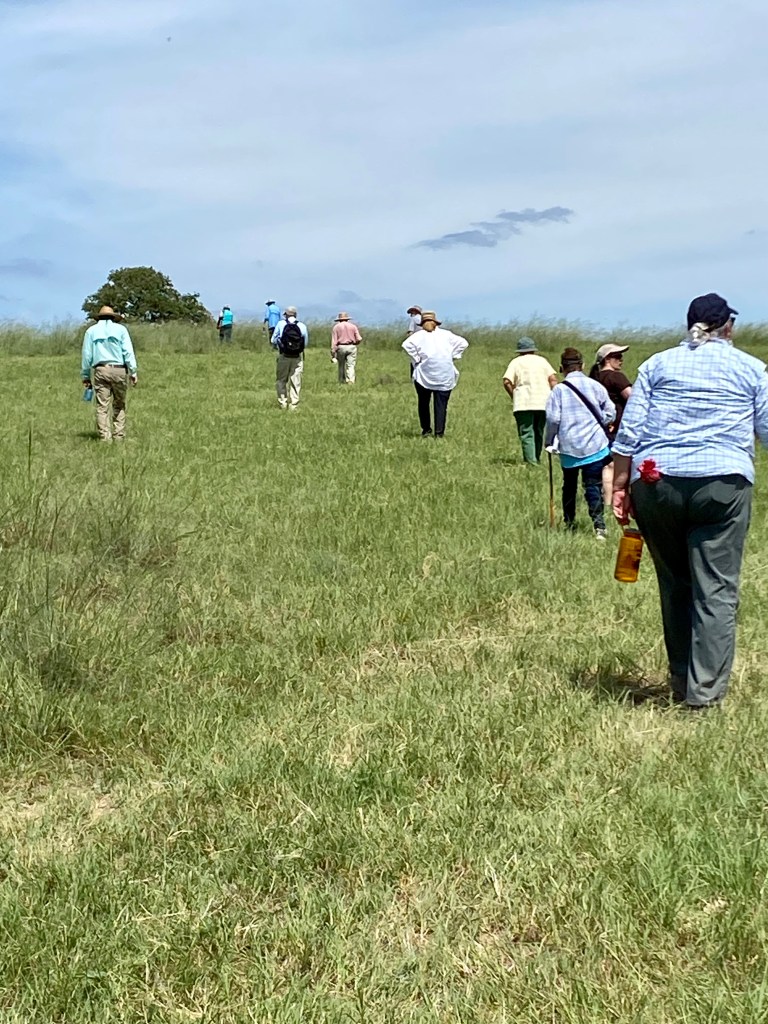

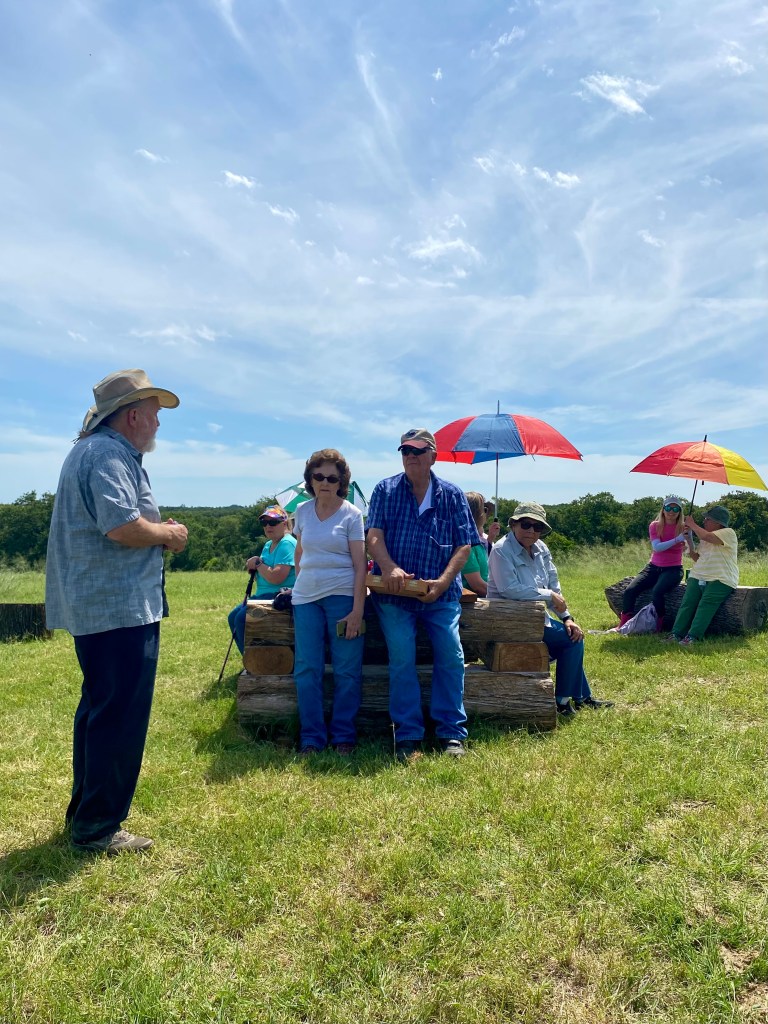
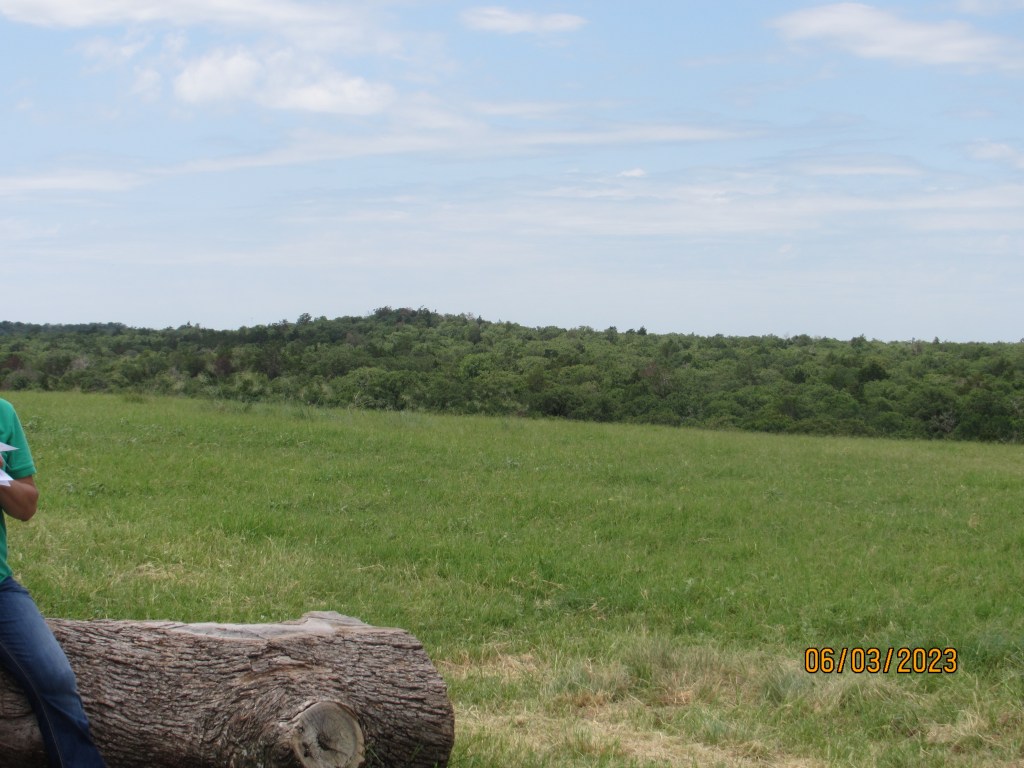
This area is part of the Rancheria Grande Los Brazos de Dios. An archaeological dig in the area around Alligator Creek and Pin Oak Creeks, both of which cross these properties, a few years ago found evidence of very early Spanish settlements.

Mike Conner and Dr. John Pruett, tour guides for the adventure, and Mr. and Mrs. Baumann, explained the history and discoveries while the rest of us recovered from the climb. Joyce Conner etched a map of the trail into a homemade tabletop. It sits at the top of the hill.

Going downhill was easier, but one could certainly feel the rising midday temperature. An appreciation of what people had to go through to get anywhere hundreds and thousands of years ago is brought home when hiking this trail.

There is a book titled The Archaeology of Rancheria Grande Los Brazos de Dios, written by Sergio A. Iruegas, archeologist, and Melinda T. Iruegas, about the discoveries in the area. It is currently out of print, but there are copies at the Cameron and Rockdale libraries. If you own land in that area, you may be sitting on artifacts.

Addendum
by Mike Conner
I would like to clear up a little confusion about swales.
Swales are u-shaped, linear depressions in the ground formed by many years of foot and hoof steps. They are never formed by water but may be damaged by water once they are formed. This is happening to some extent to Hidden Swale. Both the Dry and Wet Swales have been certified by archeologists to have been used during Spanish colonial times but may have been used for thousands of years before. The somewhat confusing names for these two swales come from the fact that the Dry Swale leads directly to the historic village site and cuts through a small valley that would only be passable is fairly dry weather. The Wet Swale leads in a less direct route to the historic village site that goes around the edge of the valley and would be passable in wet weather.


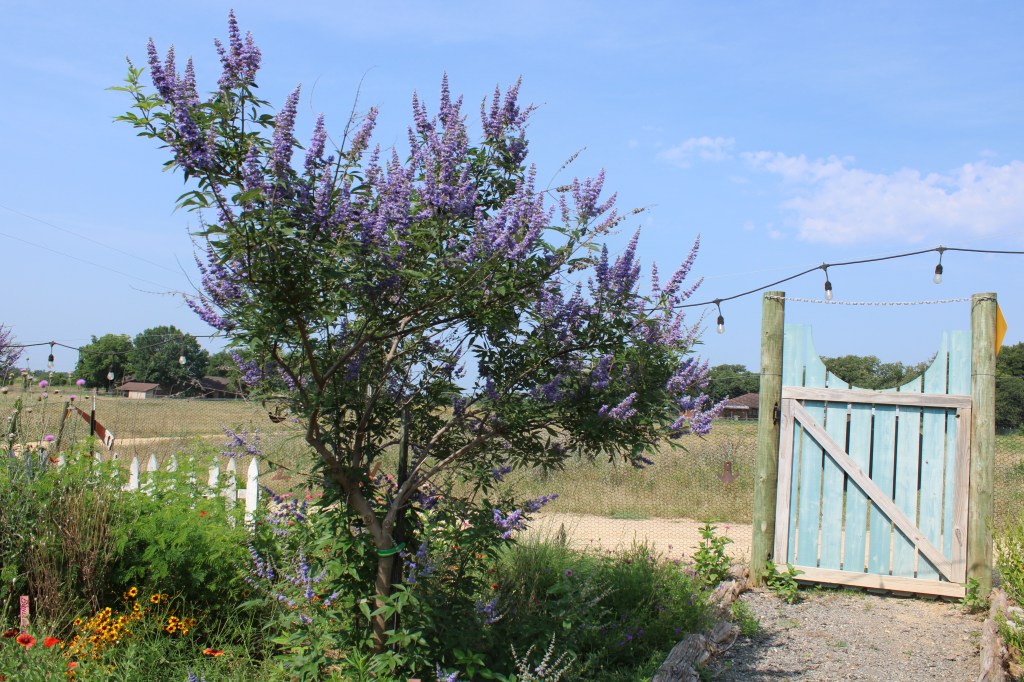



 Nature Along the El Camino Real