What about Barn Swallows?

by Sue Ann Kendall

We hear a lot about purple martins (Progne subis) in this blog, since our Chapter member Donna Lewis is a dedicated observer of their lives and activities as she supports them by providing structures to nest in.

There are other types of swallows in Milam County, though, as most residents have most certainly noticed. Barn swallows (Hirundo rustica) are commonly found around our homes and also depend on humans for a little help with their nests. I have some of each bird on my property, but my few purple martins nest in abandoned holes in dead trees that we have left standing. I didn’t know we had them until recently, when my handy Merlin Bird ID app noted their song, then I actually saw a pair. So, I guess purple martins do nest in the “wild” at least a little here.

Here’s a purple martin photo by ME, from a structure in Temple, Texas.

But what about the barn swallows? Why aren’t they beloved by all, like purple martins? After all, they are quite beautiful with their shiny navy-blue bodies and striking rust-colored breast markings. And they eat lots and lots of flying insects and provide lots of entertainment while they do so. It’s like a swirling circus act when they’re all out hunting around sunset.
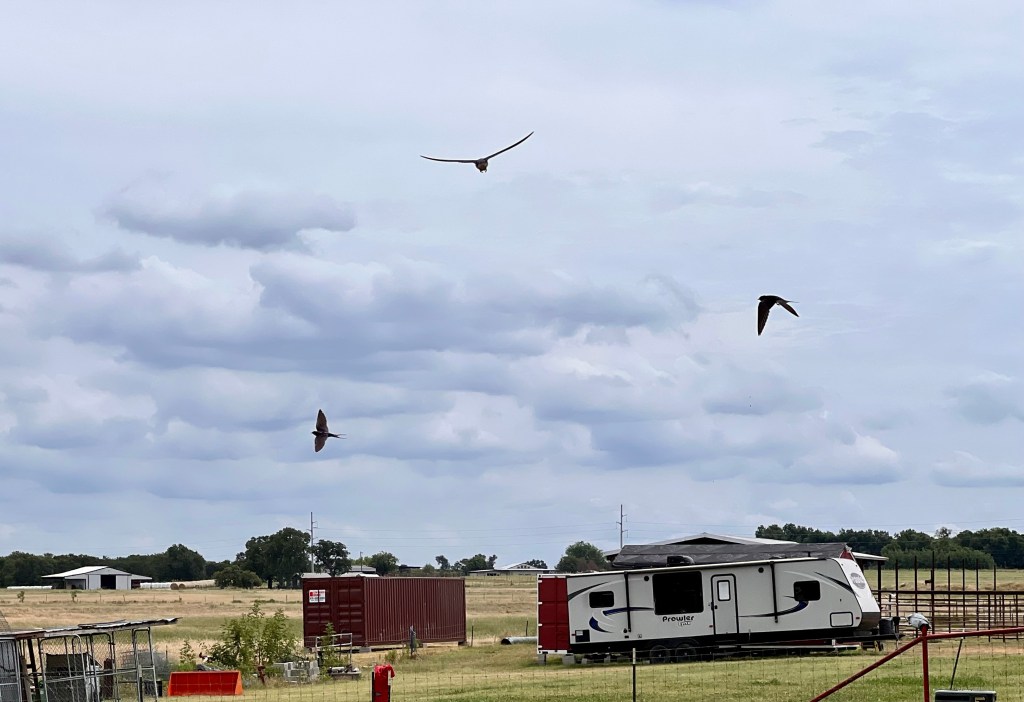
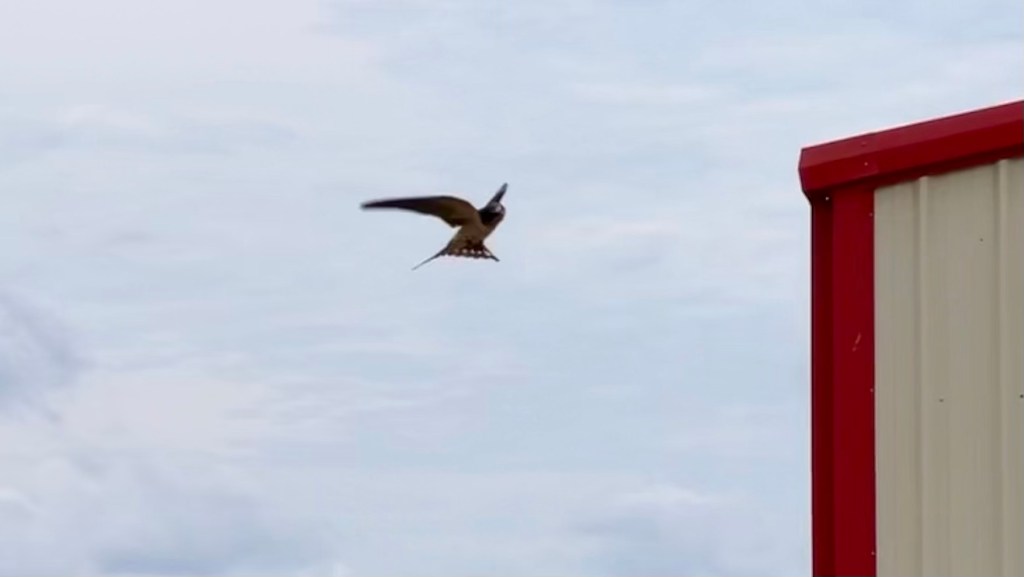
One reason people aren’t fond of them is that their nesting behavior doesn’t fit in with most suburban folks’ ideas of neat and tidy “curb appeal” for their homes. Barn swallows do nest in barns, when available, but they also nest under bridges (the same kind the Mexican freetail bats nest in), and, of course, people’s houses.
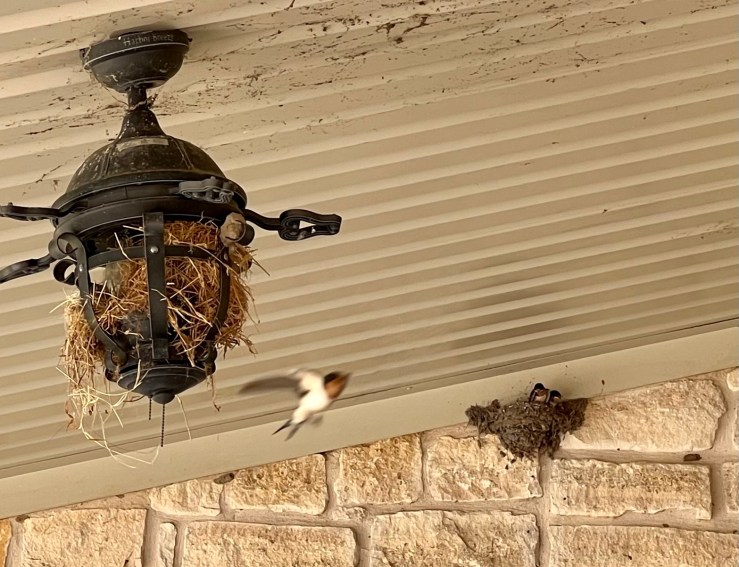
Swallow parent dodging hideous sparrow nest to go to her lovely mud nest.

When I lived in suburban Round Rock, many neighbors either invited people to come in through their garages or spent lots of time getting very messy trying to remove barn swallow nests. Many of the homes had two-story entrances, which swallows (cliff swallows, too) just loved to build their mud nests in. They also loved to shove baby bird poop out of those nests and onto people’s fancy potted plants or outdoor furniture. I will spare you a photo of swallow poop, since you have probably seen some.
Luckily, I don’t live in the Meadows of Brushy Creek on a crowded cul-de-sac anymore. And I am happy to let barn swallows build all the nests they want to around our house, which has many porch sites to choose from. After all, there is only one population of barn swallows left that still uses caves to nest in, and that’s in California, according to All About Birds.
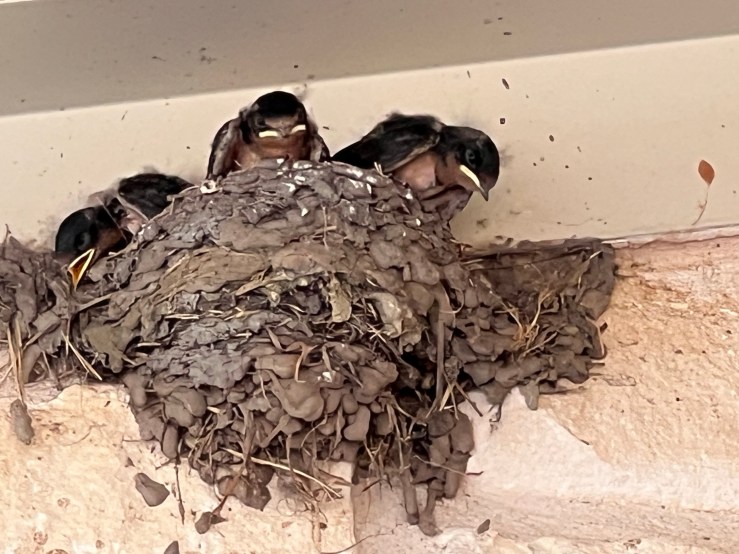
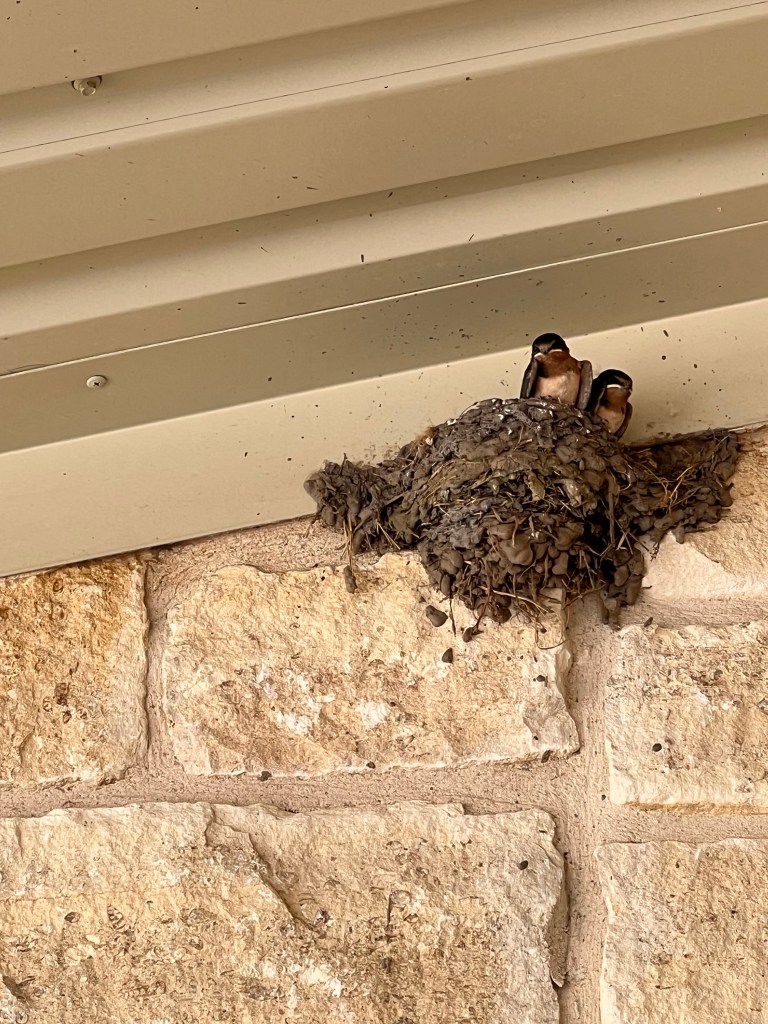
It’s getting crowded in here!

Our birds have just finished raising their second set of nestlings since they arrived from South America in the spring. I noticed a couple of the nests had three adults feeding babies, and that turns out to be a common practice. The helpers were probably babies from the first clutch.
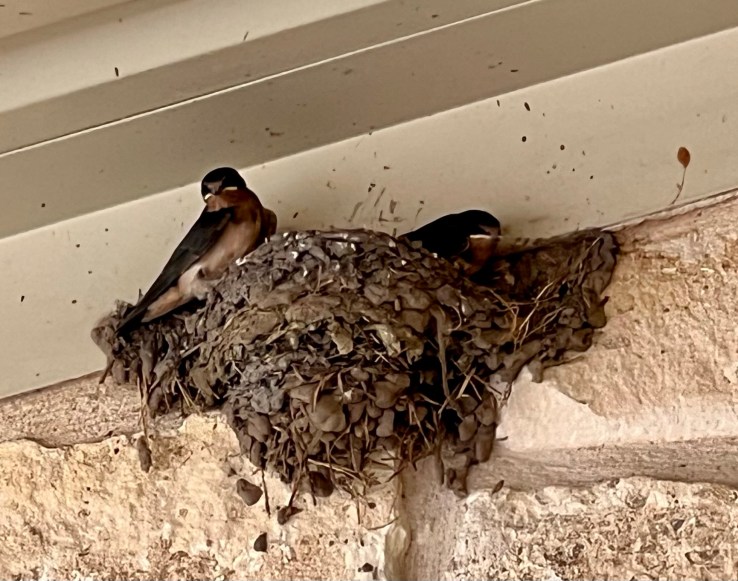
I gotta get out of here.

As the babies grew and grew (this is a very loud period on our porches), they began to have a hard time fitting in the nests. We always wondered which day would be the one when they’d fledge. Last week, I was happy to find two of them sitting on the light fixture where their dad usually hung out. Two others looked very un-ready to fly, but by the next day, everyone was swooping around with abandon.
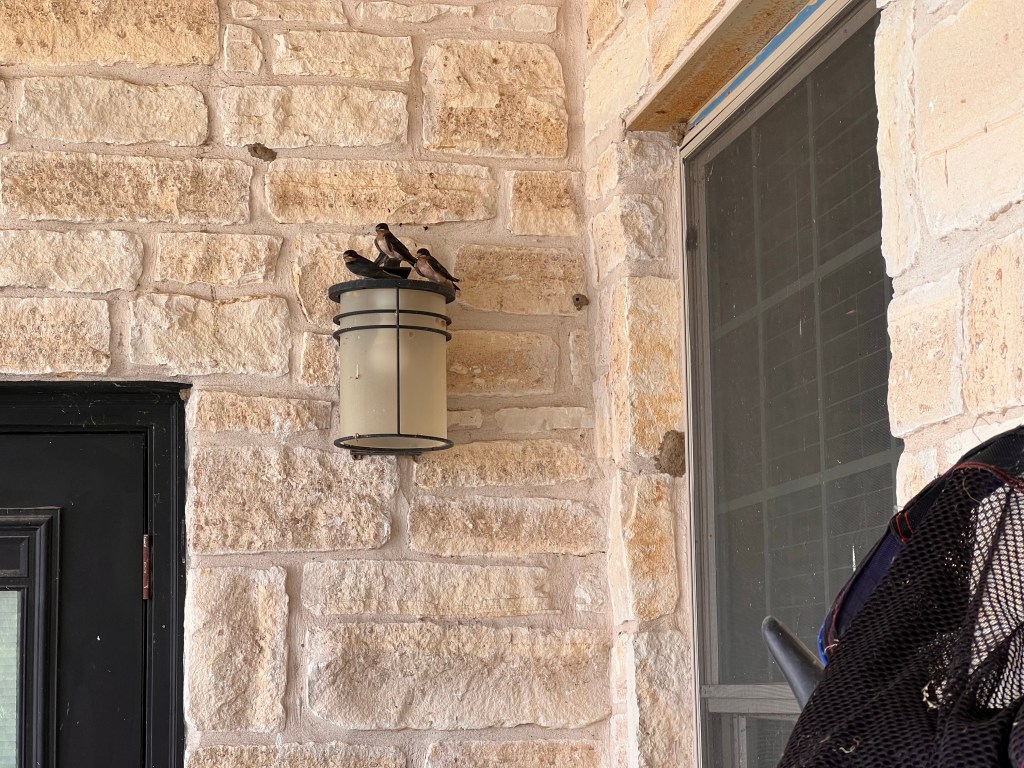
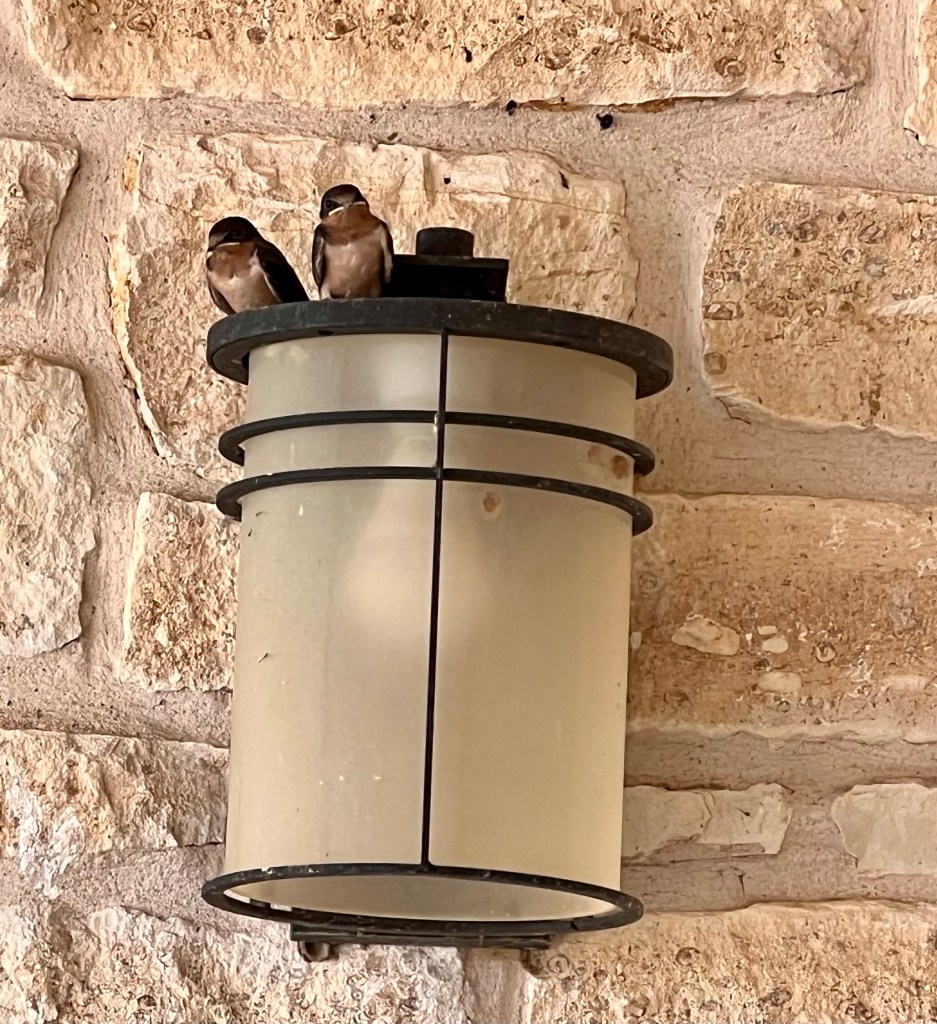
Here’s a funny thing about these birds. The whole time they have been nesting, they have completely ignored us humans and the dogs as we go in and out of the house, sit on the porch, or swim in the pool. But, after the birds had spread out and were practicing their skills, they started dive-bombing me when I went into the back yard or over to the horse pens. Each time they got to my head they’d make a sound, and I swear as they zoomed back up, there was a Doppler effect. It was really cool, but there was no way I could get a photo, since they always surprised me.
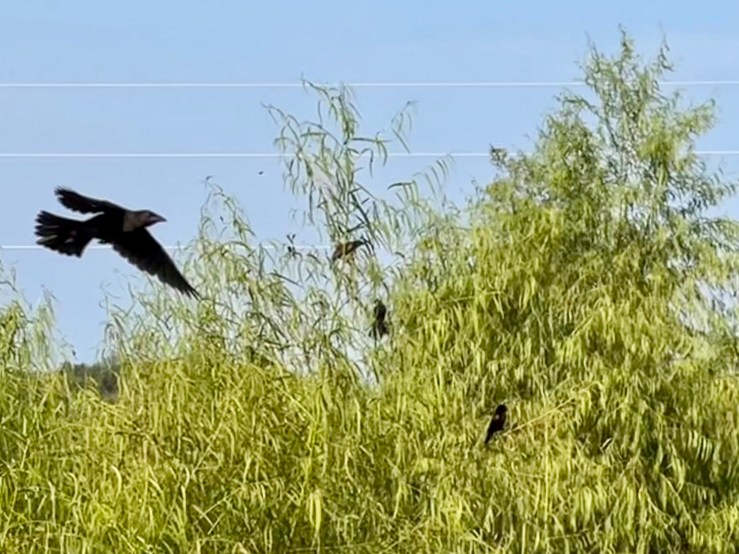
Another local resident that likes to dive bomb humans is the red-winged blackbird (Agelaius phoeniceus). Luckily, they hang out in the willows, far from me.

I am seeing fewer and fewer barn swallows this week. It’s time for them to head off to their non-breeding lands way to the south now that the young ones know how to fend for themselves. They will return in late January or early February. I’ll soon be able to power wash the porches and other poopy areas and enjoy the clean surfaces for six months. (It’s been recommended to put newspaper under nests, but that would not last long at the Hermits’ Rest, wind capital of Milam County.)

Another Nest or Two

I tell my family we are running an aviary, since house sparrows have been nesting away on the porch this year, too. I guess we were lucky they didn’t find us until this year. They are really chirpy and poopy and not native. But the nests are funny.
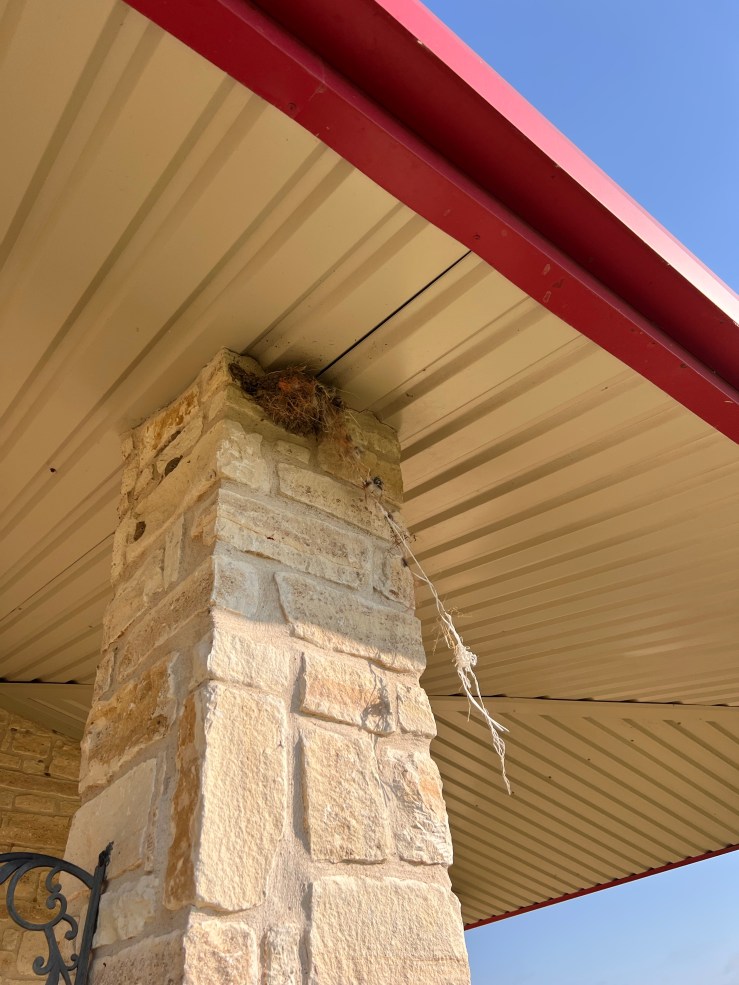
This mess is a sparrow nest converted from a swallow nest. The sparrows have to add their own special touches.

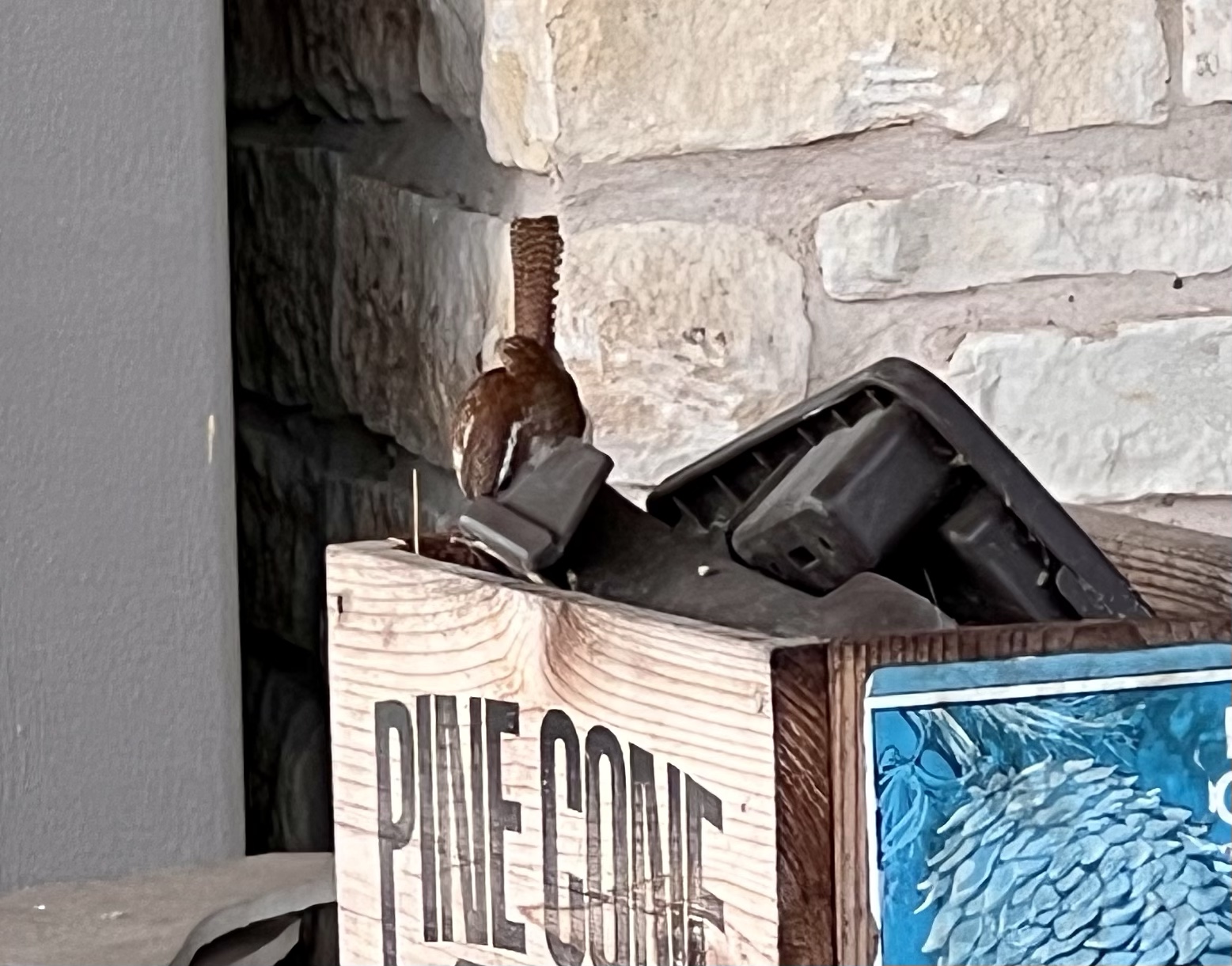
The nest of our third porch-dwelling species, the Carolina Wren (Thryothorus ludovicianus) – also known as my favorite small bird – is much cuter and more fun to watch. These wrens are well known for building nests near human habitations in odd places. We have had families in an old grill, in numerous hanging plants, and in a watering can, to name a few spots. Our current pair have taken up residence in the box that is supposed to hold the pool remote control. I had set a few other items in there to keep the wind from blowing them away, though, and this made the box irresistible to wrens.
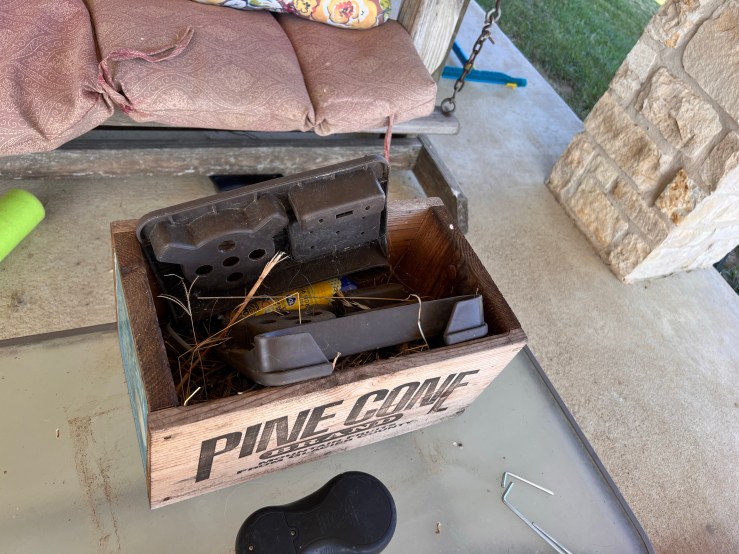
The box, with remote control in front of it. Note lots of grass. That’s nest material.

I went to clean out the box and put the remote control back in and was faced by one of my most beloved sights, an angry wren. Oops. I backed off, and we are now giving the growing family their space. The eggs have hatched (I peeked and saw two), so now the parents are taking over from the swallows and putting on a show for us patio dwellers. The pace at which those guys catch bugs and take them to the nest is impressive. We are looking forward to more pretty, fun, and melodic wrens in the near future.
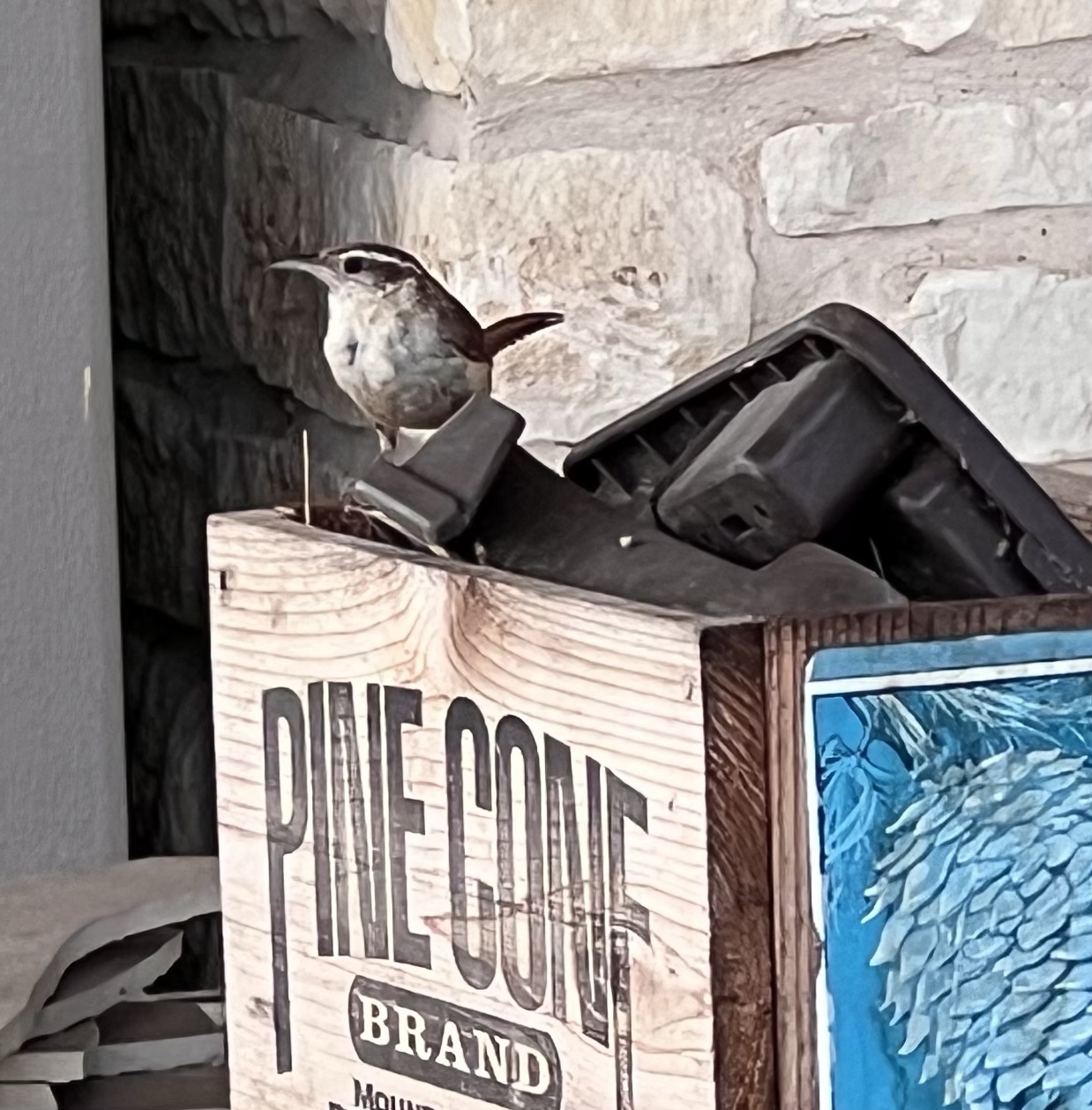
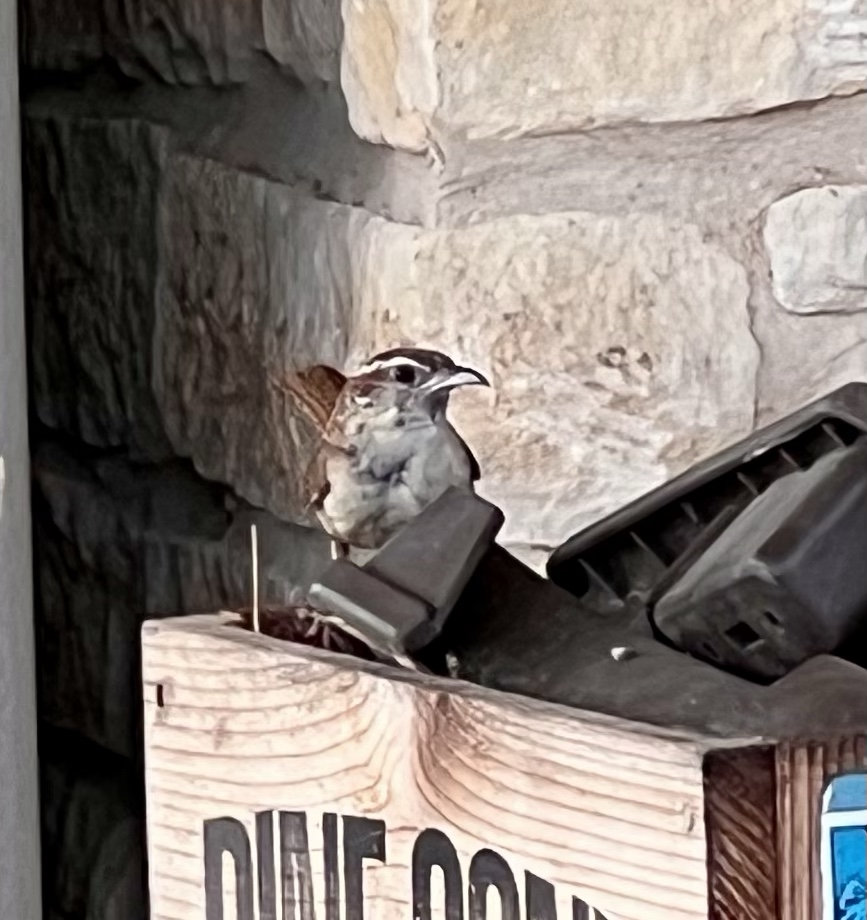
Honestly, I don’t know how anyone can get bored around here!

Weird and Interesting Sights

by Sue Ann Kendall

This post isn’t about Milam County, but it’s about some nature I observed at Fort Parker State Park, near Mexia and Groesbeck, Texas, to the north of here on the Navasota River. Since we have readers from all over the area, I’m hoping for some feedback on some of my sights, and for some high-fives about a few cool observations.

The trails were surrounded with beautiful Turk’s cap plants in bloom.

Even though we are under a giant heat dome, it was pleasant at the shady park during the mornings, so I did my longest “hikes” then (as anyone who’s gone on a walk with me will know, I stop an awful lot on hikes). The biggest highlight of my trip happened when I was on the river trail. I was busily listening to birds (vireos and more vireos), when something moved to my left. It was extra-brown and looked like mobile leaf litter. The shape told me I’d stumbled across a Chuck-Will’s Widow (Antrostomus carolinensis), my favorite nightjar! By standing still/creeping around, I managed to get photos that were identifiable, which excited me greatly. You don’t often see these birds; you more often hear them. as they are very loud and nocturnal. I’d only seen one of these birds one other time. So, that was enough nature for me, right there.

As good as my photography gets.

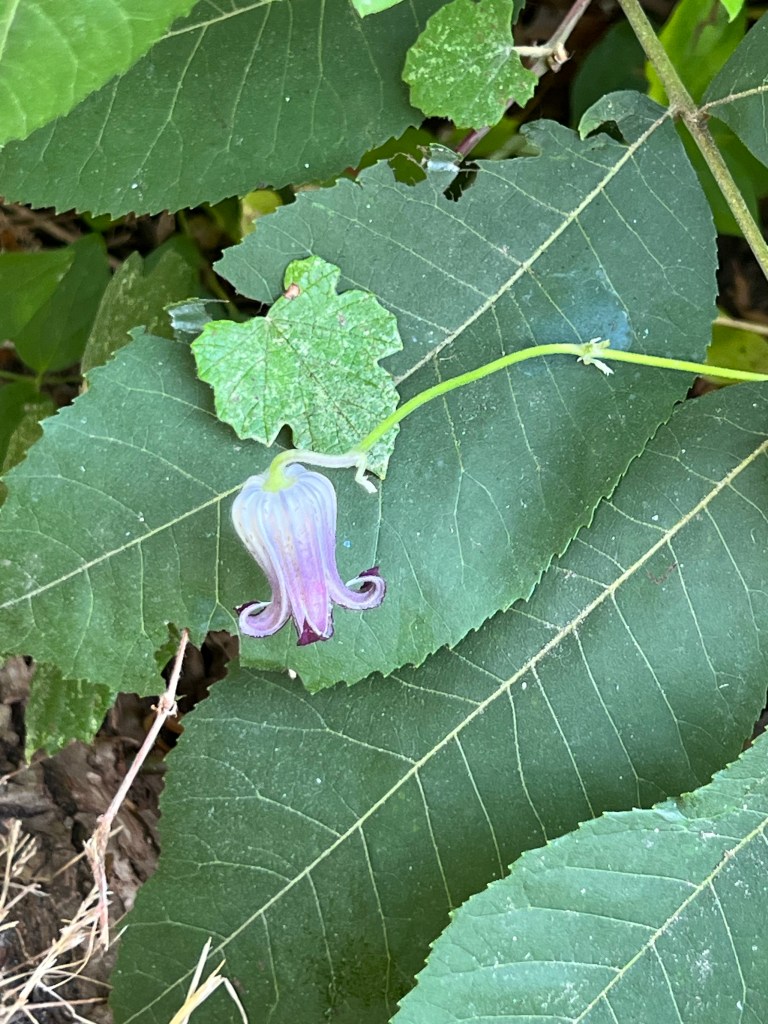
Of course, I found many other things. A couple of flowering plants were new to me, including this one, which could be one of two plants, both of which have the common name of butterfly pea or pigeon wings: Clitoria mariana or Centrosema virginianum – I’d love some help getting the right identification for this flowering vine, which is one of the most beautiful things I’ve ever seen.

There aren’t many flowers, but the vine itself is really interesting, because it grows very long tendrils that hang down gracefully.

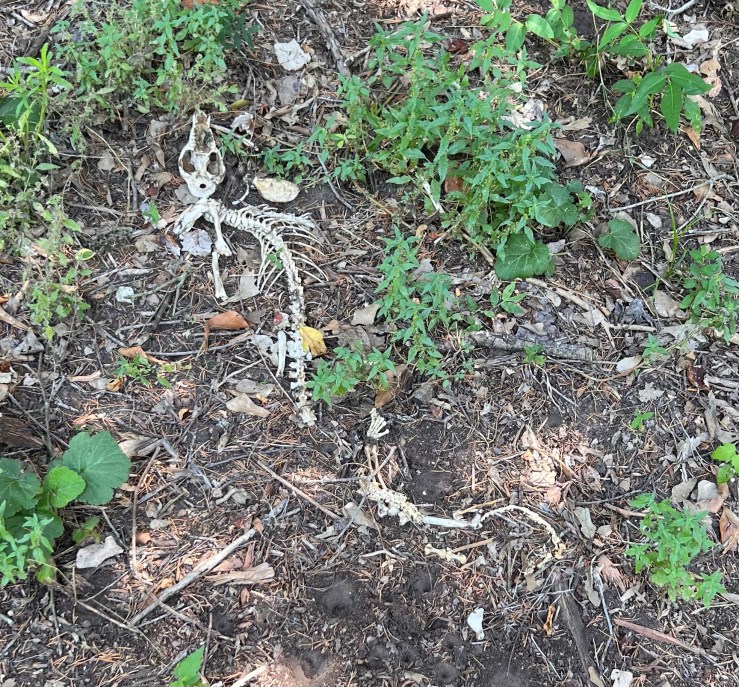
Another thing I saw that I could use some identification help with is this mammal skeleton. Could it be a fox or a coyote? It has large canine teeth. Or am I missing something obvious?

A former animal

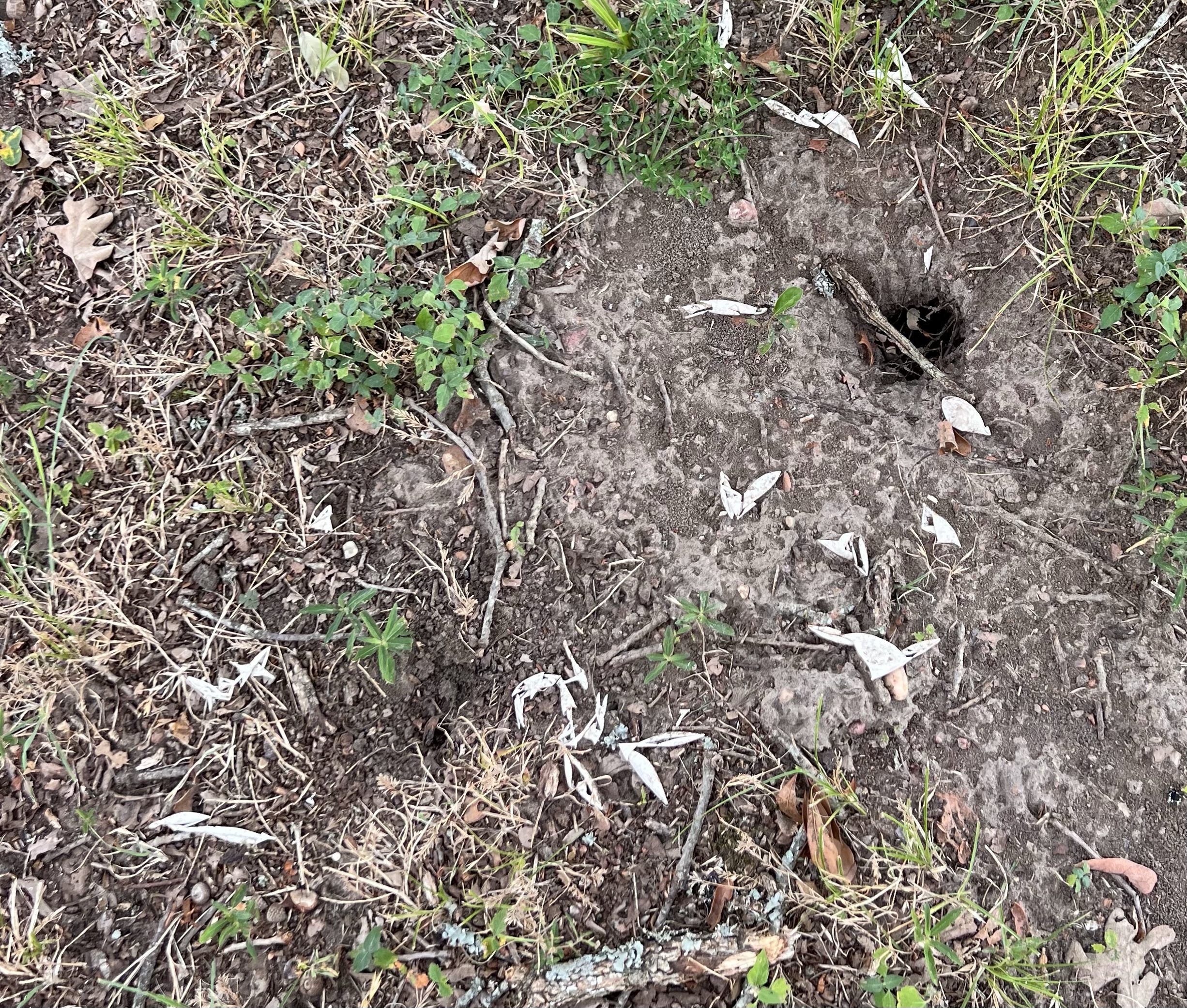
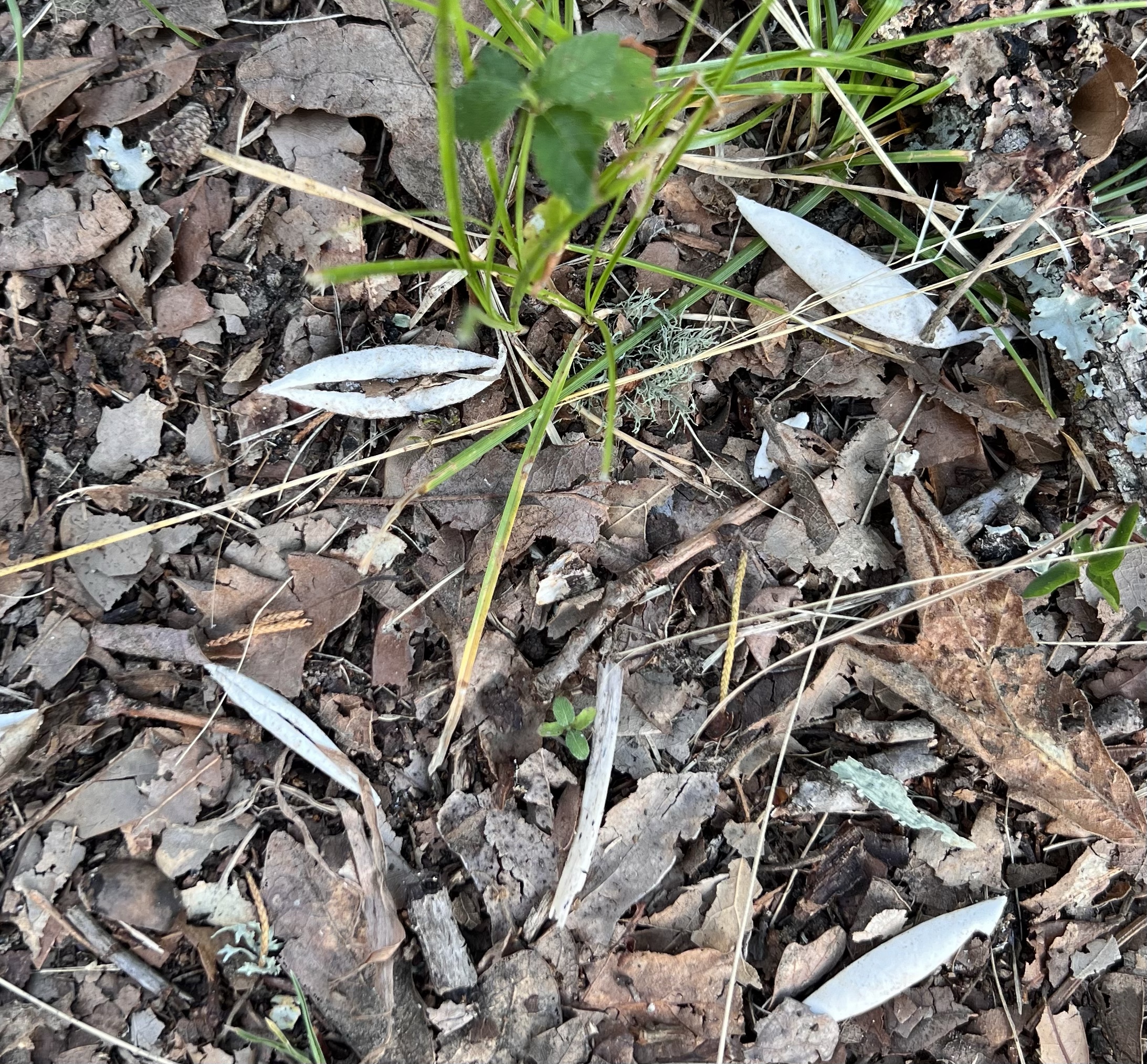
There was other evidence of creatures that have moved on, too. All over the part of the park near the lake are holes that look recently dug, with white things scattered around them. There were dozens of them.

My thought is that these are recently hatched turtles. I did see a few mounds of dirt that resemble turtle nests I’ve seen before. If even some of these made it to the lake, that’s a LOT of new turtles out there! I have a feeling all the egrets around the lake are happy with this potential feast. Do these look like turtle eggs to you?

That does it for my mysteries. I thought I’d share a few other bits of interesting nature that I ran across. Let me know if any of my IDs are wrong, and be sure to go correct me over on iNaturalist (I am sunasak).

If, for some reason, you’re dying to see the many, many other plants and insects I saw over the weekend, feel free to visit my personal blog:

Or for you hard-core observation lovers, I’m sunasak on iNaturalist. Please go confirm or deny my identifications! I appreciate it so much, and it helps me learn more.

Killdeer Tactics

By Sue Ann Kendall

For the past few weeks, the killdeer at my ranch have been in a breeding frenzy. I have even spotted tiny new birdies down by my front pond.

Killdeer have a few interesting habits. When they create a nest, it consists of nothing more than a small depression on the ground, with eggs in it. While the eggs do a great job of blending in with whatever surface they’re laid on, they are just sitting there, exposed.

Killdeer sitting on eggs. Photo by Eric Schmidt, from iNaturalist.

The parents are vigilant about protecting their nests, though. They don’t want a hawk or snake to find them, and they’d prefer the livestock not stomp on the eggs, either.

Ignore the center of the driveway! Nothing there!

They spend much of their time while eggs are incubating making loud sounds and flashing their wings, pretending to be injured to attract predators away from the eggs. I can assure you it’s loud.

My serene butterfly and wildflower observation time has recently been accompanied by many killdeer trying to get me to go away from wherever I am (oh, and dickcissels are also bellowing, too). Those parents have got to get tired, because at least one pair led me all the way down the driveway and partway down the road.

Follow us! We are more interesting than our eggs!

I do wish they were a little more careful about selecting nest locations. So far, I’ve seen two on the pond shore get washed away in recent rains. The current one I’m watching won’t wash away, but I have to warn my family to stay on the driveway and not cross into the middle, because that’s where these two eggs are!

Aren’t they an interesting shape?

I hope they make it!

Celebrating Our Graduates!

by Sue Ann Kendall

Photos by Sue Ann Kendall and Debbi Harris

Wednesday night was very festive for the El Camino Real Texas Master Naturalist chapter. We celebrated the five new graduates from our training program with a delicious meal and a lovely presentation at the All Saints Episcopal Church in Cameron, where we also have our monthly meetings. We are grateful to Fr. Jeff and his staff for being such gracious hosts.

Father Jeff and our graduates.

Our food was catered by Hot Corners, the company that is located in the beautiful Venue at Railfan that recently opened in town. Barbara Dominguez does a wonderful job, and we were glad to see our vegetarian attendees had many options. Next time we’ll remember to ask for a gluten-free main course!

The appetizers included one of Barbara’s famous charcuterie boards, along with wine and some pretty darned good non-alcoholic wine beverage that was fun to try!

MMM, charcuterie

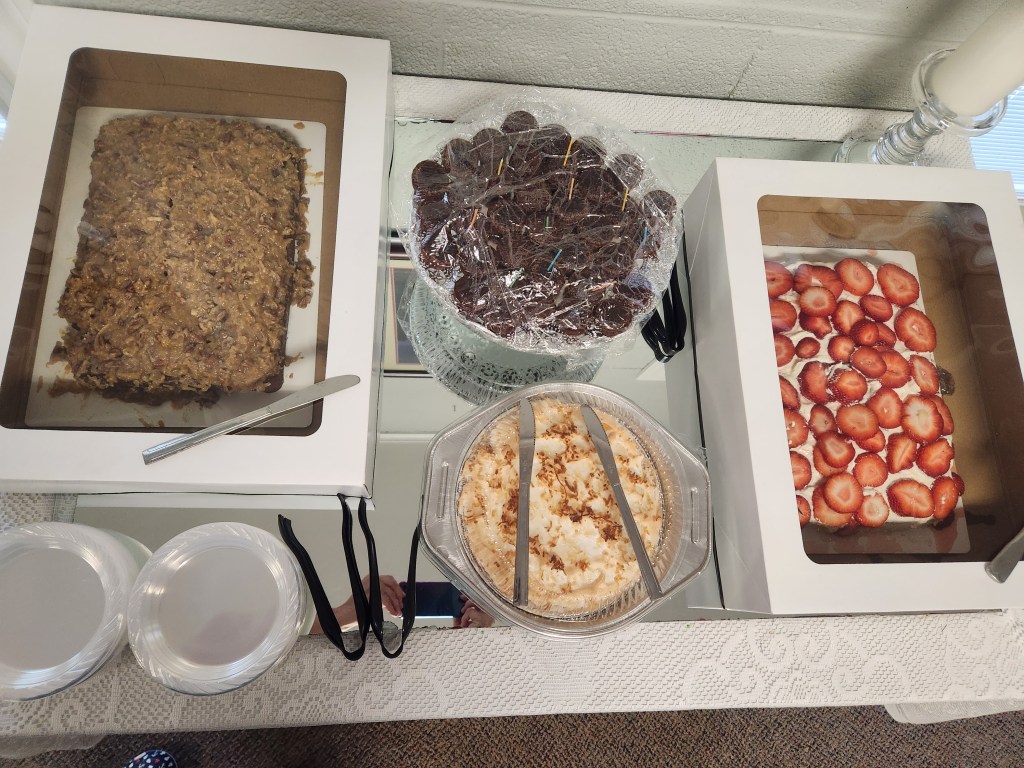
Desserts were provided by Alan Rudd, who was also our assistant trainer this year. It was hard to choose which one to try, so many people tasted more than one.

The fellowship and conversation were fantastic, and everyone had a good time at the meal, and an even better time during the awards.

First, Dorothy Mayer read her famous poem she wrote when she was graduating, which always brings a laugh.

Dorothy shares the story of her poem.

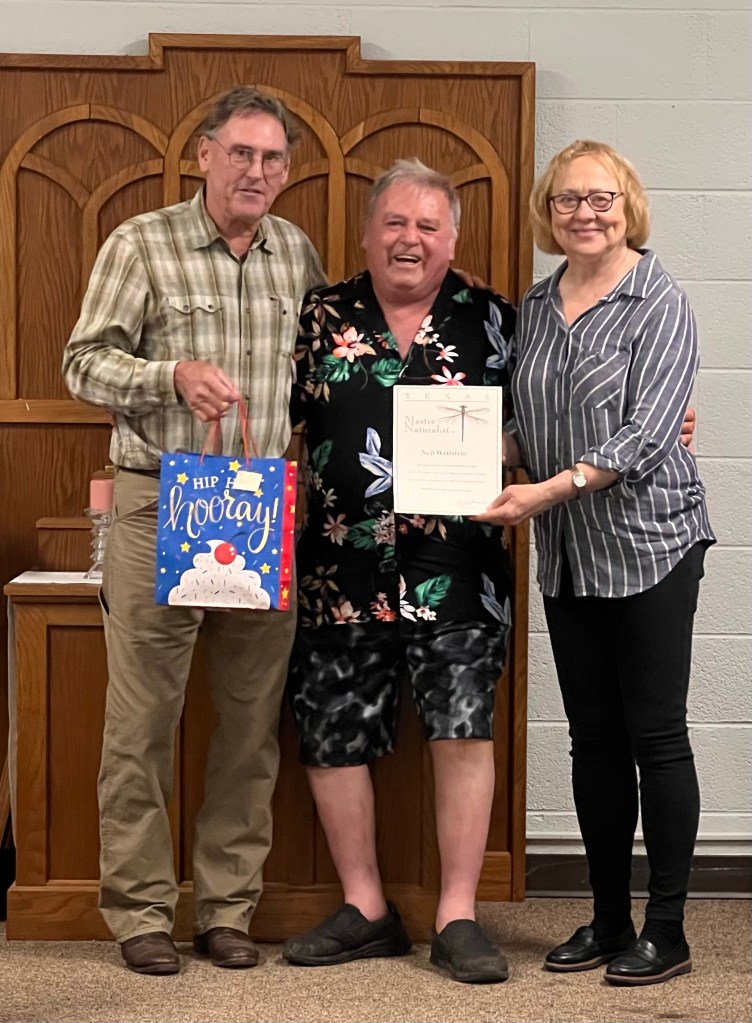
Then came the highlight of the evening. Patricia Coombs, Brenda Ferris, Ellen Luckey, Michelle Pierce, and Neil Wettstein were each presented with their graduation certificates, and two others received their first dragonfly pins for their initial certification as well. Great job, everyone!

Following the student awards, Alan Rudd presented Kathy Lester, our lead trainer for the past three classes, with a beautiful painting of a sunrise or sunset (you get to pick) with kind words on the back of it from past students. Kathy was surprised and delighted by her gift, which is obvious in the photos!

Kudos to the team who put together the party and decorated the room so nicely. It takes a lot of work to organize all our activities, and we appreciate our dedicated members very much. Now, let’s get going on the City Nature Challenge!

Here are a couple of funny out-takes from the party. We did have fun.

When Do We See the Most Butterflies?

by Sue Ann Kendall

In my personal blog earlier this week, I shared photos of a lot of butterflies I’ve been seeing around Milam County. One of our readers, who is also a follower of this blog, expressed surprise that we see so many butterflies in the autumn. She also wondered where the butterflies came from. Were they here all along or are they migrating through? It got me to wondering if this was an atypical year or if there are usually plentiful butterflies in early November. And I thought for sure some of the butterflies (monarchs and snouts) migrated but I figured the rest were born here and stayed on to become food for the birds.

So, I went and looked up whether the butterflies we see here migrate or stay here, and what times of year they are seen most. I got all the information off iNaturalist and Wikipedia, and I have lots of links in this post that you can explore.

Gulf Fritillary

Dione vanilla have been seen to migrate twice a year (in Florida). But they only go from south Florida to north Florida. Here is the chart of their distribution here in Texas (from iNaturalist). You can see they are here year-round but peak around the beginning of autumn, when all those yellow flowers are out.

Gulf fritillary appearances

There have been lots of observations around where I live, so they are pretty common, but beautiful.

Common Buckeye

This one, Junonia coenia, I see a lot but only at some times of the year. It’s also seen year round here but has a spring peak as well as a fall peak. I’m getting the idea that autumn is a big butterfly time here!

Common buckeye appearances

These do migrate, but seem to be here all year, because it isn’t too cold, I guess. Here’s what research says:

Common buckeyes move to the south along with tailwinds directed to the north or northwest after the cold fronts from September or October. They are sensitive to the cold and cannot spend the winter in northern regions that will experience extreme cold temperatures. However, they will migrate back from the south during the spring. It was spotted in California in late summer, early fall of 2022.

The butterfly gardener’s guide. Dole, Claire Hagen. Brooklyn, NY: Brooklyn Botanic Garden. 2003. ISBN 978-1889538587OCLC 52223505.

Pipevine Swallowtail

Battus philenor is not as common this time of year. It’s also more of a forest butterfly than a prairie one, which explains why I saw it at Tarrin’s – lots of wooded areas near her ranch. This one is also more of a warm-season butterfly. I probably saw one of the last adults for this year. I see lots of observations of caterpillars right now on iNaturalist.

They must not migrate, since I didn’t find any information on that. I do want to note that they need the pipevine plant to lay eggs on, and I found a member of that family at my neighbor Sara’s place earlier in the year. Yay!

Observations near me. The top one is our place.

Queen

Danaus gilippus is most definitely a fall flyer. It’s only found in the southern US and is more common in South America. This one, like the monarch, uses milkweed plants as its host. It sure is pretty.

Queen butterfly sightings

Painted Lady

Painted Lady (Vanessa cardui) is another one with two peaks. One thing I’m noticing, though, is that even the ones with a spring peak have a larger one in the autumn. So, that explains something that Louise was asking about: many butterflies seem to be autumnal!

Painted Lady sightings

Painted ladies are the most widespread of all butterflies and are found worldwide. I hadn’t known that! They are resident in places like where I live, but also migrate to northern areas in the summer.

Common Checkered-Skipper

Common Checkered-Skipper (Burnsius communis) is one I can’t get verified, but the ones I see sure look like the ones in the picture. It doesn’t seem to have been studied as much as many of the others, though it’s really pretty with its blue body and lacy pattern on the wings. And yep, it’s another one that is seen mostly in the autumn.

Checkered skimmer sightings

Variegated Fritillary

Euptoieta Claudia is common in this area. They seem to be prevalent all year except in the dead of winter. I think they’re pretty, too.

Variegated fritillary

They use passion vines as their host, which may explain why we see so many here. I have LOTS of passion vines! They also like disturbed areas and open fields, which we have plenty of around here. They produce multiple broods per year, which may explain the prevalence during all the warm months.

This is such a pretty photo

Dainty Sulphur

Dainty Sulphur (Nathalis iole) is a tiny yellow butterfly, the smallest of the bunch, it turns out. We have lots of sulphurs around here, and they are very busy little fellows, so it’s hard to get photos. This one seems to go away in the hotter months. I do recall seeing them all winter, since we always have something blooming, like chickweed, which is one of its favorites.

Dainty sulphur observations

This one is also white and other colors, so now I know that all those teeny ones I see are the same butterfly. I learned something!

Thank you for holding still

Fiery Skipper

Fiery Skipper (Hylephila phyleus) is another small one. They are incredibly numerous around here and are very busy little things. I enjoy watching them skipping around. Well, when I read the article on them, it became clear why I see so many! They love Bermuda grass. Guess what all the pastures around here were planted in? Bermuda grass. The beloved coastal Bermuda has pretty much made life difficult for the native grasses around here, but I guess that makes the fiery skippers happy. It makes them a pest in Hawaii, though. I say, eat away, skippers!

I also learned why the butterflies I see that are identified as fiery skippers look so different. They are sexually dimorphic, with the males much brighter than the females. I’m suddenly becoming a butterfly expert as I write this.

Fiery Skipper Sightings

Gray Hairstreak

I am trying to figure out what butterflies I see earlier in the year. Gray Hairstreak (Strymon melinus) is one I know I see in spring. Even this one peaks in the fall, though. It’s tiny, but holds still enough that I can get photos. Thanks!

Gray hairstreak
It held still

American Snout

These guys, American Snout (Libytheana carinenta), just migrated through here, so I know they are migratory. But they are most often seen in autumn, like all the others so far. Migrations happen after droughts that are followed by heavy rains, which explains the one last week. The Wikipedia article says sometimes there are so many that they darken the sky. Wow. Funny looking, too.

American snouts

Pearl Crescent

Another beauty, Phyciodes tharos is more of a spring and summer butterfly that’s found all over North America. It’s very common in this area.

Pearl crescent

Hackberry Emperor

Asterocampa celtis is one of the summer butterflies around here, probably because of its ties to the hackberry tree (which we have plenty of). I guess it shows up when the trees start blooming.

Hackberry emperor

This is a weird butterfly. It’s rarely seen visiting flowers (I see it on trees, duh). And it doesn’t pollinate the trees:

Species in the genus Asterocampa are regarded as being “cheater” organisms, since these butterflies do not pollinate flowers when they feed from them. This species can more accurately be described as parasitizing their hosts and plant food sources since they extract nutrients without providing any benefits to the host.

Neck, Raymond W. (1983). “SIGNIFICANCE OF VISITS BY HACKBERRY BUTTERFLIES (NYMPHALIDAE: ASTEROCAMPA) TO FLOWERS” (PDF). Journal of the Lepidopterists’ Society37 (4): 269–274.

How about that?

It’s on a tree

Eastern Giant Swallowtail

I’ll stop with Papilio cresphontes, since I finally found one that isn’t most common in the autumn. This one is more of a summer butterfly. It’s always great to see one of these gracefully flitting around.

Giant swallowtail

This is the largest butterfly in North America, so I’ve shared with you both the largest and the smallest today! The caterpillars are pests to citrus growers, but they are just beautiful sights as far as I’m concerned.

Monarch

I lied about stopping. I forgot to stick the monarchs (Danaus plexippus) in my original post, figuring everyone already knows all about them, but since I have all kinds of delicious milkweed on my property for them to enjoy, I figure I’d better share their data, too.

Monarch sightings

As you can see, these are butterflies of summer, but you’ll still see a few of them at other times of the year. They are famous for migrating, but not all of them do so, thus the sightings at other times of the year. And did you know these were the first butterflies to have their genome sequenced? Yep. Also, did you know how to tell males from females? Males are larger and have a spot on a vein on each hindwing. I guess mine’s a female, or you can’t see the spot when the wings are folded.

I’m very lucky, because the only time I ever went to the interior of Mexico (it was for work), our hosts drove us the long way to Valle de Bravo, where we were meeting, so that we could drive through the mountains where the monarchs stay in winter. If you go around noon, they drop to the ground to feed, and we got to see hundreds and hundreds of monarchs floating down. We had to drive slowly to keep the butterflies safe, and there were men with flags that said “Mariposas – Despacio” (butterflies – go slowly) at the entrance to the forest. This was in the early 2000s, so there were way more monarchs than there are today.

Conclusions

From what I’ve looked at, it turns out that late summer to early autumn is the best time to see butterflies around here. It also appears that most of the butterflies we see in Milam County don’t migrate far, if at all. I enjoyed learning all this, and I hope you get something out of it, too.