I had a magical nature adventure on my own property yesterday!
I was delighted to discover that the woodland floor next to our house was covered in charming little flowers. I’d never seen them before, even though I walk in these woods often each spring, because I’m noting when different plants and birds come and go.
Gosh darn it, they’re cute.
I had to look them up as soon as I went inside after my birding break. Their name was as lovely as their appearance: Virginia Spring Beauty (Claytonia virginica). I happily read the excerpt of a longer article that appears in iNaturalist as had to giggle when I saw that one of their other common names is Fairy Spud. I had to learn more.
I’m your little spud.
It turns out that the plants grow from tubers that were eaten by many indigenous people in the eastern US, you know, like potatoes! They were thought to cure convulsions and/or prevent conception. I assume the latter didn’t work well, since people ate it a lot. The whole plant is edible, but the Wikipedia article noted that the leaves are “not choice eating.”
Now, here’s a mystery. Today it’s much cooler and very windy. I went out to see my little flowers, but lo and behold, I couldn’t find them. I hope they come back!
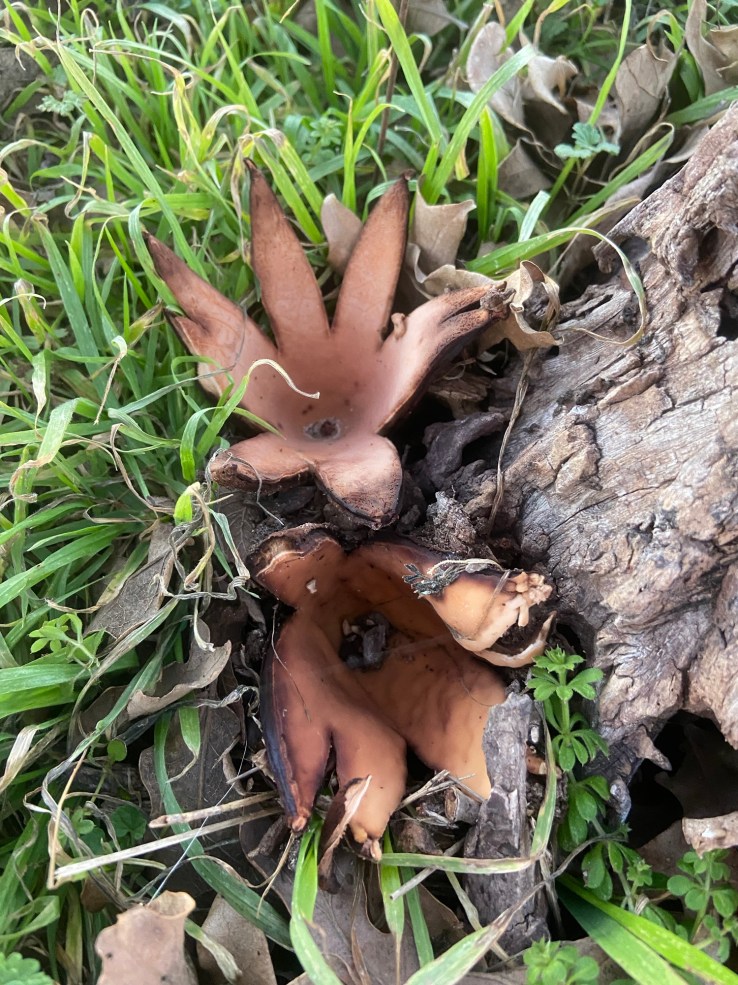
The State Fungus of Texas is the Texas Star (or Devil’s Cigar) (Chorioactis geaster). It’s not spotted often, so wheneever you see it, it’s newsworthy. When it was spotted for a second time at Inks Lake State Park last December, it made the news all over Texas. This is just one of the articles. There’s also an article on them in this month’s Texas Coop Power magazine. So, when my neighbor Vicki sent me a photo and asked me if I’d ever seen anything like this before, my heart skipped a beat.
I knew exactly what it was!
I told her it was rare and exciting. She looked it up, and we both geeked out over it for a while. The next day I went over to her property to get a look (I’d also hoped to pet her minature horse, but she was in the next pasture.) The mushroom was in a field of post oak trees, which confused me.
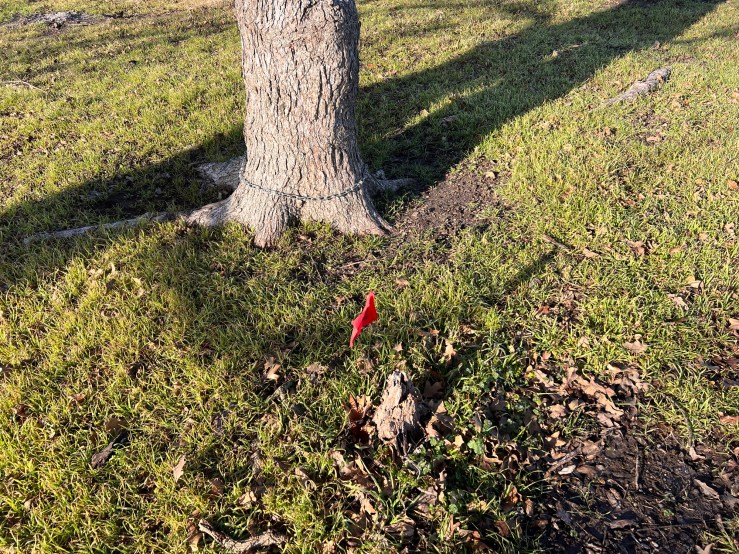
However, when I got closer to the spot where the Texas Star was located, conveniently flagged by Vicki, I saw it was exactly where it should be. It was right next to the stump of a cedar elm tree (that’s basically all we have, the oaks and the elms). We’d recently had a lot of rain, so it was fruiting right when it was supposed to.
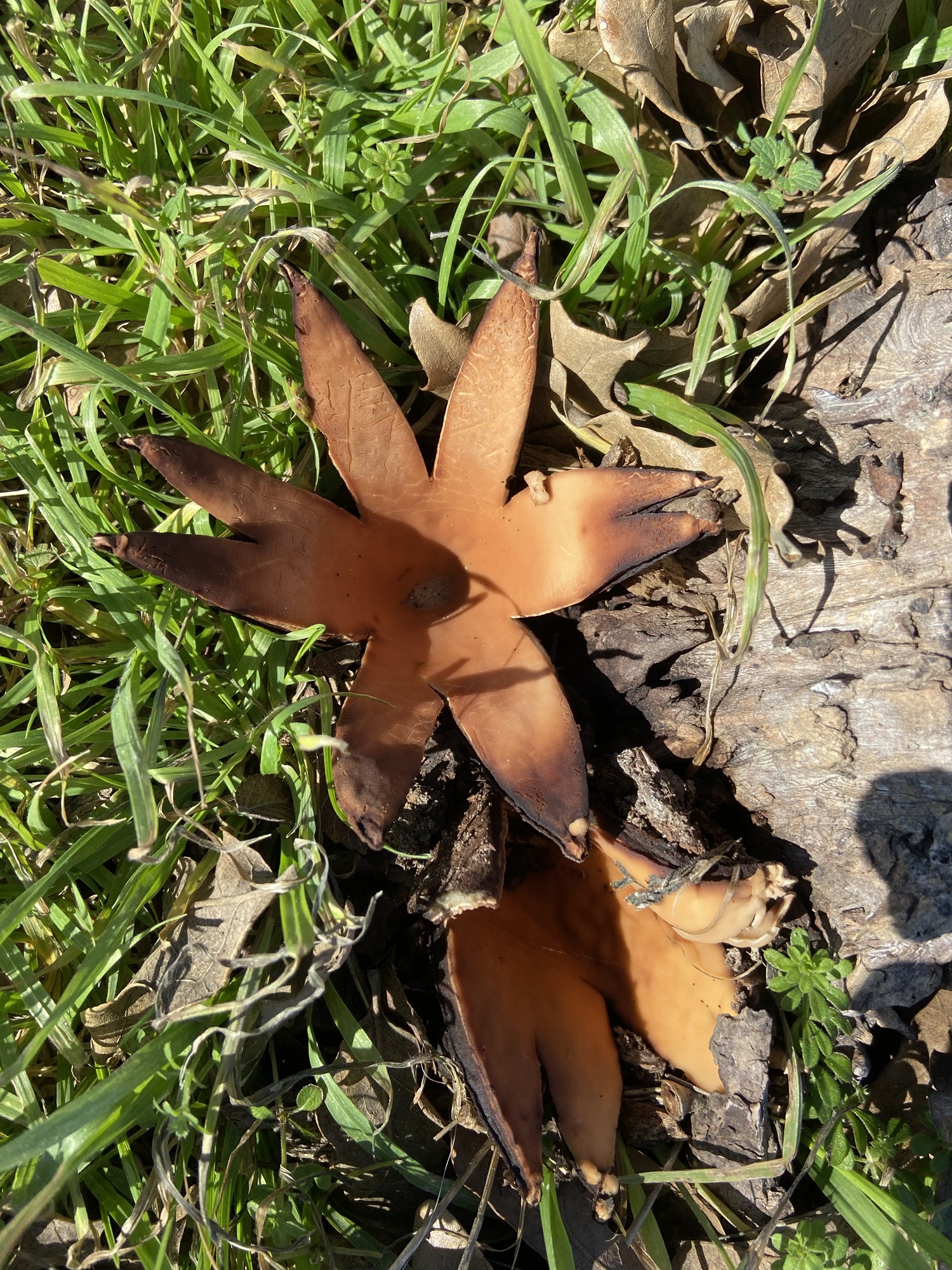
There it is!
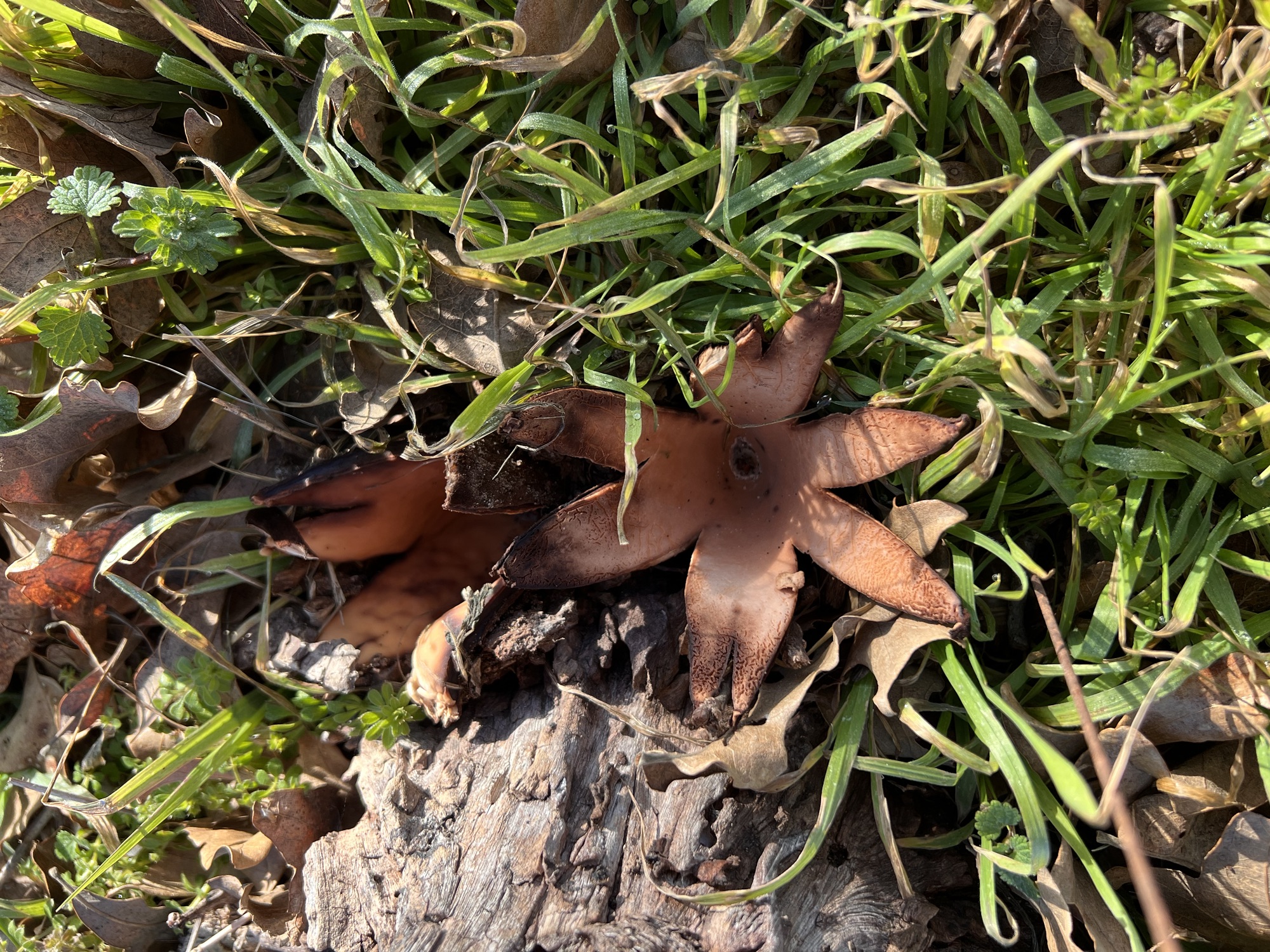
As soon as I got my own photos, I uploaded the observation to iNaturalist, where it was quickly confirmed. It had already burst its spores out, so we missed the exciting hissing sound the Texas Star makes, but it was fun to feel its leathery “petals,” and see if it smelled funny (I couldn’t smell anything). I looked around but didn’t see any more on her property. I also looked at the dozens of cedar elm stumps in my woods, but no Texas Stars have turned up.
It pretty much looks the same from all angles.
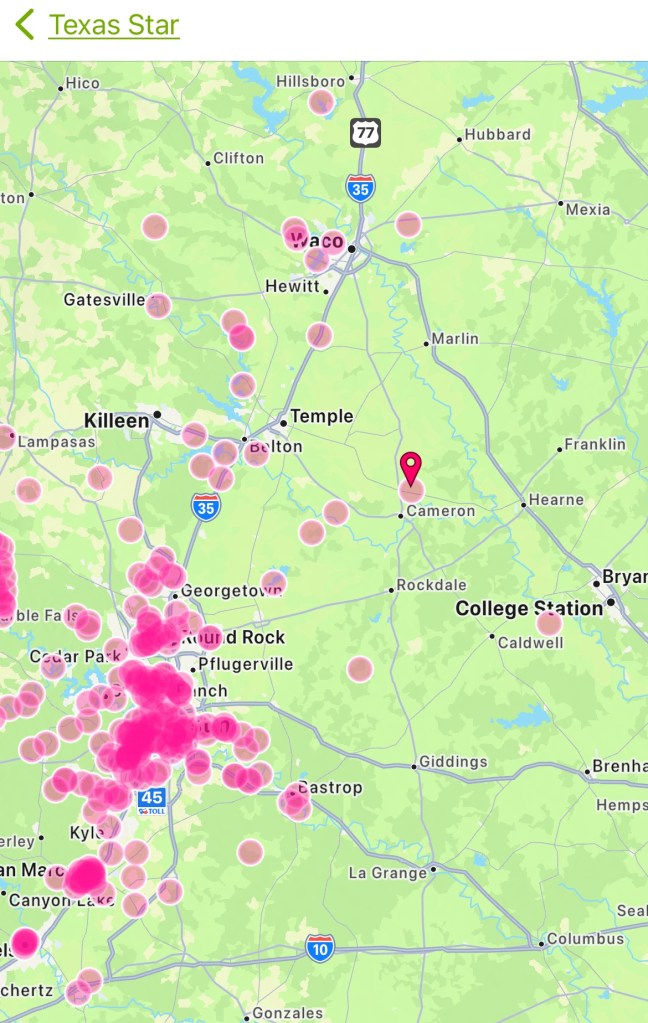
As I looked at the information on iNat and Wikipedia about the fungus, I learned a lot. First of all, I’m pretty lucky to live where it grows. It’s only found here in the middle of Texas and a small place in Japan. That makes me wonder if they are really the same fungus, but I’m sure professionals have looked into that.
This iNat screenshot isn’t the whole Texas Star range, but it shows how few observations there are in this part of the world.
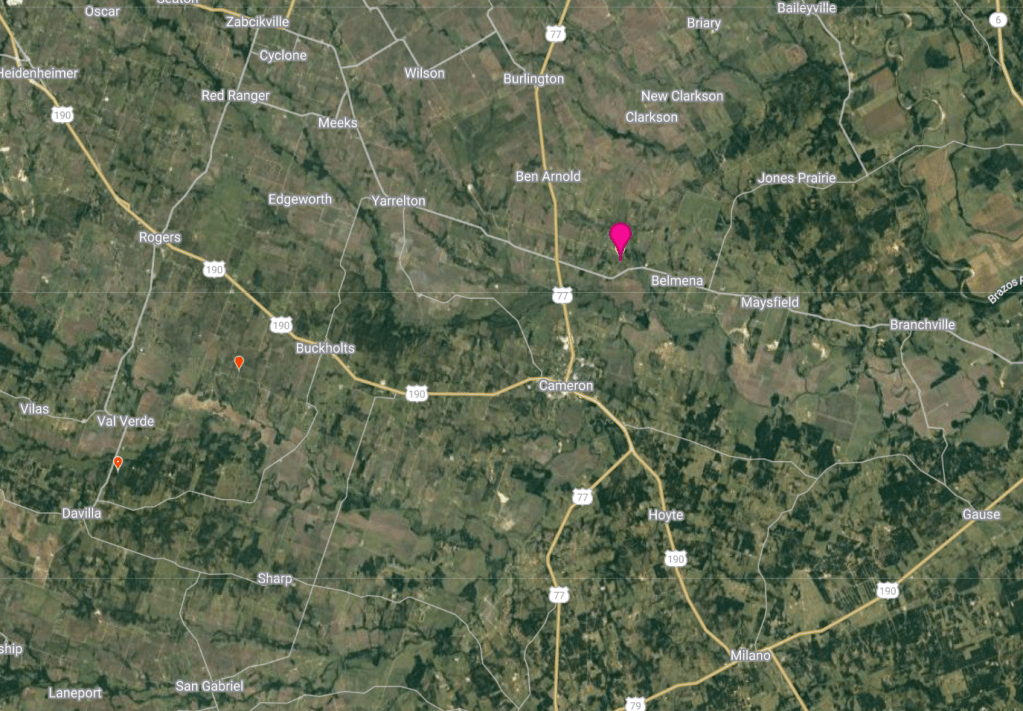
There were observations near Davilla and Buckholtz, but only the Davilla one was research grade, making my observation the second confirmed one in Milam County. And we are way to the east of its usual range. I was excited!
This map has most of Milam Couonty in it, and shows the three potential observations.
Keep on the lookout for these if you have decaying cedar elms (Ulmus crassifolia) and we have another nice rain (which I assume will happen soon). To learn more, read any of these articles:
Since we’re not getting many submissions lately, I’ll go ahead and write up some of my little naturalist projects. Too bad I don’t get volunteer hours for this kind of stuff, but I enjoy it anyway, because it gets me out in nature and my data is useful to someone.
Where I listen to birds.
What I’ve been doing involves using my eyes and ears to track the bird species in an area of northern Milam County about a half mile in diameter around my property. It contains pastures, woodlands, ponds, and a creek.
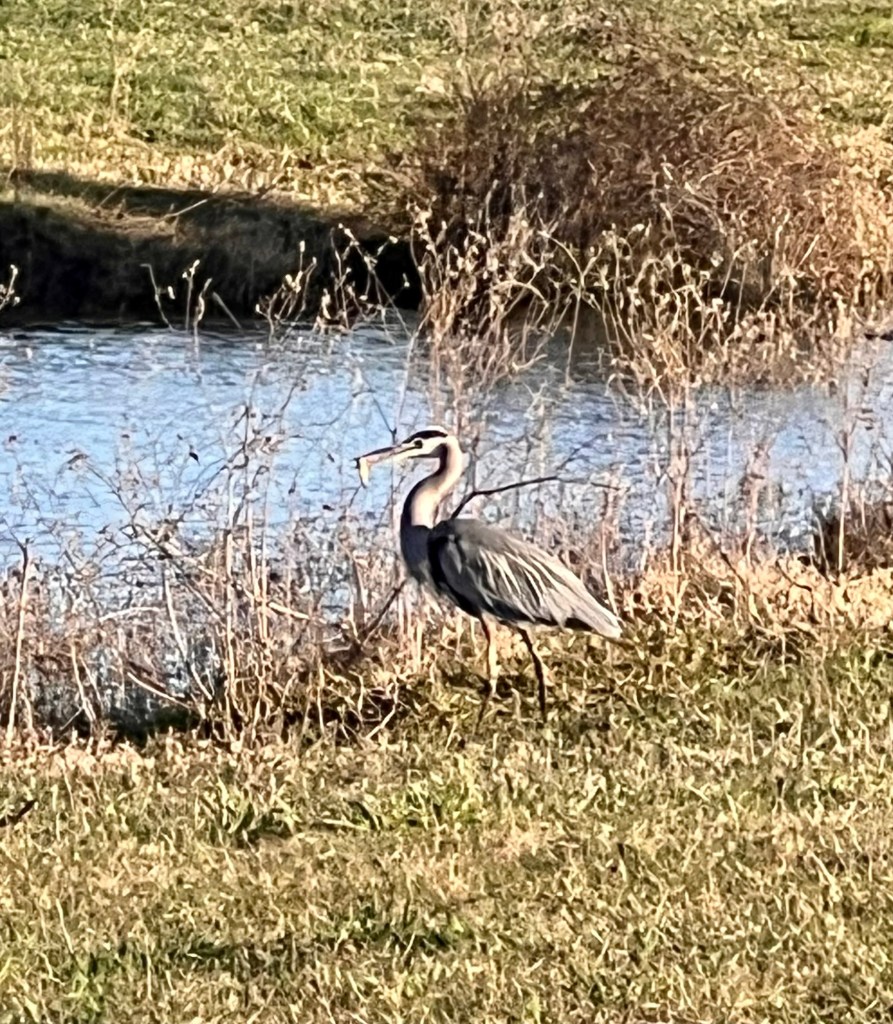
Mmm, fish
I’m keeping a record of what birds I observe with my eyes (I do try to get photo confirmation on iNaturalist for unfamiliar birds, but I trust myself to identify the two vultures I see as well as crested caracaras. For listening, I use Merlin Bird ID, which is really quite accurate (only twice has it found birds that shouldn’t be here, and who knows, the wind could have brought them in).
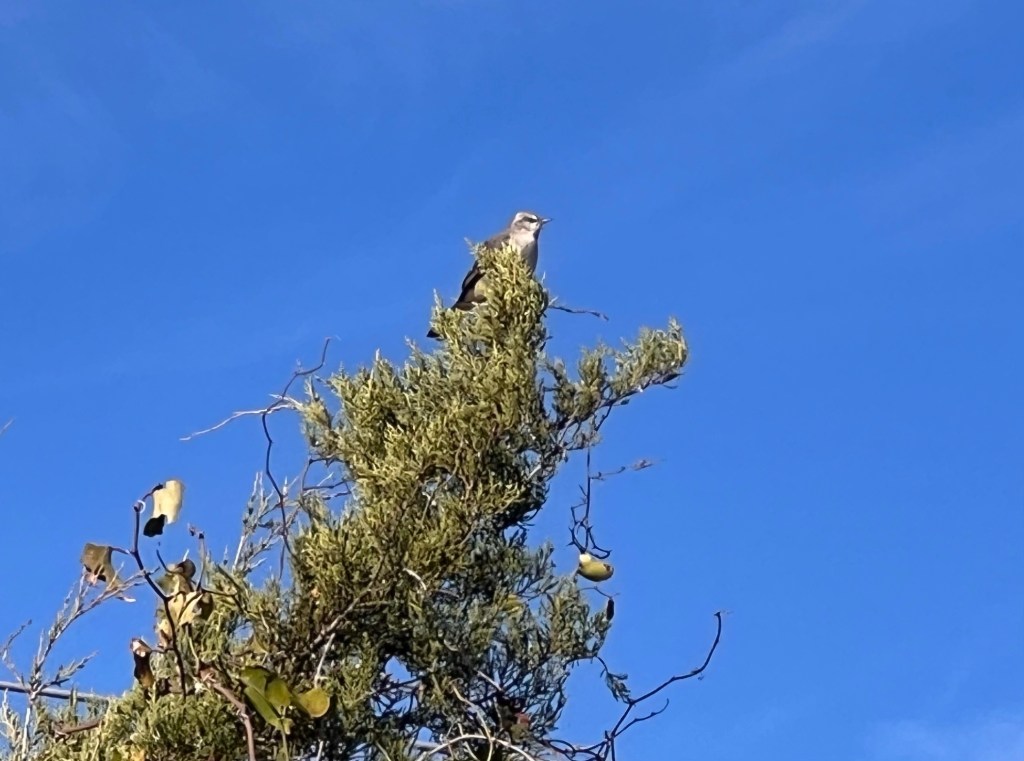
It’s a mockingbird, not a loggerhead shrike.
I use Merlin for between half an hour and an hour a day, and I have three places I usually listen. Mostly I listen between 8 and 10am, depending on my schedule, though I occasionally listen around dusk so I can get owls (barred and great horned so far).
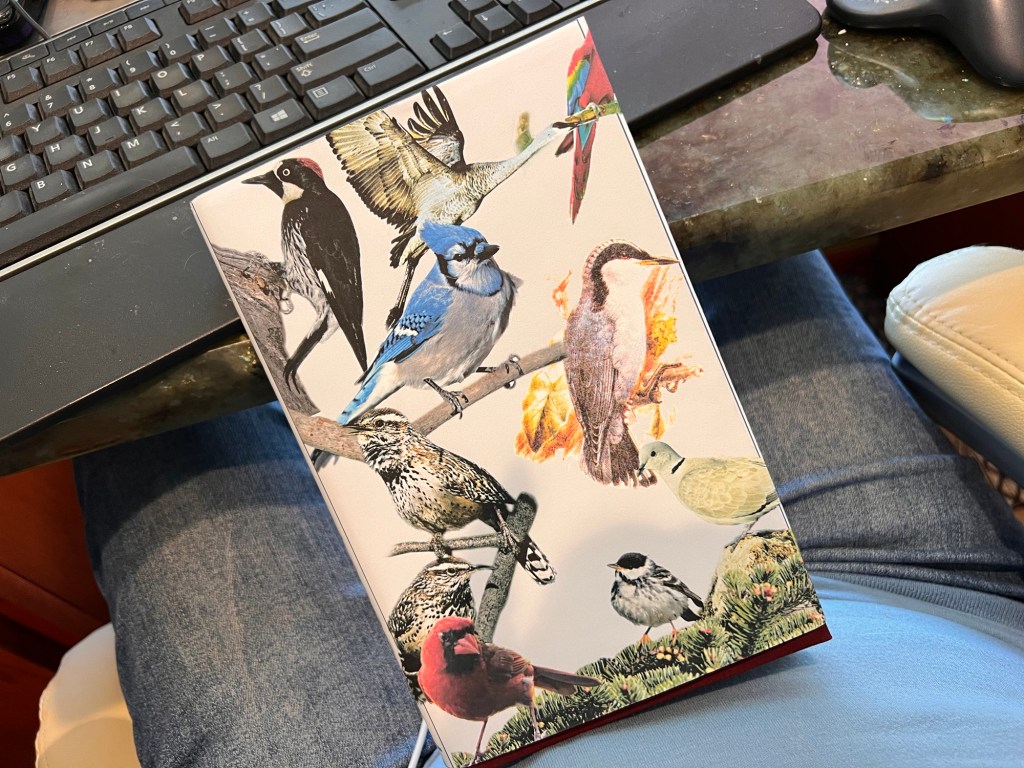
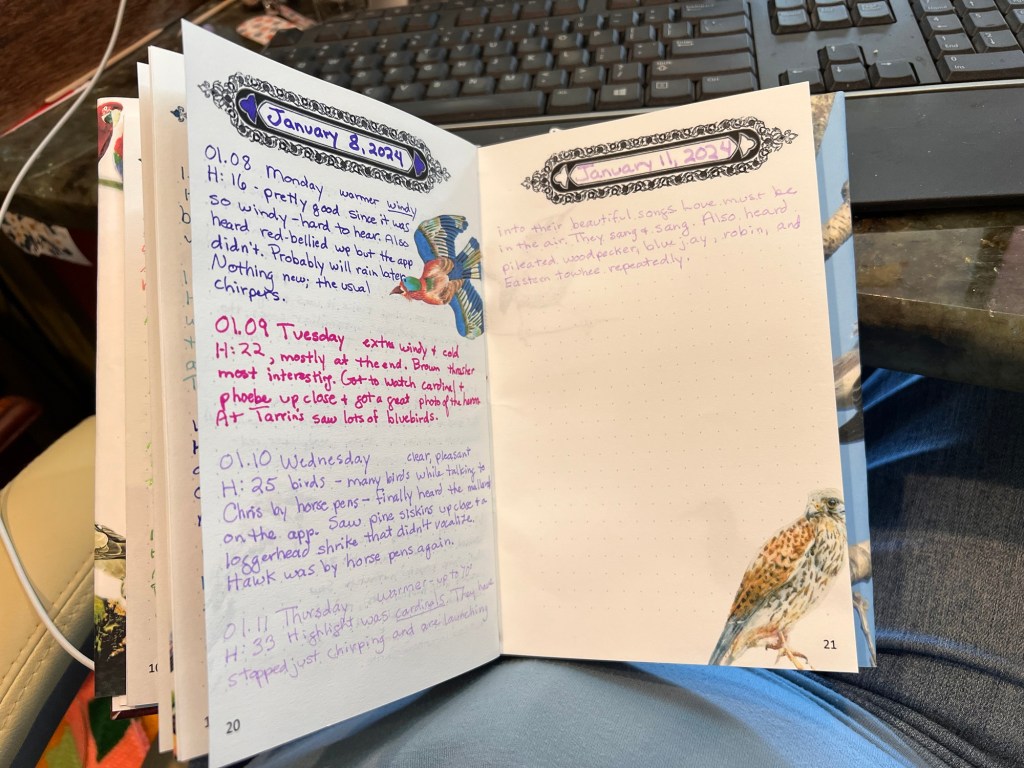
I have a bird journal that my spouse made for me. I record weather notes as well as how many birds I hear each day. I also note birds I get to observe up close or with my binoculars, and any new arrivals.
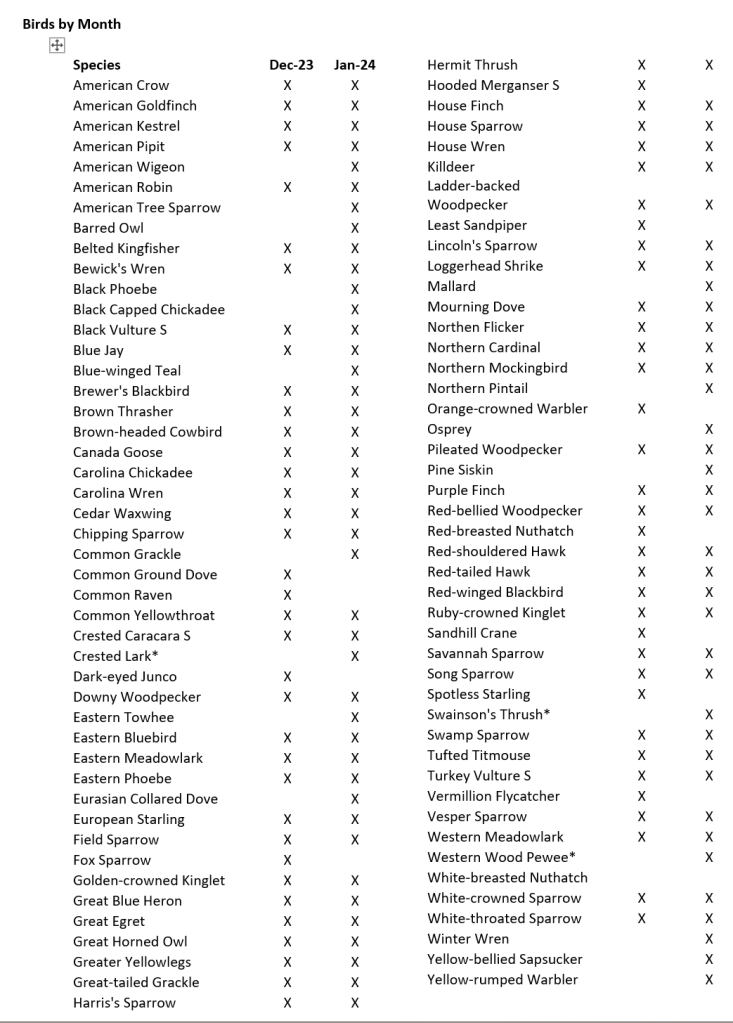
Where the research part comes in is that I have started a spreadsheet that lists each species I observe each month. I’m looking forward to spring migration to see what passes through as well as to record when winter residents leave and summer ones arrive. I miss the painted buntings and their friends, though the twelve kinds of sparrows here do keep me on my toes. Yes, twelve.
Current birds observed
By the end of the year, I’ll have a good idea of the patterns here in this small area. My hope is to keep observing for a few more years, so I can see how climate or big weather events affect this area.
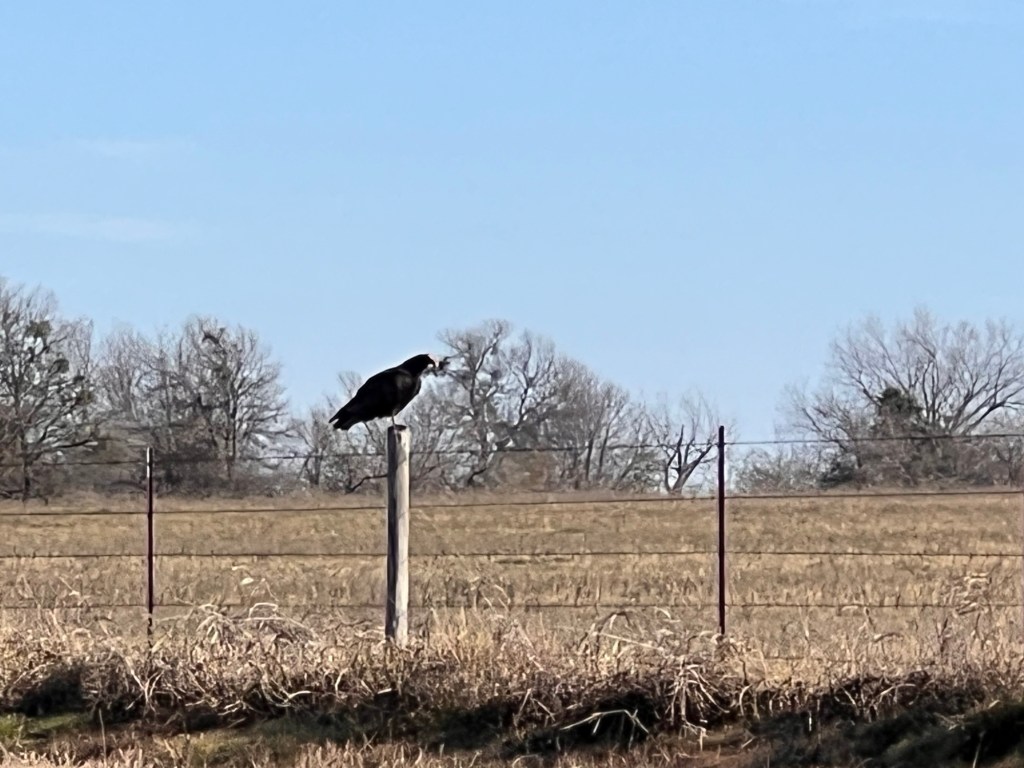
I’m a black vulture.
I’m going to put in another plug for the Merlin Bird ID app on my phone. All the observations go into the eBird database, since it’s from Cornell Ornithology Labs. You can contribute photos as well as record sounds of birds. I say sounds, because it identifies mourning dove wings correctly!
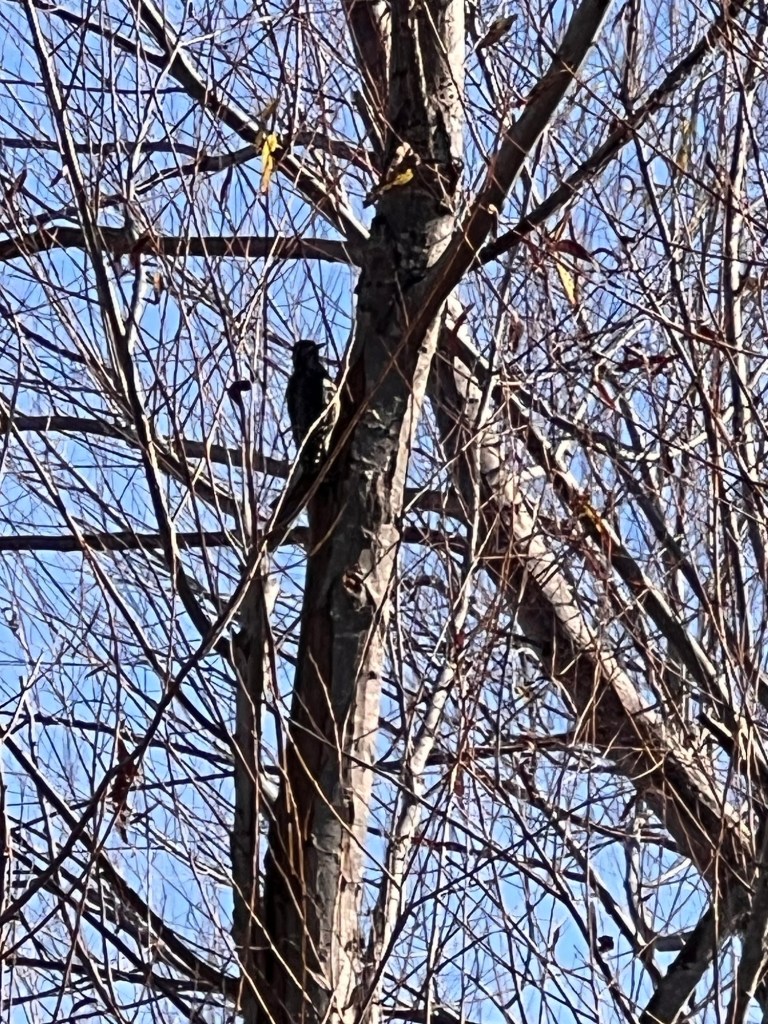
Sound ID told me this one’s a ladderback woodpecker.
I’ve learned so many bird calls that enrich my life. I drove my spouse crazy yesterday identifying all the birds on the Nature PBS show yesterday. There was one persistent Phoebe. I now know Carolina Chickadees have many more songs and calls than I’d realized and that we’ve had a few Black-capped Chickadees drop by.
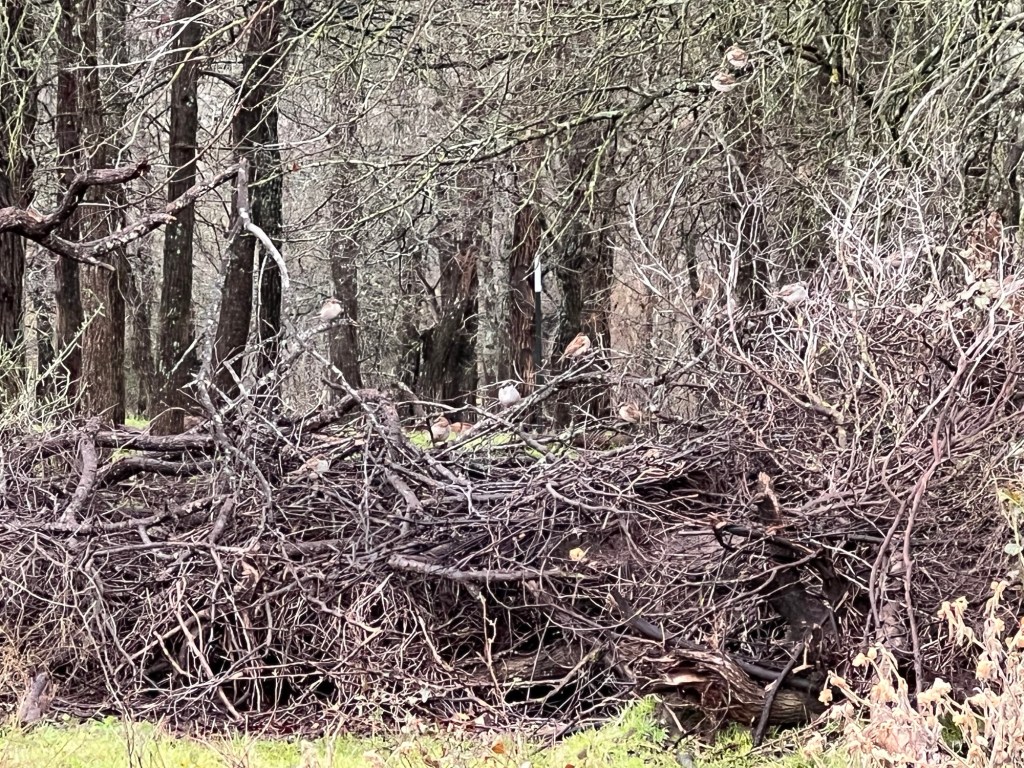
Some of our sparrows. Mostly white-capped, some house sparrows, maybe a Harris’s sparrow in there.
The part I find funny about this app is that it refuses to identify chickens, Guinea fowl, and turkeys, at least at the Wildscape. The last one confused me, because they are native. but maybe it “knew” these were at a facility for raising turkeys.
By coincidence, two different groups of El Camino Real Texas Master Naturalist members got to witness the lifecycle of the Gulf Fritillary butterfly (Dione vanillae) up close and in person on Saturday, November 4. Here are our stories.
From Carolyn Henderson
Six members of our chapter got to see a Gulf Fritilary emerge from its chrysalis Saturday at the El Camino Real Texas Master Naturalist Nature Day aththe Wildscape project.
The chrysalis was on the gate entrance to the Wildscape. Donna Lewis noticed it and Carolyn Henderson took the photos.
Traffic through the gate was heavy, but the butterfly managed to hang on and make its debut. The first photo was right after it got out. It was still wet. The second photo was taken about an hour later. It was still getting its bearings.
From Sue Ann Kendall
Coincidentally, I was camping at Buescher State Park near Smithville/Bastrop this weekend. I had taken many long hikes, led a guided nature walk with a group of people from a church, and made many iNat observations. But my best observation was made less than ten feet from our RV, while relaxing and knitting. Go figure.
My campsite view was of a mixed deciduous forest with a lake behind it. There was a lot of yaupon holly, oaks, hackberries, beautyberries, and cypress. Just a mile or so west start the loblolly pines.
We’re in a very woodsy campsite with lots of birds (very loud pileated woodpeckers for example) and I also enjoyed many butterflies wandering around, like sulphurs and red admirals. But one Gulf Fritillary was extra fun to watch. It spent a LOT of time right in front of me, at first on some straggler daisies (that stuff is EVERYWHERE), but then on a vine that I somehow had overlooked when I was taking note of what plants were growing at the campsite.
I watched as the butterfly kept landing on different parts of the leaves of the vine. I was a little slow that morning and wondered why it was so interesting, since there were no flowers on the vine. It dawned on me that the plant resembled a passion vine.
There’s a clue to the butterfly’s mission in this photo.
After the butterfly left, I went in to get a photo of the plant to identify it on iNat. That’s the photo above. I quickly realized there was more going on. Two caterpillars were munching away at one of the leaves.
Hmmmm.
I rushed back to my chair to investigate. The plant turned out to be the yellow passionvine (Passiflora lutea) that Linda Jo is always looking for on hikes. Hooray! And the caterpillars were Gulf fritillary caterpillars. Suddenly, the butterfly’s mission was clear. She was laying eggs. See the tiny yellow dot in the photo of the passionvine?
So, between Carolyn’s group and me, we’ve pretty much seen the entire lifecycle of the Gulf Fritillary!
Here’s what I learned from Wikipedia, which confirms all the things we’ve sen:
The caterpillar food plants–also called the host plants–for gulf fritillaries are members of the genus Passiflora. The adult butterflies use nectar from many flowers, including Lantana plants. The Passiflora host plants are frequently called passion vines; in some Texan counties where this butterfly’s population is high, gulf fritillaries will feed on specific species such as Passiflora lutea and Passiflora affinis. These passion vine plants are suitable host plants as they provide a good structure for larval host habitats which enables young populations of gulf fritillaries to be sufficiently nurtured and protected. The role of host plants is also integral to the oviposition of gulf fritillaries, as the female butterflies lay their eggs on or near the host plant.[8][9]
I left Texas for a couple of weeks and looked for birds in South Carolina. I was surprised at how few I saw, though looking up and seeing an osprey floating outside my window scanning for prey was a pretty cool highlight.
I have no bird photos, so I’ll share other summer survivors. This beauty is a checkered setwing (Dythemis fugax). I love its stance. We have lots of them now, but I’d never observed one before.
Back here in northern Milam County, Texas, I’ve had the same experience. Before I left, the drought was just getting started, and I still saw scissortail flycatchers, large flocks of starlings and grackles, paintd buntings (heard, not seen), a few dickcissels, and my buddies the bug-eating barn swallows. When I returned, those birds were long gone. In fact, because I slept in a bit the first few days that I was home, I didn’t see or hear many birds at all.
The ground cherries (Physalis cinerascens) are only blooming in the shady areas.
Since I’ve been getting up earlier to hang out with my horses before it gets stifling hot (108 at my house yesterday), I found that the birds make their forays early. For example, this morning I saw three of my pond bird friends, the blue heron, the green heron (it chided me for making it move), and the upland sandpiper. What? Yep, every year a few of them show up and run up and down the “beach” created by the ponds losing water. I often get a yellowlegs or two but have not seen one this year.
We usually have lots and lots of prairie broomweed (Amphiachyris dracunculoides) but this year there isn’t very much.
I turned on my trusty Merlin Bird ID app to see what was out there while I walked around this morning, as well. The red-shouldered hawk was declaring its presence loudly, while the American crows (which I can now distinguish from fish crows by their calls) were answering. I enjoyed that dialog, only to have them joined by my trusty friends who never leave, the Carolina wren (at full volume), the tufted titmouse, and the cardinals. I didn’t hear the woodpecker, but I hear them often, so I believe Merlin on that one. It sounded pretty good there for a while, and I was happy to learn that my woods still had some residents.
What Merlin heard from 8:30-8:40 am this morning.
Other birds that are still hanging around are the house sparrows (much fewer in number now than they were), vultures (black and turkey), and nighthawks who show up promptly at dusk every evening.
These camphorweed (Heterotheca subaxillaris) are pretty perky in areas that get some shade.
It’s nice to know there are still some birds of summer out there. We have lots of water sources, which help a lot, and plenty of seeds and bugs for them to eat. What birds are you seeing where you live?
Feverfew (Parthenium hysterophorus) is popping up near my house. It’s extra poisonous, so it’s going to get cut down.
PS: my photos aren’t of birds, because I haven’t been close enough to photograph any.
I have yet to identify the mysterious sea monster in the pond behind my innocent horse.






 Nature Along the El Camino Real