Now let’s look at readying the apartment house for the Martins.
It has been cleaned, emptied of all nesting materials and covered last August when the Martins left this area. Then the house was lowered down and secured till the next season which usually starts in Central Texas in late January and on.
At my site, February 14th is the normal time for my friends to return.
Once again, the first scouts are normally males looking to get a nest they like. They will then start singing trying to attract females to the site. It is a beautiful song.
Right now I uncovered the house. I inspected it to make sure no wasps, spiders or anything else had taken up residence since I last closed the house.
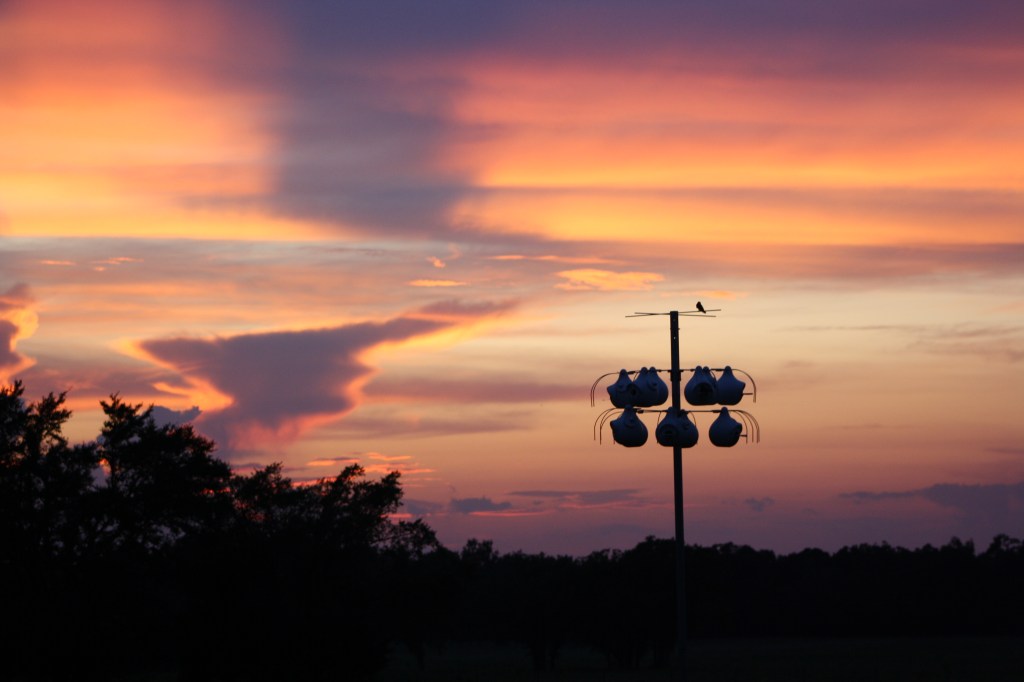
I then slide in the nest box that I have put fresh dry pine needles in all of the 26 compartments. I also have an early arrival door that goes over the openings. It has only the door for the birds to enter. When the summer heat has arrived and there are babies in the house, I switch the doors to ones that are made with more ventilation.
It can be extremely hot inside the houses. That is why I have aluminum houses painted white to reflect the heat as much as possible. So now, I recover the house and keep it as low as it will go.
When I hear the Martins arriving, I remove the cover and roll it up. Then I only open a few holes at a time. That will keep some of the House Sparrows from taking over. It is absolutely a requirement to keep them out. They can ruin an entire colony by killing the Martins.
So right now is the time to get new or existing ready to open at a moment’s notice. It’s kinda like a fire drill. So naturally, the weather is going to be cold, windy and rainy. That is why you want to do what you can while your hands are warm.
So my timeshare is OPEN, come on in! I just love the Martins and all birds.
Just as our weather starts to turn cold and windy, for Martin landlords it is time to get ready for the return of our beloved Martins.
Right now they are still in Brazil. Very soon they will feel the time-long urge to migrate back to their breeding grounds. That would be across the border into the US and Canada. From my experience, the birds will arrive in Milam County around February.
Times vary a little from year to year.
The first to arrive are called scouts. They tend to be the adult males looking for nesting areas that will best attract females. Last year’s birds will arrive later, up to four to eight weeks.
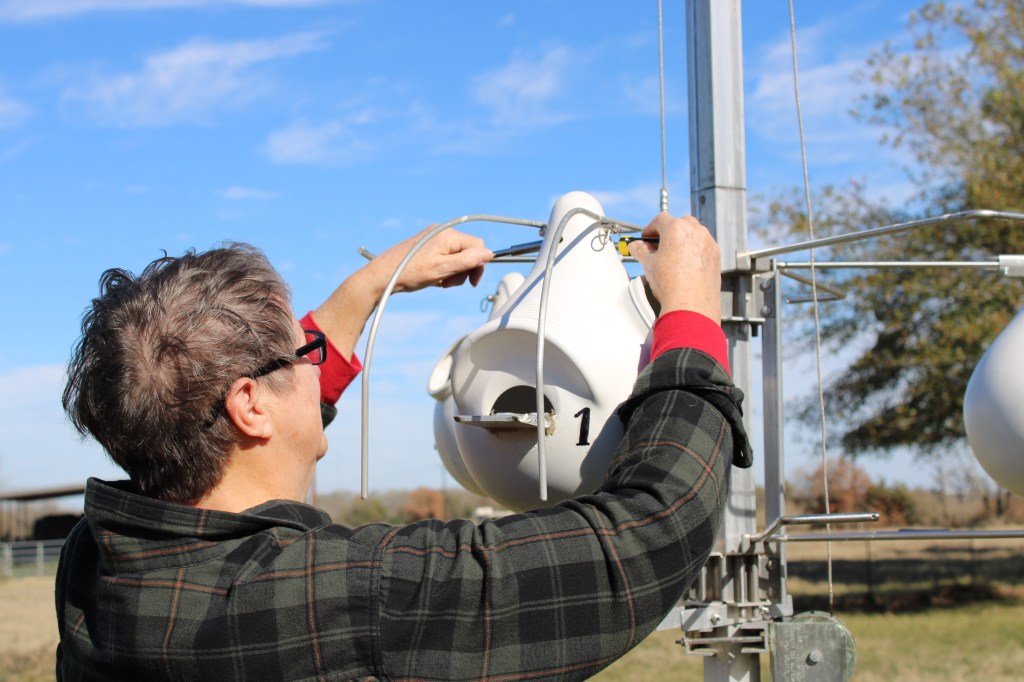
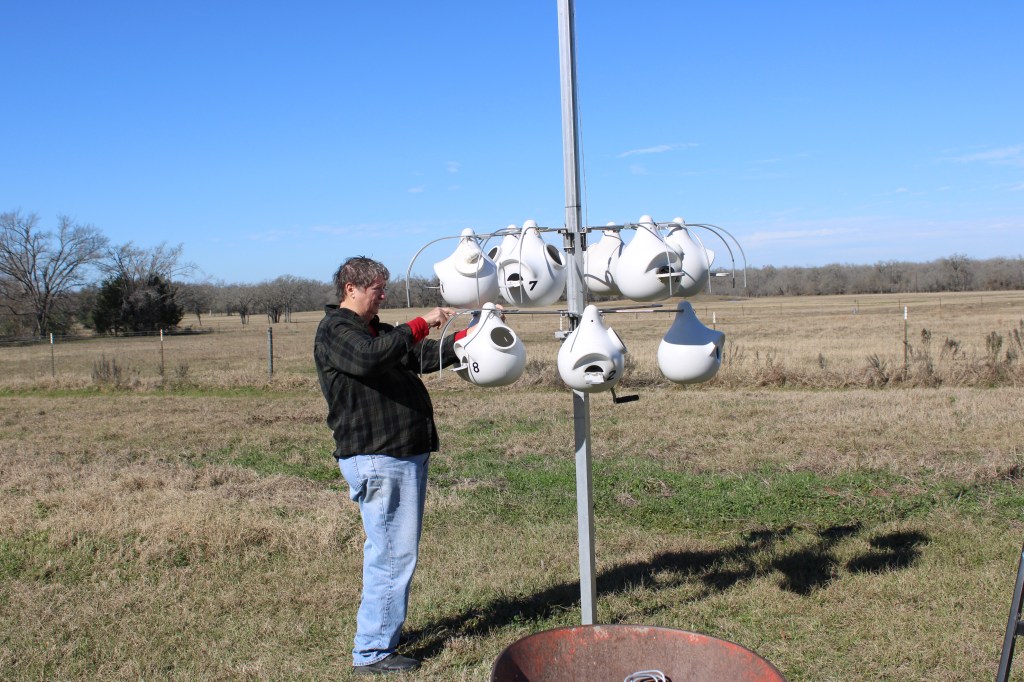
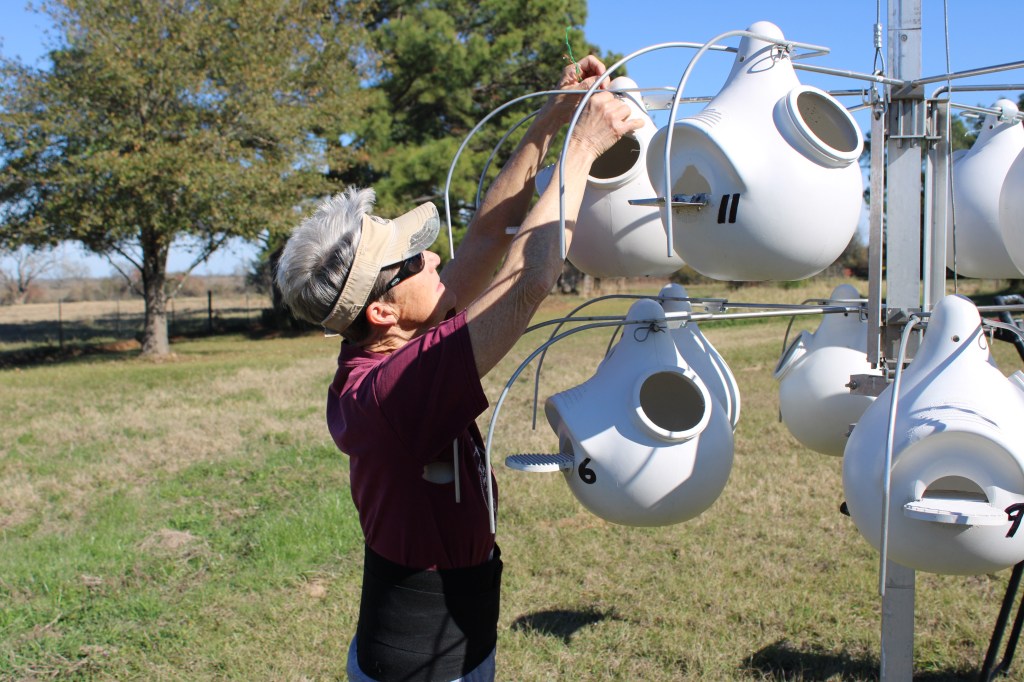
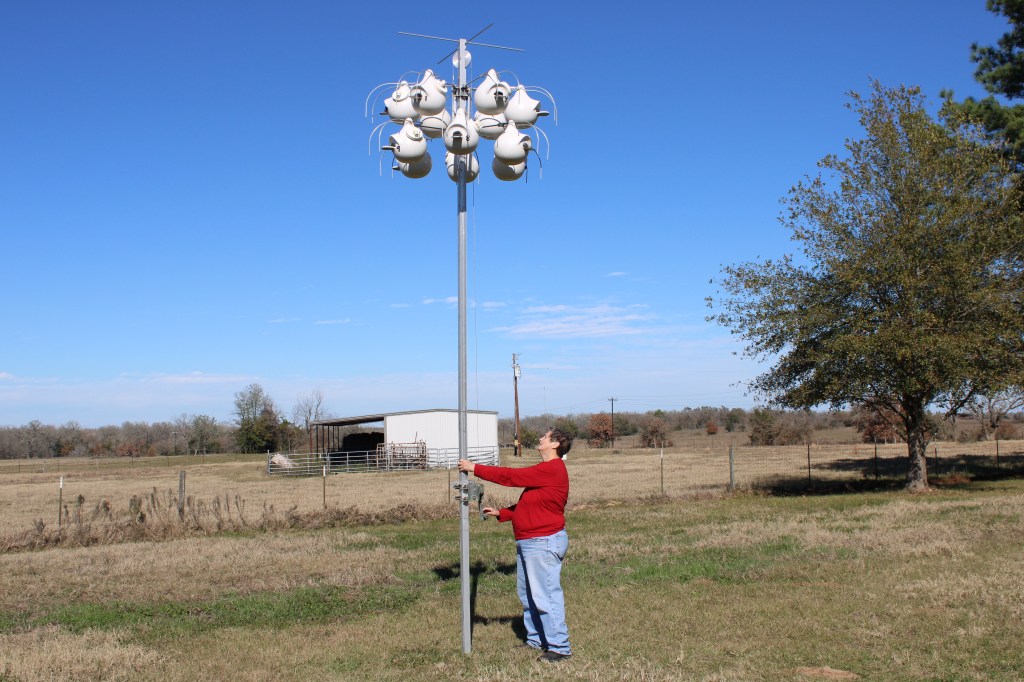
Right now is the time to get your houses ready. It is harder to assemble an Owl guard when the weather is cold and windy. Putting your gourds or apartments up nowmakes sure you are ready as soon as they arrive. Do NOT open the cavities yet. You need to wait till you hear the bird’s arrival and open only a few cavities. This keeps unwanted birds (House Sparrows) from taking over. Block the entrances with foam or something you can easily take out. Duct tape is NOT a good option.
I have people ask me how I know I have a Martin? Their song is different from any other bird. Believe me, they will let you know they have come home.
So, I had help putting up my gourd rack, and all I will need to do is add the pine-needles in a few weeks.
I have both a Gourd house and an apartment house. I have noticed here at our site, the gourds are the most favored.
Also, it is best to add new housing, or make changes before the Martins arrive. They don’t like change.
All my Purple Martins have fledged. The last baby left the house on July 9th. It’s a good thing because it is way too hot in the martin houses. I actually had a few deaths related to the extreme heat. I was happy and sad when they got out and up into the air where the breeze could cool them and lift them up. It’s where they do their magic.
So, after they leave the nest, they visit their house occasionally. They will live in the trees now like other birds. This is when they learn to fly and catch their food in the air. Learning to drink on the fly is also a skill they will have to master.
Right now, they are honing all their new skills and getting stronger every day.
When it’s time, they will head South to Brazil. Only they know when it’s time. Some have never been there, but the older ones will return to the forests they know.
Then next February they will return here again and start breeding all over again.
We hear a lot about purple martins (Progne subis) in this blog, since our Chapter member Donna Lewis is a dedicated observer of their lives and activities as she supports them by providing structures to nest in.
There are other types of swallows in Milam County, though, as most residents have most certainly noticed. Barn swallows (Hirundo rustica) are commonly found around our homes and also depend on humans for a little help with their nests. I have some of each bird on my property, but my few purple martins nest in abandoned holes in dead trees that we have left standing. I didn’t know we had them until recently, when my handy Merlin Bird ID app noted their song, then I actually saw a pair. So, I guess purple martins do nest in the “wild” at least a little here.
Here’s a purple martin photo by ME, from a structure in Temple, Texas.
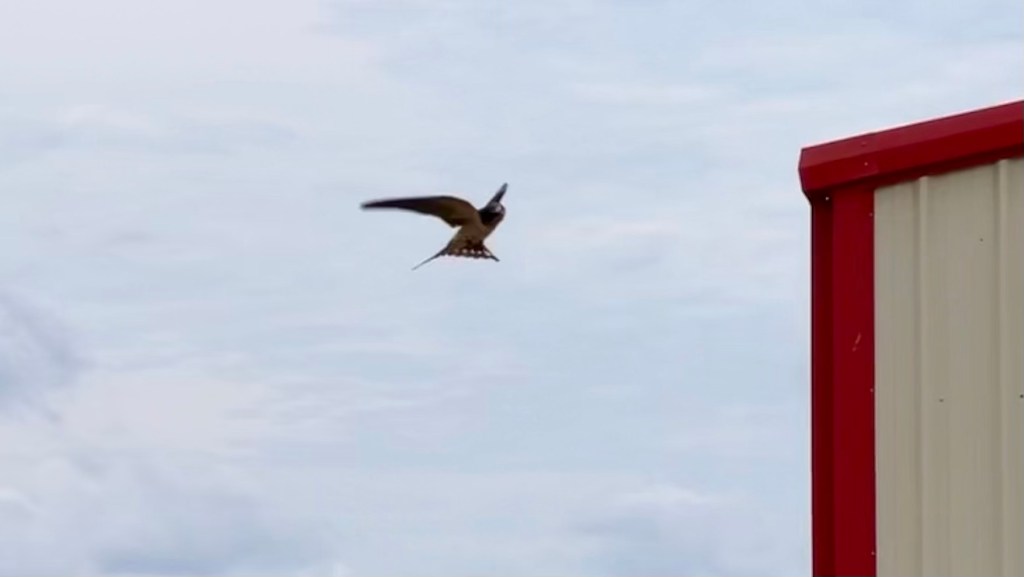
But what about the barn swallows? Why aren’t they beloved by all, like purple martins? After all, they are quite beautiful with their shiny navy-blue bodies and striking rust-colored breast markings. And they eat lots and lots of flying insects and provide lots of entertainment while they do so. It’s like a swirling circus act when they’re all out hunting around sunset.
Barn swallows on my property
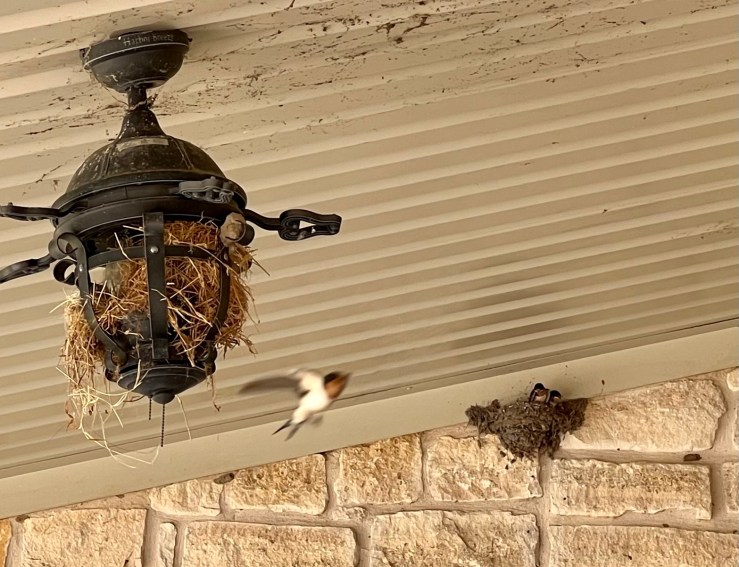
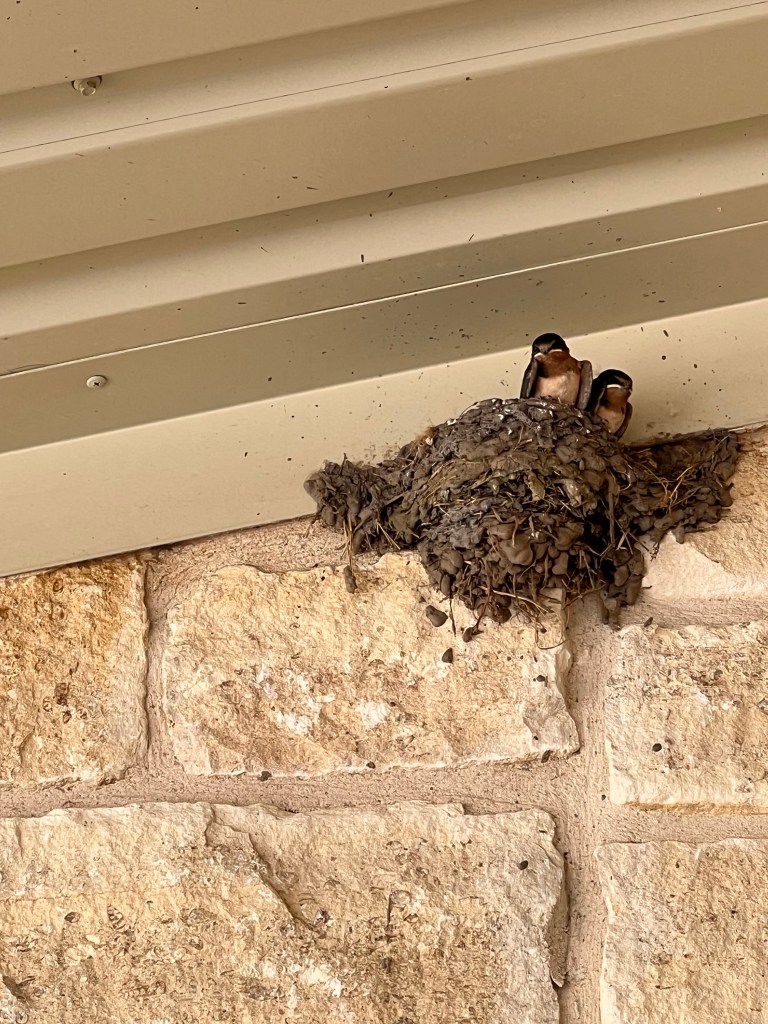
One reason people aren’t fond of them is that their nesting behavior doesn’t fit in with most suburban folks’ ideas of neat and tidy “curb appeal” for their homes. Barn swallows do nest in barns, when available, but they also nest under bridges (the same kind the Mexican freetail bats nest in), and, of course, people’s houses.
Swallow parent dodging hideous sparrow nest to go to her lovely mud nest.
When I lived in suburban Round Rock, many neighbors either invited people to come in through their garages or spent lots of time getting very messy trying to remove barn swallow nests. Many of the homes had two-story entrances, which swallows (cliff swallows, too) just loved to build their mud nests in. They also loved to shove baby bird poop out of those nests and onto people’s fancy potted plants or outdoor furniture. I will spare you a photo of swallow poop, since you have probably seen some.
Luckily, I don’t live in the Meadows of Brushy Creek on a crowded cul-de-sac anymore. And I am happy to let barn swallows build all the nests they want to around our house, which has many porch sites to choose from. After all, there is only one population of barn swallows left that still uses caves to nest in, and that’s in California, according to All About Birds.
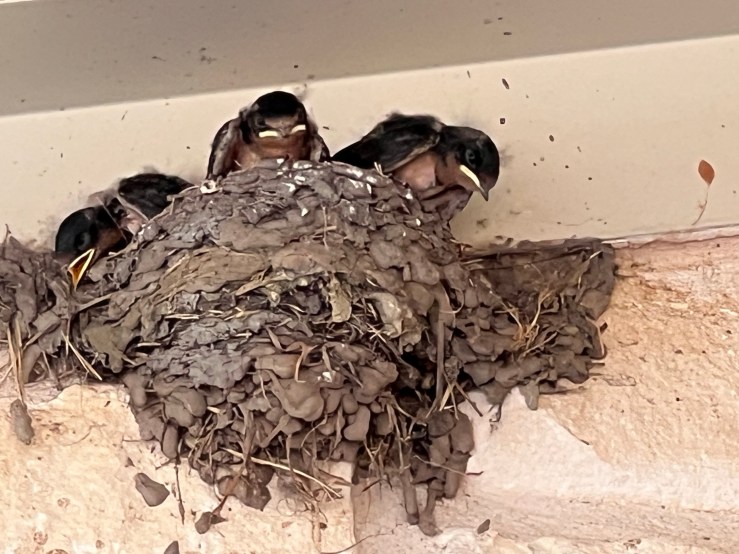
It’s getting crowded in here!
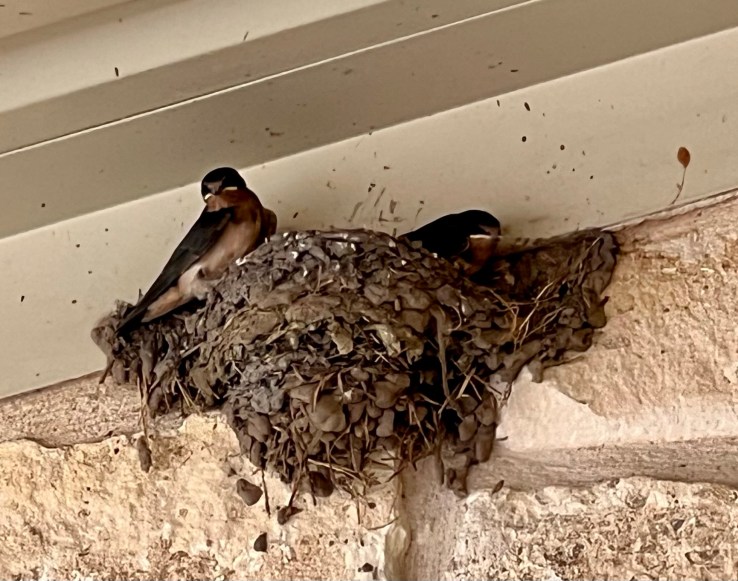
Our birds have just finished raising their second set of nestlings since they arrived from South America in the spring. I noticed a couple of the nests had three adults feeding babies, and that turns out to be a common practice. The helpers were probably babies from the first clutch.
I gotta get out of here.
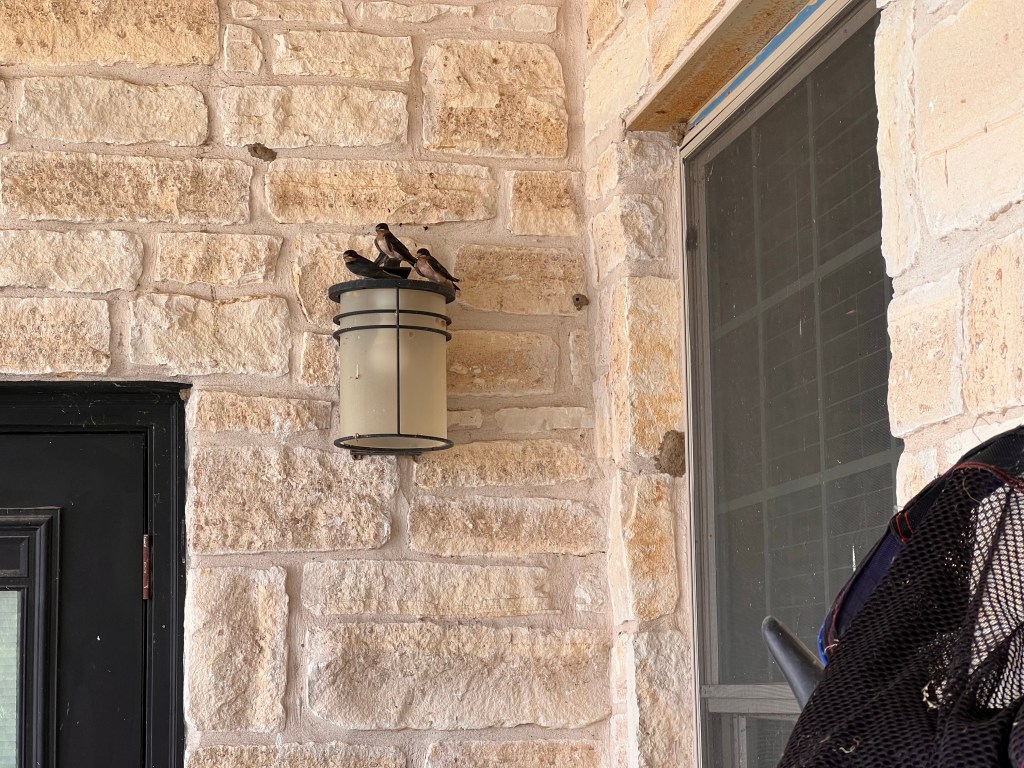
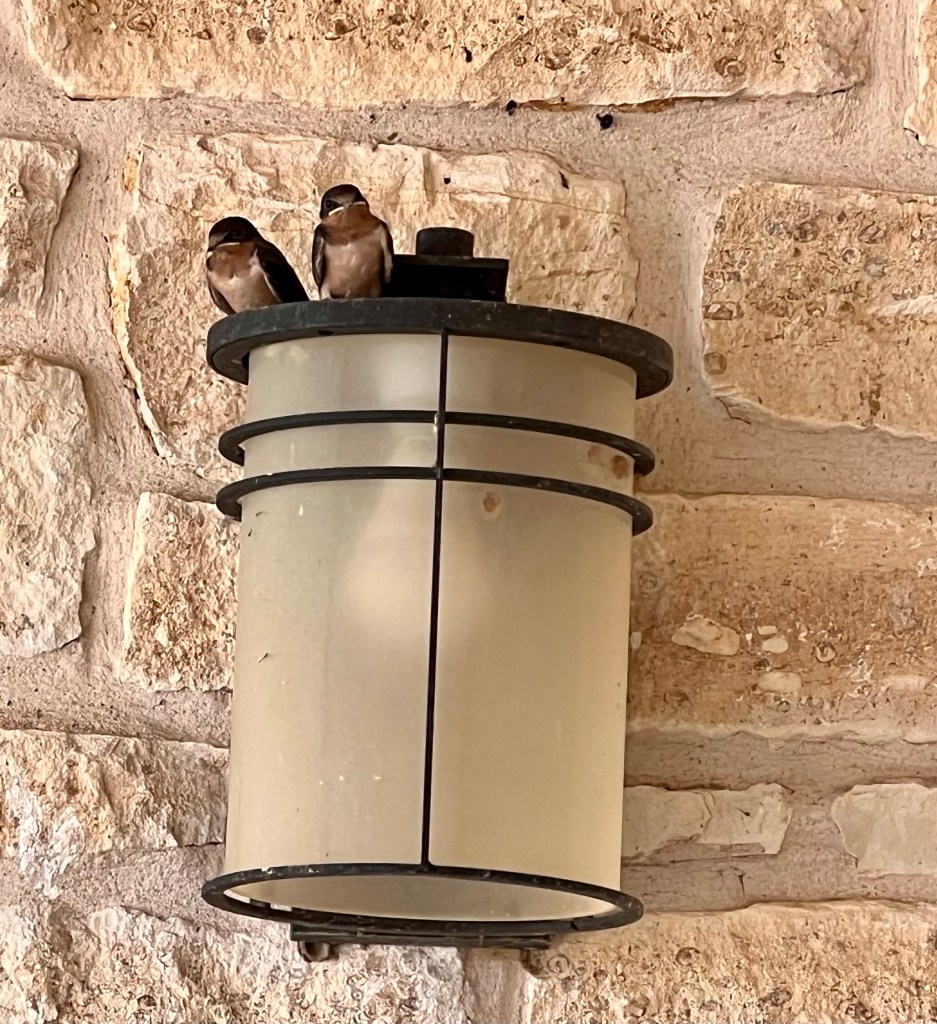
As the babies grew and grew (this is a very loud period on our porches), they began to have a hard time fitting in the nests. We always wondered which day would be the one when they’d fledge. Last week, I was happy to find two of them sitting on the light fixture where their dad usually hung out. Two others looked very un-ready to fly, but by the next day, everyone was swooping around with abandon.
Look Ma and Pa! We flew!It’s cool over here on the lamp post.We are NOT leaving
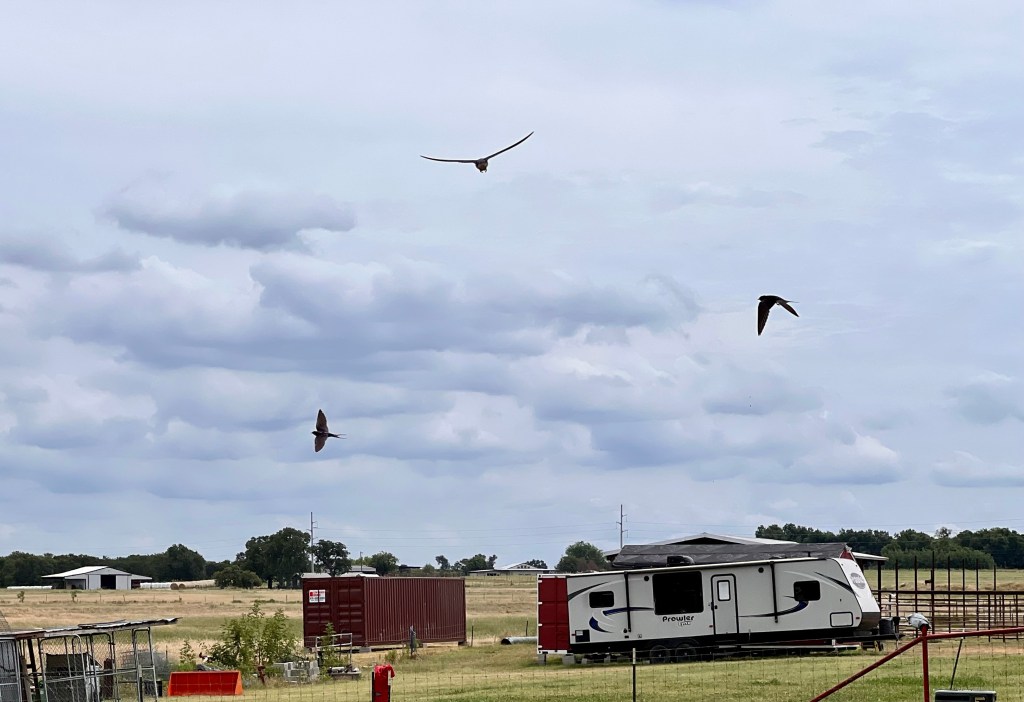
Here’s a funny thing about these birds. The whole time they have been nesting, they have completely ignored us humans and the dogs as we go in and out of the house, sit on the porch, or swim in the pool. But, after the birds had spread out and were practicing their skills, they started dive-bombing me when I went into the back yard or over to the horse pens. Each time they got to my head they’d make a sound, and I swear as they zoomed back up, there was a Doppler effect. It was really cool, but there was no way I could get a photo, since they always surprised me.
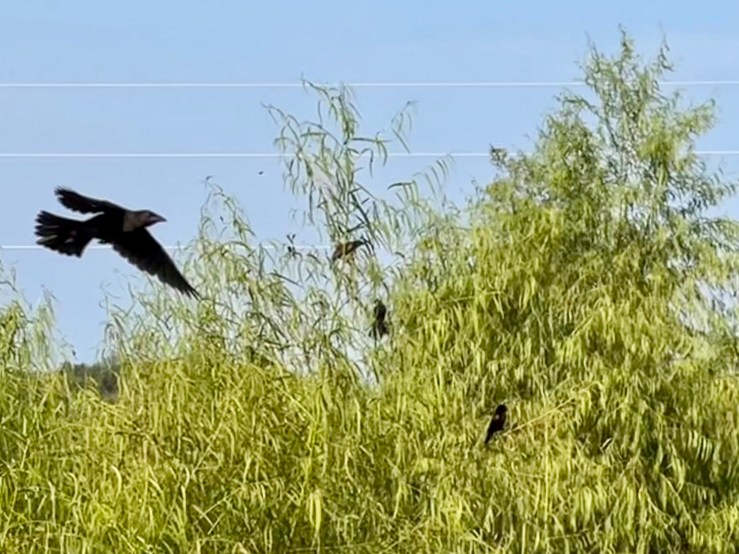
Another local resident that likes to dive bomb humans is the red-winged blackbird (Agelaius phoeniceus). Luckily, they hang out in the willows, far from me.
I am seeing fewer and fewer barn swallows this week. It’s time for them to head off to their non-breeding lands way to the south now that the young ones know how to fend for themselves. They will return in late January or early February. I’ll soon be able to power wash the porches and other poopy areas and enjoy the clean surfaces for six months. (It’s been recommended to put newspaper under nests, but that would not last long at the Hermits’ Rest, wind capital of Milam County.)
Another Nest or Two
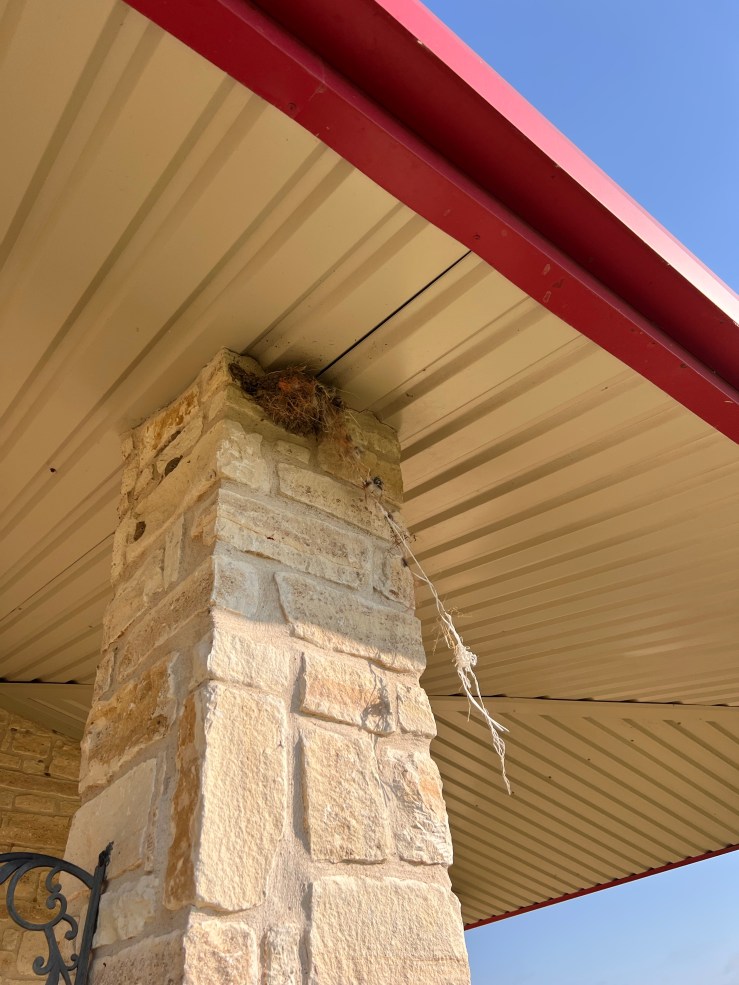
I tell my family we are running an aviary, since house sparrows have been nesting away on the porch this year, too. I guess we were lucky they didn’t find us until this year. They are really chirpy and poopy and not native. But the nests are funny.
This mess is a sparrow nest converted from a swallow nest. The sparrows have to add their own special touches.
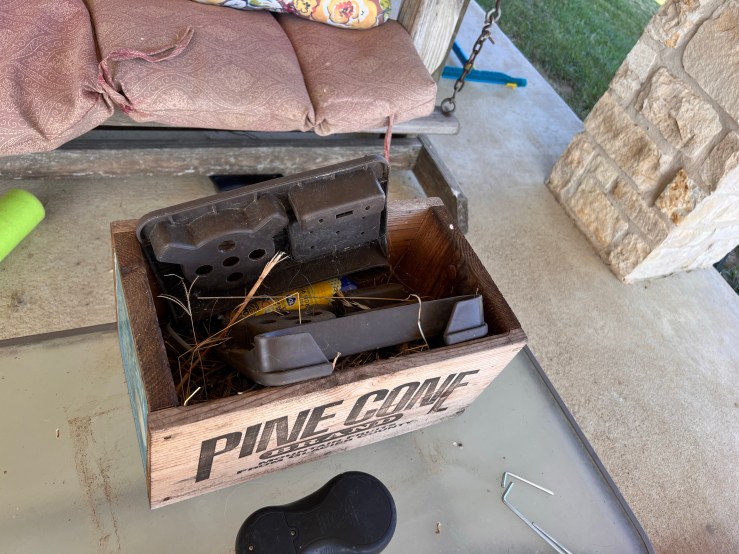
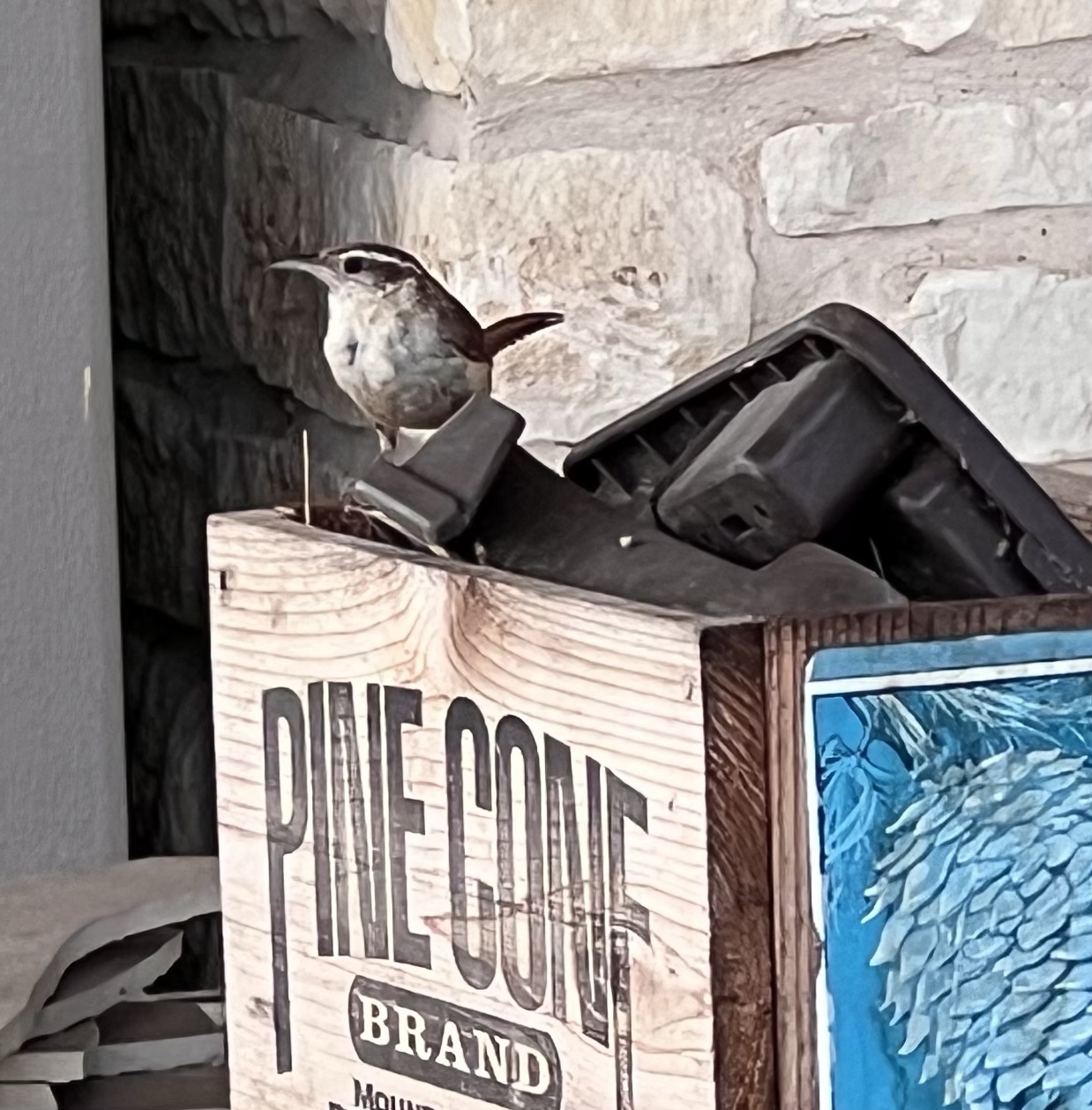
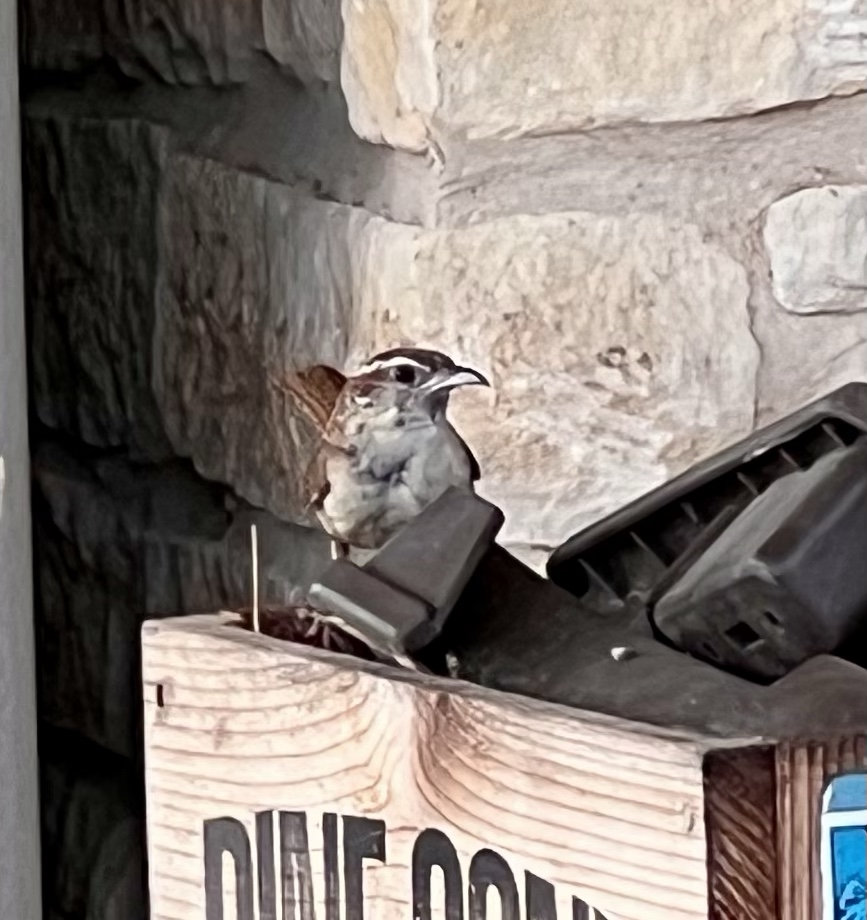
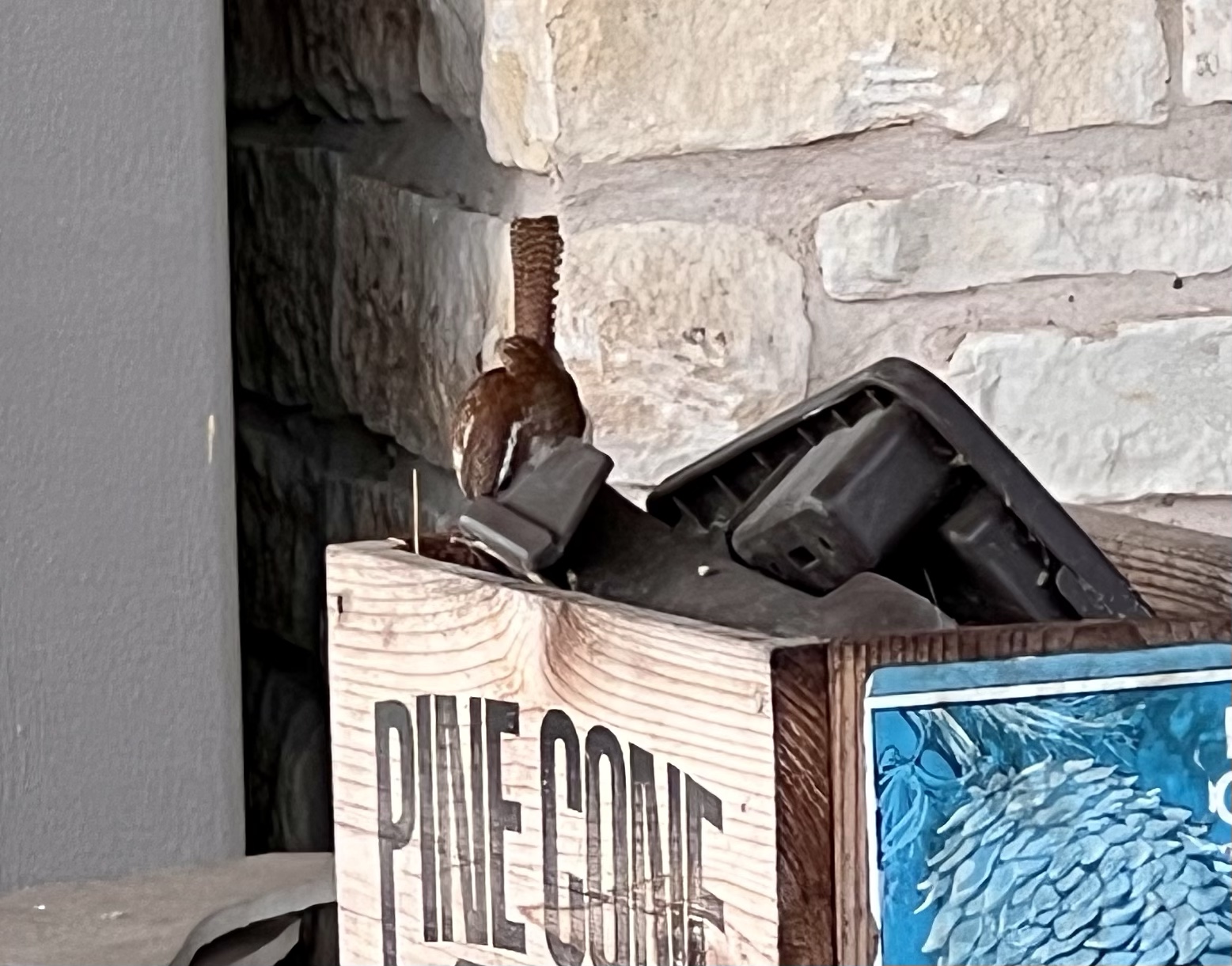
The nest of our third porch-dwelling species, the Carolina Wren (Thryothorus ludovicianus) – also known as my favorite small bird – is much cuter and more fun to watch. These wrens are well known for building nests near human habitations in odd places. We have had families in an old grill, in numerous hanging plants, and in a watering can, to name a few spots. Our current pair have taken up residence in the box that is supposed to hold the pool remote control. I had set a few other items in there to keep the wind from blowing them away, though, and this made the box irresistible to wrens.
The box, with remote control in front of it. Note lots of grass. That’s nest material.
I went to clean out the box and put the remote control back in and was faced by one of my most beloved sights, an angry wren. Oops. I backed off, and we are now giving the growing family their space. The eggs have hatched (I peeked and saw two), so now the parents are taking over from the swallows and putting on a show for us patio dwellers. The pace at which those guys catch bugs and take them to the nest is impressive. We are looking forward to more pretty, fun, and melodic wrens in the near future.
Honestly, I don’t know how anyone can get bored around here!
Right now, it is very hot here in Central Texas. In fact, we are setting records for elevated temperatures. So, how does this affect the Purple Martins who live here part of the year?
The Martins that arrive here first around January and February get their eggs laid first and their babies leave the houses first. Once they fledge and are living outside in the trees like other birds, they are not living in the houses. The trees provide shade and are so much cooler for them. So, the earlier the better. Of course, the early Martins also risk late freezes. Nature is always a challenge for any living creature that lives outside.
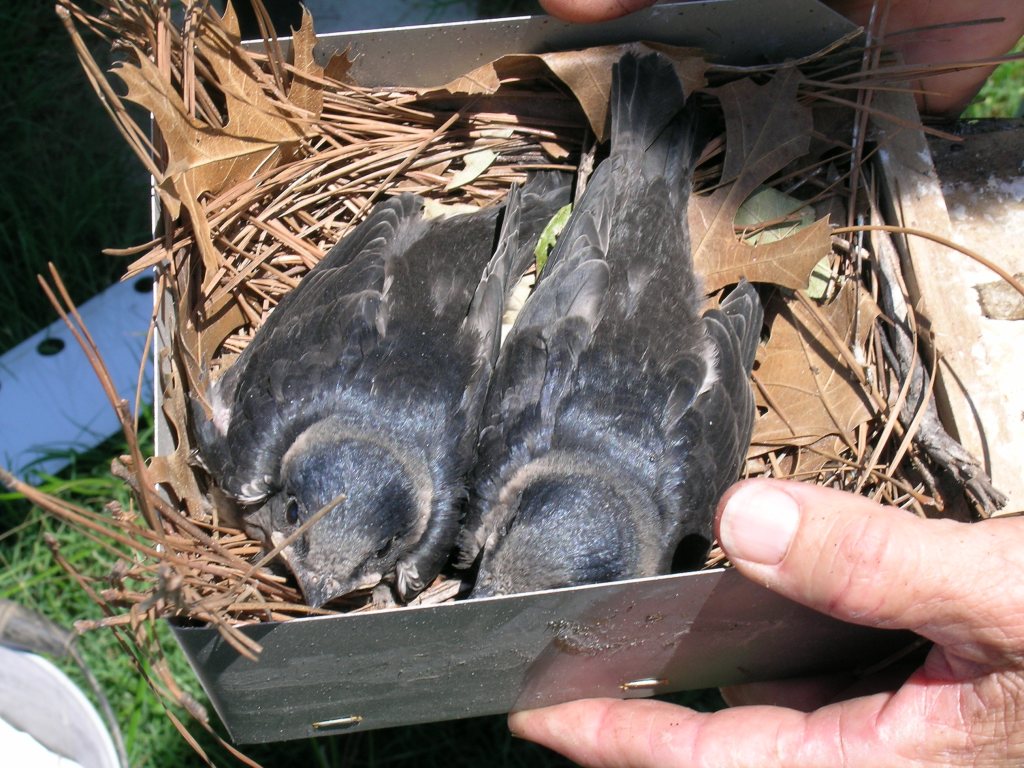
This year the Martins at my location have fared pretty well. I have noticed some heat related deaths now in June and July. As of today (July 4, 2023) I have only two babies still in the gourds and they should fledge any day now. Believe me, they need to. I don’t know how these two have survived the heat. I am sure the parents will be happy also.
Babies!
Most of the Martins are training their new offspring to hunt and fly right now. The trip to Brazil will be coming soon. If they are not strong enough, they will not make the journey to their winter home. Keep in mind, the new Martins have never been to Brazil before. Their first try must be successful.
I always think of it as the young are getting their “driver’s license” now. Martins live from 5 to 7 years as a rule. So, if they are lucky, they will make the trip to the US and back to Brazil several times. It is amazing that any of them survive at all. Weather, lack of insects to eat, and predators are always out there.
The Martins sing a lovely song when they court in the spring. It is one of the reasons humans love them so much.
I am sure they are talking to their young now and saying, ” What an adventure you are about to undertake.”





 Nature Along the El Camino Real