Possum ‘Ranglin’

By Pamela Neeley

Sometimes I forget to replace the lid on the dog and cat food stored in galvanized containers during the day. I arrived home after dark from a meeting. I went out to feed the dog and cats.

Before I put my hand in the container I saw a little opossum face outside of the dog food bag.

Then I saw a snout move, and saw the second opossum IN the dog food bag.

I went into the house, (the food is in the art studio), to get my phone and put Ruby the dog in the house. She chases and tries to kill opossums.

Back in studio I snapped a few photos. Found a large towel, doubled it and picked up the little one. Took it outside to let it go in the pasture.

The second one was in the dog food bag. I picked up the bag, with top closed, and walked it out to deck. After a bit, that possum came out and went for the field.

I encouraged them to stay away from this farm because of the “hound” that is on patrol. I may not always be around to free them.

Opossums do so much good for us and the environment.  They love ticks and enjoy eating a variety of insects, small rodents, seeds, eggs, fruit.  And pet food!

A Visit with a Houston Toad

By Pamela Neeley

The Famous Endangered Houston Toad also attended the Wildlife & Woodlands Post Oak Savannah Landowner Workshop, where our chapter had a booth last week.

The male toad saying hello.

The pair traveled in customized carriers with their chauffeur, back to the Ft Worth Zoo (a 2.5 to 3 -hour trip each way). I only managed one photo of his handsomeness. This species is leading the resistance against riparian and native species destruction.

A few live in the southern part of Milan County. The Brazos River splits this county. I’m on North side of the river, and the soil is Blackland. South of River is sandy soil and that’s where our small Houston Toad population lives.

I enjoyed getting to see their huge back feet, which are all the better for excavating their holes while moving backwards! They don’t have to turn around to watch their world!

Water Moccasin Alert

by Pamela Neeley

As usual, I was walking around the outside of the house checking flower bed for upcoming Spring cleaning, and I was wearing capris, flip-flops and no gloves. My friend pulled me back while saying, “Snake!”

Big, fat, black water Moccasin was right in front of me, but heading away from us. (Solid color usually indicates mature snake. Patterns refer to young or juveniles. ID can be confusing because of the patterns.)

A cottonmouth adult

 It’s been awhile since I’d spotted a viper. I used my single-shot shotgun and missed at less than 6 feet (?) and I couldn’t remember how to release the safety on the other.  So, I called my neighbor, who was at home, and asked him to dispatch this cottonmouth.  

A juvenile cottonmoutn

One shot from his pistol. He says he keeps snake shot handy just for me! I believe this.

I hung it on the fence, to alert other snakes. Legend has it that snakes will continue moving until sundown.I don’t know. It wasn’t on the fence when I looked. I didn’t go search for a moving, dead snake, either.

AI made this pretty version.

Cautionary tale: It is Spring and suddenly moist. The frogs are back. Cottonmouths, or water moccasins, are very nasty-tempered poisonous vipers. It will stand its ground, and possibly move toward you if you disturb it. They will try to stare you down, and possibly chase you – not a myth.  Both on land and in the water.

The frogs have returned and are a favorite food. Flowerbeds often have mulch.  Texas is famous for drought. The cement slab houses have to be kept moist around the base, about 18″ from base of house, and create a perfect environment for meal-seeking snakes.

Wear protective clothing.  Review use of firearms. Although poisonous, infection is common because their mouths are nasty and full of exotic bacteria, etc.

There is a viper antivenom,  CroFab antivenom (Wikipedia). I do not know if local medical facilities have this in stock.

So Many Grackles

By Pamela Neeley

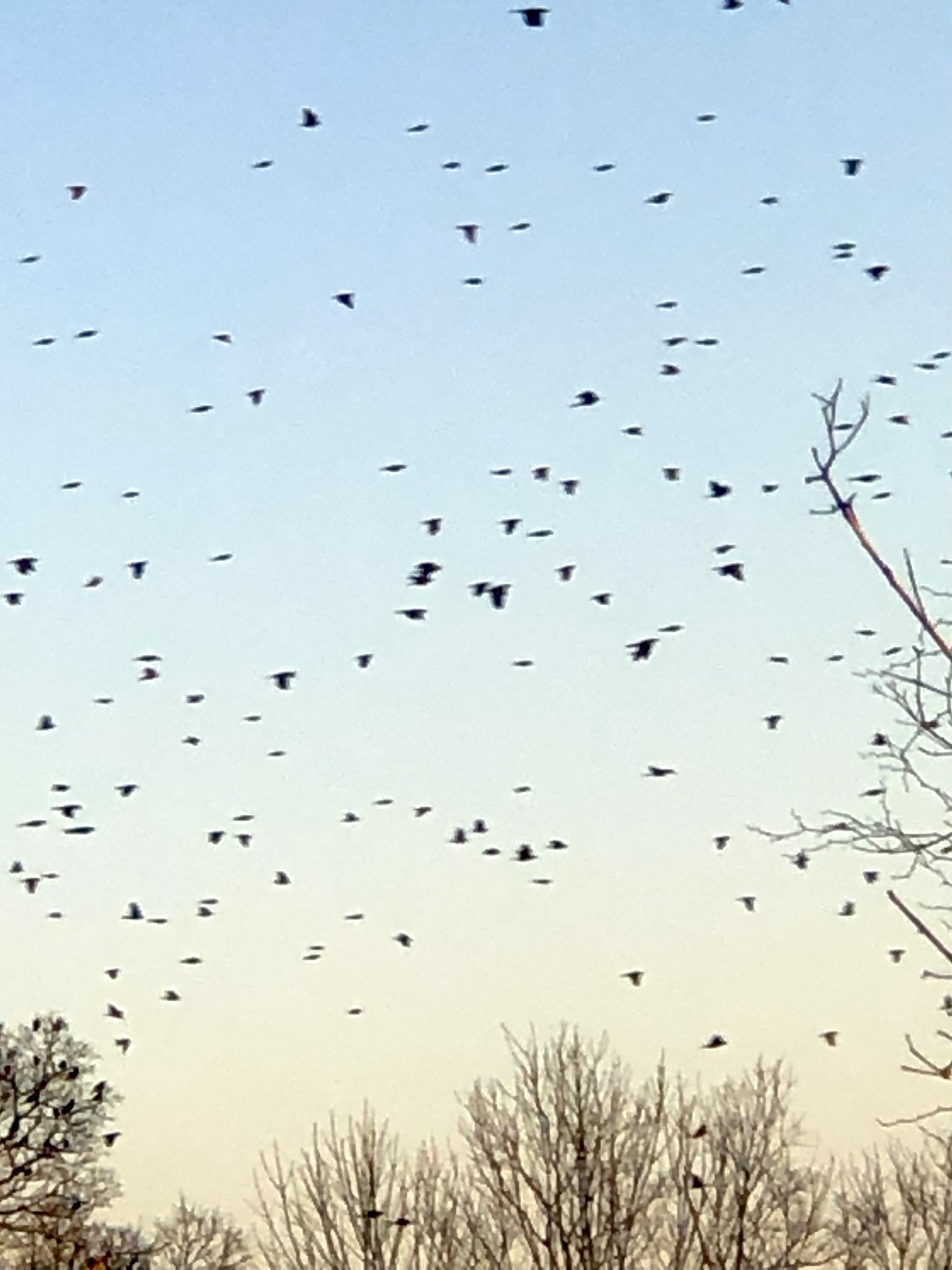
On February 2, 2025, I was working in my studio with the doors open when I heard chattering coming from the sky.

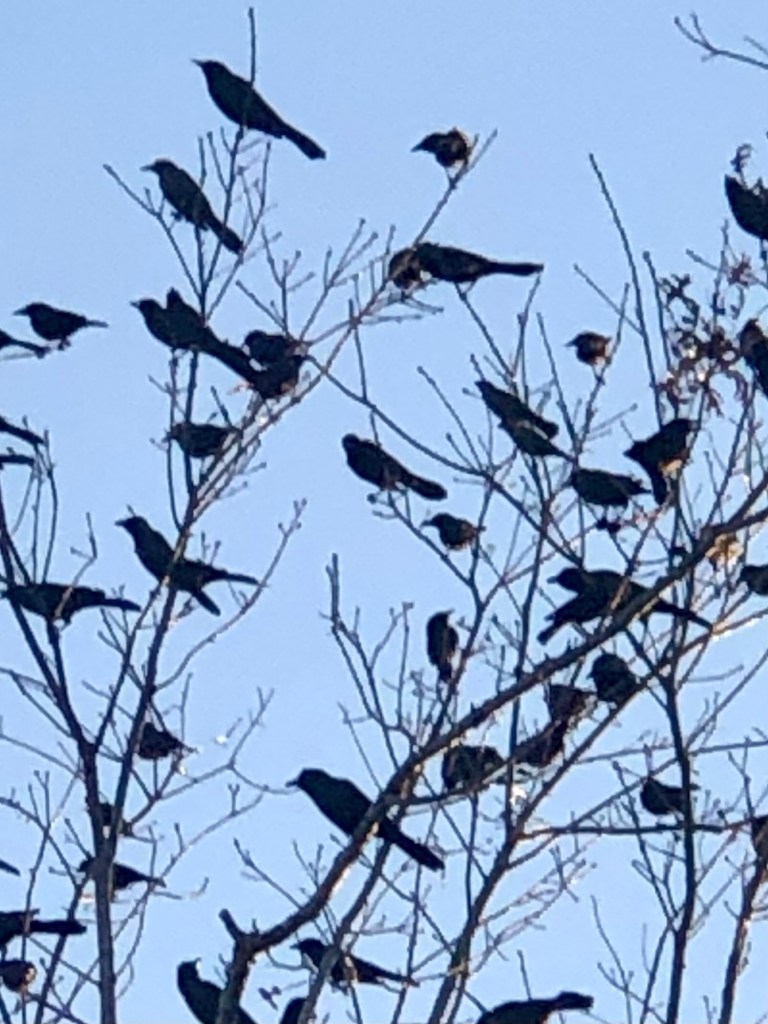
Grackles with bonus Black Vultures

The Common Grackles were flying over.

I witnessed three waves of hundreds of birds soaring overhead from east to west, around 5:30 pm. Some stopped briefly in the treetops, while others kept going.

Each group flew over slightly south of the previous group.

Toad Rescue

By Pamela Neeley

Thanks to the cautious behavior of my cat, Apollo, I interrupted the swallowing of the largest toad ever!

Apollo spots the problem.

The black snake was having trouble swallowing the toad because it was so large. I had to choose between my camera and using a stick to annoy the snake. I poked the snake with the handle of broom I had in my hand. It released toad.

There was a bad smell and it curled and headed my way. I maneuvered away! At last the black snake went the other way.

Thanks for saving me!

I placed the toad in a water dish while I settled my nerves. The photos are of the toad in the water feature and in the last, I imagine he’s smiling at me.  

I get to live to croak again.

Once I got back in the house (this had occurred at the back door) I looked up the snake, and I’m pretty sure it is a western cottonmouth.* I’m glad I didn’t know that earlier or the toad would be dead.

Cottonmouth photo by Railprof on iNaturalist — many are much darker than this.

The snake was large, black, thick, and with a skinny short ending to its tail. It also had a musky smell. It did want to escape. I only had an Asian broom but it worked.

The cat was no further help.


*Actually most of the observations in Milam County come up as northern cottonmouths, so who knows? (Inserted by curious editor)