Pepper Pot Mushroom: A Rare First for Milam County

by Michelle Lopez

Sometimes the most extraordinary discoveries happen quietly—right under our feet.

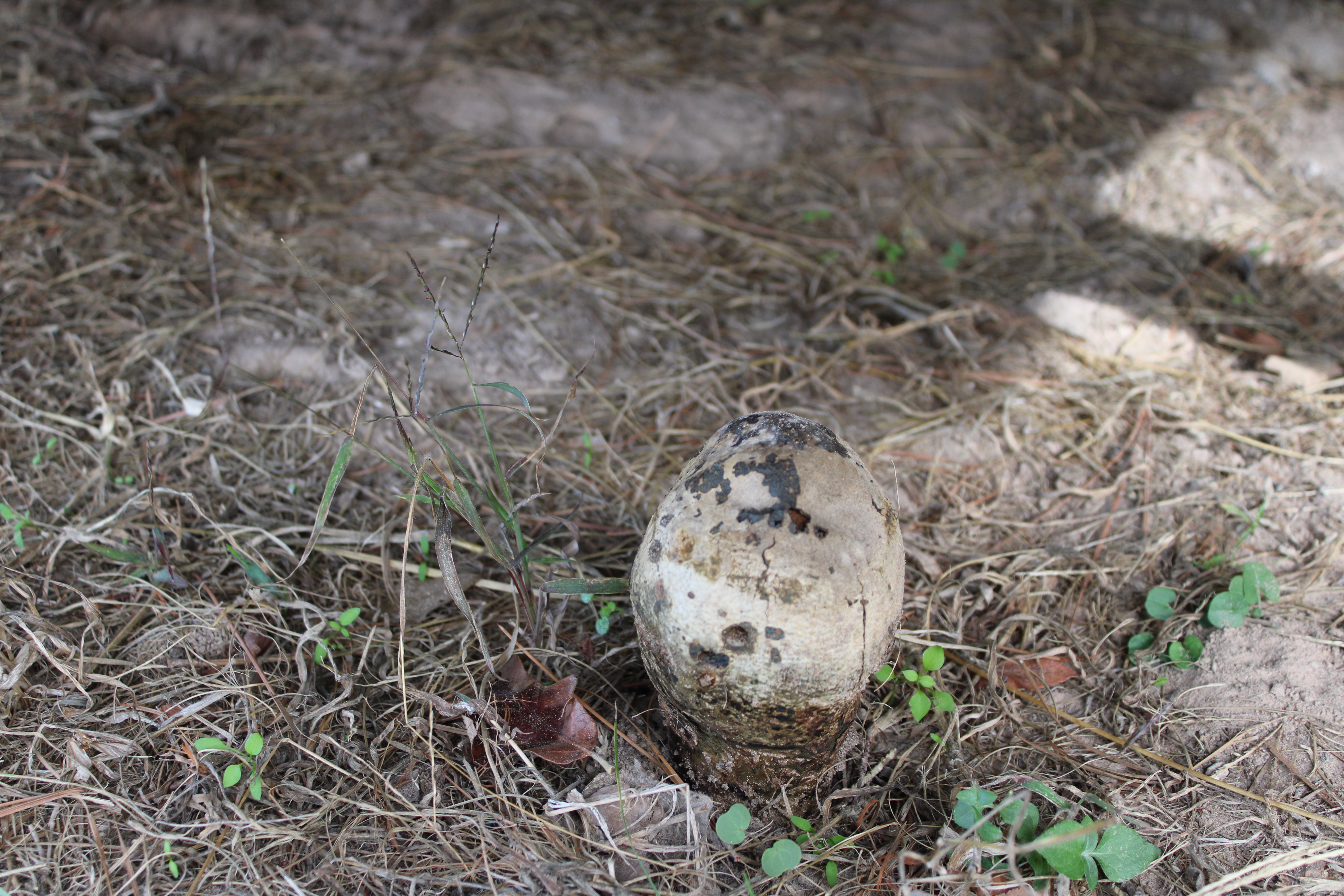
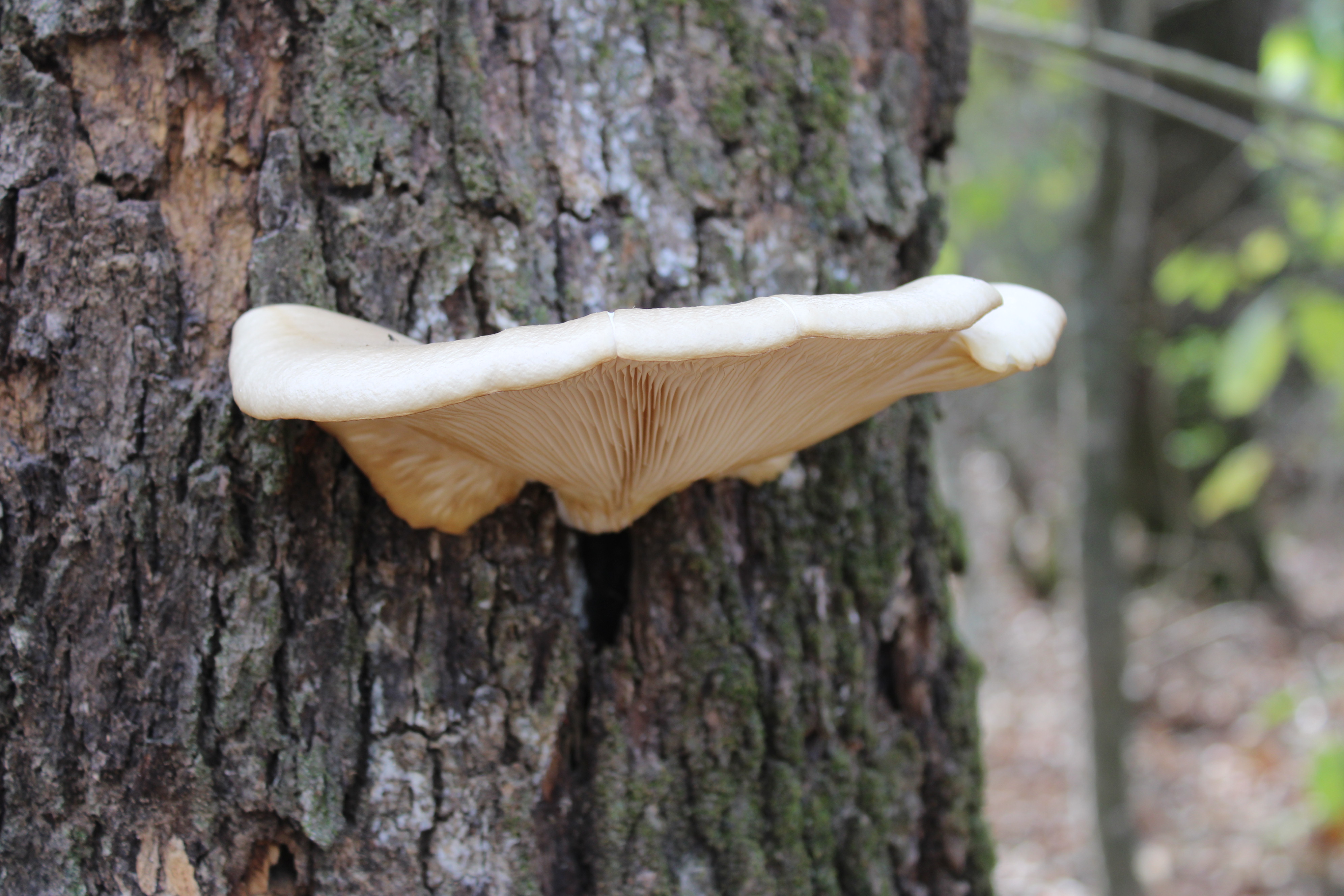
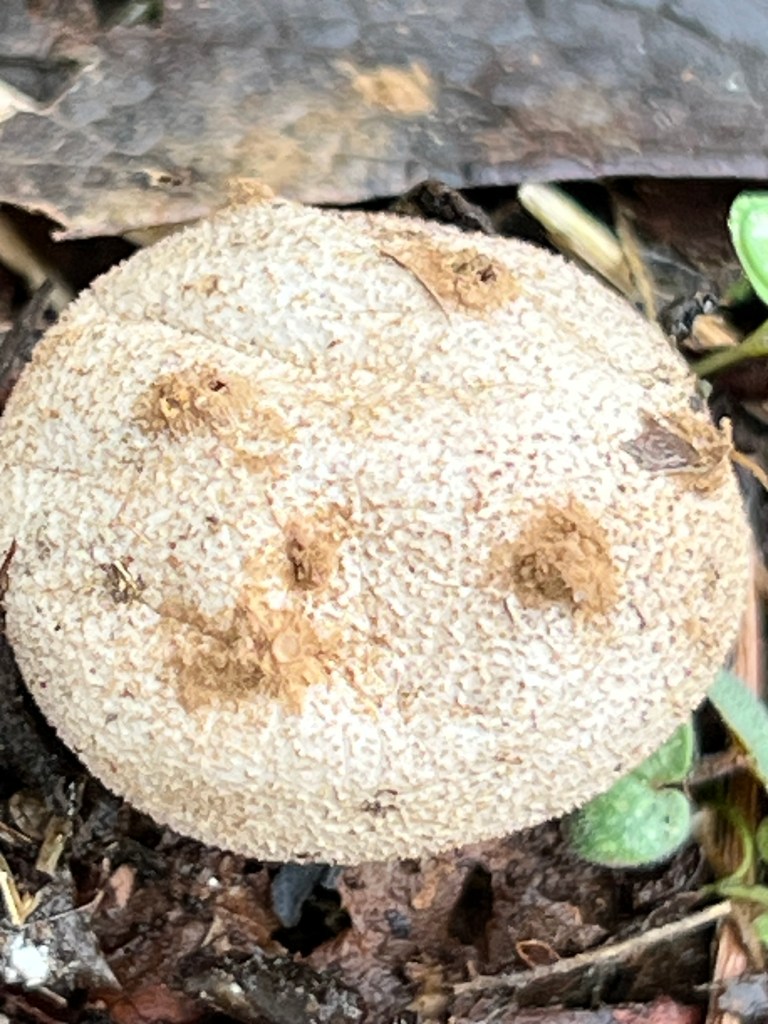
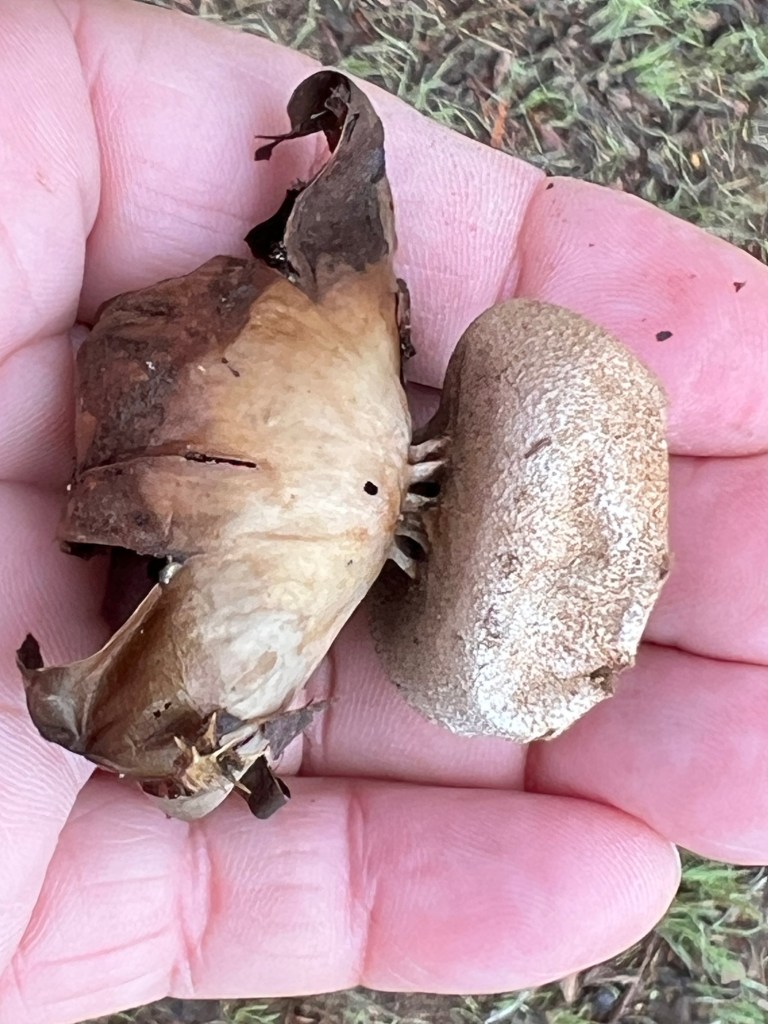
While exploring Twisted Creek Ranch, I came across an unfamiliar mushroom growing beneath a mix of native trees. At first glance, it didn’t resemble the common fungi we see after rains. Its clustered form and unusual structure immediately stood out, prompting a deeper look and documentation.
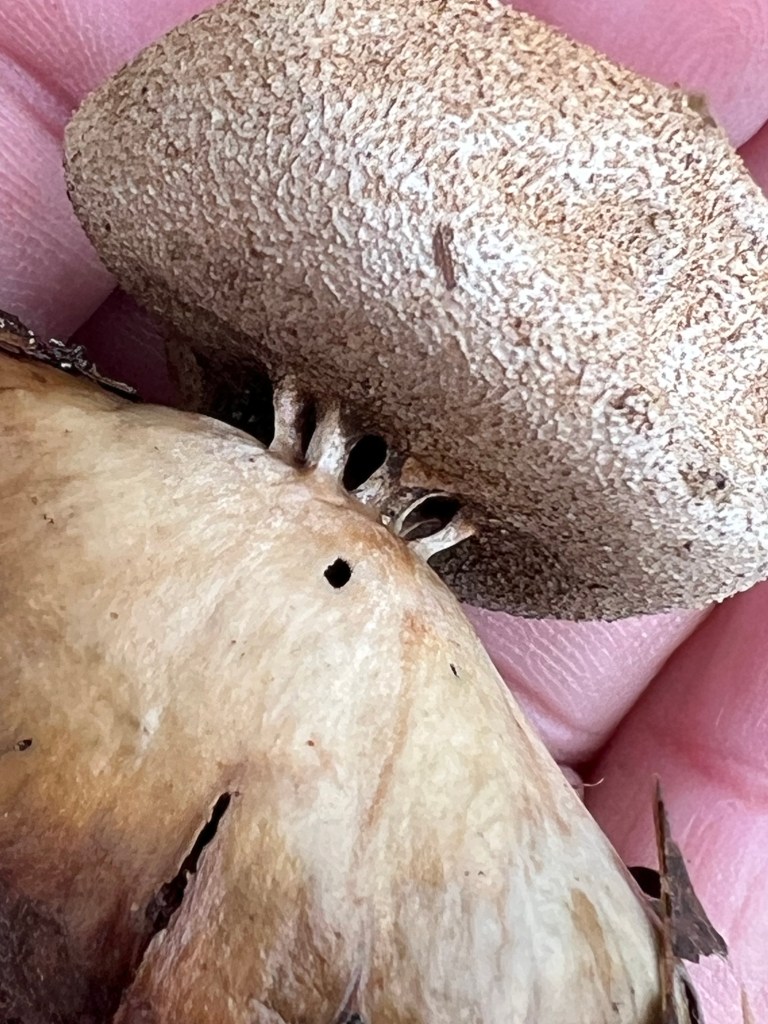
After careful observation, photo documentation, and consultation, the mushroom was identified as the Pepper Pot mushroom—a species with only around 820 documented sightings worldwide. Even more exciting, this appears to be the first recorded sighting in Milam County, Texas.

Why This Find Matters

Pepper Pot mushrooms are not just rare; they are indicators of something larger. Fungi play a critical role in ecosystems—breaking down organic matter, recycling nutrients, and supporting soil health. The presence of such a rarely documented species suggests a healthy, functioning habitat with intact ecological relationships.
Twisted Creek Ranch is a National Wildlife Federation–certified wildlife habitat, and discoveries like this reinforce the importance of preserving native landscapes. Undisturbed leaf litter, mature trees, and minimal chemical inputs all create the conditions fungi need to thrive—but that are increasingly hard to find.
The Value of Paying Attention

This find is a reminder of how much there still is to discover, even in places we walk every day. Fungi often go unnoticed, emerging briefly and disappearing just as quickly. Without slowing down, looking closely, and being curious, moments like this are easy to miss.

As Master Naturalists, documenting these occurrences—especially rare ones—is invaluable. Each observation adds to our collective understanding of species distribution and habitat health.

I’ve included photos from the original discovery to help document this sighting and to encourage others to keep their eyes on the forest floor. You never know when your next walk might turn into a county first—or even a global rarity.

Discoveries like this are why I’ll always advocate for leaving the leaves, protecting native spaces, and staying curious.
The Third Time’s the Charm: A Rare Mushroom Find in Texas

by Michelle Lopez

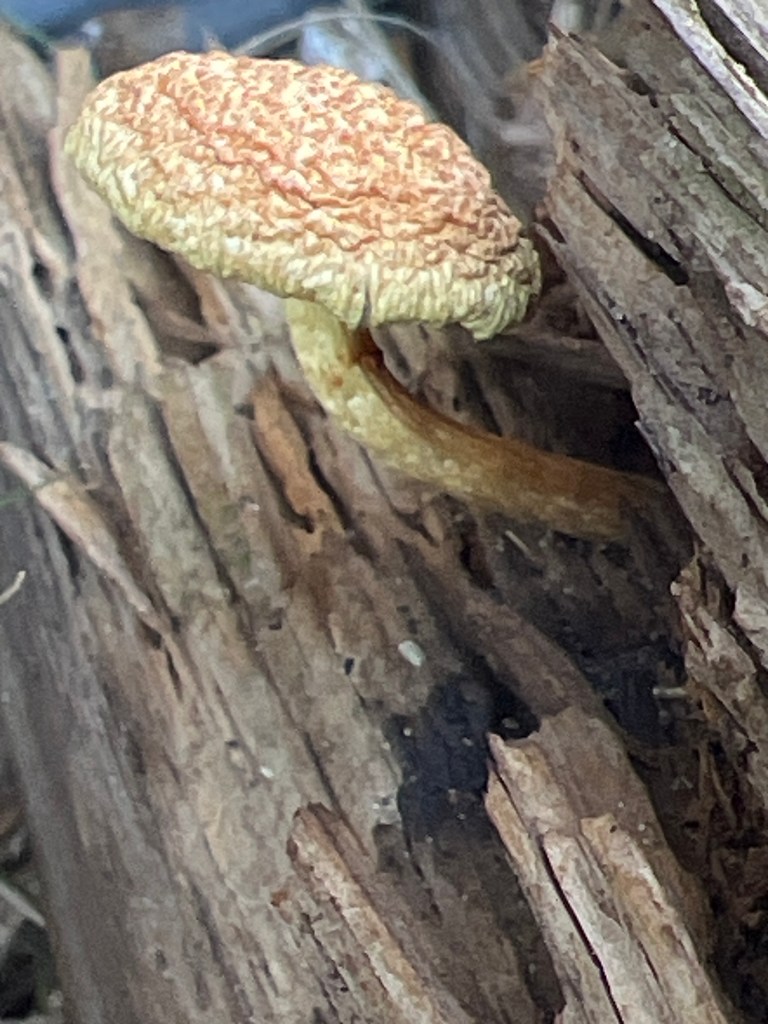
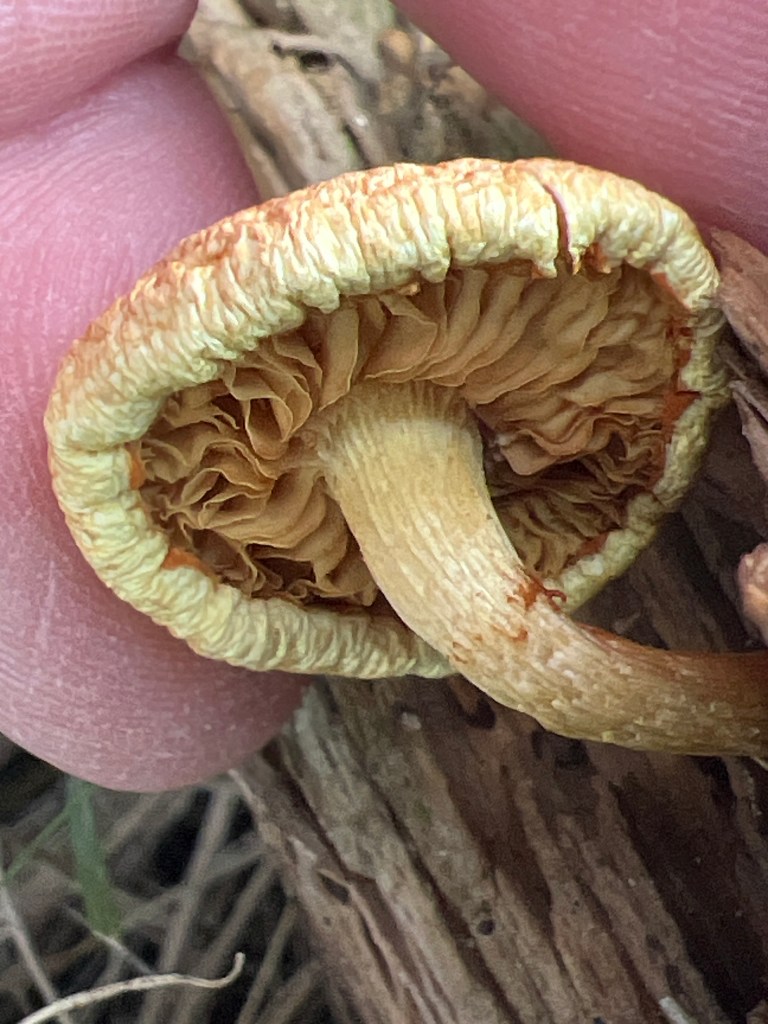
I was standing behind the barn the other day, not looking for anything in particular, when I happened to glance down at an old board on the ground. Growing right out of it was a small, unassuming mushroom—one of those moments where something ordinary suddenly asks you to pay closer attention.

Of course, I did what any curious naturalist would do: I took a photo and uploaded it to iNaturalist.

That’s when the surprise came.

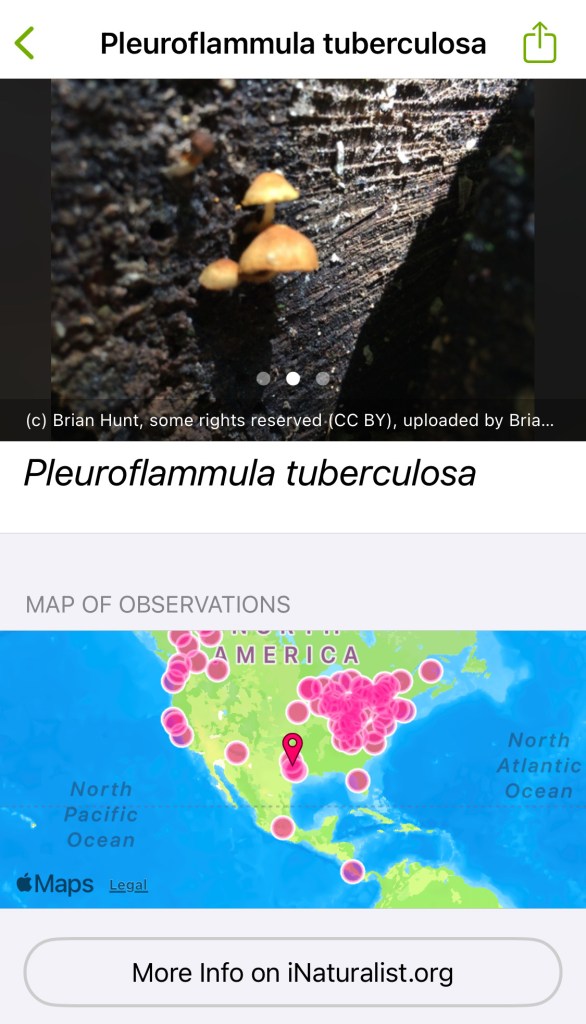
The mushroom turned out to be Pleuroflammula tuberculosa, a species with only 527 documented observations worldwide—and just two prior sightings in the entire state of Texas. Mine became the third.

Finding something so rare without intentionally searching for it feels like a quiet gift from the land. It’s a reminder that nature doesn’t always announce itself with fanfare. Sometimes it waits patiently for us to slow down, look down, and notice what’s right at our feet.

Moments like this are why I love spending time outdoors. Nature never disappoints. There is always something interesting happening—fungi recycling old wood, birds passing through unseen, insects going about their lives—if we’re willing to stop and observe.

Who knows how many rare, beautiful, or important things we walk past every day without realizing it? This little mushroom was a good reminder to keep my eyes open and my curiosity alive.

Mushroom Bucket List Success

By Ann Collins

Does anybody besides me have a mushroom bucket list? I don’t need to see a “Death Angel” (might be Angel of Death or one that glows in black light, although that would be really interesting. No, my bucket list is only one deep, a bird’s nest fungi. I’ve seen pictures but figured I’d have to go to eastern Canada or the jungles of Belize to see one.

Well, wouldn’t you know it! I’m wandering around in my wildflower meadow, in my nightgown and robe, in the cool damp morning. I’m doing a bit of “belly botany” getting a picture of the very first winecup of the season. I’ve been keeping a sharp eye out for them. I knew they were coming and wanted to add them to my growing list f flowering plants to satisfy the sweet lady at the appraisal office. I do pollinators, critters, and plants for my wildlife exemption, and I’ll do just about anything to make the folks at the Appraisal District happy. Someday I’ll have to show the Master Naturalists my scrapbooks and journals.

Anyway, I see what I think is a small mushroom cap. But it isn’t! It’s a tiny cup about the size of my little fingernail. Inside the cup is a bunch of little charcoal gray “eggs.” Wow! Is this a fairy’s bird nest? Maybe a lost leprechaun’s? I would have jumped straight up in surprise, delight, and amazement, but at my age I can’t manage that sort of thing anymore!

Ta da!

As I gazed in awe, I realized there were bunches of them all over the place. I dug one out of the ground with a toothpick-sized stick and reverently laid it in my palm. Gosh! Don’t you love your camera phone? There was a kind of bulb or knot at the base of the cup. I tried carefully knocking off the damp soil from the tangle of roots. That wasn’t working out very well, so I took my precious treasure into my potting shed and started washing it. Let me remind you, this thing is the size of my little fingernail – tiny! 

I feel like I just discovered Cleopatra’s tomb – really! The detail on this little bit of magic is simply unbelievable.

Side view

The world we live in is filled with wonderful, magical, delightful structures if we only take the time and get down on our hands and knees and look.

Part that was underground.

Don’t forget to take your phone camera!

I looked them up online, of course, and they are used in Chinese medicine. There are lots of benefits: anti-viral, anti-inflammatory, anti-microbial. Treatment for tuberculosis, asthma, skin problems, stomach troubles. It’s even used against aging.

Tiny!

There was a lot of information on how to get rid of them. I can’t even begin to know why. They are very tiny! So much hidden wonder and magic. For a mere $630.00 you can purchase them for home use. 4.8 stars! You can even buy bird’s nest mushroom tea.

The Elusive Texas Star in Milam County

by Sue Ann Kendall

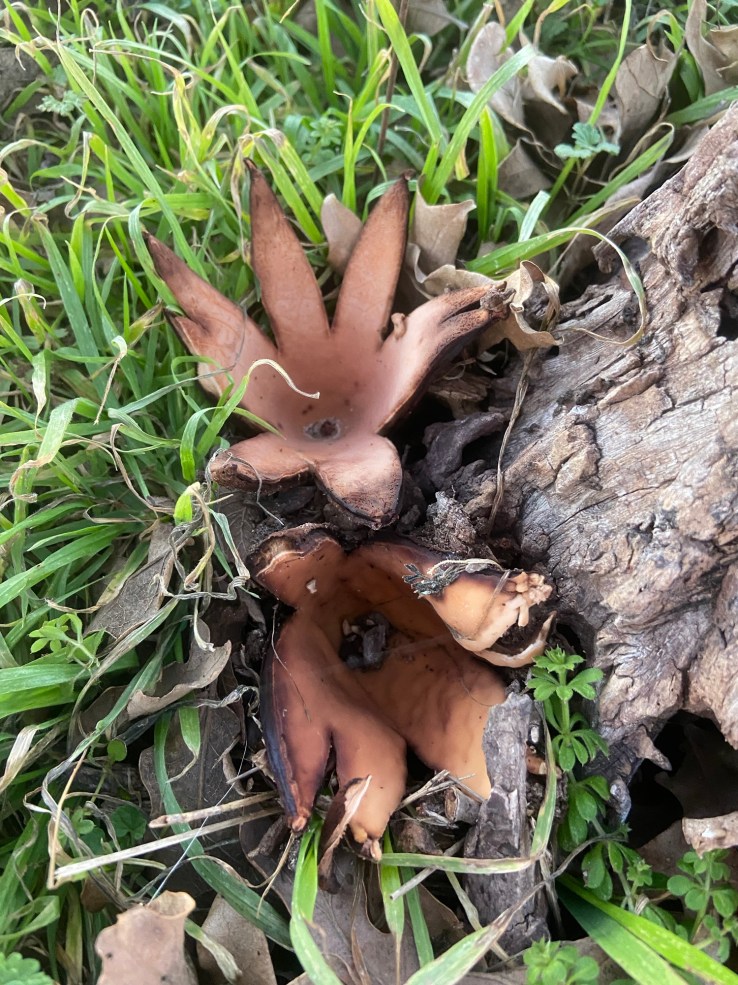
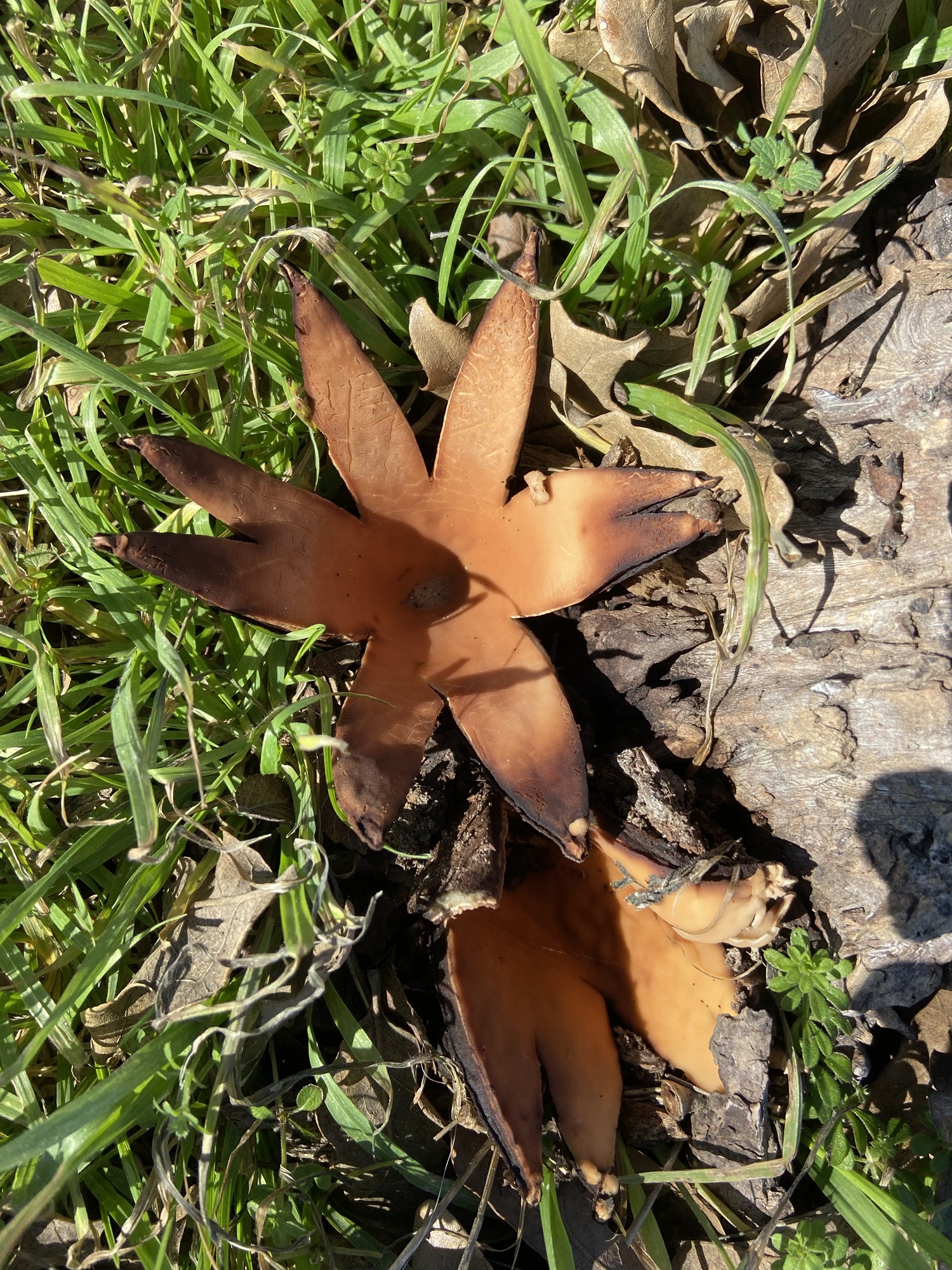
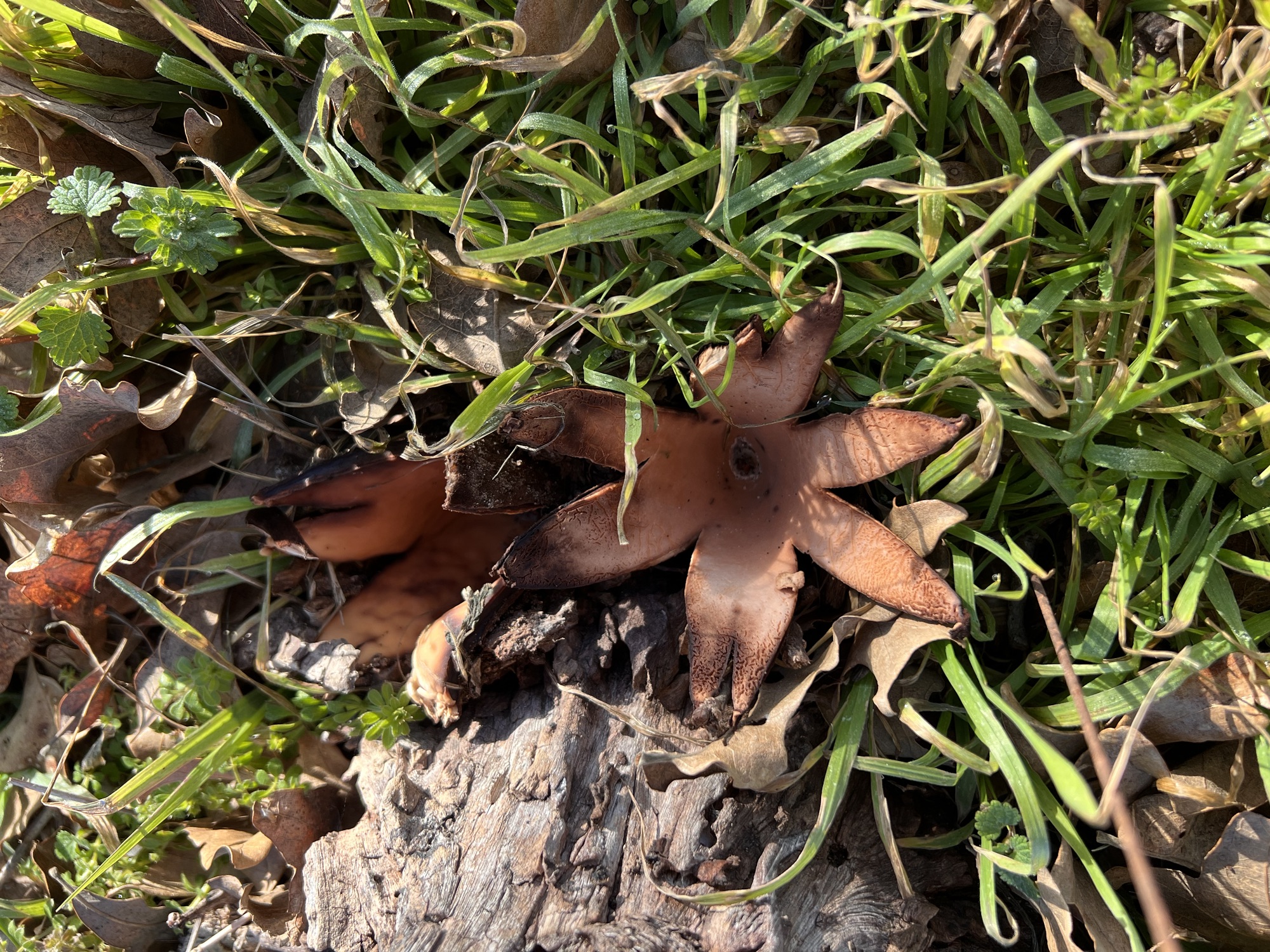
The State Fungus of Texas is the Texas Star (or Devil’s Cigar) (Chorioactis geaster). It’s not spotted often, so wheneever you see it, it’s newsworthy. When it was spotted for a second time at Inks Lake State Park last December, it made the news all over Texas. This is just one of the articles. There’s also an article on them in this month’s Texas Coop Power magazine. So, when my neighbor Vicki sent me a photo and asked me if I’d ever seen anything like this before, my heart skipped a beat.

I knew exactly what it was!

I told her it was rare and exciting. She looked it up, and we both geeked out over it for a while. The next day I went over to her property to get a look (I’d also hoped to pet her minature horse, but she was in the next pasture.) The mushroom was in a field of post oak trees, which confused me.

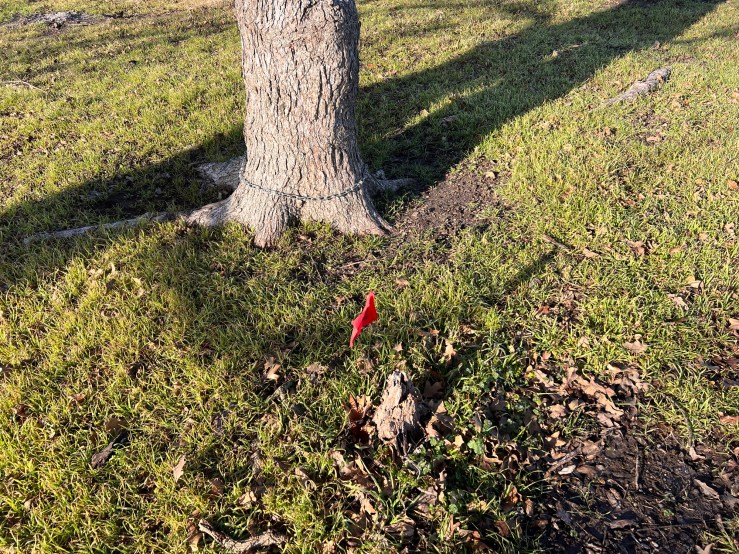
However, when I got closer to the spot where the Texas Star was located, conveniently flagged by Vicki, I saw it was exactly where it should be. It was right next to the stump of a cedar elm tree (that’s basically all we have, the oaks and the elms). We’d recently had a lot of rain, so it was fruiting right when it was supposed to.

There it is!

As soon as I got my own photos, I uploaded the observation to iNaturalist, where it was quickly confirmed. It had already burst its spores out, so we missed the exciting hissing sound the Texas Star makes, but it was fun to feel its leathery “petals,” and see if it smelled funny (I couldn’t smell anything). I looked around but didn’t see any more on her property. I also looked at the dozens of cedar elm stumps in my woods, but no Texas Stars have turned up.

As I looked at the information on iNat and Wikipedia about the fungus, I learned a lot. First of all, I’m pretty lucky to live where it grows. It’s only found here in the middle of Texas and a small place in Japan. That makes me wonder if they are really the same fungus, but I’m sure professionals have looked into that.

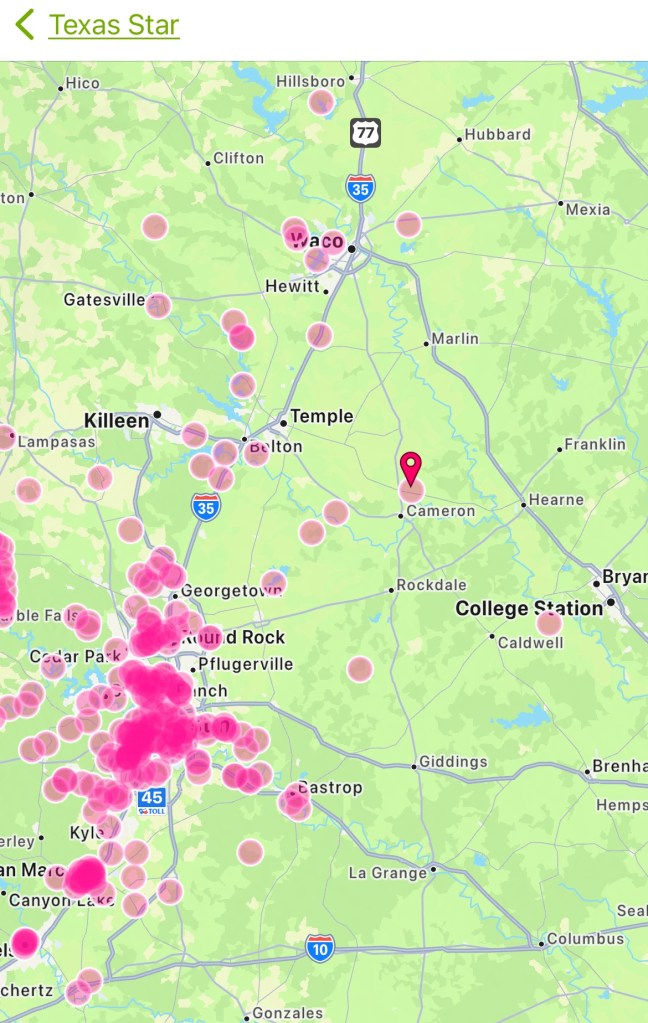
This iNat screenshot isn’t the whole Texas Star range, but it shows how few observations there are in this part of the world.

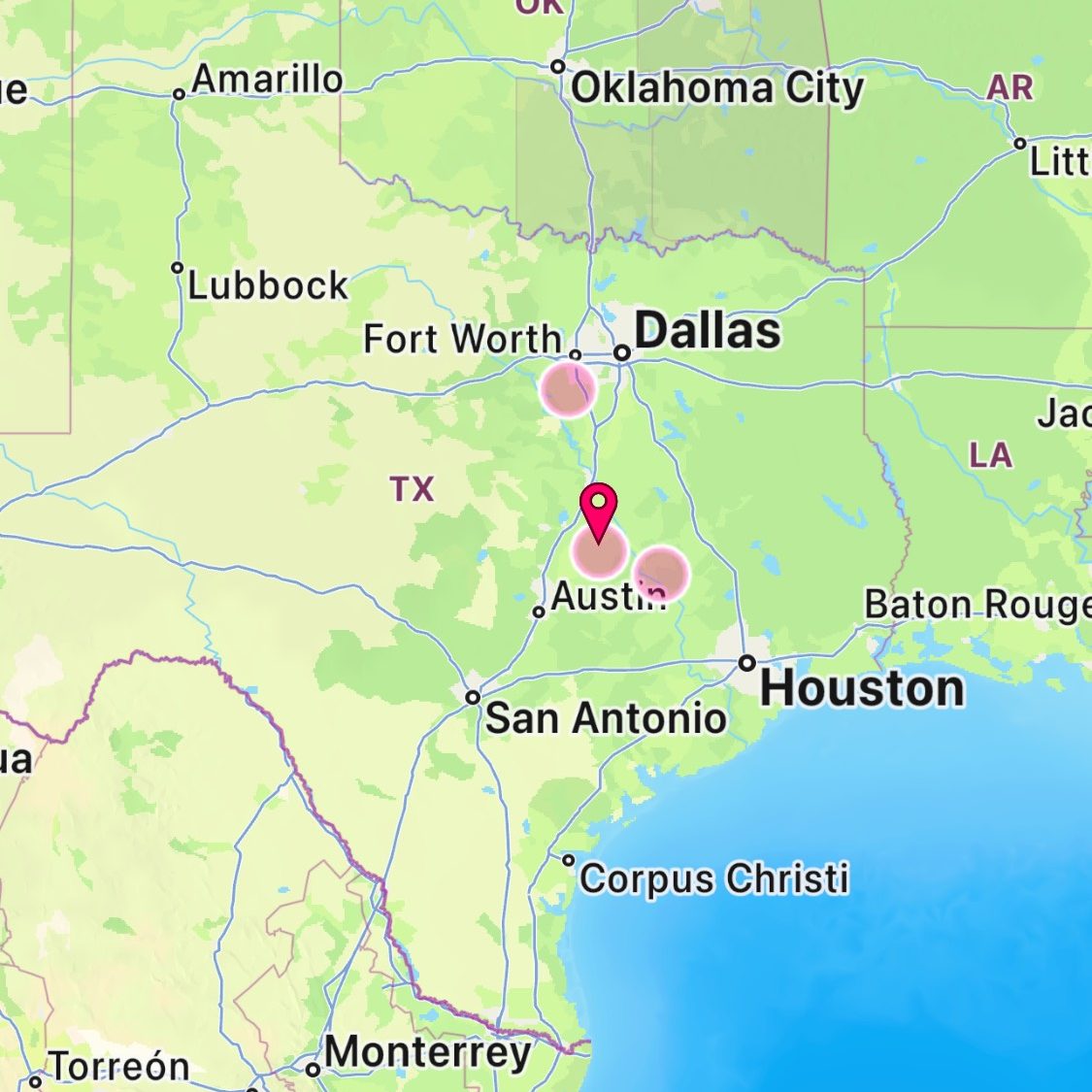
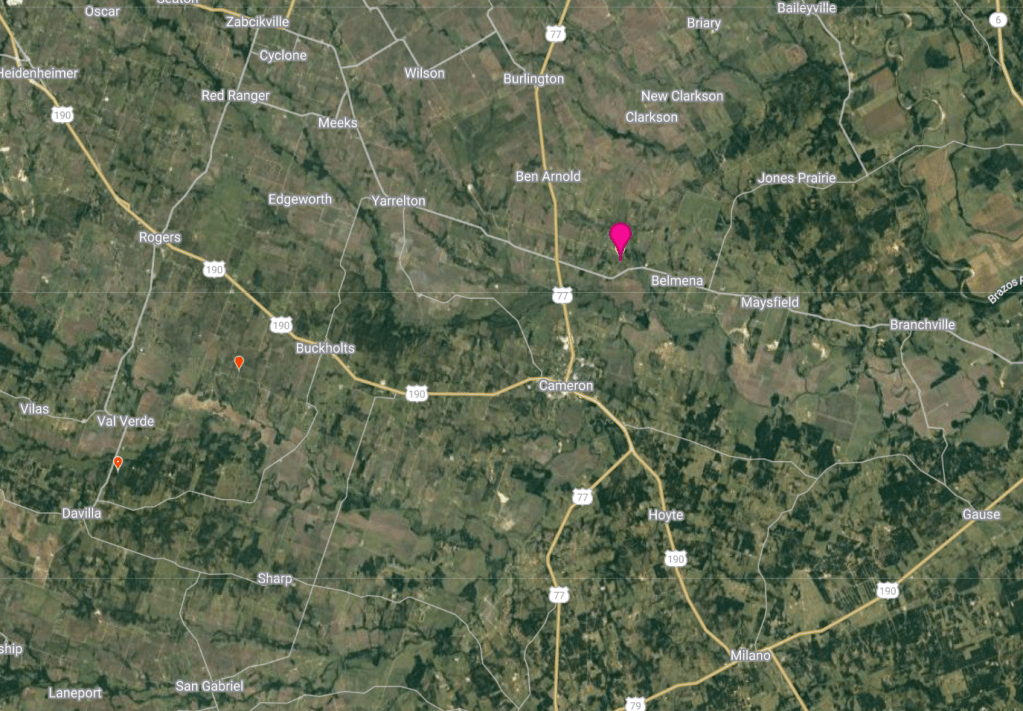
There were observations near Davilla and Buckholtz, but only the Davilla one was research grade, making my observation the second confirmed one in Milam County. And we are way to the east of its usual range. I was excited!

This map has most of Milam Couonty in it, and shows the three potential observations.

Keep on the lookout for these if you have decaying cedar elms (Ulmus crassifolia) and we have another nice rain (which I assume will happen soon). To learn more, read any of these articles: