Tree Girdling at Wilson Ledbetter Park

by Carolyn Henderson

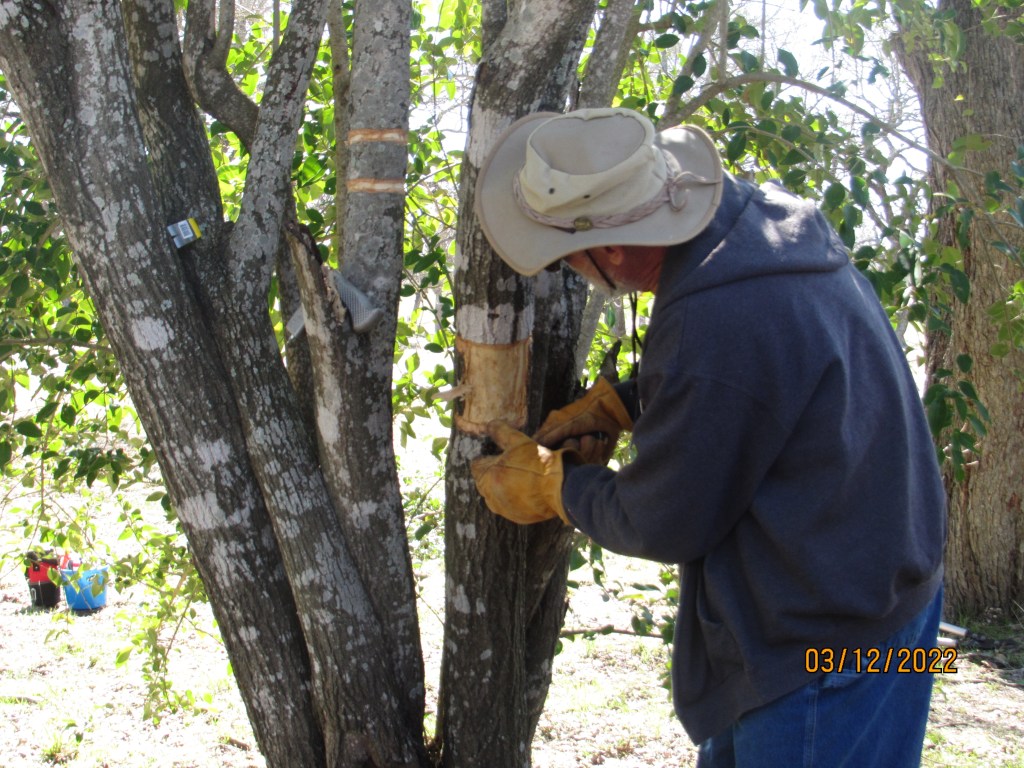
Ten troopers from the El Camino Real chapter of Texas Master Naturalist met up Saturday, March 12, to attempt to rid Wilson Ledbetter Park, in Cameron, Texas, of an invasive species. With the very experienced guidance of Cliff Tyllick, we managed to wear ourselves out after three hours of Glossy Privet girdling. I’m not so sure about the trees. 
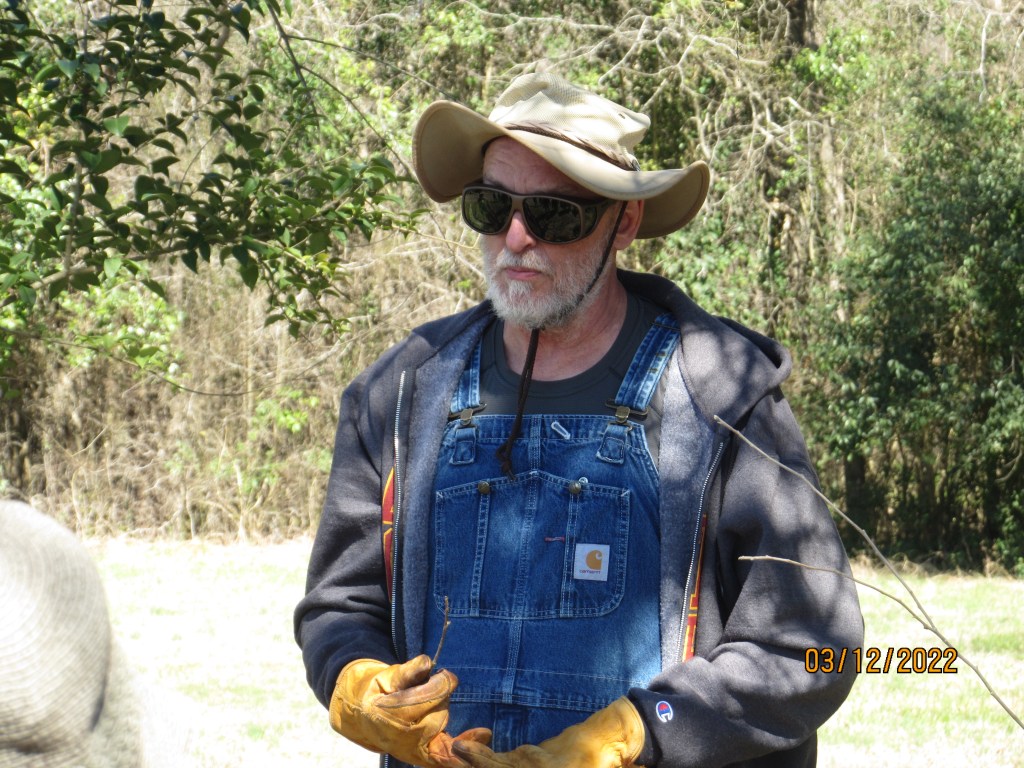
Cliff Tyllick explains tree girdling

Tyllick has years of experience girdling trees in the Austin area. Much of his work is done through grants and conservation organizations in an attempt to hold back Glossy Privets and some other invasive species. He also has done a program on girdling for Texas Master Naturalist at the annual meeting in 2019. 
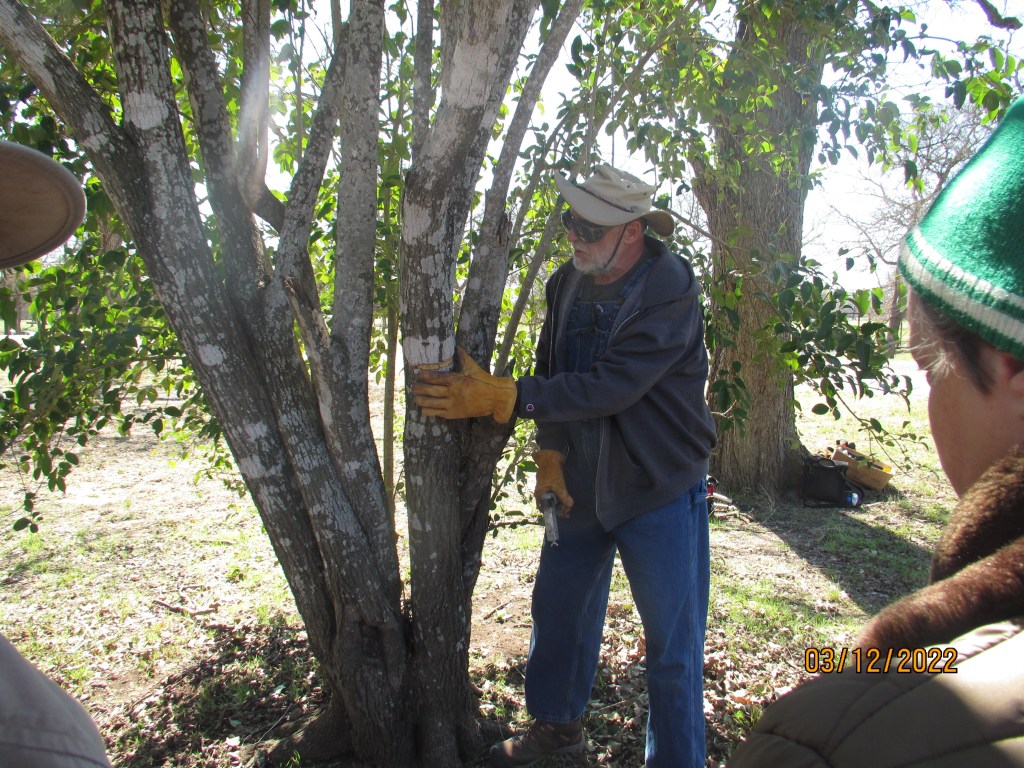
Tyllick draws lines on bark to be removed
Bark is removed between the lines

Is it more difficult than cutting down the tree and poisoning it? Yes! So why do it this way? Girdling doesn’t require the use of poisons that could contaminate nearby plants, animals, or water, and it eliminates noisy large equipment (as well as the need to carry it down long trails). It eliminates spreading of the trees by seed while killing it slowly. If it’s in a wooded area, you can let the tree decompose to fertilize the ground.
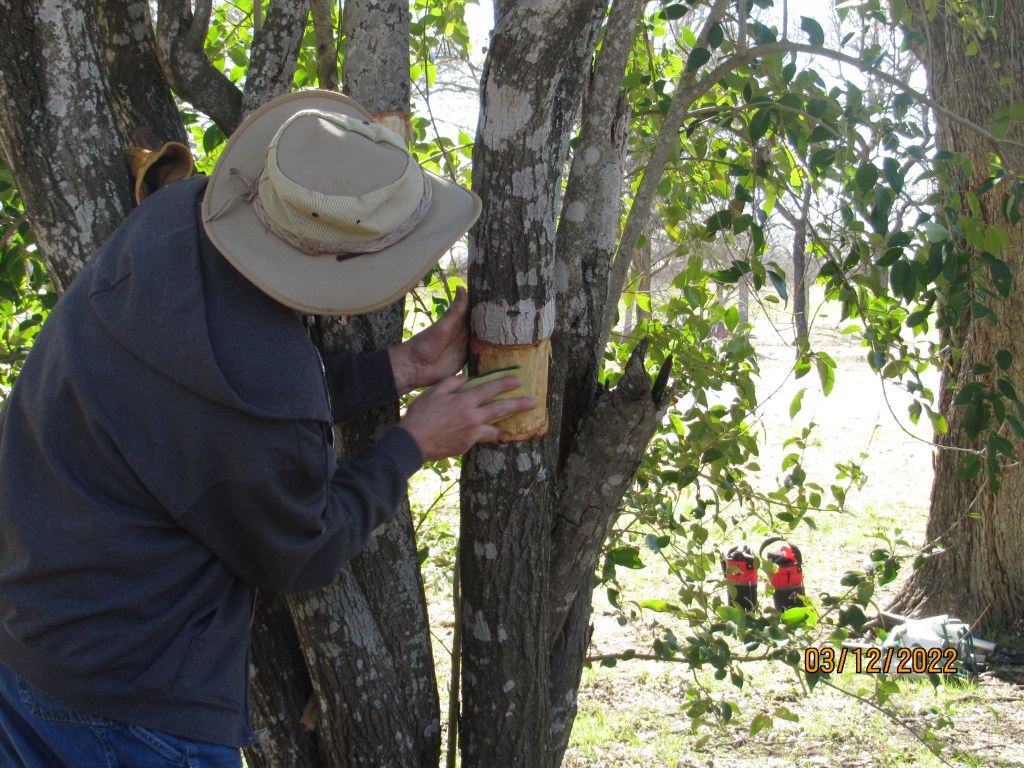
 All pulp material is removed to prevent regrowth

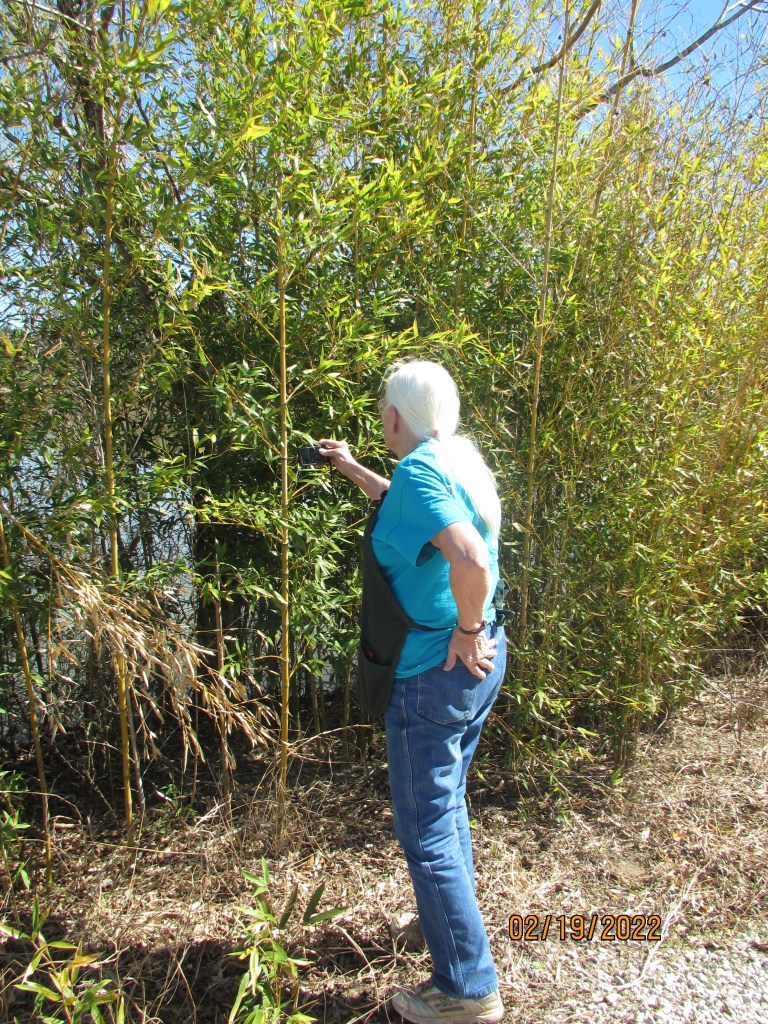
And why would there be a need to remove the invasive Glossy Privet that produces flowers and shade? They hinder the growth of native trees and flowers in the area. They outgrow native trees in height, which hinders the growth of native Texas species growing below them. Bees and butterflies do like the flowers, but that stops them from pollinating native Texas flowers.
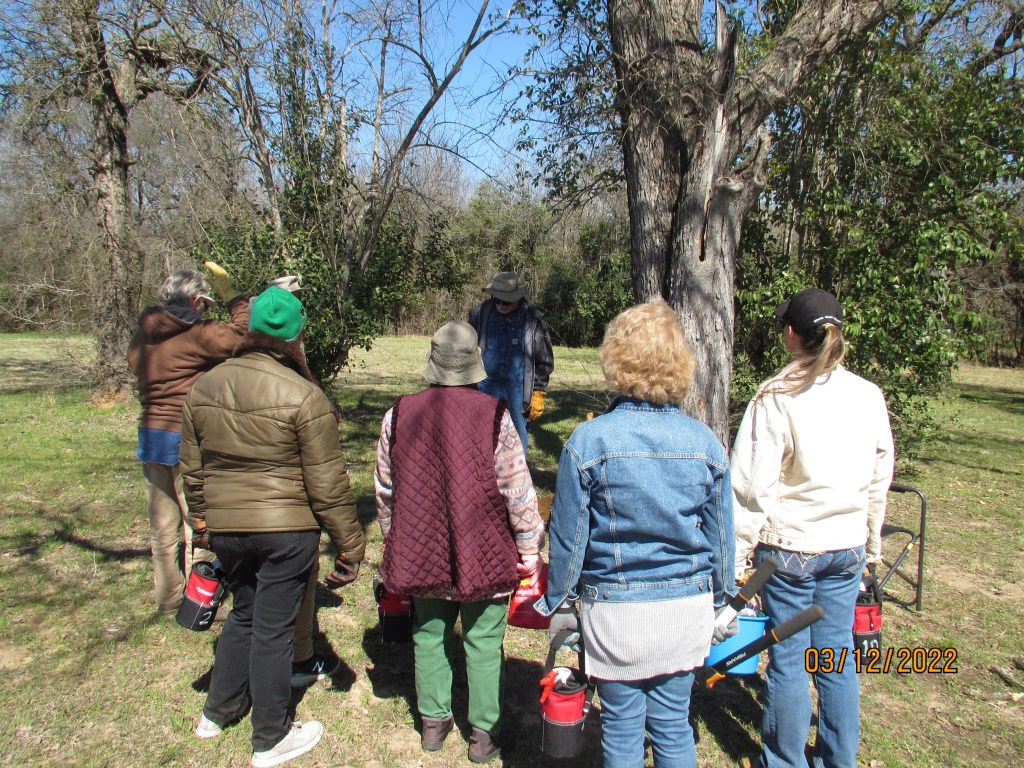
Members walk toward the ill-fated Privets.

There is a specific format to do the girdling in so that it will take out the plant in one effort. The outer bark must be removed for about the length of a hand. Then the pulpy matter left must be removed by using tools to scrape it away. Once it’s removed, it is washed with soap and water then cleaned with an alcohol and water mixture. This combination keeps it from regenerating what was removed. If you’d like to see it in action, check out this video:

It was hard work, and most of us were worn out, but learning a new process was interesting, and we got to enjoy the company of our chapter members. As an aside, Tyllick’s wife, Karen is an archeologist by training and a PhD. She found some relics in the park. Thanks to her for our group picture. We were all smiling because we said “Girdling” instead of “cheese”. It was really funny at the time, which was at the end of the day.
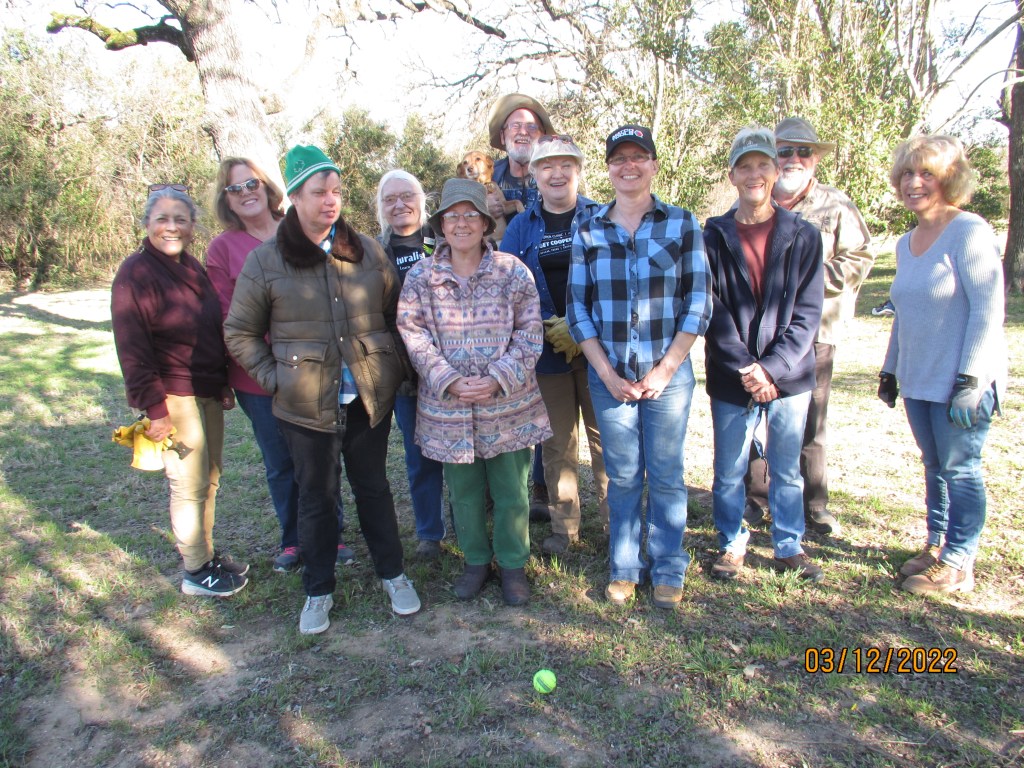
ECR chapter members smile big after all the girdling.

More Field Trip Memories

by Carolyn Henderson and Catherine Johnson

The El Camino Real chapter of Texas Master Naturalist took their first field trip of the year to the farm of Master Naturalist Alan Rudd. About twenty members, including new trainees, toured the place learning about natural methods of fish farming and how the stock ponds were created. Rudd also gave a history of all the new species drawn to the area by the abundant water and food sources.

After the hike around parts of the place, members cooked hot dogs and pie iron goodies over the fire. Many thanks go to Rudd and his family for hosting the chapter.

Amazing Nature Walk for 2020 Class

Yesterday was the first field trip for our 2020 class and some tag-along Chapter members. We literally visited a field! What a beautiful field it was, however, and we are grateful to Nancy Webber for inviting us to share the property she has been managing as a wildscape for over a decade.

Heading out for the walk, Nancy explains how she manages her property.

After a bit of gawking at the beautiful off-grid home on the property, complete with huge cistern, solar panels, and blazing wood stove, Nancy led the class through the riparian area and meadows in her property, somewhere between Davilla and Bartlett. She presented so much information about her property, how they manage it, and what they do with it.

We had fun spotting prickly pear that they dug up and hung from trees to propagate no more, and marveled at how few mesquite there were. On the other hand, the possumhaw was glorious, and everywhere!

Not my best possumhaw photo, but you get the idea.

We saw and heard many birds, which was great fun to the birders among us. A ladderback woodpecker and American robins were highlights, though there were many more. We knew there were also plenty of raptors around by the evidence of many former mourning doves.

Former dove.

We had fun finding dens of some of the local mammals (one of which had an interesting musky smell), spider webs in trees and on top of holes, and even a grasshopper and a sulphur butterfly.

The spider just left before I could take the picture!

Another fun activity was spotting the cool things the property owners had done to honor the nature in the area, such as decorated trees, a “portal,” and an entire area featuring various bones hanging from the trees. It’s a great place to play “guess the carcass!”

The two hours flew by, since the weather was pleasantly cool and the mud wasn’t bad at all. A couple of us lagged behind as we got all involved in plant identification and taking photos for iNaturalist. We just can’t help it, plus one was a new one to us (fringed puccoon, pictured below). I think Ann Collins and I may have hooked one of our class members on our hobby!

I wish we could tour more property of our members, to see how they differ. Hope you enjoy my photos. I am sparing you most of my iNaturalist photos!

We all had a great time on our field trip!

Busy Weekend for Us

This past weekend our Chapter members were busy learning and sharing what they learned.

The Chapter members who are also members of the El Camino Real de las Tejas National Trail Association attended their conference on Friday and Saturday. They shared our new wildflowers of Milam County brochure with all the attendees. (I was unable to go, so I don’t have any photos.)

Viewing the photos of the land conference attendees got to see in person.

Yesterday they did field trips of Milam County sites that were on the trail, including the property of Joyce and Mike Conner, Cedar Hill Ranch, which has some important sites on it. They also went to Sugarloaf Mountain and Rancheria Grande. Many thanks to our chapter members who volunteered to help out with the tour.

Chapter members tell a visitor about what we do.

Meanwhile, other members put together a lovely exhibit of plant samples for the herbarium that members of our group helped collect. It was located at the at the Milam County Historical Museum.

Plant samples for use in herbaria.

There was also a display of beautiful photographs Christopher Talbot’s A Photographic Journey of the Trail exhibit. The photos were quite impressive, including a photo of the Graham Swale that Ann Collins and Connie Anderle claimed was theirs, because they are from the Graham family. So yes, fun was had.

Ann Collins and her “family swale.”

Ann, Donna, Linda Jo, and Scott did a great job answering questions and passing out material. After the tour was over, the trail conference attendees came to enjoy the exhibits. Lots of people came in, since the Steak, Stein and Wine Fest was also going on. It was a fine way to do some outreach, and the weather was just perfect.