Wolf Spider Identification Update

by Eric Neubauer

[Note: our most popular article on this site is Wolf Spider Identification. This article provides a brief update, plus links to Eric Neubauer’s recent presentation at the 2024 Texas Master Naturalist Annual Meeting.]

This material serves as an introduction to a new wolf spider species that is quite common in Texas and Oklahoma. It is also known in nine other states as far away as North Carolina. There is sufficient information to identify both juveniles and adults in the field as well as learn something about its life cycle. This is a departure from tradition in that a tremendous amount of information is made available to the public before publication in a scientific journal and formal acceptance of the species name.

Hogna incognita

Links to slides and explanatory text in lieu of a speaker follow:

I hope the average amateur naturalist and even professional arachnologist will find this more user friendly than the typical scientific paper.

I’m now waiting to see if any adult females make it into November. There were some with babies out there just a week ago. They outlasted my last Argiope aurantia. Someone needs to compose an “End of the Season Blues.”

Not to worry, some other wolf spider species are nearing maturity including the other undescribed Hogna west of the Edwards Plateau and another unknown I saw three adult males of last winter. I don’t want to say it’s an undescribed species until I see some adult females and do a thorough search of the possibilities. Exciting times!

Hogna incognita postscript

There’s always more to know about a species. Based on last year’s observations, adult females last though October. As the class of 2024 dwindled, it looked like some might make it into November in parts of Texas and Oklahoma. I held my breath and went out with my headlamp on as soon as the sun set on November 1st. I found one fairly quickly in the stubble of the hay field out back. She was away from her burrow and I caught her easily.

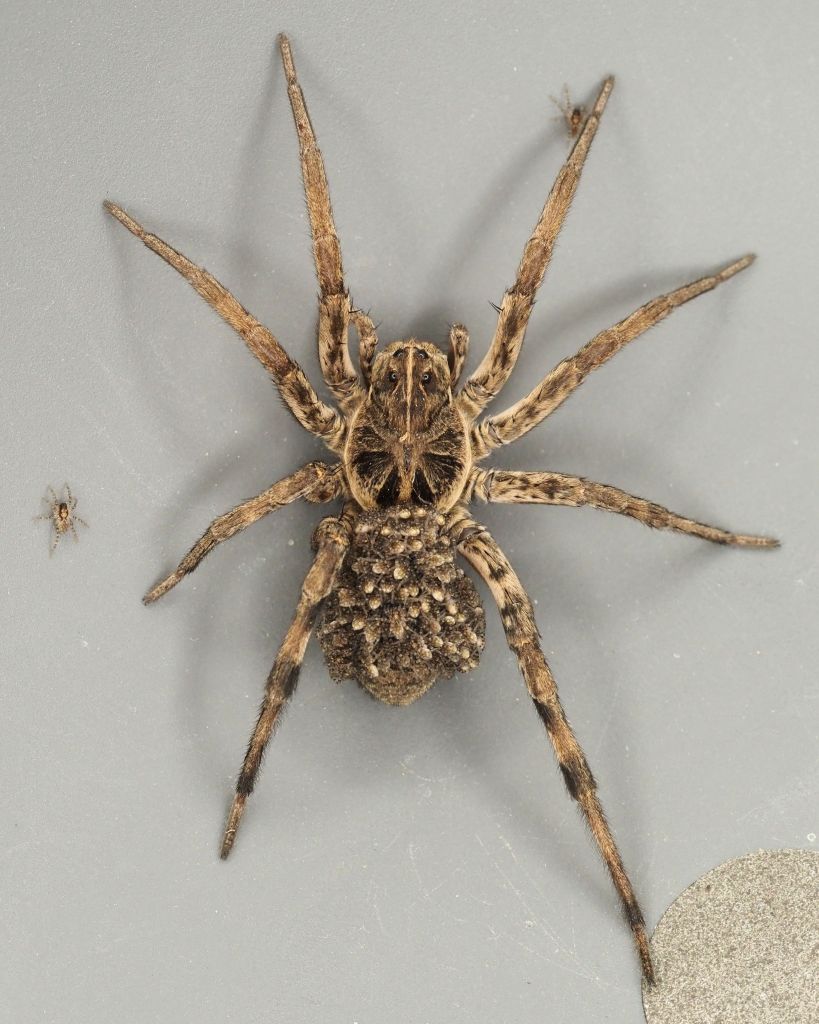
About a third of her family had already dispersed. Another half dozen or so decided to go off on their own while I did the photography. I collected her and the spiderlings that had disembarked and released them on higher ground next to a crack in the soil for cover if they needed it, and just in case of heavy rain.

More on Eric’s Research

The November 2024 isue of Texas Coop Power magazine features an article on Eric and “his” spider: A Wolf Spider Misidentified for 120 Years Gets Its Due, by Sheryl Smith-Rodgers. Check it out!

The Female Hogna Appear

by Eric Neubauer

Since I knew the Hogna ‘incognita’ females were on the verge of adulthood, I went out spotlighting on my property at 5 AM this morning. Recent rains had sealed up all the cracks in the soil, and a heavy dew made picking out spider eyes harder than usual. Although I saw several promising spiders, they easily eluded me under the new vegetation caused by the rain. I was disappointed and rather wet from the knees down.

The only option left was to go down the gravel driveway and check out the margins of the gravel county road. On the way down the driveway, I found one which turned out to be my first adult female this season! Walking a quarter mile of county road in front of my and other properties filled out the eight containers I carry with me in a tub. These included an adult male and four more adult female ‘incognita‘ as well as two adult female Hogna antelucana. Oddly enough several were along the edge of the neighbor’s mowed lawn where there was little cover. The others were found bordering hay and row crop fields.

The largest was this female ‘incognita’, and she was a feisty one. Wolf spiders, especially the larger ones, may stand their ground when approached. They may raise one or even two pairs of forelegs in a threatening position. They may lay the tip of one foreleg on what has approached them to gain more information about it. Less often they’ll launch a mock attack which likely would turn lethal for edible prey. In the past they’ve attacked the toe of my boot and a finger. During the latter I felt some pressure.

A while ago I ended up with some toilet paper rolls with a center that could be pushed out. The centers became useful to have around for other purposes. I have one I’ve reduced to about a half inch in diameter and find useful to get larger spiders to go through the bottom of a funnel into an observation chamber for ventral views. The large female wasn’t happy about the process and attacked the end of the small roll. She was lightning fast of course, and I could feel a substantial blow from the other end of the roll. Best analogy would be a cat boxing the ears of a larger dog. Calling this family wolf spiders is a bit of a stretch in my opinion. They don’t hunt in packs and many other behaviors are much more like house cats. Should they be called Felicosa or kitty spiders?

Hogna ‘incognita’ reaches another seasonal milestone

by Eric Neubauer

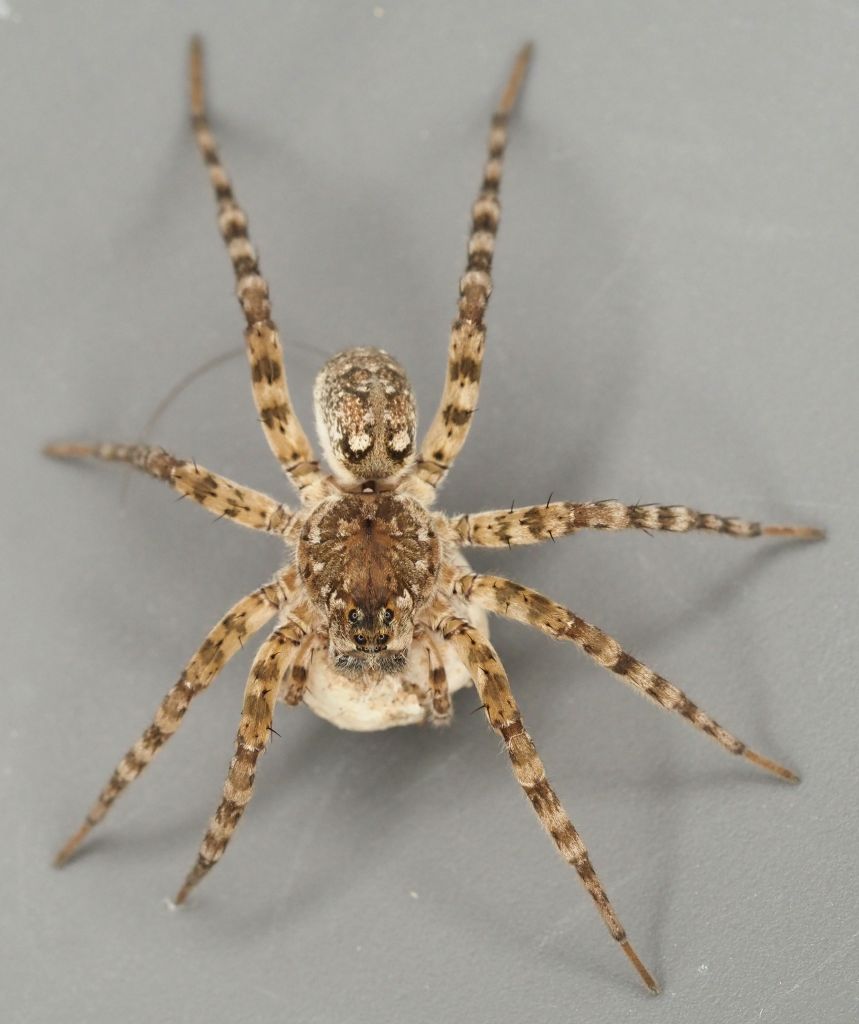
My first adult incognita of the year. Like birds, wolf spider males are often more eye catching than the females. In the case of this species, this means a bolder pattern with greater contrasts like this one here.

Males mature ahead of the females, but I think I also observed a female with only one molt to go which means they’ll start maturing soon too.

I’m just learning how to recognize females as they approach maturity. At present I’m assuming that if they’re big enough to be recognizably male and they aren’t, then they must be females.

The timing appears to simultaneous across its range, with recent observations from Oklahoma, Kansas, and for the first time ever, Louisiana. Even those that have been lab raised since last October are on schedule with the first male molting into an adult last week.

An Unusual Spider Story

by Eric Neubauer

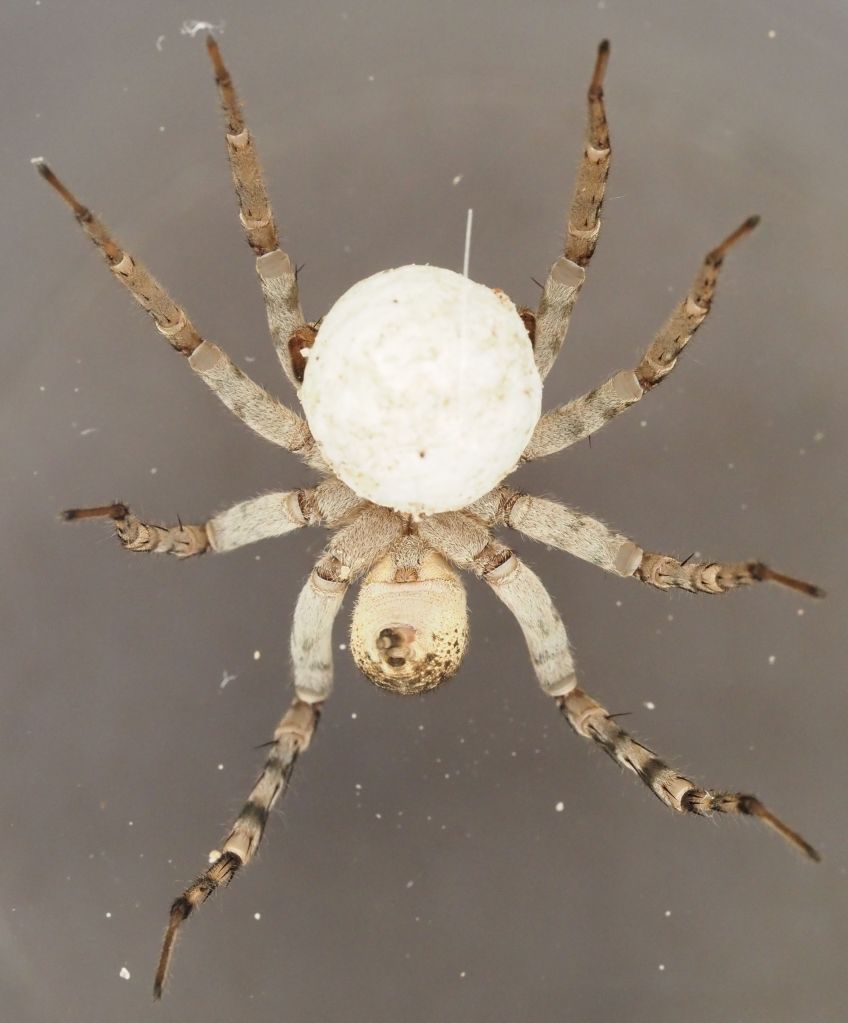
Wolf spiders usually carry egg sacs attached to the spinnerets at the back of the abdomen. They will pull the egg sac forward under their sternum to protect it when feeling threatened so I expected to see the sac still attached to the spinnerets with silk in the ventral view. What I did find was the spinnerets in a jumble and apparently not working right. Until the spiderlings emerge and climb on her back, she won’t be able to catch prey or eat without putting the sac down. She seems prepared to do whatever is necessary.

Spider courtesy of Alan Rudd/Edwards Ranch.

I suspect this species spends a lot of time preying on smaller Pardosa wolf spiders on the lake shore. Without better than average photos including a ventral view, this story would never be known. As it is, we’ll never know how it ends. Or how she managed to make the egg sac in the first place.

Hogna Babies Are Teens!

By Eric Neubauer

I’ve been checking my local Hogna ‘incognita‘ spiders since late last
year and looking forward to the time when I can get some good
photographs of adults. They’ve already started to grow rapidly, and at
5:15 AM on June 15 I found my first sub-adult male. A few more molts and
they’ll be adults!

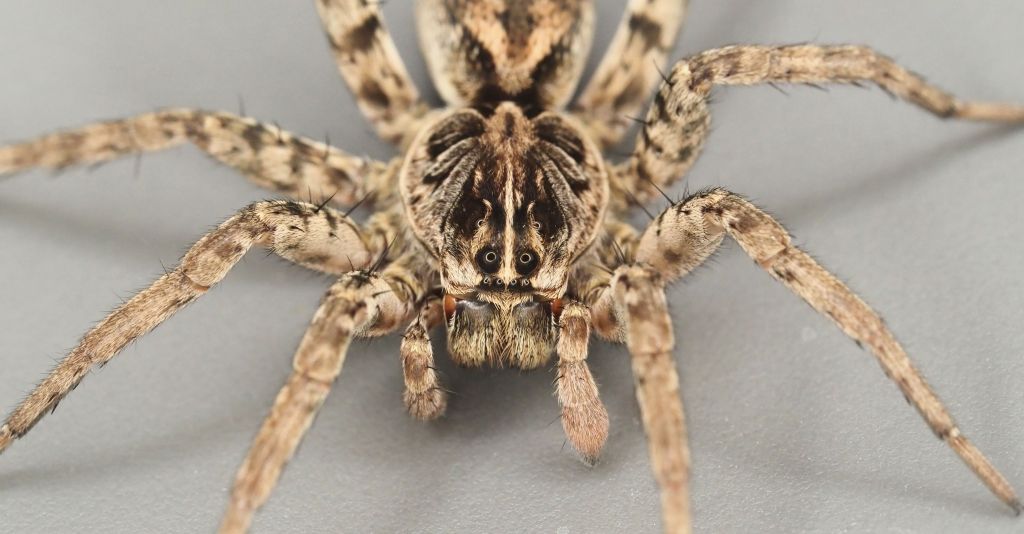
Look at that face!