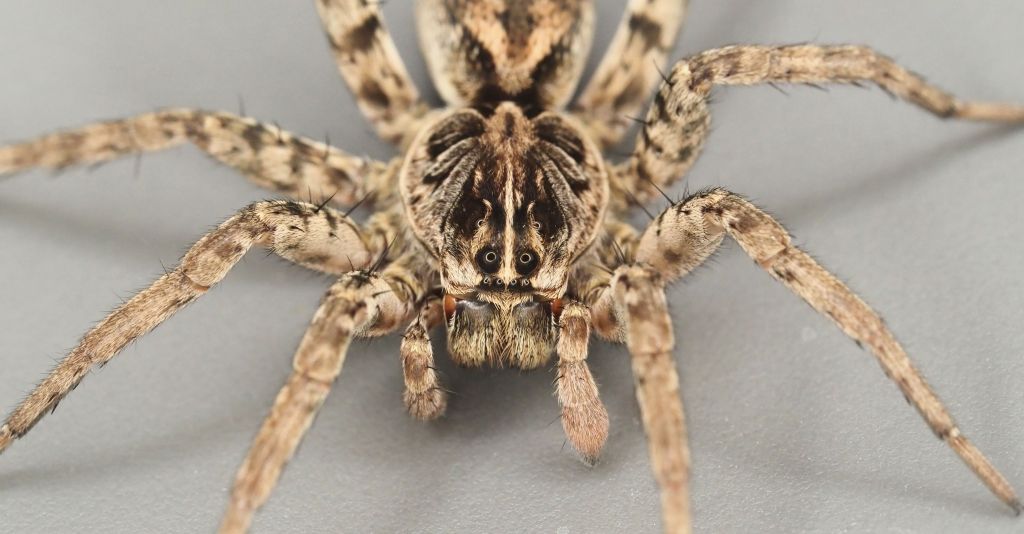
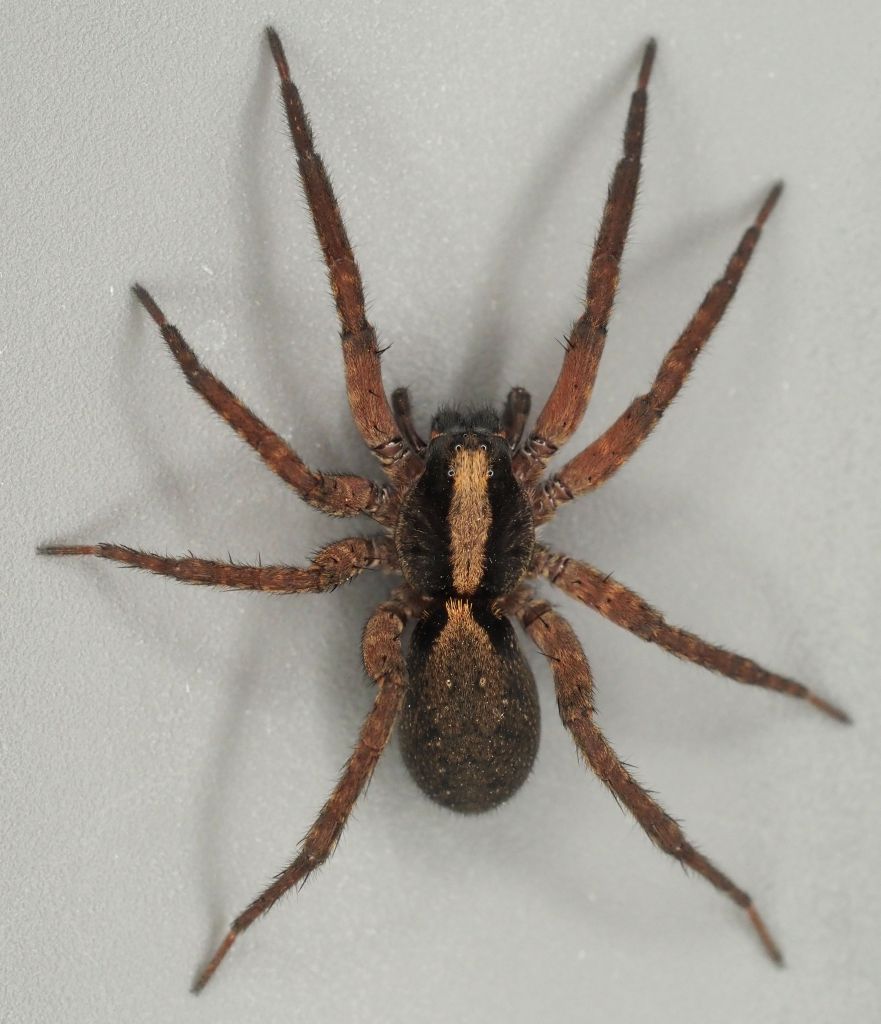
I’ve been checking my local Hogna ‘incognita‘ spiders since late last year and looking forward to the time when I can get some good photographs of adults. They’ve already started to grow rapidly, and at 5:15 AM on June 15 I found my first sub-adult male. A few more molts and they’ll be adults!
[This article appeared in the Cameron Herald, Thursday, April 4, 2024]
A local member of the El Camino Real chapter of Texas Master Naturalist is putting Milam County on the scientific map in spider identification. Eric Neubauer, now considered a local Rabid Wolf Spider expert, discovered a kind of Wolf Spider that has never been identified anywhere.
Eric Neubauer
Neubauer discovered the new spider and named it Hogna Incognita while studying the biodiversity of his place out near Davilla in 2019. He had just moved to Texas from Pennsylvania and bought a few acres in that area. When he realized the place was covered in what are commonly called Wolf Spiders, he felt compelled to identify all of them.
The newspaper article
There are many kinds of Wolf Spiders, but after two years of trying to identify the Hogna Incognita without success, he believed that he had found a new, unidentified, as yet unnamed spider. “It’s amazing that a spider that big, that common had not been identified already,” said Neubauer.
He started using iNaturalist, an internet vehicle to identify all living things all over the world, in 2019. Only 4 people had an active interest in Wolf Spiders on the site. Neubauer went through 13,000 Wolf Spider observations on several different identification sites. None were his spider. The first identification of Wolf Spiders in Milam County goes back to 1904 when Texas was still a popular place for biologist to study all types of living things.
Hogna incognita– photo by Eric Neubauer
After extensive studying, he came to strongly believe that he had a new one that had never been mentioned in scientific literature. The Hogna Incognita has a relative that looks similar to it, but it doesn’t look exactly like it. The “cousin” is commonly called the Hogna Antalucana. He believes the incognita was thought to be the antalucana because they had one similar trait.
Neubauer began giving presentations on Wolf Spiders to fellow Master Naturalist. In 2021, convinced it was a new one, He put up a “note” on it on the Bug Guide web site. The curator of the site agreed that it was a new species.
After some statewide presentations by Neubauer in 2023, Tarleton Professor Russell Pfau read the presentations and offered to help Neubauer with definitive evidence of its uniqueness. Pfau did extensive DNA testing on both the incognita and antalucana. Neubauer and Pfau caught some of each type in several stages of development – including all the spiderlings on the mother’s back. Pfau has managed to raise them from infancy to adulthood. The raising of them showed difference between the two from birth to adulthood.
Just weeks ago, Pfau notified Neubauer that the two spiders did indeed have different DNA. He had found an unidentified Wolf Spider.
“Hearing that the DNA test verified what I was sure I’d found – I was more excited than I thought I would be,” said Neubauer, who is normally very stoic.
Neubauer would like to stress that Wolf Spiders are harmless. They may bite, but it’s not poisonous or painful. “I’d rather be bitten by a Wolf Spider than a mosquito,” he said. They offer some benefits out in the blacklands, too. The incognita is mostly in the blacklands and some surrounding areas, so if you’re in Milam County you probably have them.
If you’d like to read the original report, you can find it on the El Camino Real Texas Master Naturalist web site https://txmn.org/elcamino/ . You also can look up Wolf Spiders on www.inaturalist.org.
The rash of alien abductions in a certain sector of the Alligator Creek community has finally come to an end although they don’t know it yet. They have suffered being scooped up and moved through a series of examination rooms, often with bright lights, and being occasionally prodded for over two months now.
My earlier photos of Schizocosa perplexa weren’t good enough to do the species justice, so fixing that was on my project list for this winter. I started looking sooner, discovered the mid-juveniles in December and found they were easy to identify. Then I checked back whenever the weather was warm as the mating season approached. First the males became adults, and then finally the females just this week. Photos of a female are included here.
Whether they deserve a conservation status or not is unknown. They appear to have very specific habitat requirements, specifically wooded flood plains with long lasting vernal ponds. Substrate is important as I could only find them in two places in the Blackland Prairie part of the county. I’ve looked carefully in the Post Oak Savanna part and couldn’t find any. My local colony appears to have had a good year. The other colony in Milam County was gone this year. It may have been active earlier but by the time I checked it last week, the ponds were already dried up and the leaf litter well picked through by armadillos. The original specimen came from Garland, Texas, and iNaturalist observations suggest robust populations in the Dallas-Ft. Worth area. These observations lack underside views so the species can’t be confirmed. S. perplexa is also known to be in Ohio.
No spiders were harmed during this project and all are alive, free, and well at home unless they got eaten by a frog, armadillo or suffered some other misadventure.
Just last Thursday night I mentioned I hadn’t seen any Hogna ‘incognita’ for a while. The last time was December 31 to be precise.
Early Friday morning, I found out they were back!
I’m back!
Based on another’s similar experiences, this nap time seems to be true of the species, regardless of environmental conditions. Its close relative, Hogna antelucana, passed on napping and is now significantly larger. That’s a neat thing about a new species. Every little discovery about it can be a surprise.





 Nature Along the El Camino Real