Anole Argument

by Donna Lewis

So, this week, I was out in my garden filling up all the water sources and I came face to face with two male Anoles having what I guess was a territorial fight.

I was about 10 inches from them when I saw this! Boy was I surprised. And if you knew me, you would know, I am not very tech savvy. I was fumbling with my phone trying to remember where the camera button was. It took me a few minutes to open the camera. I was afraid I would miss all the action. I just cracked up over this display.

I also forgot that my voice is on the video, so I am just as funny.

This was great!! I have never seen the Anoles fight before. Usually they are going after the ladies or catching an insect. No animals were harmed during the filming of this video!!

About Anoles

There are more than 250 species of Anoles: Family Polychride, the largest genus of lizards in the world. Only the Green Anole is native to the continental United States.

Green Anole

This lizard has the ability to change its color as a result of the movement of pigment granules within the cells of the skin. This can happen in response to stimuli such as temperature, humidity, emotion and activity. The colors can be gray, brown or green.

The Green Anole is arboreal, prefering to be up on a fence, tree, plant or higher than ground level. I see them among vines especially. Their diet is insects and spiders.

So, as I always say, you need to look around at nature. There is always something really new and exciting to see. But you need to look.

And always remember who you are gardening for.

Also give our expert Blog Master an  “atta girl”  for knowing how to transfer this video to the computer for me.

(Thanks, Donna)

Rain: All Creatures Need It

by Donna Lewis

Yes, it has been raining lately. And yes, it has been HOT! So let’s talk about our wild friends during the hot summer.

At Sue Ann’s house, they got 8.11′ of rain last night. Frogs are very happy. Photo by Sue Ann Kendall.

We love to put out bird seed, and other goodies for our friends, but the most important thing is water. Sometimes the closest water can be a great distance for the animals to travel. This means that providing a close water source is immelsely helpful. Keeping fresh water nearby could save the life of a baby bird, a baby bunny, and all of the wild things.

A good example of water with a place to perch. Photo by Janice Carriger on Pexels.com

Another thing to remember is that birds need a perch to light on.  An especially important thing in wildscaping is to provide an arbor, a fence, or even a cattle panel propped up. I have been quite successful in bringing birds to our place, so I know what they like, which is water, a perch, food, and some shelter near all of these items. Shelter can be an evergreen bush or small tree. Safety from cats should also be considered.

Be creative, like we have at the Milam Wildscape! Photo by C. Johnson.

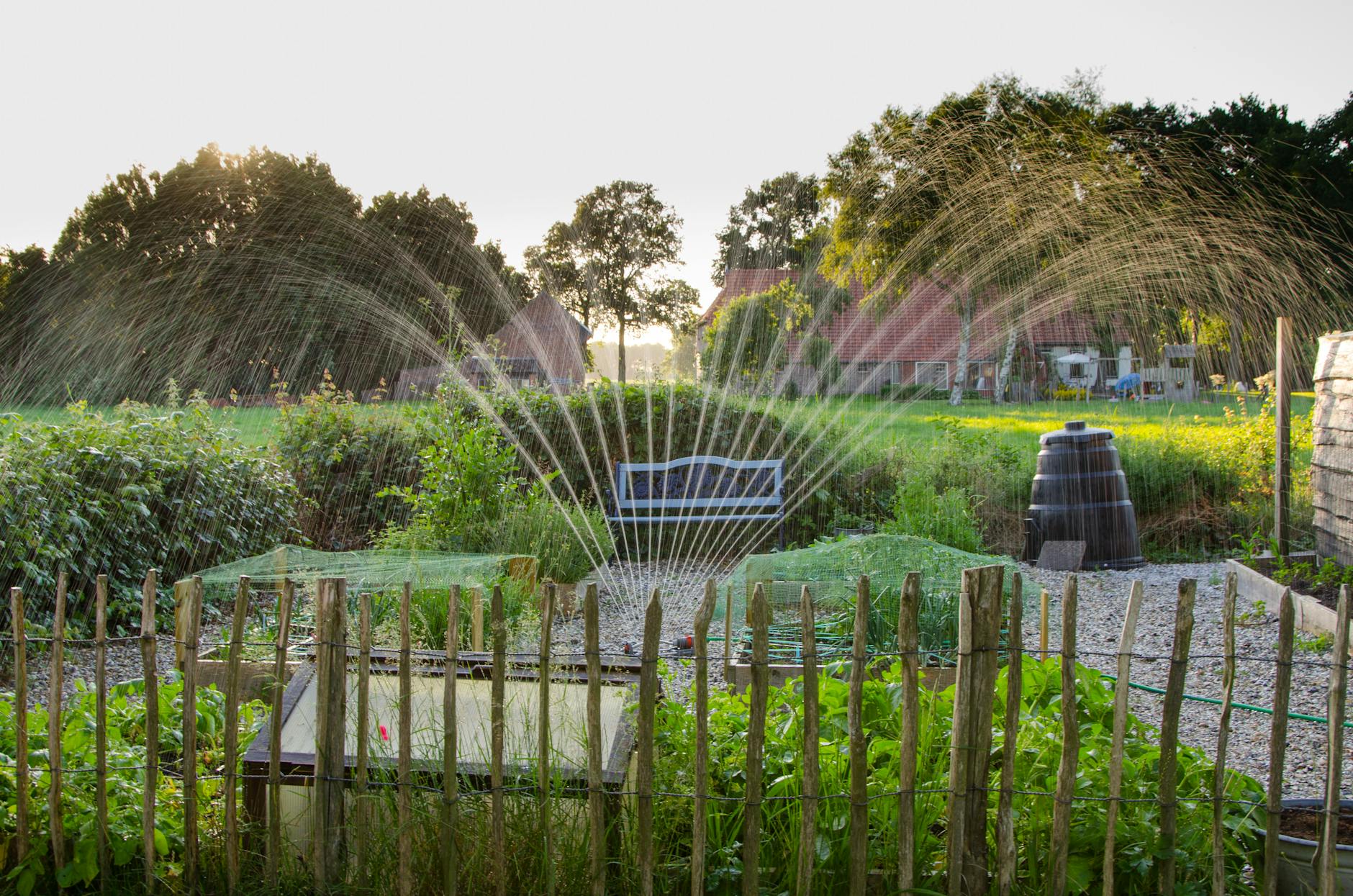
A sprinkler put out is heaven for my little hummers. I place the sprinkler near a fence lined with vines and they go crazy.

Photo by ClickerHappy on Pexels.com

So don’t forget our friends; we need them.

Maybe we don’t need as much rain as some of us got last night, but it is ALL appreciated. This is Walker’s Creek at County Road 140, now more like a river. Photo by Sue Ann Kendall.

Hummers Have Arrived

by Donna Lewis

At last, our tiny hummingbird friends have returned from down South ole Mexico way. It is hard to believe these little jewels are real living beings. A miracle for sure.

Tiny, but mighty. The two main species that visit Central Texas are the Black-Chinned and the Ruby-Throated. Both only weigh 0.1 ounce each. There are several other species that can be in our area also, but these are the most prevalent and easy to identify. They can beat their wings approximately 75 times per second! Yes, I said second, not a minute. WOW!!! I can’t move anything that fast.

Black-chinned Hummingbird. Photo by Mike Kit on Pexels.com

The males usually arrive first and get ready for the ladies to arrive soon after.

These birds drink nectar and eat insects. The plant they like the most for me is the Coral Honeysuckle. Turk’s Cap is another favorite bush.

Ruby-throated Hummingbird. Photo by Skyler Ewing on Pexels.com

Let’s talk about the human feeders we love to put up so we can watch them and assist in times of stressful weather events. There are some rules to follow so the nectar is safe.

Use regular white cane sugar. One part sugar to four parts water. I use our well water because I am in the country. No need for me to boil anything. If you are in the city, you probably should boil it. The feeders are usually red; do not use dye.  You can tie a red piece of cloth or ribbon if you need to. Year to year in the same place, the hummers will remember where they are.

Here is the MOST important thing of all.  Always change out the sugar water every three or four days in hot weather, or simply every time. The sugar water will ferment, and the bird will become drunk, and many will fly into a window or door and break their neck.  Very sad.

If you can place the feeder under some cover to shade it, that helps.

Cats and snakes like to get our friends, so try to keep them where they cannot be reached. Everybody has to eat.

So get your feeders up, clean them with soap and water every few times and watch a little amazing bird show off its flying skills for you.

Remember who you garden for.

Cedar Waxwing Visitors

by Donna Lewis

Recently I had several large flocks of these very sleek looking birds in my oak trees.

These beautiful migratory birds, Cedar Waxwings, like to stay in flocks and will go all the way to Canada during the warmer months.

A sleek crest with a black mask and red wax-looking tips on their secondary wings make these birds easy to identify. The feathers on their chests are short and look slicked down.

Photo by Skyler Ewing on Pexels.com

They mostly eat fruit, berries, flower petals, some insects, and occasionally sap.

I love the fact that when they are courting male and females will sit side by side and pass flower petals back and forth, share a meal and rub beaks. How romantic!  The babies are even fed by both parents.

They will drink from bird baths and sometimes eat raisins from bird feeders. But more often Cedar Waxwings keep to the wild things for food.

Photo by AE Rudd

If you see some birds with a crest and look like Zorro, then they’re probably Cedar Waxwings.

Remember who you garden for.

Monarchs Passing through Milam County

by Donna Lewis

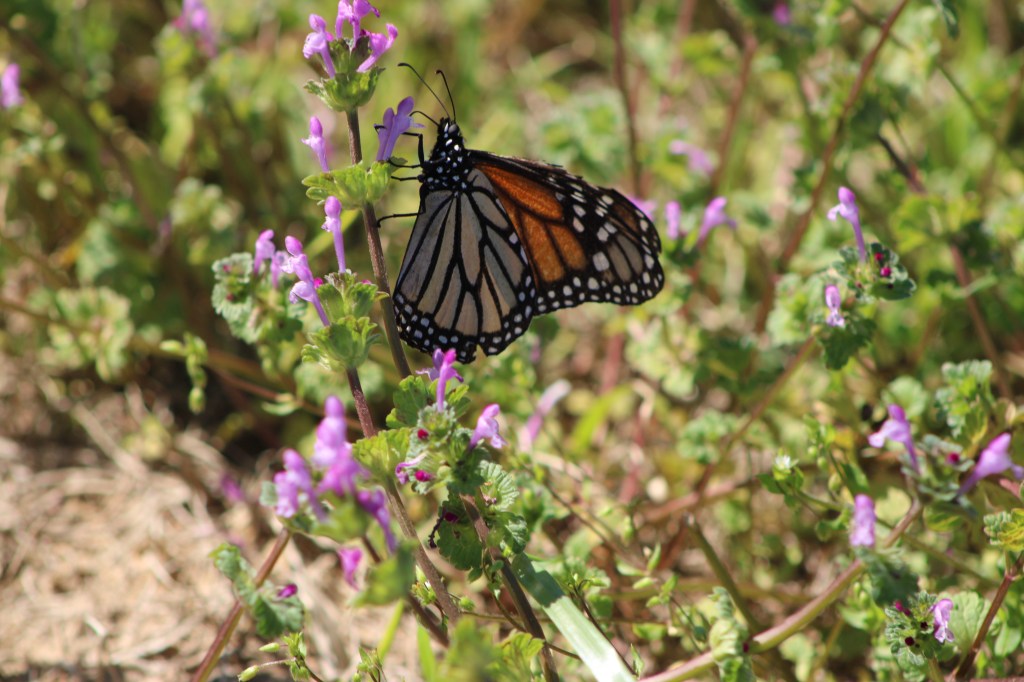
A few weeks ago I had the few Monarchs that I was able to see on our property here in Central Texas.  I have only counted about one dozen in all. That is a sad number considering there used to be hundreds crossing our pastures. I have been counting them for years and reporting this information to Journey North and several other organizations.

This serious decline is happening to most butterfly species. The Monarch is just an iconic species that we all recognize.

There needs to be more citizens who try to help them. Probably all who read our Master Naturalists blog will do something. But most people will not. This could be that they don’t know what to do, or they think their small actions won’t matter. Everything matters.   Remember that.

So, action means leaving natural area’s unmowed till after all the milkweed has gone to seed. It means learning about all of our pollinators and planting appropriate native plants for where you live. There are lists online about these plants. Yes, these plants can be hard to find. It means looking to volunteer groups like Texas Master Naturalists for advice.

These are the things we love and work hard to educate ourselves about them.

As humans we like to neaten up our yards and pastures. That is not what butterflies, birds and mammals like. A mower means death to them. So just taking a little more time to be aware of what is living near you. If you loved moving to the country, then do not change it.

The Beatles have a song by John Lennon that talks about this. The song is, “Let it be, let it be, speaking words of wisdom, let it be…”

Remember what something beautiful means to you…and work to save it.