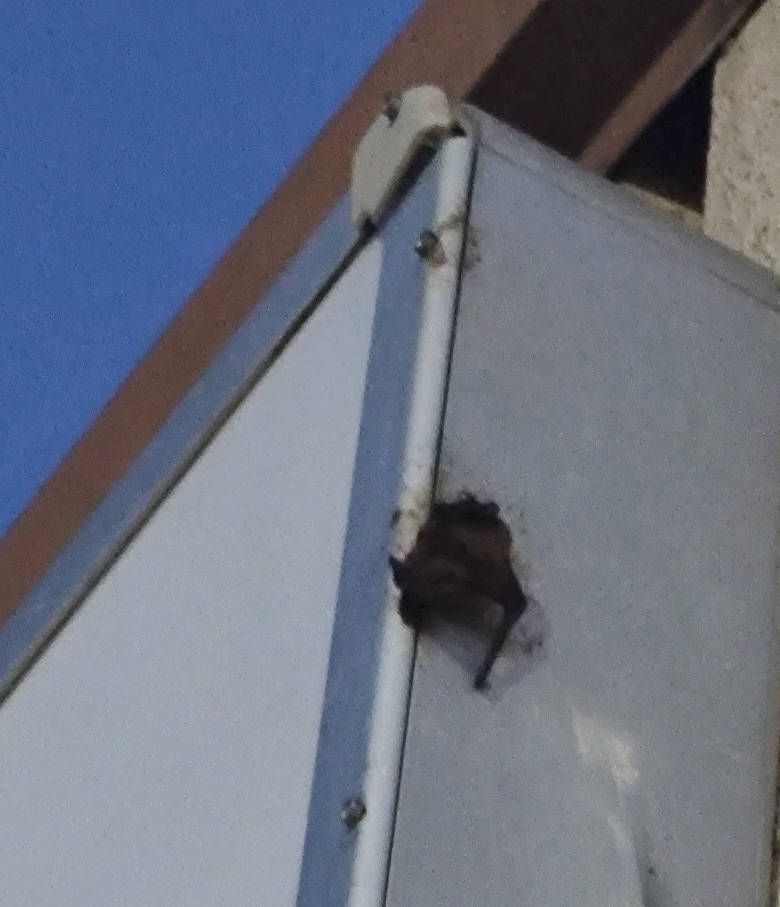
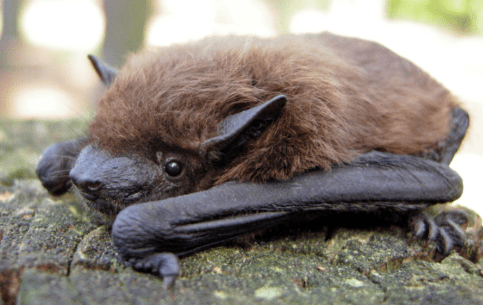
The bats are in residence in a strip mall here in Cameron. I believe they are Mexican Free Tails. Every evening around 6:30 pm they exit their abode in search of the evening meal. I’m unsure where they get their water.
The still shot is of a bar that appears to have gotten a leg stuck in the sign panels. It survived there for at least three days. Unfortunately. I couldn’t get it loose.
Postcript
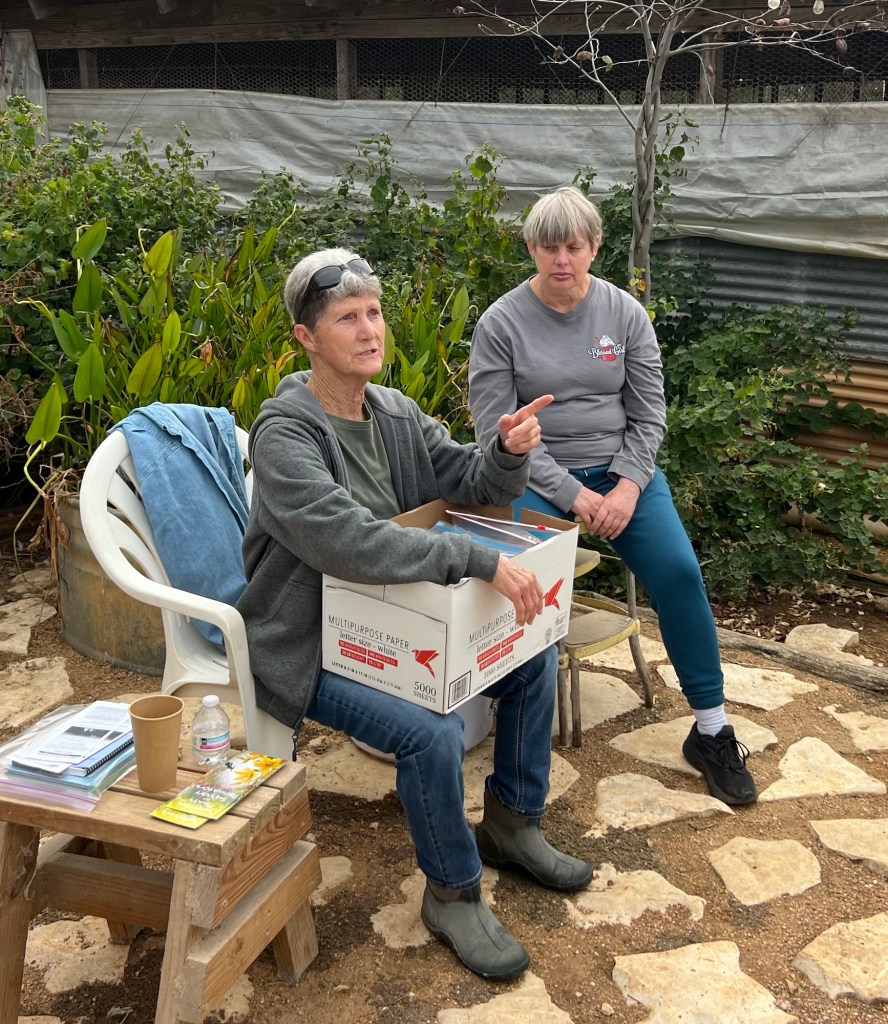
At our March chapter meeting, Michelle Lopez shared the results of our Milam County bat monitoring project from last year. In addition to Mexican free-tail bats, we have Tri-colored bats (these are rare), evening bats, big brown bats, and eastern red bats. Nine sites were monitored for a week each. Michelle spent countless hours analyzing the sound files.
The mini wildscape at All Saints Episcopal Church in Cameron got some new plants and grooming, and the fight against the persimmons continues.
Chad Cryer, Liz Lewis, Alan Rudd, and Carolyn Henderson planted six new Mexican Sage bushes, pruned back what was still blooming and scraggly, and took out a few more persimmons trying to pop up. Alan was gone by the time we thought to take photos.
The wildscape is still supplying food to butterflies, bees, and Texas Spiny Lizards which all showed themselves once it started to warm up.
As part of our grant from the H-E-B Pollinators Across Texas Project, members of our chapter spent the morning at the Milam Wildscape making sure invasives have been removed and preparing for planting the native plants we hope will attract the set of pollinators we want to document over the coming months.
Common Buckeye on trailing lantana
Chad, Scott, Bill, Liz, and Kit shoveled and moved a whole lot of crushed granite. Luckily, we had multiple shovels and wheelbarrows to get the work done.
In progressHappy to see the last load
Meanwhile, Tina, Catherine, and Carolyn spread the gravel and stomped on it. It was quite satisfying to stomp, and the rose bush did not permanently injure any volunteers. The end result is beautiful and will make the area safer for visitors.
Rose bush trying to attack CarolynShe dominatedHard at workThe area was well prepared
Don’t worry, we need more gravel spread- for our chapter members who missed the opportunity!
Two views of the team
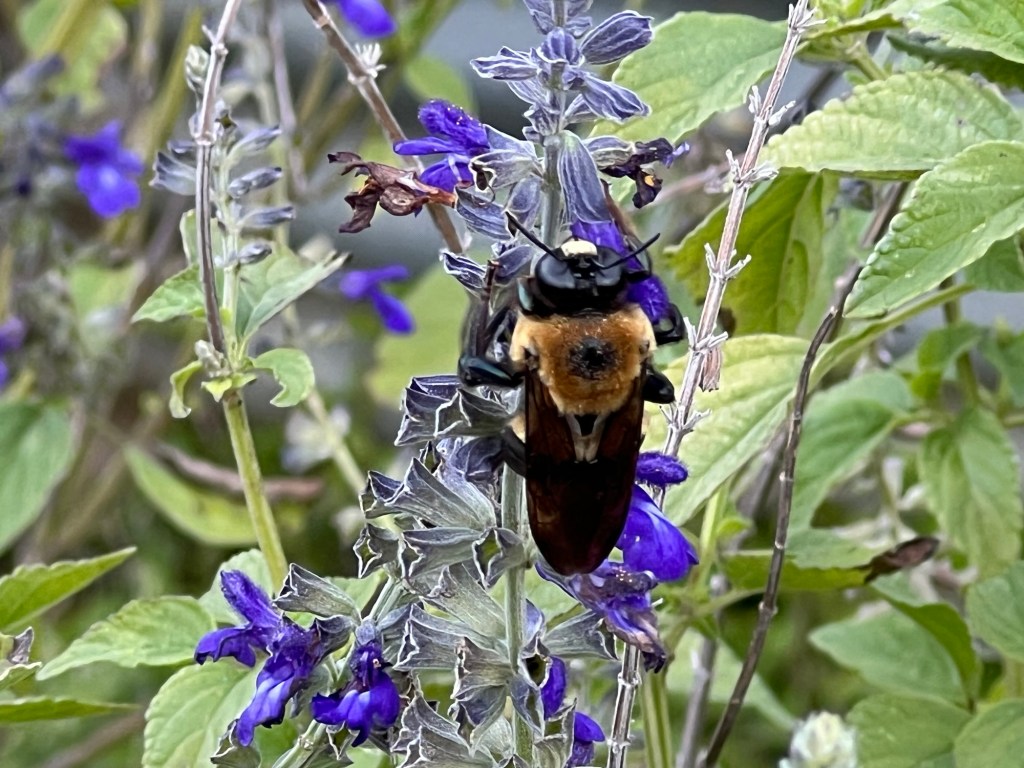
Patsy and Sue Ann recorded the whole event for reporting purposes. They even found a few pollinators lurking around the Wildscape.
Patsy had a real cameraSue Ann took a phoneCarpenter beeAnother one!
Donna, Ann, and Kim greeted visitors who wondered just what we were doing. The visitors got free wildflower seeds and pollinator brochures to answer all their questions.
Charming the visitors Donna and KimDonna and Ann
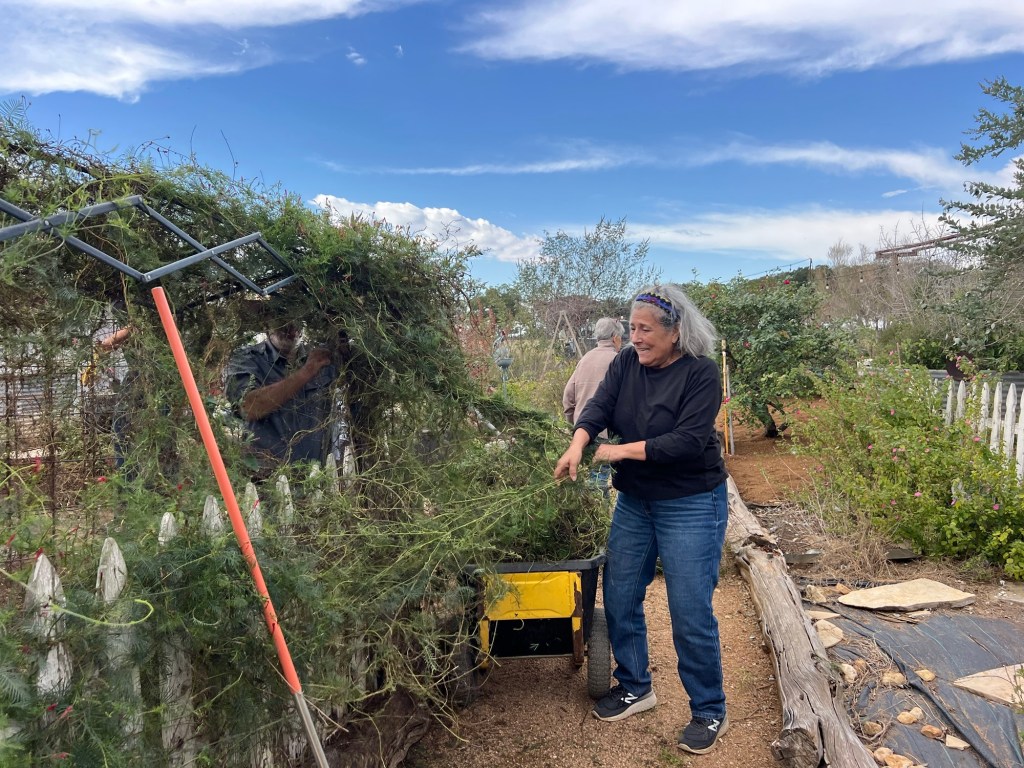
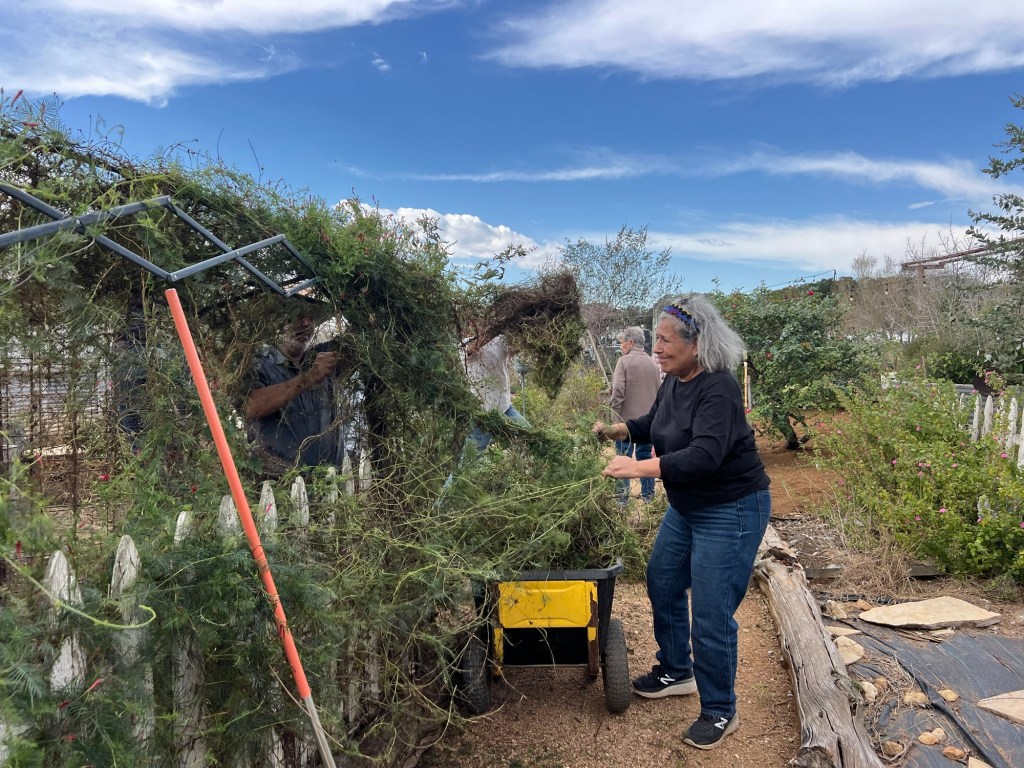
The most impressive achievement of the morning was that the excessively aggressive (though native) Cypress vine that took over the awning was removed – again. Kit, Tina, Liz, Scott, Chad and Carolyn slayed it – for the moment. This will probably need to be repeated. The vine is beautiful but very aggressive.
That vine was toughDone!
We look forward to sharing the progress of this project and are grateful to H-E-B for the Pollinators across Texas grant.
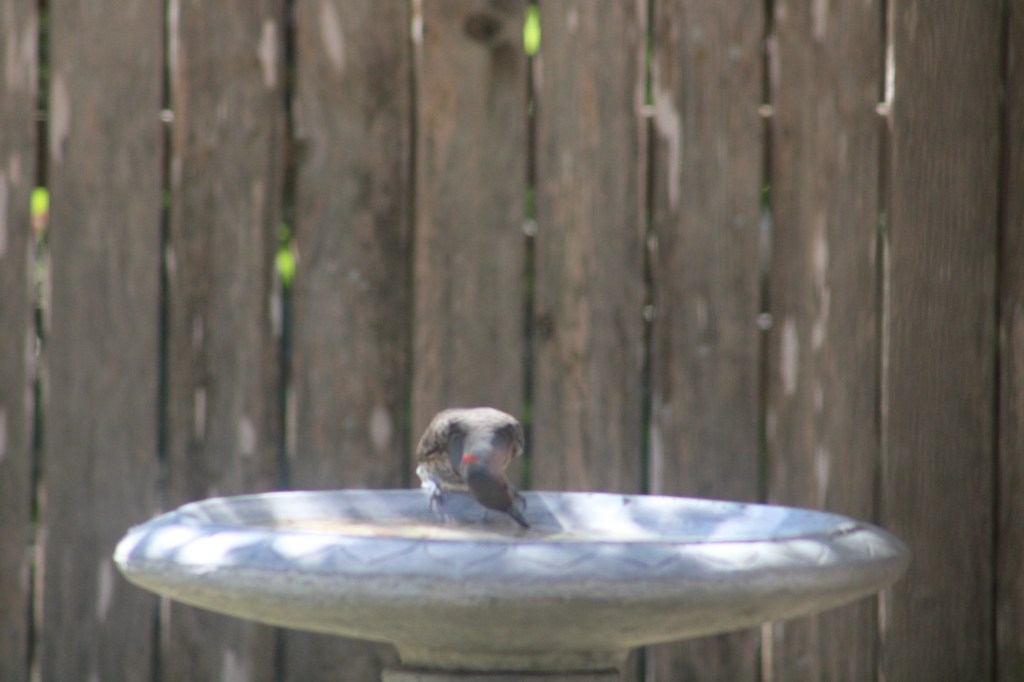
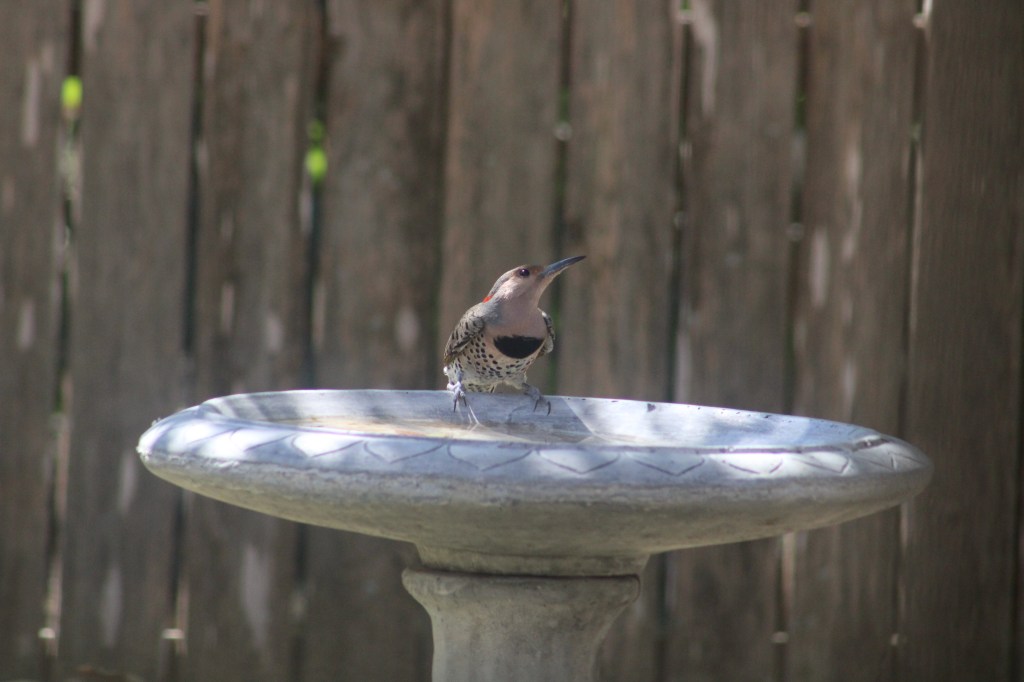
I went home for lunch on Monday and was nicely surprised by a first sighting for me. A Northern Flicker was drinking out of my birdbath. I did not know what it was, so I worked on some photos to put on iNaturalist. I had to take them from inside my house through a window, so they aren’t perfect, but they’re clear.
It’s considered a woodpecker, but it has dappled brown feathers with a red spot on neck and black markings. An it’s unique from other woodpeckers because it hunts its prey on the ground. Flickers prefer ants! This explains why it’s in my backyard. Fifty percent of its diet is ants. It also lets the ants crawl on it to rid it of parasites. I have an ant problem. Plenty for it to eat. Another difference from most woodpeckers is that it migrates. It can’t find ants in frozen ground.
I looked to see if anyone else in Milam County had reported one, and I saw the only other one was Michelle Lopez in 2024. She first heard it with her Merlin then she got some photos.
I really enjoy finding new sightings. When I tried to get to a better window to take photos it flew away. I hope it comes back and eats lots of ants.
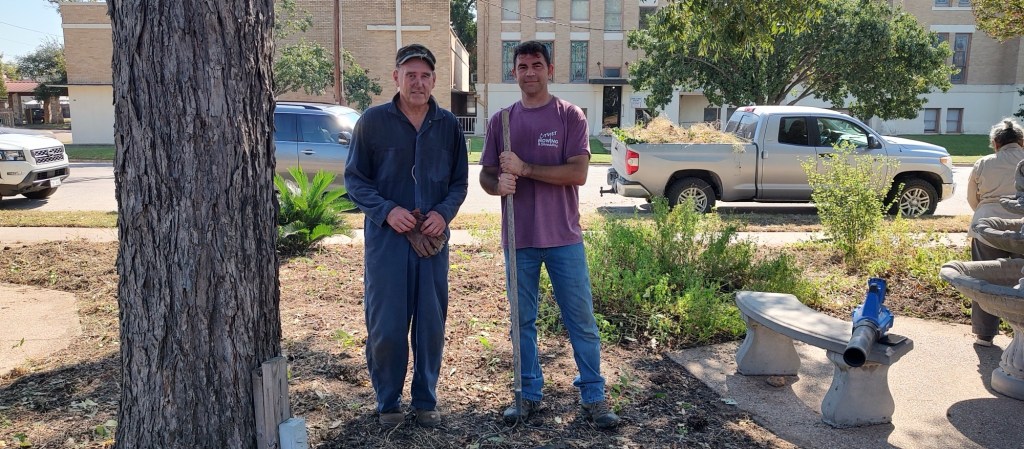
A small but intrepid group took on the fight of the non-native, invasive plants in the Wildscape – again. Chad Cryer, Alan Rudd, Liz Lewis, Phyllis Sheffield, Pamela Neeley and I implemented a new method to attempt to get rid of the seriously invasive persimmons and Tree of Heavens.
Small but mighty
I would call it isolated poisoning. Chad clipped the multitude of pomegranate trees, many that had managed to reach at least 5 to 6 feet this season. Alan then put a tree poison only on the cut limbs. We cut them back in February. Alan had already done it to the Tree of Heavens that weren’t as numerous.
The invasives elimination committee.
We put all the limbs in Alan’s pickup bed. The pile stood taller than the truck cab.
We also fought off the Tievine that had totally covered the Gulf Muhly grass among other things. We also removed the other invasives in the Wildscape. A good deal of what had been planted was there, but scraggly looking from being overshadowed by all of those. It knocked out a few completely.
The weeding committee
We vowed to be back in two weeks to evaluate our efforts.









 Nature Along the El Camino Real