By Sue Ann Kendall

The Common Mestra (Mestra amymone) is a butterfly I’ve been seeing very often this autumn. I went on and on about it the first time I saw one. Since …
Why Is Common Mestra So Common This Year?

Nature Along the El Camino Real
Blog of the El Camino Real Chapter, Texas Master Naturalists, Milam County, Texas
By Sue Ann Kendall
The Common Mestra (Mestra amymone) is a butterfly I’ve been seeing very often this autumn. I went on and on about it the first time I saw one. Since …
Why Is Common Mestra So Common This Year?
by Carolyn Henderson
At just after noon on Saturday, I was standing on my patio when a Monarch butterfly flew by very close to me. Unfortunately, I didn’t have a camera to get a photo of it, but I probably wouldn’t have gotten it anyway. It flew straight by into my neighbor’s back yard. It did, however, inspire me to go chasing them.
I go to the Little River Basin Texas Master Gardeners Triangle Garden seasonally to take pictures of pollinators, and I usually see Monarchs, and many other types of butterflies, there. So I took my camera to see what I could see.
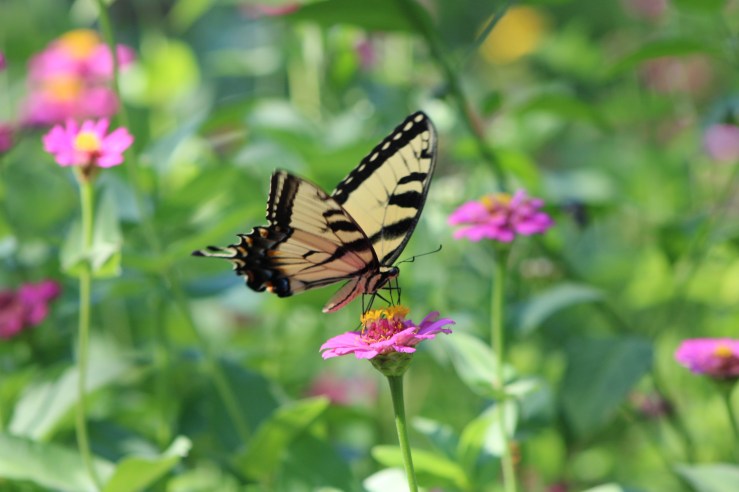
I found huge Giant Swallowtails eating from abundant Zinnias. The Fritillarys, both Gulf and Variegated, also were fond of the flowers. So was a Bold Jumping Spider that seemed to be after the Variegated Fritillary. I also found Gulf Fritillary on Tropical Sage. I am unsure if the Giant Swallowtails are Eastern or Western variety. iNaturalist thinks they are Western, but Eastern are more common here.

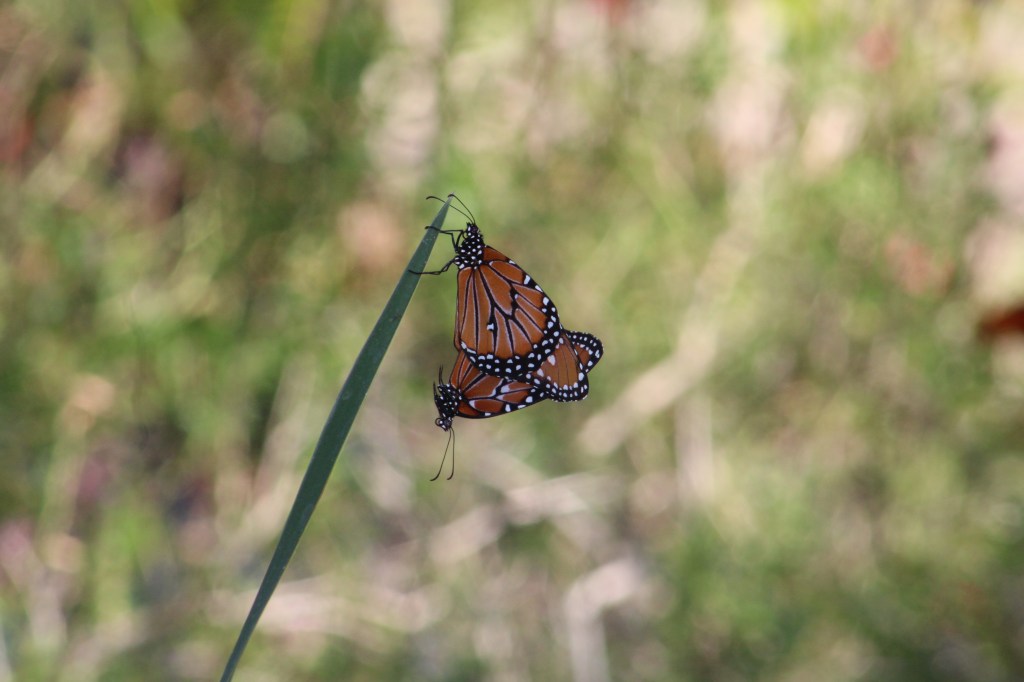


One of my favorite butterflies is Queens. They were abundant on Gregg’s Mist. I can always find them on this plant. They also were mating. I’ve seen more of them there, but it may be early in the migration. Bordered Patch and Fiery Skippers also were enjoying the Gregg’s Mist.
What is not there, at least yet, are Monarchs nor Pipevine Swallowtails. The Flame Acanthas and Tropical Sage and Gregg’s Mist are ready for them. So is the cat in residence (see photo).


I also found a few others at my house. My yard is inundated with Hackberry Emperors, and some Clouded Skippers are hanging out there. So are Carolina (or Arizona?) Praying Mantis and Spinybacked Orbweavers with an elaborate web, and grasshoppers that were abundant at the triangle garden, too. I also had a hummingbird that was interested in the Texas Purple Sage at my house.

The iNaturalist fall project to submit as many pollinators as you can find is coming up in October. If you are participating, you might want to try the El Camino Real Wildscape which is usually full of butterflies in October – including Monarchs. Or, you also can try the Triangle Garden.

by Donna Lewis
Here are some last photos of August…
A male Painted Bunting, a Rat Snake in the trees, an Inca Dove, Cardinals on feeders, Pipevine Butterfly, Ruby-throat Hummer on feeder, Swallowtail Butterfly, and Mr. and Mrs. Bunny eating the bird seed.

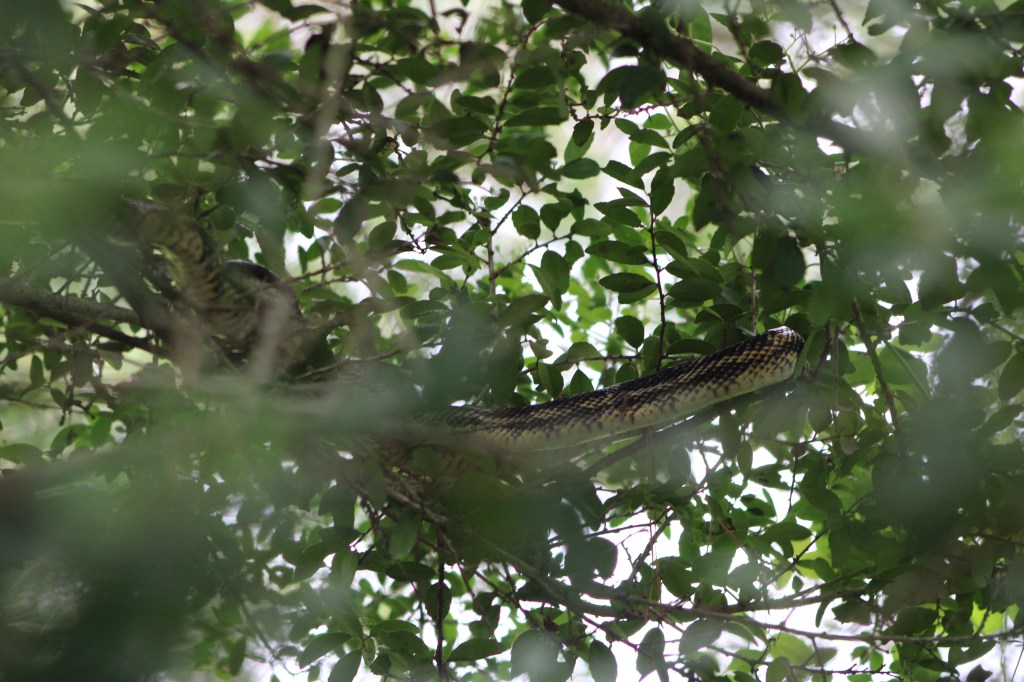


I hope I have made them happy.
by Lisa Milewski
So many times, I have heard someone say, “I just killed the most ugly caterpillar I have ever seen.”
My face turns to horror in my barely contained reaction. After a brief pause to gather my thoughts, I swiftly turn this into an opportunity to educate others.
I ask two questions. One, to describe the caterpillar, and two, what plant or vegetable was it on. Based on those two things, I am usually able to identify the caterpillar. I then proceed to let them know that the ugly caterpillar was going to turn into a beautiful butterfly which in turn is a pollinator that will actually benefit your plant or vegetable. They had no idea!
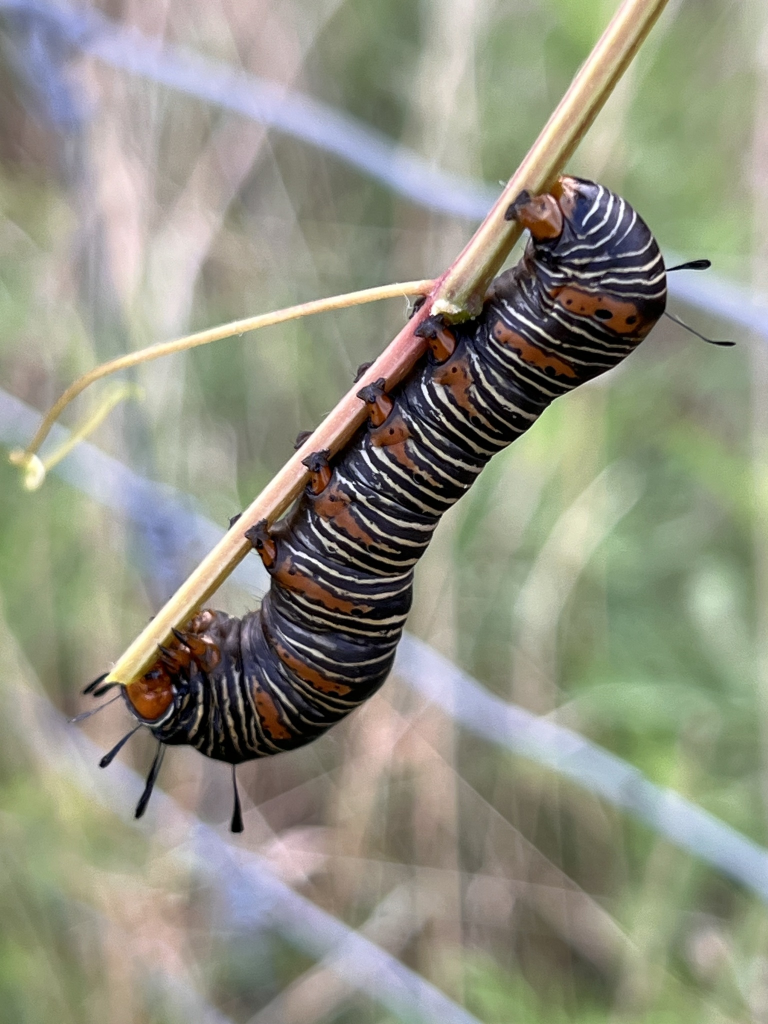
Sometimes the reaction is, “but they were eating up the leaves.” I then ask if it was a miniscule number of leaves or is it completely devoured. If it’s miniscule and it is a mature plant or vegetable or fruit tree, I say let it be since it won’t be long until it turns into a beautiful butterfly and that mature plant will quickly recover. If it is an immature, young, plant or vegetable, I suggest protecting it with crop covers until it matures and can handle the occasional munching from those caterpillars.
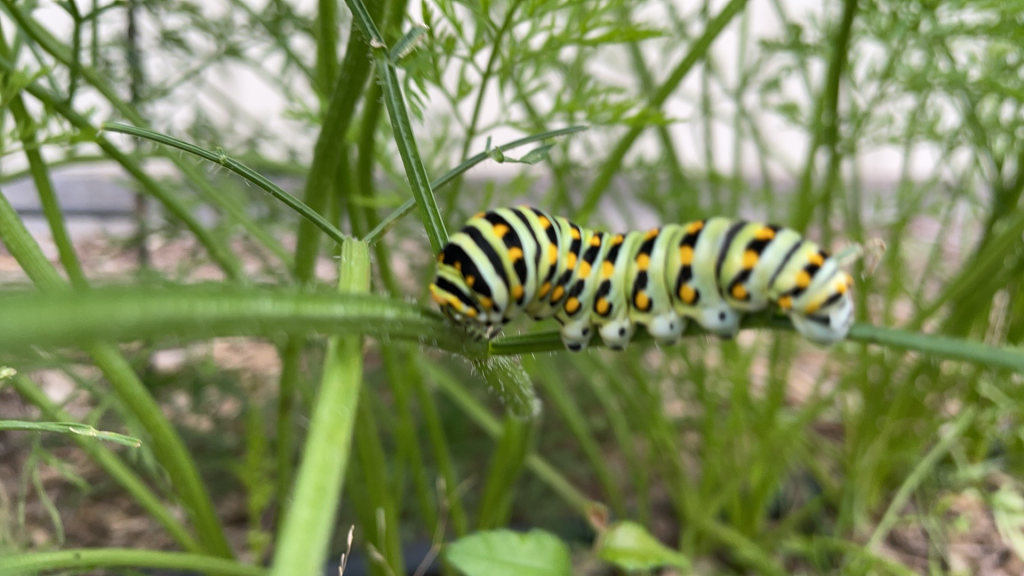
At this point, I remind them of the many benefits the pollinators provide to include bees, wasps, hummingbirds, etc., and how it actually benefits their plants, vegetables or fruit trees by pollination. For most (not all), it is critical that the pollen gets transferred from the male plants to the female plants in order to reproduce. Although some plants, like cedar trees, reproduce by the wind that spreads their pollen, most others rely on pollinators.

The next time you think about killing that “ugly” caterpillar, bee or insect, please look it up to identify whether or not it is a friend or foe. If it a beneficial pollinator, we can always find a way to co-exist.
by Sue Ann Kendall
There’s going to be a big visitor event at the Wildscape our chapter sponsors, and it’s coming up fast, so the garden needed a lot of pruning, weeding, and encouraging. Members got out early this morning and got to work pulling up what shouldn’t be there (overly enthusiastic grasses for the most part) and directing what should be there to their proper spots. A lot of the roses needed encouraging!

There were enough people to help out that only a little dizziness or other heat issues developed, and as always there was plenty of camaraderie.


I admit that I may have spent more time taking pictures of bees, butterflies, and other insects than pulling weeds, but I did contribute! Besides, everyone likes pictures of flowers and pollinators, right?
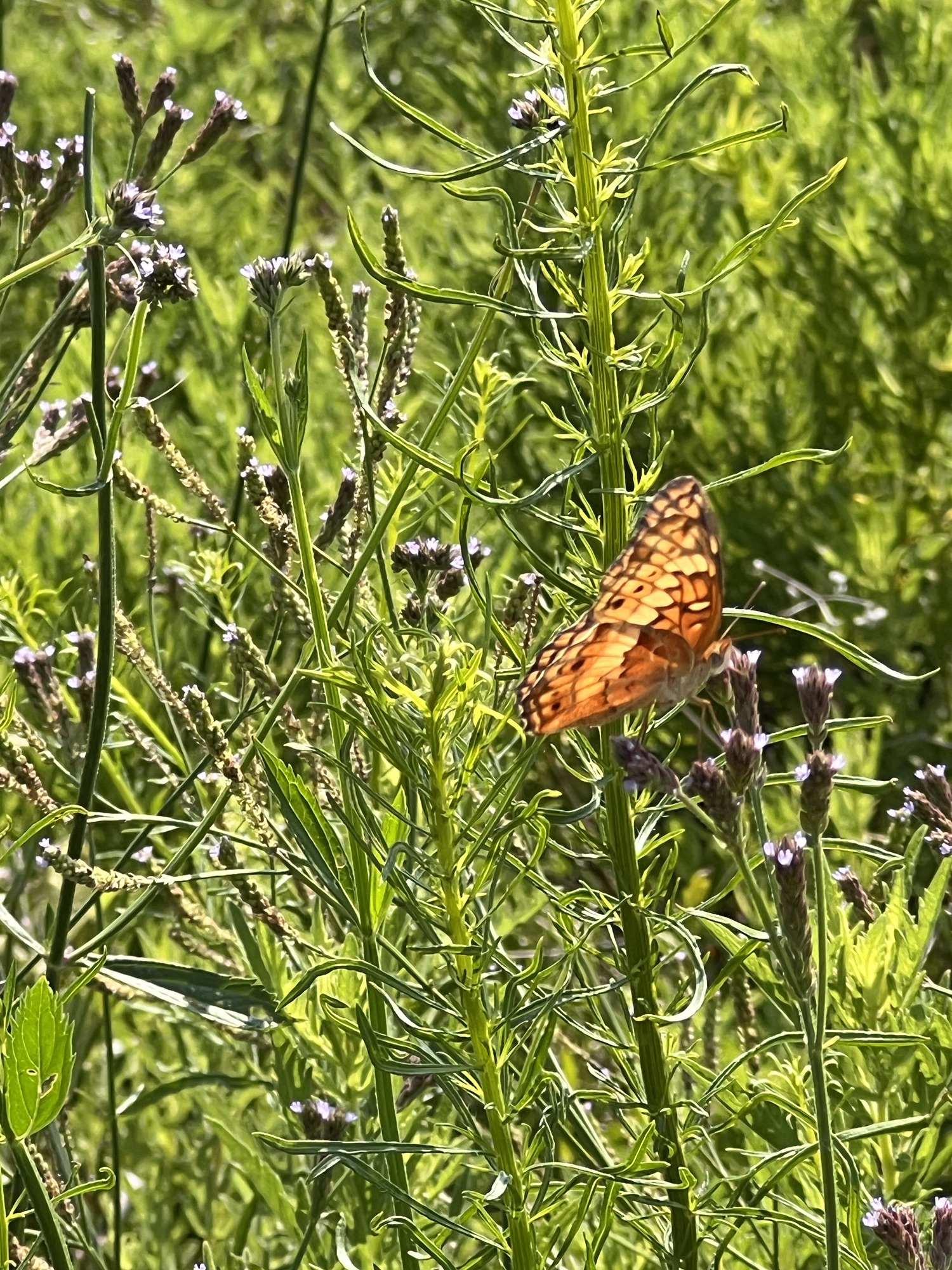


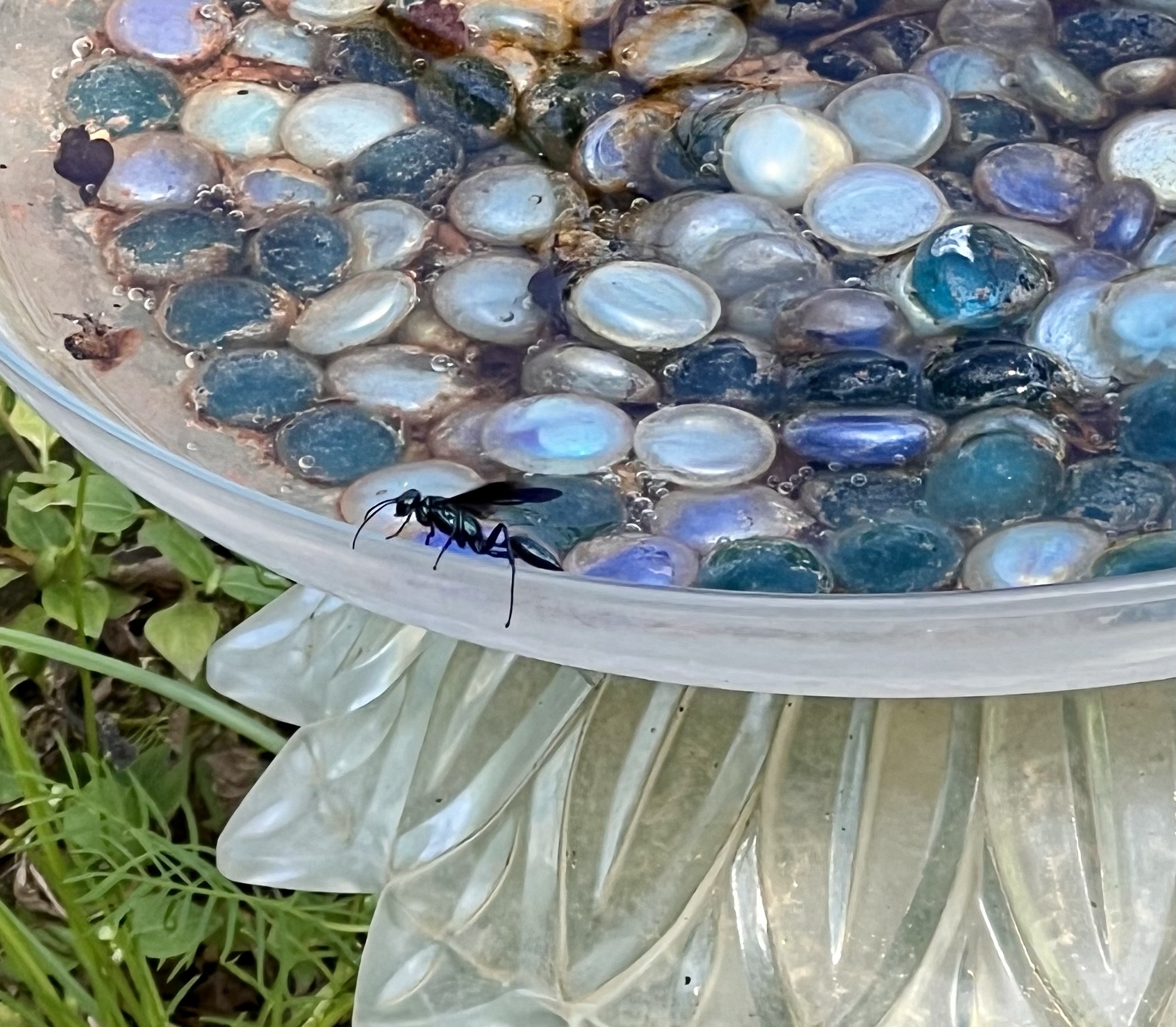


After we were finished, we headed to Rockdale for lunch, where we ran into Linda Jo Conn and her family. The people in the restaurant must have thought it very weird that everyone in both large groups seemed to know each other. Volunteering can be fun.

 Nature Along the El Camino Real