by Catherine Johnson
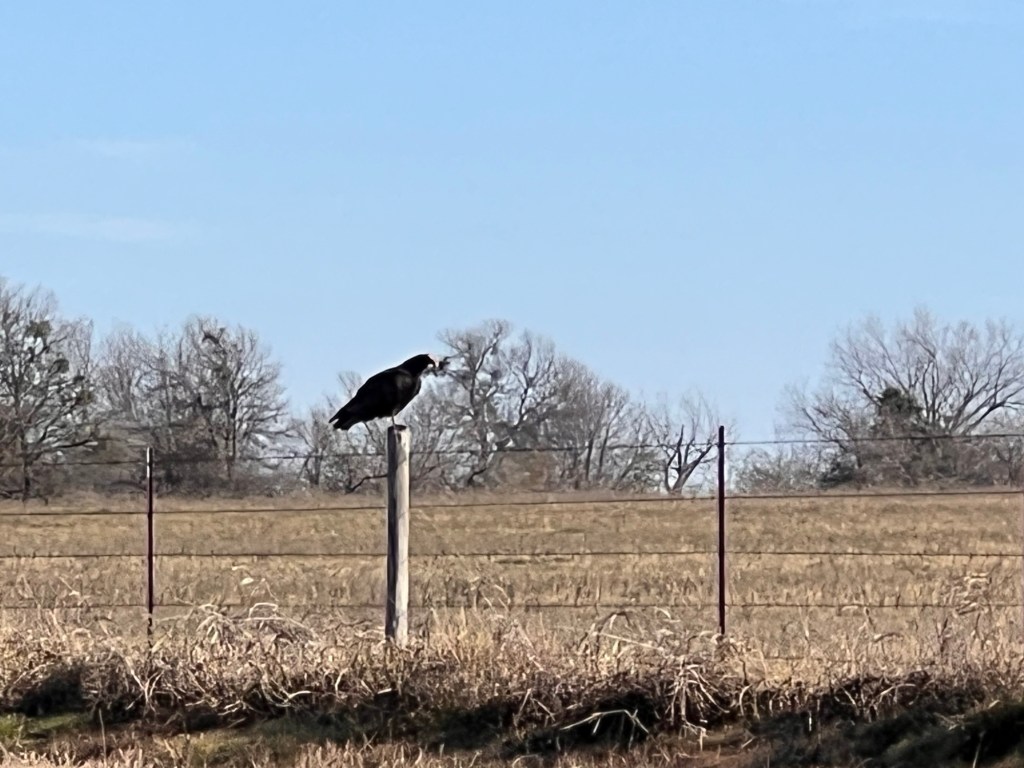
This silent sentinel (black vulture) kept watch at my house.


Nature Along the El Camino Real
Blog of the El Camino Real Chapter, Texas Master Naturalists, Milam County, Texas
by Catherine Johnson
This silent sentinel (black vulture) kept watch at my house.
by Alan E. Rudd
We have had the typical bumper crop of red berries in the yaupon (Ilex vomitoria) thickets of Burleson County again this year. Last year during the February 2023 cold spell these berries that contain hard seeds were consumed by legions of robins (Turdus migratorius). A mockingbird (Mimus polyglottos) that owns our front-yard and half the farm, fought thousands of these rest-breasted raiders trying to protect his winter food supply. He lost the battle, but survived to eat grasshoppers as the spring season warmed toward the heat of summer.

Today is the “Ides of March” 2024 and so far very few robins have ganged-up in the oak thickets of Edwards Ranch. I saw them in the woods along Sandy Creek in February, but they never touched the yaupon berries near the house. A sizable flock of cedar waxwings (Bombycilla cedrorum), however, have been staying about and gorging themselves on yaupon fruit for the last three days. These calm, gregarious birds allowed me stand at a distance of six feet and watch them pluck red berries from a 12-foot tall female yaupon. It required me to be completely still and lean into a tree trunk, while doing my best to impersonate shaggy bark. I watched predator eat prey. After eating berries for less than a minute the birds flew up into the height of a nearby bald cypress (Taxodium distichum), only to repeatedly return to the yaupon to continue the feast. The winged berry-predators were dropping seeds processed through their digestive tract to the fertile ground below.
Those waxwings were smiling. The yaupons, too, were smiling. As in every true symbiotic relationship, who is the master and who is the servant?
by Sue Ann Kendall
I’ve been using Merlin Bird ID since last summer to identify birds I hear. I’d used it before to identify birds I saw, but once I started the listening exercise, I was hooked. It’s such fun knowing what I hear around me, and it’s great training for birding without the app. My ability to identify birds by song is hugely improved. Plus, knowing what’s out there helps you know what to look for if you want to see birds.

Cornell Labs has done an amazing job developing this app, which you can download from the App Store in whatever kind of phone you have. I can’t imagine how much work it has taken to train the listening app on the sounds of all the birds around the world (you can get Bird Packs for wherever you happen to be).

I’ve learned a few interesting things about Merlin that those of you who use it or are interested in giving it a try may benefit from.

1. Merlin will not identify domestic birds. My chickens can walk right in front of the phone and nothing registers. It also completely ignores my horse trainer’s guinea fowl, and didn’t pick up the turkeys at Bird and Bee Farm. However, it has identified wild turkeys, so I think the turkey thing was a fluke.

2. The app has trouble with birds who make sounds that are low in pitch. For example, it needs most doves to be really close in order for it to register them. Collared doves make a higher sound that it identifies more easily. And you have to be on top of an owl for it to be picked up. In the past week, I’ve heard entire owl conversations that didn’t get “heard,” both of barred owls and great horned owls. That’s why it pays to also be able to identify birds with your own ears!

3. Crazy things can happen after a recording is interrupted. Two things that happen to me often will interrupt a recording: the phone ringing or me accidentally starting a video rather than taking a photo while the app is running. You can usually save the recordings, though I have lost a couple.
However, I’ve found that if I start the listening function again after an interruption occurs, Merlin’s decides I am not only in North America, but I’m also in Eurasia. I will be informed that I hear a great tit or a European robin, which is highly unlikely!
So, if you suddenly get an identification of a bird you’ve never heard of, be sure to click on the map for that bird, to be sure it has actually been seen in your area. Sure, occasionally birds are blown off course when migrating or after a storm, but most European birds stay in Europe (other than our biddies the house sparrows and starlings, of course!).

4. Moving around is hard on Merlin. The app works best if you are standing still (or the phone is sitting on something) and the environment is not noisy. It’s amazing how loud you are walking on a trail or around your property. I live in the country, yet I realize now that it’s loud here. Loud farm vehicles and trucks, single-engine planes practicing their takeoffs and landings at the nearby tiny airport, our six dogs, the pool pump and waterfall, and air conditioning units all contribute. When camping, screeching children on trails and boats are hazards. So are waves, believe it or not. But if you stay still, Merlin’s does a pretty good on anyway.

When I’m out walking, I usually pause if I hear an interesting bird, so the app can pinpoint what it is. My exercise app on my watch hates that.

I hope you get something helpful out of these hints. If I’m wrong about anything, let me know. Also, if you have additional insights or hints, tell me and I can add them to this blog post. I’m still learning!

By the way, I’m not claiming Master Naturalist VT hours for any of this, since it’s on my own property most of the time, and that doesn’t count. I did count my time during the Great Backyard Bird Count, since that’s approved. I don’t claim hours when I’m camping or traveling, since I’m also usually making iNaturalist observations at the same time and don’t want to “double dip.”
[this is a revised version of a personal blog post]
by Donna Lewis
So, we have some very cold weather upon us.
Some of you who are originally from the North may think it’s not cold. But those of us born in Central Texas think even barely freezing is terrible. I am one of those people.
I can hardly bear it to go below 50 degrees. I hate it. It makes me crazy to worry about our wildlife friends.
But, they are adapted more than we think.
The birds have a harder time finding food when it’s cold. That is because the insects they like are not moving around.
One way we can help during this time is to put out suet for them. You can make your own or purchase it. I found that making it is messy. So, I bought some. Now is the time to put it out.

It needs to go in suet holders and placed near feeders. You can make your own holders and make them suit your location. A suet holder can be as simple as a small cage made from hardware cloth. Anything that a bird can cling to. Many species will come to a suet feeder. Even woodpeckers like them.

The suet provides needed energy to help the birds keep warm.
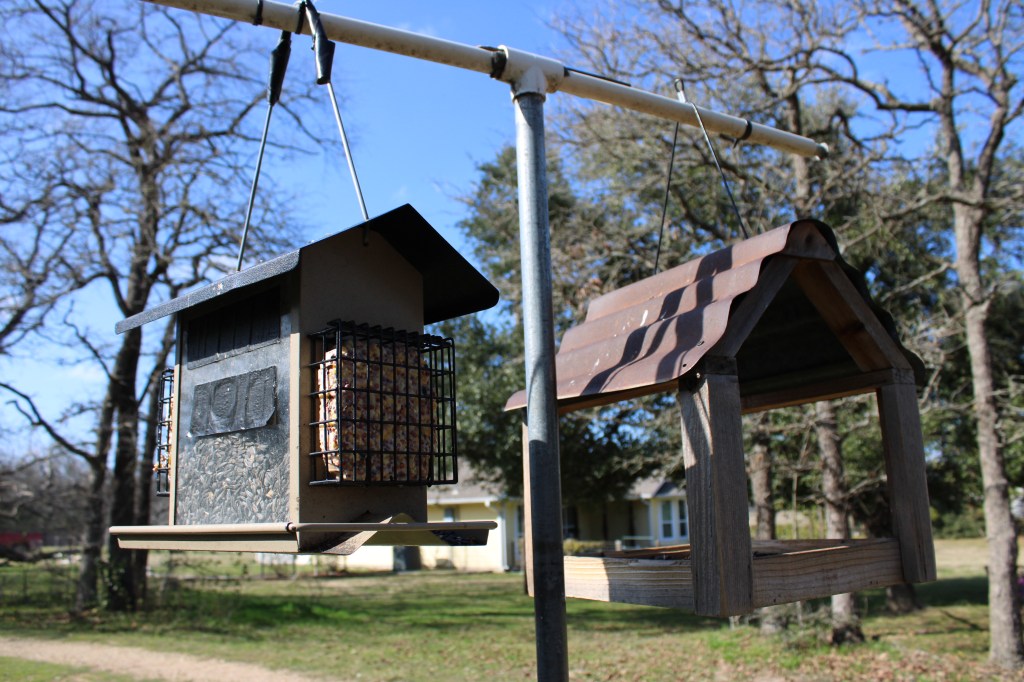
Right now, I am waiting for a new product to arrive that keeps hummingbird feeders from freezing. As soon as I receive it, I will put that info out for everyone.
So don’t forget our feathered friends…
“I cannot do all the good that the world needs, but the world needs all the good that I can do.
Jana Stanfield
By Sue Ann Kendall
Since we’re not getting many submissions lately, I’ll go ahead and write up some of my little naturalist projects. Too bad I don’t get volunteer hours for this kind of stuff, but I enjoy it anyway, because it gets me out in nature and my data is useful to someone.
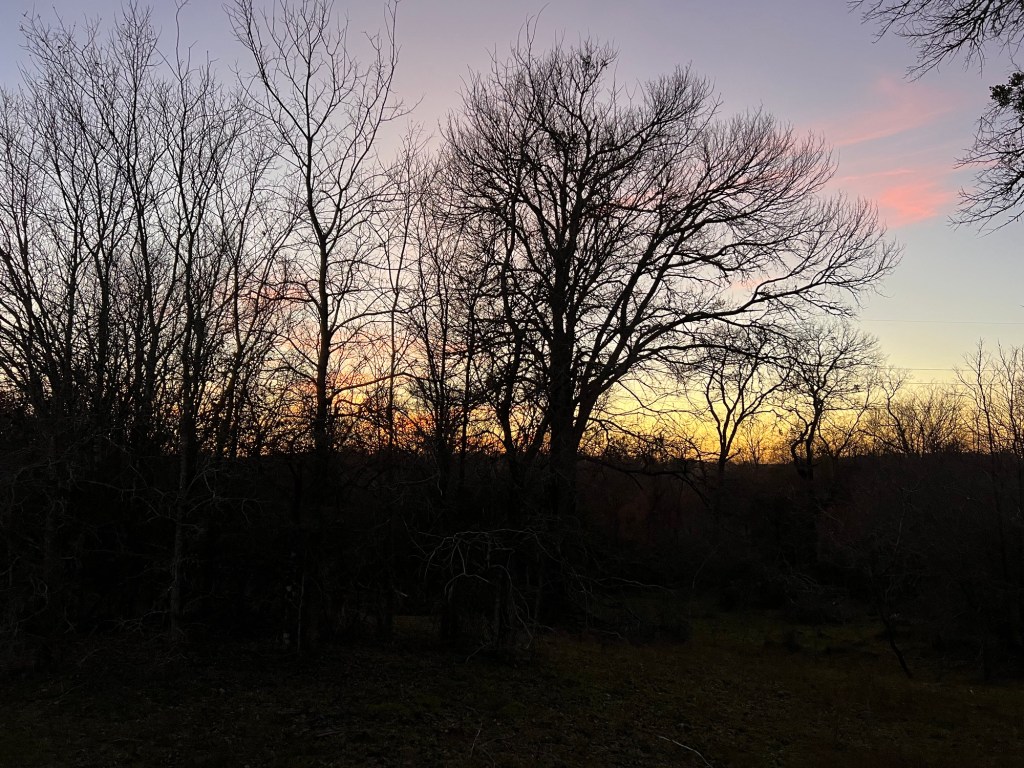
What I’ve been doing involves using my eyes and ears to track the bird species in an area of northern Milam County about a half mile in diameter around my property. It contains pastures, woodlands, ponds, and a creek.
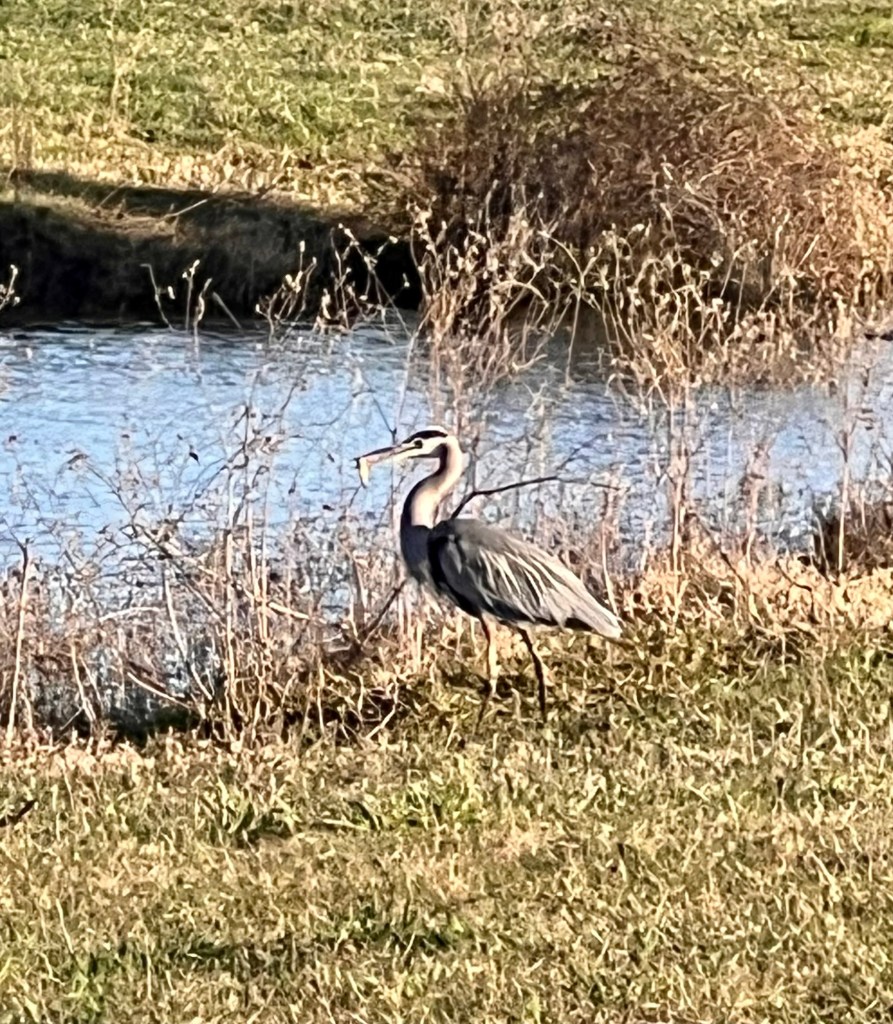
I’m keeping a record of what birds I observe with my eyes (I do try to get photo confirmation on iNaturalist for unfamiliar birds, but I trust myself to identify the two vultures I see as well as crested caracaras. For listening, I use Merlin Bird ID, which is really quite accurate (only twice has it found birds that shouldn’t be here, and who knows, the wind could have brought them in).
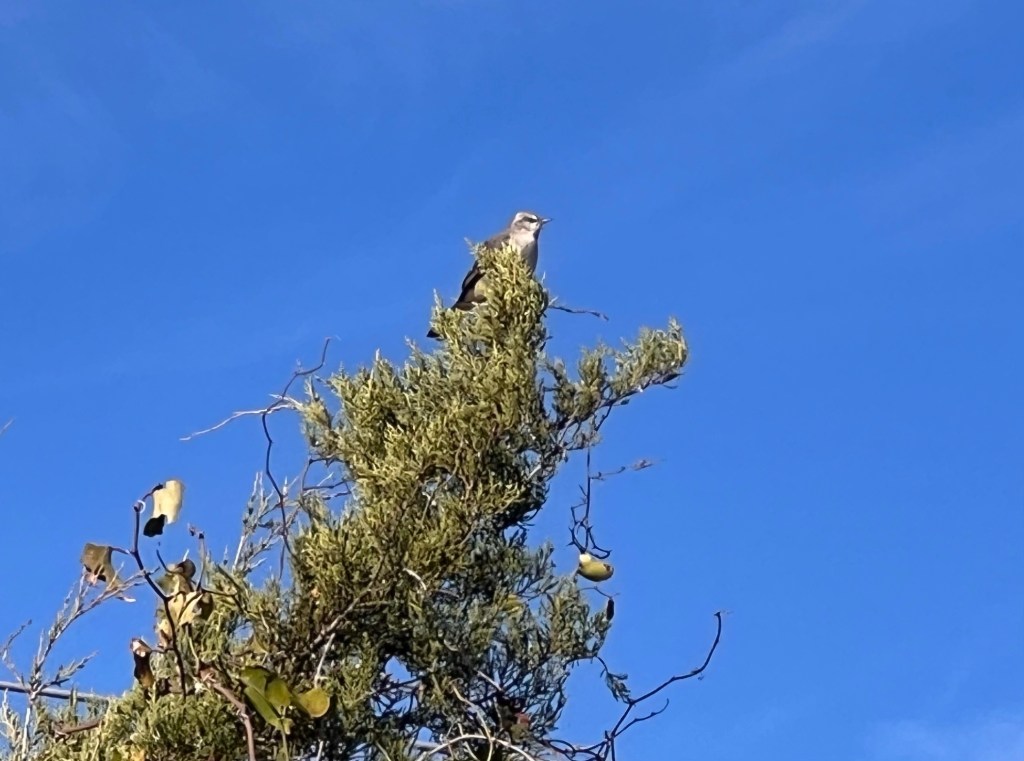
I use Merlin for between half an hour and an hour a day, and I have three places I usually listen. Mostly I listen between 8 and 10am, depending on my schedule, though I occasionally listen around dusk so I can get owls (barred and great horned so far).
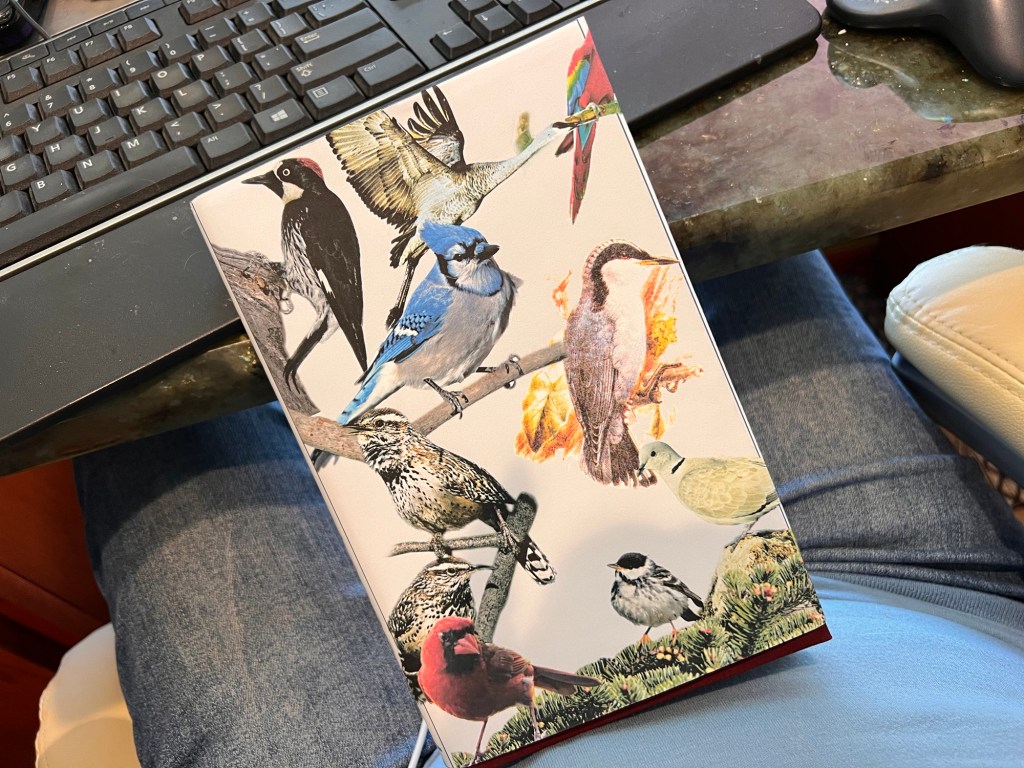
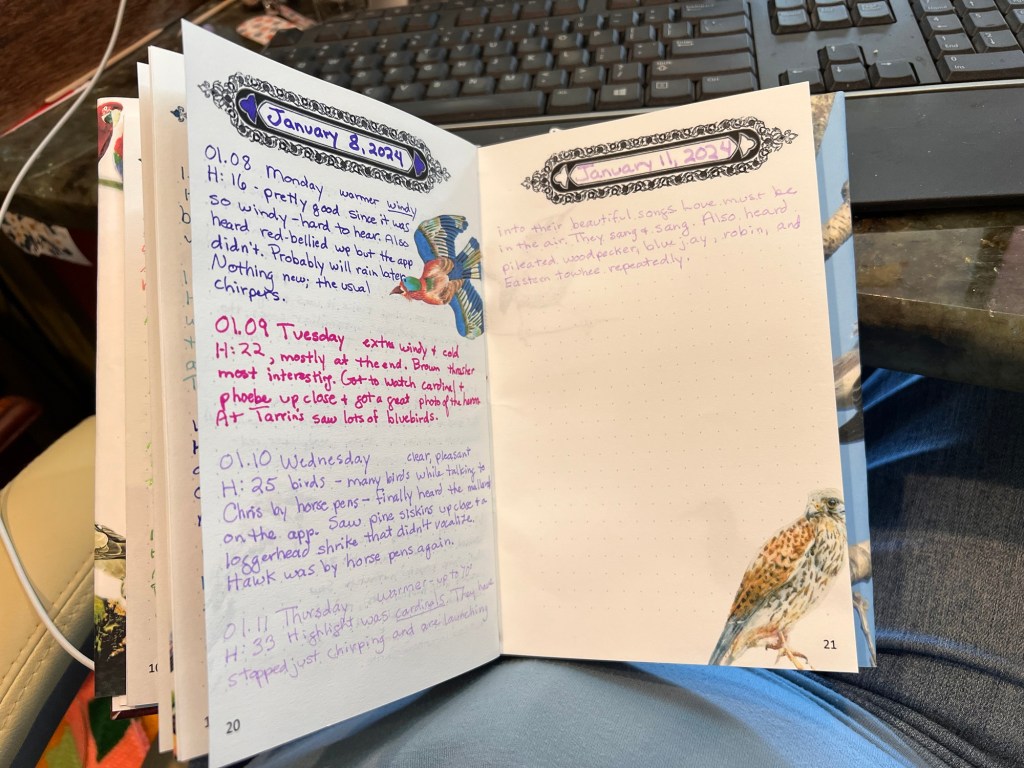
I have a bird journal that my spouse made for me. I record weather notes as well as how many birds I hear each day. I also note birds I get to observe up close or with my binoculars, and any new arrivals.
Where the research part comes in is that I have started a spreadsheet that lists each species I observe each month. I’m looking forward to spring migration to see what passes through as well as to record when winter residents leave and summer ones arrive. I miss the painted buntings and their friends, though the twelve kinds of sparrows here do keep me on my toes. Yes, twelve.
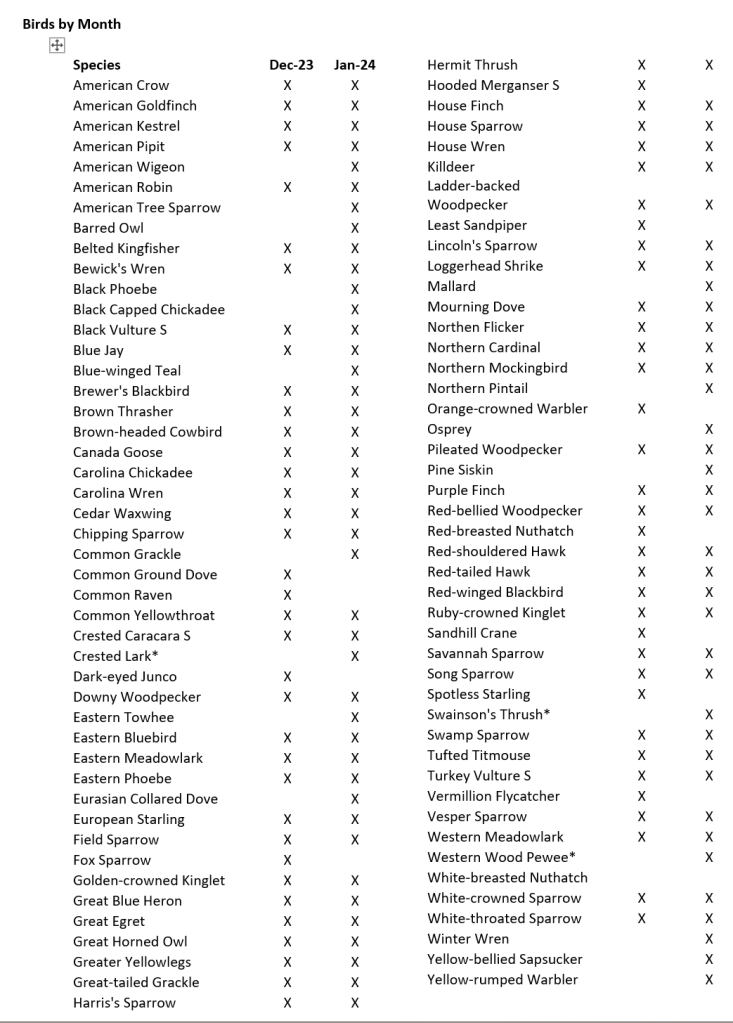
By the end of the year, I’ll have a good idea of the patterns here in this small area. My hope is to keep observing for a few more years, so I can see how climate or big weather events affect this area.
I’m going to put in another plug for the Merlin Bird ID app on my phone. All the observations go into the eBird database, since it’s from Cornell Ornithology Labs. You can contribute photos as well as record sounds of birds. I say sounds, because it identifies mourning dove wings correctly!
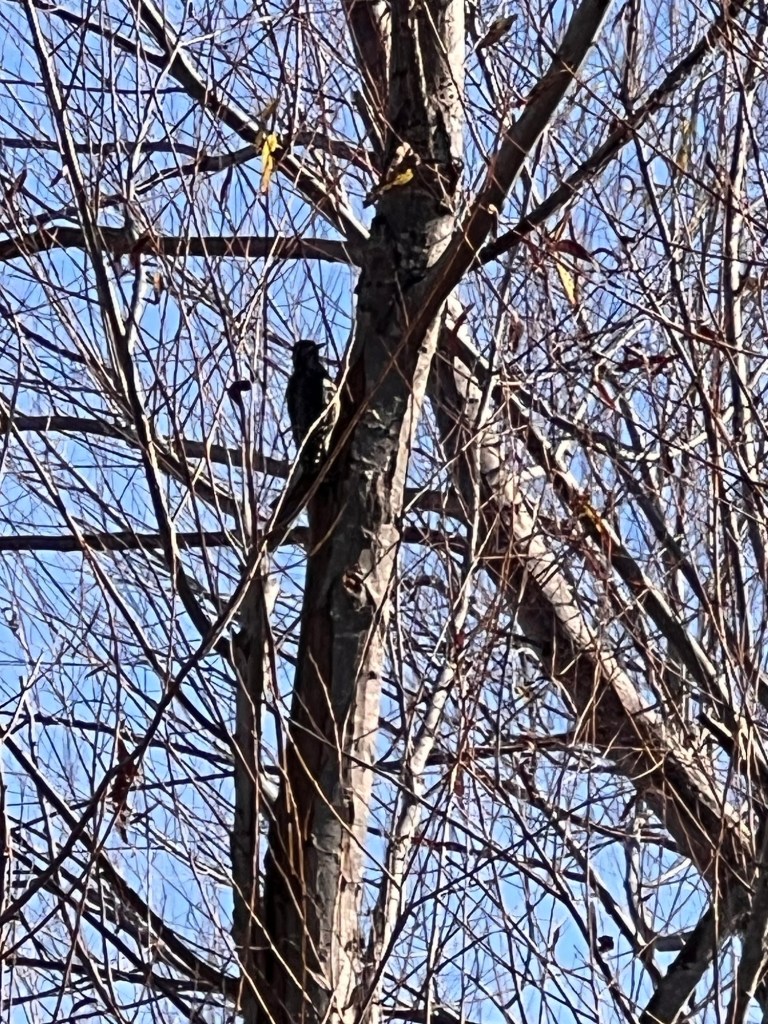
I’ve learned so many bird calls that enrich my life. I drove my spouse crazy yesterday identifying all the birds on the Nature PBS show yesterday. There was one persistent Phoebe. I now know Carolina Chickadees have many more songs and calls than I’d realized and that we’ve had a few Black-capped Chickadees drop by.
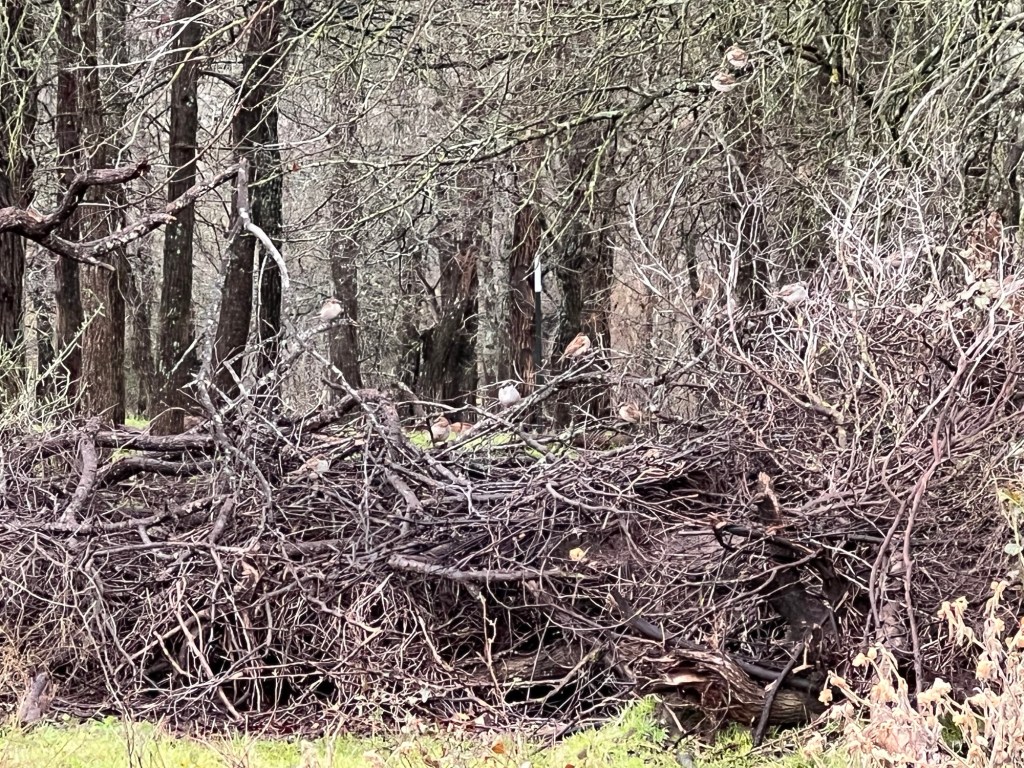
The part I find funny about this app is that it refuses to identify chickens, Guinea fowl, and turkeys, at least at the Wildscape. The last one confused me, because they are native. but maybe it “knew” these were at a facility for raising turkeys.
 Nature Along the El Camino Real