“Belly Hunting” for teeny, tiny flowers is hard on the leg muscles. On Sunday, I went to Wilson Ledbetter Park to take pictures to post to the Great Texas Wildlife Trails (GTWT) Adopt-a-Loop project in iNaturalist. It was a follow-up to pictures posted in February before the Great Freeze of 2021. I discovered that the park is covered in teeny, tiny flowers, and plenty of larger one, too.
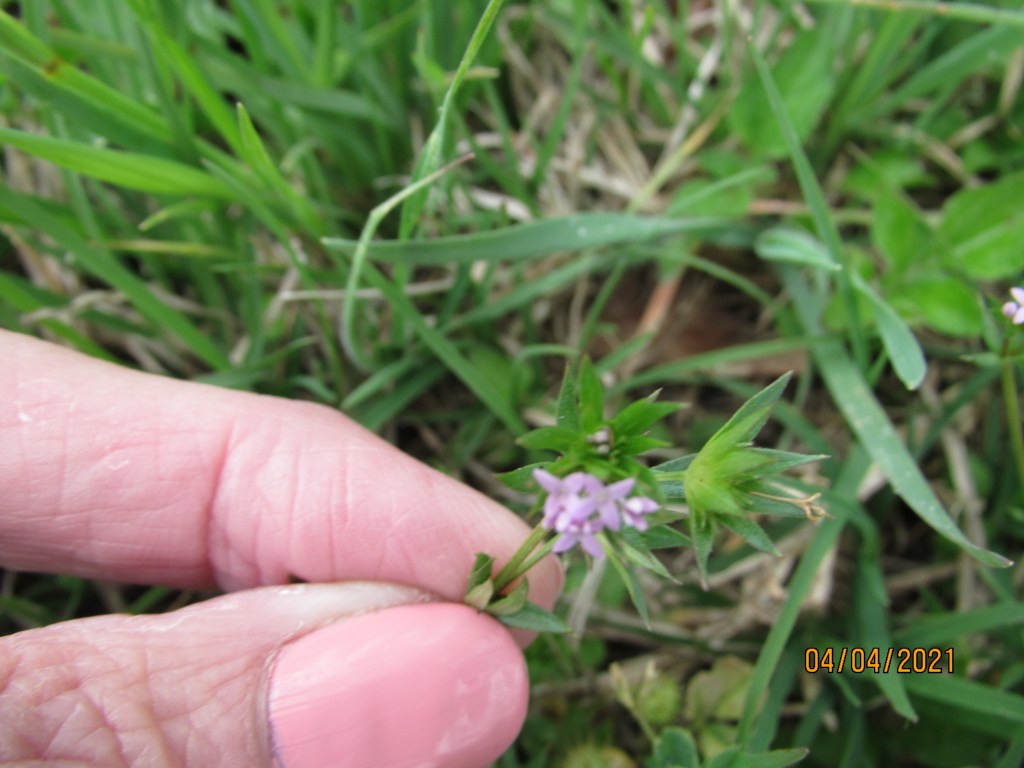
Field madder
If you attended the March meeting of ECRMN, you remember that Monique Reed, retired Botanist for the state, called it belly hunting because it requires getting down on their level which is really low. I opted for a lot of squatting trying to stay out of the way of the ants.
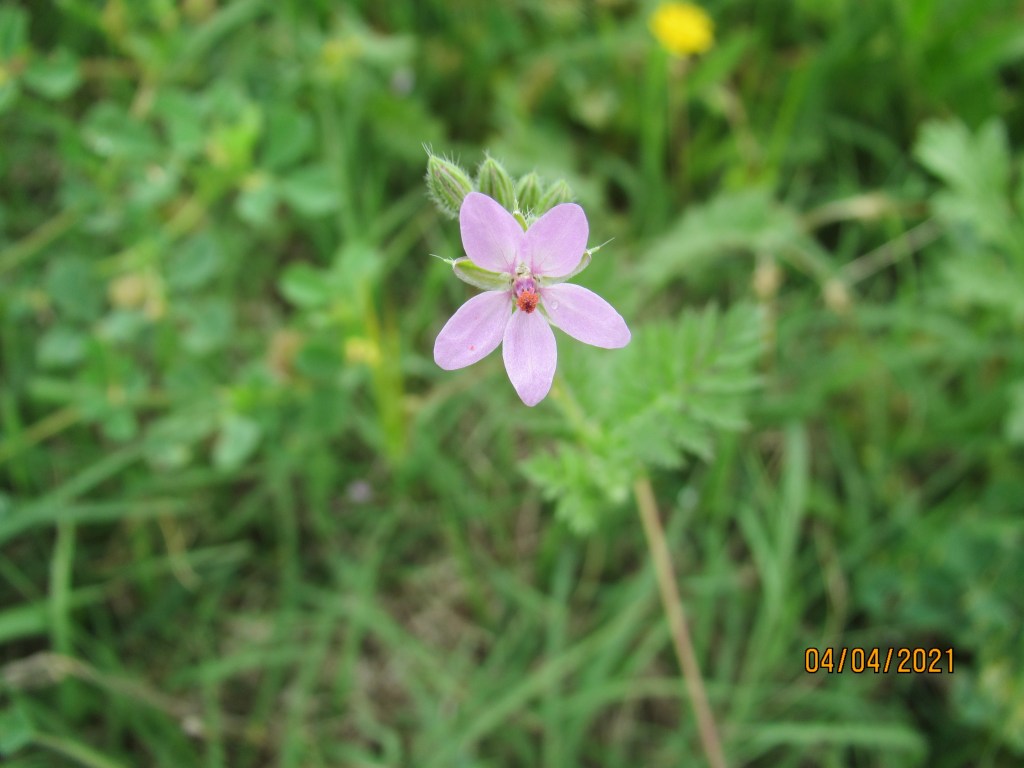
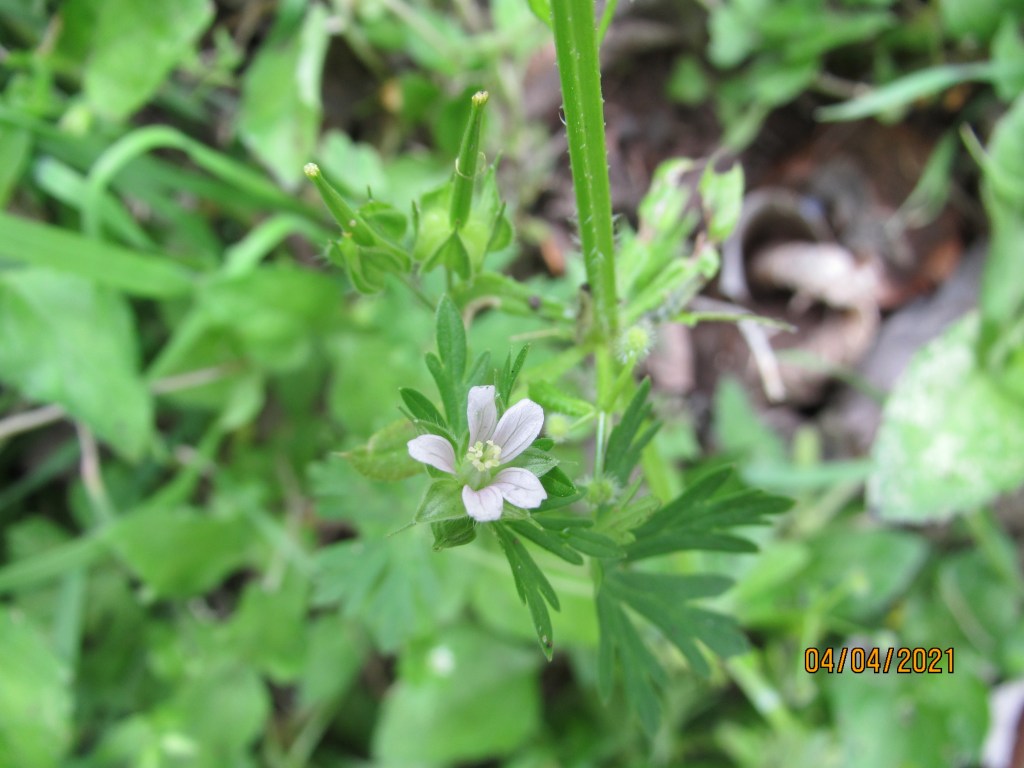
Common stork’s bill
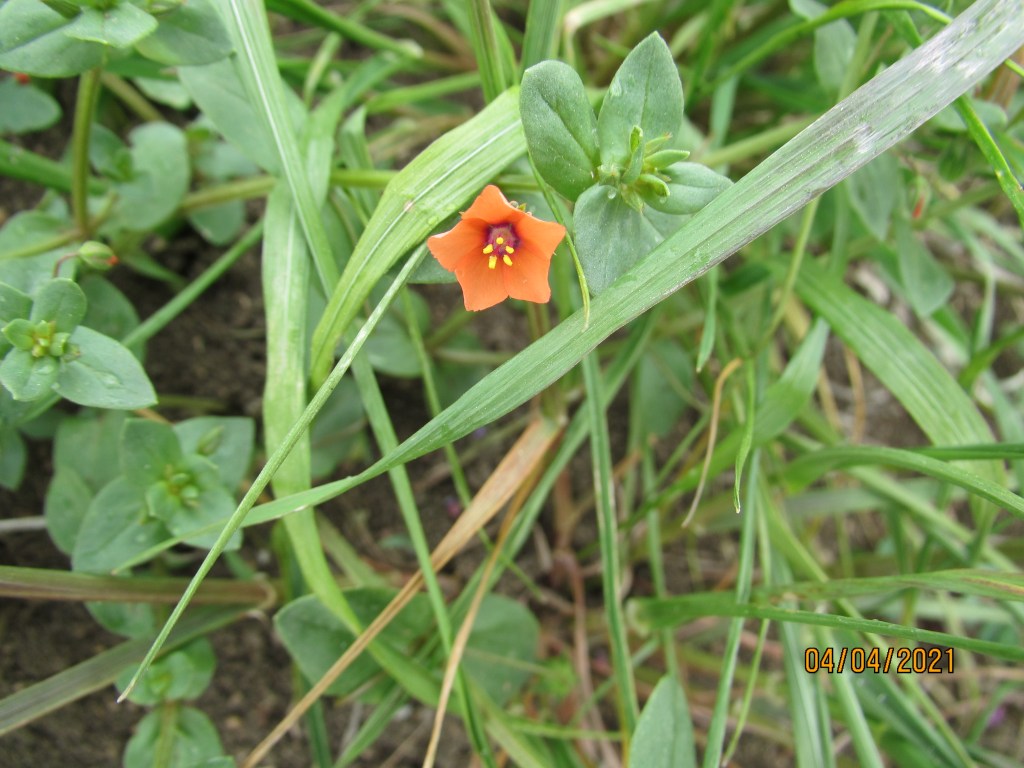
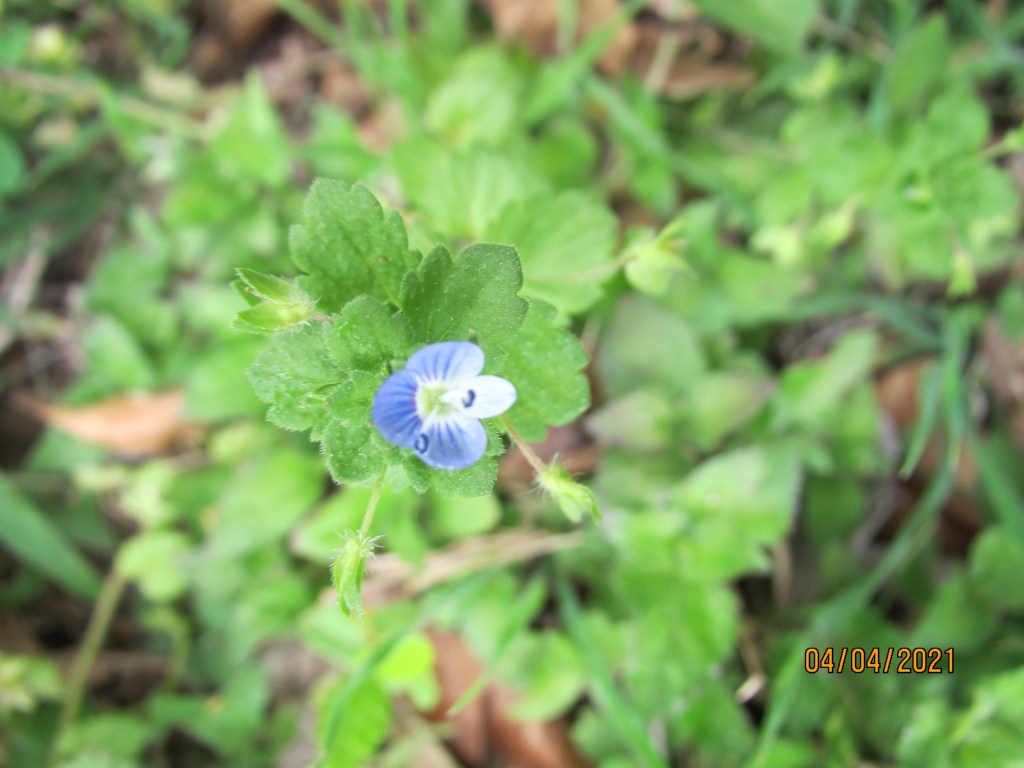
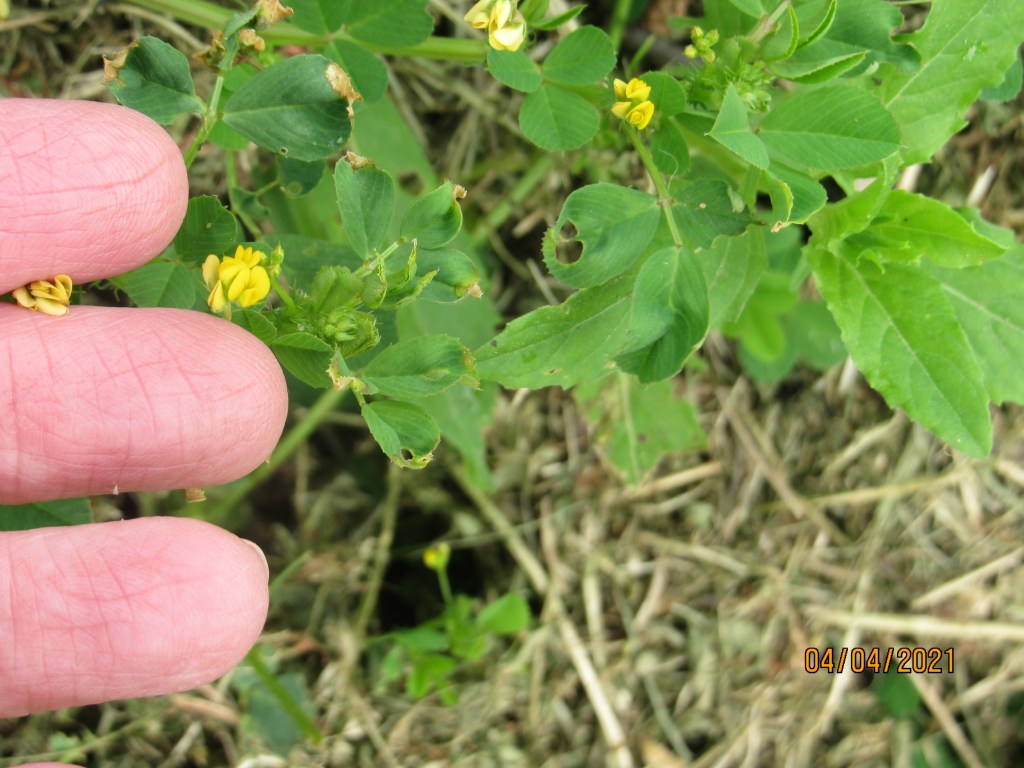
Some of the teeny flowers I encountered were Field Madder, Common Stork’s-bill (very pretty flower), Bird’s-eye Speedwell in abundance, Black Medick, Scarlet Pimpernel, and Carolina Crane’s-bill. It isn’t difficult to find them because they are currently abundant in Wilson Ledbetter Park. I have included pictures of these flowers. Often, I came across patches with five or six of these in a space about the size of a square yard. I didn’t see any bees out there, which is a little worrisome, but there were several types of butterflies, flies and ants.
Scarlet pimpernel
I also recorded the larger flowers – which don’t require frequent squatting. I challenge you to locate Grape Hyacinth, Texas Baby Blue Eyes (some of these are twice the normal size that I’ve always found), Poppy “Winecup” Mallow, Cretanweed (they have darkened lines at the edges of the petals but look similar to dandelions), two different types of Blue-eyed Grass, Fine-leaf Fournerved Daisy, Floating Primrose Willow, and Canadian Meadow Garlic. Here’s a hint: the last two are located near/in the lake/pond. Some are on the fence by the cemetery.
Bird’s-eye speedwell
If you’re active in iNaturalist, they’re easy to get identified. If you’re not, you can sign up. It’s free. Enjoy a walk in the park surrounded by many types of flowers, birds and butterflies. I will buy lunch for the first person to find all those flowers at Wilson Ledbetter who posts the pictures in a blog here. I am not liable for any bee stings – in case they show up.
Carolina crane’s bill
Happy belly hunting.
Black meddick, not to be confused with bur clover. But it’s easy to do so.
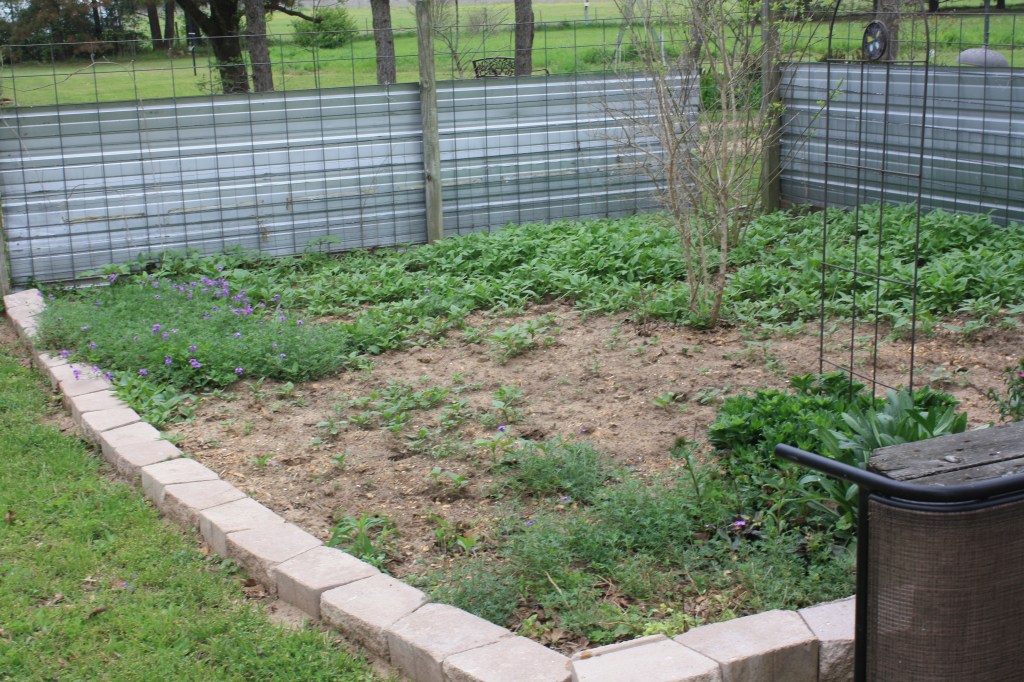
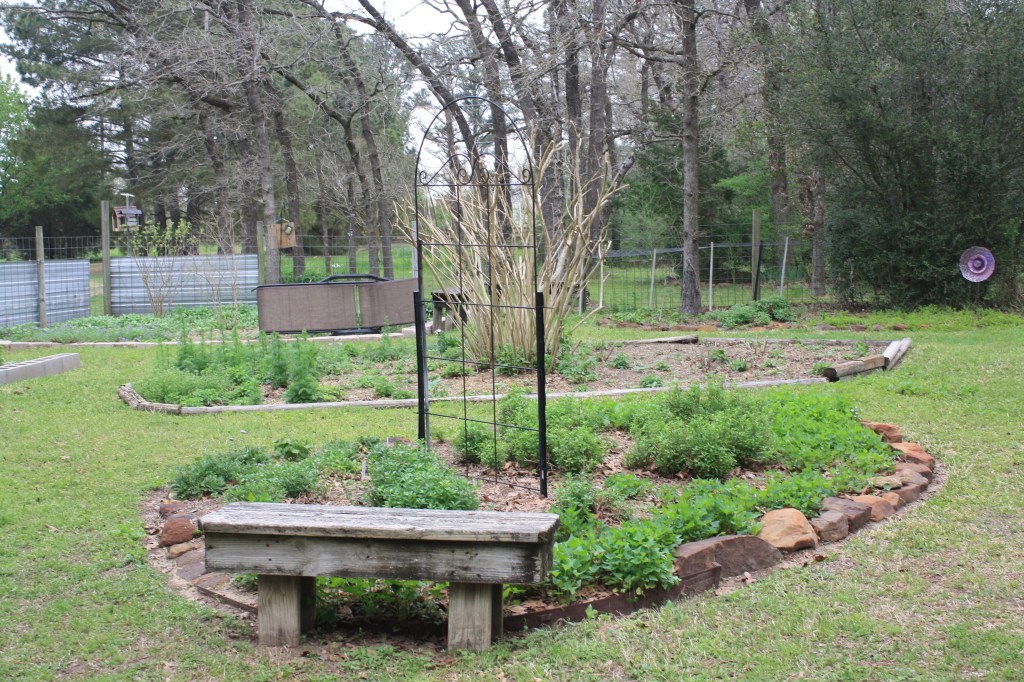
As promised, I am taking photos of my pollinator garden every month or so.
The “Uri” storm or as I called it “The Arctic Beast” pretty much took a terrible toll on the garden. I was very upset about it. I understand that nature has its own way.
Nothing could stop the verbena!
The garden, along with so many animals and plants could not stand 10 days of freezing weather. Many were lost to it.
I and many others put out tons of extra bird seed. I know it helped some of the birds. I tried to keep water for them also. You have to do what you can.
Plants are returning! And there’s water for the birds.
So for the last couple of weeks, I have been trimming and cutting back all the dead plants in the garden. I’m using lots of love and TLC to bring it back for all the bees, birds, and butterflies that come to it. It has been a slow process.
It’s nice to see something green again.
But the very reason we try to get people to plant native plants is that they are tough and hard to kill. I am seeing green leaves and little buds everywhere. It makes me happy to see it and know that nature is very resilient.
Looking healthy!
The monarchs are still coming through now. I hope I will have something blooming soon for them. As Master Naturalists, we never give up trying to save our beautiful planet filled with amazing animals and a green paradise of plants.
As my favorite saying goes…
…we were not born to do everything, but to do something.
As I had finally thawed out from the Great Freeze of 2021 on March 6, I decided to try my hand at feeding bees and butterflies. I was short of old beaten up pans as shown in a previous teaching segment here, because my children take stuff every time they move in and out. I went to Brookshire’s, where I happened upon purple and green plastic deviled egg platters. I thought maybe the colors would attract the bees and butterflies. I bought two, and I threw in a disposable aluminum pan just in case silver is what they prefer.
Turtles basking in the sunlight at Orchard Park, Cameron.
On March 7, I mixed sugar water at a 1 sugar to 4 water ratio. (I specify this in case it is incorrect and can be noted.) I placed rocks from my yard that I had washed into all three containers. I put cut oranges in the silver pan with rocks. I poured the sugar water over the deviled egg platters and a little in the oranges platter. I placed them at different places in my yard.
On the morning of March 8, I discovered that my sprinkler system had gone off unexpectedly. There were no bees, so I assumed the sugar water had been diluted from the sprinkler.
On March 9, I drained the old watered down sugar water, and put in fresh sugar water. I added small sticks from my freeze- damaged trees. My cat started drinking it. I moved them so the sprinkler system could not reach them.
On March 10 and 11, nothing happened except the cat kept tasting the sugar water.
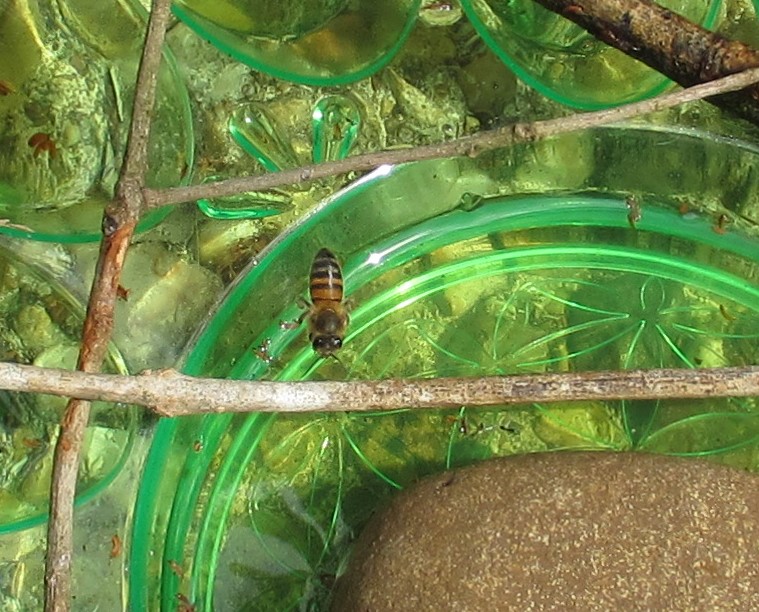
Eureka! On March 12 at noon, I found one bee drinking from the green platter. And one cat. And some ants. On the 12th, it had been pointed out to me that things are starting to bloom and the Monarchs are moving north despite the freeze, so unsaid person was pretty sure that the bees and butterflies would survive without my sugar water.
My one bee visitor
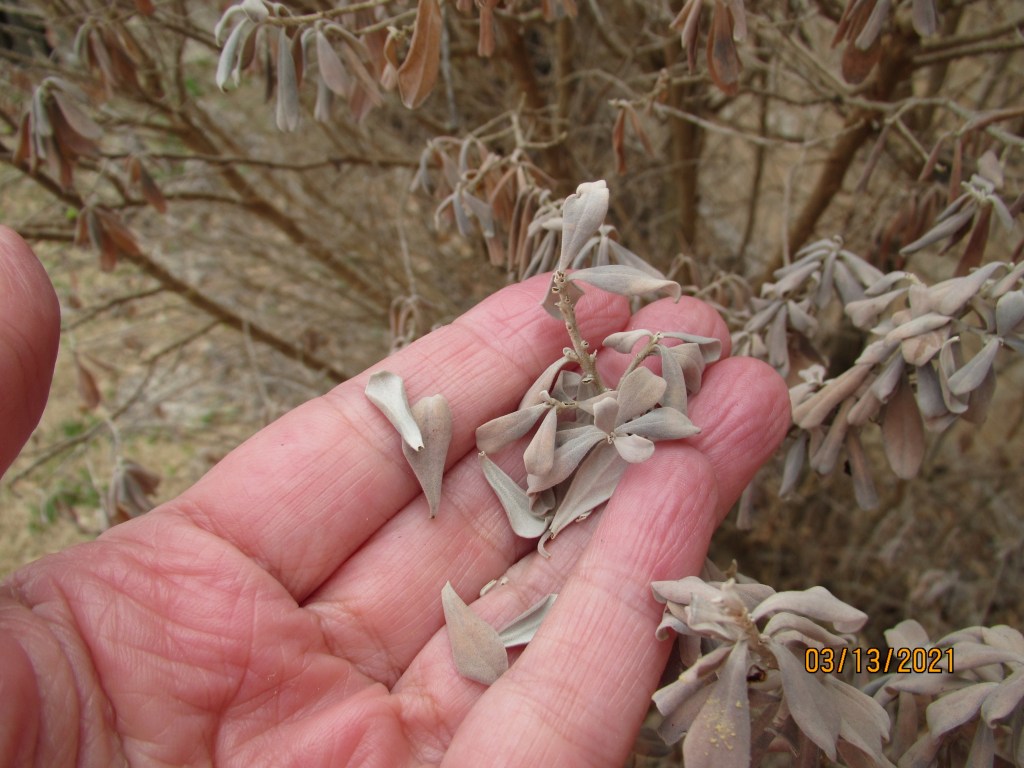
On March 13, there were no bees or butterflies, so I bought flowering plants at Lowes. I had already bought quite a few to plant at the Master Gardeners Sale the previous weekend. I don’t know if the bees will come, but at least everything won’t be brown in my yard. I even noticed that My large Texas Purple Sage, which looked like a goner from the freeze, was putting out new leaves while it still shed the dead ones.
The Sage sprouting new leaves at the same time it was shedding the old leaves. The Texas Sage is an evergreen – normally.
The Texas Sage shedding copious amounts of dead leaves.
Maybe bees and butterflies aren’t attracted to plastic deviled egg platters or oranges, or maybe all my neighbors had also been seeing the encouragement to feed bees and beat me to them. Maybe they found those plants that were already blooming.
I did look up the topic of cats drinking sugar water. It is not deemed particularly harmful to them, but, oddly, it is also noted that cats can’t taste sweet. I guess the cat just needed a drink of water.
From Suna: I did a much stronger sugar solution, 1:1, and had lots of bees. Then I read the sugar water wasn’t great for them, so who knows if I did any good or not?
Bees in very sugary water, crawling on various things Suna put in a shallow vessel.
I’d really hoped something good would come out of those horrible winter storms we had last month. When I read the extent of the damage, as reported by Dr. Chip Taylor of Monarch Watch, my heart sank.
The 11-day cold spell (10-20 February) in Texas was a disaster. Freezing temperatures covered the state and extended well into Northern Mexico. While many of the immediate effects of the freeze are clear, season long and multiple year effects may linger. The damage to the flora was extraordinary, and it is likely that nearly all above ground insects died over a wide area. Plants already in flower may have been so damaged as to not flower this year.
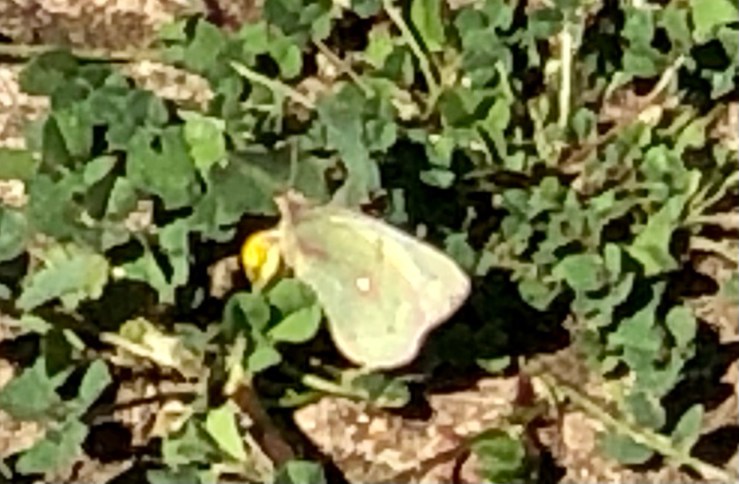
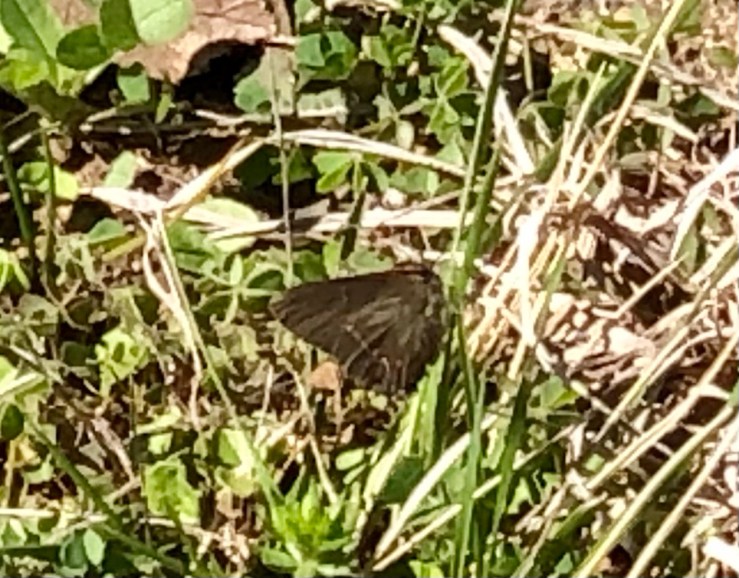
I immediately went out to look for the kinds of plants that the iNaturalist project that’s tracking the damage is looking for. It’s a work day, so I only had a half hour, but still I managed to find bees, butterflies, and some relevant plants. I’ll look for more this week and this weekend.
Sulphur butterfly
Hairstreak
Honey bee
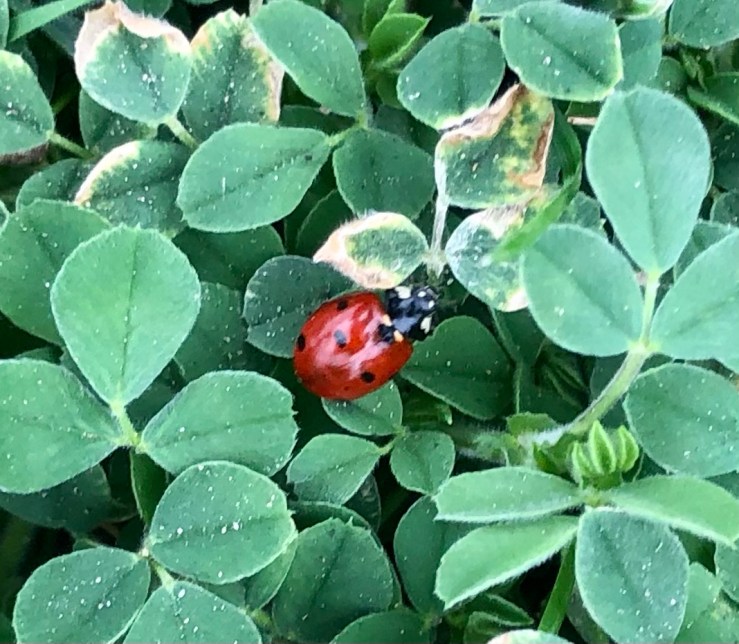
And a lady bug
Pollinators that weathered the storm!
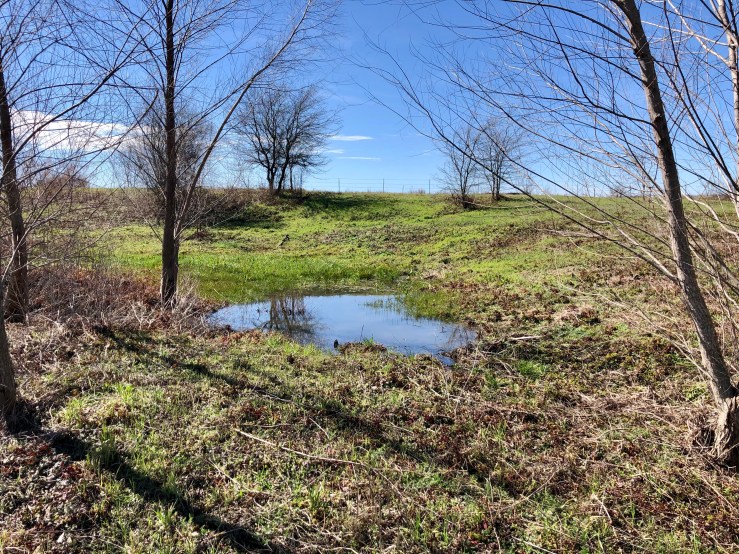
My husband and I had noticed a wet spot that we hadn’t seen before. It remained wet when the snow fell, which seemed odd. So, we went to check it out. It is near our arroyo, which has a number of springy areas (more this year than since we moved here) and a stream that runs into Walker’s Creek. We’ve never been able to spot the source of any of the springs other than one in our woods, which we can see coming from between two soil layers on a slope.
The spring that made this little pond is up that slope somewhere.
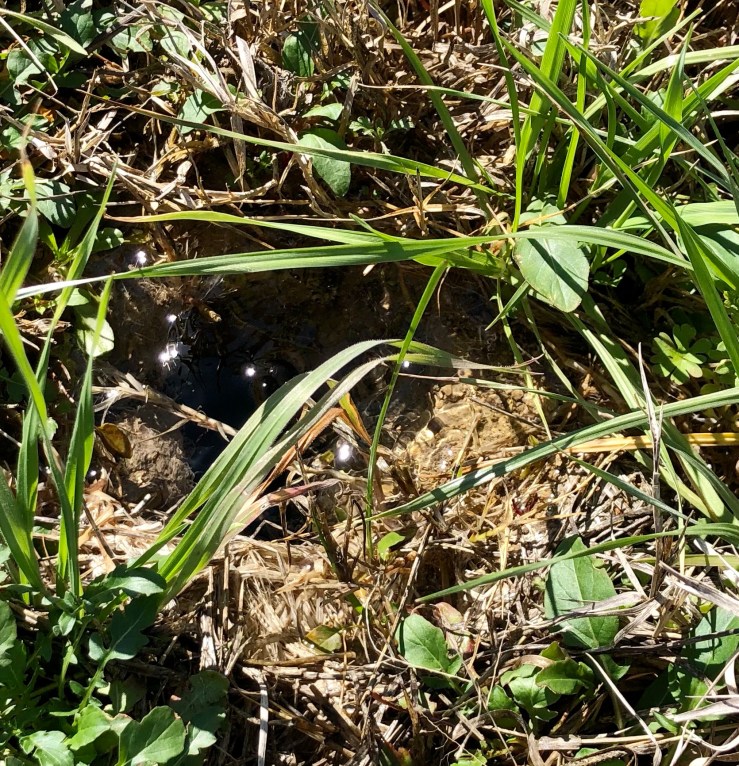
I have to say I made a bit of a fool of myself as I walked over there and heard bubbling sounds. I was ecstatic to find a hole about five inches wide, from which clear water was emerging, along with some bubbles. It wasn’t seeping, either, it was flowing pretty briskly. I’d finally found the source of a spring!
That shiny stuff is water!
Brief Aside
(Why was I so ecstatic, you ask? I have just loved springs my whole life. I was born and raised in north Florida, a place just chock full of springs, artesian wells, sinkholes, rivers, and lakes. The water level at my childhood home in Gainesville was so high that my dad had to be careful digging holes for trees, or he’d lose a shovel.
My happiest memories are of swimming in cold, spring-fed lakes or the springs in rivers, such as Fanning Springs, on the Suwannee River, on the way to where mom spent much of her childhood.
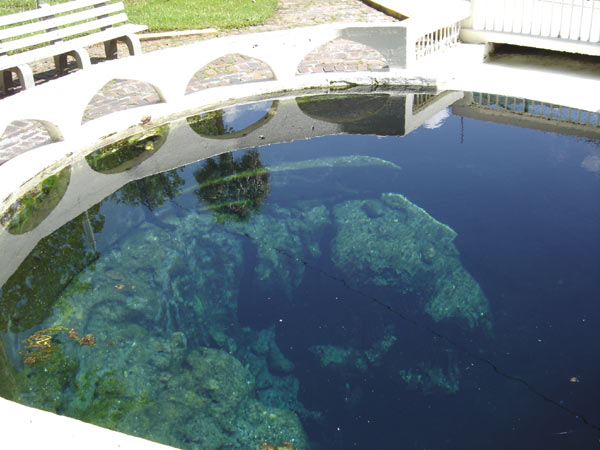
This photo of Fanning Springs, from Florida Spring Life, looks exactly like this spring did when I was young. You can see straight to the bottom of the spring area. In the distance is the river.
My mother’s family came from Green Cove Springs, Florida, a place that started out as a resort where people came to bathe in water from a deep, deep sulphur spring. My relatives lived right down the street from the spring (411 Spring Street!), so we often went to marvel at how deep the spring was, and to look at the little fish that lived in the short waterway that took the spring water to the St. Johns River. Once a naturalist, always a naturalist.)
The spring in the 1880. Behind it is the pool house where people went to get cured of whatever.
This looks exactly like it did in the 1960s, minus the gazebo.
I have tried to see to the bottom of this hole SO many times.
Green Cove Springs, Florida
Back to the Hermits’ Rest Ranch Spring
My semi-educated guess is that the reasonable amounts of rainfall for the past 2-3 years got at least three of the old springs on our property back up and running. And the water sinking in after the three winter storms, with all the ice and snow, allowed a new one to pop up. Maybe it was started in a mouse or rabbit hole, or maybe the extremely busy armadillos on our property helped.
Here you can watch it bubble, and see where the spring leads.
I get to dreaming that I can put some rocks over there and make a small dam to capture some spring water before it heads off to the stream in our arroyo. I don’t want to obstruct it, just briefly delay it.
My attempt at showing where the spring starts, where the water goes, and where it ends up.
But, who knows how long we will have a little spring to enjoy? My dogs love it, the red-wing blackbirds are playing in the wet area it’s made, and I even saw a merlin watching the meadowlarks and other birds. It’s like a buffet for that little guy!
Carlton says spring water is tasty. This is just before it falls into a depression and into the stream that goes to Walker’s Creek.
I wish I could have gotten a photo when the geese were closer! They were easily identified by their black wing tips and all the honking.
By the way, I’ve been hearing sandhill cranes all week, and some landed at Pamela’s place. And more surprisingly, a flock of snow geese flew right over me earlier in the week, honking away. I am in such awe that I forget to take pictures at such times.
Oh, and it looks like some frogs and turtles are still in our ponds, and I’ve seen signs of living crawfish (plus a dead one). Nature will persevere!
I was just going to show the monthly progress of my pollinator garden when the artic blast occurred. It was horrible. One of the things I dislike the most is COLD weather! It ruined the garden progress, along with our water well.
The damage to our wildlife friends was severe. Many birds did not make it through the freezing temperatures. That was very sad for me. I put out ten times the bird seed that I normally use. I hope it helped some of the birds make it through. Nature can be swift and harsh when it wants to, then forgiving and magical the very next day.
I guess it’s my age, but I always think of certain songs that seem to fit the moment and the mood. When the cold weather was on its third day or so, my mind went to “California Dreaming on such a winter’s day… ” Then when the cold was fading away I thought of John Lennon’s “Here comes the sun.”
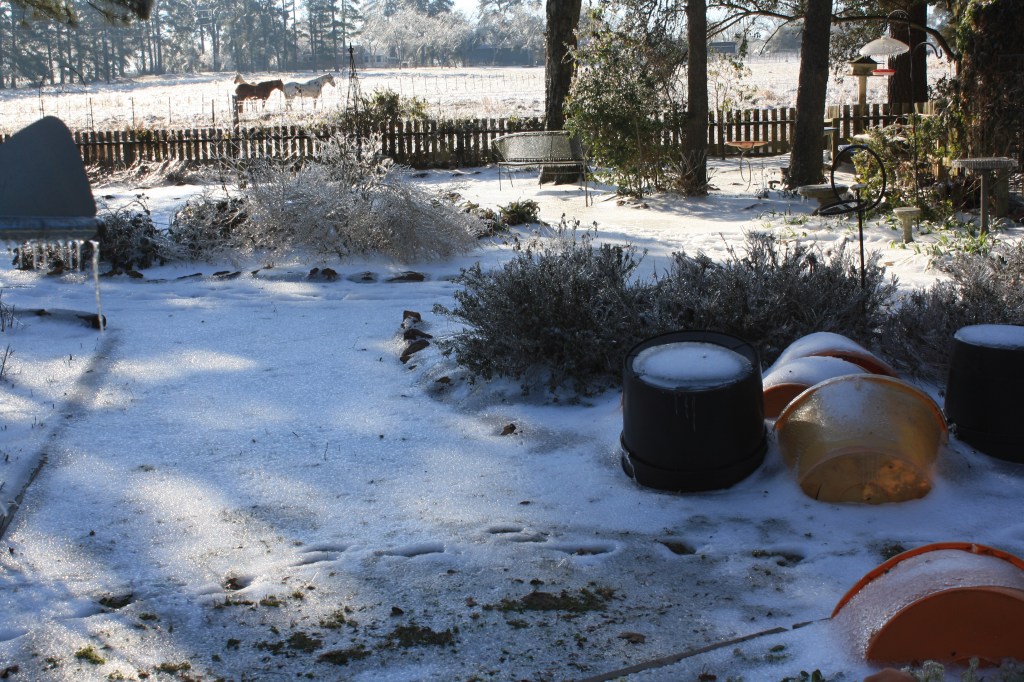
Here are a few photos taken during the event.
Frozen Garden
Cold garden and horses
Wildscape in the cold
I hope the photos I take next month are more cheerful.












 Nature Along the El Camino Real