We Have a Jumper!

by Donna Lewis

A few days ago I heard one of my baby purple martins screaming. It was on the ground calling to its parents. It either fell out or was pushed out.

Martins are the largest and heaviest of all the swallows. So, while they are excellent at soaring, they are not good at going to the ground. The entire colony got into the rescue attempt. All the adults were flying over the baby trying to get him or her to fly.

How did I get here?

This is the reason I look at the babies as soon as I can. This way I know how old the first set of eggs were when laid. It takes 28 days for a baby to have enough feathers to take its first flight. I guessed that this baby was about 26 days old

So he was close but not quite there. He needed a few more days.

I could not just lower the gourd rack and pop him back in. Doing this when many of the other babies were the same age could cause many more of them to jump out. Then I would really have trouble.

This year five rat snakes attempted to climb the pole and have my Martins for lunch. So, I knew if he stayed on the ground too long, something would eat him.

The first night he was on the ground, I put out a five-gallon bucket with a towel over it and a rock inside. He immediately went to it for protection. The adults saw this and again flew around him. They did not attempt to feed him or give him water. This is tough love.
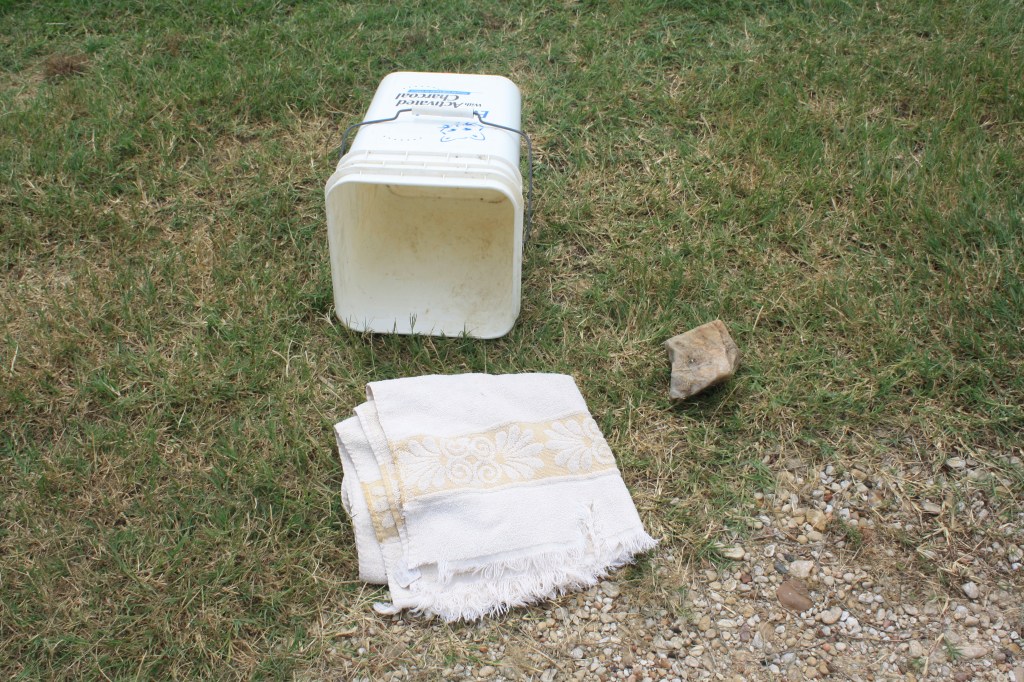
Improvised bird shelter material

The next morning I was out early, and he was still alive and looking at me. So, I left him alone.

Howdy, Donna

I watched over the next four hours, and he left the area around the gourd rack, flying about ten inches high and started out across our pasture. I knew that was dangerous, for sure.

So I put up an open bird feeder on a shepherd’s hook and set him on it. The adults saw this, and once again tried to encourage him to take that first leap. After four hours, he got his nerve up and jumped, flying low until he gained some altitude, and he was off to the sky.

The launching pad bird feeder

I was so happy!! This usually does not happen. But this day, all was well.

Right now there are many baby birds on the ground. So, be careful mowing for a few weeks until they are in the trees.

How’s the Mason Bee Real Estate Doing?

By Carolyn Henderson

It turns out to be true that if you build it, they will come – at least where Mason Bees are concerned. 
Several members of El Camino Real Texas Master Naturalists worked to construct and place “houses” that were thought to attract Mason Bees. Catherine Johnson conceived the idea for the project to be placed at the Birds and Bees Wildscape, which was created and is maintained by volunteers from ECR TMN chapter. Ms. Johnson is getting her Girl Scout troop involved, too. Sam Jolly started making the houses from Eastern Red Cedar trees. Alan Rudd completed that phase, then he and Scott Berger placed them around the wildscape. The additional bee condos were made with Hickory, Black Jack Oak, and Post oak. Rudd gave several  to members to place on their properties in an added project to see where they are best placed for future reference and what wood, if any, they may prefer. 
Approximately 8 of them were placed under a covered sitting area at the wildscape.

Alan and Scott Berger working to hang bee houses.
A bee!

Two that are in the exterior south-facing position are nearly totally occupied. A third there has about a fourth of it’s “condos” filled. The Mason bees were busy taking  possession and laying eggs on the interior houses facing both north and south as I was taking photos. 

I have one in a heavily shaded area facing south at my house. Even it has three places occupied by Mason bees so far. A spider also has taken up one “condo”.  I’m assuming that we will know that the bee eggs have hatched when the dirt plugs are gone. If you took one home, let us know where you placed it, which wood was used, and if it has Mason Bee occupants. If you would like to get involved, there will be a project at the wildscape involving the Girl Scouts and the Mason Bee condos on July 17. Contact Catherine for additional information. 

Ten Minutes with a Tree

by Carolyn Henderson

On a hot, humid day this week, I ventured out in the early evening to see what I could find to post on iNaturalist. Because of the aforementioned humid heat, I didn’t go far. I decided to peruse a Texas Ash tree in my backyard. This tree took a hard hit from the freeze earlier this year, and I am doubtful it will survive, but nature seems to think otherwise. I spent 10 minutes looking over the tree and found nine species on it. 

Butterflies, spiders and bugs were all over it. I first happened upon a live Superb Dog-day Cicada before it molted from those prehistoric looking shells they leave attached to everything. There were two shells and a live one that I think was trying to get out of it’s shell. It succeeded. I checked back the next day, and the shell was attached to a leaf with out the Cicada in it. It had a little white thing attached to it pre-shedding (molting?) and post-shedding that the other two shells didn’t have on them. These are the cicadas we get every year in Central Texas. I haven’t seen one of the 17 year versions. 

Cicada

Next, I found two types of beetles and an ant hanging out together. I took a picture of the small, brown stink bug and got a larger Green Beetle and ant with it. The smaller brown beetle was identified as a Southern Green Stink Bug on iNat. I didn’t attempt to identify the type of ant. I thought the Green Beetle was a leaf when I took the picture. I also found a Dock Bug (per the closest thing I could find that looked like in on iNat). It could be a juvenile leaf-legged beetle. These look very prehistoric. The armor clad look makes me think of ancient Samurai warriors. Another type of beetle-looking bug was also abundant. It is identified as a Acanthocephala terminalis on iNat.

On that same tree, were several Seven-spotted Lady Beetles, Hackberry Emperors, and Garden Orbweavers. The Hackberry Emperors camouflage well when on the bark of the tree with their wings up. That’s nine different species cohabitating on one tree in close proximity to each other. 

In a nearby bush, I found a Mealybug Destroyer with it’s children?. The “destroyer” name seems inappropriate for the small, fluffy white insect.  Note in the picture that there is a much larger one (compared to the others) and three very small ones. The three small ones are in a straight line behind the large one. There was a Texas Ironclad Beetle, a Flesh Fly, and a Condylostylus. The last one, a very colorful and small flying insect, is numerous and difficult to take a clear shot of because of it’s size. A better camera than I have is needed. 

A quick walk in my backyard produced a large array of nature to observe. And, I had more than one thing to post on iNat. If you are interested in joining iNaturalist, go to www.inaturalist.org  to get started. Linda Jo Conn is the go-to person for our club on anything iNat.

Hint: If you want your post verified quickly to get research grade status, post it of a bird, butterfly or bee/wasp. I’ve had my bird posts verified before I finish the post. 

June in Donna’s Garden

by Donna Lewis

It’s heating up.

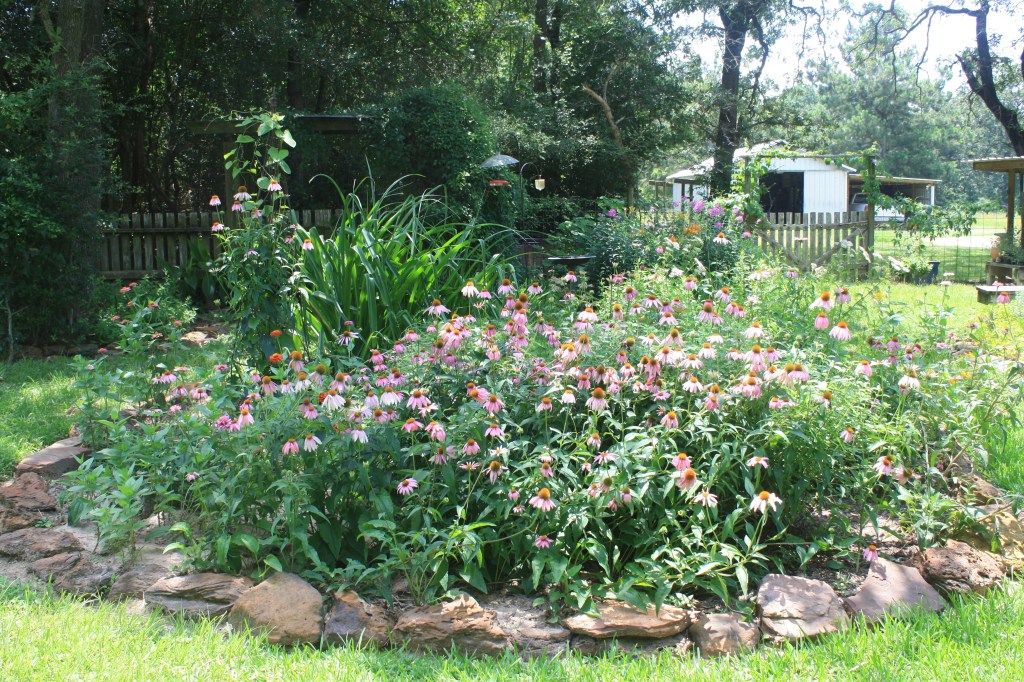
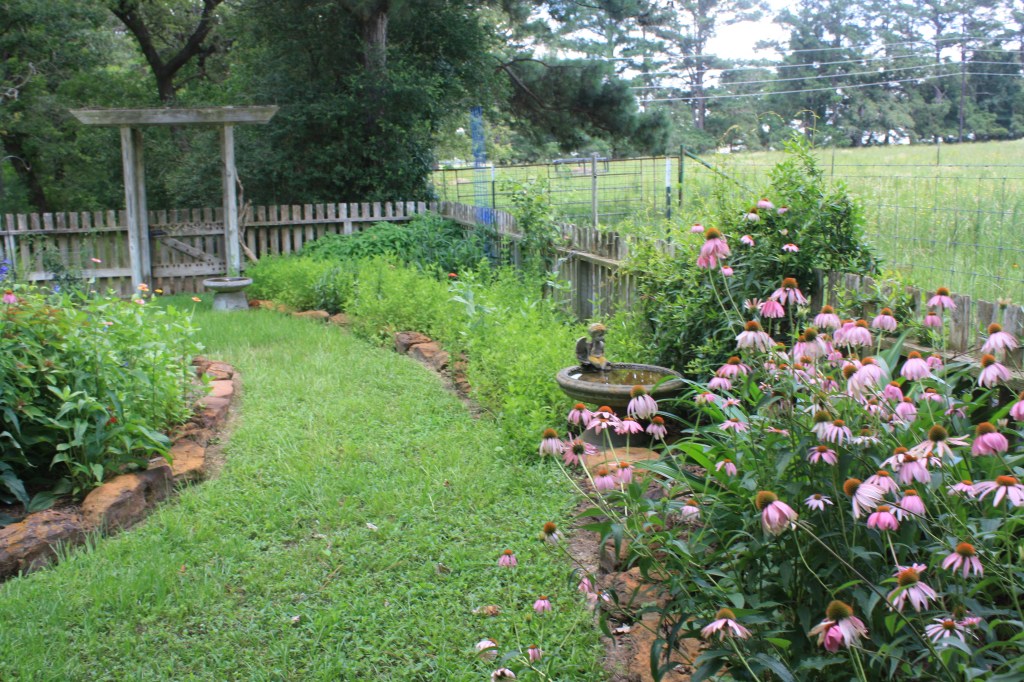
Gorgeous purple coneflowers

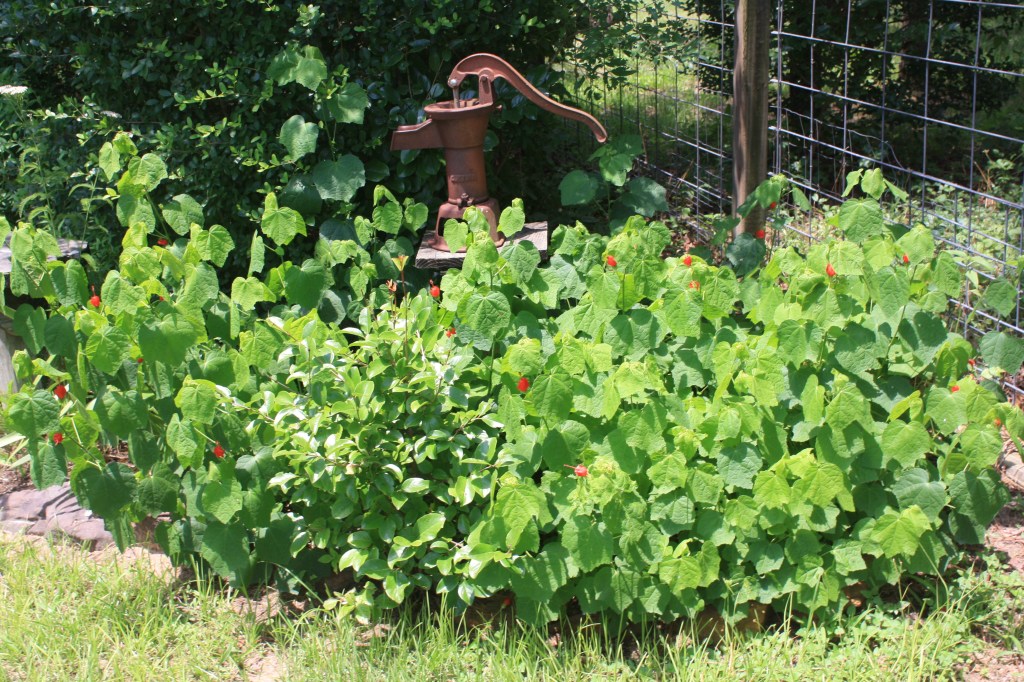
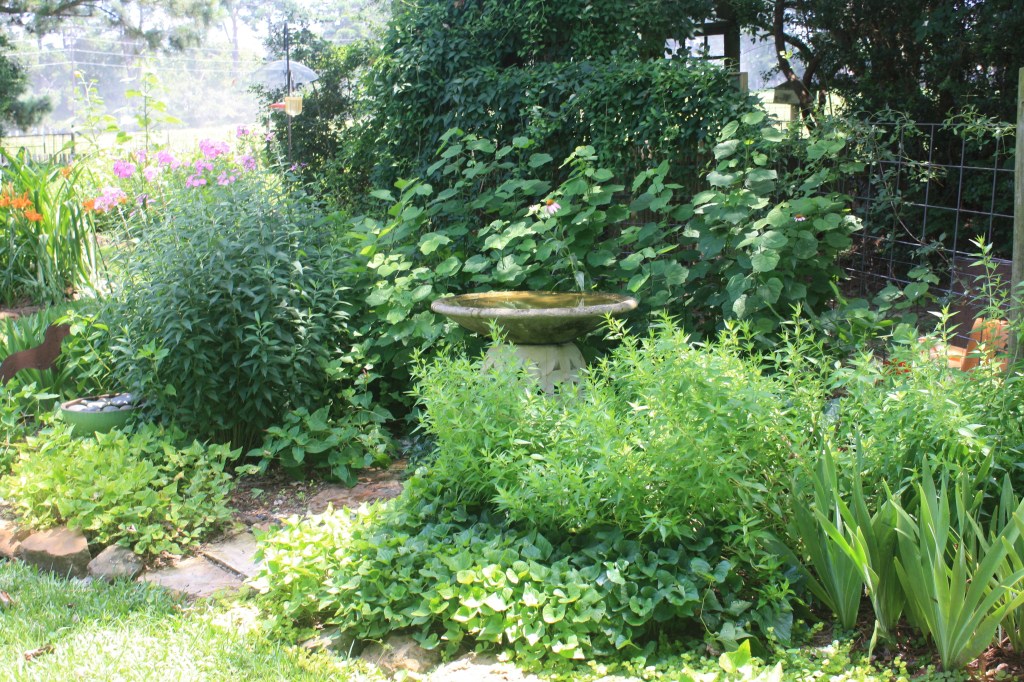
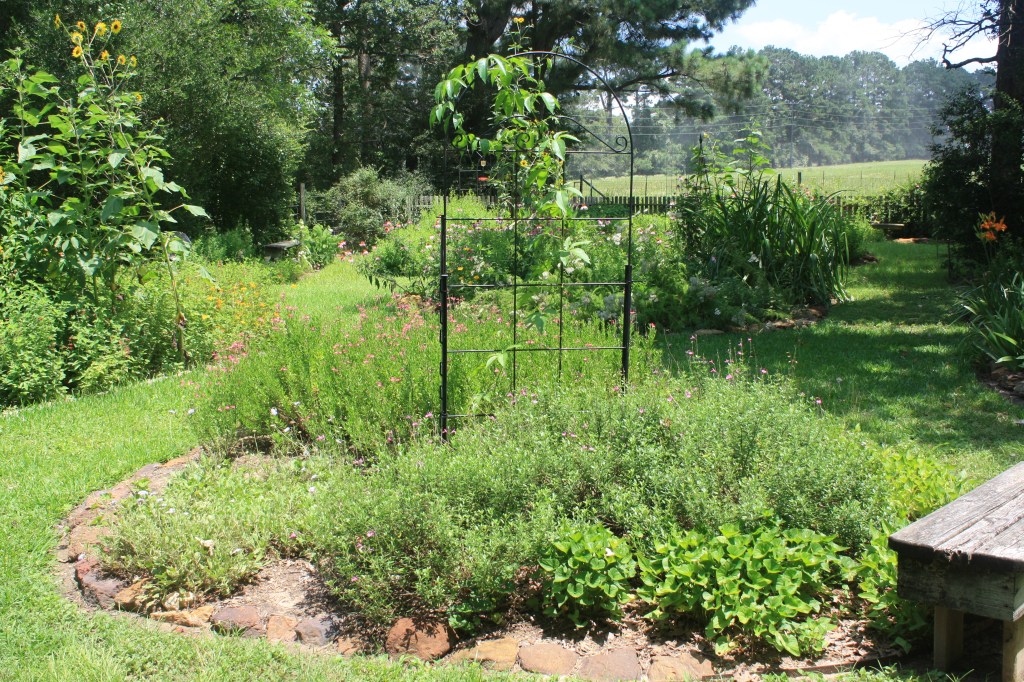
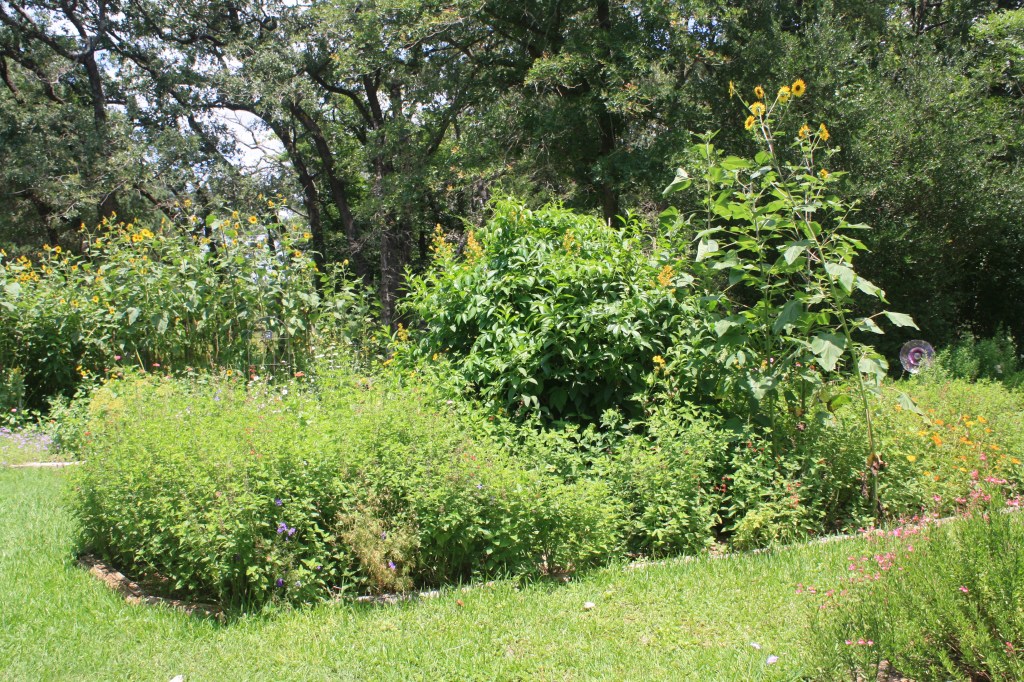
So here are the June photos of my pollinator garden.

Turk’s cap is enthusiastic!

After days of rain, the sun and the humidity have returned in force.

We have gone from too much rain to too much heat.  Now I have to actually think about watering my plants.   I have to do that while I stay in constant motion so the mosquitoes don’t eat me for lunch.

The first tall plants were beat down by the wind and rains we had.  Mostly purple Larkspur.  They were really pretty and the Swallowtails liked them alot.

There are so many different flowers that I cannot name them here.

Just know  I make sure that every plant or vine has some value to nature.

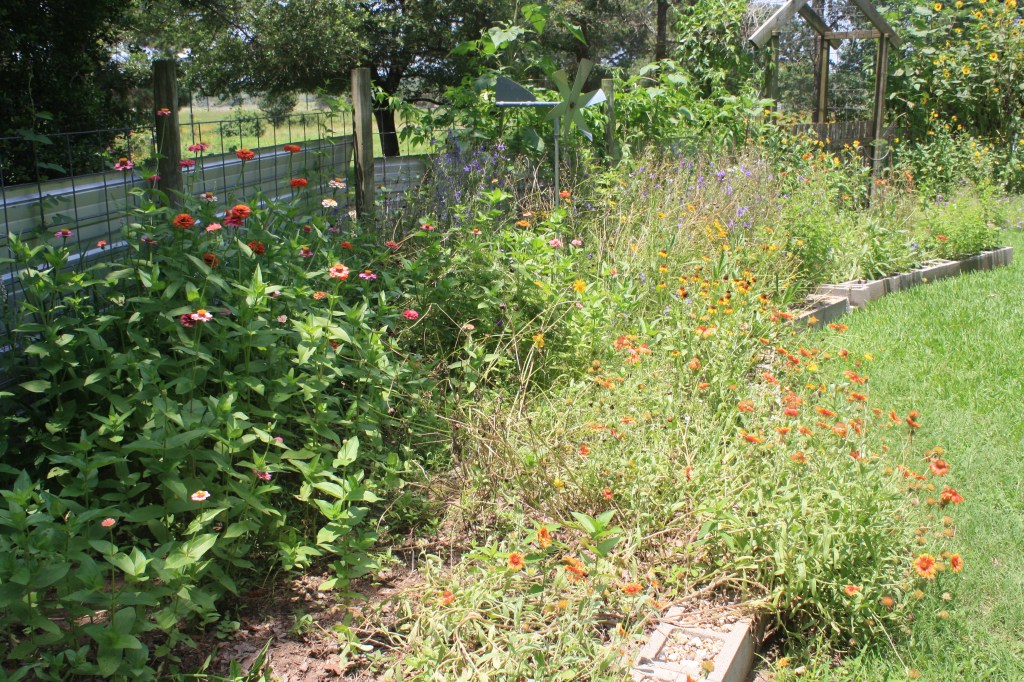
Zinnias, Indian blanket, black-eyed Susans, etc.

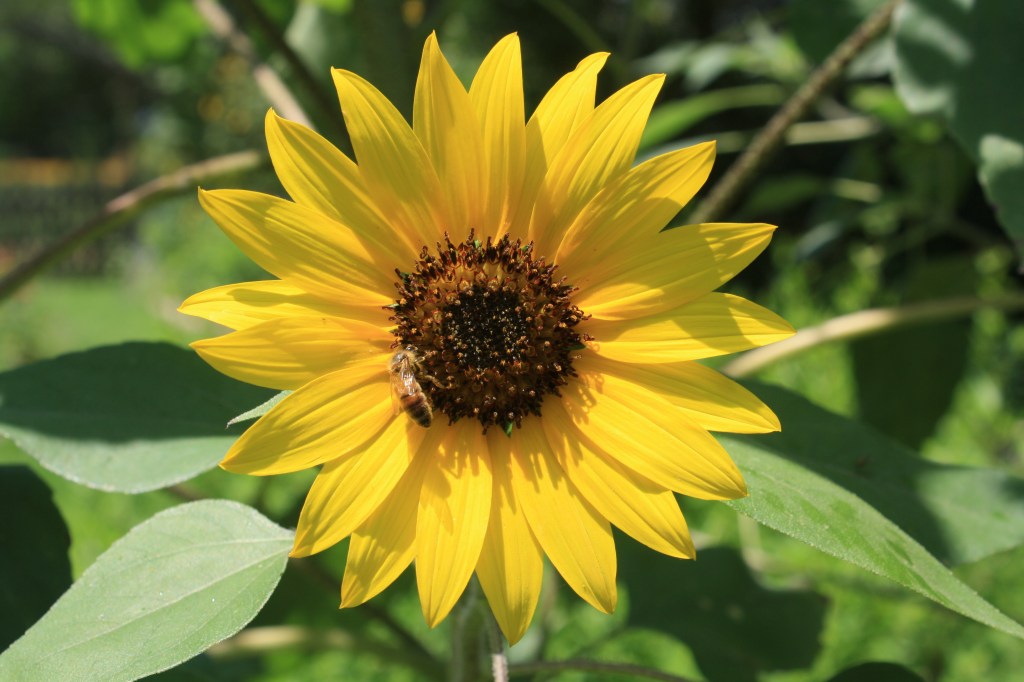
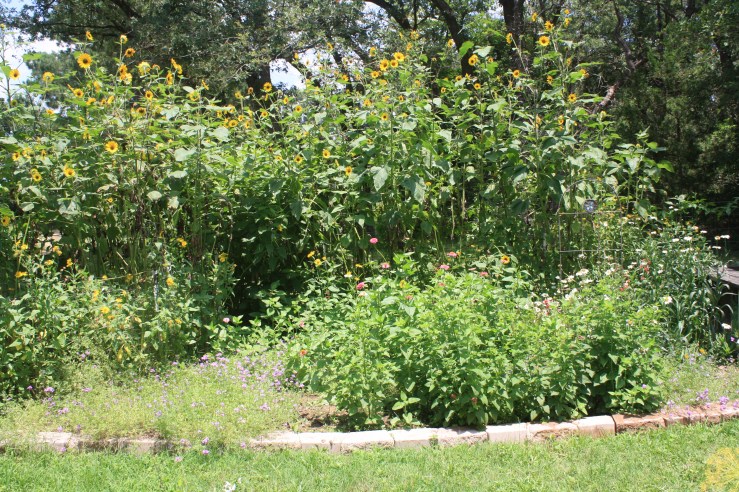
The tall sunflowers really fit the bill because they have both nectar and bugs. The nectar for the pollinators and the bugs for the birds. The cardinals and the wrens go crazy over them. Zinnias are just popping up and just about all the butterflies like them.

Sunflower and bee

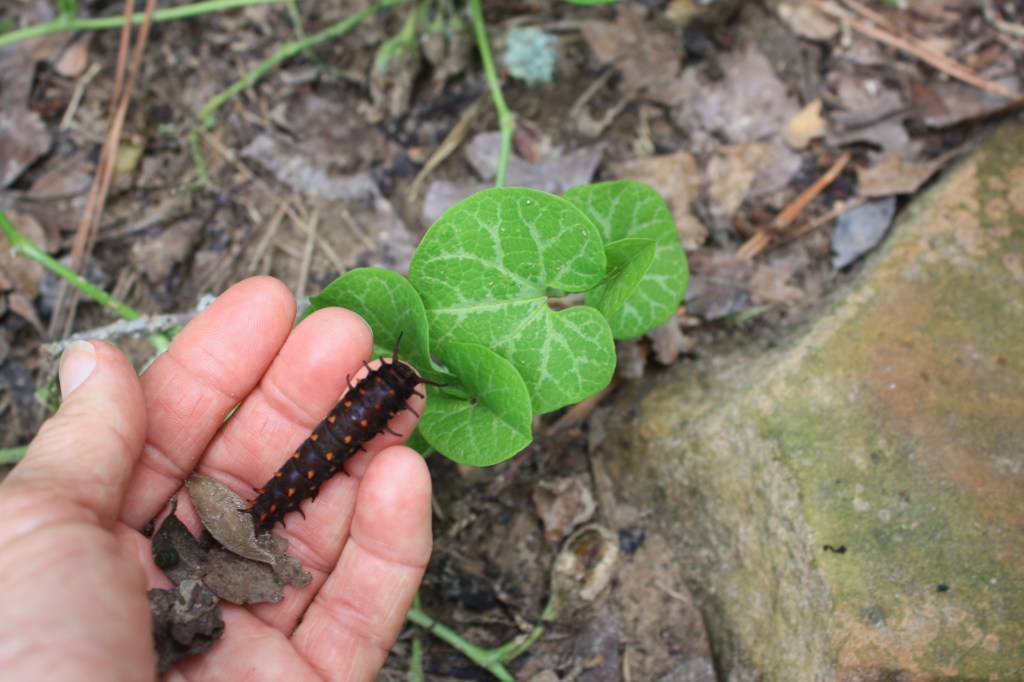
Fennel is back and the Black Swallowtail butterflies lay their eggs there.

Sunflowers and friends, not fennel

It’s a wonderful place to be if you are a pollinator or a bird. It’s pretty nice for me too.

Weird and New Nature Observations

by Sue Ann Kendall

In the past week or so, I’ve seen some pretty darned interesting sights on my north Milam County ranch. I thought I’d share a few with you all. Plus I have a bonus observation from Pamela Neeley.

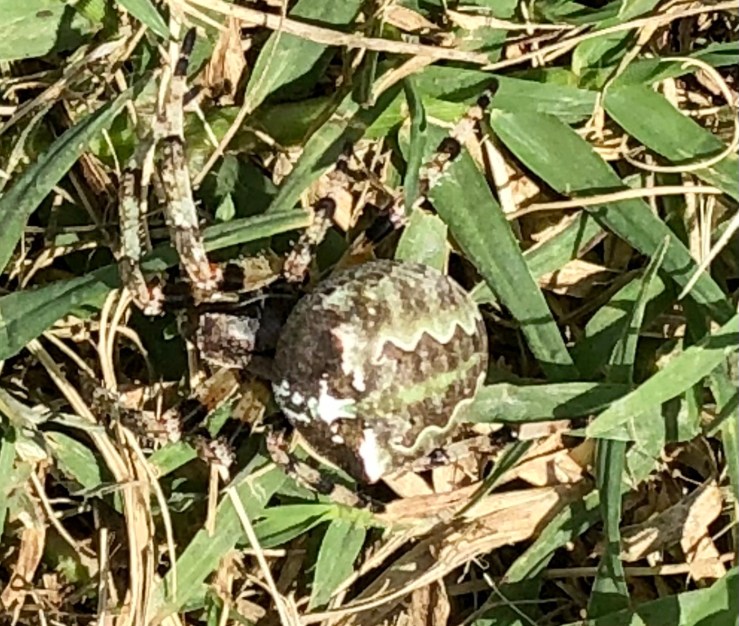
We’ve been digging a lot of holes for fence poles this week, which stirs up the insect population. A couple of days ago, we saw something wriggling on the ground, and I realized it was a spider I’d never seen before. It had beautiful pale green markings and had a very large abdomen.

I wondered what it was, and iNaturalist indicated it could be an Giant Lichen orbweaver, Araneus bicentaurius. What a beauty. We are in some of the most western areas they are found.

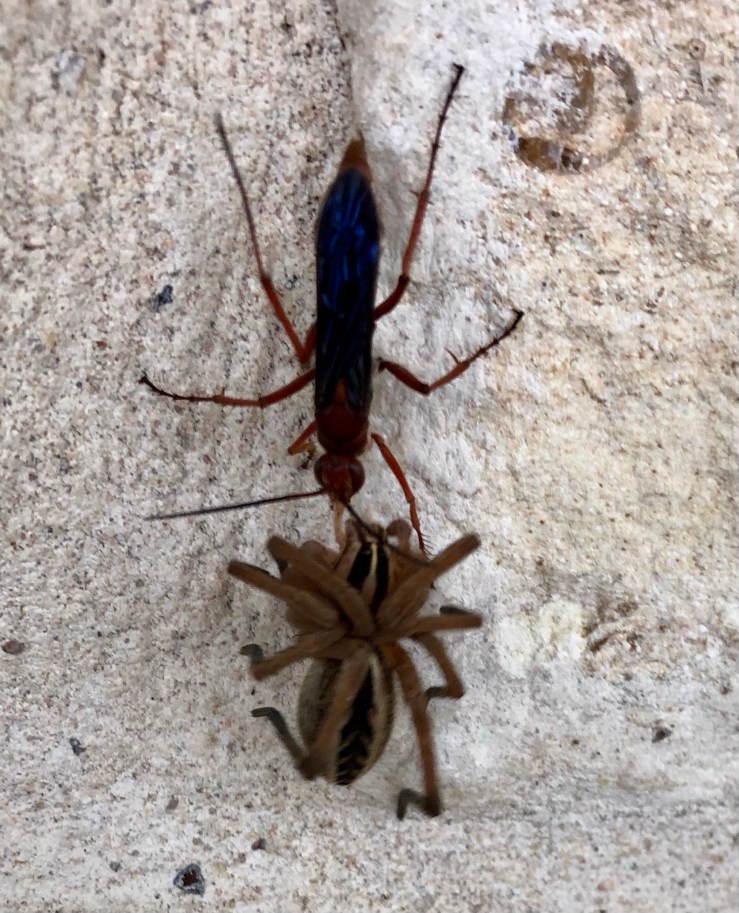
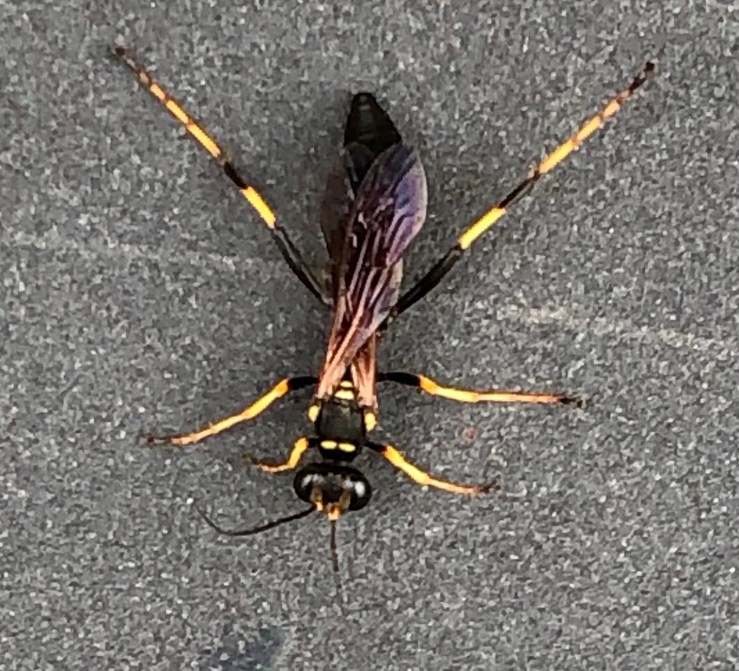
The day before, I has spotted a rabid wolf spider, lying motionless and with its legs all curled up. That was weird. I went to look at something else, and when I came back, I knew what had happened to it. A Rusty Spider Wasp Tachypomplilus ferrugineus had stung it, and now it was dragging it up the wall to wherever it was going to enjoy its spidery meal. It turns out those wasps, which were new to me, prefer wolf spiders as prey.

This looks yummy!

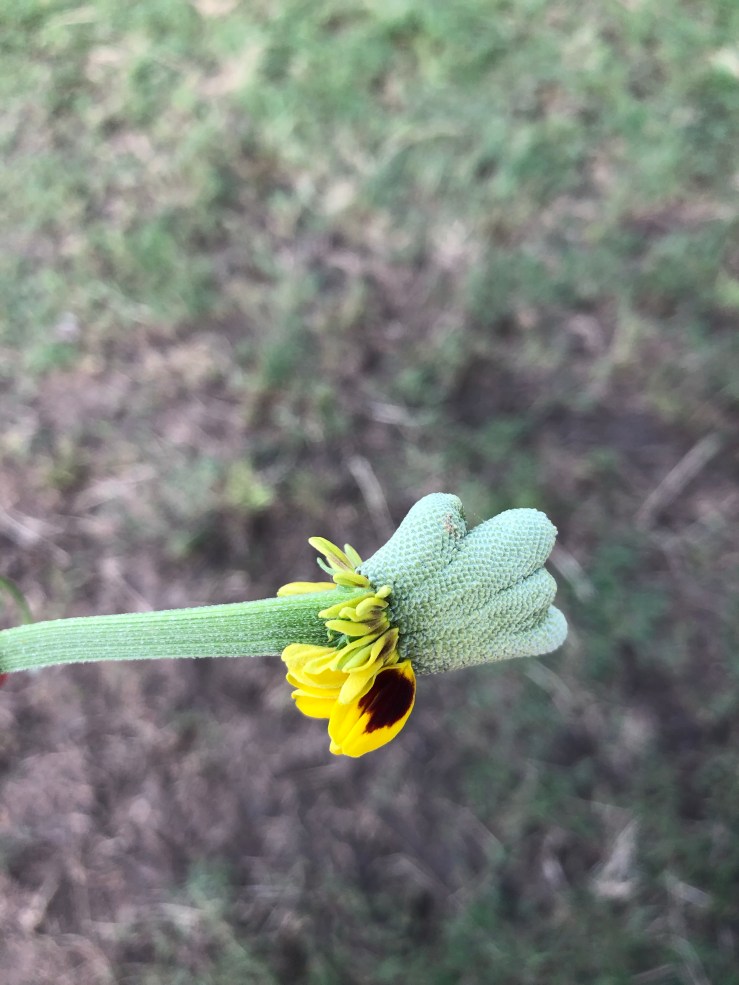
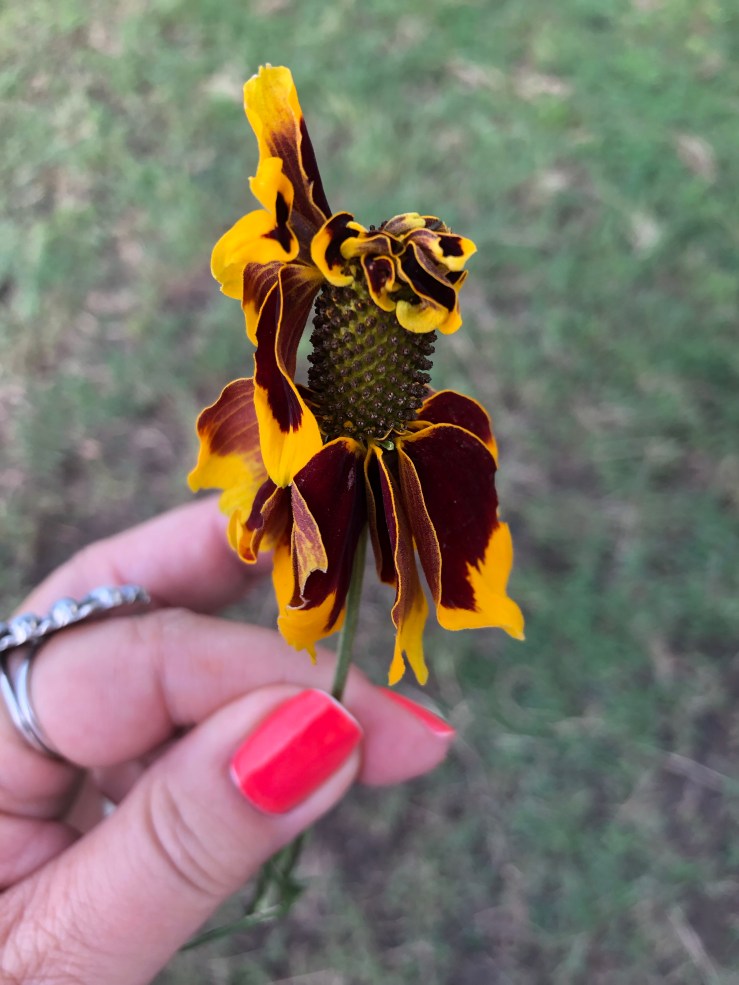
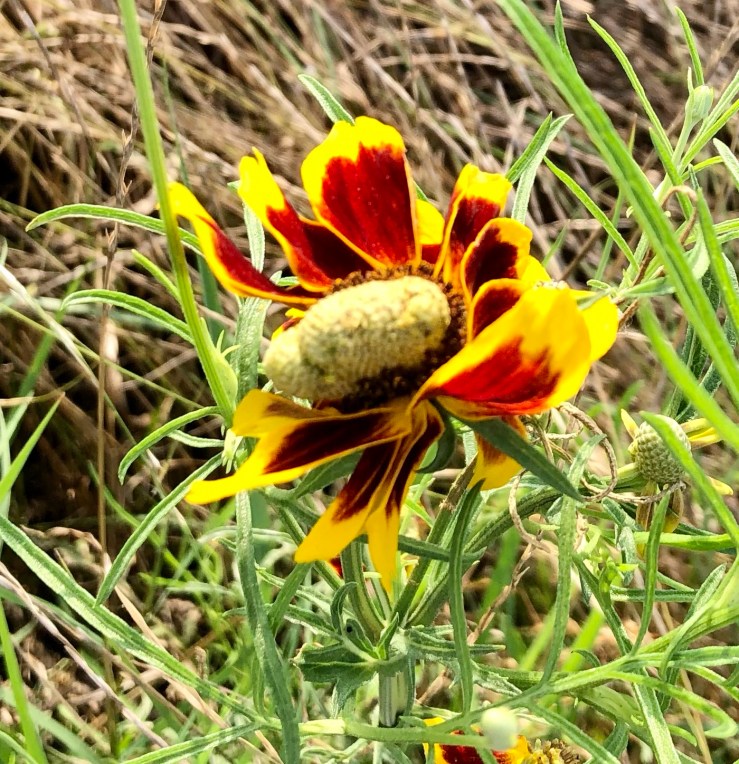
Something else that was new to me this year was my discovery of a bunch of odd-looking, deformed Mexican hat flowers  (Ratibida columnifera or upright prairie coneflower). I wrote about them in my personal blog, but have learned more since, thanks to fellow Chapter member, Linda Jo Conn. Alongside of a field that had grown oats for silage, the flowers didn’t look quite right.

Since I know that the field next to the flowers got sprayed by herbicides more than once (the representatives from our ranch coop gave permission), I wondered if that is what caused the flowers to have extra petals, extra “cones” or oddly shaped flowers. I uploaded some of the images I had to iNaturalist and waited. Sure enough, Linda Jo commented that there’s a word for abnormal growth in vascular plants: FASCIATION. Now, isn’t that cool? The Wikipedia article on fasciation says sometimes it’s caused by hormones or by viral/bacterial infections. But, among the possible causes ARE caused by chemical exposure. Another possibility is excessive cold weather. Guess what we had in February??

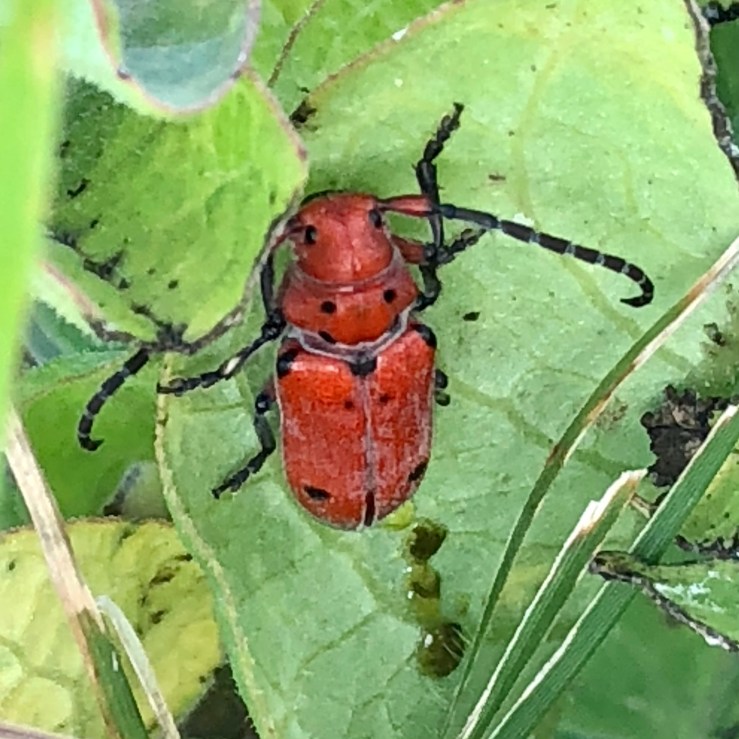
Other than that, I’ve been enjoying the insects of summer. Wow, there have been some interesting ones here at the Hermits’ Rest!

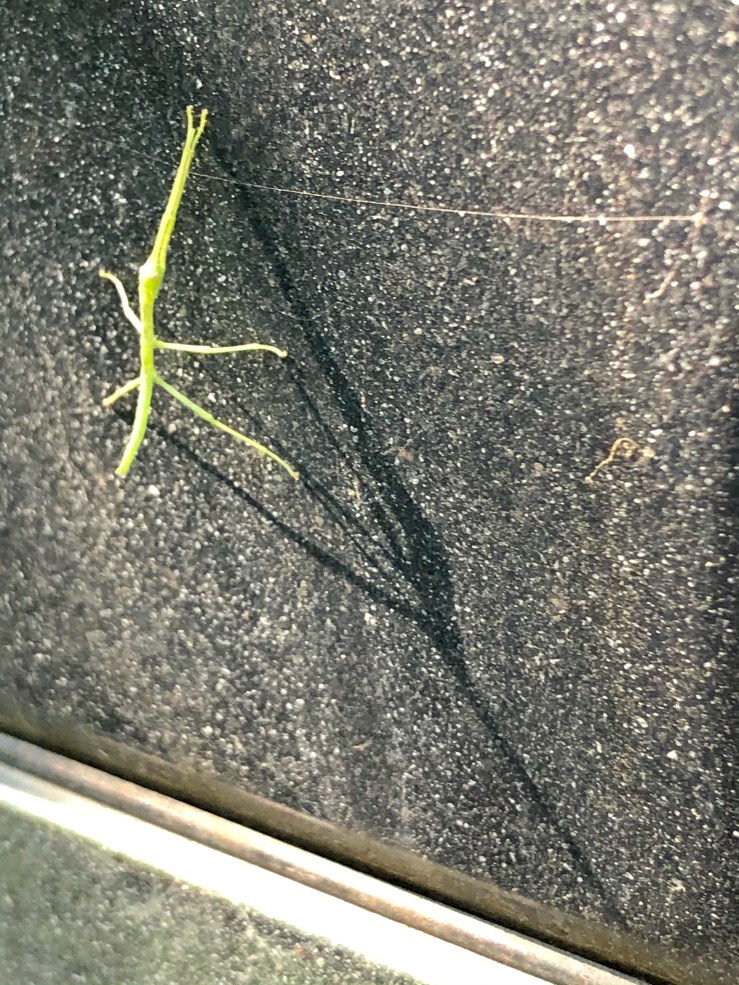
And finally, just for fun, I wanted to share a photo Pamela Neeley took of a young praying mantis. Look at its shadow! It’s a giraffe!