Bright Green Spider: Wear Goggles if You Get Close!

by Donna Lewis

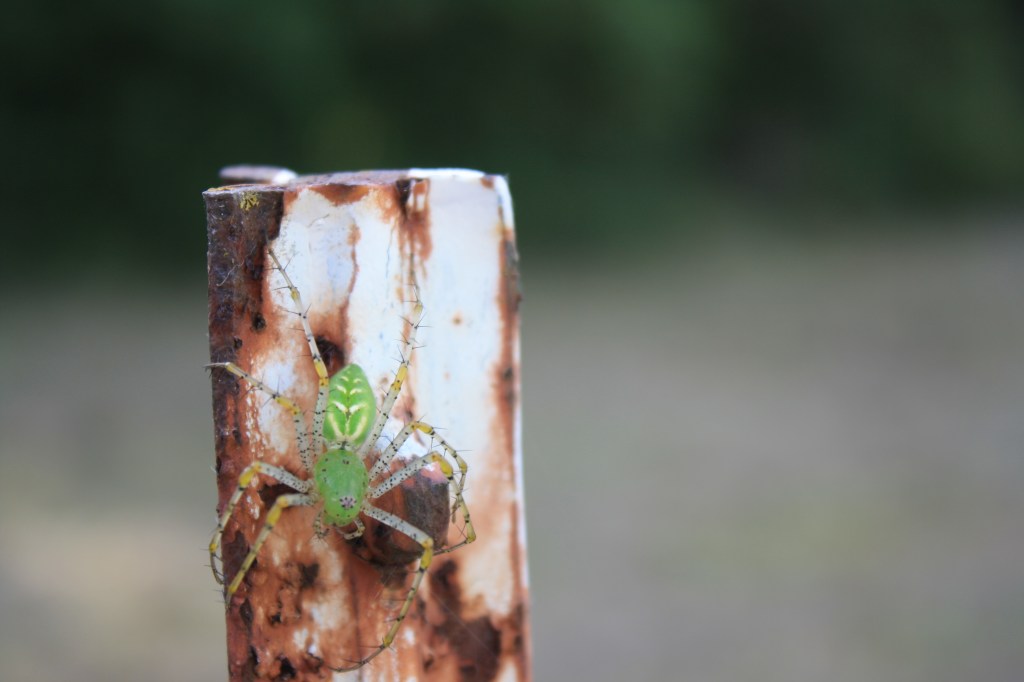
So, while walking along our back fence, I see this brilliant green spider on a fence post.
All the other posts were taken by pairs of grasshoppers. Love is in the air.
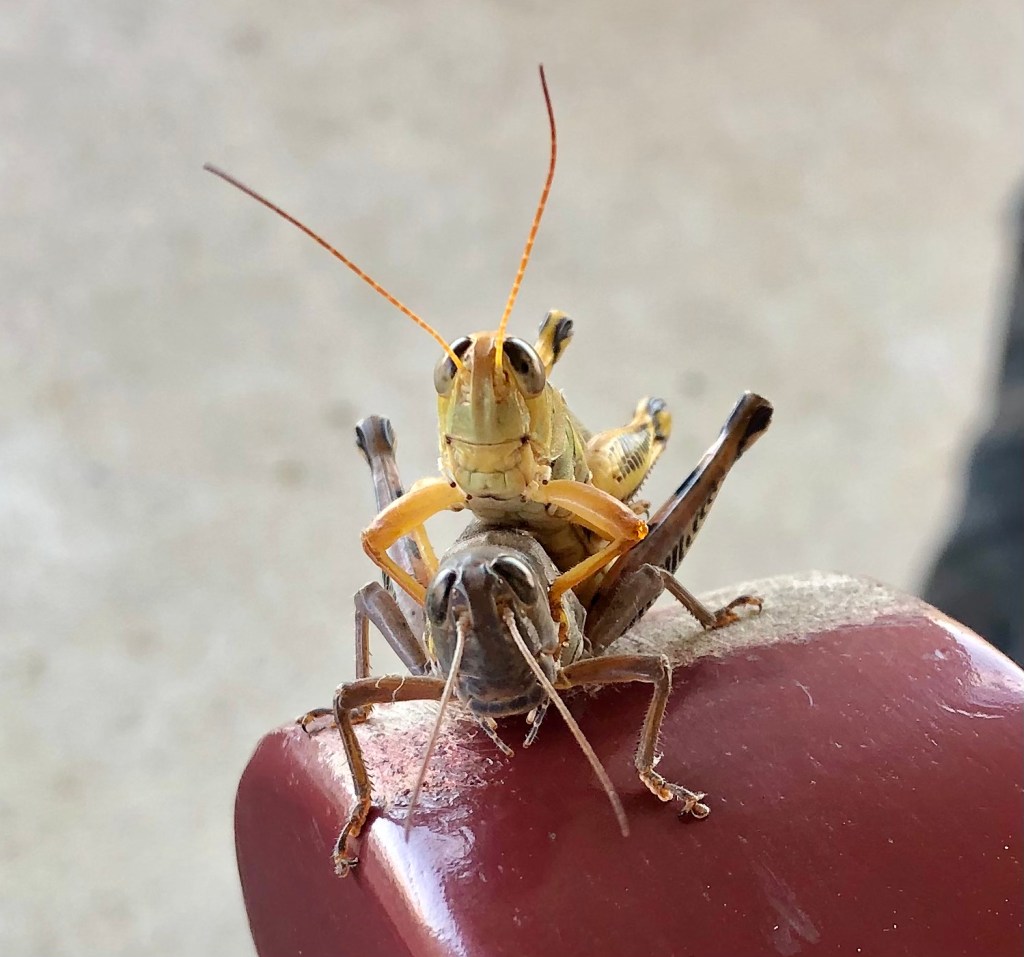
Suna got to watch these differential grasshoppers show their love on her rocking chair.

I did not know what the spider was, which is why I got really close with my camera to take this photo.    After I sent the photo to my go-to specialists, Eric Neubauer and Linda Jo Conn, I learned that it was a Green Lynx Spider, common in our area.

I also learned that when a female is guarding her 600 green eggs, she can squirt some venom about one foot away!  Wow I won’t get so close again. It was beginner’s luck that I didn’t get venom in my face!

This spider is a hunter. It goes after prey, while some spiders weave their webs to catch their prey. It loves moths and bees and most insects.

Lately we have seen more spiders in our house, just not one of this kind. I know what you are thinking, does she kill them? I actually do try to catch and release. Sometimes I can’t, but I try. Everything has a purpose.

Gulf Fritillary Arriving on Planet Earth

by Donna Lewis

On the morning of September 4, 2021, I got to witness a miracle. 

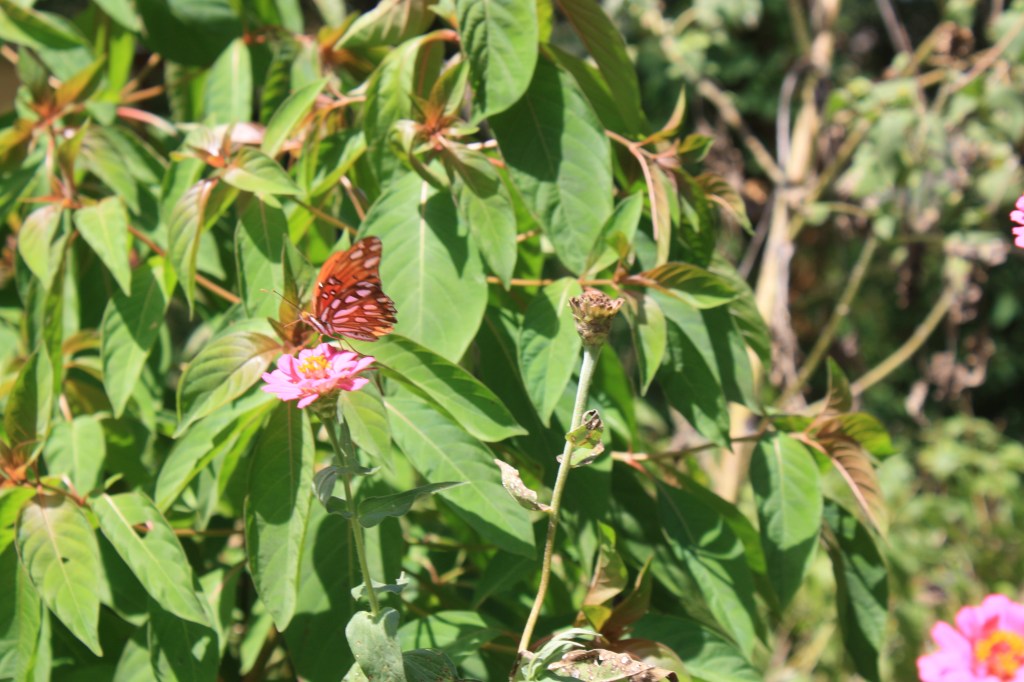
 On our front porch, a new Gulf Coast Fritillary butterfly hatched. After a few hours it had pumped its wings up and was waiting to dry enough so it could take its place among the other pollinators that are here in Milam County.  What a neat way to start the day.   

New life!

We will need many more of these and other pollinators to help feed the world, and provide beauty for all of us.

Passion flower

The Gulf Fritillary uses the passion vine for its host plant. The female will lay her tiny eggs in the tendrils of the vine. When they hatch, they will eat the leaves and buds until they are ready to go to sleep in a chrysalis and awaken to become the beautiful butterfly we know.

Orange and silver, they are easily recognized. The new butterfly will spend its winters in the most Southern states and in Mexico. It can not survive freezing weather.

While the passion vine is its host plant many of our common summer plants are its nectar choices: butterfly bush, coneflowers, lantana, zinnias, and salvia to name a few.

On a zinnia

So enjoy them while the weather is warm.

I Want to Get Away

by Catherine Johnson

Linda Jo Conn’s Let’s Get Outside activity for our Chapter is a respite for some — more to get away than to get outside.

Desert willow

We recently met at the Master Gardeners’ demonstration garden in Cameron and identified plants and wildlife. 

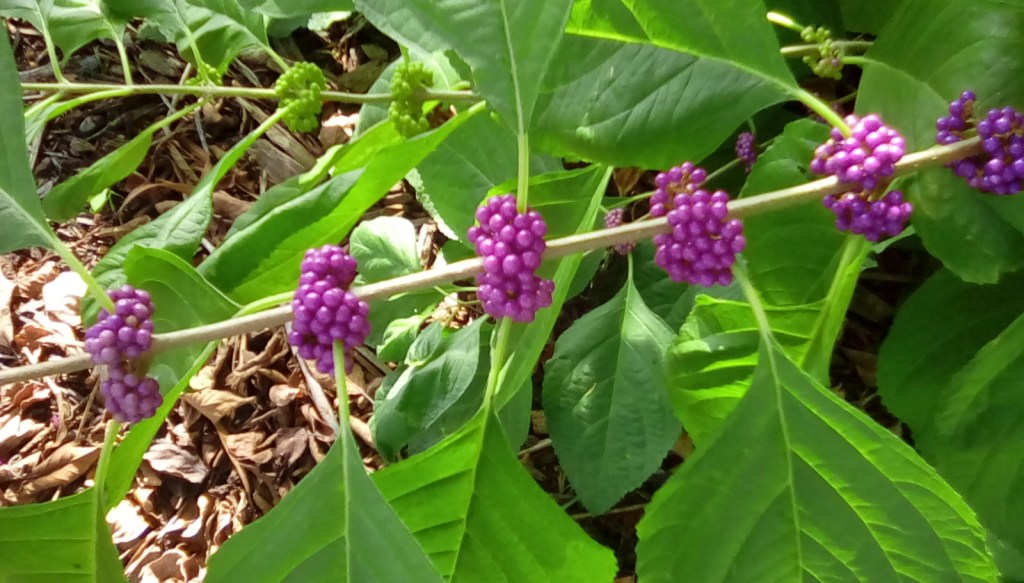
Beauty berry

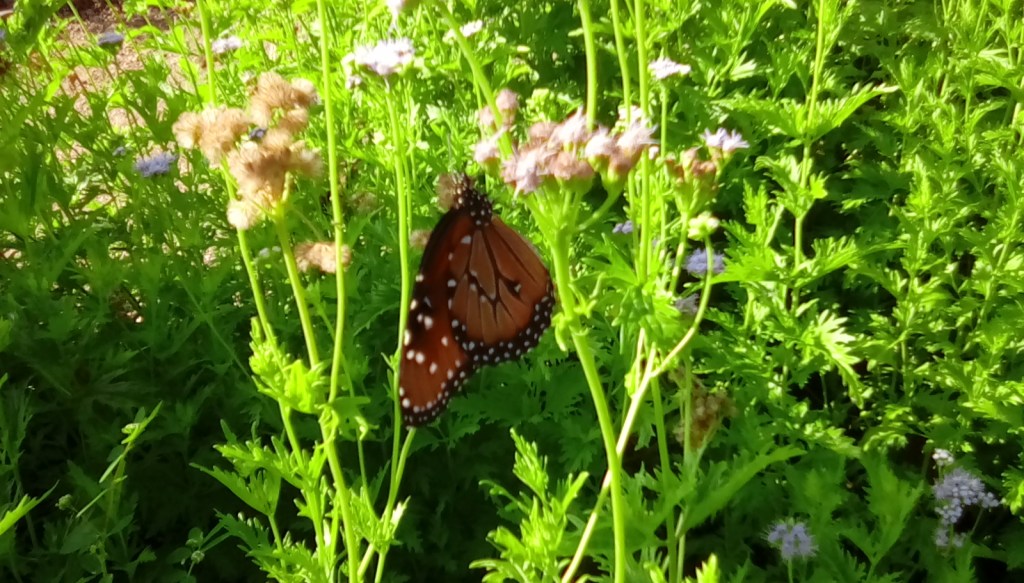
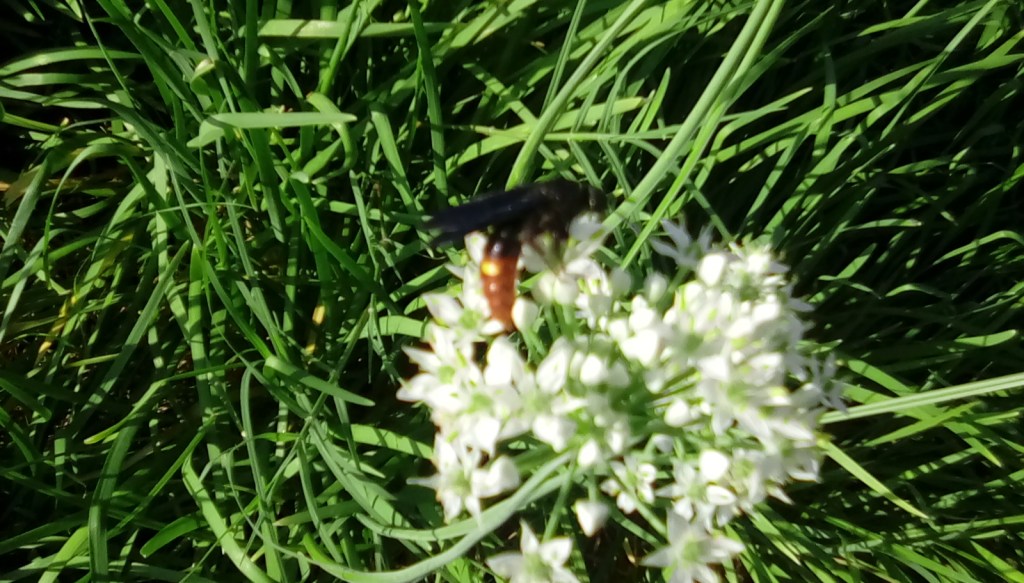
The garden is kept up very nicely, and there were lots of butterflies and hummingbirds.

Under the gazebo we made plans for future events and learned more of the world around us. 

Then it got hot. Kim and I said goodbye to Linda Jo, Pamela, and Jackie T.  and finished our big day relaxing in the air conditioning at Texas Burger.

Frog and Toad Research on My Property

by Donna Lewis

Hello,

We just received the results from an acoustic monitoring event that was performed by Dr. Paul Crump, a biologist from the Texas Park and Wildlife Department. He is a Herpetologist in the Nongame and Rare Species Program.

First of all he was checking out Milam County to look for the Houston toad. This toad was recorded in this county years ago, but not found here in the past few years.

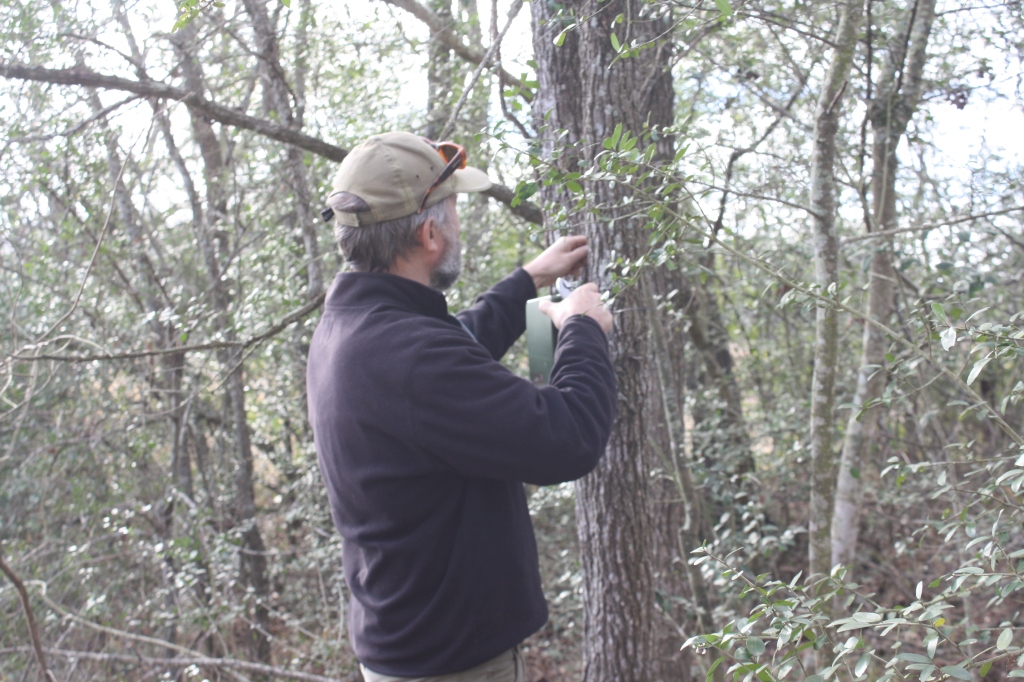
Attaching the song meter

It was really interesting to see how this survey was done. Dr. Crump placed a recording box to a tree near our small pond at the back of our property. It is called a song meter and recorded two hours of audio every night from January 28, 2021 until June 12, 2021.

Then Dr. Trump retrieved the box and took it with him where he had the tedious job of listening to hundreds of hours of frogs and toads singing, so he could identify each species. Wow what a task! You really have to know your stuff to do it.

Song meter at work

Sadly there were no songs of the Houston toad recorded, but he did identify seven different frogs and toads! I did not know we had that many on our property. Very neat.

I hope this report does not make its way to the snakes that live near me. They will be arriving here pretty fast for lunch. I have learned more about these creatures by looking up each one of them. Thanks to Dr. Paul Crump.

My New Friend the Water Snake Returned

by Donna Lewis

Well since I wrote about the yellowbelly water snake eating my toad friend, it returned.

I thought it had left since it had eaten my little friend.  Sadly, it liked the hole the toad had wallered out and decided that it would take up residence there.

Hole, before filling in

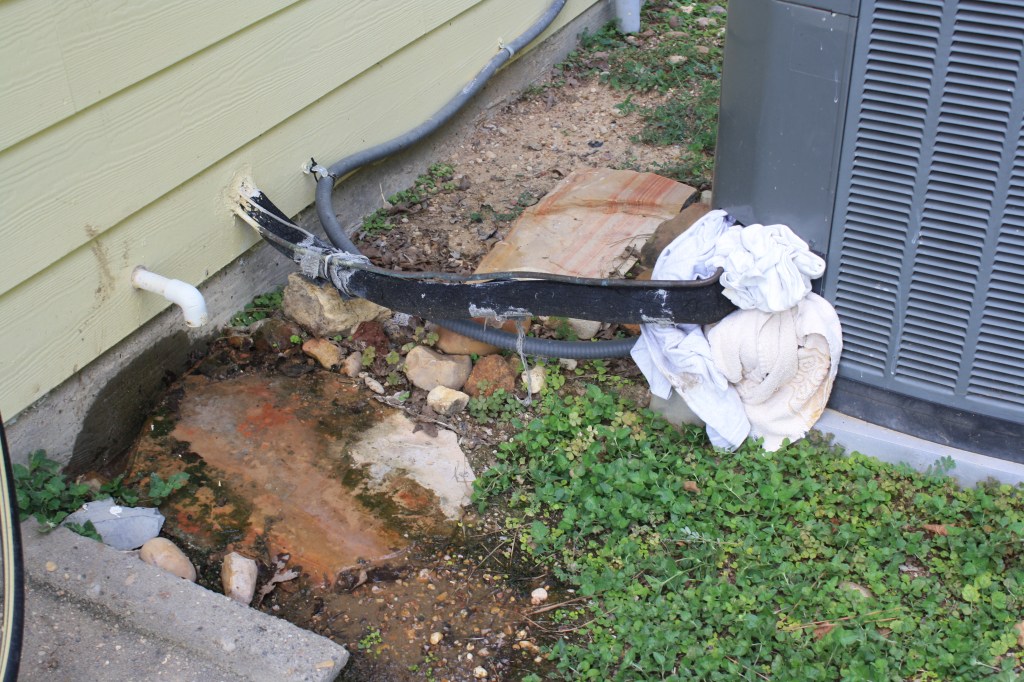
So, now I could see its head poking out the hole under the water faucet every time I used the hose. All I could think about was it might be a girl and she would have her babies there. Not a good thing.   

I didn’t want to hurt it, but it needed to go back to our woods, where the pond is. My Linda also said it must go. She would have been happy to get the shotgun and blast away. I could not let that happen.

So, all I could think to do was to remove the little area under the faucet and fill it in. Of course, the snake was in the hole while I got started. How exciting.

Tools are ready!

I put on my snake leggings, just in case it wanted to bite me. Then I got everything I might need to do this task.  I got a hoe, shovel, dirt, and some rocks and put them close to the area.

Protection

Then, I lifted the flat rock that I placed there to keep the water from making a hole.  As soon as I lifted it, Mr. or Mrs. Snake came flying out and lunged at me. 

I had the shovel, so I flipped the snake away and started trying to scare it. I kept moving towards it and flipping it about five feet away. It actually was bucking in the air!  It was both terrifying and funny at the same time. 

At last, the snake finally decided I meant business and took off across the pasture.  Yes!

I quickly dug out the hole and then filled it in with all the stuff I had assembled. This was last week, and so far no snake.

All covered up

Who would believe this, but it’s true. No snake was hurt during this adventure.