Or: The most exciting part of the conference (for me) was getting there!
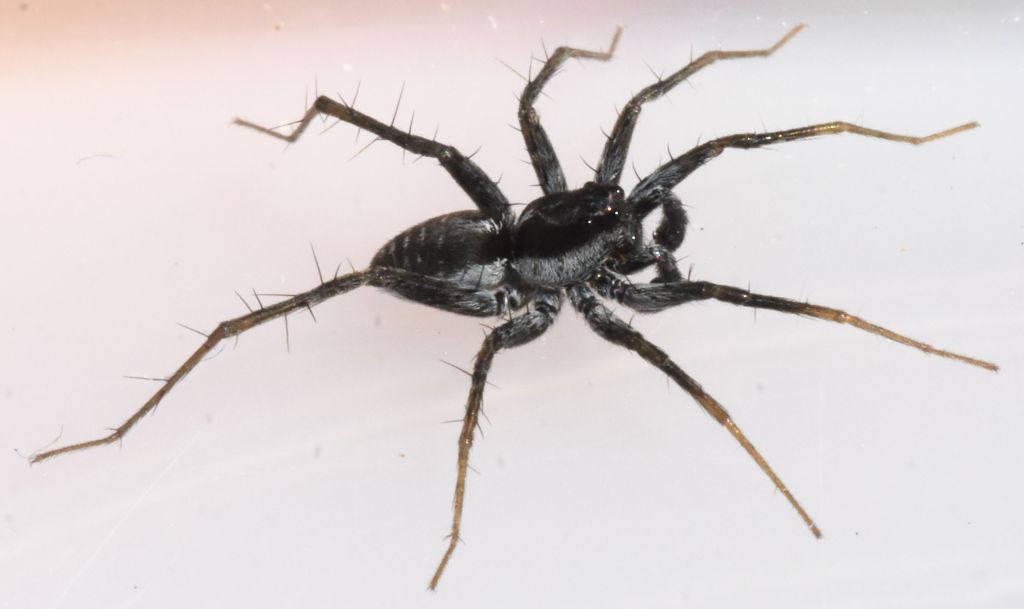
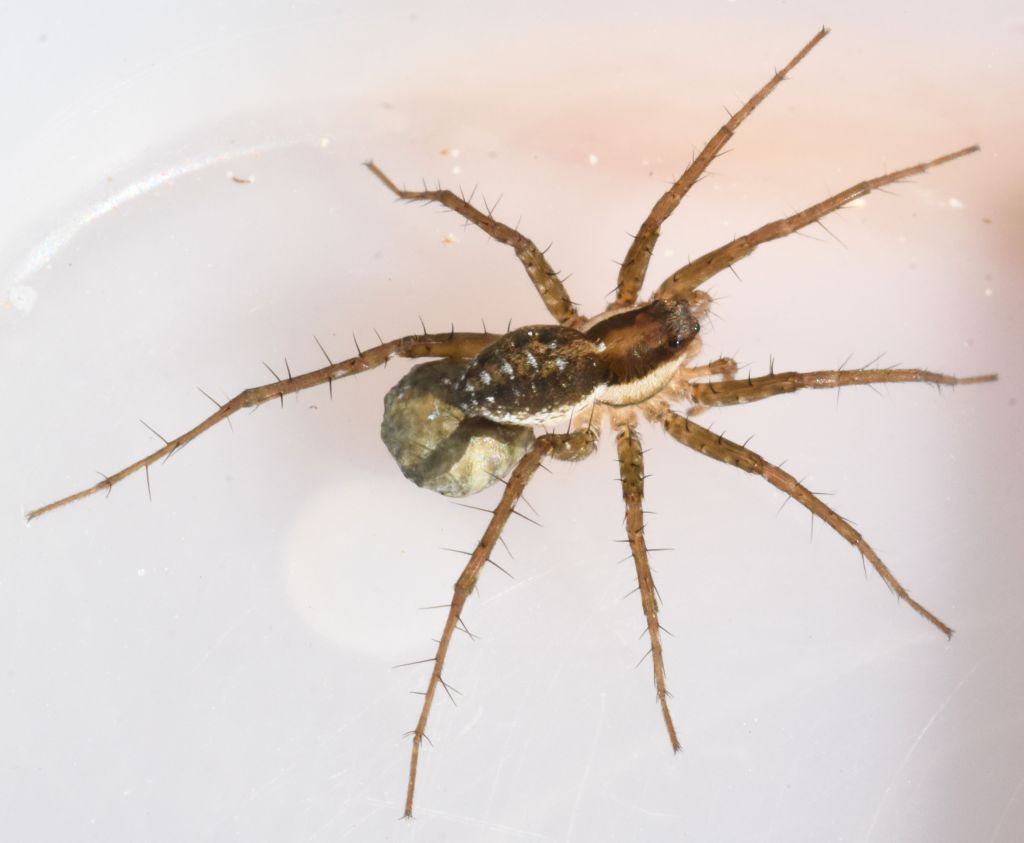
I’ve been chasing Pardosa wolf spiders from one corner of Texas to another all year. One species I hadn’t encountered was Pardosalittoralis, which I eventually learned was only found in brackish marshland. I had wanted to check out the Texas coast for wolf spiders for sometime, and the TMN convention gave me an excellent excuse.
So, I drove to Houston via Surfside and Galveston. No one on iNat had encountered Pardosalittoralis south of New York, let alone Texas. They’d been observed in New Hampshire and Nova Scotia at the opposite end of their range. I happily found some in small areas at several locations without a muddy mishap.
I wonder when the last human paid them any attention? Someone must have once, because they were known to be in Texas. Bonus: I’m now comfortable identifying these in Texas, something I couldn’t do before, since I never saw one in person or even in a photo, only those in observations made 2,000 miles away.
Male (left) and female (right) images attached. Body length about 2/10ths of an inch, male (black) slightly smaller than female.
I went to check our pond to see if the 1.5 inches of rain made a difference, and I was surprised to see two birds in the pond that I did not recognize. I didn’t have my binoculars or any of my bird watching stuff with me so I got the best pictures and video I could with my phone. My dog Whiskey was also excited to see them…too bad she scared them away. Hopefully they will come back.
I used my Merlin app to identify the birds, it told me that they were Juvenile White Ibis, and they are rare in this area. I confirmed it with my Sibley’s Bird Guide. How exciting!
The annual Texas Pollinator BioBlitz is on! Participants search for, photograph and post photos of all pollinators and what they pollinate during the month of October. There are a few places to post the photos, but the primary location is iNaturalist – my media of choice. Texas Parks and Wildlife Biologist and other studiers of pollinators and their source of food use the data to assess the viability of the insects.
I started my quest on Sunday. I was headed out to some friends’ place to check the Green Antelopehorn Milkweed which was abundant in May. I stopped at the Triangle Garden in front of Cameron Elementary School because it was full of a variety of blooms. The garden was started and is maintained by the Little River Basin chapter of Texas Master Gardeners. Because it is cultivated, I can’t use the flowers as post of pollinator food, but I can use what lands on them. I felt like I had hit the motherload of butterflies.
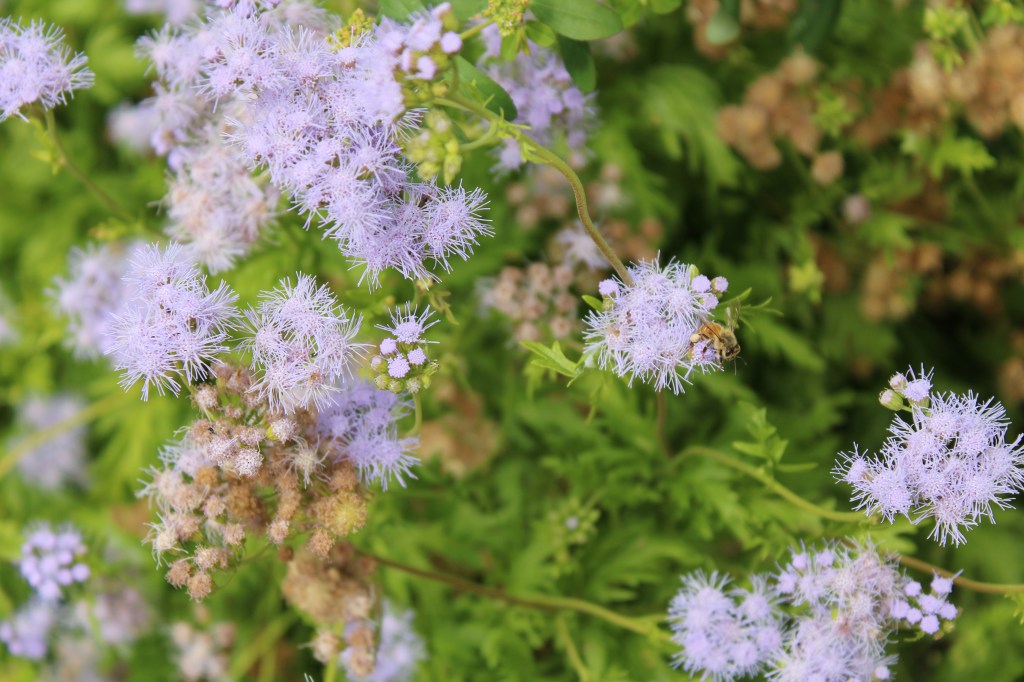
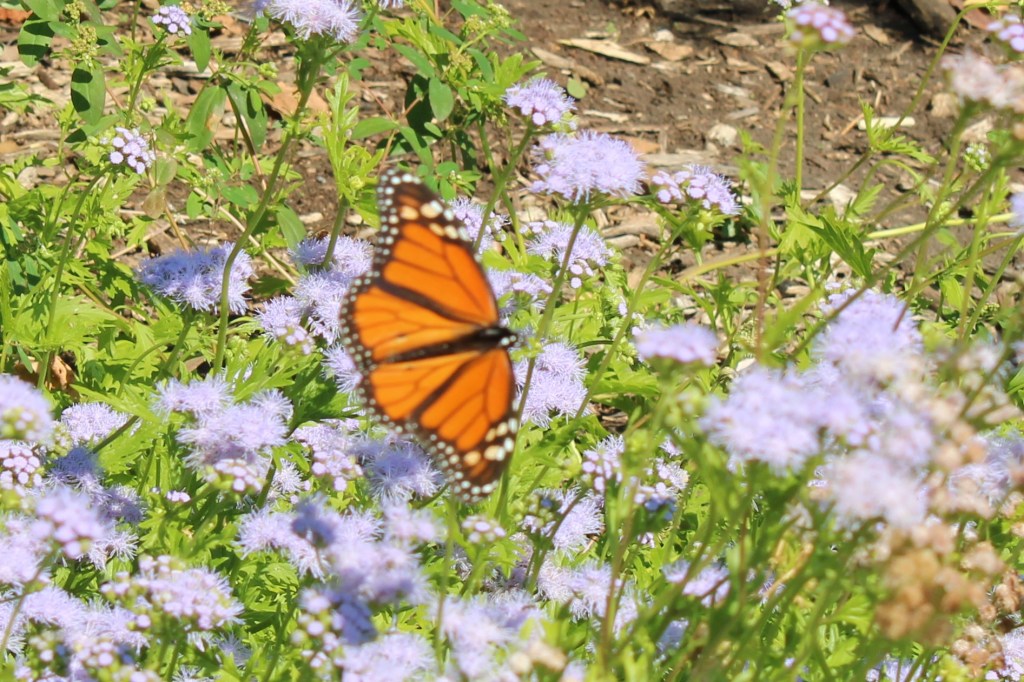
I was surrounded by Monarchs (at least 10), Queens, Gulf Fritillary, Pipevine Swallowtail, Fiery Skipper (or Southern Broken Dash – I’m still not sure), Painted Lady, and even a few Giant Tiger Swallowtail. Add in Eastern Carpenter Bees, plenty of honeybees, a few Bumble Bees, and something I think is a Snowberry Clearwing. I’m also pretty sure a saw a couple of Hummingbirds, but they moved too fast to identify. I took many, many photos. And none of them worked. I was upset. It was my fault. I’d done something wrong with my new fancy camera. They were all washed out. Of course, I didn’t know this until I got home.
To make it worse, when I arrived at my friends’ place, the Antelope horn Milkweed was gone. The total lack of rain and excessive heat had done them in this summer. I did get photos of Great White Egrets, Greater Yellowlegs, and thousands of American Bullfrogs. The Bullfrogs are hanging out in mass around the edges of a rapidly shrinking small lake. They look like little balls of mud from a distance but move in mass when startled. One verifier on iNat even gave them a “Wow!” for the sheer number of them. I did get a photo of “Swamp Smartweed” which was covered by honeybees. It’s a source of pollen on my quest.
Not to be deterred, at lunch on Monday, I went back to the Triangle Garden, and all the butterflies had waited for me to come back and take photos of them. I got most of them, but not all. On Tuesday, most of them were still there, and the Pipevine Swallowtails were getting full, I think, because they actually sat still for a few seconds at a time, so I could get clear pictures of them.
If you want all these butterflies to stop at your place next fall on their southern migration, I advise planting Gregg’s Mist and maybe a little Tropical Sage. The Queens, Gulf Fritillary and Skippers stayed only on the Gregg’s Mist. The Monarchs also stayed there mostly. One was interested in a lantana. The Pipevine Swallowtails like the Tropical Sage and Gregg’s Mist. The bees were less picky. Of course, if you want Monarchs to lay eggs at your place, you’ll need milkweed. That’s the only thing their caterpillars eat (according to current general consensus).
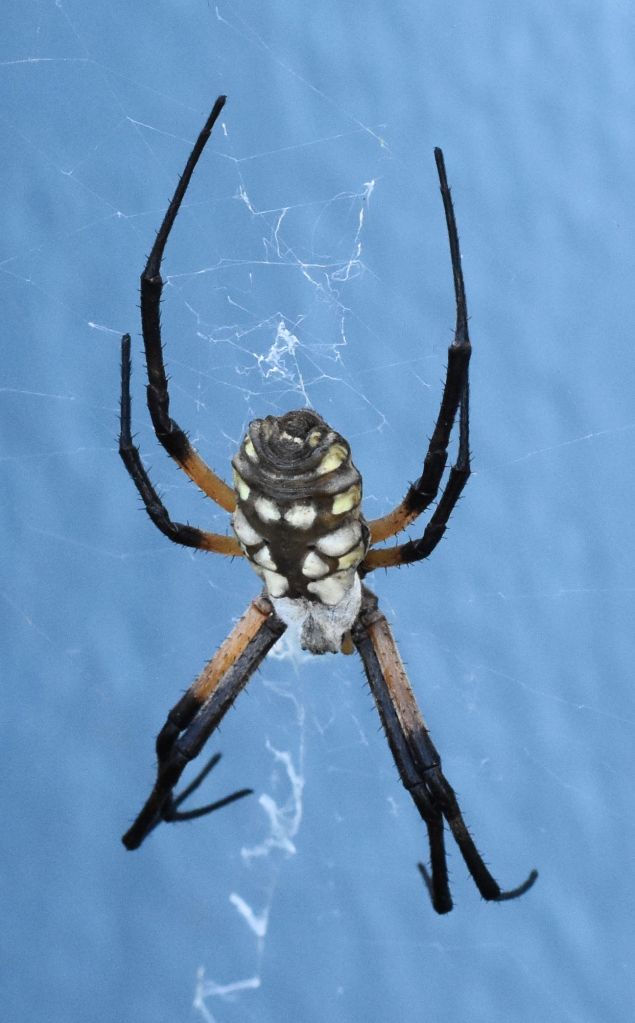
Fall is a sad time of year for some. I had garden spiders arrayed around my house again this year. One picked a low spot between the porch and skirting. It was a good spot at first and she grew quickly. There were lots of suitors while she was the only show in town, including some from the other species.
Argiope aurantia
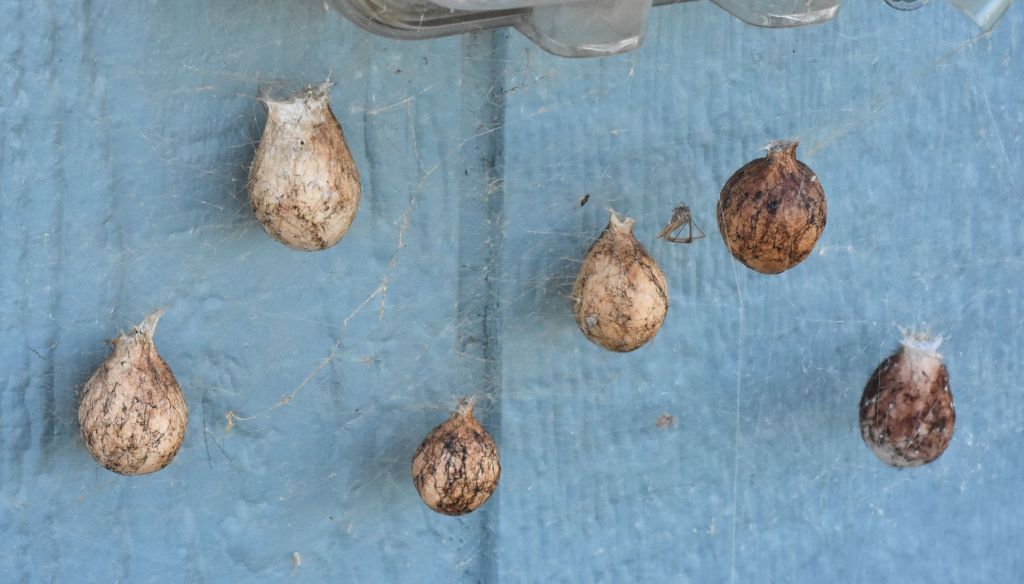
About that time, she wasn’t catching anything and looked like she might be starving to death, so I started throwing differential grasshoppers into her web. After a while she was doing OK on her own, so I stopped. In all she produced six egg sacs. No other spider came close and most never produced a single sac. After the last sac, she caught no more grasshoppers and died about a week after the photo was taken.
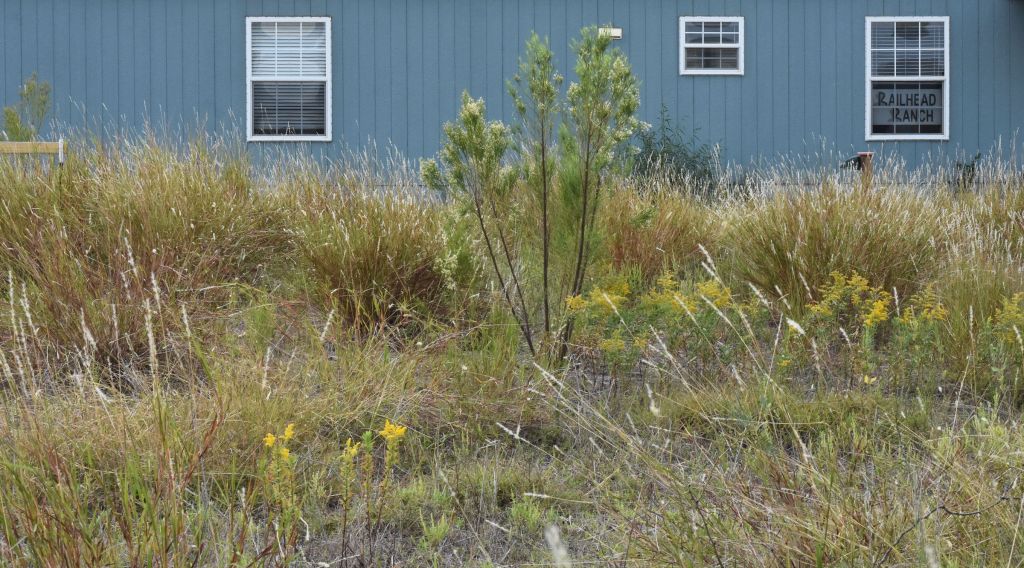
Many people in the chapter have probably heard about my continuing war on Johnsongrass. Here’s a shot from out in the yard of an area that was once overrun. You can see bunches of native grass which grow to about 4′, drifts of goldenrod, and a poverty weed. It’s about 30′ from the bunchgrass to the house. Although the initial Johnsongrass pulling was taxing, maintaining the area got easier with time. After several years it has dwindled to pulling scatted seedlings once or twice a year. The native plants were already there and just needed sunlight to thrive.
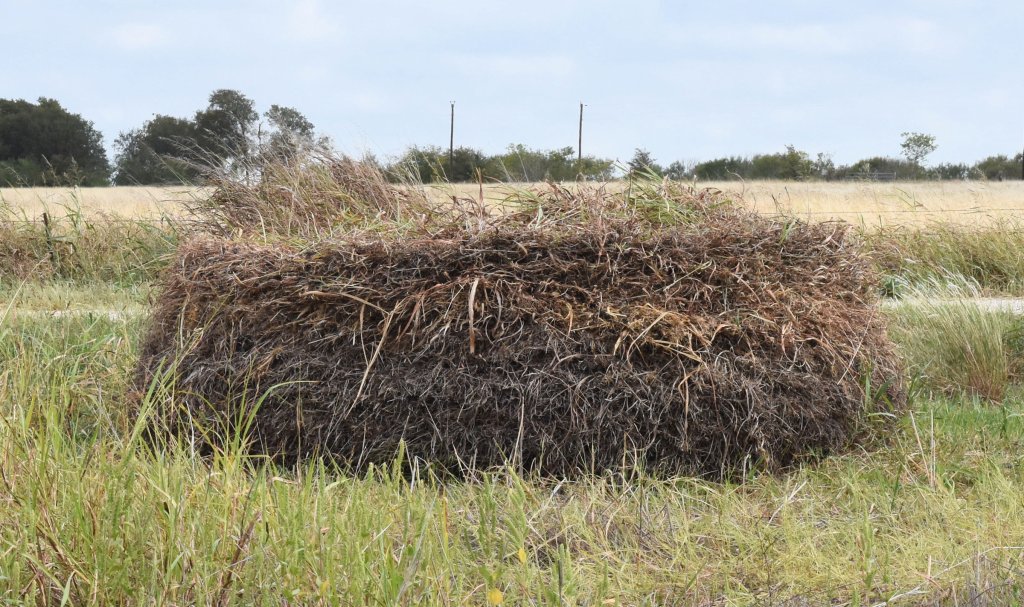
What do I do with all the pulled Johnsongrass? I decided to build haystacks to provide shelter for various animals. This one is conveniently located near the powerline that various raptors were hunting from last winter. The canes are arranged with the roots on the outside so they dry out and die, and the seed heads are on the inside where they won’t spread and germinate. The stack is about 12′ in diameter and 4′ tall now.





 Nature Along the El Camino Real