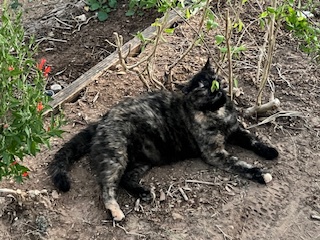
Thanks to the cautious behavior of my cat, Apollo, I interrupted the swallowing of the largest toad ever!
Apollo spots the problem.
The black snake was having trouble swallowing the toad because it was so large. I had to choose between my camera and using a stick to annoy the snake. I poked the snake with the handle of broom I had in my hand. It released toad.
There was a bad smell and it curled and headed my way. I maneuvered away! At last the black snake went the other way.
Thanks for saving me!
I placed the toad in a water dish while I settled my nerves. The photos are of the toad in the water feature and in the last, I imagine he’s smiling at me.
I get to live to croak again.
Once I got back in the house (this had occurred at the back door) I looked up the snake, and I’m pretty sure it is a western cottonmouth.* I’m glad I didn’t know that earlier or the toad would be dead.
Cottonmouth photo by Railprof on iNaturalist — many are much darker than this.
The snake was large, black, thick, and with a skinny short ending to its tail. It also had a musky smell. It did want to escape. I only had an Asian broom but it worked.
The cat was no further help.
*Actually most of the observations in Milam County come up as northern cottonmouths, so who knows? (Inserted by curious editor)
I bribed my little sidekick (not really so little at a bit over six feet and weighing well over two hundred pounds. Anyway, he’s my baby boy, so he will always be “little” to me) to drive me out to Wild Wings Bird Sanctuary to refill the hummingbird feeders. Anthony/sidekick had hung the feeders and of course he “hung ’em high!” I couldn’t reach them, anyway!
The feeders had only a token amount of nectar, so it’s a good thing we went. When we filled them the week before, the hummers were all over them. no hummers were circling this trip. Just FYI, if you go out to the bird station and think the mix looks a bit off, please note that I do not use bleached sugar. If you have ever seen my sugar cane juice, you know it is a dark brownish yellow in color. The color doesn’t make a lot of difference as long as it isn’t colored red with Red 44. Please don’t ever put that poison in your nectar mix.
The hummers are migrating now, so please be faithful to keep your feeders clean and full at all times.
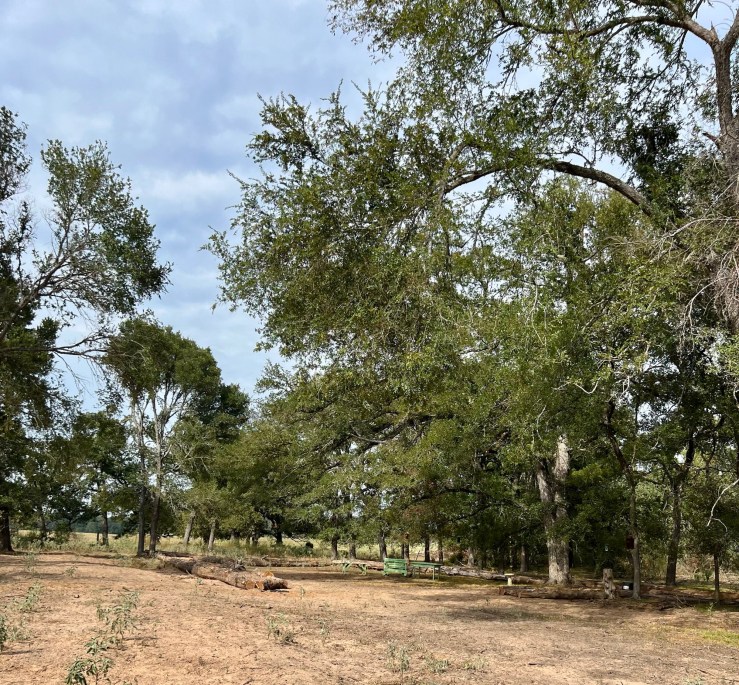
The Wild Wings Bird Santuary
Ruby-throated are the most prevalent in our neck of the woods, but Black-chinned might visit if you have a more open area. You could see a Rufous during migration if you are so blessed.
The Caracara
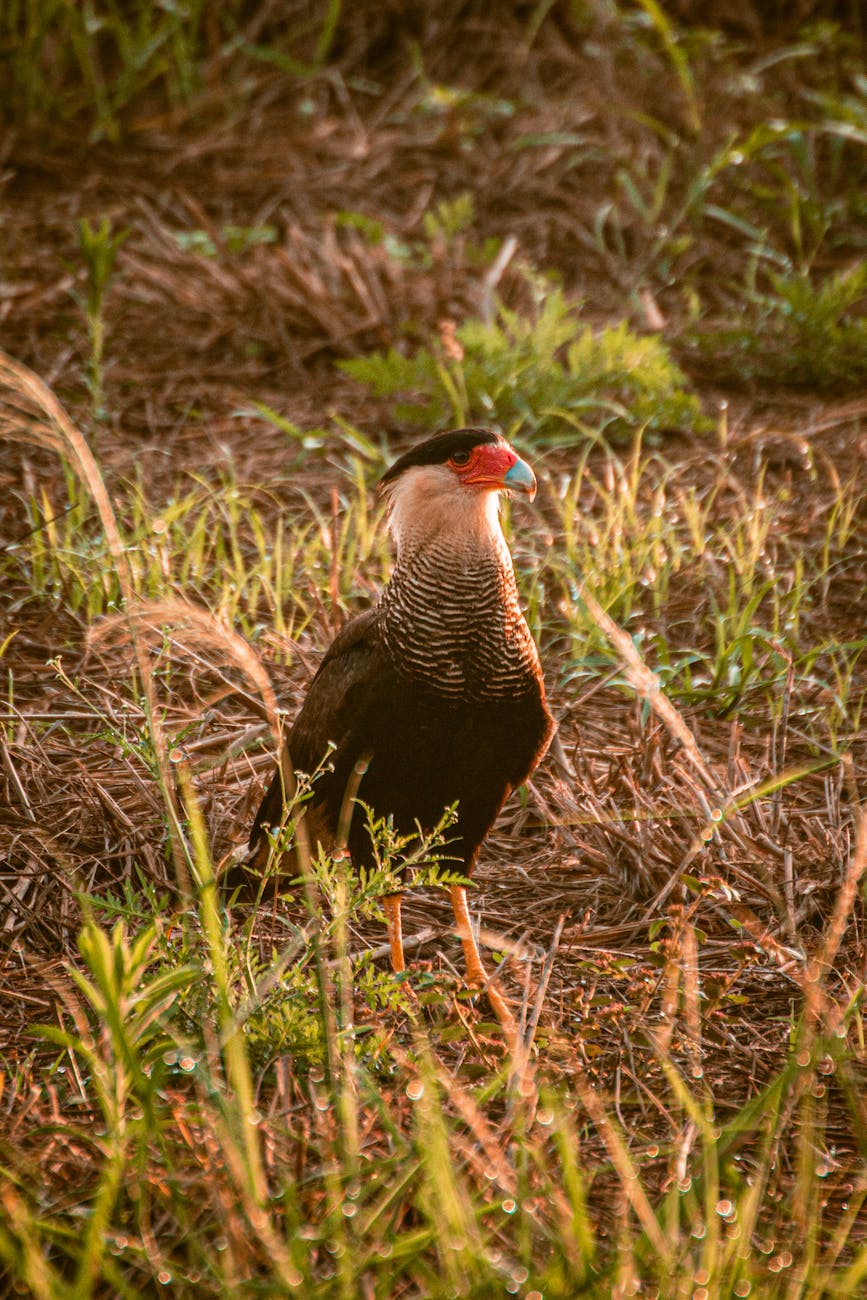
Just before we turned in to Bird and Bee Farn, there was a Crested Caracara perched on the side of a cattle water trough across the road. He posed nicely for us. I say “he” but there is no difference between the sexes. The juveniles are brown with no distinctive white markings.
When we arrived at the gate to the bird station, a caracara came sailing in. There was another one in one of the tall oaks, and “he” can flying out, so we got to witness a bit of a back-and-forth chase. So special! They really are magnificent creatures, even if they do enjoy some freshly killed carrion.
Caracara. Photo by Felipe Gonu00e7alves on Pexels.com
Locally, some folks call the caracara a “Mexican Eagle.” Sorry, but they are not related to eagles at all. In fact, they aren’t related to hawks, falcons, or vultures, either. They seem to be in a class by themselves. They are birds of prey, so I guess that means they can kill if necessary. They are frequently seen feeding with vultures, so maybe they are opportunistic of just plain lazy.
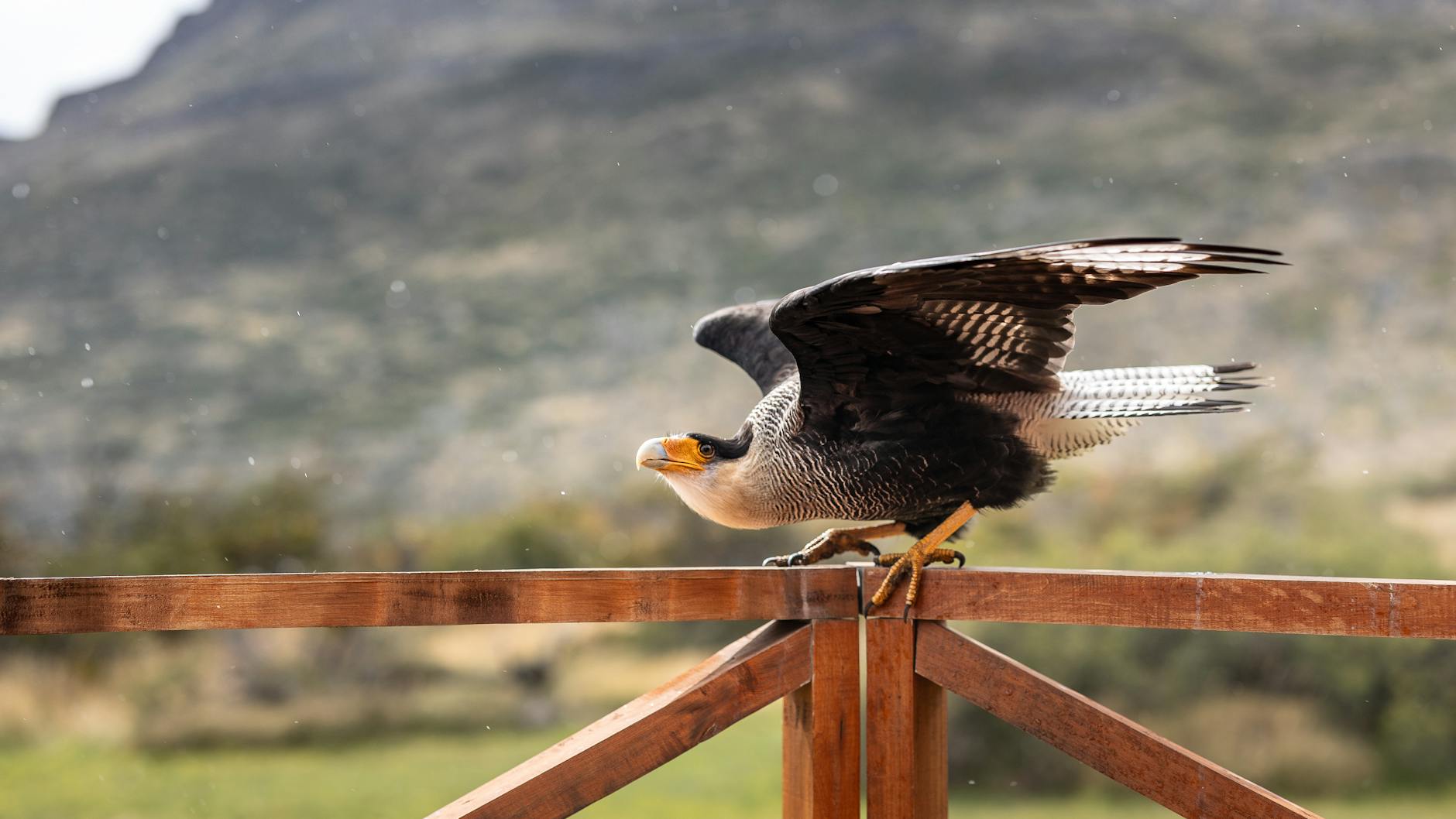
They are regal birds, for sure. Photo by Marek Piwnicki on Pexels.com
A black crest adorns their heads and part of their beak is orange-red, giving them the appearance of having a red face. The chest, tail, and wing tips are white, so they are often descrivved as “white on all four corners.” They are the only species of caracara in the US, but there are probably more to the south of us.
The Bird Bath Saga
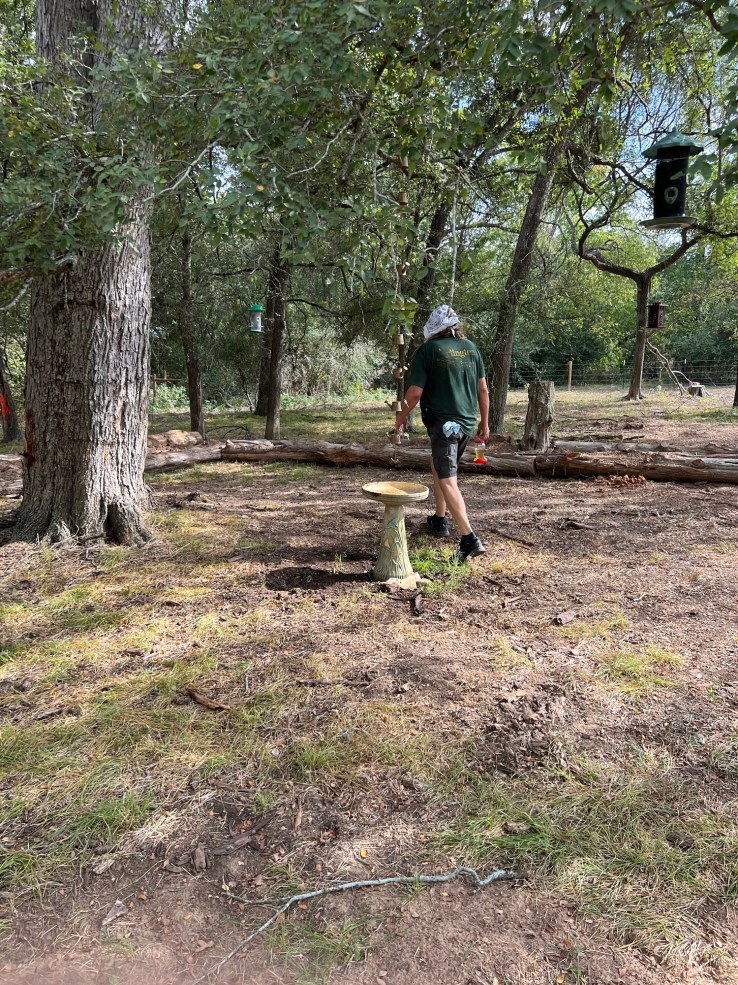
There is a lovely little bird bath at the santuary that the rain chain drips into. We had hoped to be able to keep a steady drip for the birds to have a safe souce of water for drinking and bathing. It’s barely a couple of inches deep, but the heifers or raccoons think Gene put it out exclusively for them. Sadly, they dismantle it and knock the bowl on the ground so that the rain chain just makes a damp spot on the ground. Cindy and Catherine have been diligently seeking a larger, heavier one to put in its place. Lots of dead ends and “sorry, you’re too late” have put quite a damper on the search. Of course, we want one cheap or free.
Ann with the original bird bath.
Update: I just heard from Cindy, and she actually has one for us! Yay! Good job! I know the birds will be happy, too. Pay attention to their tweets for the next few weeks.
Please come for a visit and sit a spell. Even if the birds are still shy, there is always a cool breeze and blissful quiet.
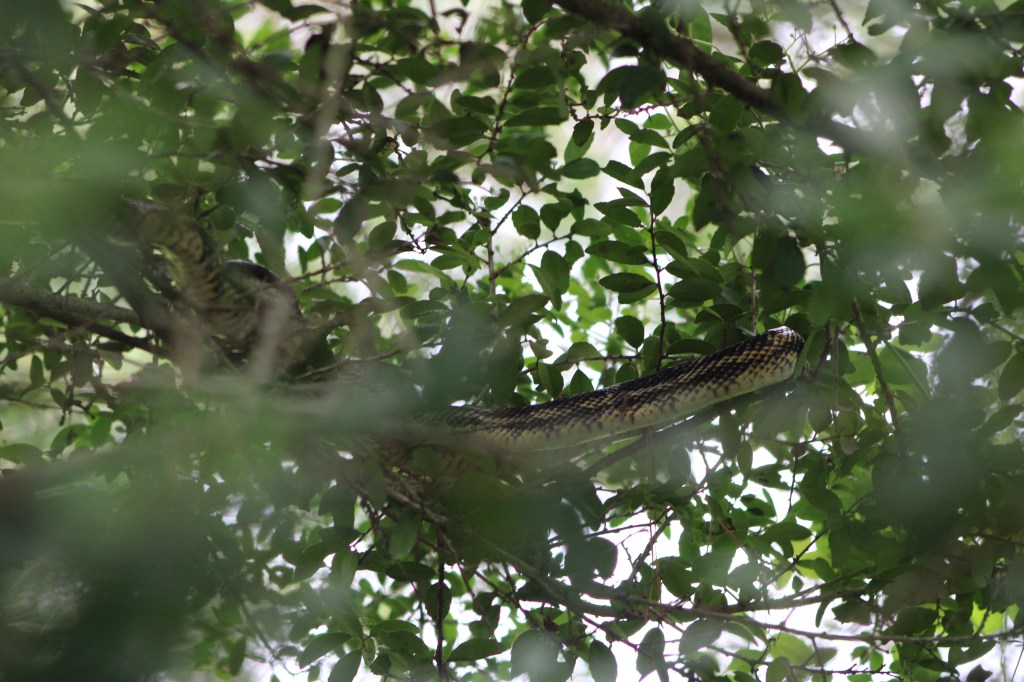
A male Painted Bunting, a Rat Snake in the trees, an Inca Dove, Cardinals on feeders, Pipevine Butterfly, Ruby-throat Hummer on feeder, Swallowtail Butterfly, and Mr. and Mrs. Bunny eating the bird seed.
Around the farm, I have all kinds of lazy water features. Let’s take a look!
This one has a drip from the faucet keeping it full and the water moving. Even large birds, cardinals, come here for water.
Here’s another lazy water feature. The solar fountain keeps things moving. The plant is rooting in a convenient terracotta strawberry pot. Also there for fish “enrichment” I put water hose into a pot when topping it off so the water movement doesn’t create mucky water. The fish are doing well and get fed pellets or mosquito larva from nearby sources.
Lazy water source is by the back door faucet. Shallow kitchen container with shard and pot in corner. When there is a fish, they have a place to hide under the shard. The pot provides extra climbing surface so the toads can get out when they find themselves in here. When mosquitos build up, I move a fish over here for a day. The faucet drips into the container when I’m watering around the house.
This large lazy water feature container is not set up right now. I have an electric ceramic fountain, usually 6-8 fish, and a water plant – this is an arrowhead. When set up it creates the pleasing sound of running water, but being under an oak tree presents problems with leaves.
The next lazy water feature is a plant container from a big box store. There’s a pottery shard for fish to hide under, and a pedestal for the water plant and solar fountain. This solar fountain has legs to keep it from hugging the wall and emptying the water on to the ground. I’ve lost one leg, so water escapes regularly.
One happy fish, pedestal for plant on pedestal – but too hot right now.
Fountains do need to have algae and minerals scrubbed off top to keep it accepting sun power. It’s a very low tech, not too expensive way to have fountain, fish, and a water feature. Just use what you may already have. Solar fountains range from $12-15 on line.
And finally, here’s another low-cost water feature at night. There are two toads enjoying the water at 10:30 pm. One is partially on the solar fountain and partly on the rim of the submerged terracotta pot. He won’t drown.
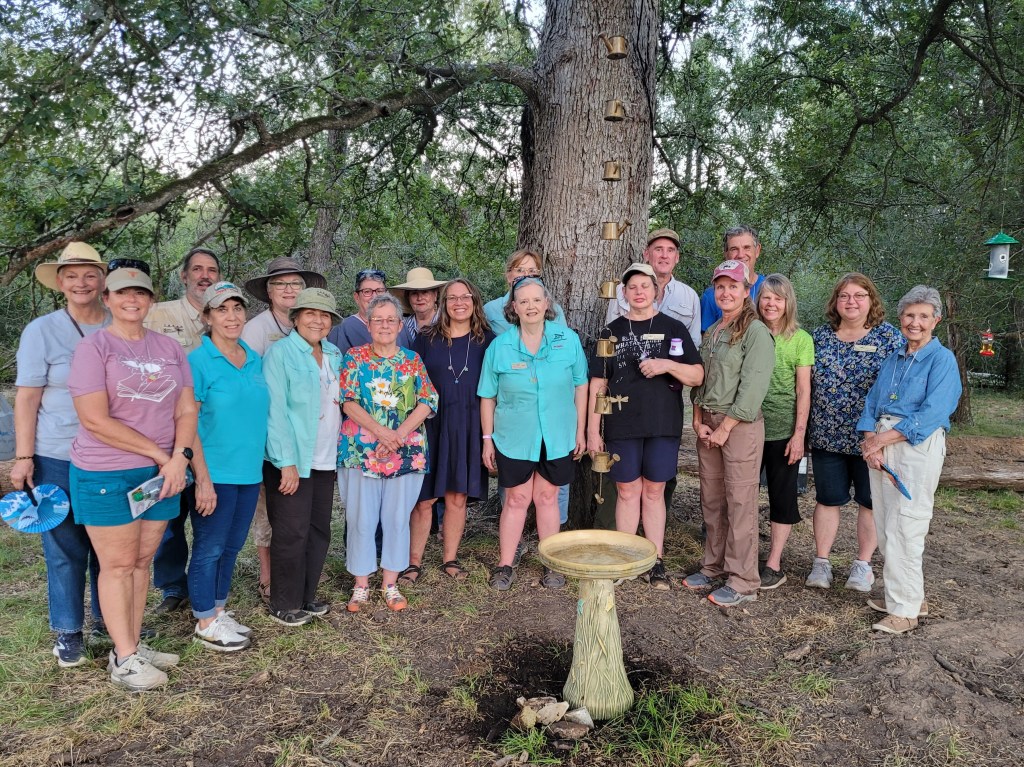
Last Monday our chapter hosted a welcome celebration! Can you believe our Milam Wildscape is five years old now? Just think of how many hours of volunteer work have gone into making the Wildscape the sanctuary it’s become, and think how many people have been inspired to go home and start their own little wildscape!
El Camino Real Texas Master Naturalist Chapter members at the celebration.
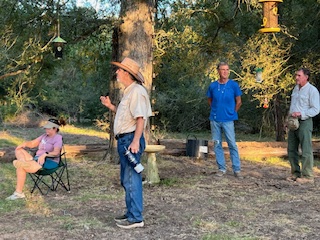
Twenty-two people attended, as reported by Wildscape founder Catherine Johnson. After food, drinks, and welcome ice cream (it was hot), the attendees met around the fountain at the Wildscape, where they learned inforrmation about the Sturgeon Super Blue Moon that was rising later in the evening.
Enjoying snacks
Those who have worked so hard on the Wildscape received recognition for their amazing contributions to the project, and everyone got goody bags and light-up star necklaces, perfect for the occasion.
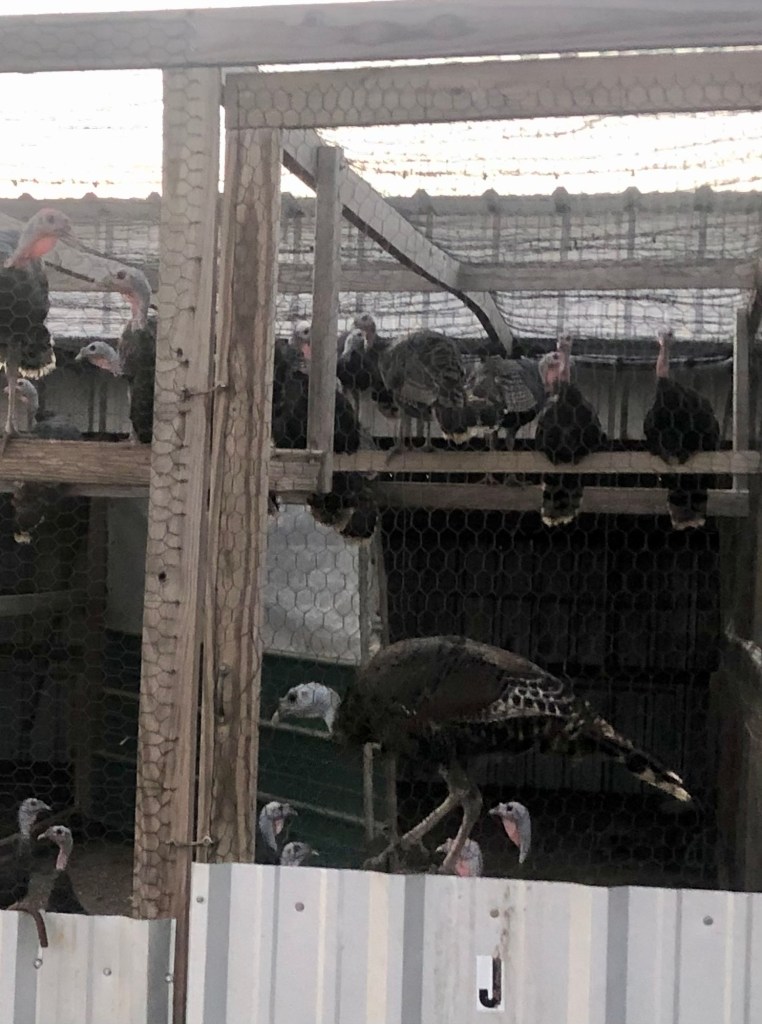
Catherine Johnson receiving a certificate of appreciation from Carolyn Henderson, Chapter President.Happy with her certificateCathy giving her presentationLook at all those goodies.The turkeys also seemed to enjoy themselvesSome of the beautiful sights at the wildscape
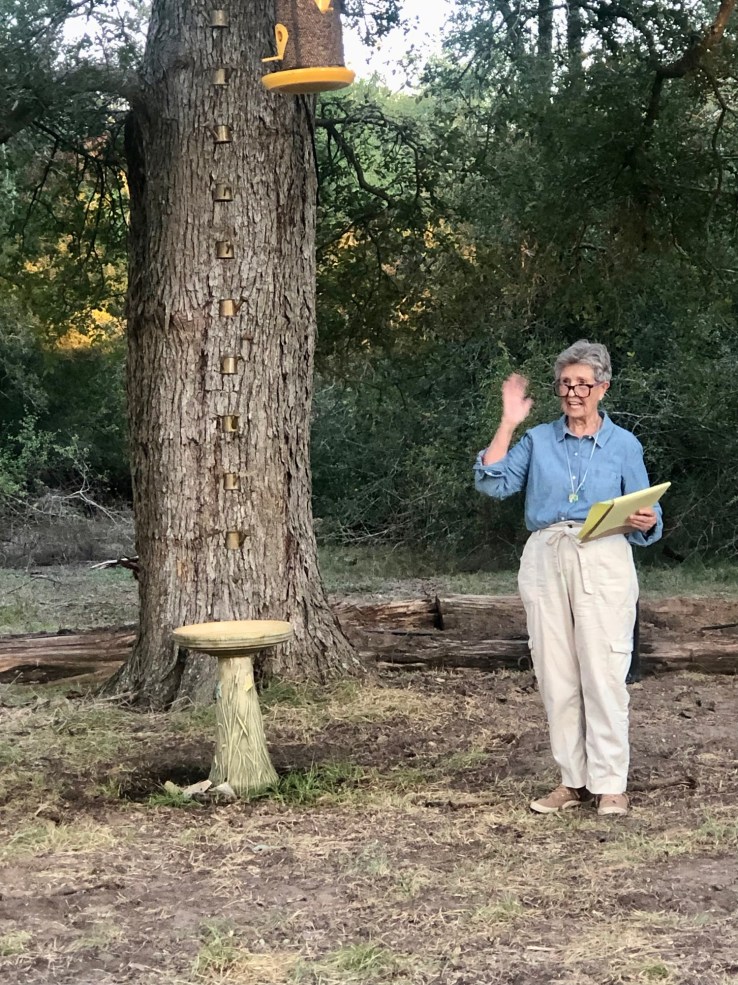
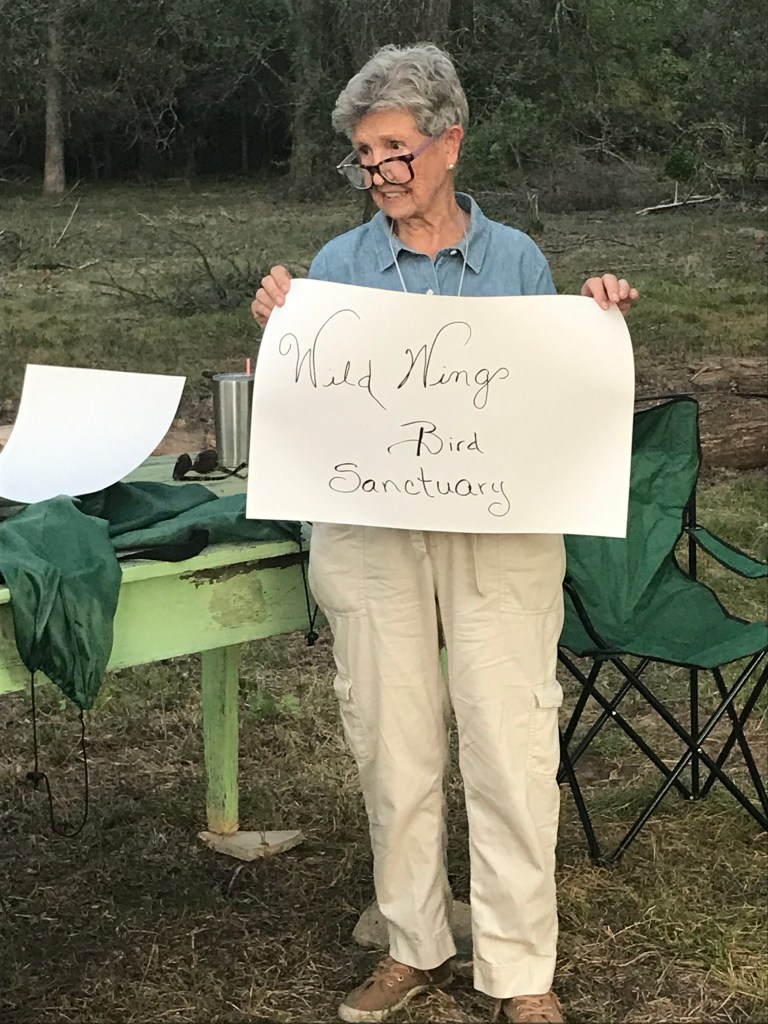
The next part of the evening focused on our birding station, where its permanent name, Wild Wings Bird Sanctuary, was announced by Ann Collins. I was honored to have one of my suggestions chosen for the name. Ann shared her thoughts, which are reprinted below, and showed off the extensive additions to the site that the Wild Wings team have been creating.
The big reveal!Bird bath and feederSo many bird feedersGreat job, Ann!The raised beds make good seatsYes, it was hot.The Wild Wings Bird Sanctuary Dedication
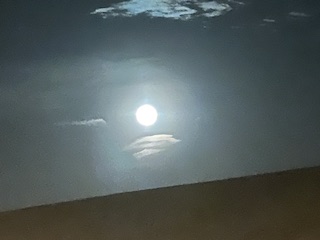
After the dedication of the bird sanctuary, the attendees returned to the Wildscape, visited, and watched the beautiful moon come up.
The beautiful moon.
Thank you to Pamela Neeley, Janice Johnson, and Rosie Johnson, and Linda Burgess for photos.
Wild Wings Bird Sanctuary Dedication Remarks by Ann Collins
Four years ago, Gene Rek, Cindy Rek, and I began exploring the possibiity of creating a bird station at Bird and Bee Farm. Unfortunately, I had a very unscheduled emergency brain surgery. Needless to say, lots of things got put on the back burner! We did choose an absolutely gorgeous spot for the station.
Well, four years passed and we revisited the idea and had another look at the site. then Gene, Mr. Energy, got to work while I fell and broke my wrist, which was another setback for me, but it didn’t stop Gene. Lnda Jo Conn things I arrange my setbacks so othre people will step in to do my work. Maybe so, but folks did get excited and got to work for me!
Gene made a road to the site, ran a water line for a water source, built a fence, mowed, set up raised beds for native plants, and all sorts of other things that I couldn’t have done anyway! Catherine Johnson searched tirelessly online for benches for lounging while birding, and she found the most adorable vintage bench, rocker, and table. She got them cleaned up and installed. Thank goodness they are somewhat hidden away or I fear they might be stolen, they are that cute! And we got a birdbath “pilfered” from Rose’s garden (named after Gene’s mom), which is a favorite target of the cows, who knock it over.
Suna Kendall contributed a couple of bird feeders and has spent quite a bit of time canvassing the birds. She’s a kind of a computer nerd and knows her way around them. I’m more of a luddite myself, but I greatly admire her skill. She is putting a bird list on our blog for each month. Check it out, and check out our new web page chronicalling our activities!
(You are welcome to share any cool birds you observe – Suna)















 Nature Along the El Camino Real