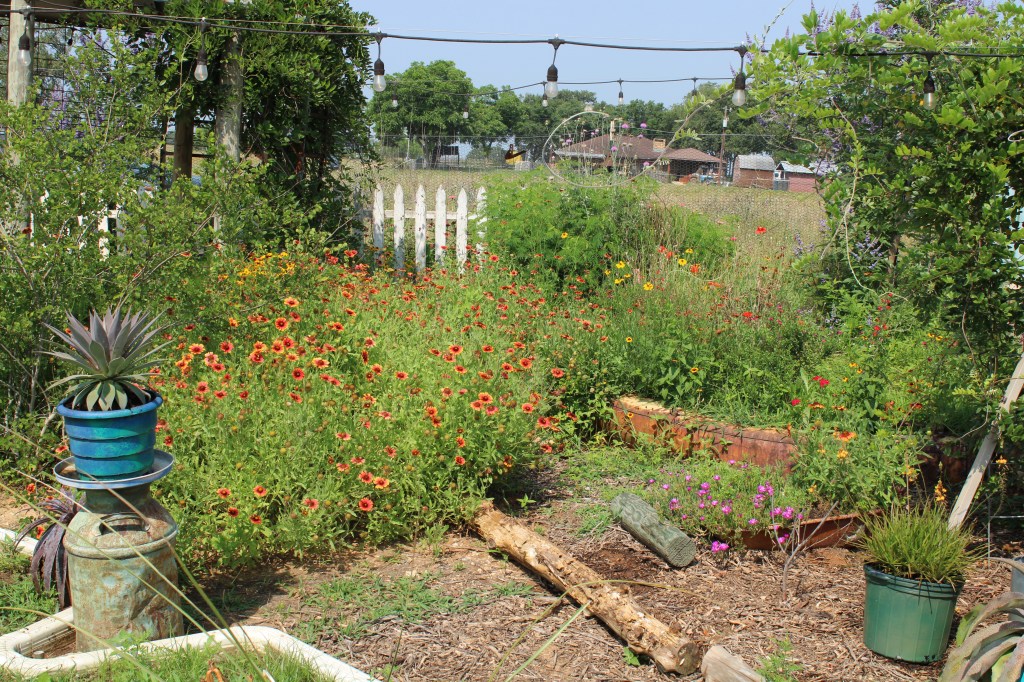
The Wildscape is especially dry for this time of year. Good news is a lot of weeds have shriveled. The pictures include super tough Elbow Bush, Evergreen Sumac, Inland Sea Oats, Sideoats Grama, and the Bug Patrol. We started with 20 roots of native purple Tall Asters and now have thousands to give away. Contact me if you want any.
As you are aware if you live in Central Texas, the weather has been cold and very windy as of late.
My Purple Martin Colony has had to deal with a number of very difficult weather events. Windy conditions mean that flying insects are not flying. Many are grounded until the winds die down. No insects mean no food for Martins.
Last night, I watched my Gourd Houses as my Martins returned to their homes just as dusk appeared. The little bit of the sun setting was enough for me to see them.
As I turned to go back in my house, I heard them chirping very softly to each other. That was not normal as they are generally quiet when they come in for the night.
An hour later it was completely dark and I went out on my porch again to check on them. They were still softly singing. Every gourd had music for all to hear. What a heartwarming moment. It made me sad and glad at the same time.
All living things are important to this world. They may even care for each other more than we are aware of. We must remember to protect this earth, not just for them, but for us too.
A sweet event I was fortunate to witness. Remember our fellow earthly creatures…
To the outside world it may seem like I’ve been in hibernation but that isn’t so. One current project is making face shots part of my wolf spider observation routine. It’s a lot harder than the dorsal and ventral views I’ve been doing for a long time. A spider needs to be encouraged to stretch up the side of a container for best results and then stay there for more than a second. It’s especially difficult with spiders small enough to balance on the head of a pin. I’m making progress but it till takes multiple attempts and a lot of prodding.
This is a typical Hogna incognita. His/her body is just over 1 mm wide and just over 3 mm long. It most likely left its mother in late October or early November and has been hanging out ever since. They have grown little over the intervening months and regardless of whether they are in captivity or wild, the only notable different is the ones in captivity are fat and the ones in the wild are skinny. In a month or two they will start to grow rapidly and most will mature in July. Sex can only be determined a little before maturity.
I rarely bother to look when it’s cold, but I did this time and found this one still moderately active at 43 degrees. By the way, Dr. Russell Pfau has started the scientific paper for this new species in earnest. I just reviewed a draft yesterday. We’ll be chasing down a several other loose ends in the same genus later this spring, but that will be another story.
During the recent Wildscape Workday, a small but focused group moved remaining donated items into the garden to be reused or repurposed. This leaves a lovely, shaded area for Community Outreach events. Our first children’s program was held there with Lisa and Donna teaching Girl Scouts about clean air and water.
(Recap of an Associated Press article from Carolyn Henderson)
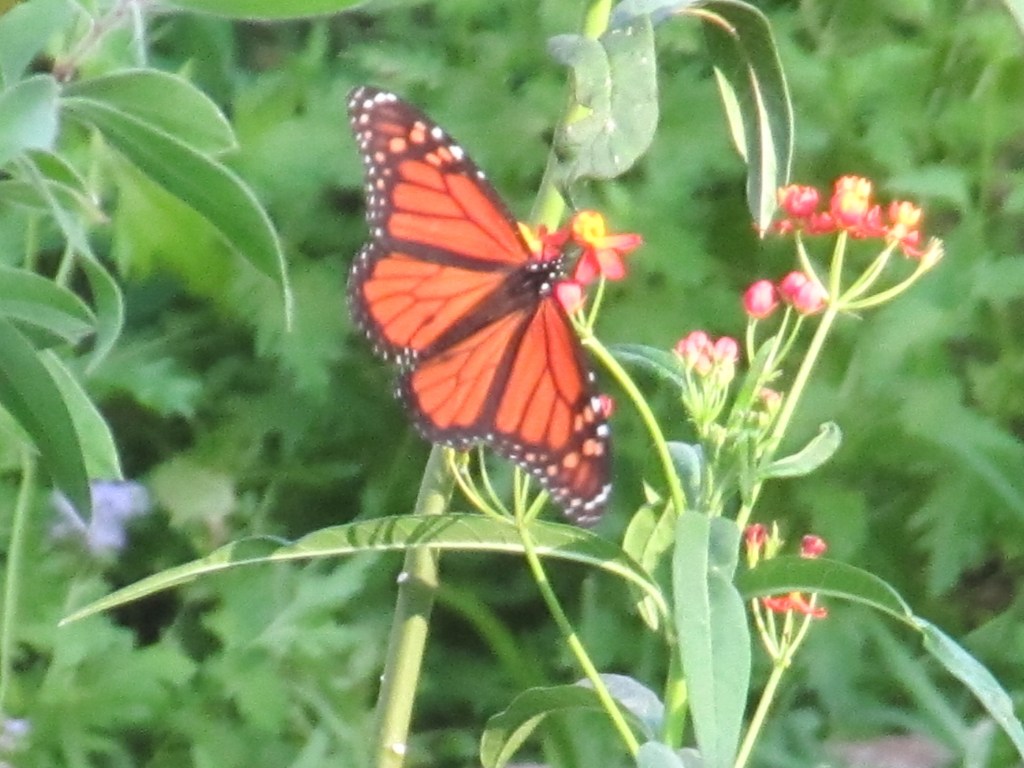
North America has approximately 650 species of butterflies and all but nine of them are in trouble. Approximately 114 of them are showing significant decline including the Monarch.
Monarch
Monarchs are reported to be down to 10,000 in 2024 compared to 1.2 million in 1997. The annual report that was just released about Monarchs from another group stated that there were slightly more hectares covered in Mexico, their winter home, than there were last year, but it still isn’t even close to a sustainable number. They covered approximately 1.8 hectares in 2024 compared to .9 in 2023. Scientist say they must cover at least 6 hectares. One hectare is equivalent to 2.471 acres.
All butterfly populations are down by 22% since 2000 in the lower 48 states. Their numbers are dropping on average 1.3% every year. There are 96 species that are so sparse, they didn’t show up on any of the counts in 2024. There are another 212 species whose sightings were so insufficient, a trend could not be calculated for them.
Two that I have seen in Milam County are on the high risk list. The Red Admiral population is down by 44%, and the American Lady population is down by 58%. Monarchs come through this area, too, but in small numbers. They are seen more along and west of I35 when they migrate.
Red Admiral
An entomologist that reviewed the collection of butterfly counts said he considered the numbers a sign “telling us the continent’s health is not doing well.” The numbers of parrots and porpoises also are dropping notably.
Butterflies are pollinators – not as much as bees, but they still contribute significantly. They are a major pollinator of Texas cotton crops – a crop often grown here. The driest and warmest areas, including Texas, are showing the greatest decline. They are doing better in colder climates.
American Lady (photo by SA Kendall)
Butterflies aren’t alone in their decline. Other insects that aren’t studied nearly as much also are thought to be in decline.
As usual, climate change, habitat loss, and insecticides are faulted. You can help by planting native wildflowers in your yard to help feed all species. Turn over some soil, throw some NATIVE Texas wildflower seeds out there, and create a butterfly garden in your yard. Native plants require very little effort once you get them growing. They need to be native to your area because butterflies need the nutrients provided by what nature normally would provide.
Our Chapter Wildscape
If you need seeds, go to the Cameron Public Library where Texas Master Naturalist – El Camino Real chapter is giving them away. At the library, you also have access to plenty of information from the Lady Bird Johnson Wildflower Center if you have a smart phone. To see these wildflowers in full bloom, wait a month or so, and come to the ECRTMN Wildscape out on CR 334. Announcements will be made when lots of them are in bloom.




 Nature Along the El Camino Real