July in the Garden

by Catherine Johnson

Last weekend, Bird and Bee Farm reopened again after selling out twice. A diversity of customers from Houston, Dallas and surrounding counties came, all practicing safety rules. 

The ducks and some guineas were a popular attraction.

Some plants were for sale, while the Master Naturalist table gave away nature books donated by Donna Lewis as well as nature brochures.
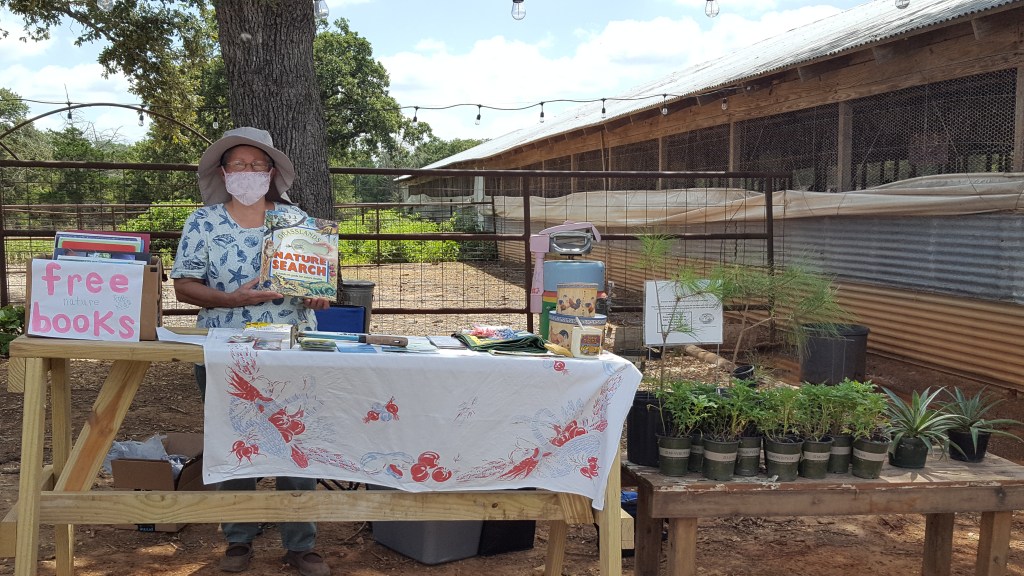
Plants and books for sale.

The highlight for me was giving the first tours of the Milam Wildscape.
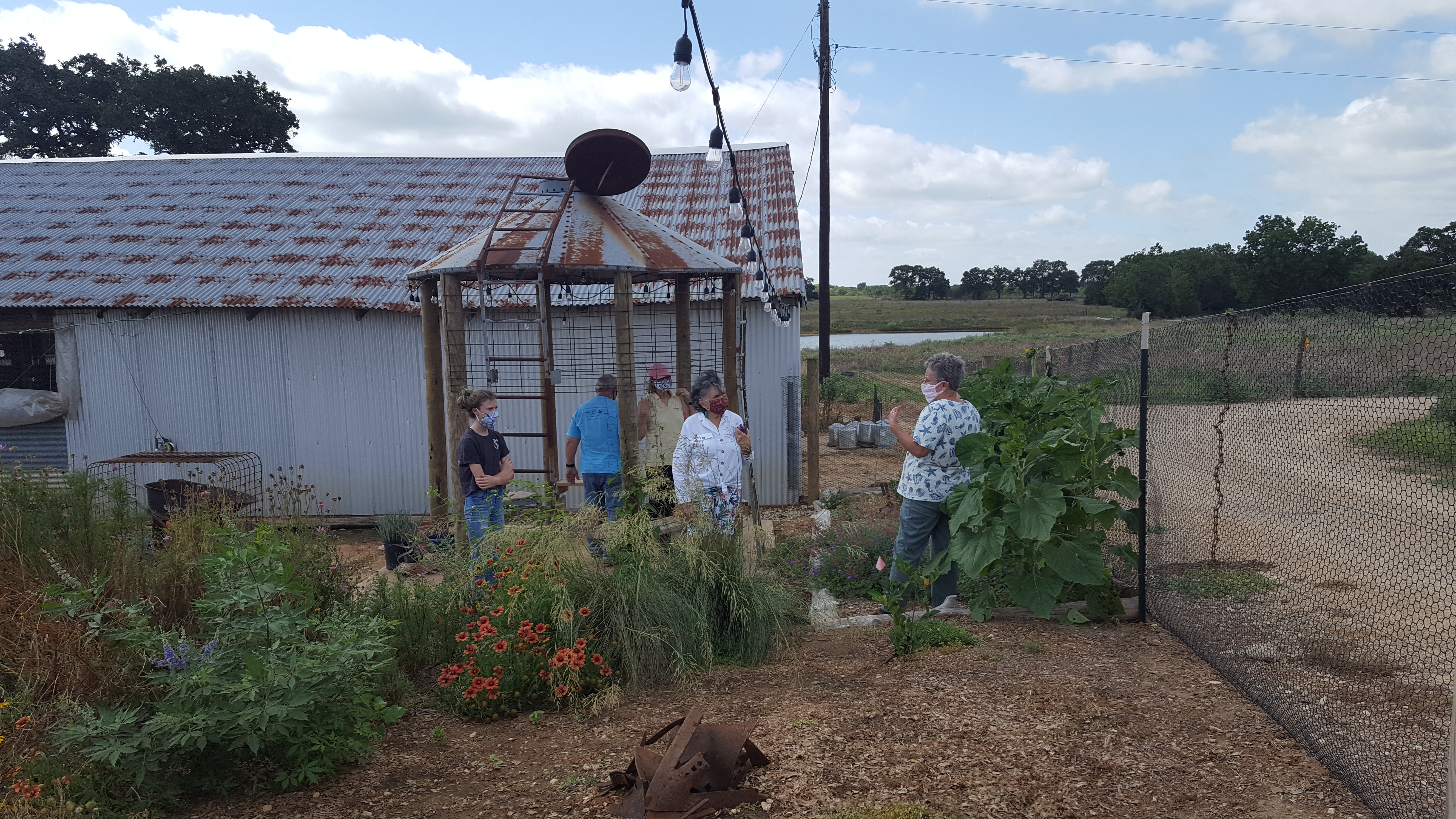
One gentleman said the giant hibiscus was the prettiest flower he had ever seen. A Houston firefighter is coming back in the fall for native plants from the garden. 
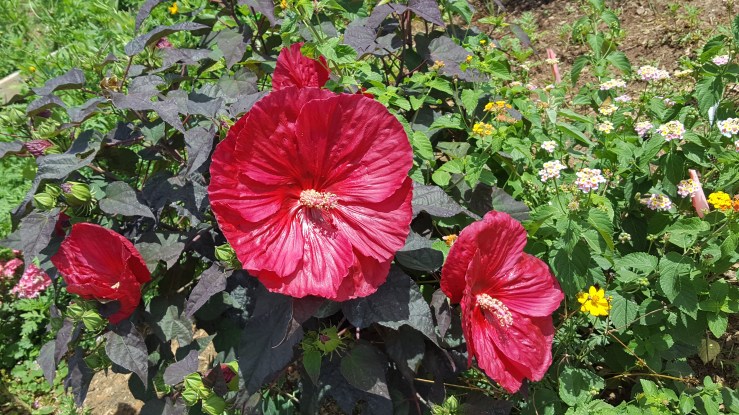
hibiscus flower
The beautiful hibiscus flower

I will send out notices on future events and the next quail release. Enjoy some more photos from around the garden, until next time!

One More News Item

Remember when we released quail into the rehabilitated prairie area? They must be doing well, because we found eggs!
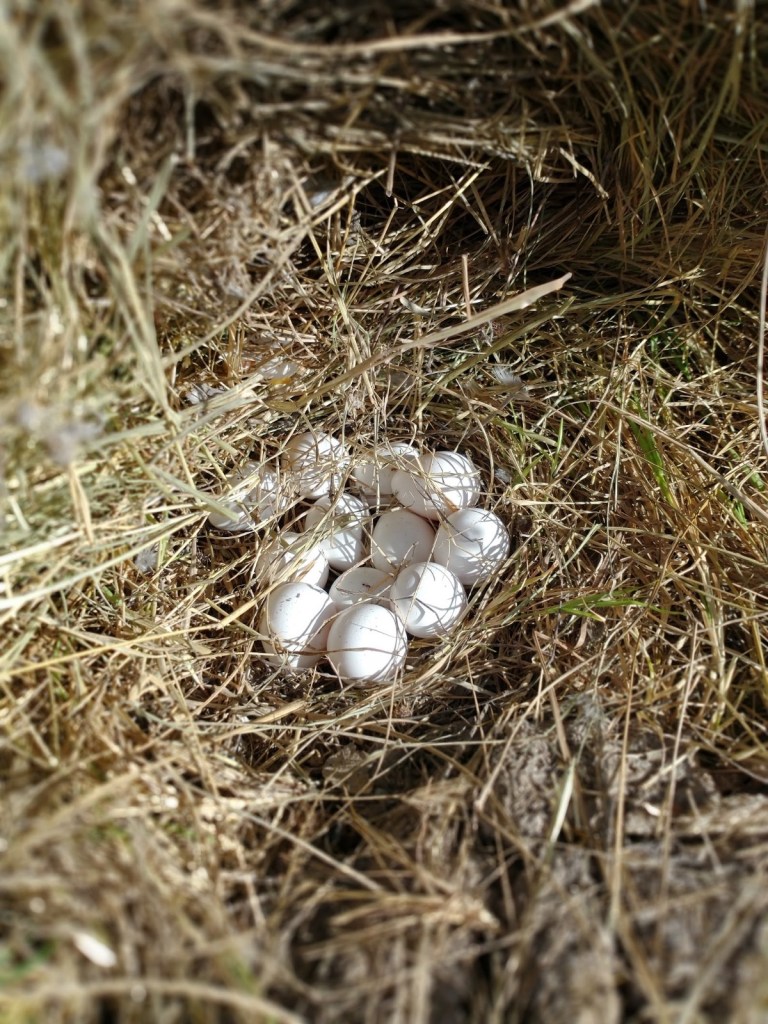
Bobwhite eggs. Such a great sign.

The Checkered Beetle and the Painful Plant

by Marian Buegeler and Sue Ann Kendall

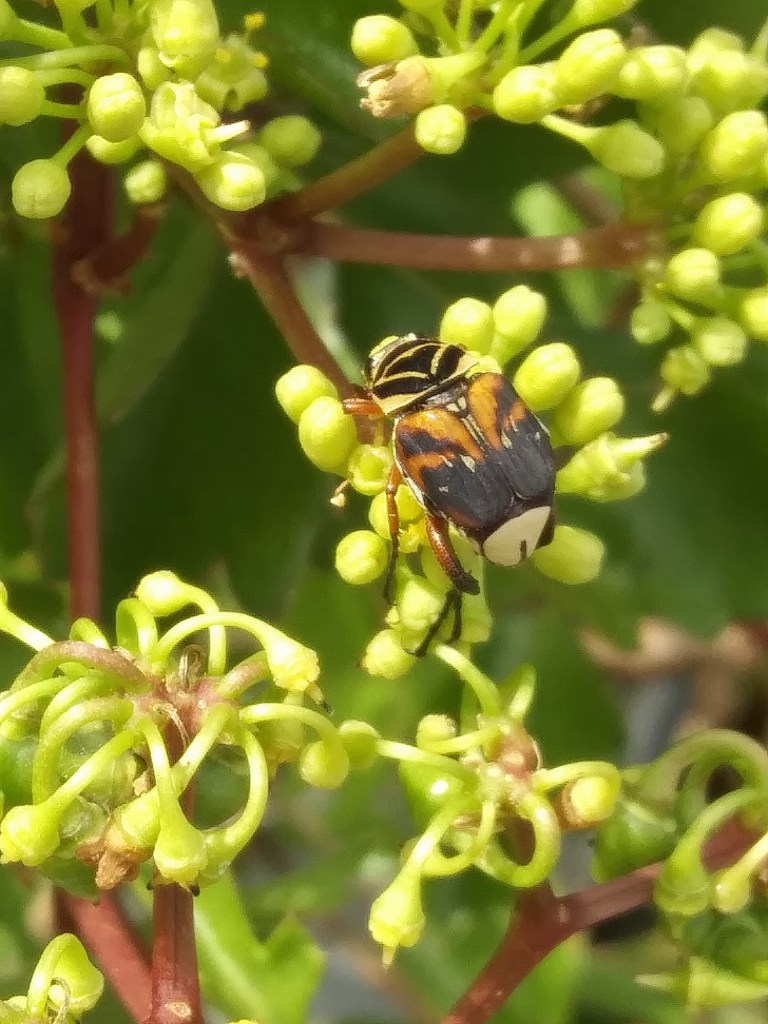
This month’s iNaturalist observation of the month was this beautiful image of a checkered beetle (Trichodes bibalteatus), photographed by Marian Buegeler of our 2020 class.

Marian reports:

[It] is sitting on a vine that iNat identified as sorrelvine (Cissus trifoliata). It is a beautiful vine that grows like crazy all over the family farm. 

I have always referred to this vine as poison ivy, because anytime I come in contact with it I break out in a nasty rash that gets identified at the docs office as poison ivy/poison oak.  

The flowers.

Sue Ann adds: The iNaturalist entry says that sorrelvine is a member of the grape family, and native to the US. It’s very common in this area (Sue Ann’s family lives nearby and reports they have it on their property, too, and it causes allergic reactions as well, though maybe because it’s near actual poison ivy).

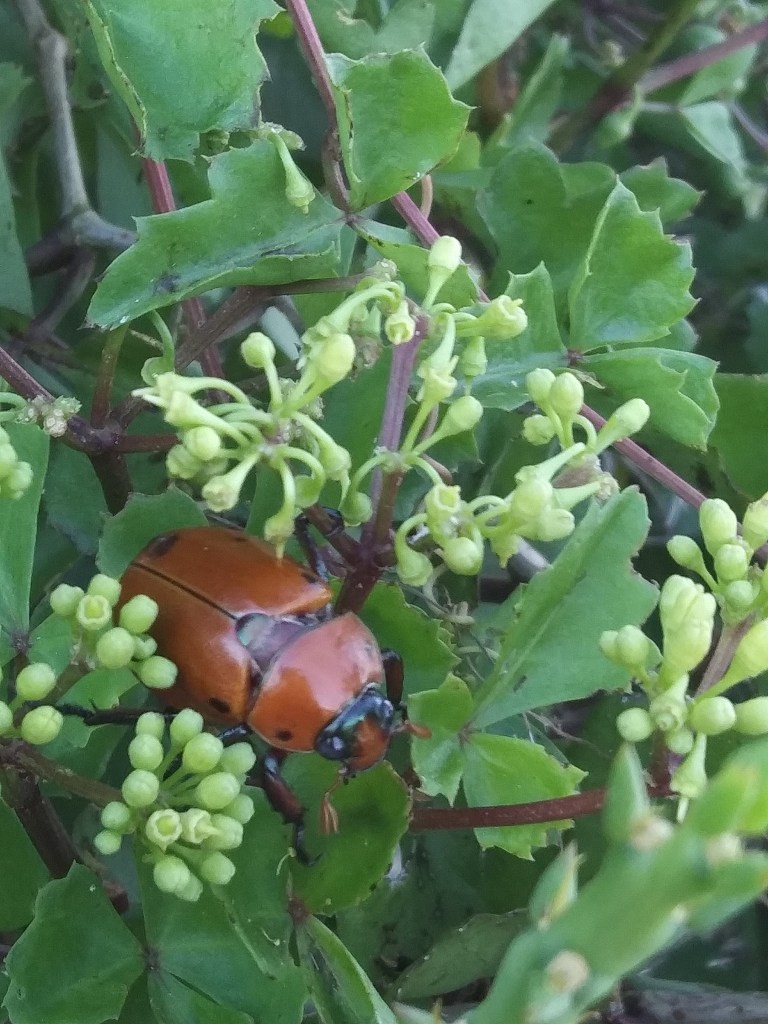
From Marian: Here are three more pictures of insects on the sorrelvine.

Another beautiful beetle on this vine.
It must be delicious.

I put these on iNat and they have been identified as Grapevine Beetle (Pelidnota punctuate), Delta Flower Scarab (Trigonopeltastes delta), and Bumelia Borer (Plinthocoelium suaveolen). Although, only the Bumelia Borer has reached research grade status.

This is definitely a scarab.

I have also seen lots of wasps and grasshoppers enjoying a meal at this vine. It certainly seems to be the place to eat! I just wish I wasn’t allergic to it.

Do any of you readers have more experience with this vine?

Nature around the Johnson House

by Catherine Johnson and Sue Ann Kendall

Today, Cathy is sharing some of the wildlife she’s found around her home outside of Rockdale. That moth is amazing, isn’t it? We hope you enjoy this photo essay!

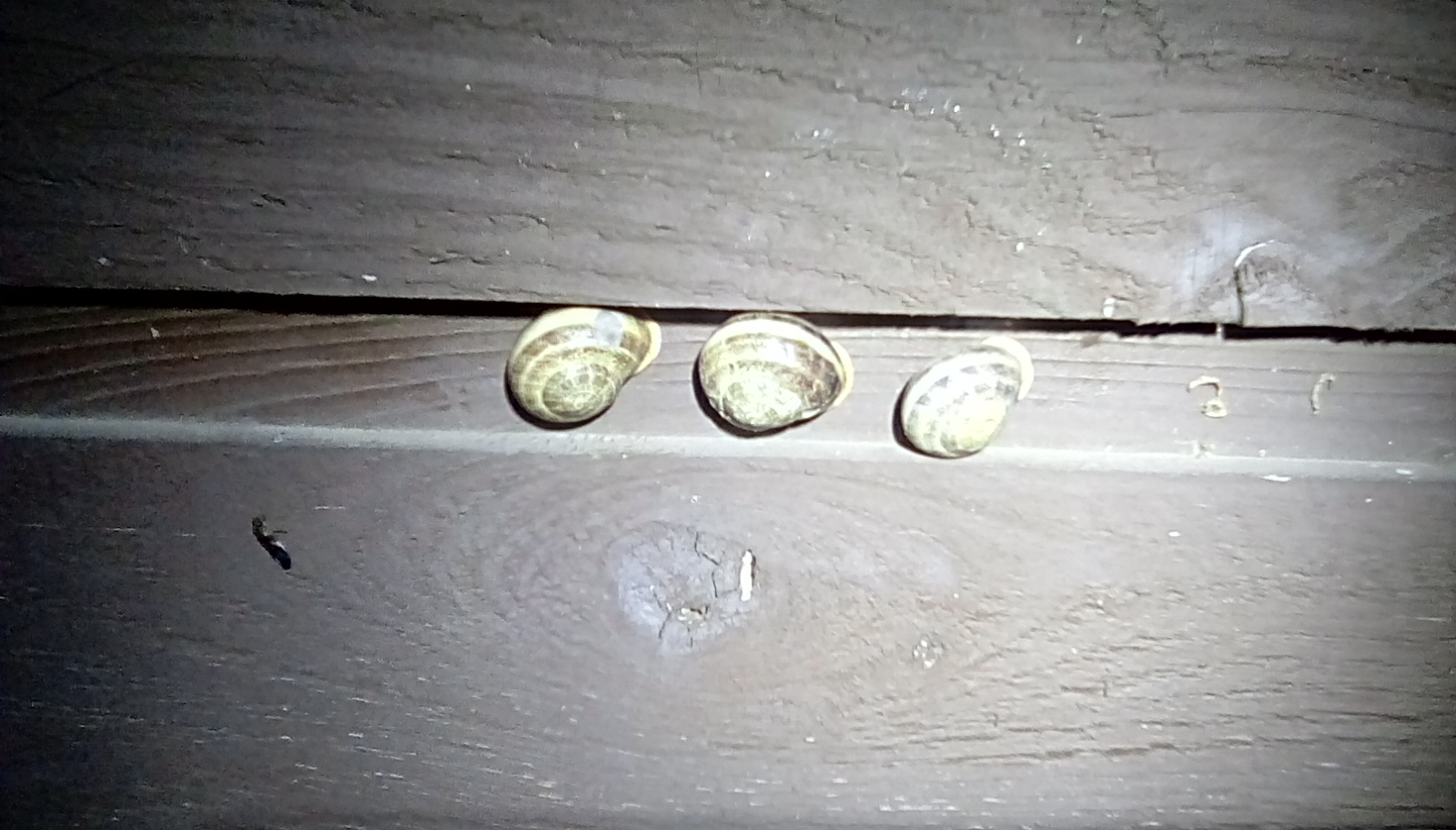
From top left, clockwise: Gulf Coast Toad and toad house, black witch moth (I think), wolf spider, milk snails, leopard frog.

Toad Abodes and Frog Fun

by Pamela Neeley and Sue Ann Kendall

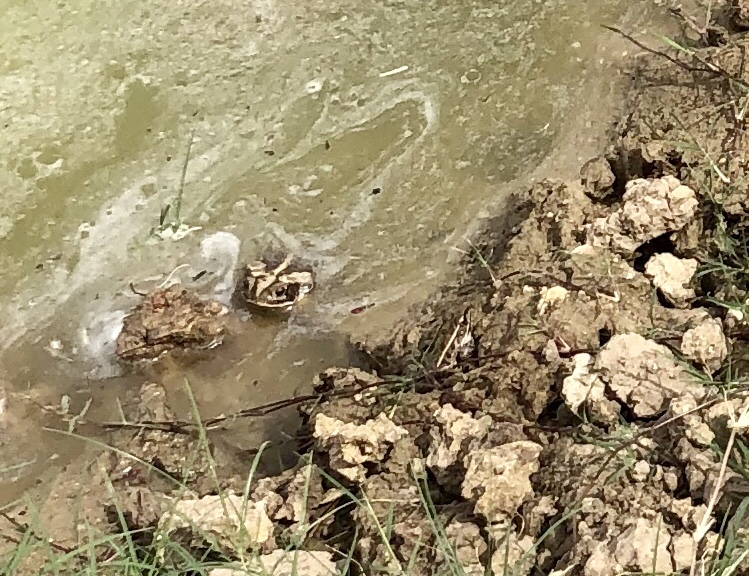
Last week, Sue Ann got all excited when she spotted a Southern Leopard Frog (Lithobates sphenocephalus) in her little pond at her ranch. She also saw 14 bullfrogs and a Gulf Coast toad, and wrote a blog post about it. When she mentioned the leopard frog at our July Chapter Meeting, lots of members chimed in that they’d been seeing them in large numbers this year.

Toad in the water, frog well camouflaged on the shore.

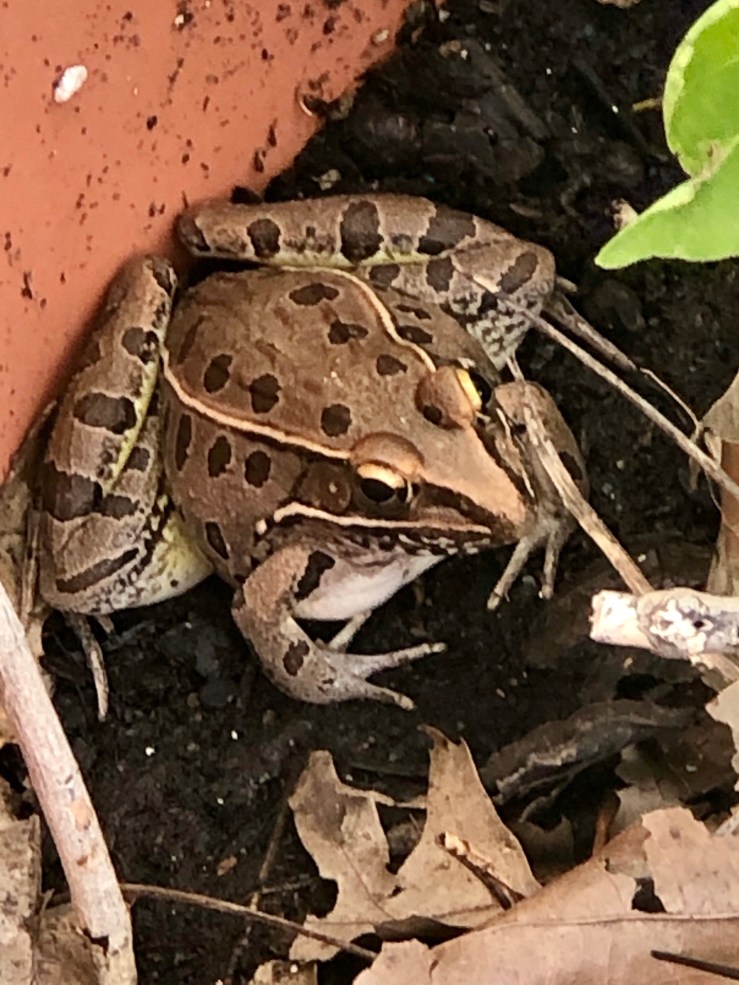
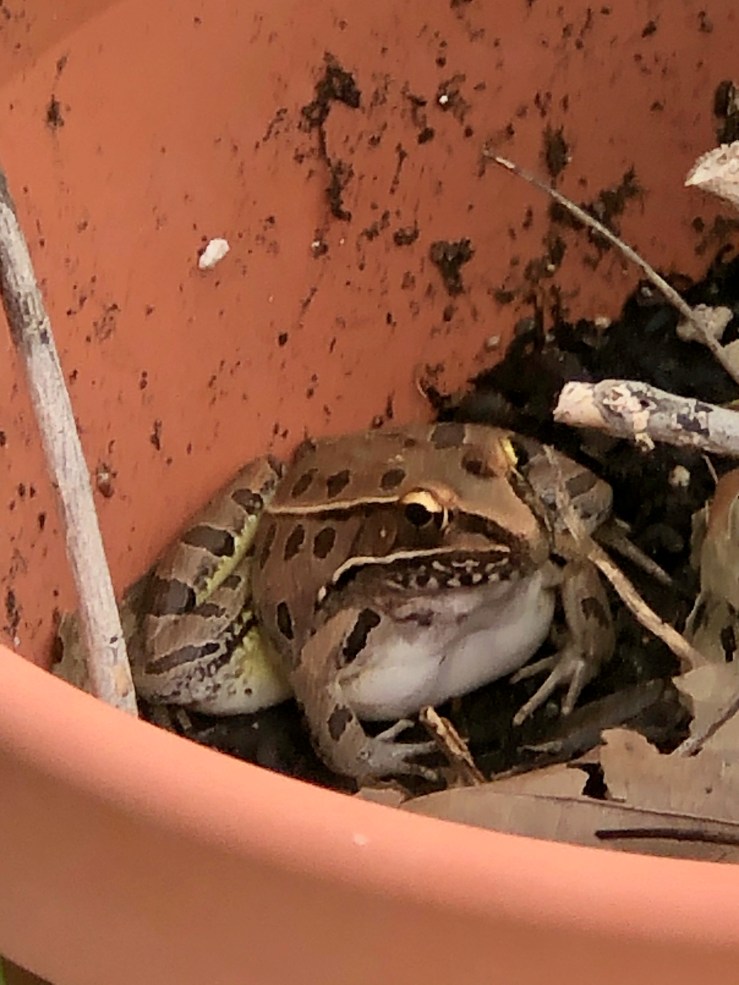
This morning, Pamela went out into her garden and found a truly magnificent leopard frog specimen. We agreed that this had to be shared.

Hello! How do you like my eye stripe?

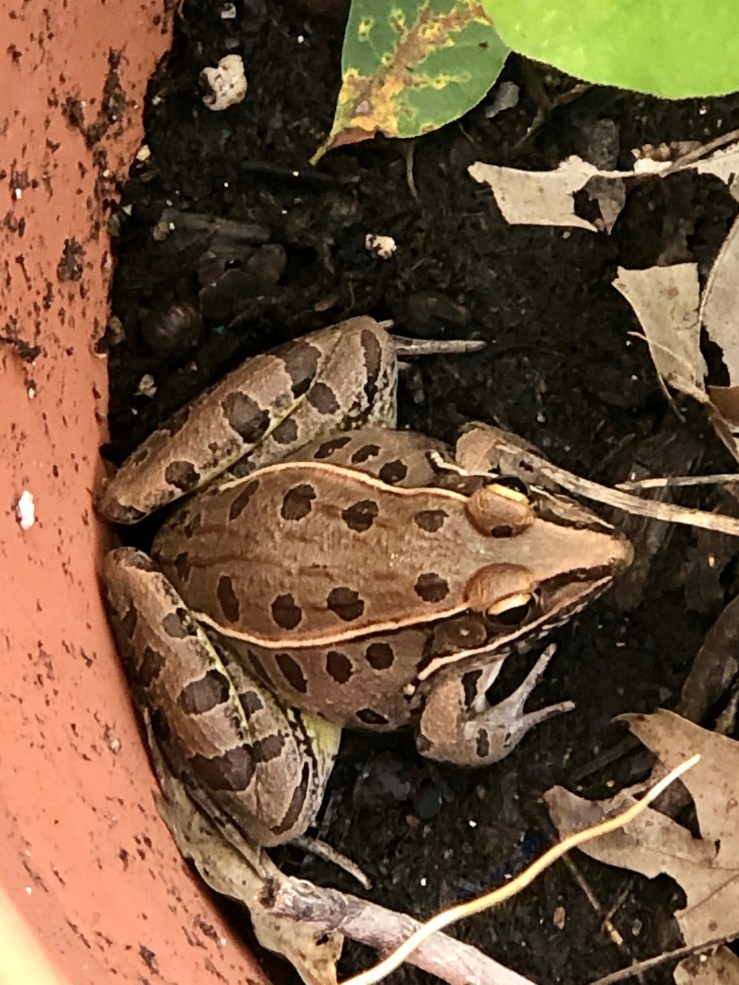
The stripes and the way they got through the toad’s eyes are so interesting, and the color is almost glowing! Pamela measured its belly print at over three inches. That’s a big one.

Look at those long legs! You can tell it’s a true frog.

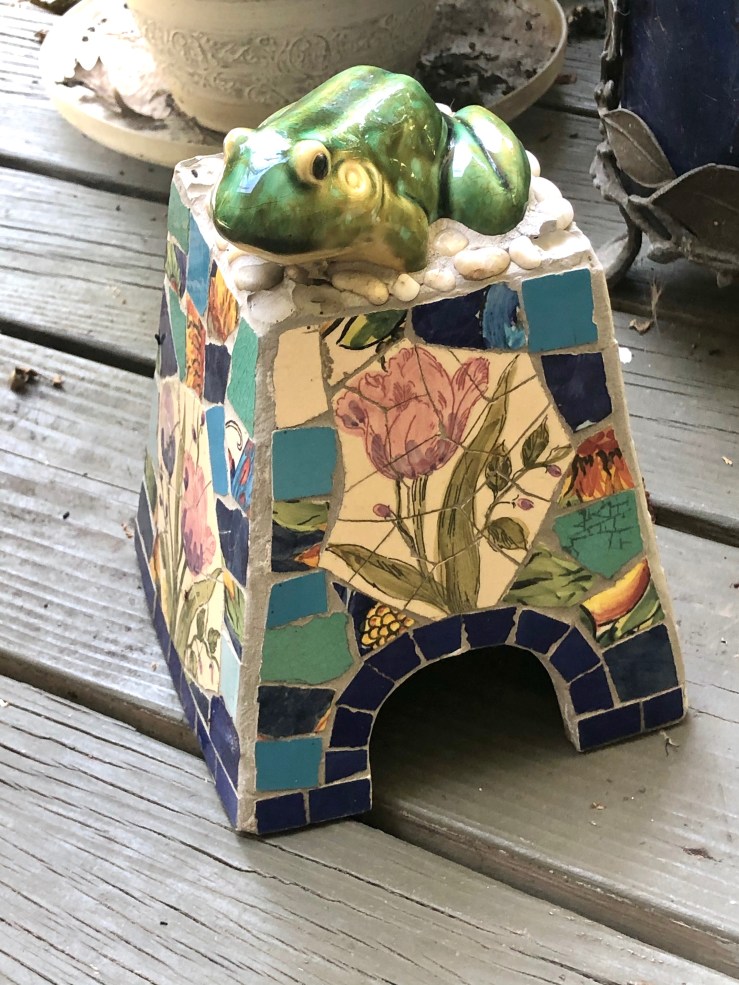
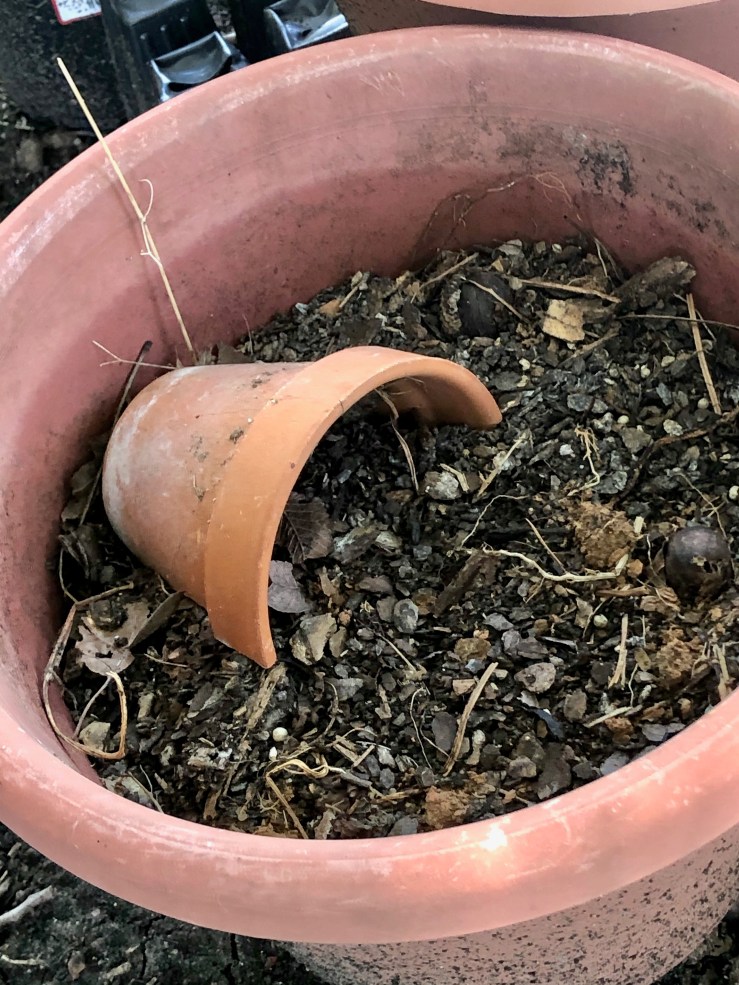
Pamela mentioned that she has more than one toad house on her property, which some of the frogs apparently use, too. Here’s the really pretty one.

Any toad would appreciate such a fine home.

But the plain ones work just fine, too, as long as you leave the bottom open, so their bellies can rest on the dirt.

Perfectly adequate toad home.
Now you can see its pretty white belly.

Making a toad abode is easy and fun. Here’s a great page Pamela found, from the Houston Arboretum Nature Center on how to make toad abodes of many charming styles, along with a lot more information about them. Don’t forget, they will need a source of water!

What kinds of toads and frogs do you have where you live?

How Glorious to Be Able to Fly

by Donna Lewis

Recently I had several clutches of Purple Martins fledge out into the world.  There are more to come soon.

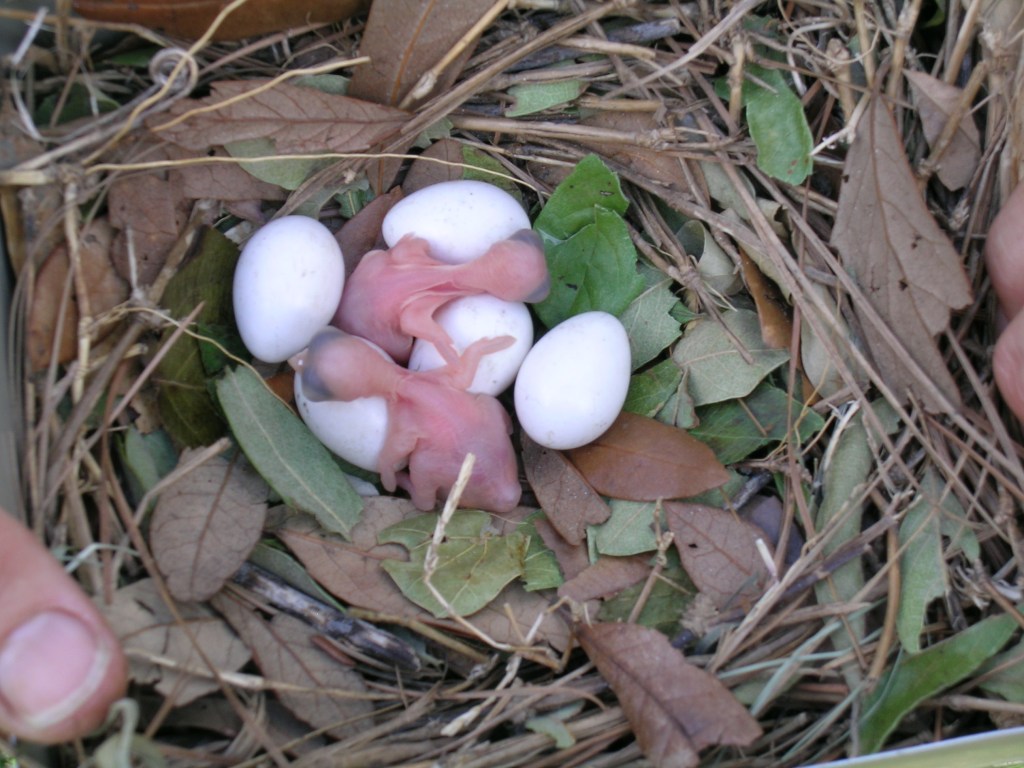
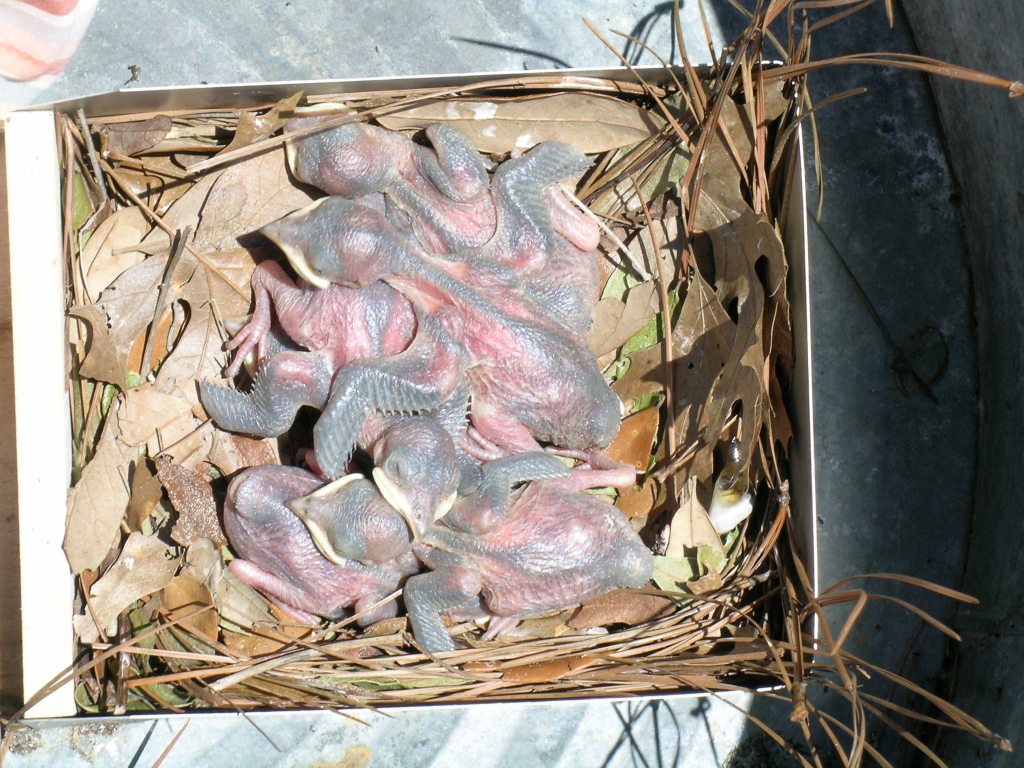
Newly hatched babies.

When they fledge, they make their first flight and leave the nest. A big step that must be successful the first time.  Talk about pressure.

Getting close to fledging.

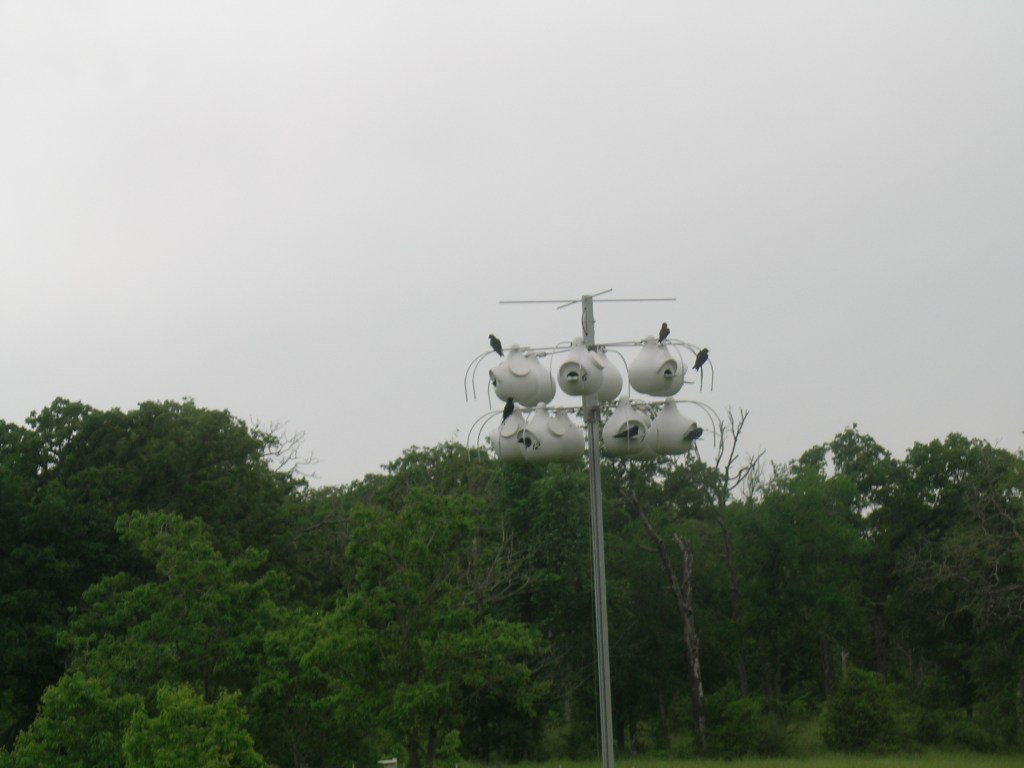
Right now they still perch on the gourd rack, but are out in the new world learning to fly, hunt, and socialize with their friends. They sing so loud and often; I know they must be laughing at the pure joy of it all.

Singing their songs

How I have dreamed of flying and looking at the earth from above. I think many of us have that dream.

The Martins will be here in the US for about another eight weeks or so. Then they start to gather in huge roosts, waiting till their instincts tell them it is time to fly to their winter home in Brazil. They have dual citizenship.

In Brazil, they live in the trees until winter is over, and once again they return here to have their babies. It will be the only time they live in gourds or other man-made houses.

A very full nest box

Their song is beautiful and one of the reasons they are so loved. It is so silent after they leave.  I count the weeks till they return.

Donna Lewis 
Proud Purple Martin Landlord