Today, Cathy is sharing some of the wildlife she’s found around her home outside of Rockdale. That moth is amazing, isn’t it? We hope you enjoy this photo essay!
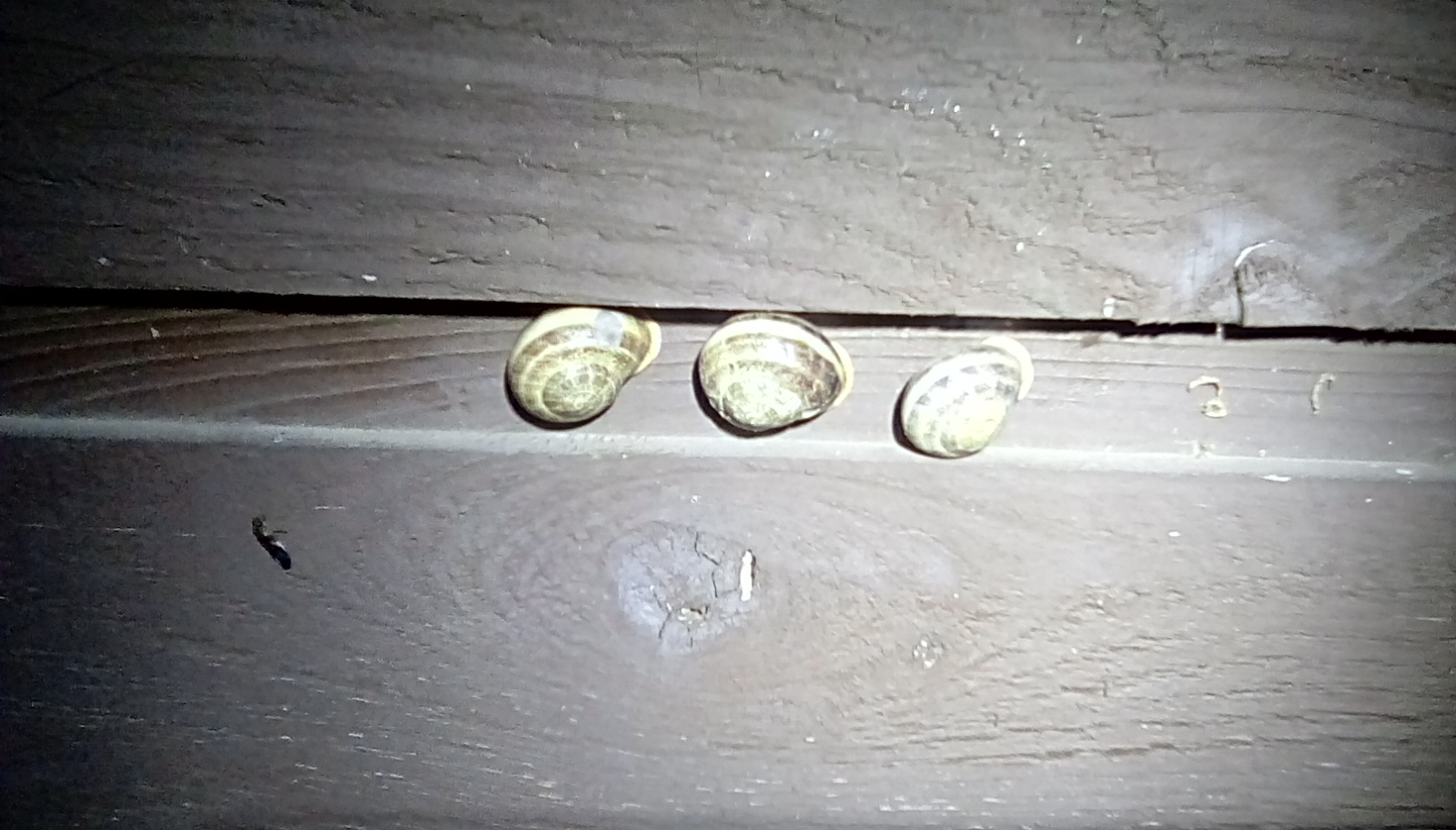
From top left, clockwise: Gulf Coast Toad and toad house, black witch moth (I think), wolf spider, milk snails, leopard frog.
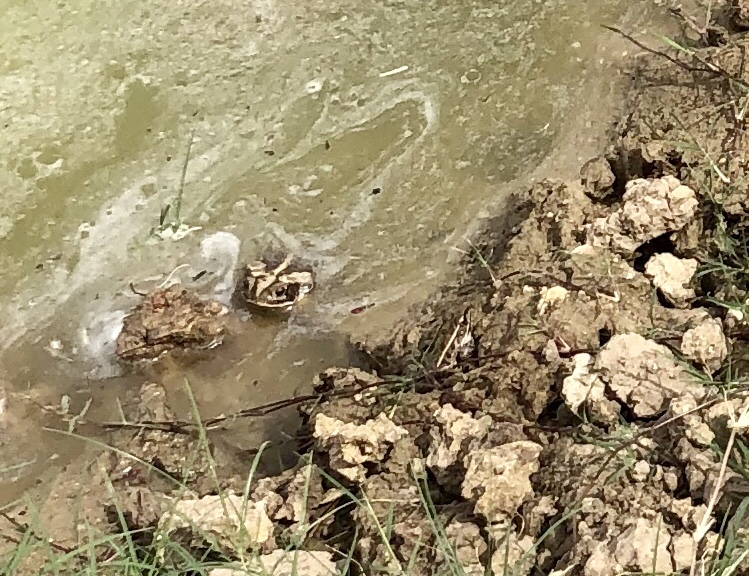
Last week, Sue Ann got all excited when she spotted a Southern Leopard Frog (Lithobates sphenocephalus) in her little pond at her ranch. She also saw 14 bullfrogs and a Gulf Coast toad, and wrote a blog post about it. When she mentioned the leopard frog at our July Chapter Meeting, lots of members chimed in that they’d been seeing them in large numbers this year.
Toad in the water, frog well camouflaged on the shore.
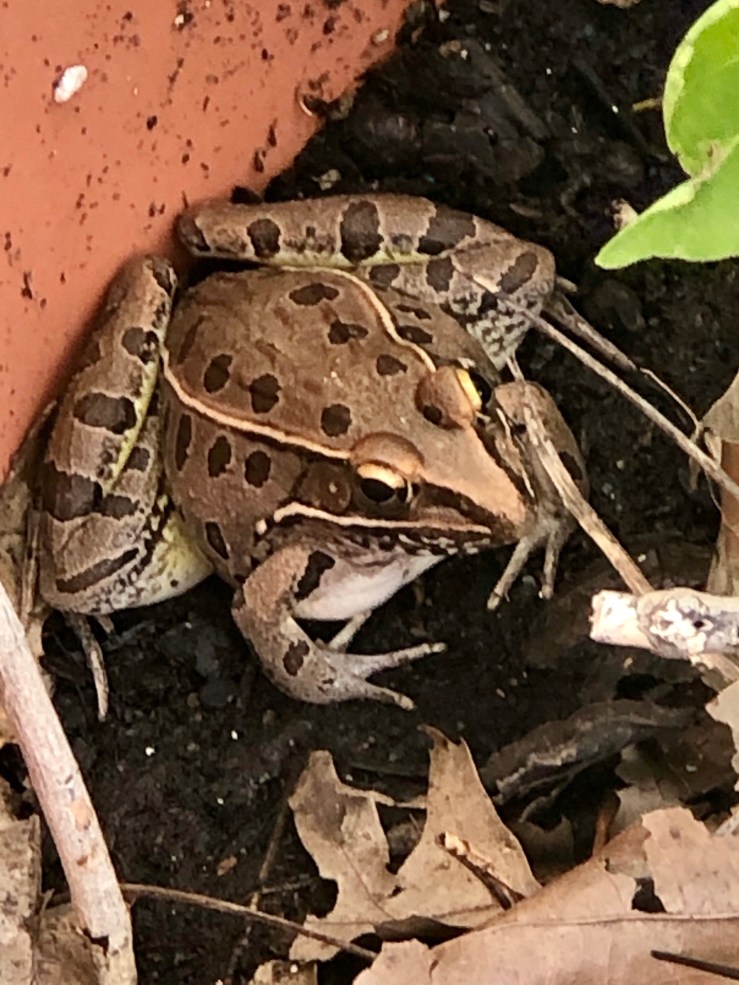
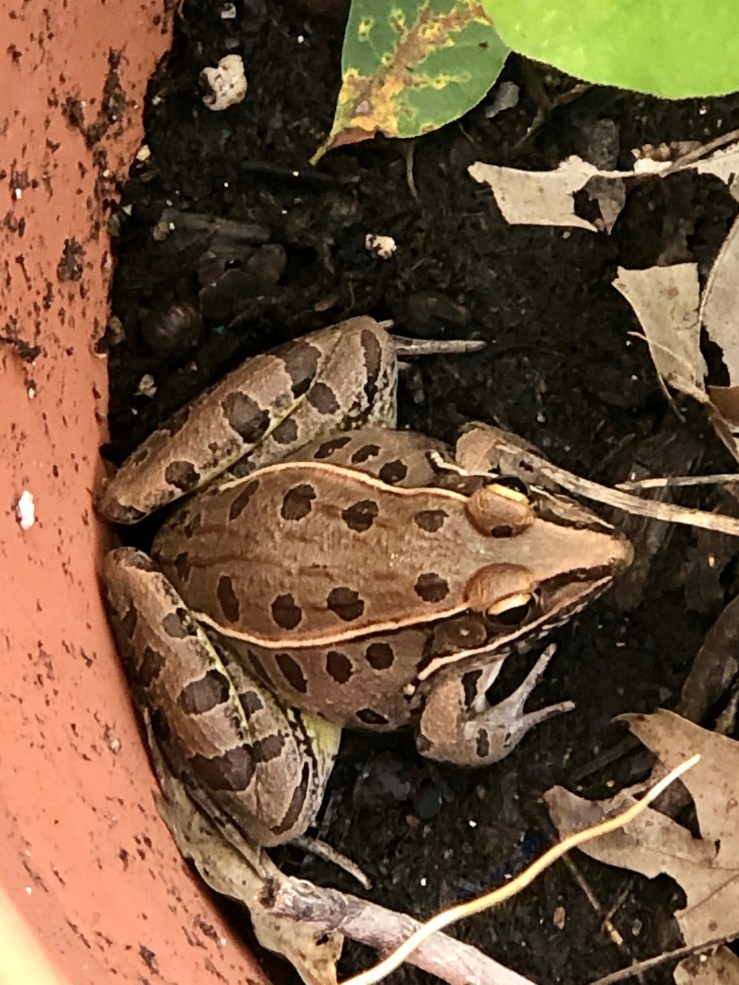
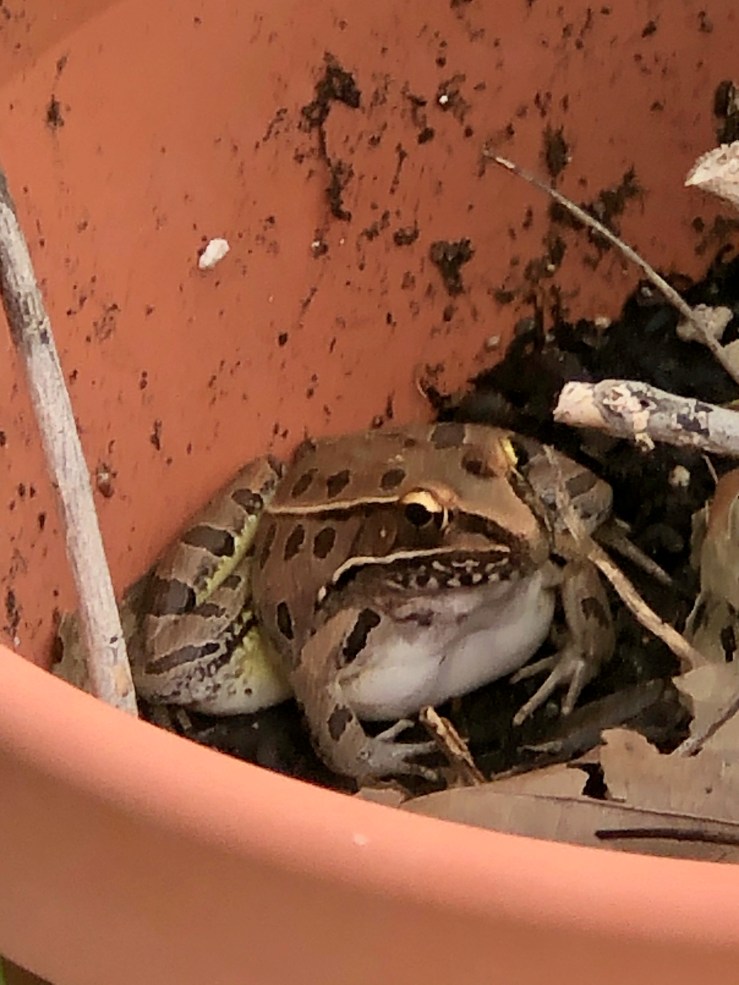
This morning, Pamela went out into her garden and found a truly magnificent leopard frog specimen. We agreed that this had to be shared.
Hello! How do you like my eye stripe?
The stripes and the way they got through the toad’s eyes are so interesting, and the color is almost glowing! Pamela measured its belly print at over three inches. That’s a big one.
Look at those long legs! You can tell it’s a true frog.
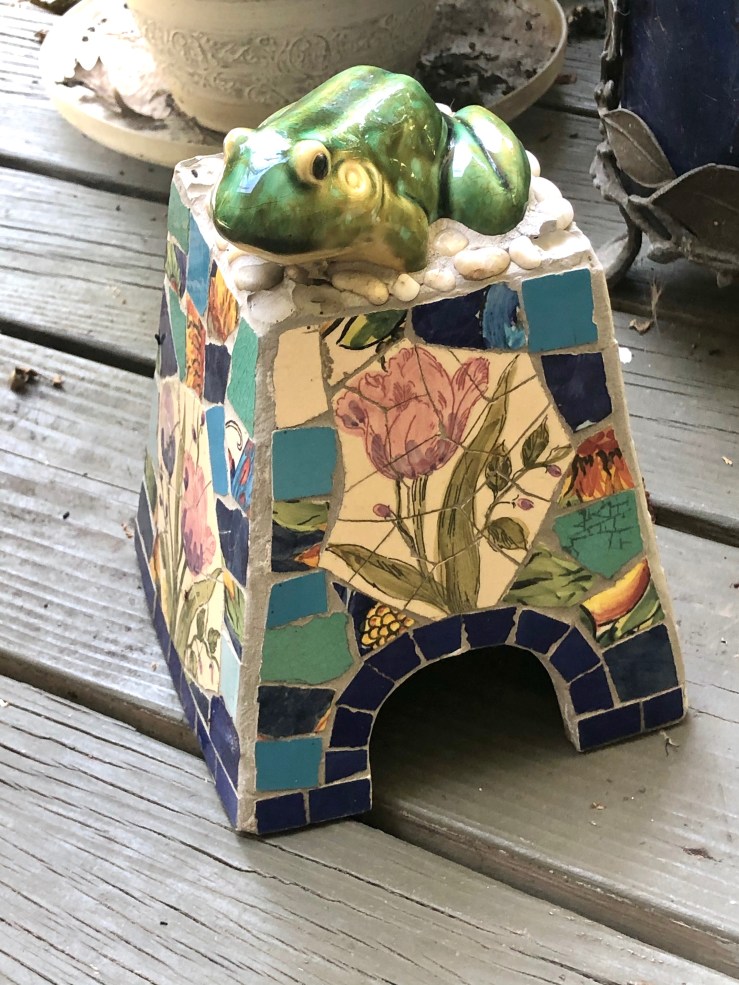
Pamela mentioned that she has more than one toad house on her property, which some of the frogs apparently use, too. Here’s the really pretty one.
Any toad would appreciate such a fine home.
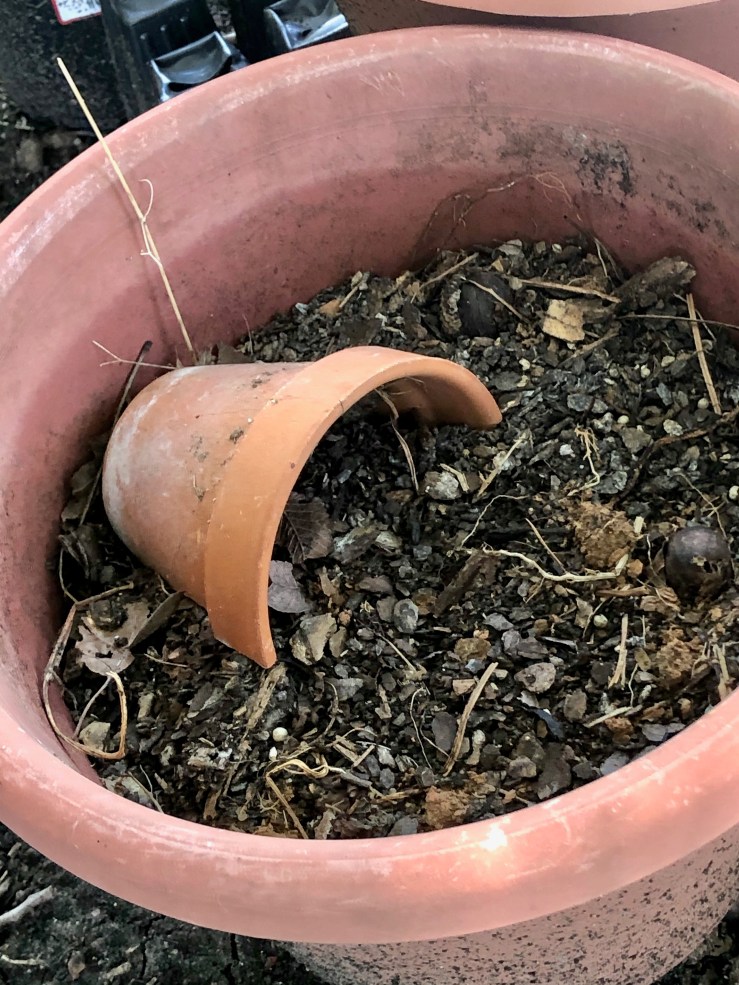
But the plain ones work just fine, too, as long as you leave the bottom open, so their bellies can rest on the dirt.
Perfectly adequate toad home.
Now you can see its pretty white belly.
Making a toad abode is easy and fun. Here’s a great page Pamela found, from the Houston Arboretum Nature Center on how to make toad abodes of many charming styles, along with a lot more information about them. Don’t forget, they will need a source of water!
What kinds of toads and frogs do you have where you live?
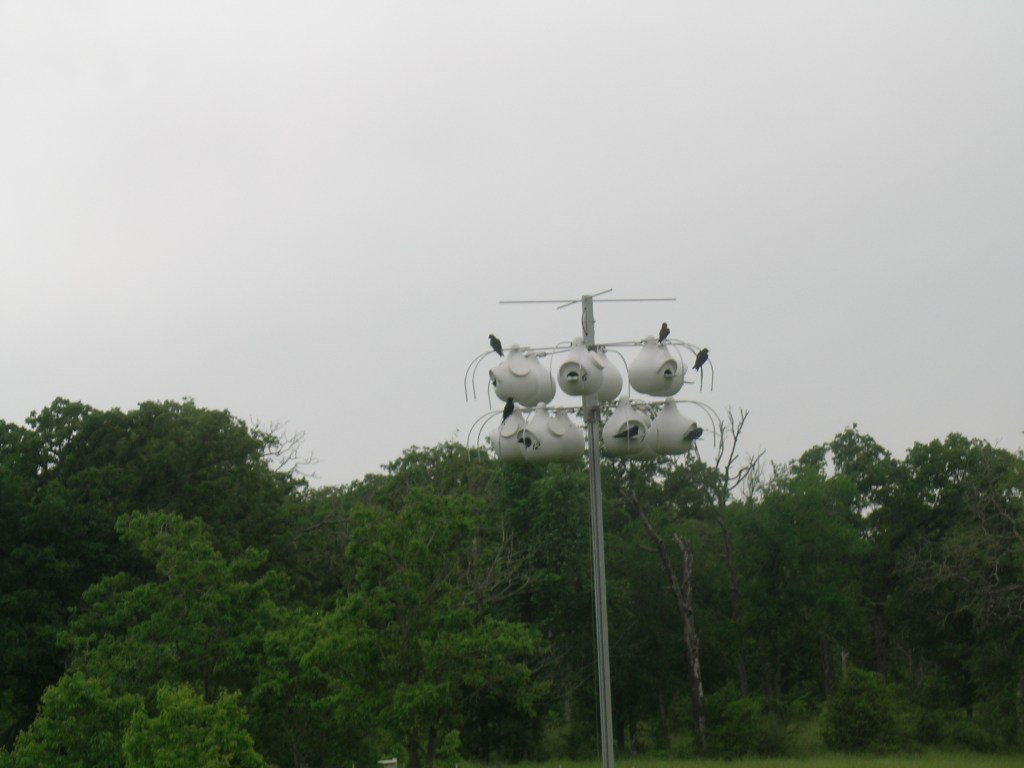
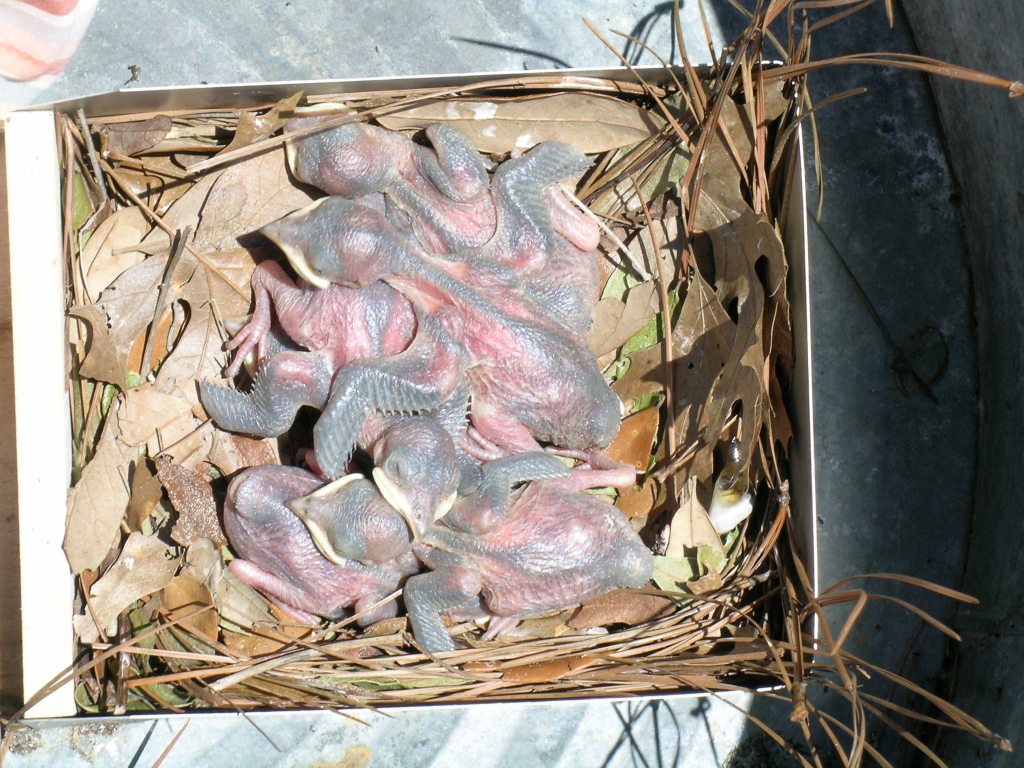
Recently I had several clutches of Purple Martins fledge out into the world. There are more to come soon.
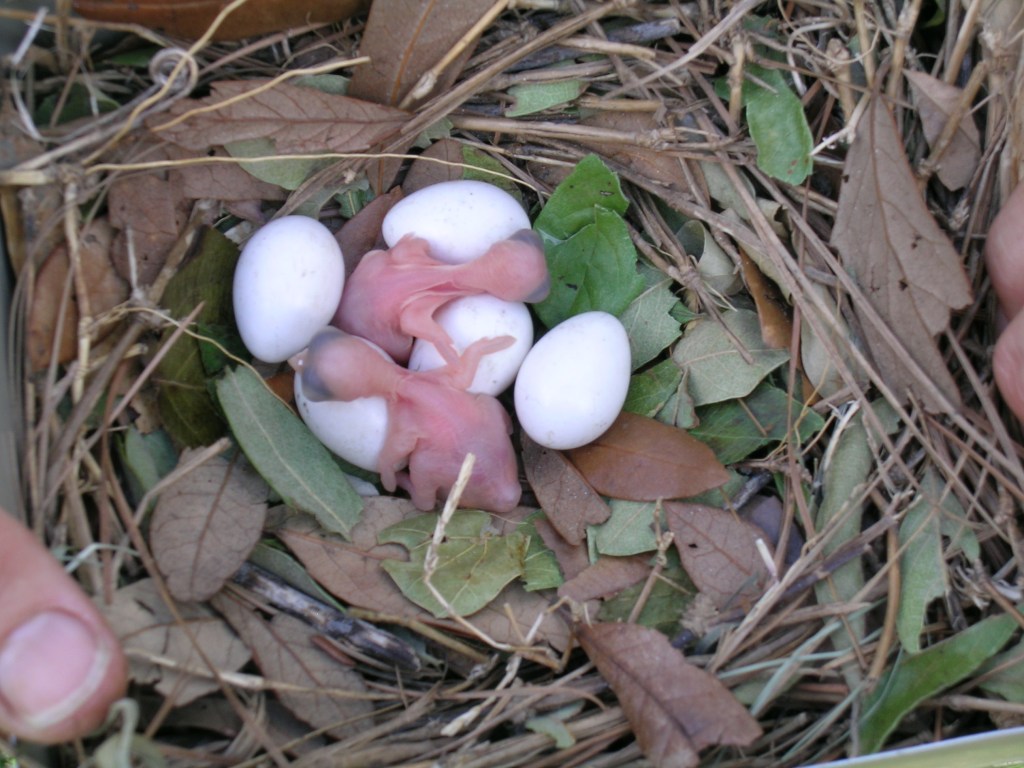
Newly hatched babies.
When they fledge, they make their first flight and leave the nest. A big step that must be successful the first time. Talk about pressure.
Getting close to fledging.
Right now they still perch on the gourd rack, but are out in the new world learning to fly, hunt, and socialize with their friends. They sing so loud and often; I know they must be laughing at the pure joy of it all.
Singing their songs
How I have dreamed of flying and looking at the earth from above. I think many of us have that dream.
The Martins will be here in the US for about another eight weeks or so. Then they start to gather in huge roosts, waiting till their instincts tell them it is time to fly to their winter home in Brazil. They have dual citizenship.
In Brazil, they live in the trees until winter is over, and once again they return here to have their babies. It will be the only time they live in gourds or other man-made houses.
A very full nest box
Their song is beautiful and one of the reasons they are so loved. It is so silent after they leave. I count the weeks till they return.
Imagine this…. eight women sharing two bathrooms in a cabin in the woods. Awakening early Saturday morning, I was in dire need of a toilet and both bathrooms were occupied. After climbing down from the top bunk, I really began to feel pressure.
Sassafras Cabin at Camp Allen Conference and Retreat Center
Thank goodness, the first Advanced Training Class I had attended on Friday afternoon at the 2012 Master Naturalist State Meeting at Camp Allen in Navasota proved invaluable to my comfort and sanity. “Techniques for Teaching Leave No Trace Principles to Urban and Suburban Audiences” was the official class title, although a more descriptive sub-title given by the instructor was, “How to Teach Soccer Moms to Pooh in the Woods”.
Many urban and suburban people have trouble relieving themselves in the outdoors when recognizable restroom facilities are not available. Showing them simple ways to be prepared to fully enjoy the experience of being in the “back country” can be part of our enablement and education process. Necessary supplies listed by the instructor were: a small Zip lock bag, a wet wipe, and on occasion, a hand trowel.
Saturday morning, I was a Master Naturalist needing relief! I knew there were no plastic bags in the cabin cabinets, so I pulled an empty Kraft Shredded Cheese bag from the trash can. A couple of squares of Kleenex from the box on a side table in the living area sufficed for wet wipes. A six- to eight-inch deep hole to bury solid waste was not necessary at the moment for what I needed to do, so the trowel was not required.
Quickly donning jacket and shoes, I ventured out into the chill and walked into the darkness. The encroachment of the woods and my internal pressure precluded taking the prescribed 100 steps away from the cabin. Thirty steps did just fine. Blessed relief! The evidence was deposited in the cabin trash can.
I was fortunate my first training class gave me the information and permission to be able to make myself comfortable. I also became aware of the difficulty many would-be nature enthusiasts may have enjoying the outdoors because of the apparent lack of restroom facilities.
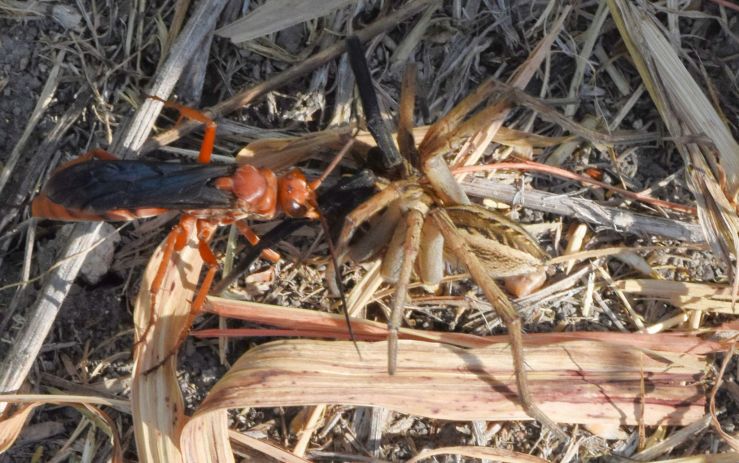
You’d think a Rabid Wolf Spider would be king of its domain. By the end of last week many had reached their prime and would be thinking about reproduction, but not this one, which was destined to become food for a spider wasp’s offspring instead.
Wolf spider played by Rabidosa rabida. Spider wasp played by Tachypompilus ferrugineus. Note that The forelegs of some Rabid Wolf Spiders blacken as they become adults.
I arrived with my camera as the wasp was dragging the paralyzed spider toward its nest. Unfortunately the early morning light was bad and the wasp was fast, so most of the photos were poorly lit and out of focus. Thus, I have to tell most of my story with words.
This is what I saw. The wasp was dragging the spider along. The wasp dropped the spider several times and appeared to wander around before returning. At first I thought it saw me as a threat and was taking evasive action, but as I watched it reach its destination, I realized how entirely focused it had been on the task at hand.
Bonus photo of a rabid wolf spider, by Sue Ann Kendall.
Wasps don’t have eyes in the back of their heads, so it couldn’t see where it was going while dragging the spider. Every time it dropped the spider, it had gone back to find the opening of its nest to reorient itself as it returned to the spider. It made no sense to drag the spider a long way and then find out it was in the wrong direction.
After dragging the spider about four feet and a couple of final yanks, the wasp and then the spider disappeared under the house skirting.






 Nature Along the El Camino Real