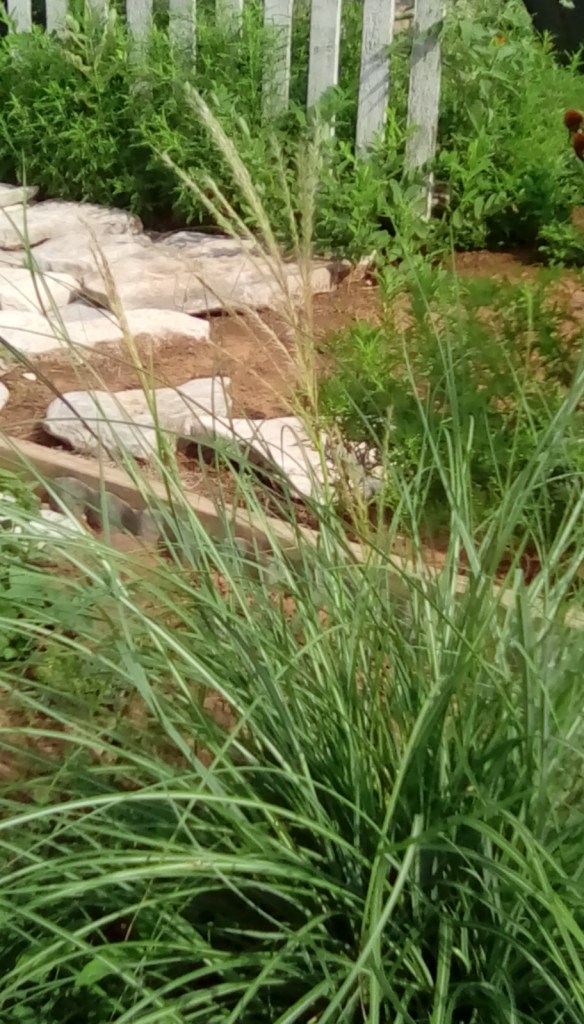
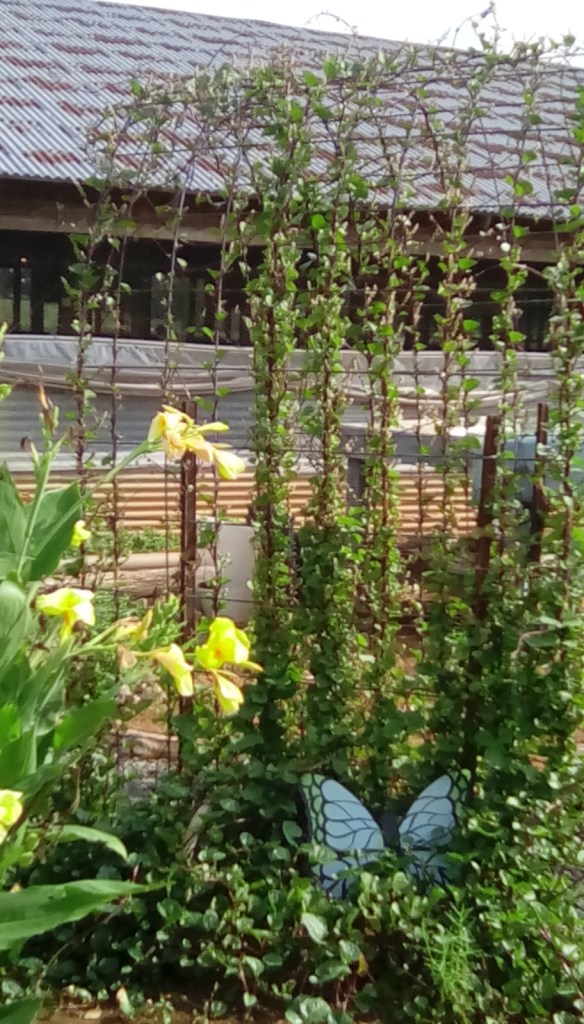
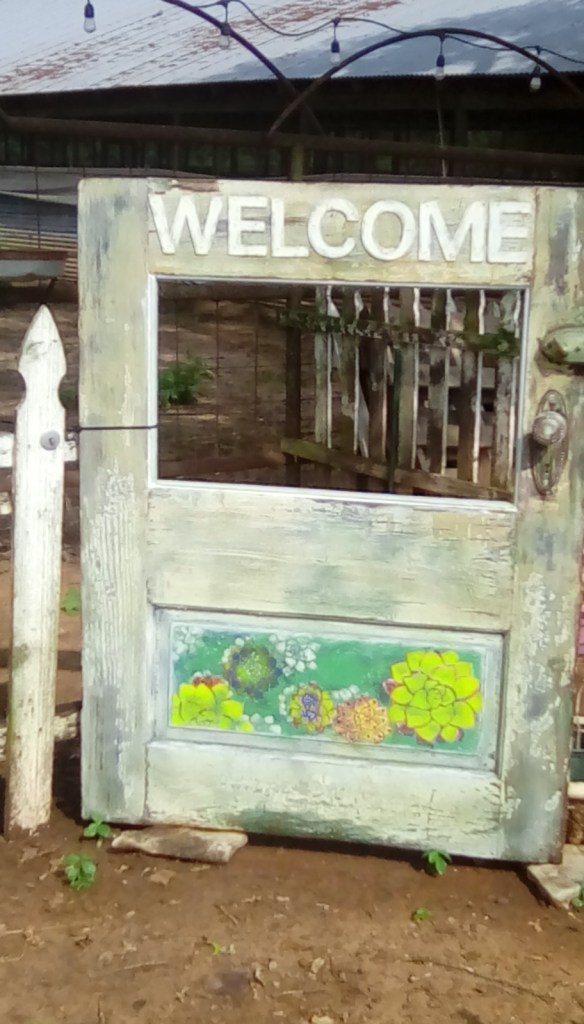
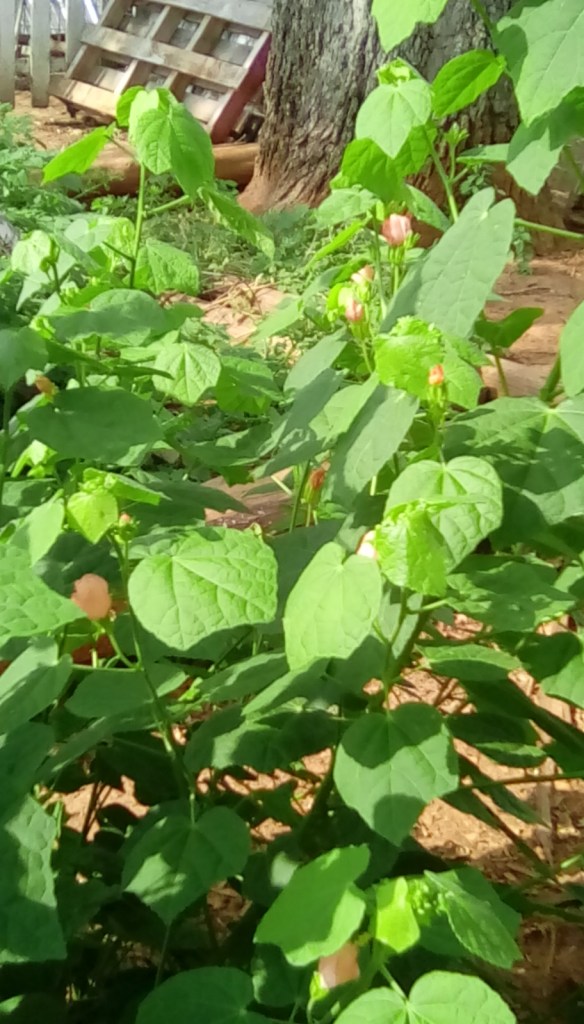
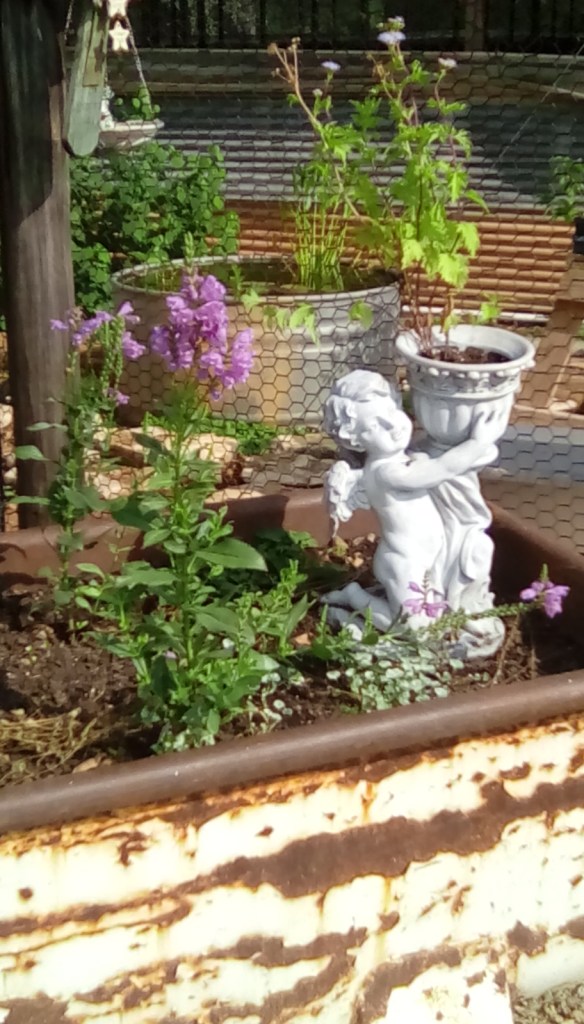
Wholesalers are offering sales now, so new natives have been acquired for the Milam Wildscape. They include Mexican bush sage, Convent sage, Benny’s acanthus, Mexican flame vine, Dwarf Barbados cherry, and Fragrant mist flower.
Humidity is causing fungus on some plants, but most are thriving. We will have many native plants, seeds and cuttings to give away in the fall.
Please click on any photo to see the entire image.
Last week I turned on my porch light every night at “dark thirty” to attract moths I could photograph and submit to the National Moth Week 2021 project on iNaturalist.org. This year was a bit cooler and more moist than most of the past years, and also a bit brighter because of the full moon. Although I thought I did pretty well with my very basic mothing equipment and a “point-shoot-and-hope” camera, I was amazed by the quality and quantity of observations my Texas Master Naturalist / iNaturalist friends across the state of Texas submitted.
by Carolyn Henderson, with additional photos from Linda Jo Conn
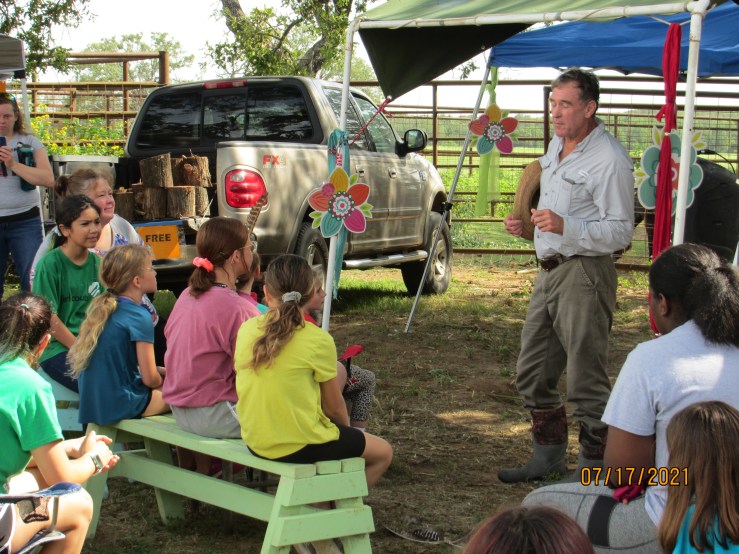
Young girls with boundless curiosity swarmed the Birds and Bees Wildscape Saturday, July 17, to perform public service in honor of the 100th anniversary of the founding of Girl Scouts of the USA. The El Camino Real chapter of Texas Master Naturalists hosted the event.
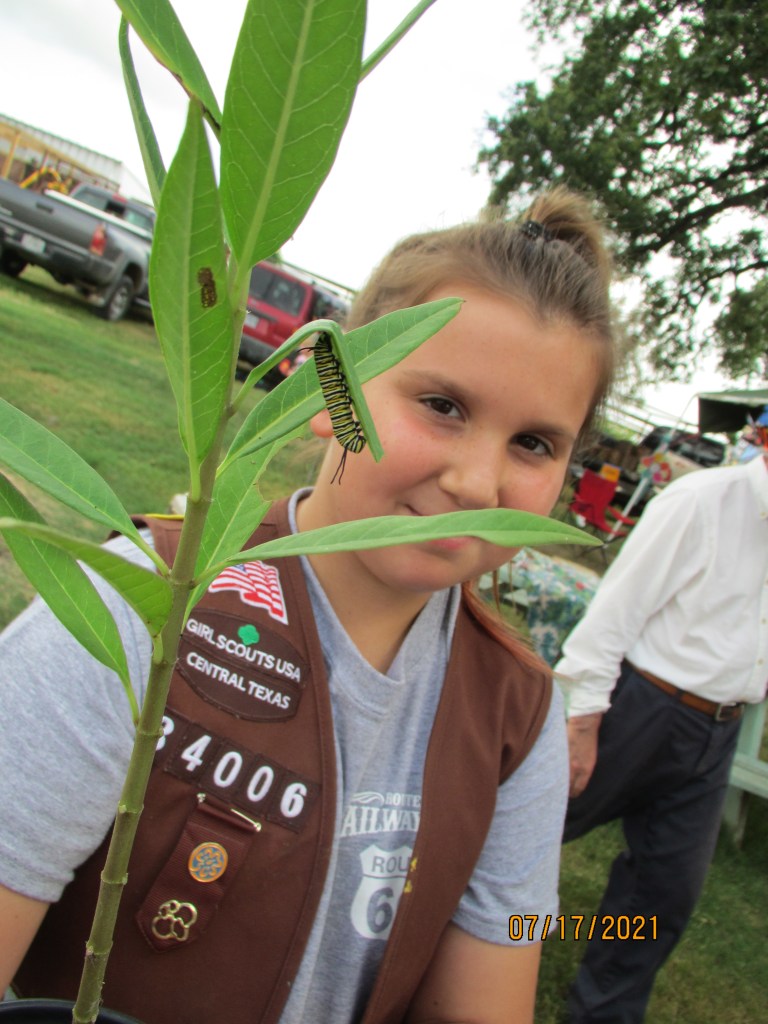
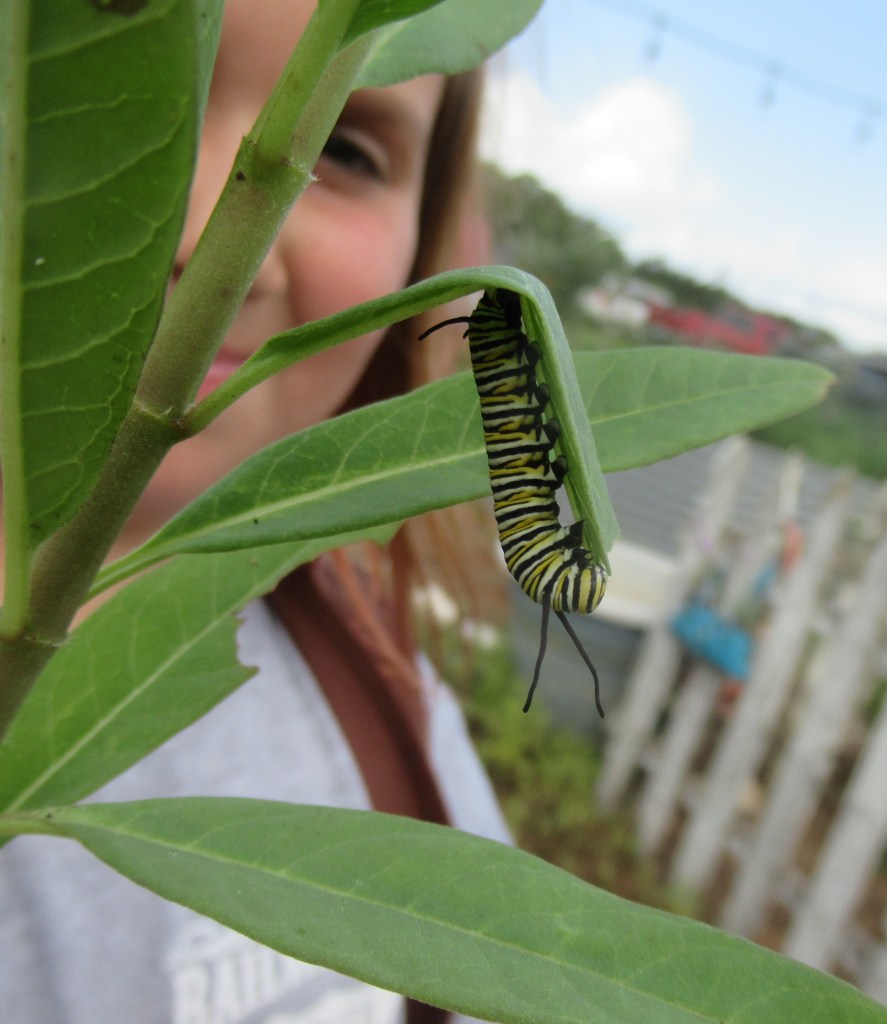
Girl Scout finds a monarch butterfly caterpillar
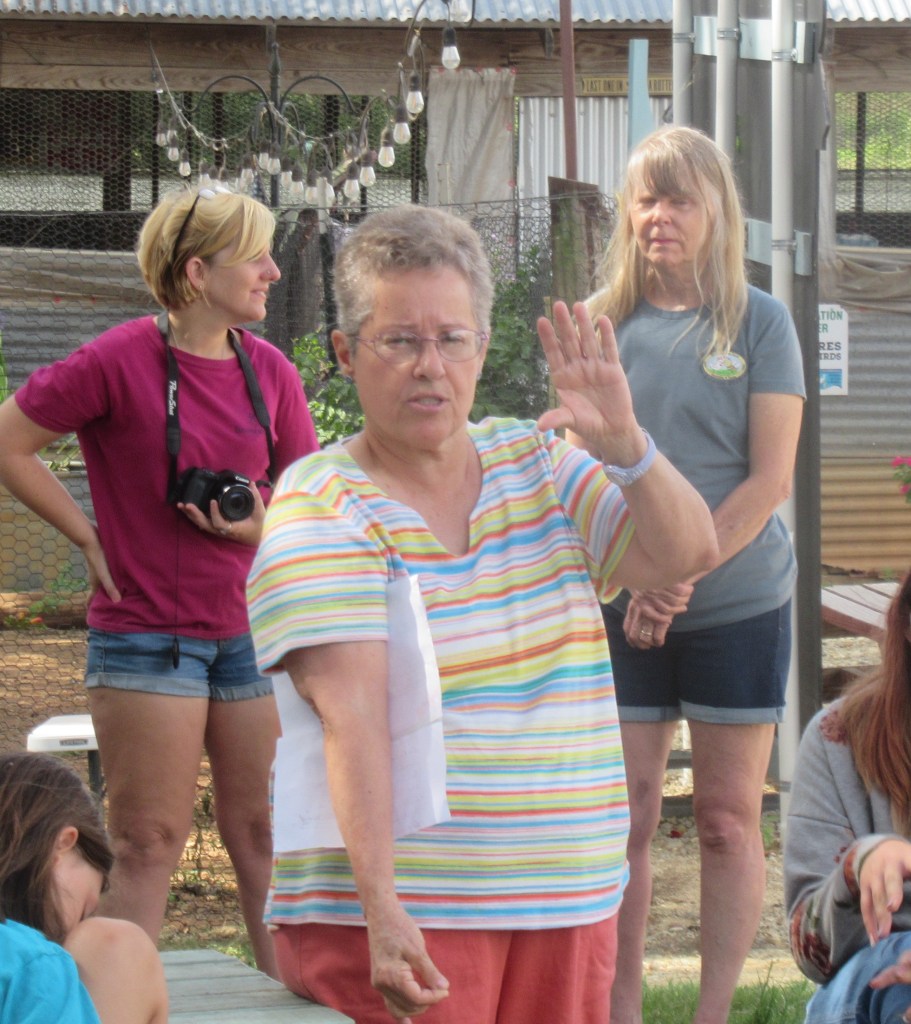
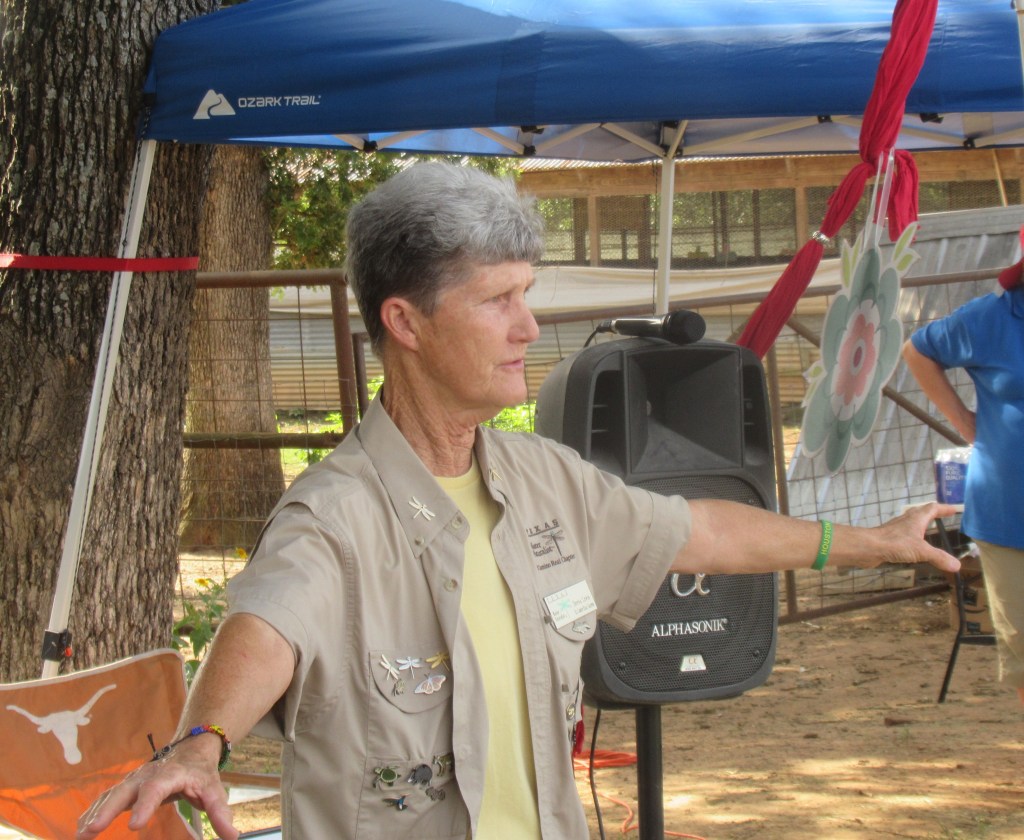
Approximately 40 scouts and their leaders and parents attended the event. It started with talks given by Catherine Johnson, Donna Lewis and Alan Rudd. An additional 15 ECRMN members helped the girls.
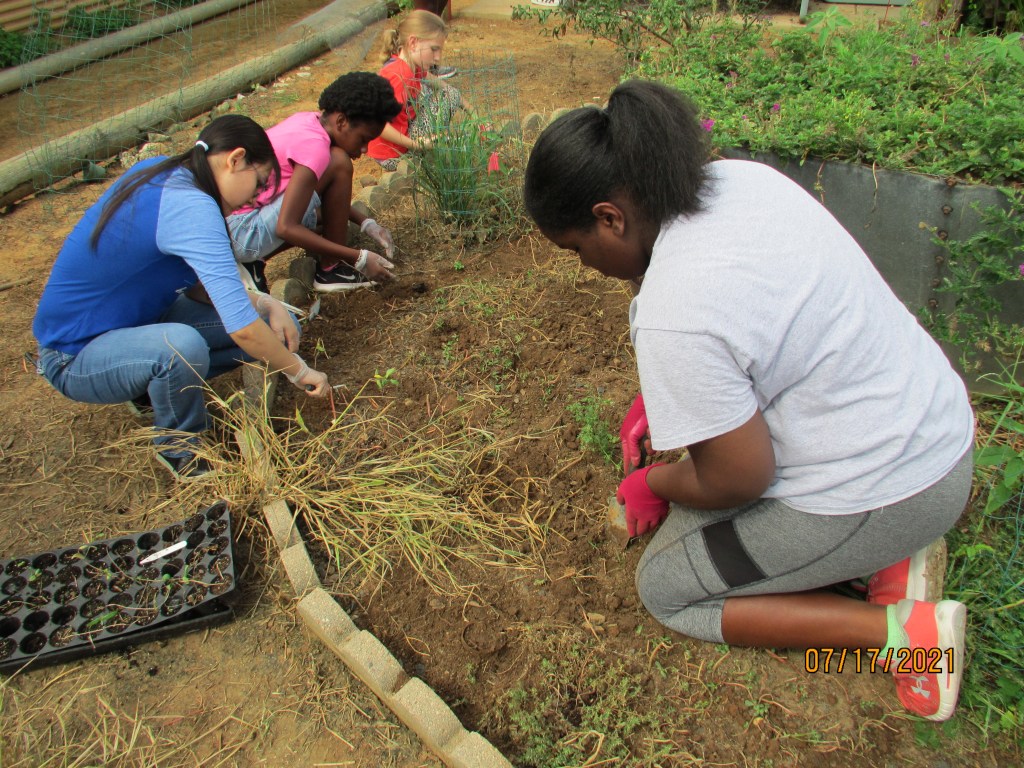
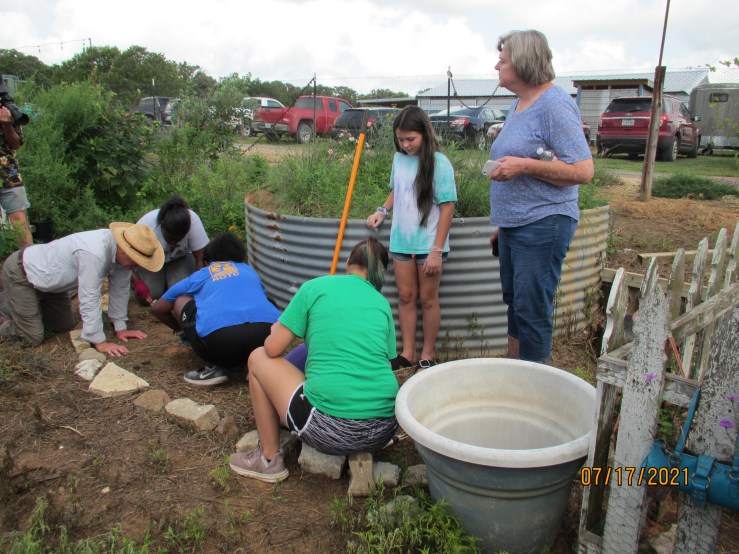
Donna Lewis spoke to them about planting milkweed to help promote the continuation of monarch butterflies. Alan Rudd spoke about the control of mosquitos with a totally natural method. Many adults were particularly interested in controlling mosquitos. The scouts then put that information into practice by planting milkweed in several sections of the wildscape.
Scouts plant milkweed
The girls and members were also excited to watch the release of many Bob-white quail into the pasture at the Bird and Bee Farm. The pasture is in the process of being returned to its natural state, and the quail were released to try to repopulate the area with a native bird that once was abundant in the area. They are rarely found east of I-35 now.
A scout shows off the goodies she’s taking home.
The girls also found stray eggs laid by other birds on the farm [guinea fowl], and monarch caterpillars that were already on the Milkweed plants that were to be planted Saturday. It was an informative and entertaining day for everyone and the scouts left with bags full of goodies and some native Texas plants to grow at home.
Two scouts explore and come back with some treasures – a large egg and some feathers.
So much went on! Enjoy more photos, as well as some taken by Linda Jo Conn. What a fun day! Click a photo to see it enlarged.
Scouts and troop leaders plant Milkweed
Alan Rudd talks about “Wigglers” ( early stage mosquitos) to the girls
Girl Scouts, GS leaders and ECRMN members wait for the quail release
Mature quail released into the wild
Girl Scout holds a baby quail. It was not released – too young
Debi, Eric, and Scott look on as Girl Scouts plant milkweed
Catherine Johnson gives her presentation
Donna Lewis shows how monarchs fly to Mexico
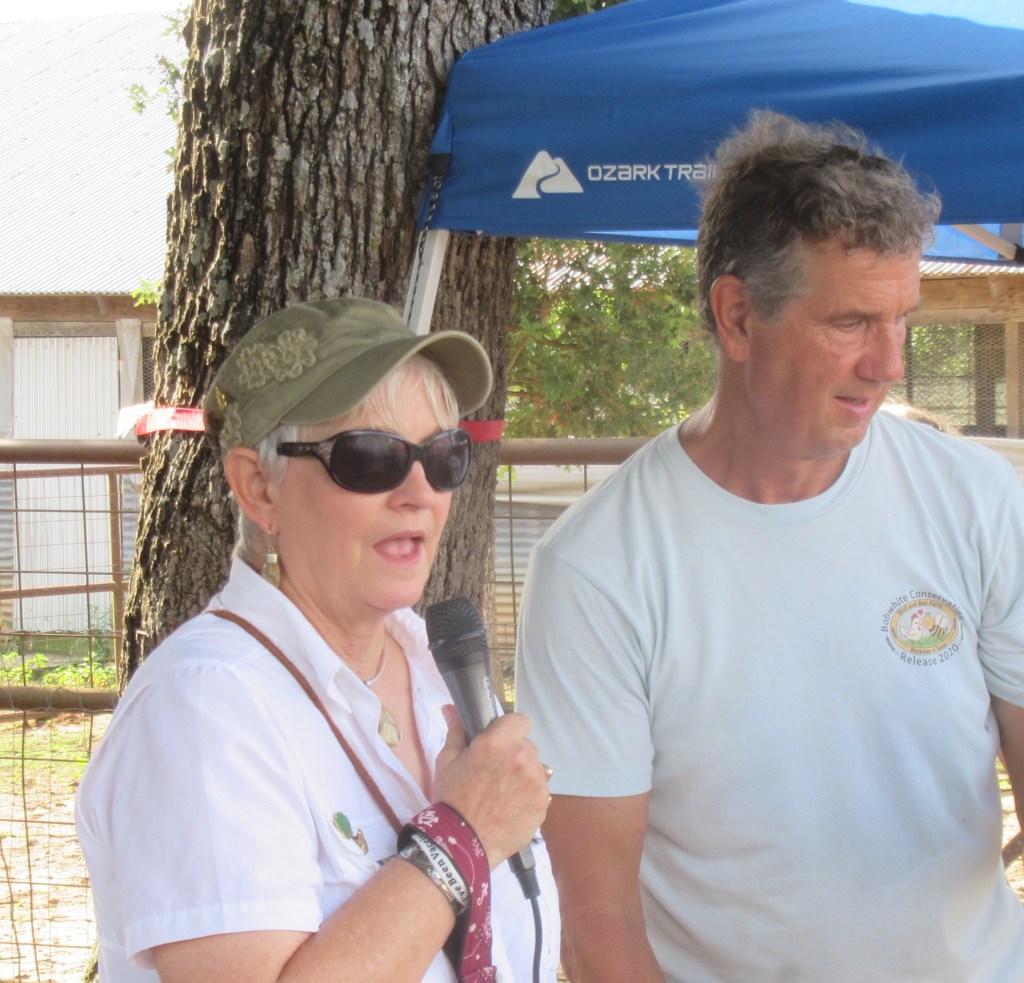
Phyllis Shuffield talks as Gene Rek of Bird and Bee Farm looks on
John Pruett, Connie Anderle, Ann Collins and I joined forces at Orchard Park in Cameron for a nature survey. Eric Neubauer arrived at the city park earlier to look for spiders and at the aerated pond and was leaving as we arrived. The park with its old pecan trees is neatly mowed. The paved walkway around the park was used by walkers and joggers during our visit. Several bordered rose beds, wildscape areas, and a huge purple martin house installed in the past are apparently not maintained as intended, but I envisioned a person or small group with the time, energy, and desire to add to the beauty and utility of the park volunteering their efforts here.
Purple martin house at the park
I was disappointed to learn that the Cameron City Manager is leaving for another position. During a conversation I had with him regarding the Great Texas Wildlife Trails Adopt A Loop Project, I was impressed with his vision and plans to incorporate more natural areas into the landscapes of the city parks.
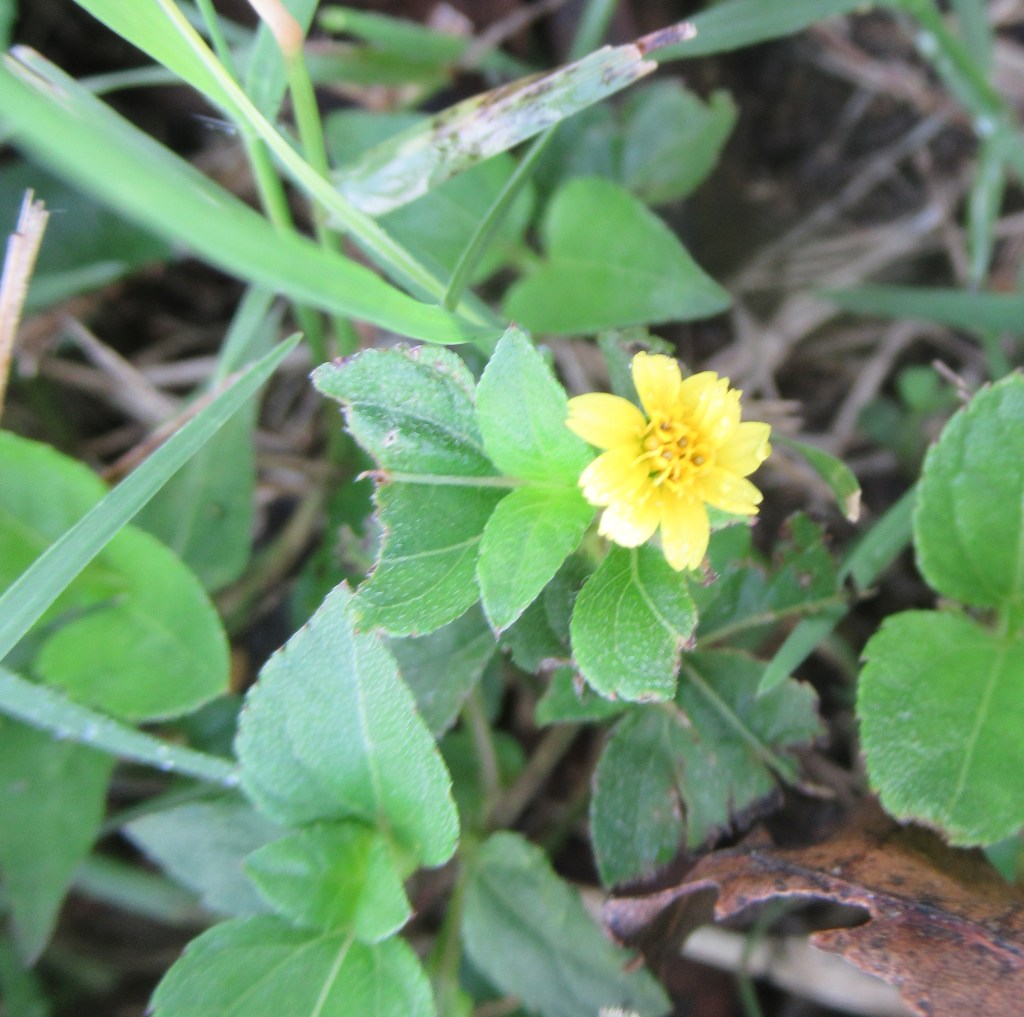
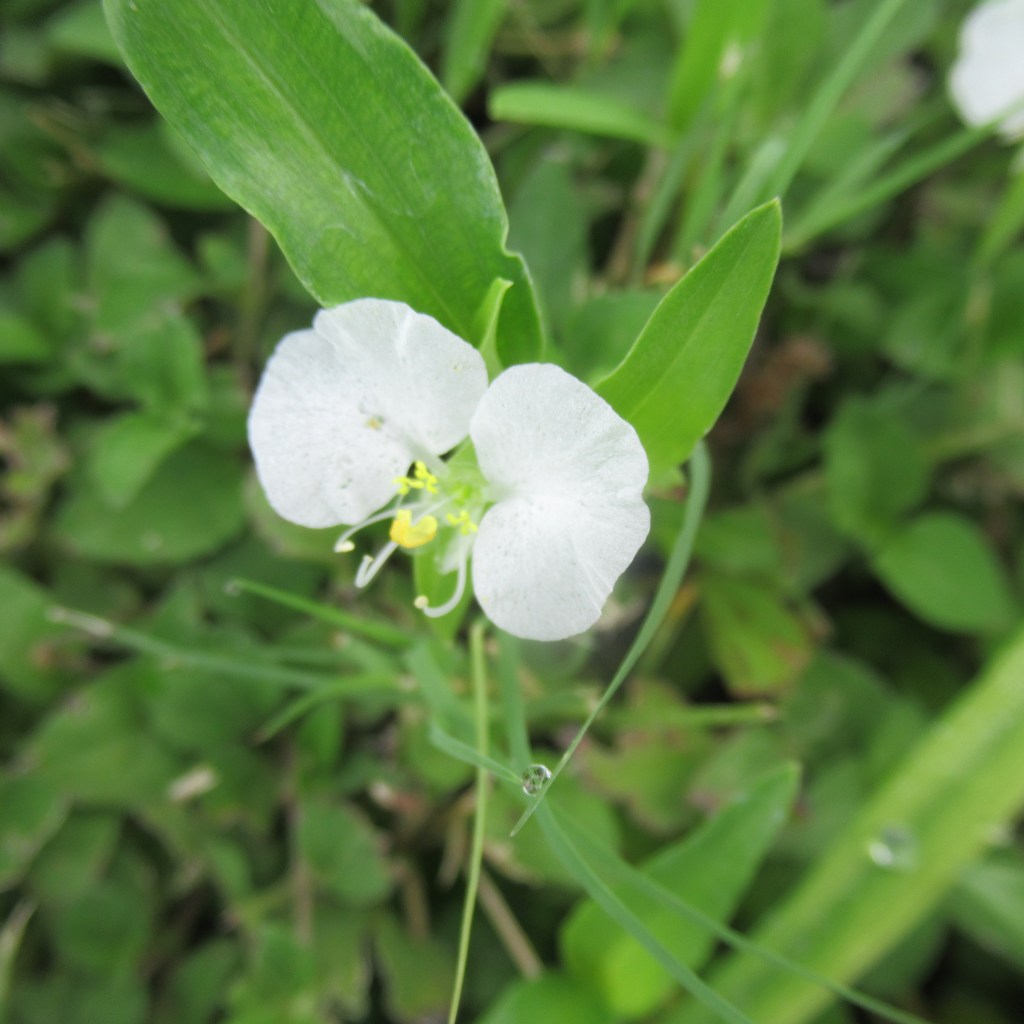
Strolling around the park “at the speed of botany,” we did some “belly botany.” Most of the plants in bloom were below the height of the mower blades. One remarkable observation was the abundance of white widow’s tears (Commelina erecta). I observed only one blue dayflower during the visit. We were pleased to see straggler daisy (Calyptocarpus vialis) and turkey trot frogfruit (Phyla nodiflora) carpeting the park. Wing pod purslane (Portulaca umbraticola) was in bloom and the tiny delicate flowers of erect spiderling (Boerhavia erecta) required a closer look.
Straggler Daisy
Erect Spiderling
Widow’s Tears
Turkey Tangle Frogfruit
Wingpod Portulaca
Plants of Orchard Park
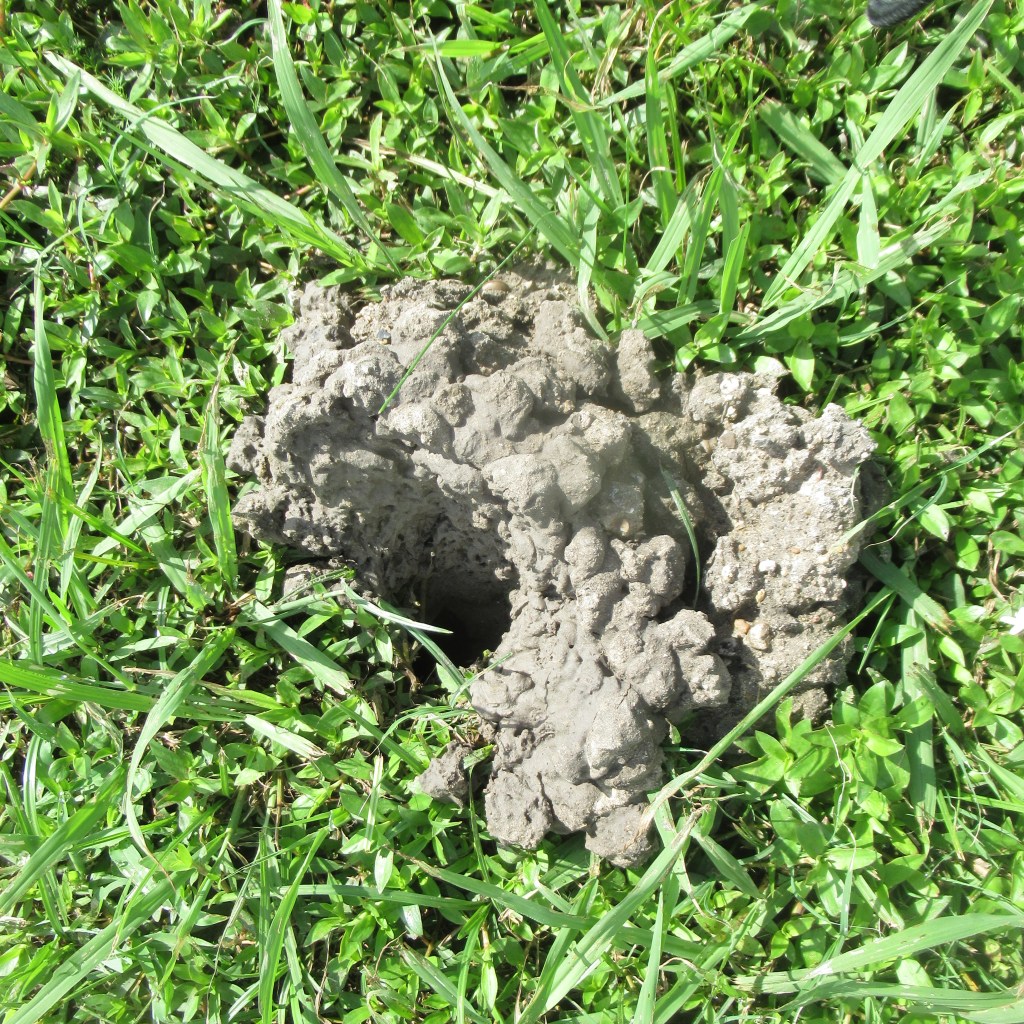
Among the animals observed was a fox squirrel (Sciurus niger) checking out the future pecan crop and several crayfish mounds (Cambaridae family). While Connie was trying to point out some rice stink bugs (Oebalus pugnax) she had spotted, my eyes focused instead on a tiny sharpshooter (Draeculacephala sp.) on a blade of grass.
Sharpshooter – Draeculacephala sp.
Rice Stink Bug
Crawfish mound
Fox Squirrel
Animals of Orchard Park
As a destination for your daily walk or to just sit and relax in the shade of the pecan trees, Orchard Park on East 6th street across the railroad tracks from the Cameron Yards is a place to go.
Colorful blooms are bursting out all over at the Bird and Bee Farm Wildscape. Whatever your favorite color might be, it’s in there.
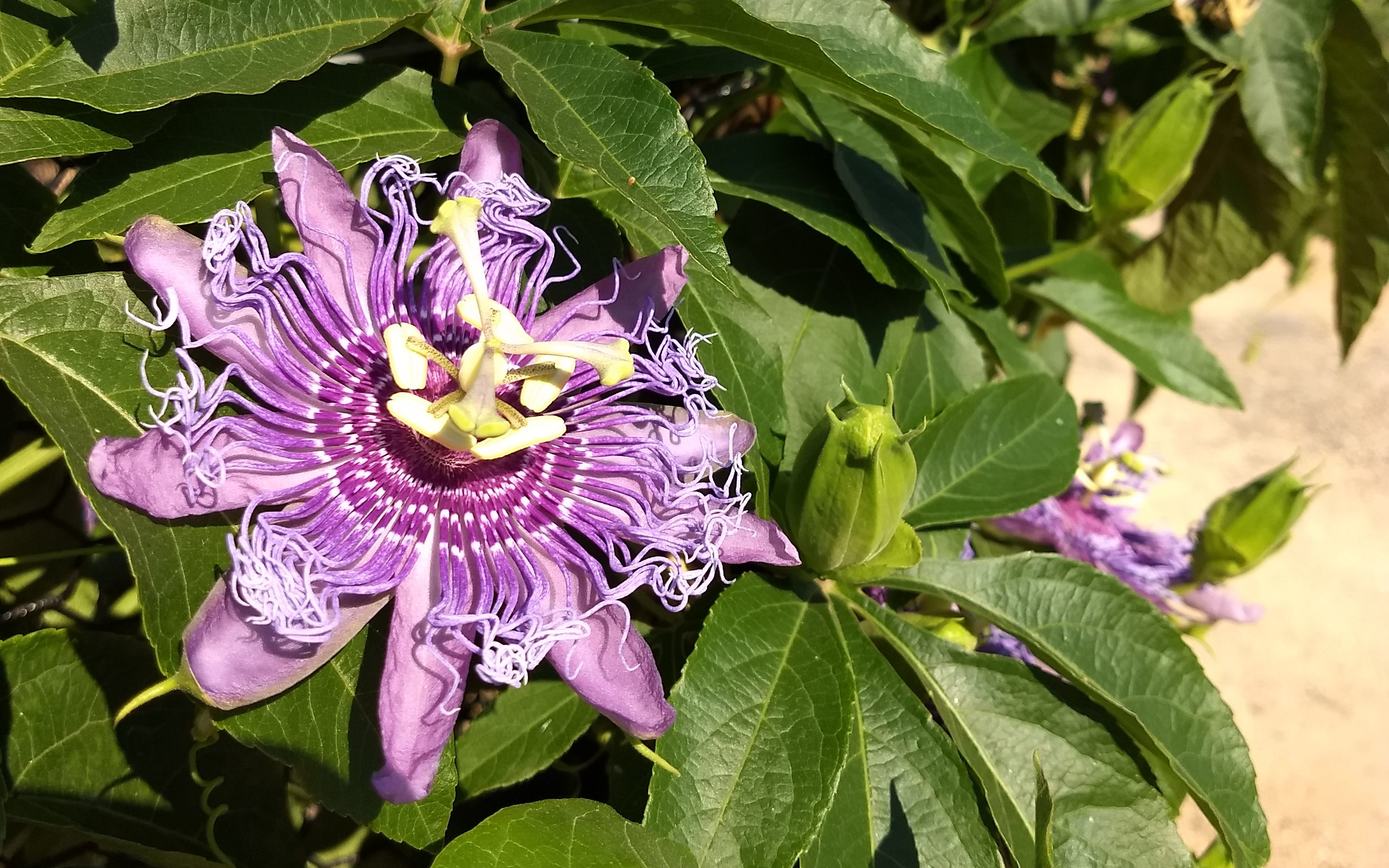
Passionflower
Shades of purple are particularly abundant. They range from the bright Mock Vervain purple to the pale bluish-lavender of Palmleaf Mists. There is a specimen of just about everything in between. I’ve included seven different flowers that are classified as “purple”. And all of them are native to Texas. They can grow in sand and blackland and most of them don’t need much rain.
Garden cosmos
If purple is not your shade, reds, oranges, yellows, and whites are also broadly represented. I encourage you to come and see all the colors. There are plenty of butterflies and bees to watch, too. They are particularly fond of most of these flowers.
Palmleaf mistflower
Mealy blue sage
Spiked speedwell
Slender vervain
Purple coneflower
Mock vervain
You can plot next year’s garden from here. And often times there are free samples to take home. Our chapter will be hosting Girl Scouts on July 17 in the morning, at the Wildscape. It’s a good time to go check out the place for yourself.