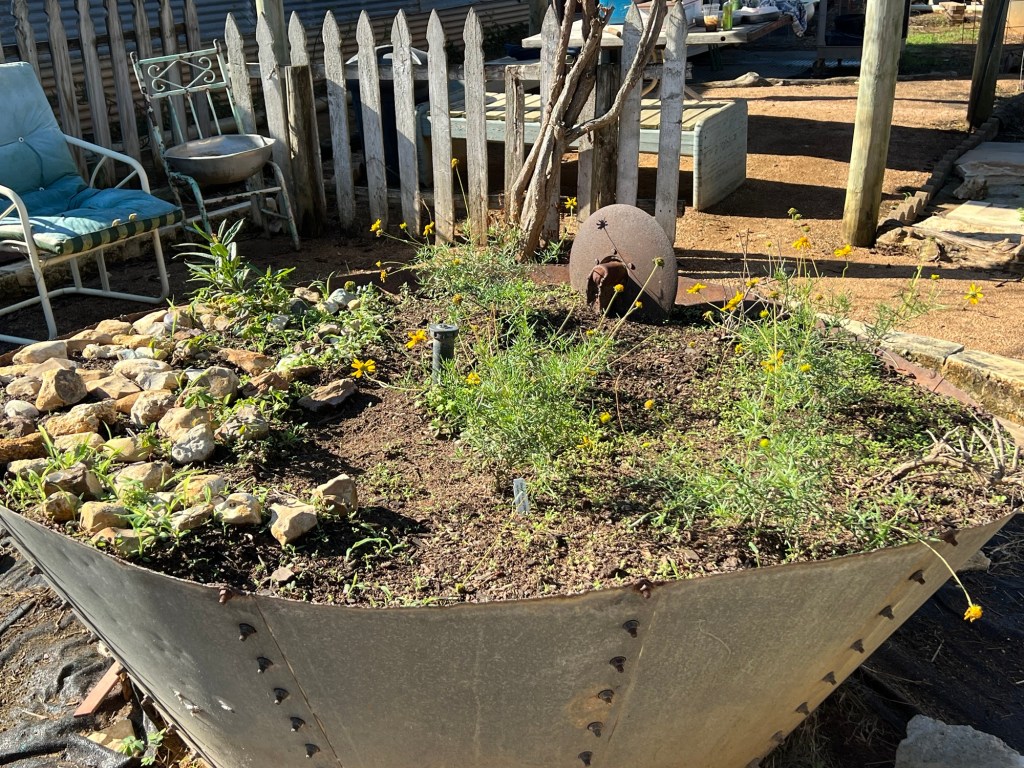
The mini wildscape at All Saints Episcopal Church in Cameron got some new plants and grooming, and the fight against the persimmons continues.
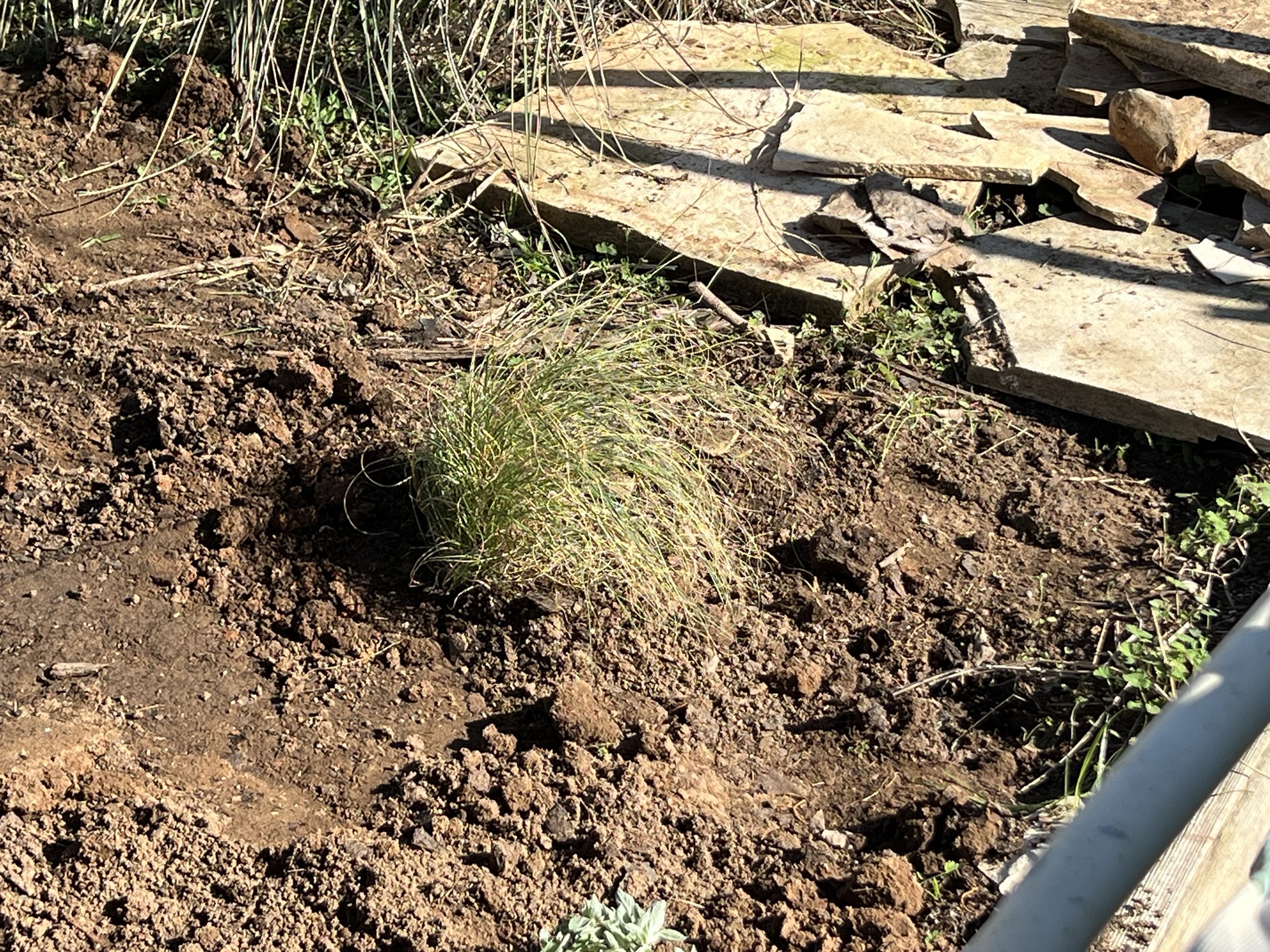
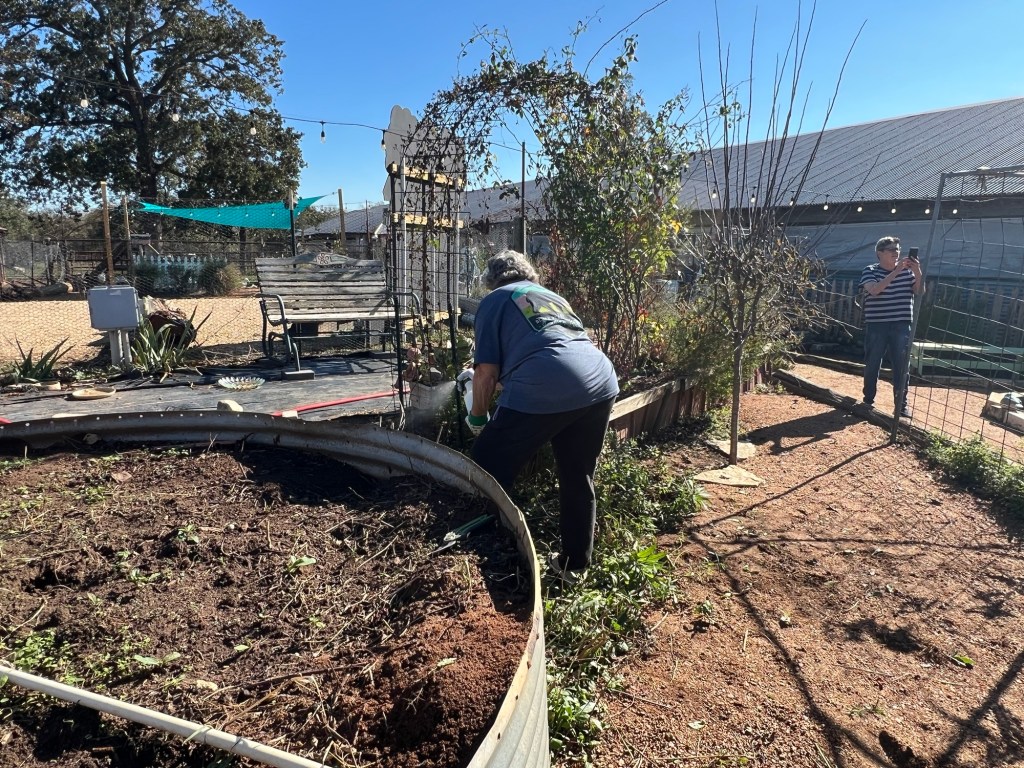
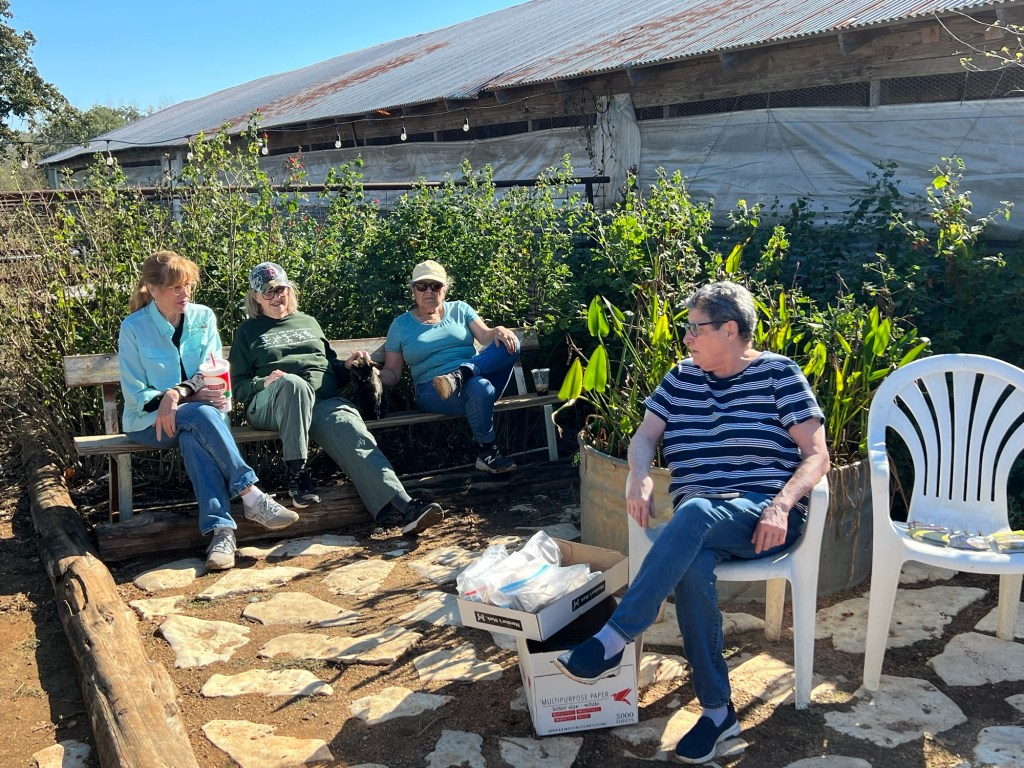
Chad Cryer, Liz Lewis, Alan Rudd, and Carolyn Henderson planted six new Mexican Sage bushes, pruned back what was still blooming and scraggly, and took out a few more persimmons trying to pop up. Alan was gone by the time we thought to take photos.
The wildscape is still supplying food to butterflies, bees, and Texas Spiny Lizards which all showed themselves once it started to warm up.
I’ve been making up for lost time at our Chapter’s little bird sanctuary, Wild Wings. Fall and winter are the best times to visit, anyway, since winter visitors may appear. I brought all my birding equipment for the past few weeks, so I could see all the little guys flitting around with my better-quality binoculars.
I also brought my real camera and telephoto lens, so here come the bird photos!
I got to watch a Red-shouldered Hawk and multiple Red-bellied Woodpeckers last week, but didn’t get many photos. I also enjoyed checking out the plants Gene has put in the beds, too.
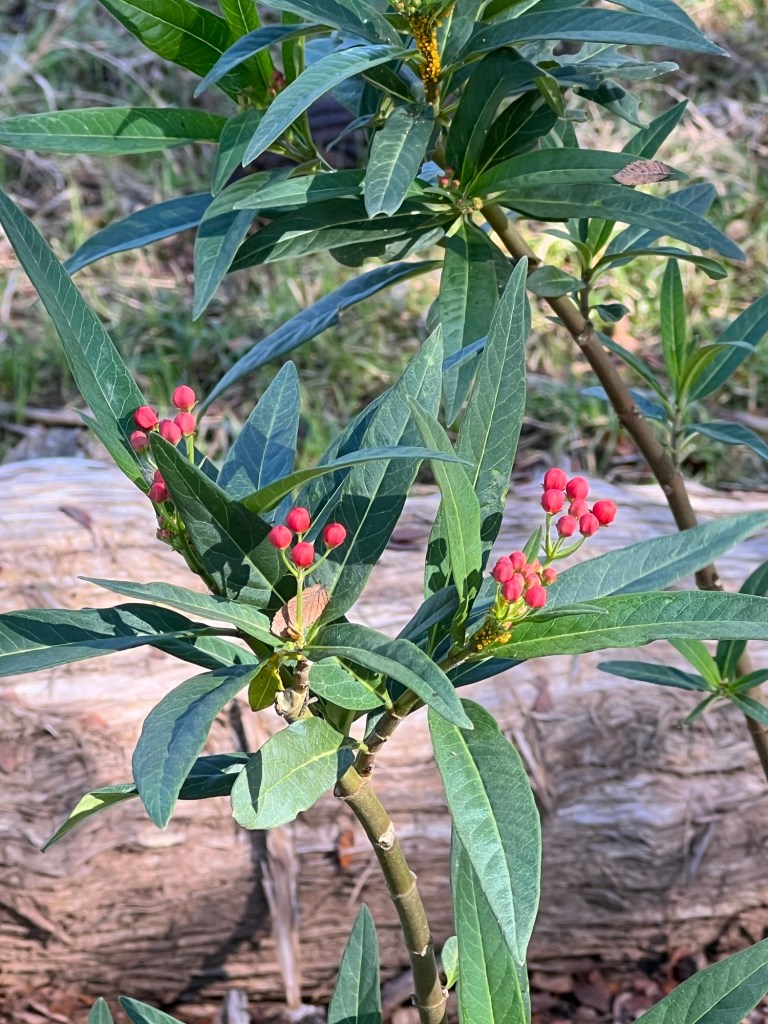
Non-native tropical milkweed will be beautiful next spring and summer.
This week, Kit and I spent time at the sanctuary listening to the birds—we have heard 17 species via Merlin Bird ID this week, plus additional ones last week, so this will be a good month for our totals, which have been missing for a while due to our volunteers and their issues/schedules (I mean me).
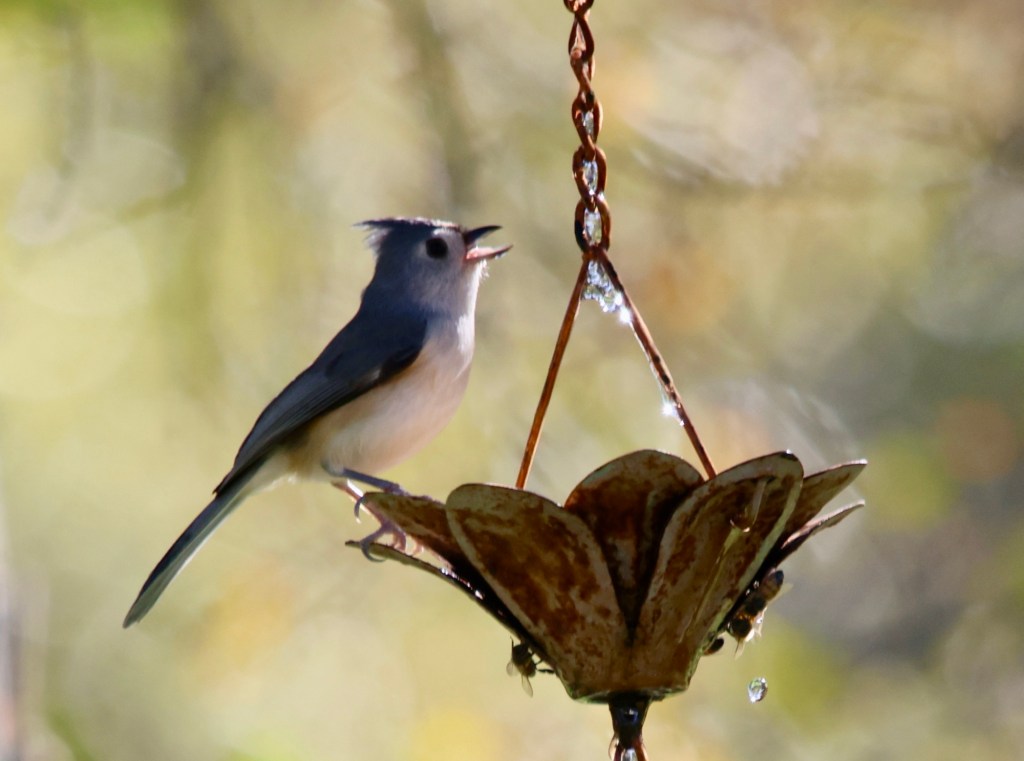
This Tufted Titmouse on the rain chain did not judge me.
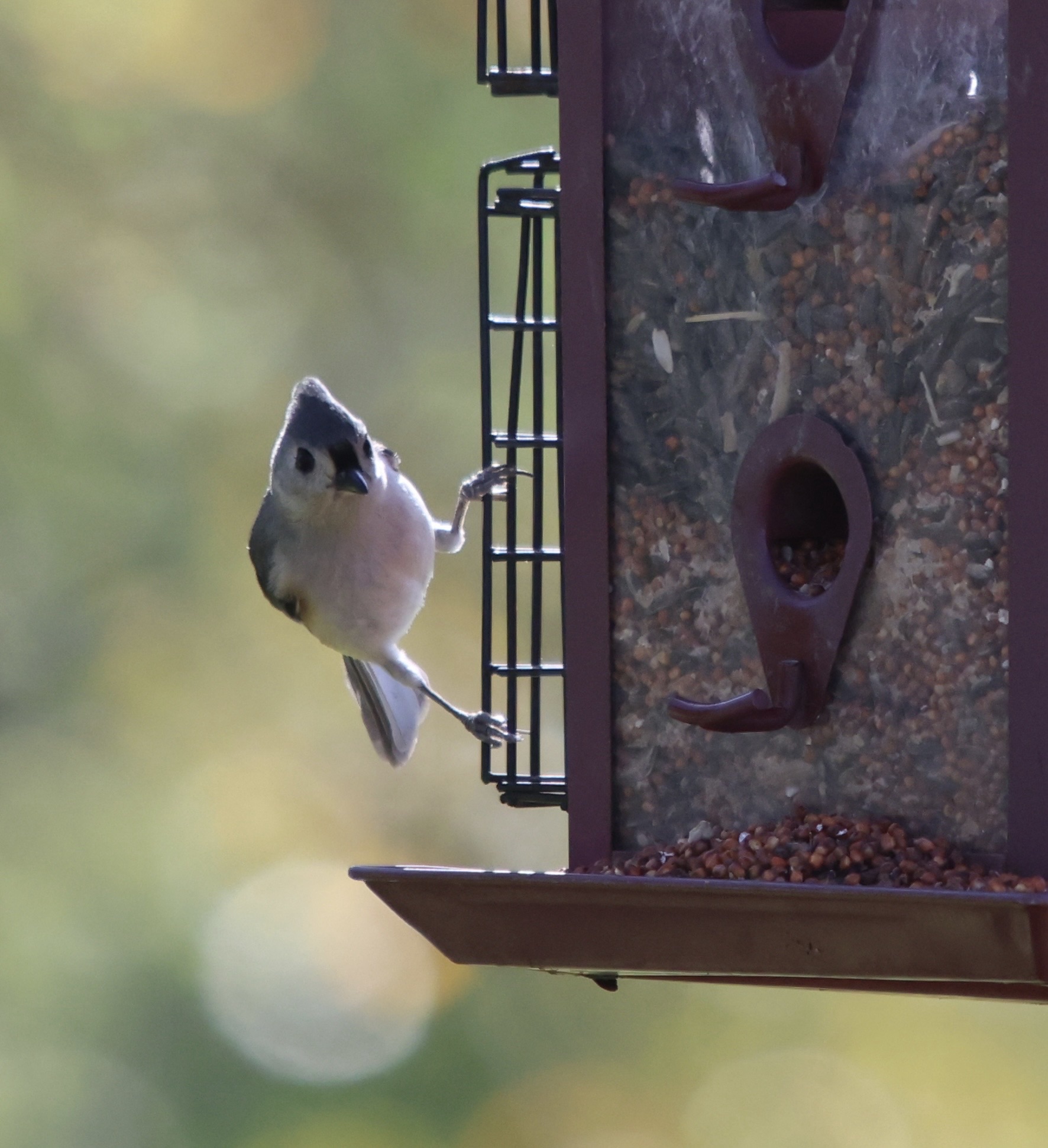
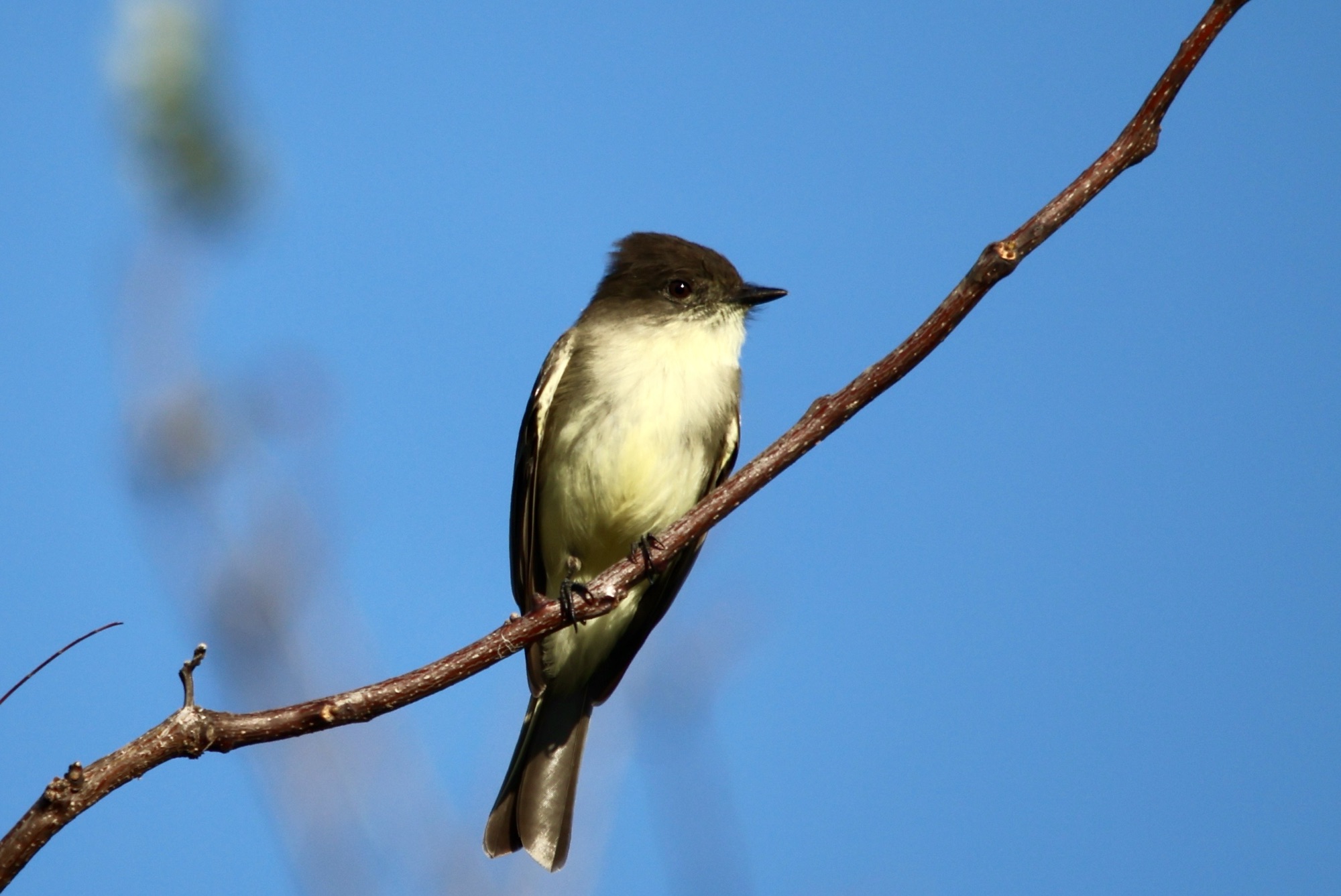
Sitting quietly in the sanctuary with all the feeders filled to the brim by our caretaker, Gene, lets you get some fine photos of whatever birds come to feeders, which means Carolina Chickadees and Tufted Titmice, and one Eastern Phoebe.
What’s in here? A new perspective This is high quality stuffWhat are you looking at?Phoebe! Phoebe!My pretty tail!Fun times with birds
The sanctuary also is home to many bees, as it’s near an apiary. The bees love the rain chain that drips into the bird bath. Look at all the bees!
They’re on the right.
We encourage visitors to the Wildscape to come on down for some peace, quiet, and birdsong.
All the preparations have paid off for our pollinator project at the Milam Wildscape. Our grant from the H-E-B Pollinators for Texas is going a long way toward creating just what our target species need.
The pollinators are waiting patiently for their new nectar and pollen sources.
Starting early on Saturday morning, volunteers got their hands dirty and planted many interesting native grasses and ground covers in the new prairie area.
Catherine Johnson explains what kinds of grasses have been planted.
This new section isn’t covered in plastic, because the grasses and ground covers should quickly fill in the space and eliminate unwanted volunteers.
The new area
All the different textures and colors of these grasses will provide a beautiful background for other annual and perennial natives.
Lindheimer muhlyWith apologies, I can’t remember the names Catherine told me for these plants.
There are various new plantings elsewhere, thanks to all the creativity and hard work of our team.
New plants I. The giant planterNew items in the succulent areaworkingWorkingTaking a break Kitty had to take a break, tooNew redbud
Of course, a visit to the Wildscape isn’t complete without some pollinators. We hope their descendants enjoy all the new plants.
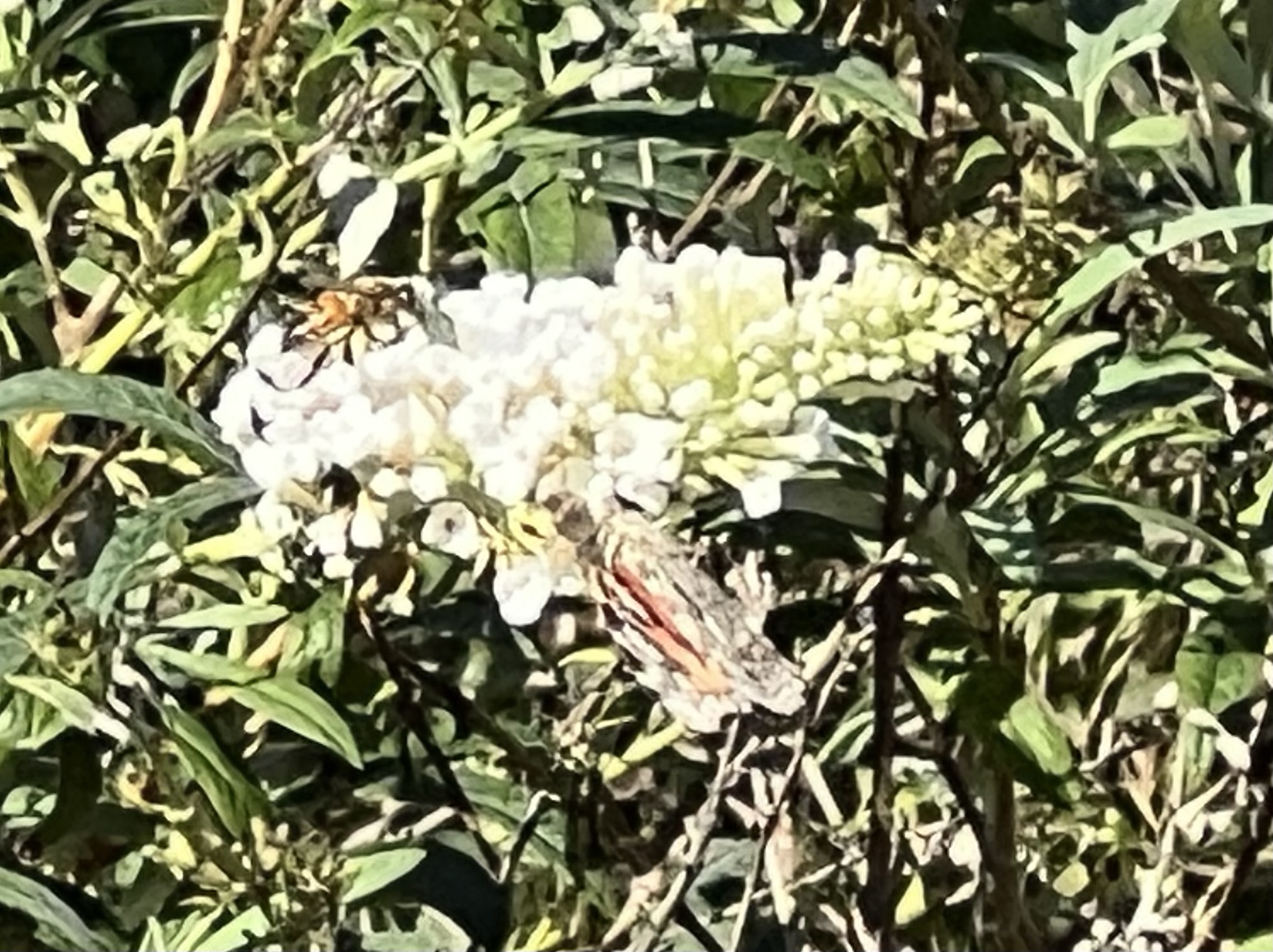
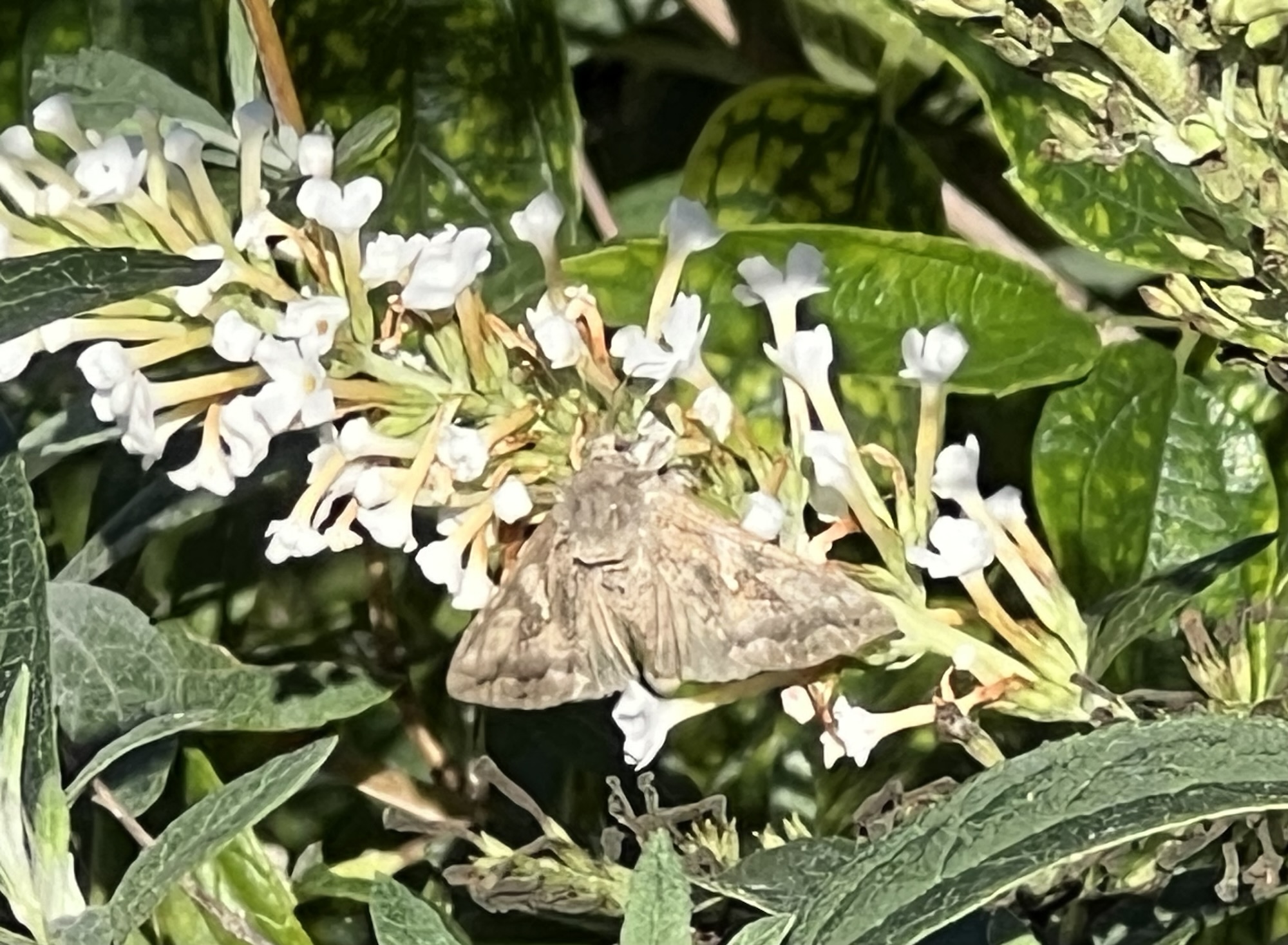
A tiny skipperPainted ladyBee and butterflyGulf Fritillary Another fritillary Gray looper mothHoneybee digging deepResting carpenter bee.
There’s another workday next week, then the plants will settle in next month.
The Pollinators for Texas project is a collaborative effort with H-E-B and the Texas Master Naturalist (TMN) Program focused on enhancing native pollinator conservation across the state by promoting awareness, conservation efforts and creating sustainable pollinator environments. The initiative aims to engage communities in supporting pollinator-friendly practices through funding TMN chapter-led projects and programs.
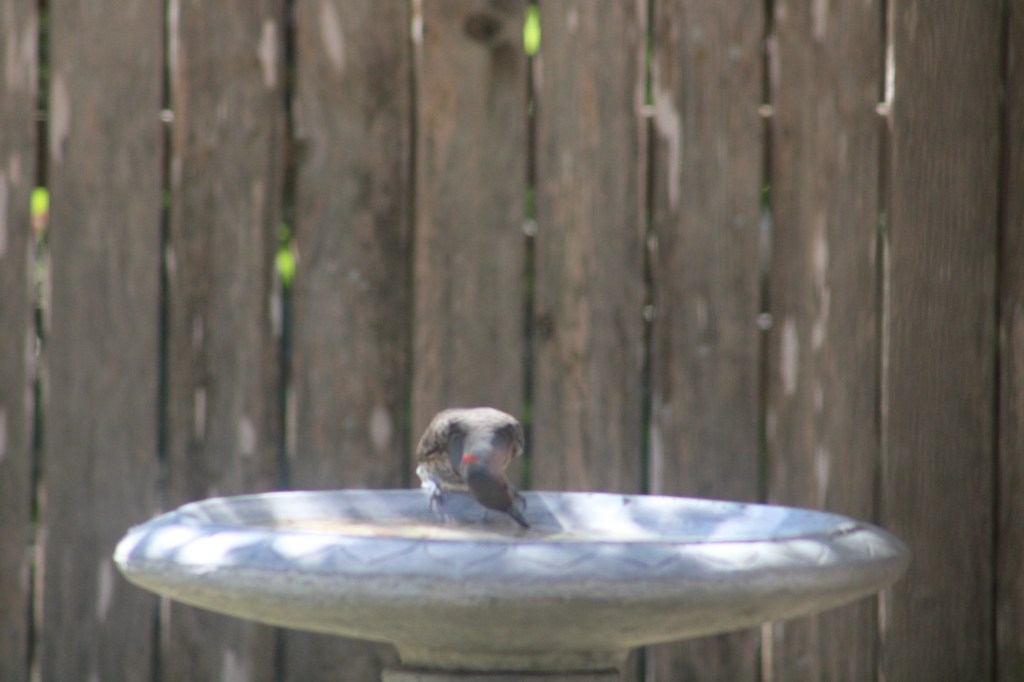
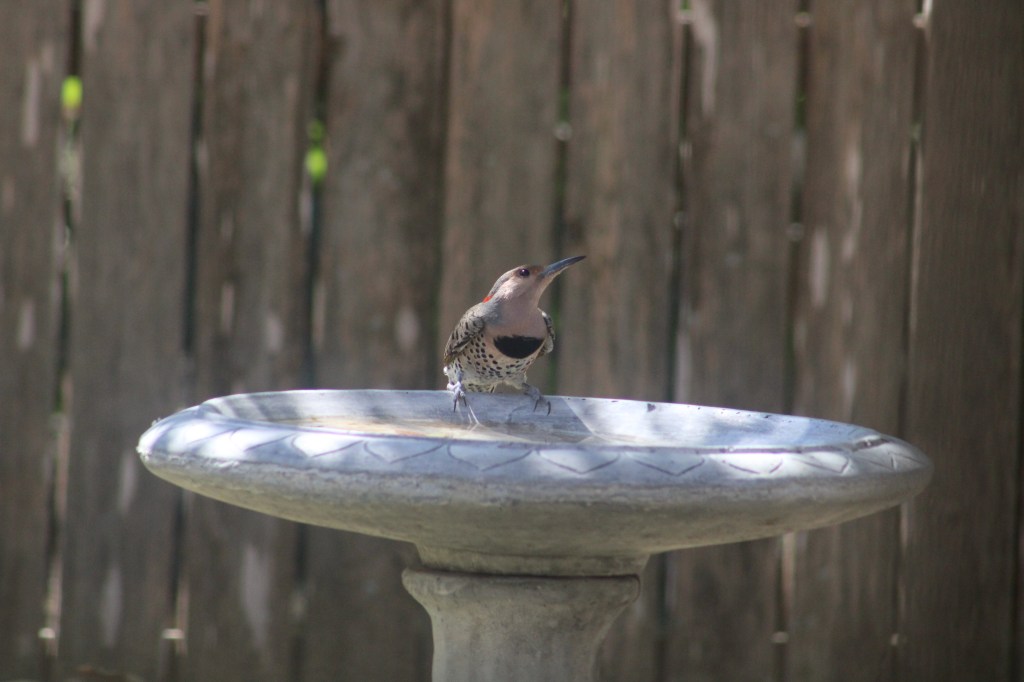
I went home for lunch on Monday and was nicely surprised by a first sighting for me. A Northern Flicker was drinking out of my birdbath. I did not know what it was, so I worked on some photos to put on iNaturalist. I had to take them from inside my house through a window, so they aren’t perfect, but they’re clear.
It’s considered a woodpecker, but it has dappled brown feathers with a red spot on neck and black markings. An it’s unique from other woodpeckers because it hunts its prey on the ground. Flickers prefer ants! This explains why it’s in my backyard. Fifty percent of its diet is ants. It also lets the ants crawl on it to rid it of parasites. I have an ant problem. Plenty for it to eat. Another difference from most woodpeckers is that it migrates. It can’t find ants in frozen ground.
I looked to see if anyone else in Milam County had reported one, and I saw the only other one was Michelle Lopez in 2024. She first heard it with her Merlin then she got some photos.
I really enjoy finding new sightings. When I tried to get to a better window to take photos it flew away. I hope it comes back and eats lots of ants.
Since I do photography in the dark with artificial lighting, I’m often get photobombing visitors. On the last trip, my experience at Monahans Sandhills State Park was especially hideous with a multitude of some kind of wasp which even stung me three times, once when I sat on one. By the time I got to Oasis State Park I had learned to keep my headlamp set to red lightand only turn on the lighting for photography as briefly as possible.
Some of the photobombing insects become meals for my subject spiders, which is a good thing. I like sending them away with something to show for it. I also got a couple of nice adult antlion observations this trip.
Brachynemurus hubbardii
Then there was this moth from Oasis State Park just across the border near Portales, NM. I put a species ID on it, then someone put a different ID on it, and then we agreed both were wrong. After a search of observations around the entire country, I finally found a pretty good match. Lacinipolia vicina is primarily found in the Northeast although there are several observations scattered around the country. The closest two are in California.
So, you never know what might drop in. The 55 observations on iNaturalist peak in September so that checks out OK.
















 Nature Along the El Camino Real