Butterflies Are Still Here

by Donna Lewis

Can you believe it is almost what us Texans would consider the end of summer? It is HOT!!! I would like to know when the humidity will go down and the temperatures lighten up just a tad.

Gulf Coast fritillary

For those of you who don’t know me, I hate cold weather. But now that I have matured (a nice way of saying I’m older),  I do like it to be in the middle somewhere, say 70 to 80 degrees with no humidity.

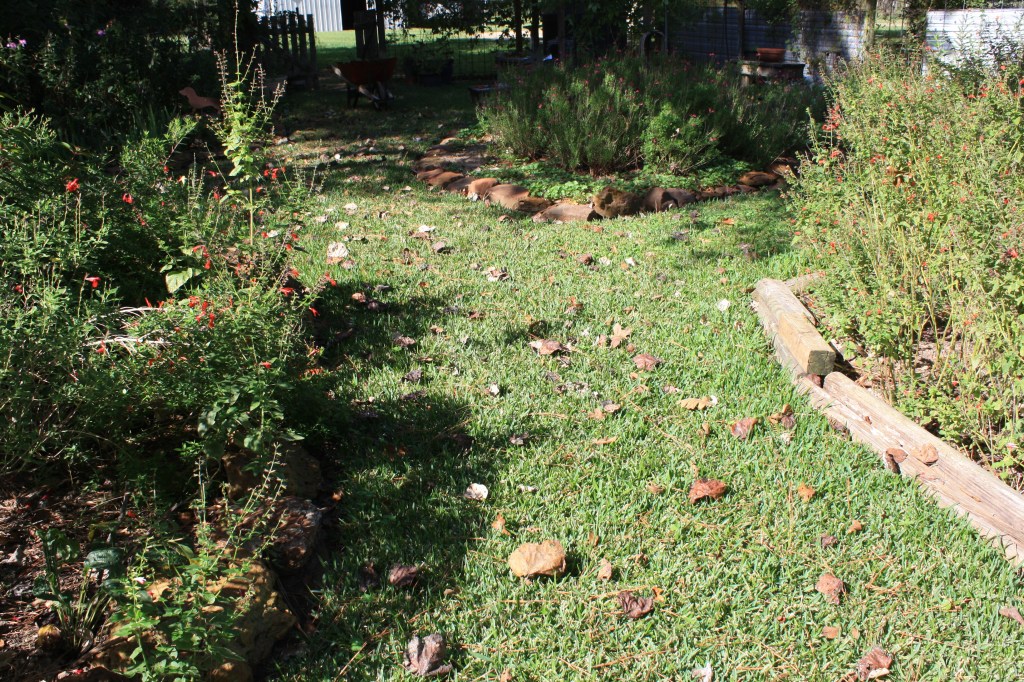
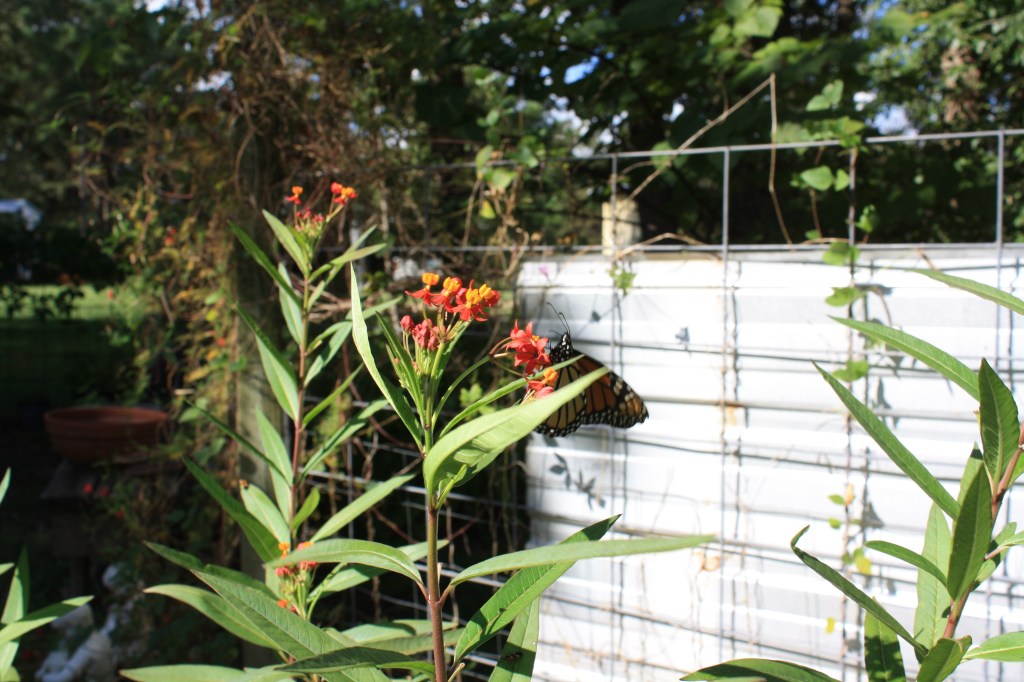
Today as I walked through my garden, there were so many butterflies everywhere trying to find the last flowers of summer that  were still blooming.  I have sulphurs, queens, pipe vines, Gulf Coast fritillaries, black swallowtails, tiger swallowtails and an assortment of small skippers.                             

Swallowtail
Common buckeye (by SA Kendall)

The zinnias are tired and ready to go back  to Mother.  The salvia are looking ragged. The cosmos, mist flowers, sunflowers, daisies , coneflowers and lots more are just pooped out.  Now, the vines are at their best.  Passion flowers, cypress vine, coral honeysuckle, and others like it hot. The milkweed also likes it hot and dry.  I still have some of it, just no monarchs right now. I guess my little beauties will be with me to the end.  I hope they are here a little longer, I love them so.

Drink a little nectar and carry on.

Garden Spiders: Photo Essay

by Pamela Neeley

Suddenly, in last two weeks, the garden spiders are out.


I went on a walk, around my house, and found all of these lovely yellow-and-black spiders. They have carved out distinct territories for themselves and are working on their signature web patterns. This one is on the carport.

The photo with shadow may be my favorite house spider photo. Many of the spiders look like dancers caught in mid-leap.

This next one is dancing under the eaves on north side of house. Her distinct patterns and colors are so fresh.

This one is the biggest and fattest. She set up her kingdom between buildings, but on the west side of my tool shed. That’s the best setup for dramatic photos.

Where do the garden spiders live the rest of the year? Why are they here now (hopefully the answer is grasshoppers) instead of July? I only found one spouse spider “shell,” by the way.

Here’s a minute-long YouTube video I found of a garden spider spinning her web.

And here’s a video Sue Ann Kendall made of one wrapping up a grasshopper for dining on later (39 seconds).

Closing Down the Martin Houses

by Donna Lewis

So, the sad day has finally arrived for purple martin landlords. Our friends have gone to their winter home in Brazil.  It is so quiet now without their beautiful song and chatter.

The martin houses must be cleaned, closed, and information about what was in the nest after they left recorded.

Normally, I just have poop and dead bugs in the houses. But, surprise, surprise, there was a little more this time (in the apartment house, not the gourds).

Ready for anything.

I opened the first slot that opened four compartments and yellowjackets came flying out at me.  Oh boy. I managed to only let one sting me on my hand, which got really swollen.

So, how do I get the little devils out? First of all, never use pesticides in a bird house of any kind. The residue could hurt newborn babies who have no feathers.  They are pink and blind like baby mice, very vulnerable. What I do is I take tongs and yank out the nest, then run like heck. Well, maybe not run anymore, just walk real fast. Then I wait for the adults to move on.

This year there were two red wasp and two yellowjacket nests in my apartment house. It took me six hours to get them all out.  I will close up the gourd house another day.

I left the apartment house open for now until I can safely clean it out with the wet vac, then wipe it with a wet cloth. I let it completely dry. Then, I put a cover over it till next February, when the martins return.

The main thing is to be careful when you look in the houses, and secondly not to use pesticides .I will miss my friends and hope they survive to visit me again.

What’s in the Hole?

by Donna Lewis

Early in the morning on Saturday, August 14, I was looking for my friend the Gulf Coast Toad that I say hi to on most mornings.  She is a big girl that lives under the faucet where I had put a flat rock for her to hollow out her house. It is always damp so she likes it there.

I like frogs and toads. They are gentle and sweet. I didn’t see her pop her head out to see me this morning. Instead another head with a yellow mouth outline looked up at me. Oh no, I think something got my friend, I thought. 

I could only see about an inch of its head. It looked like a lizard of some kind. Well, I am not afraid of lizards so I decided to take a photo of it.  You can see the first photo I took, before anyone poked their head out.

The hole under discussion

So I tossed a little rock in the hole to encourage it to come out for me so I could take a photo.  I leaned down pretty close to the hole. Woo boy!!! Something came out alright, but it wasn’t a lizard. 

You don’t see any second photo because I jumped back as fast as I could. It was a black snake with a yellow mouth and belly. It shot out that hole and came at me really fast!! 

Donna asked Suna to find a picture for her, so here’s one from iNaturalist, © tom spinker, used with permission.

I must admit it scared me.  I am surprised I could move that fast. After looking through my snake guide I learned that it was a Yellowbelly (or plain belly), a non venomous water snake.  The guide also said it was a vigorous biter. I am glad I didn’t find out how vigorous.

So, I am sad about my toad friend…life outside.

Wolf Spiders Are too Hard for Amateurs to Identify

by Eric Neubauer

Wolf spiders are too hard for amateurs to identify

I’ve heard that, and you may already believe it even though there is at least one species, Rabidosa rabida, that most people are familiar with. On bad days I even believe it. Wolf spiders come in many kinds and sizes, and their rapid movements out in the open often bring them to our attention. Rabidosa rabida appears to seek out commotions in daylight, and we’ve all been surprised by seeing a big one standing motionless nearby when we’ve been busy doing something. There’s a game I play. I set foot on a property and say, “Now where are the wolf spiders?” With a little practice, you can be a regular winner. So, people are constantly reminded that they can’t put a name to those dang wolf spiders.

The life cycle of a wolf spider is simple compared to a butterfly. There are eggs, spiderlings clinging to their mother, and then spiders which get bigger and bigger and almost unnoticeably change from juvenile to adult, and then they grow some more. Since they have exoskeletons they have to moult repeatedly as they grow. During each molt they have the ability to make physiological changes including re-growing lost legs. None of the changes are as dramatic as a chrysalis turning into a butterfly, but many subtle changes can occur during each molt. It’s that long period of gradual development that causes most of the identification difficulties. I figure you’d need at least five separate identification guides to cover Hogna antelucana at various times during its growth. Because I rarely encounter older spiders, I was unaware of a later change in Hogna antelucana when I did the presentation back in July. Thanks to seeing other people’s observations come in during July and August I’m aware of it now, and an addendum will be forthcoming. Think of the difficulty of writing a guide on wolf spiders. Each species would take a half dozen pages and be too complicated to make sense of unless very carefully presented. And what about regional and seasonal differences?

Wolf spider with spiderlings. Photo by SA Kendall.

I don’t want to scare anyone away from trying to identify wolf spiders. The truth is, if you take photos of multiple spiders in one place at one time you’ll find many as alike as peas in a pod. Given the same history, the appearance of spiders is remarkably similar. Get to know a population and watch it for a year and then you will be able to identify the next individual on sight regardless of their age or sex. Going to a new place and encountering the spiders there the first time is a greater challenge, but it may turn out there is less regional variation than people thought after developmental changes are taken into consideration. In the long run we’ll work out which characteristics are most reliable for identifying each species. Having iNaturalist and BugGuide is a great asset. I was able to virtually travel 4,000 miles looking for a particular species group along the way in less than a week and without leaving my house. Nevertheless, I still prefer to interact with them in real life.

Pardosa mercurialis with egg sac

The main image of the observation below was taken on Mustang Creek under the U.S. 79 bridge southeast of Taylor. I was specifically looking for it there and found just one. After the photo session she was released right where I found her and is probably covered in spiderlings as I write this. I’m trying to locate all accessible populations of these in eastern Williamson and Milam Counties. At this point I found them in three locations, plus a single individual roaming downtown Taylor a half mile from where it should have been. That’s all I could find until water levels in the creeks and rivers drop. They like rocky or pebbly areas with water on one side and low vegetation on the other. If anyone has an accessible area like that on their property, I’d appreciate a chance to visit.

Another view.