ECRTMN Wildscape Spreads Its Seeds Way Beyond Boundaries

(to my house)

by Carolyn Henderson

A Turks Cap with pink flowers was planted at the El Camino Real Master Naturalist
Wildscape last year. Due to its prolific growth, which was over six feet tall and wide, and it
being covered in many pink flowers, it was the wonder of the season, including with me.

I was determined to grow some myself! Catherine Johnson, site manager, felt
compelled to give me a “baby” plant that had sprouted up under the big plant just in
case my attempt to grow some from seeds didn’t pan out. I should point out that a few
“baby plants” of another species had not made it at my house.

One of the reasons I really liked this plant was that it likes shade. It can grow large even
if it’s in the shade most of the day. My front yard was covered in shade all day long due
to some very tall and old Live Oaks that run across my front yard. Notice I said “was.” It
is not quite as covered now. The freeze/ice of 2021 and freeze/lots of ice of 2023 has
severely pruned those trees to the point of blue sky now being visible when one looks
up.

I have planted a few other things from the Wildscape that are alleged to be shade
tolerant, and they are to a degree, but they are stunted in growth by too much shade. A
Flame Acanthus reached about 12 inches tall and finally put on two blooms last year.
This pink-flowered Turks Cap was in shade for a good part of the day, and it grew like
crazy. It did get chicken poop fertilizer, so that probably helped.

So, I took about 10 of the small, red apple-looking seed pods late last fall. I did some
research on how to grow them from seeds and proceeded to try all versions. There
were basically three different methods suggested by different people.
First, it was suggested to stick the whole seed pod in the ground. I did two in that
manner. I put one in the ground and one in a small potting container. Neither has come
up yet.

Second, it was suggested to open the seed pods, remove the seeds and clean them of
any of the pod then dry them in the sun. After the drying, it was suggested to pot them
in very small containers and put them in the sun. I did eight in this manner. I started
them inside in a window that doesn’t get much sun. The weather was staying pretty
moderate, so I moved them outside. I watered them periodically, and left them out
during the freeze. Nothing has sprouted yet.

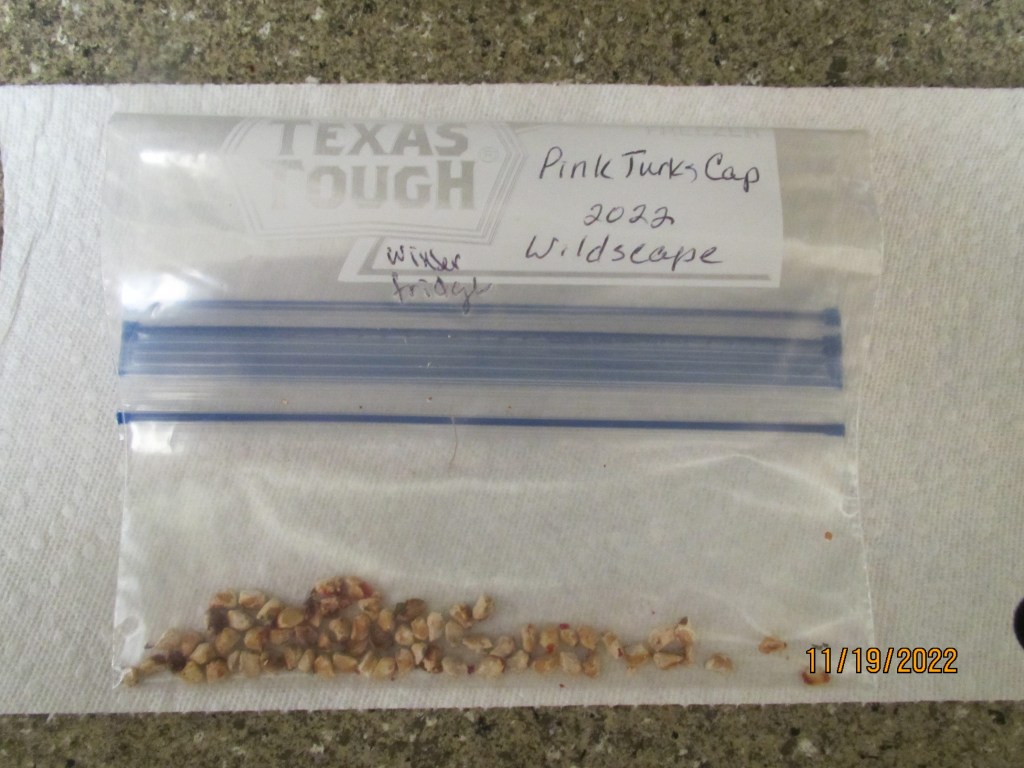
Third, follow the cleaning advice in the second version, then put them in an airtight bag
in the refrigerator for the duration of winter. I used a zip lock bag. Plant them in late
February or early March. Two weeks ago, I purchased a container made for starting
seeds that would fit on my kitchen window – the only window that is accessible and gets
several hours of sun in my house. I took some dirt from the empty flower bed where I
intend to plant them if they grow and planted them. I dropped several seeds into each
section of the container. I had seeds left, too. This window is in my kitchen, so I’m
paying close attention to them.

My first positive sign of growth was the “baby plant” that I put in a large flowerpot last
year. It is back! I should note that it is in a sunnier area.

My eureka moment came on Tuesday this week! One of the refrigerator seeds has
sprouted. I excitedly yelled “Yea!”, which caused my son to come into the room to see
what was wrong with me. He reminded me that I had not invented something new. But I
had grown it from a refrigerated seed.

I’m hoping it really will like all the tree shade in my front yard.

Purple Martin 2023 Update

by Donna Lewis

Hello, everyone who loves Purple Martins. As of today, February 21, 2023, I have five Martins. They arrive one at a time.

The birds

I have opened up all of the gourds now on the rack today. The apartment house is still vacant, so all the northern compartments are still blocked.

When we get straight line rains those compartments get wet sometimes, and I have to remove all the wet pine-needles and replace them.

Last year I only had three pairs in the apartment house. I do not know why since in years past all twenty-seven cavities were occupied. It may be because trees in the vicinity have grown taller and it is harder to gain entrance to the house?

Anyway, it is so nice to have some happy little friends singing to me.

Since our place suffered from the recent ice storm, and trees and limbs are down, it shows us that life goes on. There is always something to sing about.

I also placed the oyster shells out that the birds use for grit. Many other birds visit the platforms I put it on besides the Martins. The Bluebirds and Cardinals really like the shells also.

The grit

So, if you have Martin houses, the birds are on their way to you now!! Yay!

The platforms

Remember which birds you are trying to attract and put out what they need.

Life is not measured by the number of breaths we take, but by the moments that take our breath away.

Unknown

Perplexa Needs Help

by Eric Neubauer

“I’m perplexa, and I’ve been lost in the scientific wilderness for nearly 90 years. Can you help me find my siblings?”

Most who have done taxonomic research have run into at least one of those “lost” species that once identified seem to be forgotten. Some are later determined to be a synonym for an earlier species. Others apparently disappear from the ecosystem. Whatever the reason, the Lycosidae family is littered with more than its share. One of those species is doing well enough in Milam County to be found in a second location early this February. It has also been found in a few scattered locations in Texas as well as one in Ohio. Is it exceptionally rare? Is it as sneaky as the Texas panther? It’s impossible to know.

Schizocosa perplexa is a medium sized wolf spider. Its tans, browns, and blacks are a bit richer than other Schizocosa species, and the legs are orange-red under the covering hairs. Its black tummy (venter) is uniquely spectacular with a thin, pale tan stripe down the middle and dozens of pale tan spots and dashes on either side. The unique venter pattern makes species identification easy, but a ventral view is needed to be see it. When I finished taking photos, I let the spider walk out of the container into my hand. I could feel him move slowly to the edge of my palm, pause for an instant, and then hop onto the ground which was about 9″ lower. An awesome experience with a “lost” species.

Here is the species history from the human perspective:

1. 3/25/1935 male only collected at Garland Swimming Pool in Dallas by S. Jones
2. 12/36 male only first described by Elizabeth B. Bryant at Cambridge, MA
3. 1937-1977 crickets?
4. 1978 C.D. Dondale and J.H. Redner decide to exclude perplexa from their revision of the Schizocosa genus, probably due to lack of information.
5. 1979-2017 crickets?
6. 4/14/2018 Sara Jane Rose finds one in Ohio
7. 5/21/2018 Sara Jane Rose uploads and observation on iNaturalist
8. 5/26/2018 Scott Snyder sees a female with egg sac near Temple and uploads observation on iNaturalist. Not identified until 2 years later by me.
9. 5/27/2020 I start seeing these and soon suspect they are perplexa based on Sara Rose’s observation.
10. 3/15/2021 I finally get a ventral view and confirm species.
11. 5/1/2021 Meghan Cassidy (who tentatively identified mine early on) finds a female at Lewisville Lake and uploads observation on iNaturalist.

An early lack of interest and/or funding was likely why it took 83 years to find out what a female looked like. The species deserved more follow up than it got, and that’s something amateur scientists have helped with. As far as I know, I’m the only one who has seen these in the wild on a regular basis. Little is known about their lifestyle, but I can speculate. Evidently, they have a huge range, but only a few locations are known. This year I found late perplexa juveniles at the edge of vernal ponds in wooded areas. A common, smaller Schizocosa species was also present. The smaller species may have been there in search of aquatic insect larvae, and perplexa in search of the smaller Schizocosa. Based on previous observations, the perplexa adults have a greater tendency to be found among died leaves and wander about. If vernal ponds in wooded areas are essential to perplexa growth, flood control projects have probably resulted in insignificantly reduced habitat for them. At the same time, the large number of ponds and lakes have greatly benefited Pardosa wolf spiders.

The Martins Are Close Now

by Donna Lewis

It is now time to have your Martin Housing ready to open.  If you noticed, I said ready, NOT open yet.  You do not want to open the cavities till you hear the Martins at your site.

If you do, you will have a House Sparrow hotel.  You cannot allow the House Sparrows to live in the Martin housing.  They will kill the Martins for the nest.

So, when you see or most likely hear your first Martins arrive, roll down your gourds or apartments and open only a few of the entrances. Open more as more Martins arrive.

It’s a delicate dance for sure. The more you do it, the better you get.

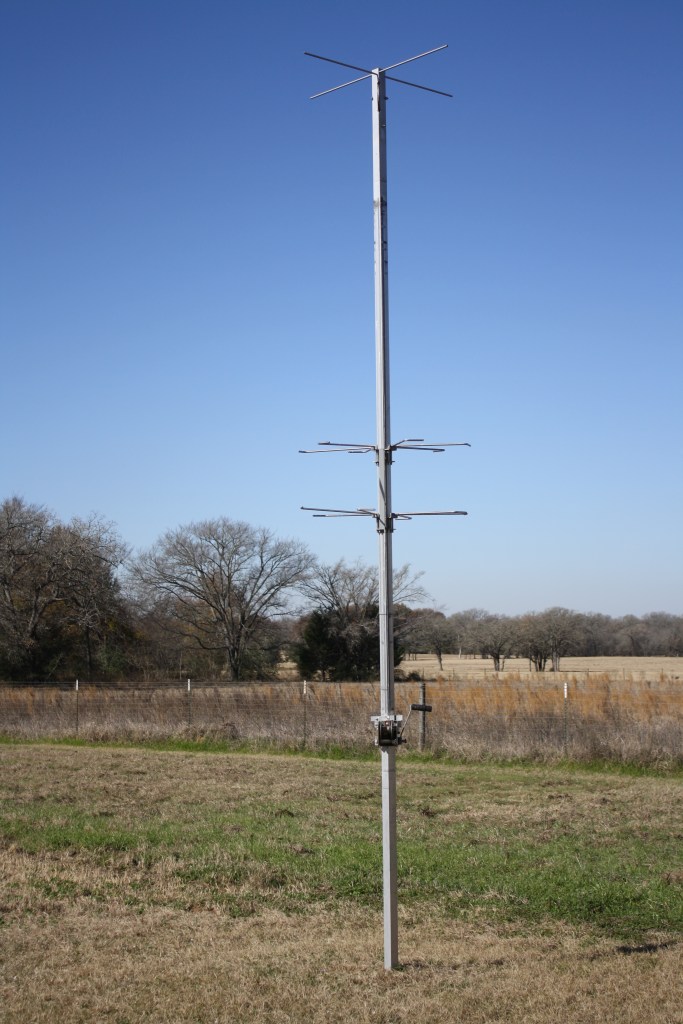
Putting everything back after the Martins have been gone for six months is hard on us senior folk. So, I was lucky this year to have some wonderful volunteers from our Master Naturalist Chapter come over and install the gourds and the Owl Guards for me. Cindy and Gene Rek came last week and did this for me.

The photo of my gourd rack shows the Reks installing the gourds.

As of 1-20-2023 the updated scout report has Martins arriving in Louisiana and Florida. So, they could arrive here in three to four weeks. 

The rack is in its down position for now.

I get asked why I would go to so much trouble for these birds.   Once you hear their beautiful songs, you will know why.  It’s truly a wonder you will not forget.

The Gourds with our friends in 2020.

I will run the houses up the first week in February and I will let everyone know when my first Martin arrives. Martins depend on human-supplied housing now, almost exclusively.

“How wonderful it is that nobody need wait a single moment before starting to improve the world” 

–Anne Frank

Soon the Purple Martins Will Arrive

by Donna Lewis

OK, very soon our beautiful Martins will be sending out scouts to look for their summer homes. They are in Brazil right now. The Martins in Central Texas will be showing up around Valentine’s Day (February 14th).  Is it too cold then?  Yes, it is.

The climate has moved our seasons a little, but our friends have not changed their timetables.  Not a good thing for them.

This is one of the hazards of climate change.  The weather is changing faster than many birds or animals can adapt. If you watch the birds or keep records of your vegetable gardens you will know what I mean.

Observations are especially important to know what is going on in our world.

This is the time when you need to get your housing ready for them. You do NOT want to open the houses, just get them installed, cleaned or however you prepare your houses.  You will open the entrances after you see them arrive.  You also want to have any housing you hope to attract Martins to up before they arrive. Their arrivals are different across the US.

Repairs or cleaning should be done now if you have not already done it. Old nesting material should be removed, and the house cleaned. You can add some pine-needles to the house (or gourd) if you like.

Plugging the entrances to any housing is critical to keep unwanted visitors out.

The Martins will let you know when they arrive.  You will be able to hear them calling you. It is the song all Martin landlords cannot wait to hear again.

No matter how often I hear them sing the “dawn song” to call for mates I never mistake it.  It is wonderful and reminds us why nature is so important to the world. It is unlike any other bird’s song.

Here are the pictures of both of my houses right now.  Within the next couple of weeks, they will be open for business.

So, get ready for PURPLE to arrive.