Quail Release

by Ann Collins and Catherine Johnson

Catherine Johnson and I had a spectacularly rare treat this week. We were visiting the Bird and Bee Farm, where Catherine has created a marvelous wildflower garden. If you haven’t seen it, you really must go. It is full of color, texture, and scents. Guinea fowl and chickens roam free, gobbling up grasshoppers and other noxious critters. Catherine even shares the overflow (flowers, not grasshoppers!).

Bobwhite quail. Image by @JBL via Twenty20

Gene and Cindy Rek have turned their hundred-acre property into a prairie paradise. You may already know they sell laying hens of every description. They also sell Rio Grande turkeys, guinea fowl, and Peking ducks.* This week they added another member of the feather family: Bobwhite Quail.

After an early morning trip to Bastrop, they came back with two flax boxes with breathing holed punched in them. Inside were thirty pairs of breedign quail. Gene carried the boxes out in some tall grass and gently set them down. He cut the strings on box #1 and carefully lifted the lid, revealing an almost-solid carpet of mottled brown feathers.

Just as we were taking in the scene, it suddenly erupted and flew away. Not at all what I was expecting!

Here’s what we saw:

The next box we were somewhat prepared for, but it was just as exciting when it was opened and thirty quail breathed a sigh of ecstasy and got their first taste of prairie freedom.

While we stood, adjusting to this miracle of Nature, the birds immediately started calling to one another with their signature whistle of, “Bob White!”

Later we saw several of them on the pond margins, trying to make sense of this incredible gift they had been given. Hopefully, most will survive to repopulate an area that was once their native habitat before every scrap of nature was cleared away for cattle, monocultures, and civilization, before pesticides, GMOs, and chemicals.

This is supposedly quail. Photo by @Tereza via Twenty20

These birds were all full grown, but future plans include day-old chicks to be raised in the barn and released later this summer.

There will be a coming out party when they are old enough, and all of you are invited to the celebration. Cindy will let us know when it is. It will be fun: a step back in time and a step forward toward restoration of a native prairie, right here in Milam County.

Mark your calendars!


*The farm is open only by appointment, and they are booked many weeks ahead. Please call them at (512) 808-8533 to reserve an opening! You can drop by and look at the gardens at any time.

Strike 2!

by Catherine Johnson

Snake adventures at our house continue.

Sami the dachshund found a copperhead by our back door. Yes, it is gone.

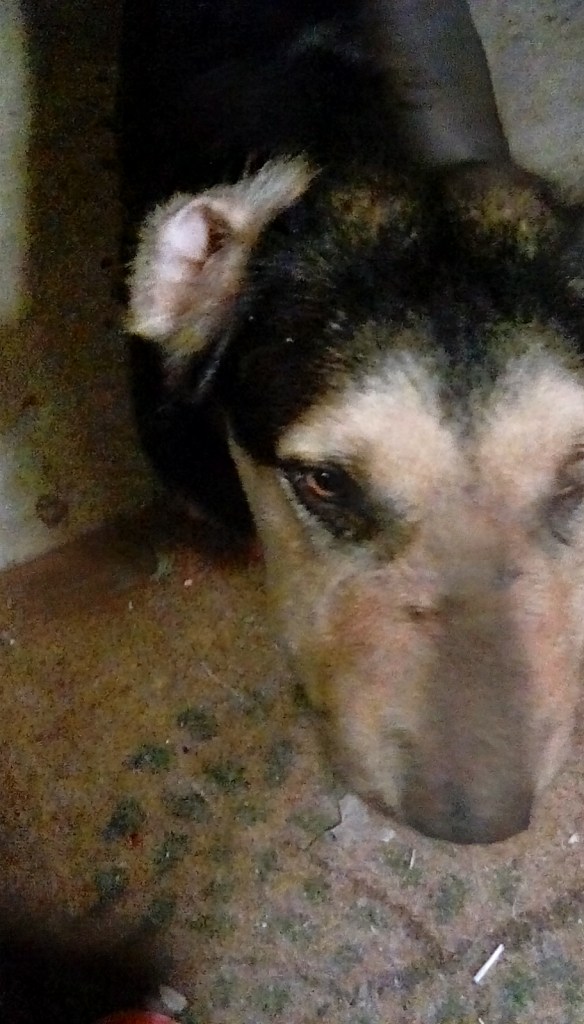
Sandy has fang marks on the black tip of her nose.

I have too many outdoor pets to worry about. We see more snakes because we are outdoor people.  We have been lucky except for one year when we had 18 copperheads around our house.

The Benadryl has kicked in.

Later today, we found Sandy had also been bitten.

Warrior Princess!

Making the Best Out of the Materials You Have Available

… the essence of engineering

by Eric Neubauer

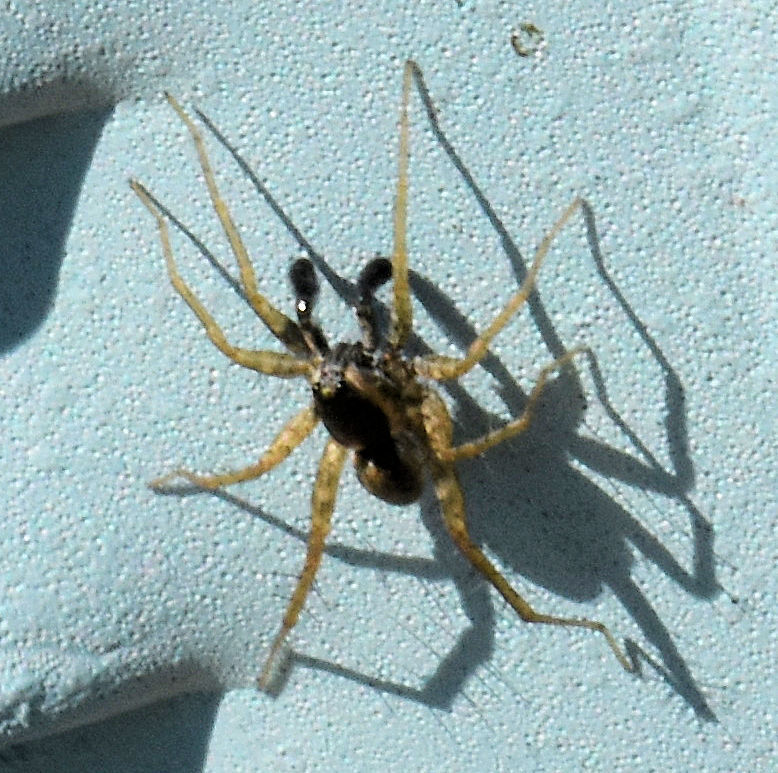
I was hardly a fan of spiders, but circumstances have determined otherwise. The pandemic has kept me almost exclusively at home, and the Texas Blacklands appear to be excellent habitat for wolf spiders (Lycosidae).

In the past, getting identifications down to the species level almost always ended up in frustration, except for Rabidosa rabida. I have identified at least three other genera on my property, and there are likely to be more.

Rabid Wolf Spider Rabidosa rabida. Photo by the author.

This year, I decided to make observations of them as they grew up. My goal was to upload at least a hundred observations to iNaturalist before trying to identify them down to species level. I passed my goal by getting 23 in 43 minutes a few days ago.

This Thin-legged Wolf Spider (Genus Pardosa) is a young one. Photo by the author.

Lycosidae are generally considered nocturnal, but this isn’t entirely true. Daytime hunting is hit or miss, but a combination of high humidity after a rain, temperatures in the high 70s, and cloudy skies apparently combined to bring them out in the middle of the day.

This one is not identified yet. Photo by the author.

There is also a matter of technique. I’ve found that closely cut grass next to high grass is the best place to look and photograph them. You can just walk around slowly and watch for movement, but many will escape into the high grass. If you lead with one foot along the edge of the high grass, this flushes more of them into the low grass where they can be photographed.

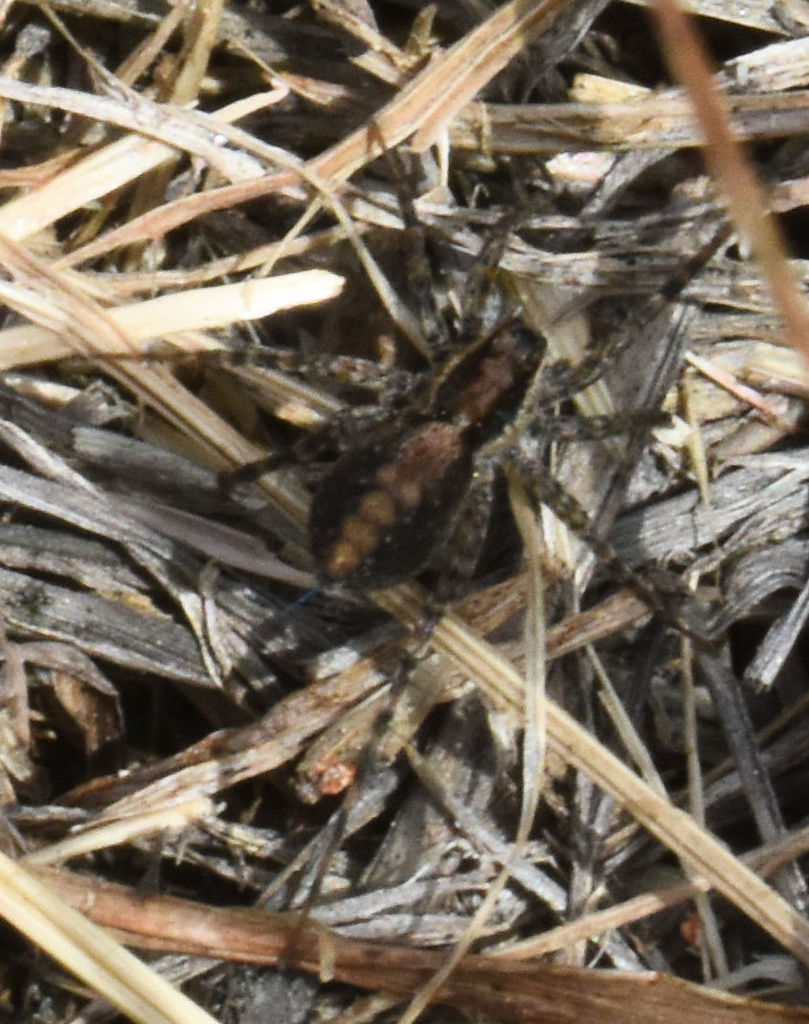
There is one particular species that is so well camouflaged it’s impossible to see unless it moves. Right now, they are mostly a half to an inch long including the legs, and they are old enough to identify the genus.

Brush-legged Split Wolf Spider Schizocosa ocreata. Photo by the author.

You may also see holes of various sizes in the ground. At present, many are probably Lycosidae burrows. They can be enticed out with a blade of grass, but I’ve found they disappear back down their burrows too quickly to photograph, making it a two person job whenever that becomes an option again.

My habitat is returning prairie on blackland with paths mown through the high grass. Confirmed genera: Hogna, Pardosa, Rabidosa, and Schizocosa. Other non-Lycosidae genera including Dolomedes are encountered.

Midnight Madness

by Catherine Johnson

Before the storm hit last night, two young canine siblings were barking at something. Their mom sleeps indoors and only barks when she knows something bad is going on.

I was watching a movie, but walked out in gown and flip flops. I immediately heard loud rattling.  Our snake killer, Boscoe,  was facing what turned out to be a 3-foot rattlesnake. 

I went and told everyone to get up. They also came out wearing flip flops, but Daughter had us all spotlights.

I found my gun but no shells, while my husband and daughter were in a daze. During a great uproar and shouting, we were able to get dogs in house, kill the snake and tend to Boscoe, who had huge fang marks on his nose. 

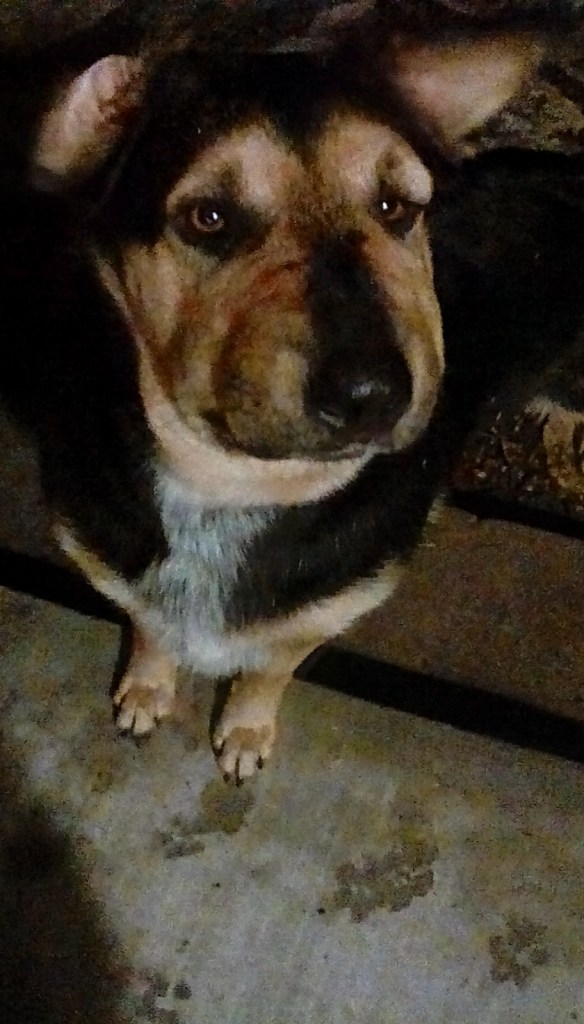
Fang marks are near his eyes. Lower left and higher right, across the black strip.

Boscoe got nervous staying inside and ran off in the storm after I brought a doghouse on the porch.  I saw him at 5 am again.  The Warrior.

Poor Boscoe!

Retrieving a Legacy

This afternoon, Phyllis Shuffield and I donned our masks and went over to where Katherine Budrich, one of the founders of our chapter, lived. Members had long hoped to retrieve some of the things she’d been storing for us, so we were very grateful to have been offered a chance to see what we wanted.

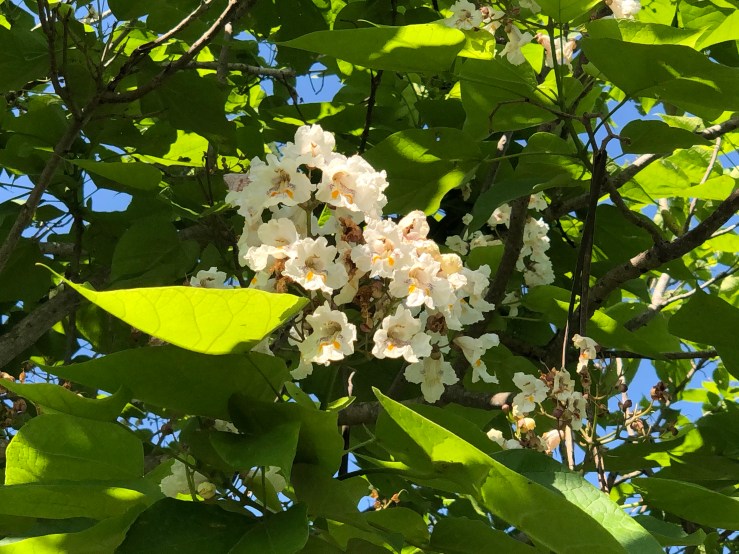
Beautiful catalpa flowers.

Neither Phyllis nor I had gone ANYWHERE since the shelter in place orders, so we both enjoyed the drive through the countryside outside of Cameron, just to get to see different scenery. Wearing masks in the heat is a pain, but worth it to get out and go somewhere. And the Budrich home is in a lovely part of Milam County.

All sorts of native trees are scattered around the property. There are lots of soapberry.

You will all be happy to learn that we got some supplies that will be useful for us in the future. There were a lot of beautiful nature posters, some of our Texas Master Naturalist signs, and a wooden sign that says El Camino Real Chapter. I hope we can use those at meetings!

Sorry the sign’s upside down. But that’s a LOT of nice posters we can use, behind there.

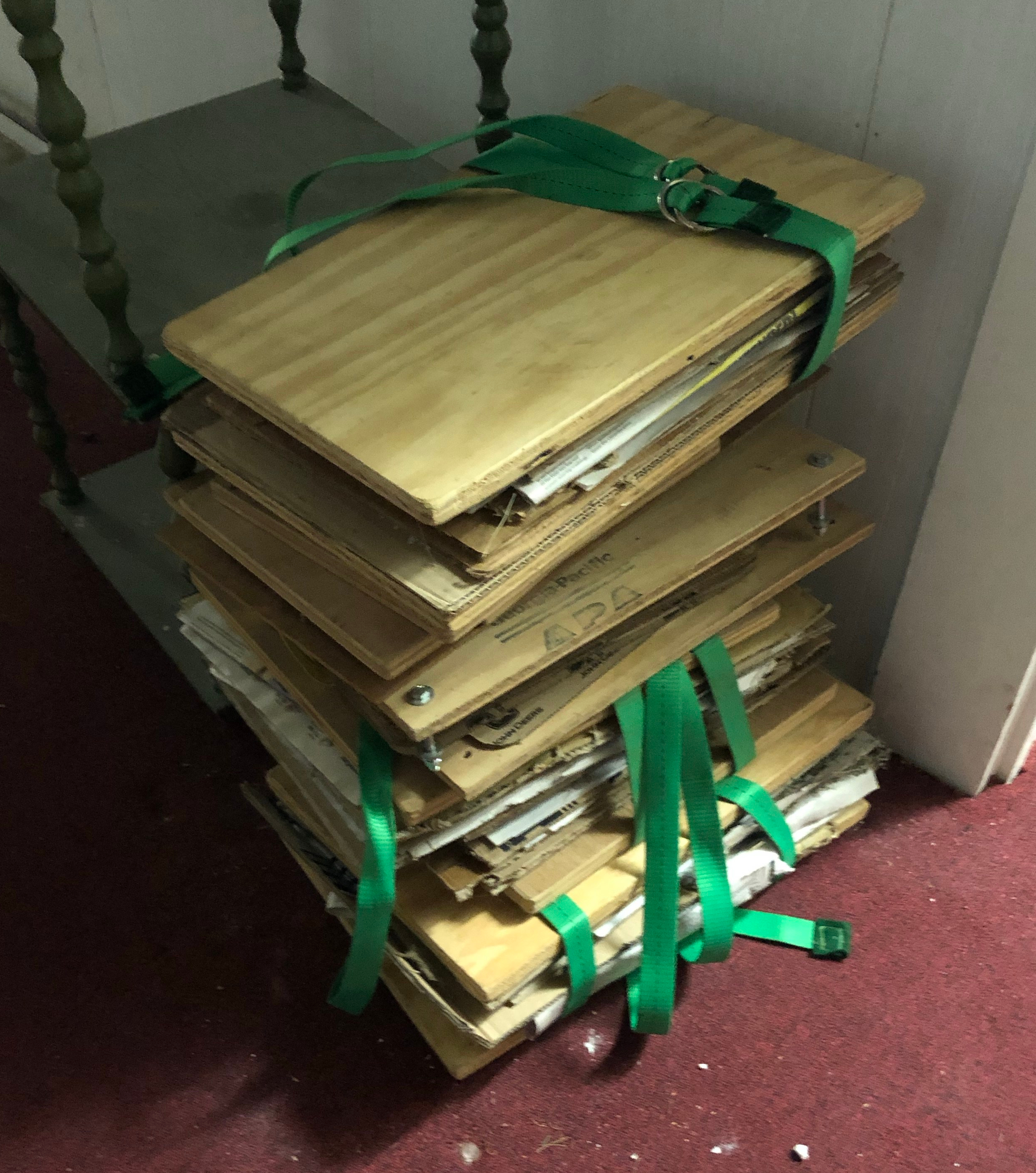
We also found a bunch of wonderful plant presses, the good kind, which will be great for future projects. There were also some amazing notebooks full of information and some books we will be able to share. And of course, Phyllis was thrilled to find a large labeled collection of native mussels, which were Katherine’s specialty.

Hiqh-quality plant presses for saving specimens.

I’m really glad that we were able to get these materials, which are a lovely way to remember Katherine and her contributions to our chapter. We have stored them temporarily in the Hermit Haus building, and I hope to find a permanent place to keep them and other chapter materials once our offices move across the street.

It was also nice to see the sweet memorial garden that’s behind the house in Katherine’s honor. It was a privilege to get to visit and see her plants, too. It feels like I sort of know her!

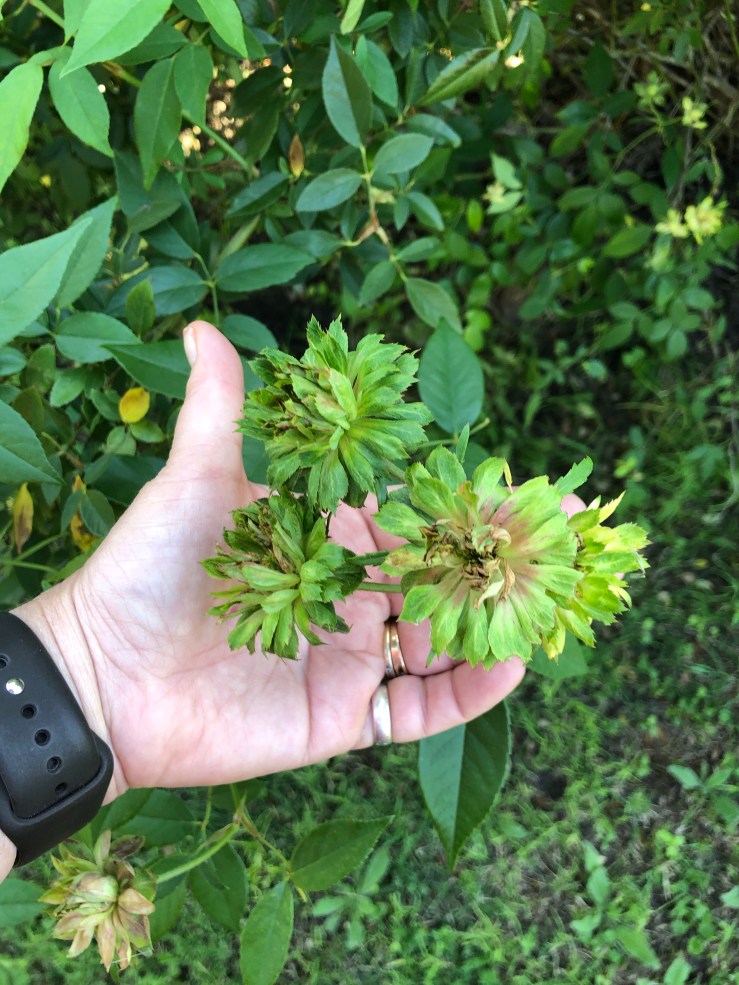
This is apparently a green rose. It’s interesting! And it’s not in iNaturalist.

The Master Naturalist community is really special. It’s touching how we care for each other, and how our contributions can last long after our lives. It was an honor to have my first trip anywhere other than my house and office since March be to help obtain these materials for us.