Tree Girdling at Wilson Ledbetter Park

by Carolyn Henderson

Ten troopers from the El Camino Real chapter of Texas Master Naturalist met up Saturday, March 12, to attempt to rid Wilson Ledbetter Park, in Cameron, Texas, of an invasive species. With the very experienced guidance of Cliff Tyllick, we managed to wear ourselves out after three hours of Glossy Privet girdling. I’m not so sure about the trees. 
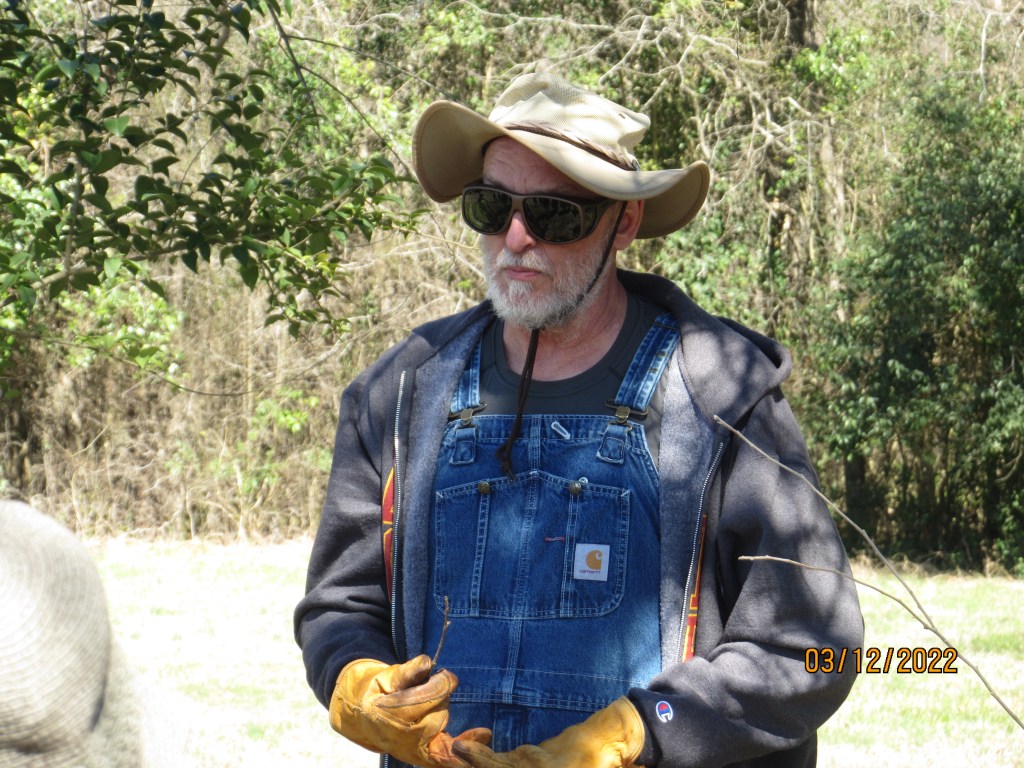
Cliff Tyllick explains tree girdling

Tyllick has years of experience girdling trees in the Austin area. Much of his work is done through grants and conservation organizations in an attempt to hold back Glossy Privets and some other invasive species. He also has done a program on girdling for Texas Master Naturalist at the annual meeting in 2019. 
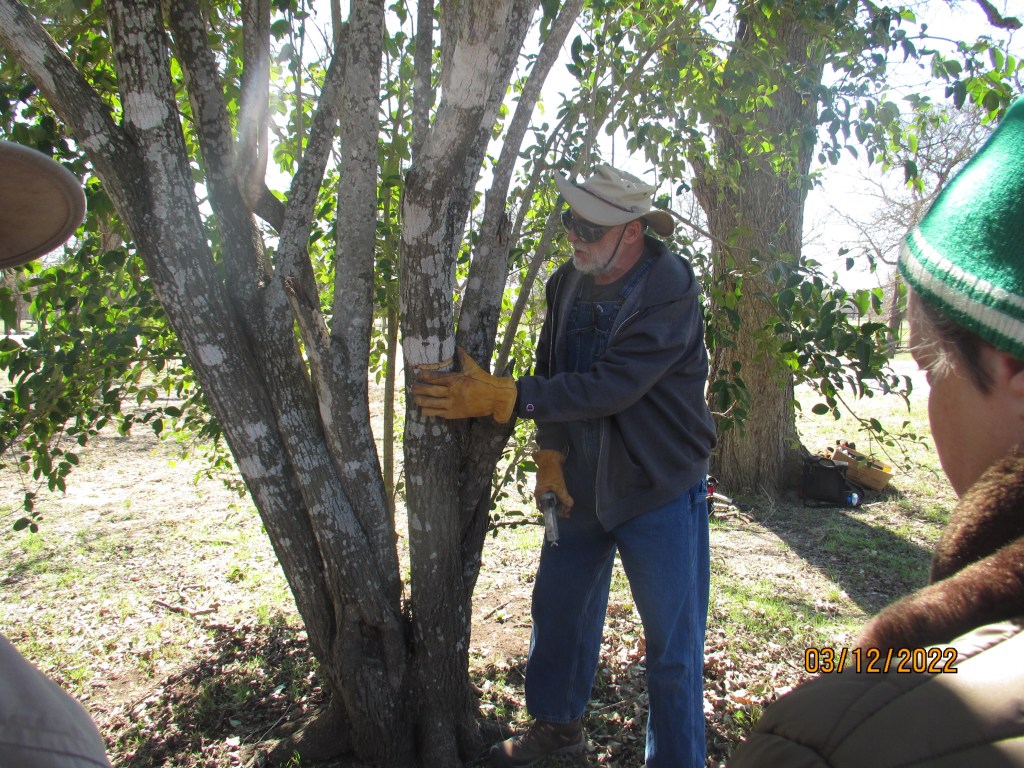
Tyllick draws lines on bark to be removed
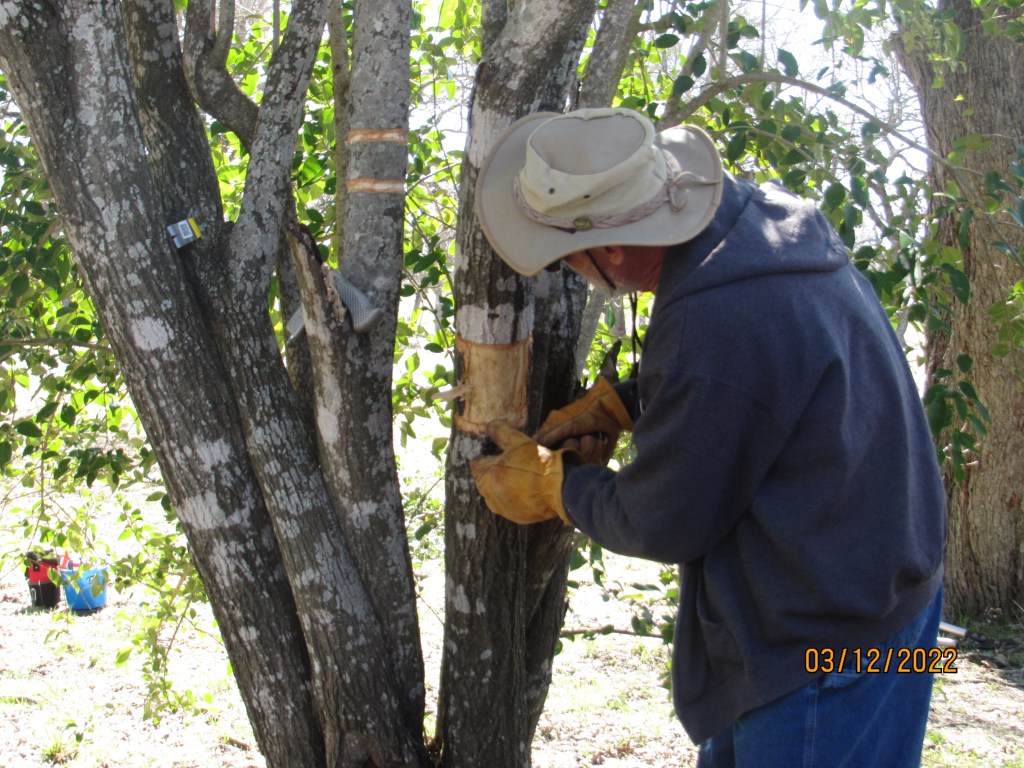
Bark is removed between the lines

Is it more difficult than cutting down the tree and poisoning it? Yes! So why do it this way? Girdling doesn’t require the use of poisons that could contaminate nearby plants, animals, or water, and it eliminates noisy large equipment (as well as the need to carry it down long trails). It eliminates spreading of the trees by seed while killing it slowly. If it’s in a wooded area, you can let the tree decompose to fertilize the ground.
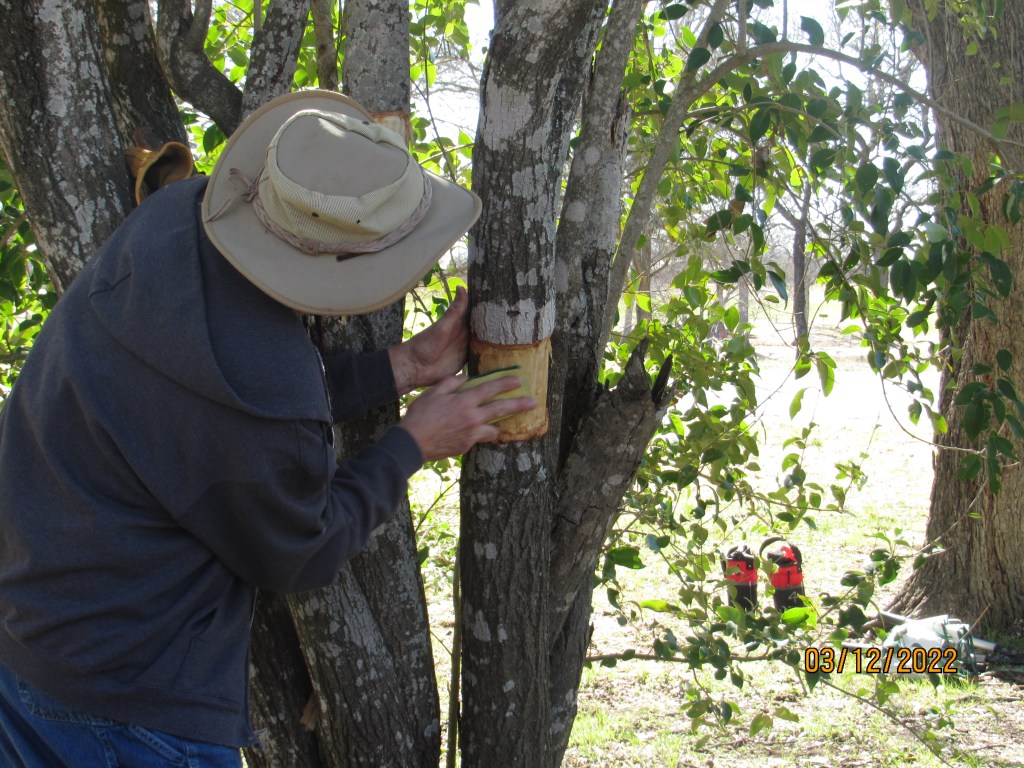
 All pulp material is removed to prevent regrowth

And why would there be a need to remove the invasive Glossy Privet that produces flowers and shade? They hinder the growth of native trees and flowers in the area. They outgrow native trees in height, which hinders the growth of native Texas species growing below them. Bees and butterflies do like the flowers, but that stops them from pollinating native Texas flowers.
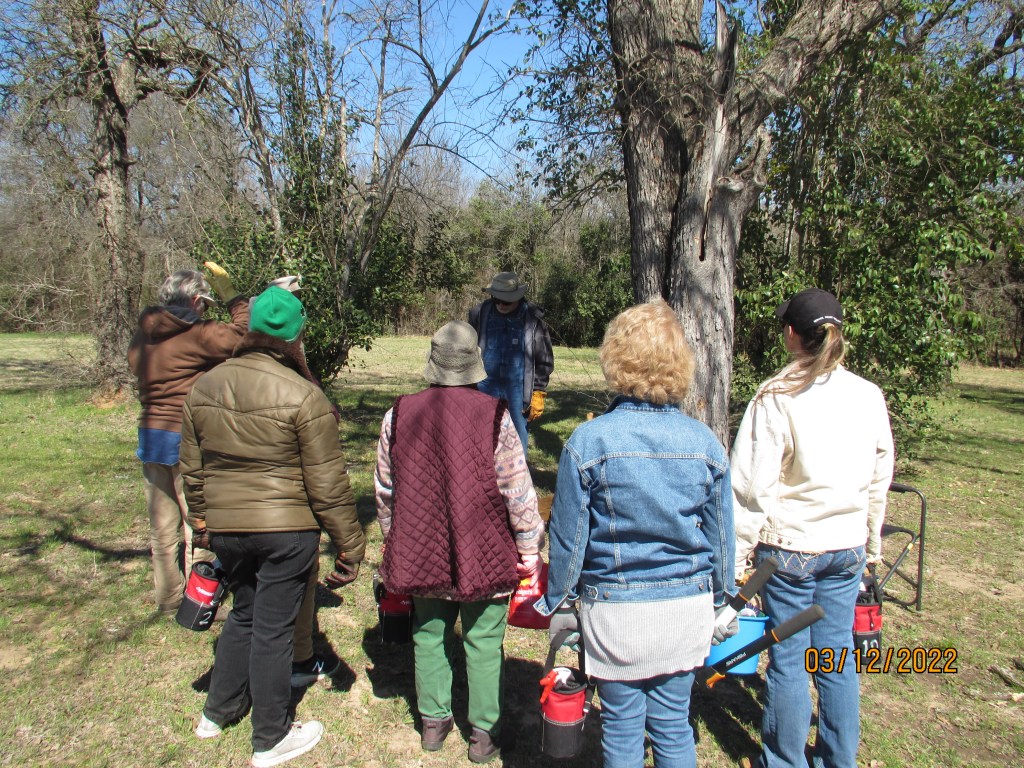
Members walk toward the ill-fated Privets.

There is a specific format to do the girdling in so that it will take out the plant in one effort. The outer bark must be removed for about the length of a hand. Then the pulpy matter left must be removed by using tools to scrape it away. Once it’s removed, it is washed with soap and water then cleaned with an alcohol and water mixture. This combination keeps it from regenerating what was removed. If you’d like to see it in action, check out this video:

It was hard work, and most of us were worn out, but learning a new process was interesting, and we got to enjoy the company of our chapter members. As an aside, Tyllick’s wife, Karen is an archeologist by training and a PhD. She found some relics in the park. Thanks to her for our group picture. We were all smiling because we said “Girdling” instead of “cheese”. It was really funny at the time, which was at the end of the day.
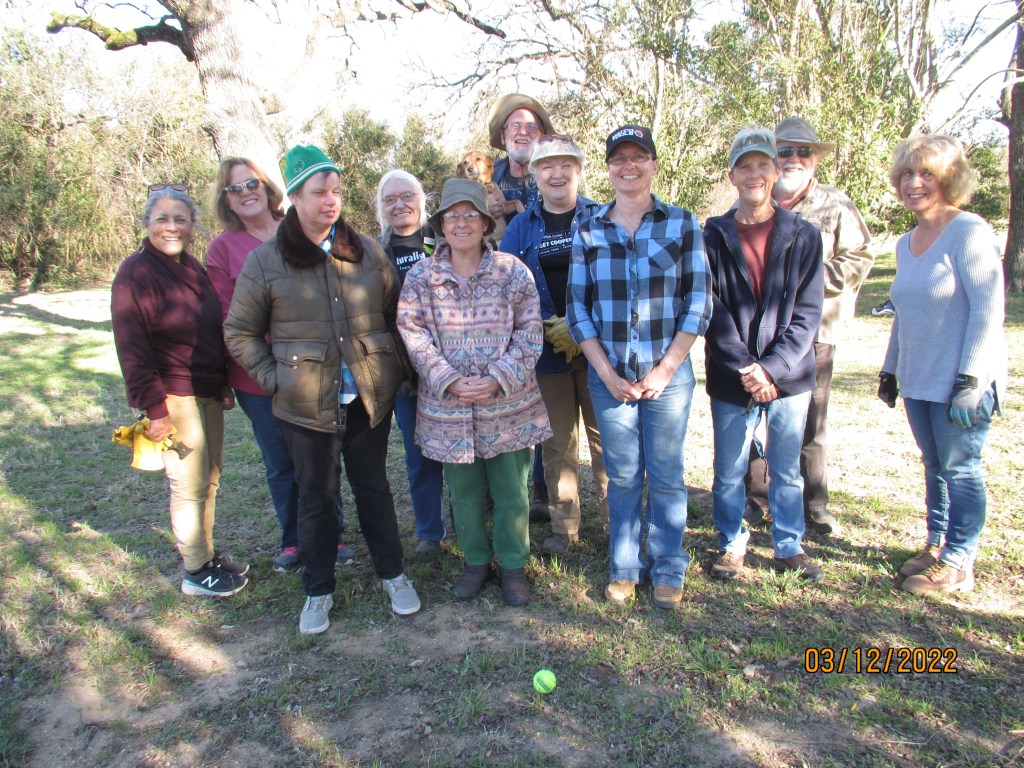
ECR chapter members smile big after all the girdling.

Chapter Meeting Presentation on Sustainable Agriculture

by Carolyn Henderson and Sue Ann Kendall

Dr. Jim Richardson, DVM and Milam County regenerative farmer and rancher, explained to the El Camino Real chapter of Texas Master Naturalist about the process he has developed to farm and ranch without chemicals or plowing. The procedure restores overworked dirt into a fertile, moisture-retaining soil that he uses to grow crops that he uses to both sell and feed his animals.

Soil restoration is a growing farming format across the nation. For any members interested in the process, Dr. Richardson recommends the book Dirt to Soil, by Gabe Brown. It is believed that if the process were used across the country, it would reduce the drought problem for farmers significantly. 

Dr. Richardson explained that using a no-till disturbs soil much less, which allows water to soak in and not run off. Running heavy equipment across soil to till and fertilize makes the soil compacted. It turns out that the less you disturb soil the more it can soak up, because the spaces between particles of soil can remain (caused by earthworms and other living creatures in the soil).

He pointed out that mulch is another thing that helps—this can be achieved by allowing leftovers from the previous crop to remain, as well as some native vegetation, which can get incorporated into the soil via animal impact. Animal impact also kills off some plant material and incorporates it into the soil to provide additional nutrients. That’s a big reason to allow cattle or other animals to graze harvested fields.

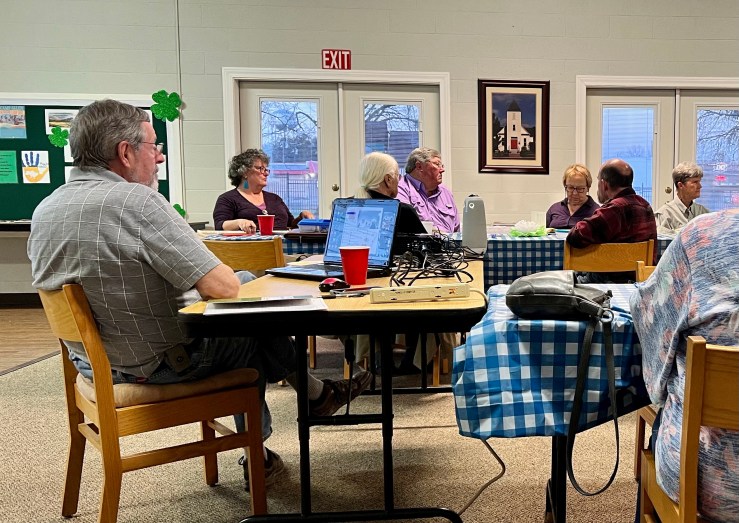
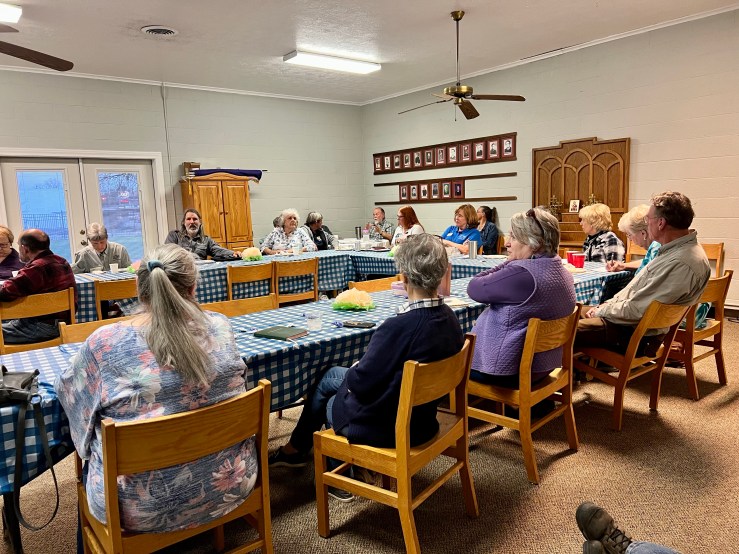
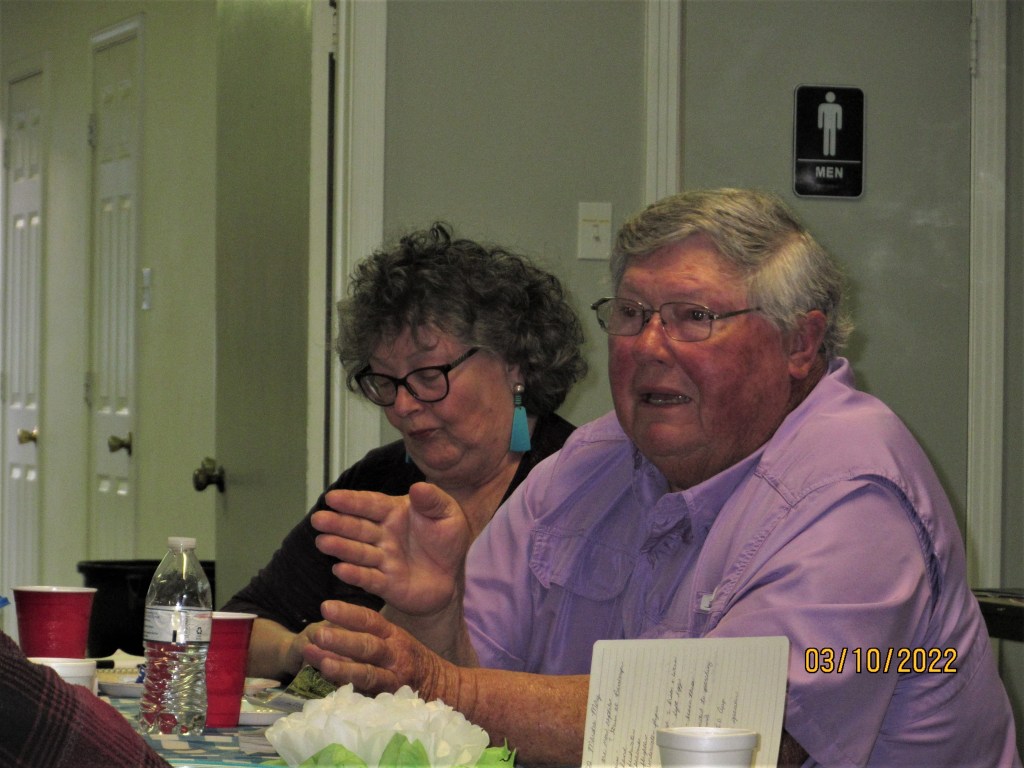
Chapter members enjoy the question-and-answer part of the presentation.

Another practice Richardson recommended is that after you harvest one crop, get another one in there as soon as possible, so it can capture the benefits of sunlight and take them into the soil.

It was good to be meeting in person. Our hospitality team did a great job with tablecloths and paper flower decorations.

By carefully managing the land to regenerate its nutrients and remain uncompacted, effective rainfall will be able to stores water for use during the drought periods. Mulch is what helps the water stay until it is needed.

The more diverse population on the land the better equipped it will be to deal with whatever comes its way and stay productive, he added.

At the end of his presentation, he shared his philosophy:

If you want to make small changes, change the way you do things. If you want to make big changes, change the way you see things.

Jim Richardson, DVM

More Signs of Spring

by Carolyn Henderson

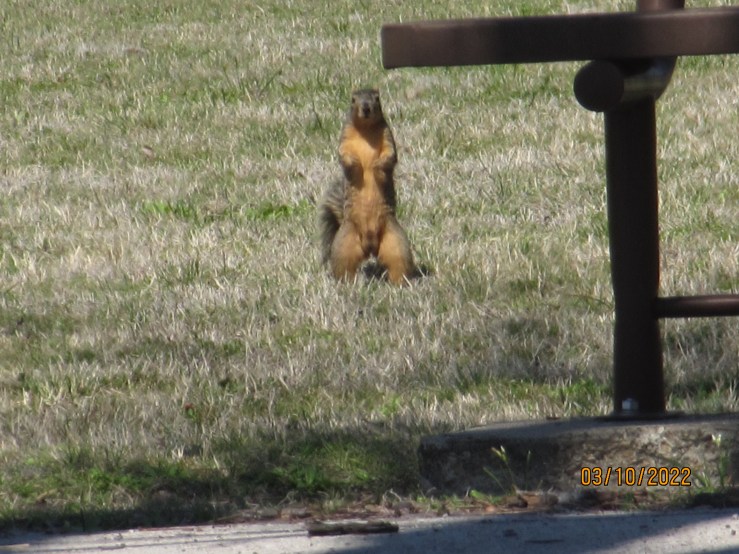
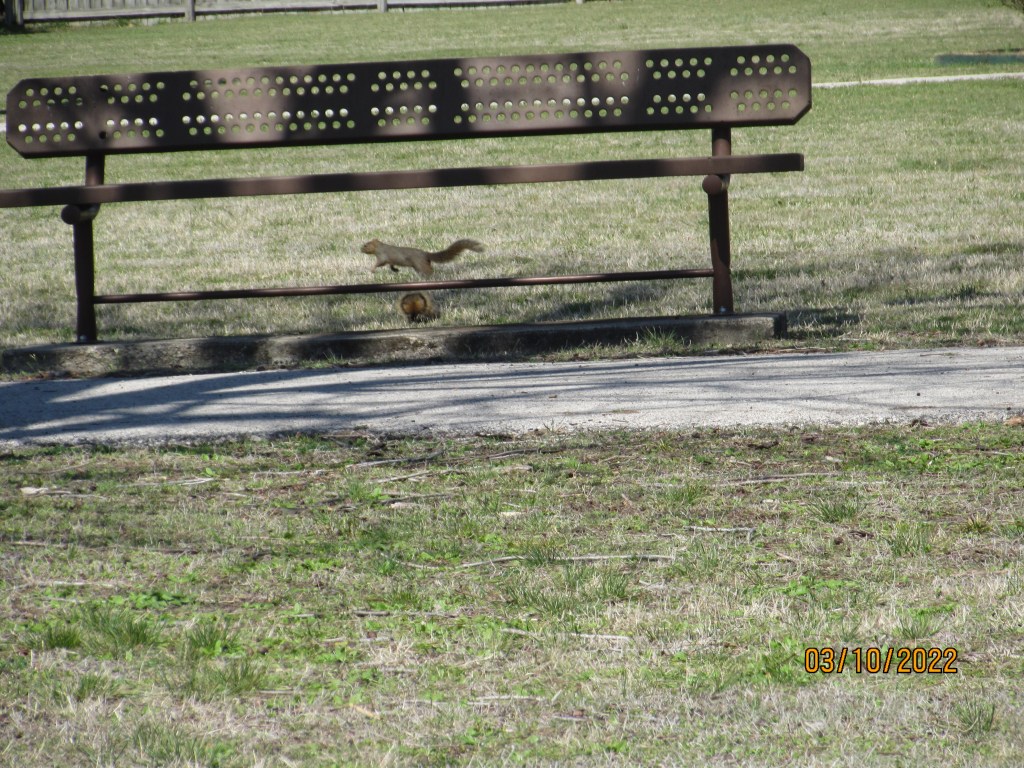
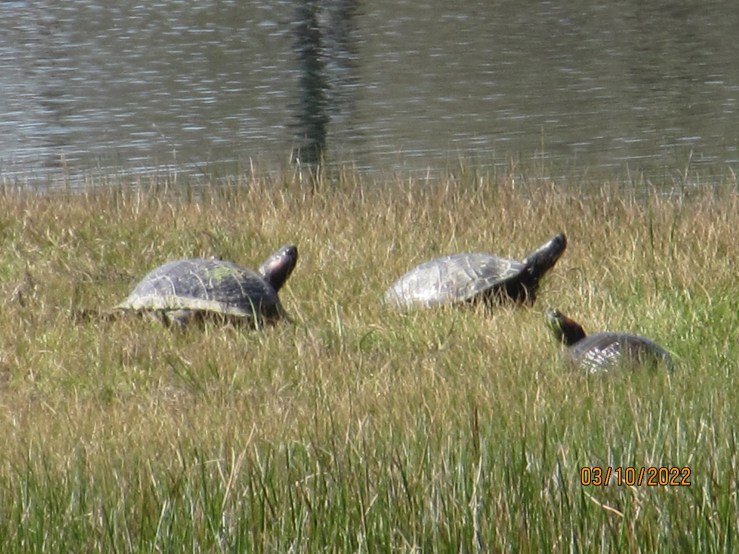
Flowers are not the only signals that spring is here. Today (March 12) a very cold front is moving in, but yesterday, Thursday, March 11, was sunny and warm, and that brought out some frolicking squirrels and some sun-bathing Red-eared Sliders. These two were observed at lunch time at Orchard Park in Cameron. There were ten or so squirrels playing chase all over the park while the turtles lifted their heads toward the sun. 

I also found an Eastern Redbud in full bloom in my neighbor’s yard. I also have Henbit Deadnettle growing in large blooming clumps in my yard, but so does everyone else, it seems. 

I hope spring is here to stay after this cold front.

Sandhill Cranes: Wonderful Sign of Spring

by Sue Ann Kendall

Last weekend I was at a horsemanship clinic when I heard a familiar sound. I pointed up and said, “Listen!” The ten-year-old girl who was in my group asked me what in the world that was. I said it was the sandhill cranes migrating north. It made my day to see how excited she was about it. She promised to keep her ears open this year and from now on.

Photo by @lburlew71 via Twenty20

The sandhill crane, Antigone canadensis, comes by twice a year, heading up north and heading back south. They aren’t endangered or anything, but they are endearing to me. I can remember when my children were small, I’d hear them from inside my car, pull over, and make my sons watch them flying over, clacking and honking as hard as they could. That was in Williamson County.

Nice quality, huh?

Of course, they fly over Milam County as well. Friends report that they touch down in some of our larger lakes, like over by the old Alcoa property, to rest as they go by. They’ve never stopped by our little ponds, but sometimes they are close enough to see the colors on their heads with binoculars.

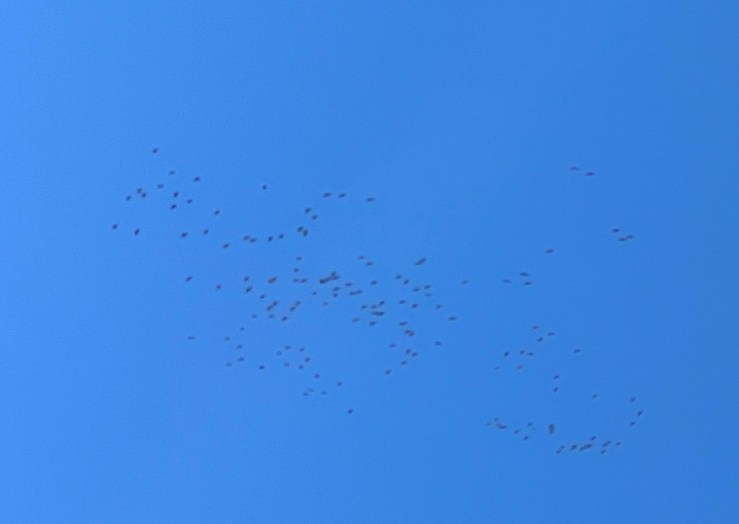
Yep, it’s birds all right.

I ran outside today when I heard them from inside my house, and got a recording and took a few photos. They aren’t great, but that’s okay. I like to document when different birds migrate through each year to see how it differs. Last year they were a little later than this year. Hey, I’m a naturalist.

Well, it was pretty in person.

I’m glad I got the recording, so my iNat identification will be easier. Since I was on my property, I can’t get any credit for the observations, but so what? I got the thrill of listening to my favorite signs of spring as they head up to get some nice fresh food. Learning to observe the rhythms of nature is one of the best things about our training.

This took me forever to convert from one format to another, so truly, enjoy the sounds!

Signs of Spring: Northern Milam Edition

by Sue Ann Kendall

Like many of our Chapter members, I always get excited when there are indications that maybe we’ll stop getting frozen participation, then heat, then cold, and over and over. Spring flowers give me hope. In the past couple of days, both Donna Lewis and Linda Jo Conn have shared flowers from different parts of Milam County. I’d already been thinking of writing a similar post, but they got there ahead of me. Or did they? We can all get into the search for spring!

It might be interesting to see what kinds of flowers are blooming just a bit north of where they observed (near Gause, and in Cameron). Plus, I needed to get outside for my nature fix.

I’ve always found henbit deadnettle (Lamium amplexicaule) pretty. Here it’s encouraging the other flowers, like the field madder, to get blooming.

I had intended to spend 20 minutes outside taking photos, but I ended up wandering around for an hour. It had been raining, so some of my specimens didn’t look too great. All the storksbills were bedraggled, the anemones were missing petals, and the crow poison had their blossoms firmly shut. So, a couple of these photos are actually from last week. But the plants ARE blooming now!

I’m fond of the showy blossoms that eventually show up each year, but my secret love are the little bitty flowers. Tiny bluets make me especially happy, and this is a great year for them out in my horse pasture.

Of course, everyone is out looking for their first bluebonnets, which are already up in Austin, from what I hear. In northern Milam County, they are usually a bit later than in many places, but that doesn’t mean we don’t have a bumper crop of them! This year will be no exception. I found beautiful leaf clusters holding raindrops in their centers, a few buds, and one just starting to bloom. I predict some great smells in the upcoming weeks!

It’s fun to see how the cold weather affects the new leaves on some of the plants, like this prickly sowthistle. I didn’t get any photos of it, but the dewberries have bright red leaves right now, too. Everything will get back to normal soon.

There are also some dandelions and field madder hiding in here with the prickly sowthistle (Sonchus asper). Notice the water droplets. I just noticed on iNat that this plant is even found in Hawaii. Those seeds stick to stuff!

I’d have a photo of my native plum tree, but it was too muddy to get to the reclusive shrubby tree. Maybe next week, if it’s still in bloom. I love those harbingers of spring, too. Some of the other plants I found were also shared by Linda Jo, but I love them so much that I can’t resist sharing.

So, fellow El Camino Real Master Naturalist Chapter members, what’s growing in your part of Milam County? No doubt that answer will be changing every day for the next few weeks. The weather will get nice one of these days, I know. Mother Nature has her own time clock.